Croatia
Zadar County, Croatia — Towns & Travel Guide
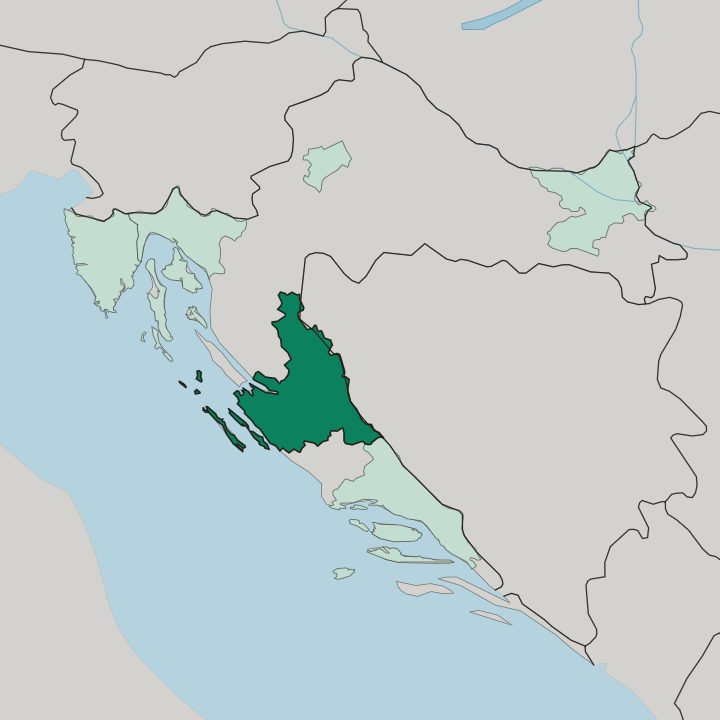
Zadar County spans northern Dalmatia and southeastern Lika in Croatia, a region governed from its seat at the old harbour city of Zadar.
Hotel links are affiliate links: booking through them may earn us a commission, at no extra cost to you. It never affects how places are ranked. How this works


Towns & cities in Zadar County
One town here has its own guide — it links to where to stay.
 Croatia
Zadar
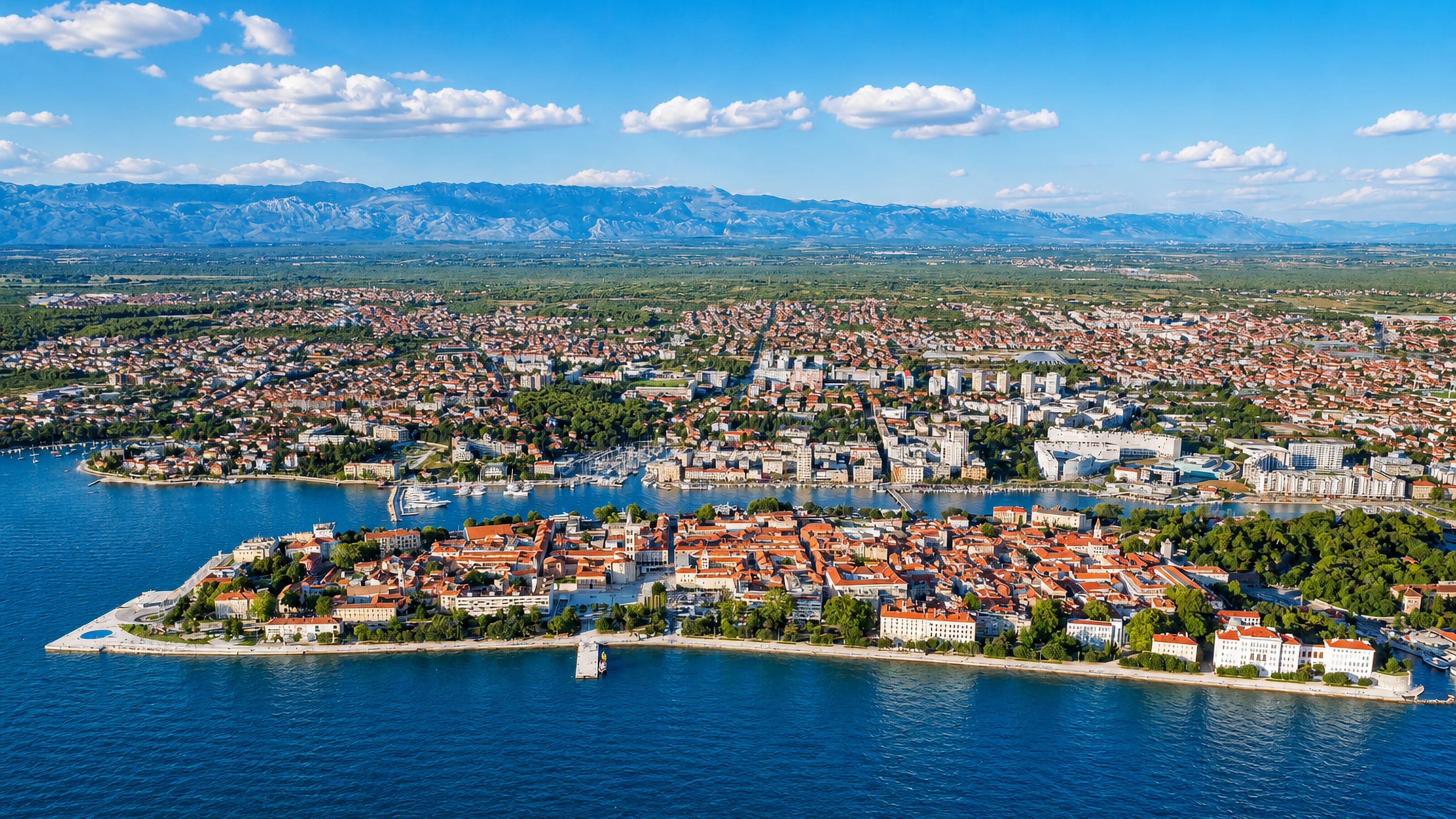
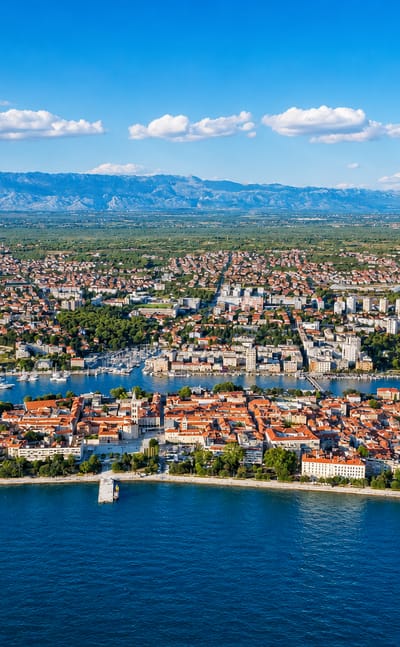
Stone quays face the Adriatic Sea at Zadar, the largest city of northern Dalmatia and seat of Zadar County, known for the Church of St. Donatus.Where to stay →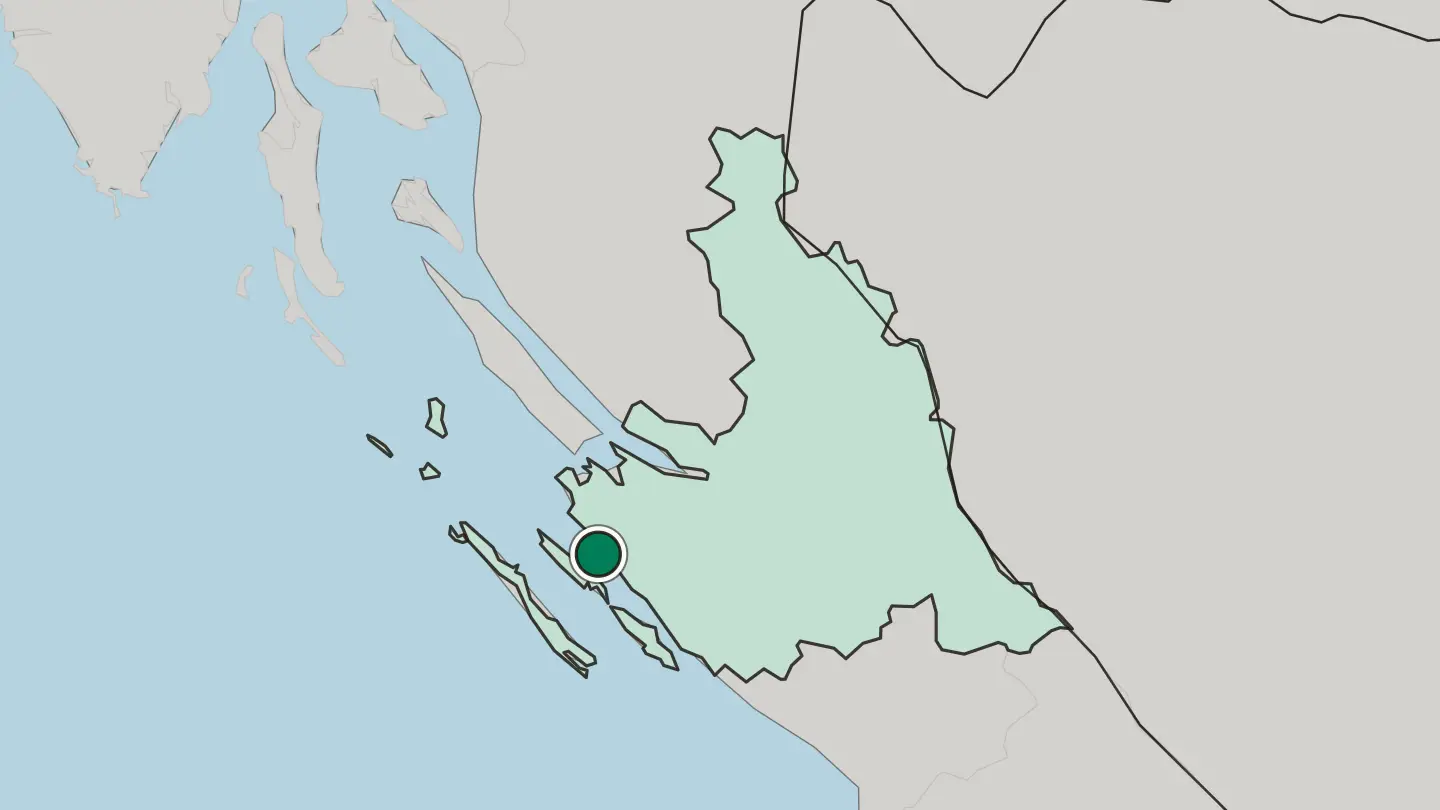
Hotel links are affiliate links: booking through them may earn us a commission, at no extra cost to you. It never affects how places are ranked. How this works
About Zadar County
What is Zadar County known for?
Zadar County is known as the county that joins northern Dalmatia to southeastern Lika within Croatia. It reaches from the coast inland, so a single administrative unit carries both a maritime seaboard and the higher ground of the Lika interior, an unusual pairing among Croatian counties. The seat holds it together.
All of it answers to Zadar, whose harbour has been the administrative and cultural centre of the region for as long as the coast has been governed at all.
Where is Zadar County?
Zadar County stretches from the coast of northern Dalmatia up into the higher ground of southeastern Lika, giving it two landscapes in one administrative frame. The seaboard is low and broken, a limestone shore fronting the water, while the inland edge rises toward the karst plateaus and colder valleys of the Lika interior. That climb is the county's defining move.
A traveller crossing it leaves the maritime margin of northern Dalmatia behind within a short drive and enters uplands that feel like a different Croatia altogether, dry stone giving way to forest and thin pasture. Zadar anchors the whole span from its harbour. The city sits at the coastal end, the point where the sea, the plain behind it, and the routes climbing toward Lika all converge, which is why the seat of the county has always been fixed there.
Water and rock set the terms. Everything about the settlement pattern of Zadar County follows the gradient from the northern Dalmatian shore up to the Lika highlands, with population thinning as the land lifts.
What is Zadar County like?
Zadar County carries a split cultural identity that follows its geography, coastal in northern Dalmatia and continental in southeastern Lika. The seaboard shares the Mediterranean rhythm of the Dalmatian coast, a life shaped by harbours, boats, and the long relationship between the town of Zadar and the water it faces. The inland runs to a different beat.
Up in the Lika uplands the pattern turns pastoral and hardier, tied to stone-walled fields and colder winters rather than the sea, so the county holds two Croatian traditions at once. Zadar sets the cultural centre of gravity. As the seat and the only major city, it gathers the institutions, the markets, and the civic life of the whole region, and its long history as the head of northern Dalmatia gives the county a coastal, urban face to the outside world.
The Lika side keeps its own quieter identity. This is what makes Zadar County distinct among Croatian regions: it is not one culture but a coast and an interior bound under a single seat, each keeping its own manner while sharing a name.
What is the history of Zadar County?
Zadar County takes its shape and its name from Zadar, the coastal city that has governed northern Dalmatia for centuries. The modern county formalises a much older reality: the harbour town has been the administrative head of this stretch of coast since long before the current borders were drawn, extending its reach inland to take in part of southeastern Lika. The pairing is deliberate.
Binding the Lika uplands to the Dalmatian seaboard under one seat gave Croatia a single unit running from the water to the karst, held together by the old authority of Zadar.
What is the climate of Zadar County?
Zadar County holds two climates that split along its coast-to-interior gradient. The northern Dalmatian seaboard around Zadar runs Mediterranean, with long hot dry summers and mild wet winters softened by the sea. The uplands are colder.
Southeastern Lika climbs into a continental pattern of sharper winters, more snow, and cooler summers than the coast ever sees, so a single county can carry both a maritime and a highland season at the same time of year.
How do you get to Zadar County?
Zadar County is reached through Zadar, its coastal seat and transport gateway. The city ties the region to the rest of Croatia by the coastal road and to the water by the ferries working its harbour, while an airport serves northern Dalmatia nearby. Roads climb inland from there.
Routes head up from the seaboard toward the Lika uplands, so a single arrival at Zadar opens both the Dalmatian coast and the highland interior of the county to any traveller.
More regions in Croatia
Updated September 2026