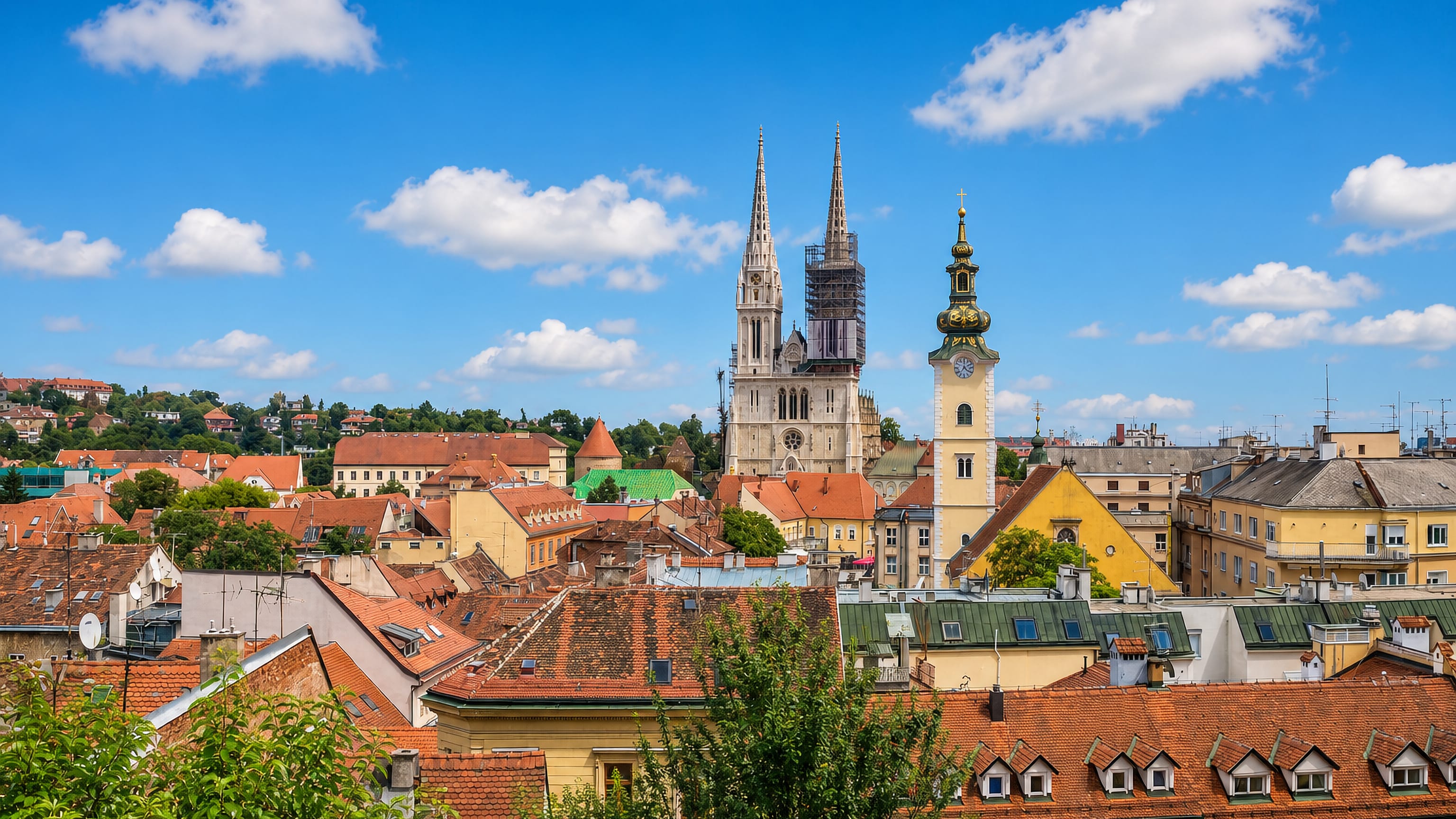
Croatia: Regions, Cities & Travel Guide
Croatia is a Mediterranean country in Southeast Europe, its mainland reaching down the Adriatic Sea past an archipelago of over a thousand islands.
Hotel links are affiliate links: booking through them may earn us a commission, at no extra cost to you. It never affects how places are ranked. How this works


Top destinations in Croatia
Cities to start from, then drill into areas and hotels.
 Croatia
Zagreb
Zagreb is the capital of Croatia, a city of medieval streets and grand squares between the Sava river and the Medvednica mountain.Where to stay →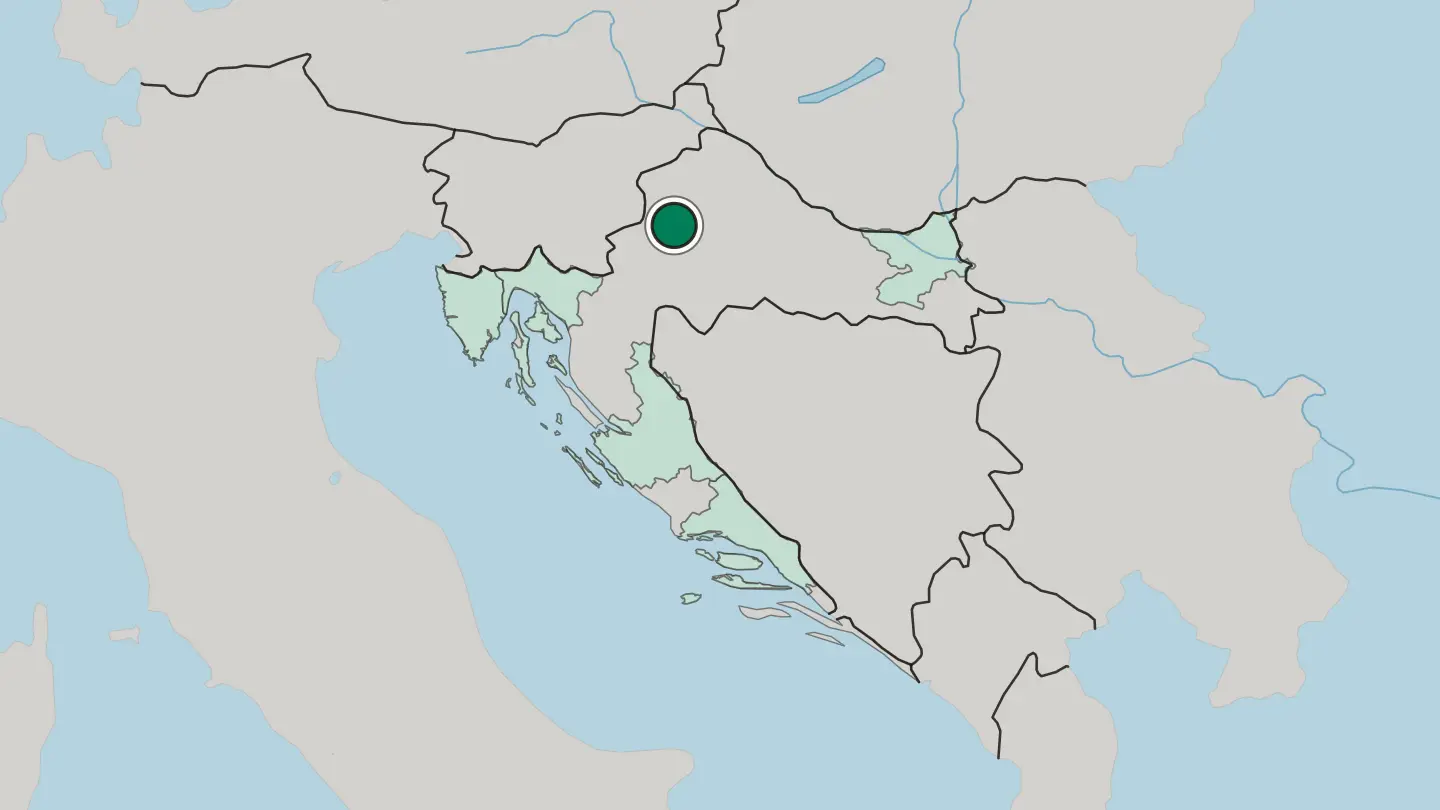
 Croatia
Split
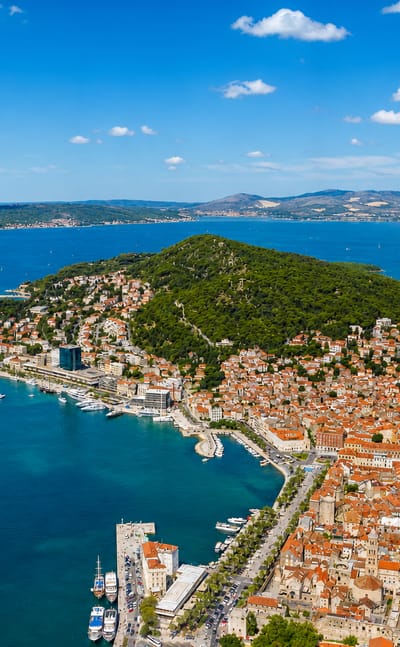
Split is a city on the central Dalmatian coast of Croatia, built in and around the Roman walls of Diocletian's Palace.Where to stay →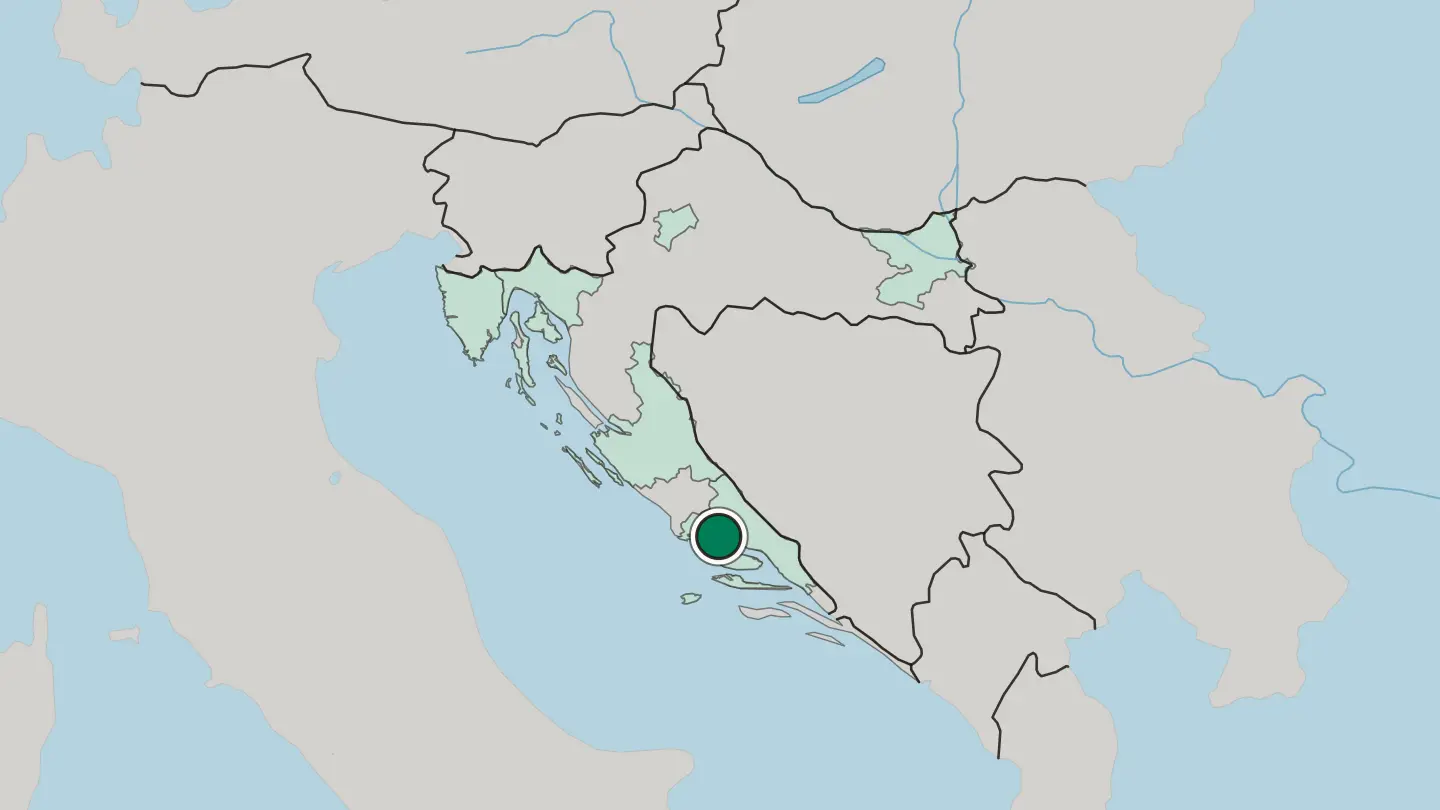
 Croatia
Rijeka
Rijeka is Croatia's principal seaport, on Kvarner Bay off the Adriatic Sea, with Trsat Castle standing back from its quays.Where to stay →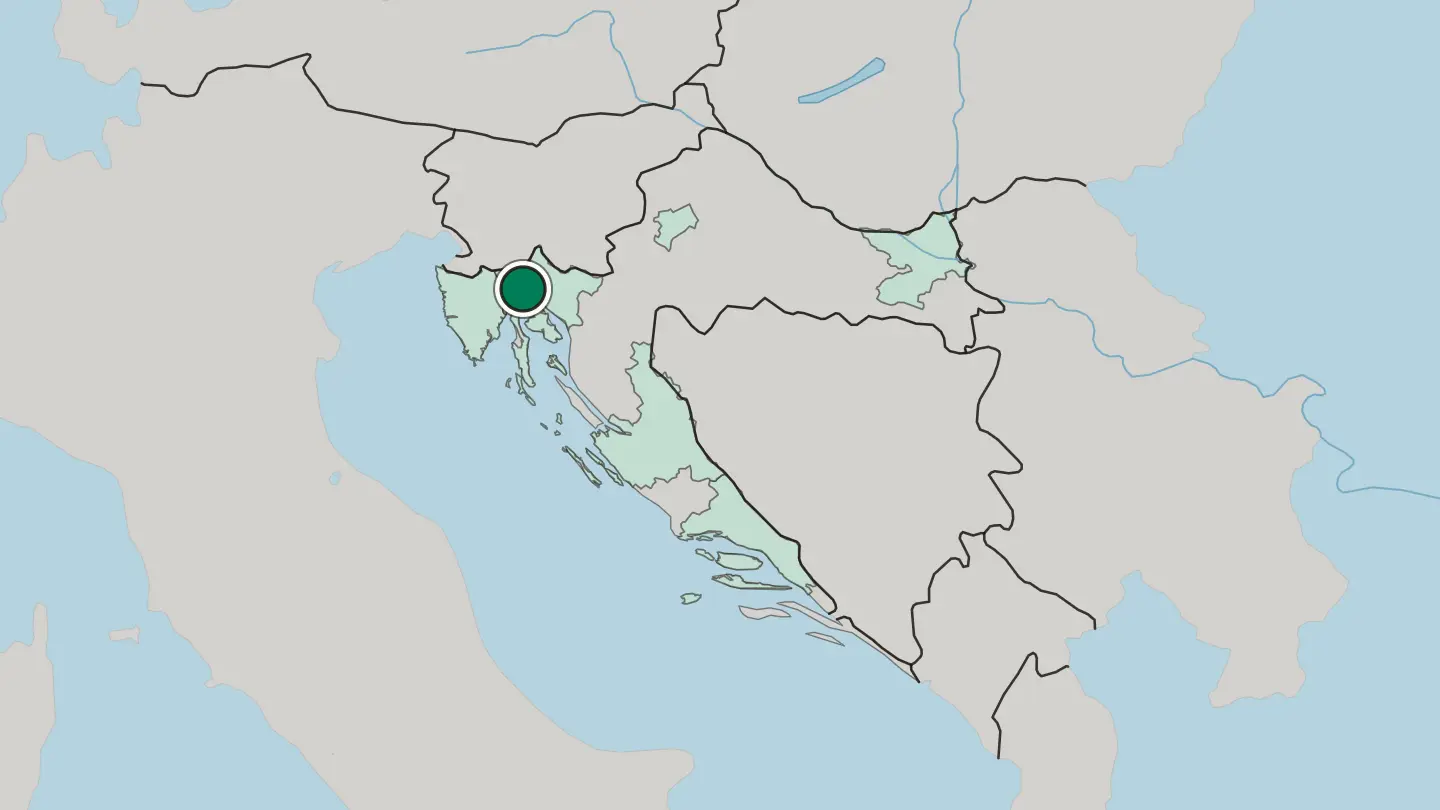
 Croatia
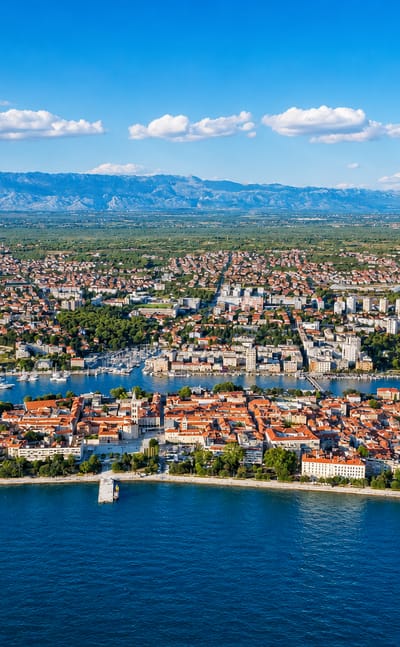
Zadar
Stone quays face the Adriatic Sea at Zadar, the largest city of northern Dalmatia and seat of Zadar County, known for the Church of St. Donatus.Where to stay →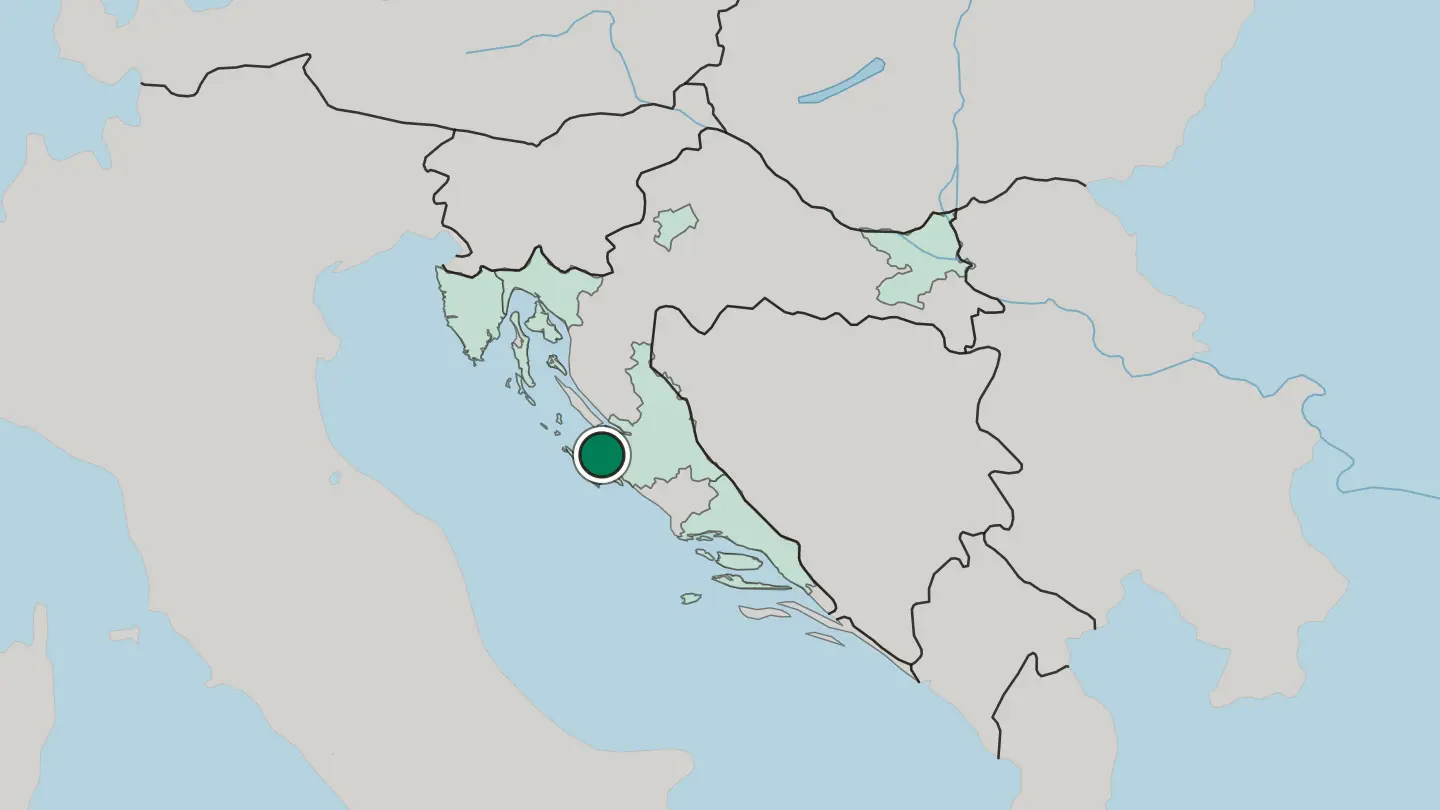
 Croatia
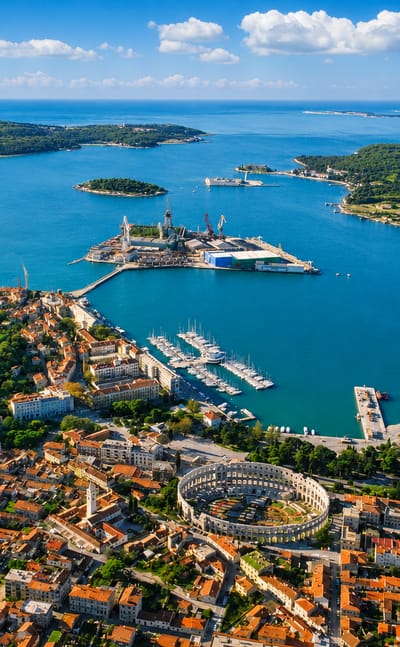
Pula
Roman stone rings the harbour at Pula, the largest city of the Istrian peninsula and seat of Istria County, known for the vast Pula Arena.Where to stay →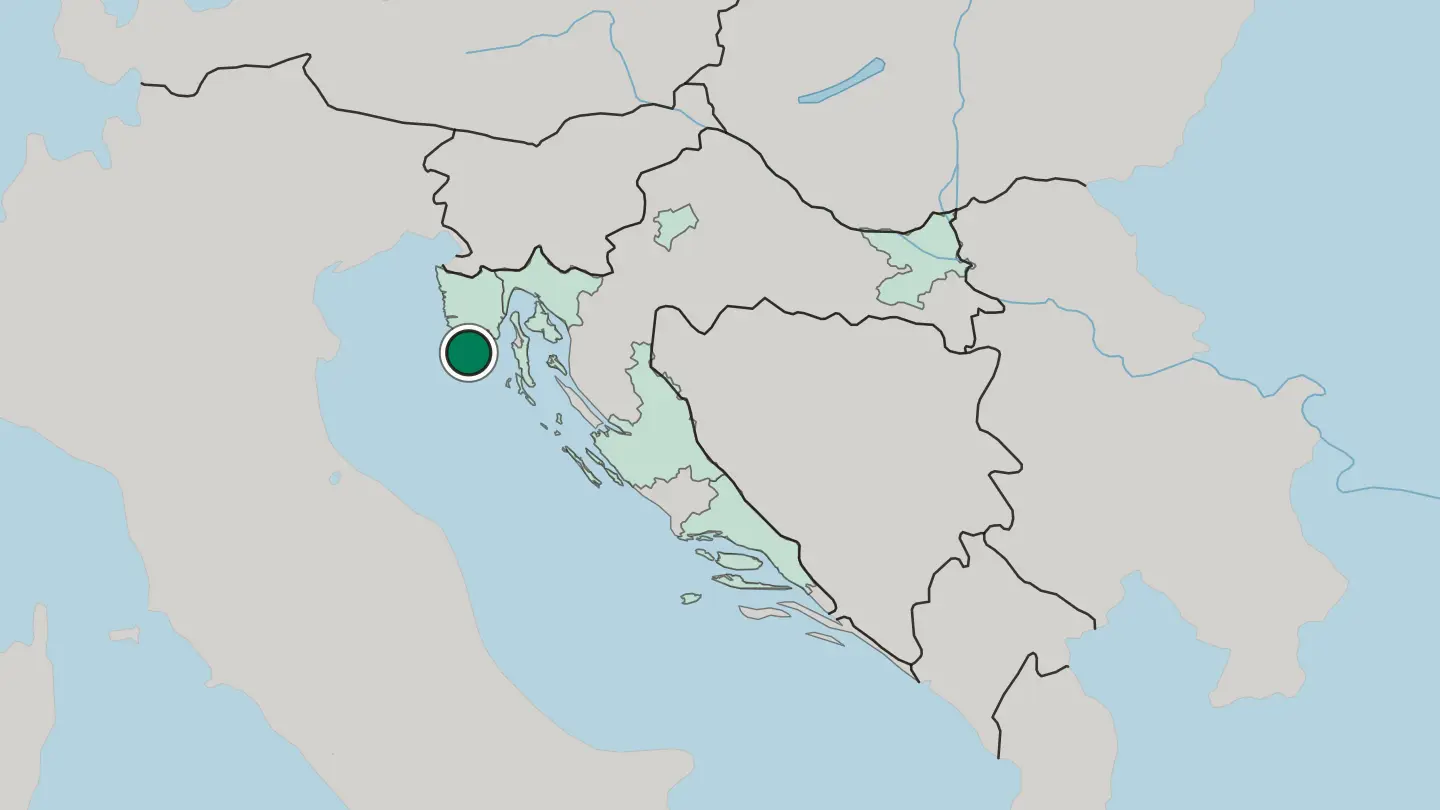
 Croatia
Osijek
Osijek is the principal city of Slavonia and the seat of Osijek-Baranja County, on the Drava above its confluence with the Danube.Where to stay →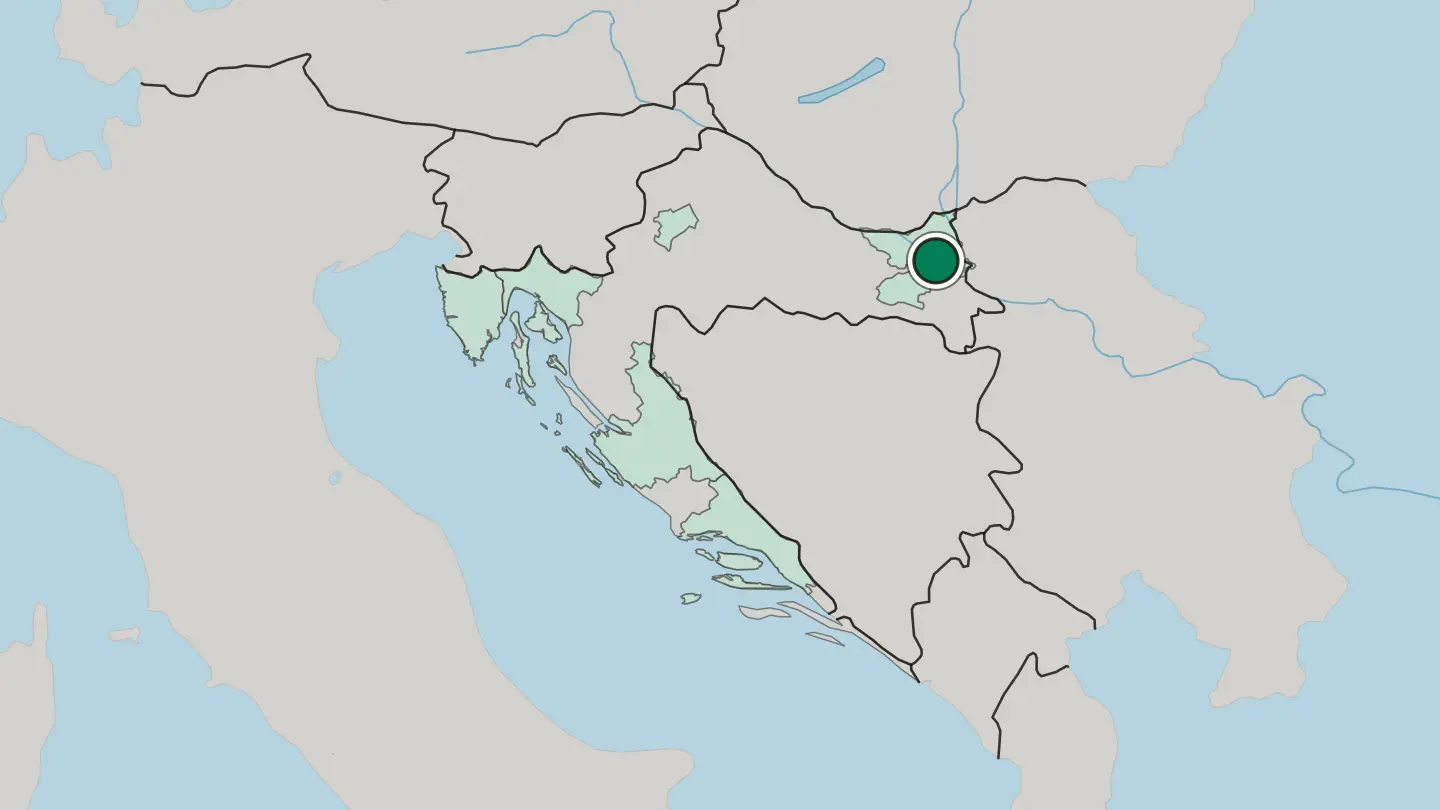
Hotel links are affiliate links: booking through them may earn us a commission, at no extra cost to you. It never affects how places are ranked. How this works
Regions of Croatia
Croatia
City of Zagreb
City of Zagreb is Croatia's capital city-region, an urban county on the Sava river below the Medvednica mountain in the north of the country.Towns & cities →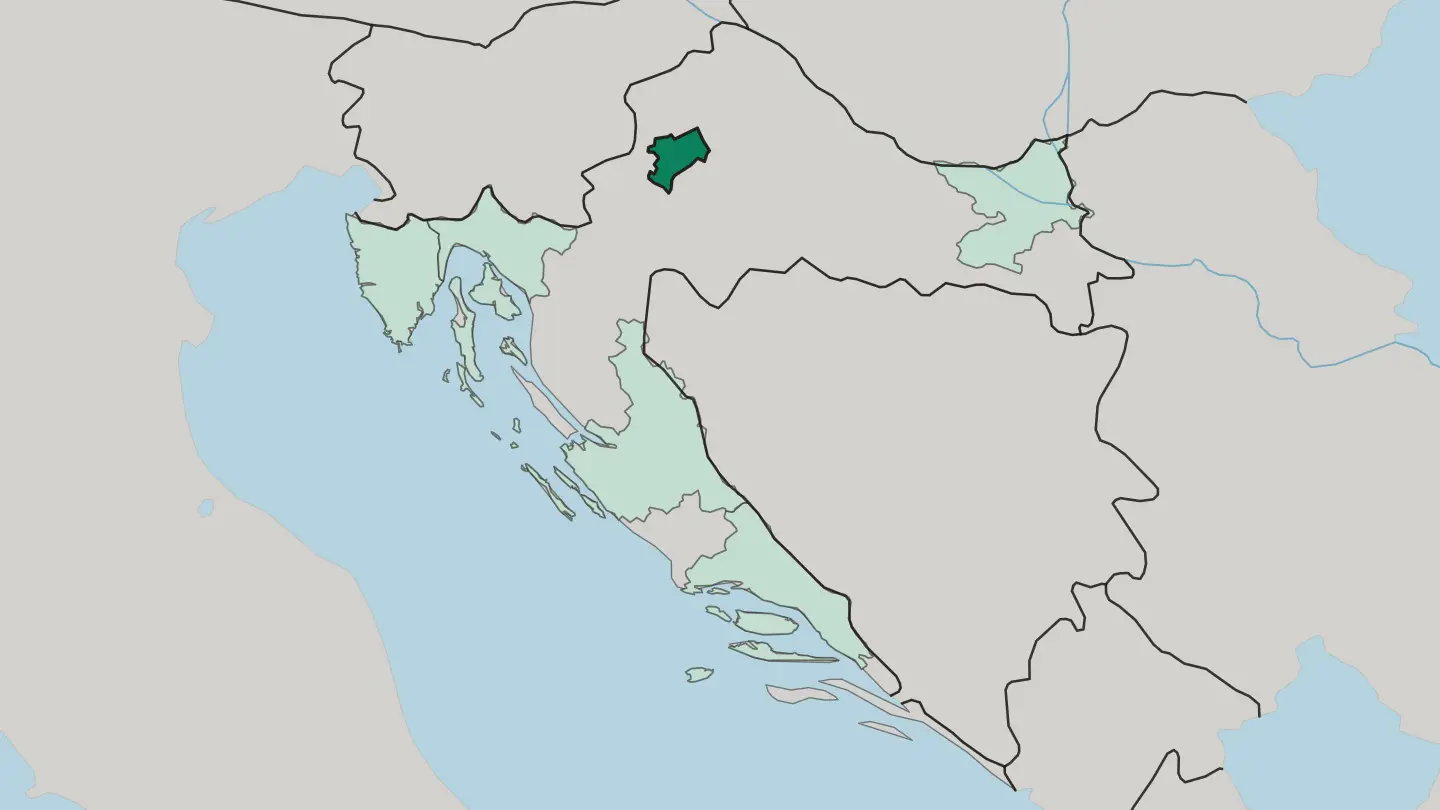 Croatia
Istria County
Istria County covers most of the Istrian peninsula, the westernmost county of Croatia, with the Roman harbour city of Pula as its largest centre.Towns & cities →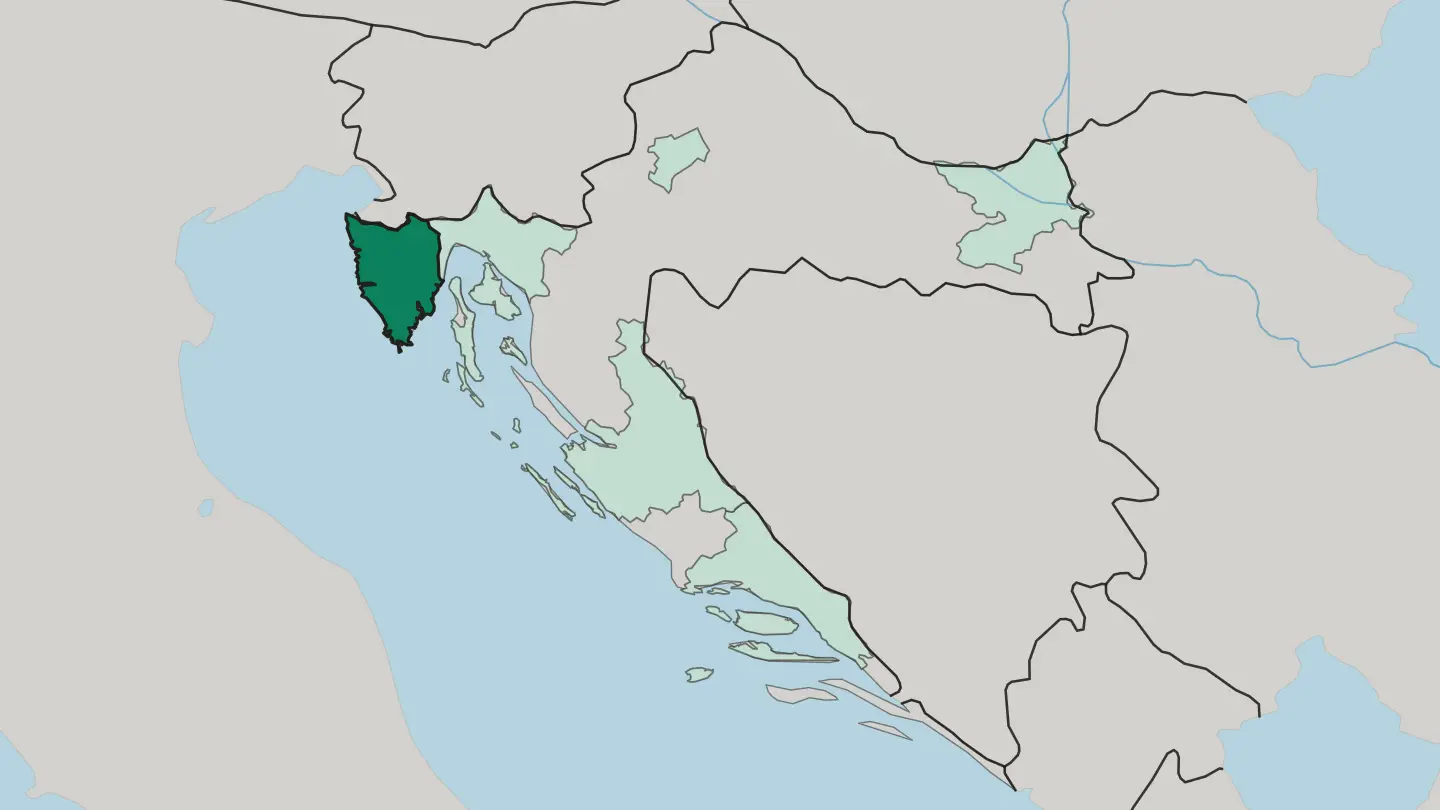 Croatia
Osijek-Baranja County
Osijek-Baranja County spreads across Slavonia and Baranja on the Pannonian Plain, with Osijek at its centre and Đakovo among its towns.Towns & cities →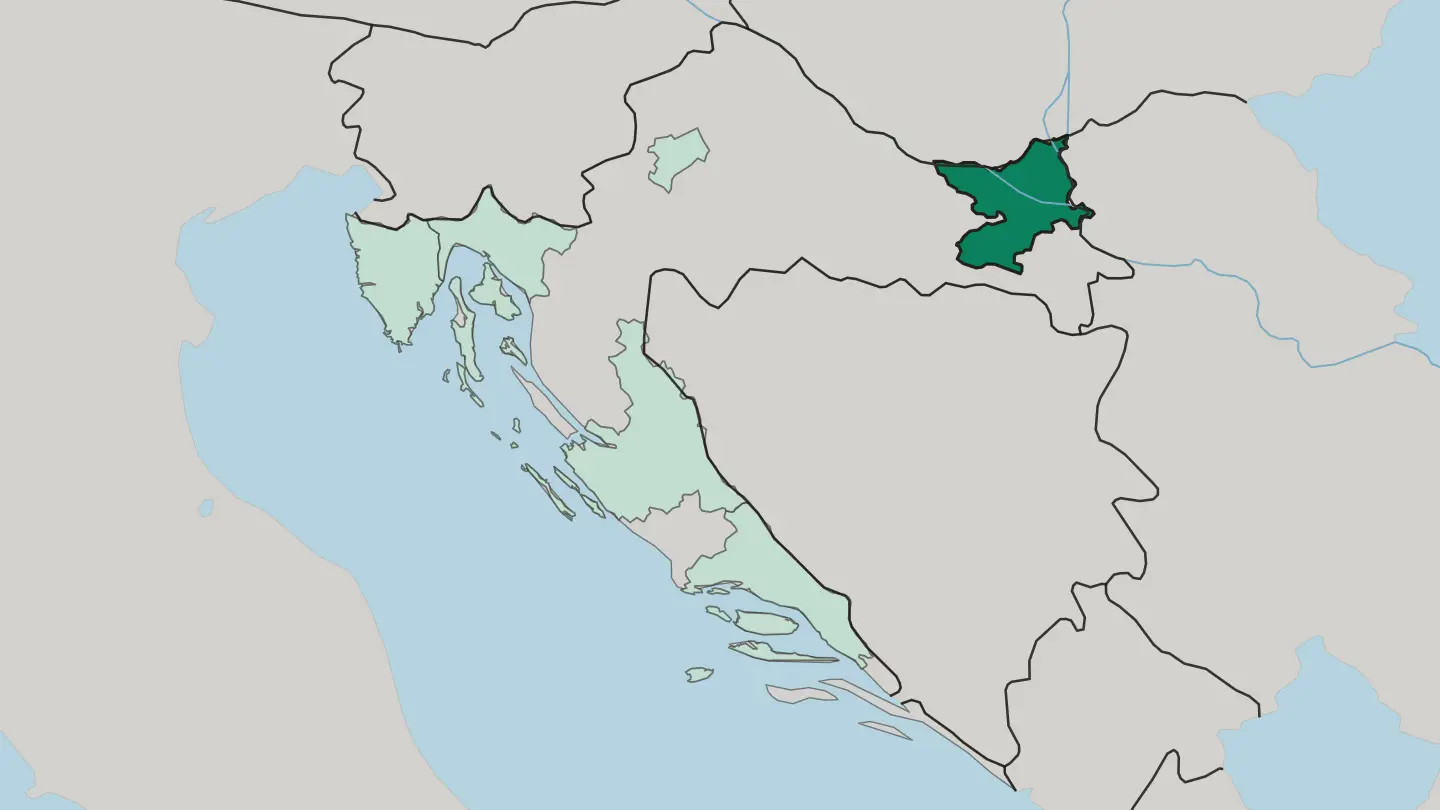 Croatia
Primorje-Gorski Kotar County
Primorje-Gorski Kotar County runs from the Bay of Kvarner up into the mountainous heights of Gorski Kotar, with Rijeka as its centre.Towns & cities →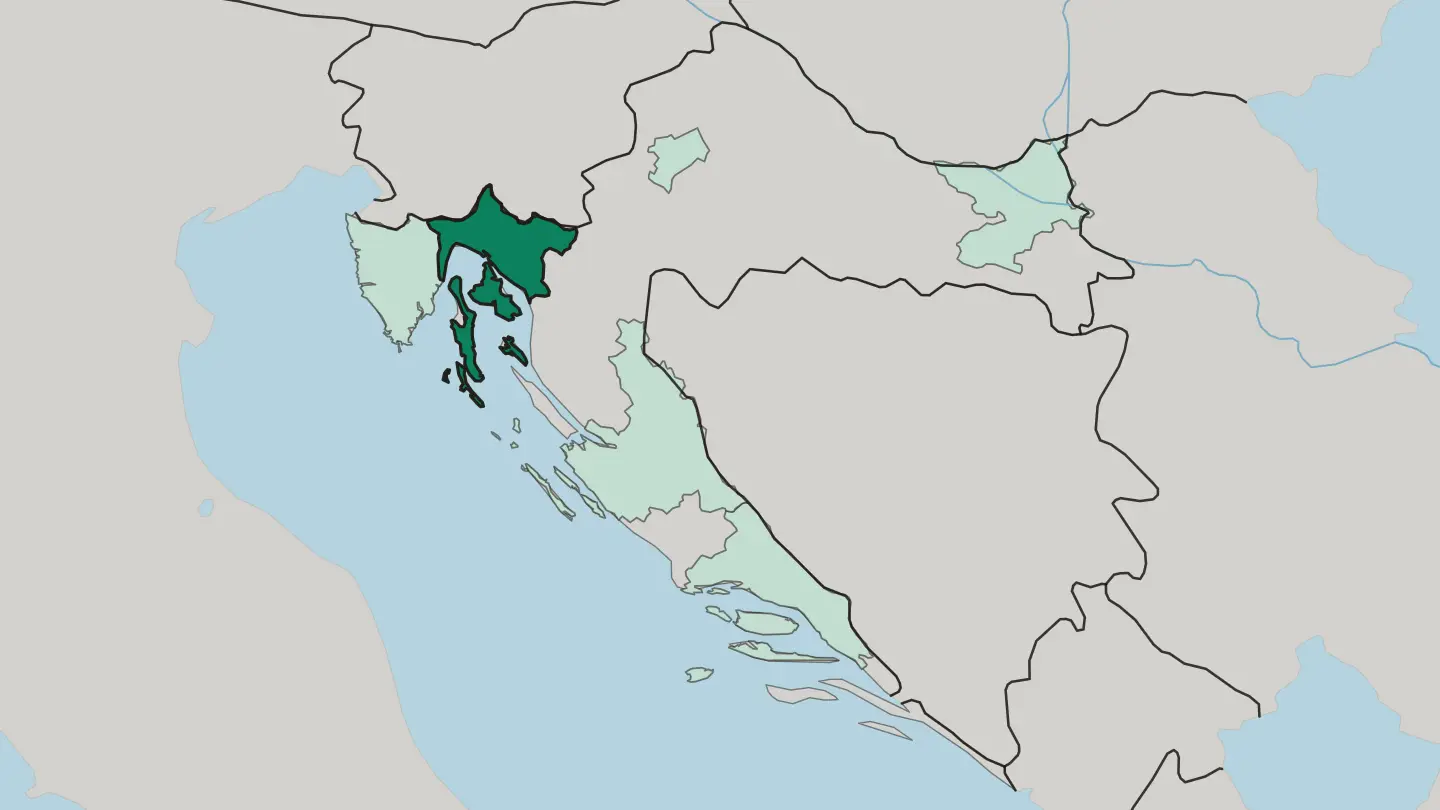 Croatia
Split-Dalmatia County
Split-Dalmatia County is the central Dalmatian county of Croatia, a long stretch of coast and islands centred on the city of Split.Towns & cities →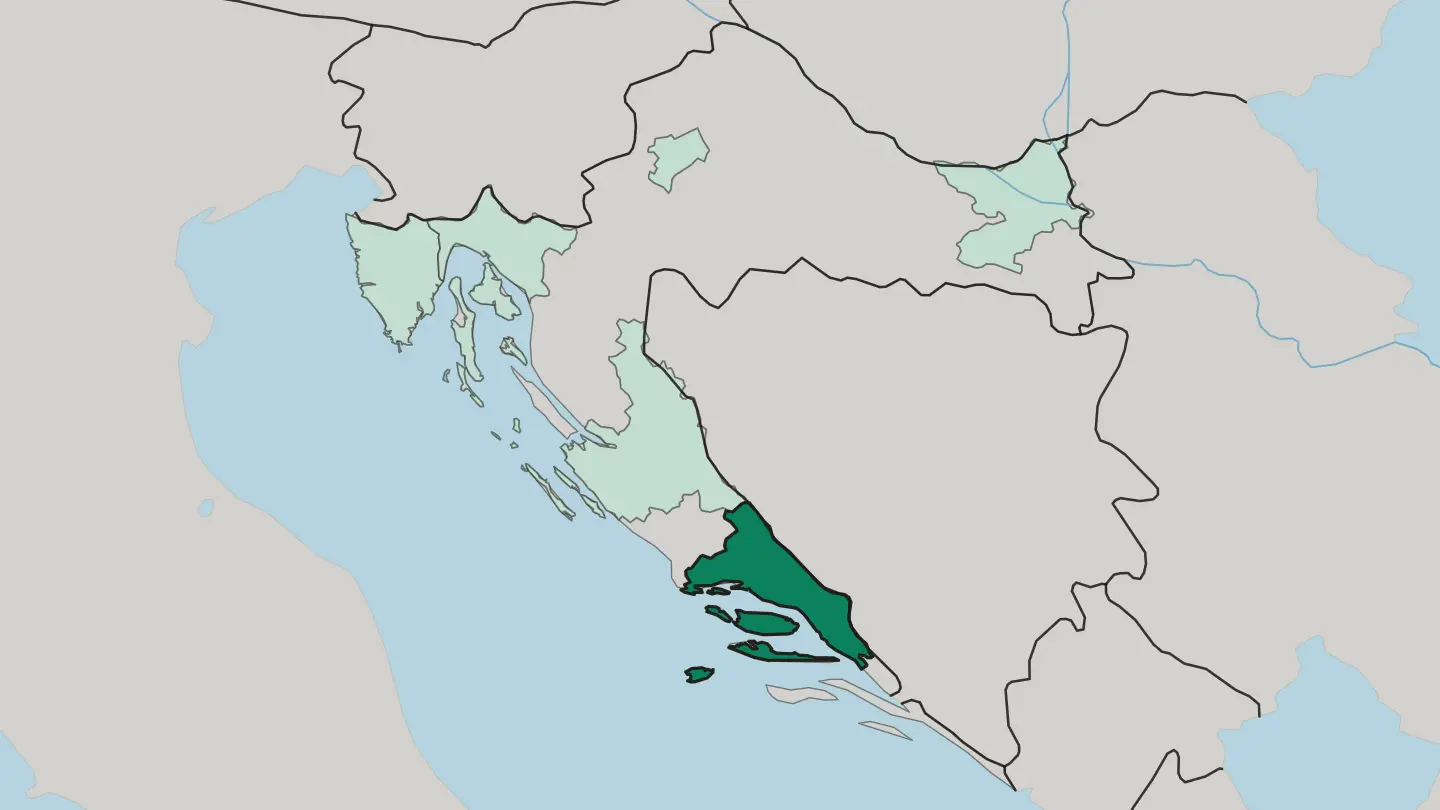 Croatia
Zadar County
Zadar County spans northern Dalmatia and southeastern Lika in Croatia, a region governed from its seat at the old harbour city of Zadar.Towns & cities →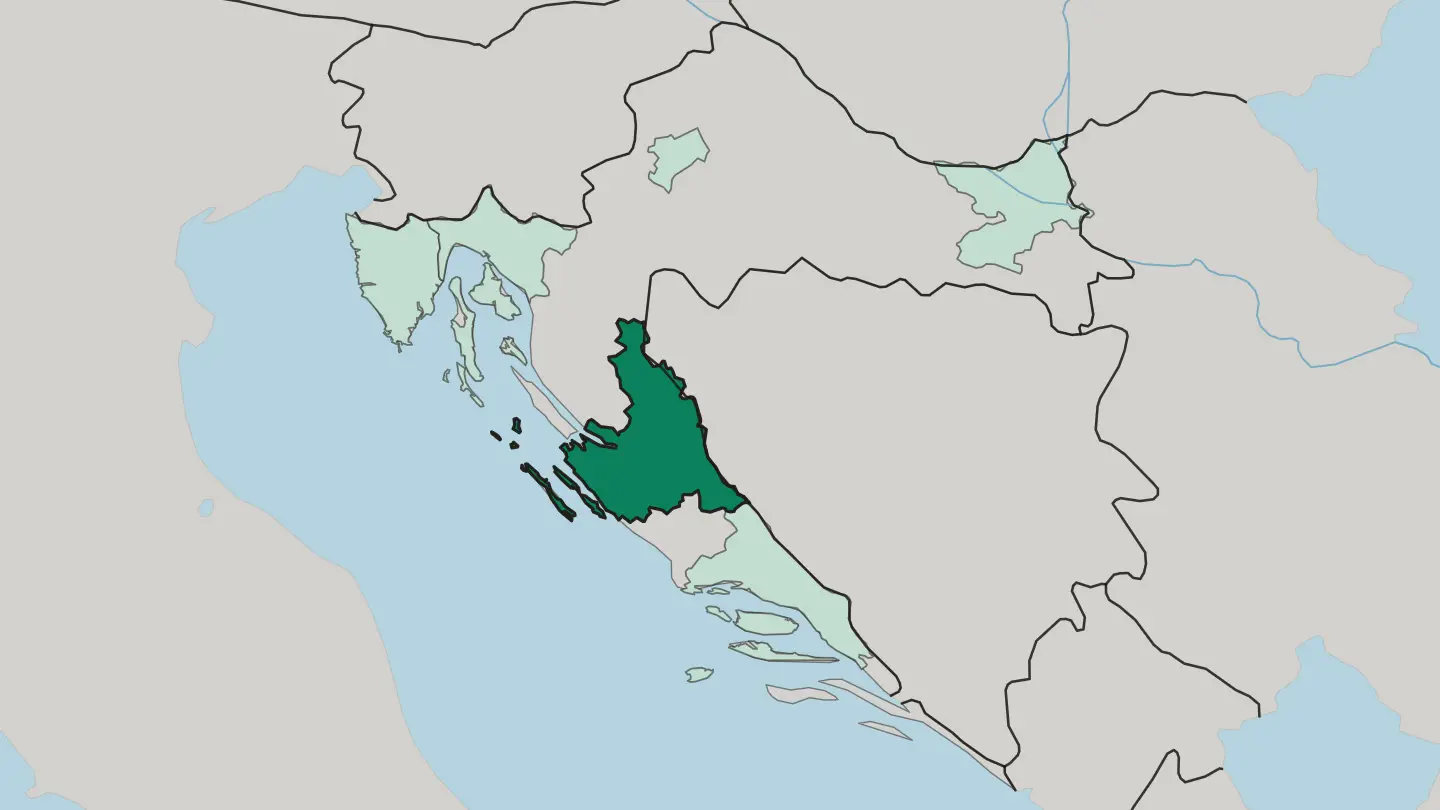
Explore by experience
Not sure which place? Start from how you want to travel.
About Croatia
Croatia is known for its Adriatic coast.
What is Croatia known for?
The long shoreline and its archipelago of more than a thousand islands and islets draw sailors to marinas and to the medieval coastal cities strung along the water. Nautical tourism defines the summer. Inland, the country turns to mountain resorts, spas, and farm stays, while Zagreb anchors its cultural and economic life.
Clean seas and nature reserves round out the appeal.
Where is Croatia?
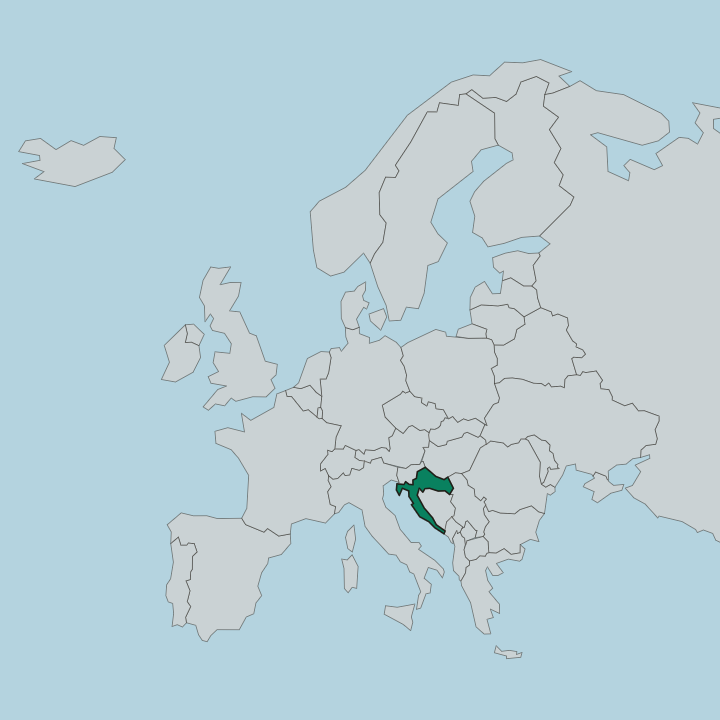
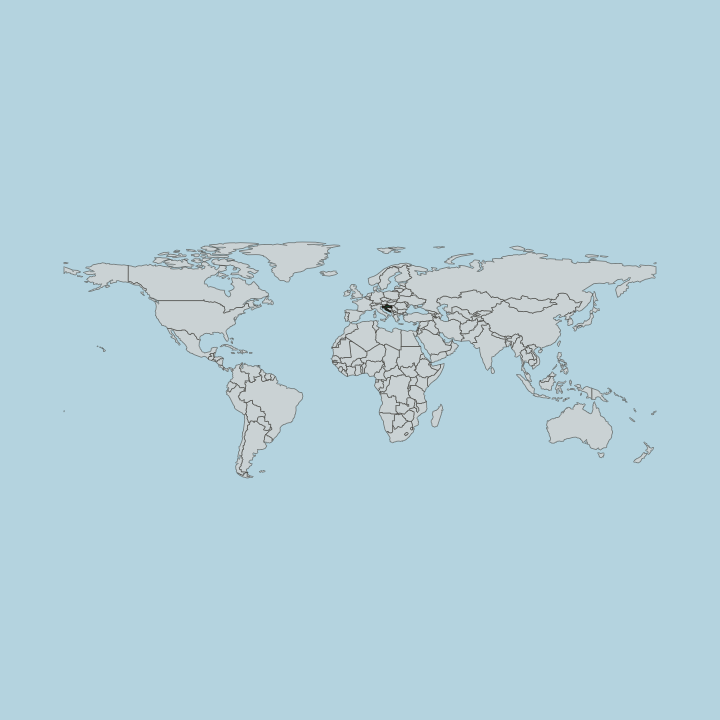
Croatia curves along the eastern shore of the Adriatic Sea in Southeast Europe. The mainland threads between the sea and its neighbours: Slovenia lies to the northwest, Hungary to the northeast, Serbia to the east, and Bosnia and Herzegovina with Montenegro to the southeast, while a maritime border with Italy runs offshore to the west. Its coastline is long and deeply indented.
Deep bays, channels, and headlands break the shore into countless natural harbours and sheltered coves. The Croatian archipelago scatters more than a thousand islands and islets across the water, the largest such group on the Adriatic Sea. Zagreb sits inland at the centre.
Behind the shore the land rises into coastal mountains and high ridges before falling away to the fertile farmland of the interior plains. The country groups its twenty counties into four administrative regions. That structure ties the coast, the capital region, and the eastern plains into a single state.
Rivers drain the north and east toward the Danube basin, a world apart from the saline edge of the Adriatic Sea. Here the Balkans give way to Central Europe.
What is the history of Croatia?
Croatia dates its modern statehood to 1991. Independence in that year established the sovereign republic that groups twenty counties along the Adriatic Sea and across the interior. The republic emerged in Southeast Europe, at the edge of the Balkans.
Its borders took shape among long-standing neighbours: Slovenia, Hungary, Serbia, Bosnia and Herzegovina, Montenegro, and, across the water, Italy. The state is young. The land it governs is not.
Settlement here runs far deeper than the republic itself. The medieval coastal cities strung along the Adriatic Sea grew as trading and seafaring centres long before the modern state, leaving the stone quarters and harbours that still define the shore. Their harbours anchored a seafaring life among the Adriatic islands and channels.
Inland, Zagreb rose to become the cultural and economic centre of the country, drawing the capital region toward the Danube basin and Central Europe rather than the sea. Zagreb has led that inland life for generations. Coast and interior grew apart.
The division into four administrative regions still mirrors that old split between the shore, the capital, and the eastern plains around the Danube.
What is Croatia like?
Croatia sits at a cultural crossroads. It is a Mediterranean country on the Adriatic Sea, yet also part of the Balkans and the edge of Central Europe, and its culture carries all three. The split shows in how the country travels its own land.
Cultural tourism leans on the medieval coastal cities and the festivals that fill their harbours each summer. Nautical tourism follows the marinas and the sheltered channels of the archipelago. Agrotourism belongs to the interior.
Inland the mood turns continental, built around farm country, market towns, and the spa resorts of the plains rather than the sea. The islands keep worlds of their own along the Adriatic Sea. Zagreb gathers the cultural weight of the interior, drawing the capital region toward the Danube basin.
Croatian is spoken across all of it. Coast or plains, the seafaring towns, mountain resorts, and quiet spa towns each keep their own version of the country. Summer is the season that ties it together.
From the coastal festivals to the inland spas, the warm months carry cultural life across the twenty counties of the country.
What is the climate of Croatia?
Croatia has two climates. The Adriatic Sea coast is Mediterranean, with warm, dry summers and mild winters that rarely bite, which is what fills the harbours and beaches through the season. The interior is continental.
Away from the sea, summers stay hot but winters turn cold, with snow reaching the higher ground and the plains toward the Danube basin. Summer is long and dependable on the coast.
How do you get to Croatia?
Croatia is reached from every direction. Most travellers fly into Zagreb or the coastal cities such as Split and Rijeka, then spread out to the Adriatic Sea by road, rail, and boat. Ferries do the rest.
A ferry network ties the mainland ports to the archipelago of over a thousand islands and islets, while marinas serve boats along the whole coast. By land, roads and rail cross in from Slovenia, Hungary, Serbia, Bosnia and Herzegovina, and Montenegro.
Common questions
What is the best area to stay in Croatia?
Zagreb: year-round city breaks. Split and Dalmatia: island-hopping and Roman ruins. Rijeka and Kvarner: sailors and ferry travellers. Osijek and Slavonia: quiet river plains.
Good for
Updated September 2026