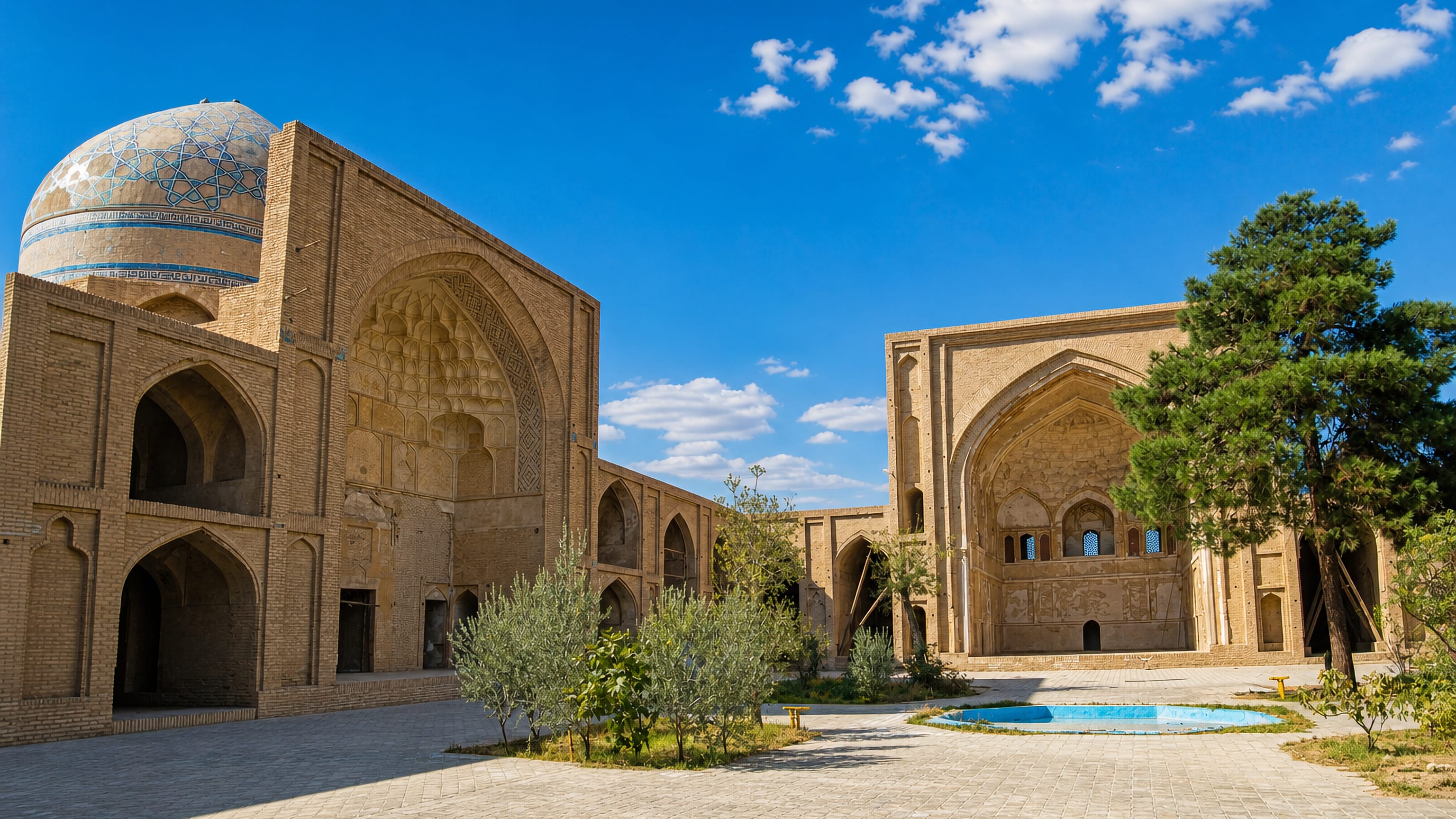
Iran · Markazi Province
Where to Stay in Sāveh, Markazi Province
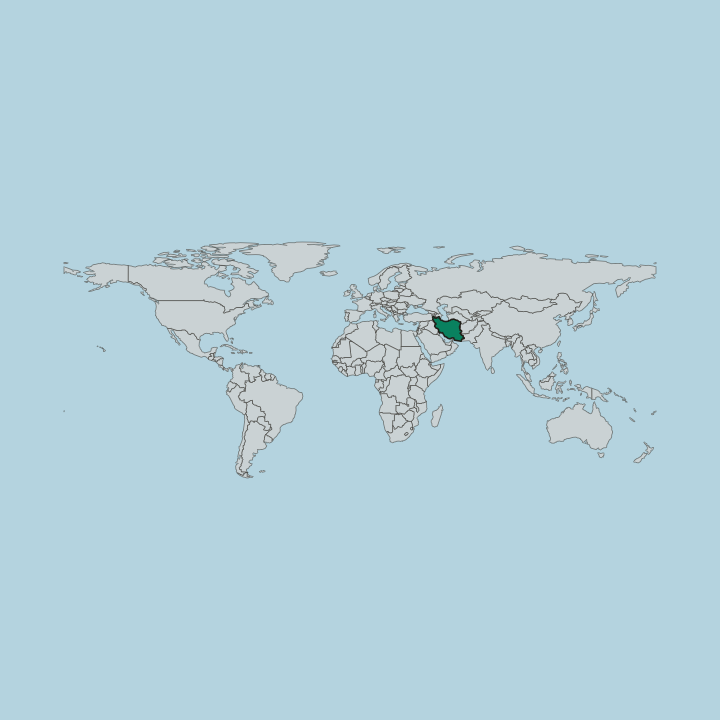
Sāveh lies about 120 km southwest of Tehran, and the Jameh Mosque of Saveh, the Red Mosque and Haji Malek Bazaar hold its old centre.
Find your area →


Where to stay in Sāveh
Where the beds are, and what that means for the visit.
Three pulls divide Sāveh: the market, the mosques, and the shrines. Beds near Haji Malek Bazaar put the covered lines of Saveh Bazaar and the domed crossing of Gonbad-e Chahar Suq within a couple of turns, which is the choice most travellers make when they have one night and want the town at street level. The Saveh Bazaar Mosque stands in the same block.
Trade still sets the hours there. The mosque quarter is quieter. Rooms under the Minaret of Jameh Mosque of Saveh look onto the Jameh Mosque of Saveh itself, with the mound recorded as تپه جنوب مسجد جامع ساوه lying just off the courtyard's southern side.
Pilgrims tend to want the third option instead, taking a room near Imamzadeh Ishaq so that the Tomb of Shahzadeh Yahya, the Tomb of Seyyed Bashir and the Ostad and Shagerd Mausoleum can be reached in one circuit on foot. Water shaped the old plan as much as prayer did, and the Seyyed Ishaq Ab Anbar and the Haj Mirza Hossein Ameli Cistern still mark the corners they were sunk into. If you are stopping on the run down from Tehran, the bazaar side is the easiest to leave from.
Stay by the shrines if the visit is a pilgrimage rather than a night's rest.
Things to do in Sāveh
Ranked by global recognition; descriptions from Wikidata (CC0).
Churches & Religious Sites
3- Jameh Mosque of Saveh Heritage
- Red Mosque (Saveh) Heritage
- Saveh Bazaar Mosque Heritage
Castles & Historic Sites
8- Imamzadeh Ishaq Heritage
- Saveh Bazaar Heritage
- Minaret of Jameh Mosque of Saveh Heritage
- Gonbad-e Chahar Suq (Saveh) Heritage
- Minaret of Red Mosque (Saveh) Heritage
Show 3 more →
- Ostad and Shagerd Mausoleum Heritage
- Seyyed Ishaq Ab Anbar Heritage
- Tepe Asiabad (Saveh) Heritage
Stadiums & Sports
1- Fajr-e Felestin Hall
worth knowingacross 3 categories in Sāveh
About Sāveh
Minarets mark the skyline.
What is Sāveh known for?
The Jameh Mosque of Saveh carries one listed in its own right, the Minaret of Jameh Mosque of Saveh, while the Minaret of Red Mosque rises over a second congregation on the other side of the old town. Trade fills the ground between them. Haji Malek Bazaar and Saveh Bazaar run their lines of shops past the Saveh Bazaar Mosque, and Gonbad-e Chahar Suq marks the domed crossing where the market's four ways meet.
What are the main landmarks in Sāveh?
Brick is the material of record in Sāveh. The Jameh Mosque of Saveh and the Red Mosque each keep a minaret listed as a monument on its own, and the Ostad and Shagerd Mausoleum, the Tomb of Seyyed Bashir and the Tomb of Shahzadeh Yahya stand among the town's older tombs. Water works count too.
The Seyyed Ishaq Ab Anbar, the Haj Mirza Hossein Ameli Cistern and آبانبار عبدل آباد were sunk to hold it, while Tepe Asiabad rises as a mound of earlier settlement and Fajr-e Felestin Hall serves the modern town.
What is the history of Sāveh?
Two mounds hold the earliest part of the story. Tepe Asiabad and تپه جنوب مسجد جامع ساوه are raised ground built up by settlement rather than by geology, and the second of them lies against the Jameh Mosque of Saveh, so the congregation gathering there does so on soil that people had already been piling up for generations. The mosque came later.
Its minaret was listed as a monument in its own right, as was the Minaret of Red Mosque above the town's second congregation, and the pair of them are the tallest things the old town put up. Commerce wrote the next chapter. Haji Malek Bazaar and Saveh Bazaar laid down the covered streets that still carry the market, Gonbad-e Chahar Suq roofed the crossing at their centre, and the Saveh Bazaar Mosque was set among the shops so that trade and prayer shared one address.
Thirst shaped the rest. A town on the dry plain southwest of Tehran had to store its water, and the Seyyed Ishaq Ab Anbar, the Haj Mirza Hossein Ameli Cistern and آبانبار عبدل آباد were dug and vaulted for exactly that. Faith left its own layer over the same ground, in Imamzadeh Ishaq, the Ostad and Shagerd Mausoleum, the Tomb of Seyyed Bashir and the Tomb of Shahzadeh Yahya.
Sāveh now serves as capital of Saveh County and of the Central District inside it, an administrative role that keeps the offices of Markazi province in the same town as the mounds.
Where is Sāveh?
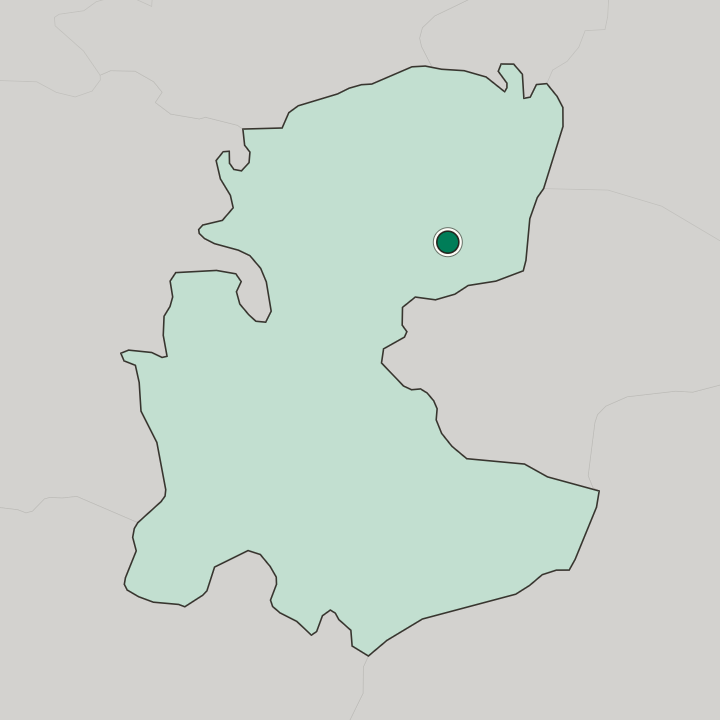
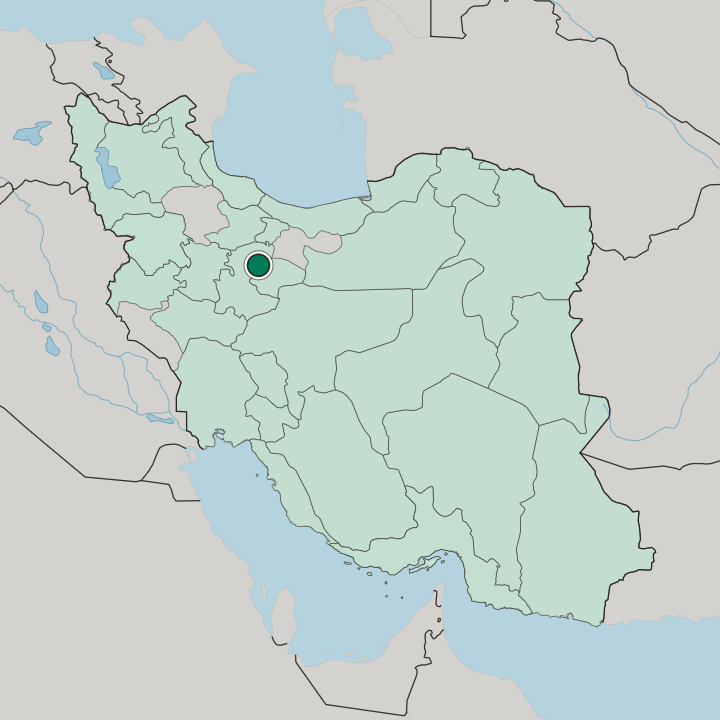
About 120 km of road separate Sāveh from Tehran, which lies to its northeast, and the town holds the middle of the Central District of Saveh County within Markazi province. The plain around it is open. Tepe Asiabad breaks that flat ground as a mound raised by long occupation, and the smaller rise beside the Jameh Mosque of Saveh does the same on a shorter scale. Iran's interior stretches on from there.
What is the climate of Sāveh?
The cisterns explain the year better than any table could. Seyyed Ishaq Ab Anbar, Haj Mirza Hossein Ameli Cistern and آبانبار عبدل آباد were vaulted underground because Sāveh's warm half of the year runs long and dry, and a town in this temperate inland band had to carry winter water through to the far side of summer. Rain keeps to the cold months.
Shade in Haji Malek Bazaar does the same job for people that the vaults do for water.
How do you get to Sāveh?
Most arrivals come down from Tehran, roughly 120 km to the northeast, which makes Sāveh an easy half-day out of the capital and a common first stop for anyone working south into Markazi province. The road is the usual way in. Saveh County spreads around the town, so its villages feed into the same approaches, and the county capital is where they end.
Fajr-e Felestin Hall sits on that side of the modern town.
Good for
More cities in Markazi Province
Updated September 2026