Iceland · Vesturland
Where to Stay in Borgarnes, Vesturland
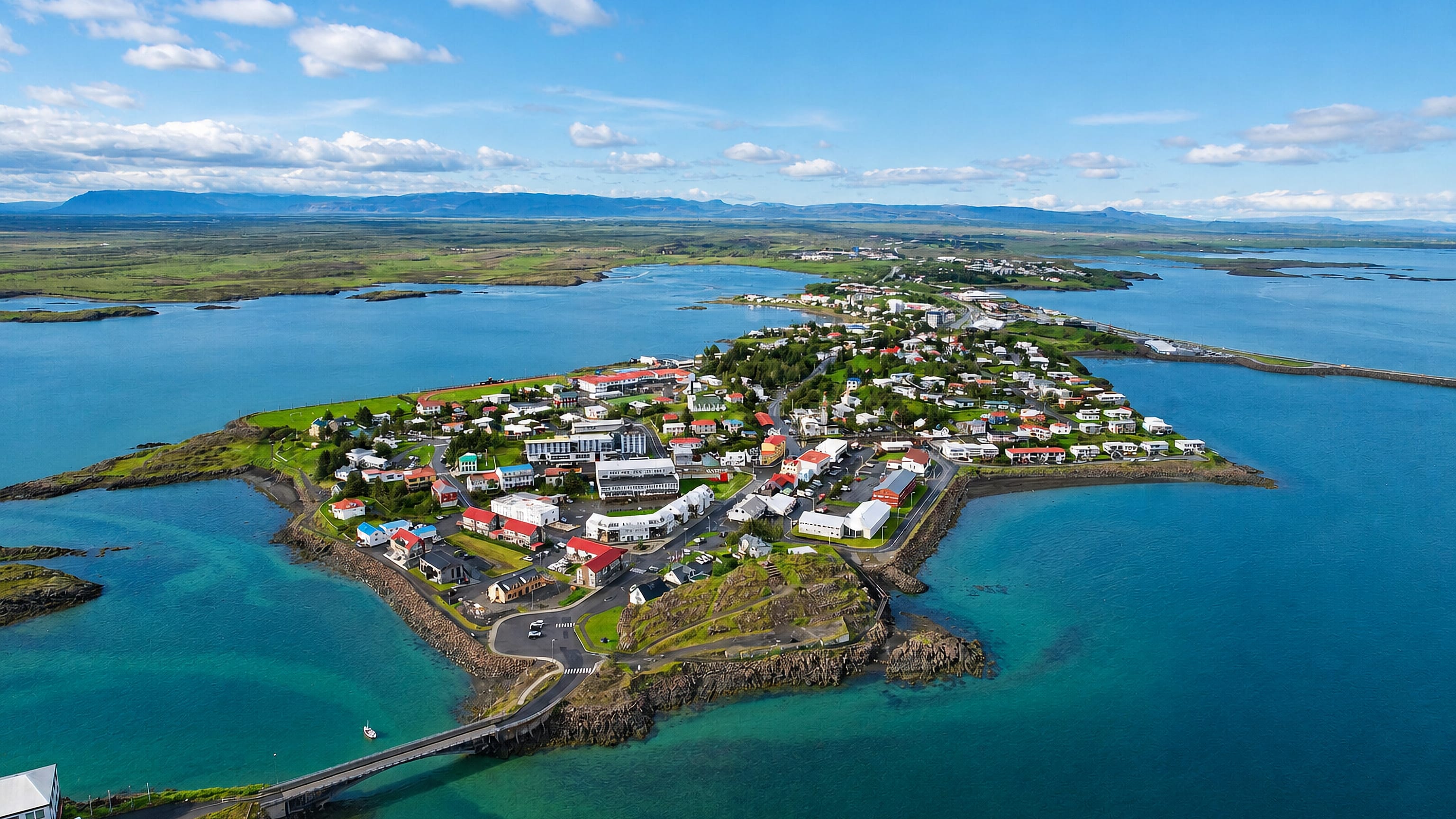
Borgarnes is a town in western Iceland, set on a low headland in the north-eastern part of Vesturland.
Hotel links are affiliate links: booking through them may earn us a commission, at no extra cost to you. It never affects how places are ranked. How this works


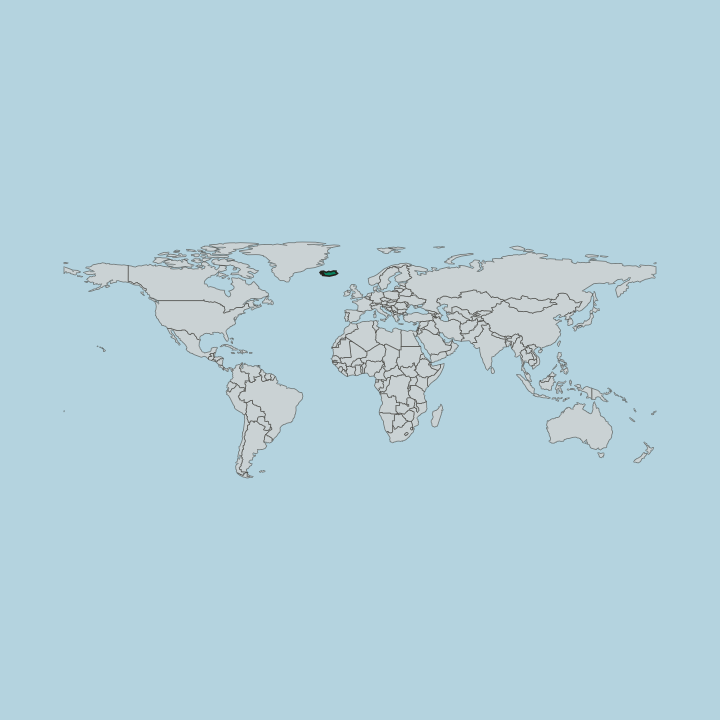
Where to stay in Borgarnes
Where the beds are, and what that means for the visit.
Most beds in Borgarnes sit along the spit that carries the town out into the fjord, where guesthouses and small hotels stand within walking distance of the shops, the swimming pool, and the water on either side. The headland centre suits travellers who want a quiet road-trip base in the north-eastern part of Vesturland, well placed for the drives north and west across the Western Region and back south toward the capital. It serves road-trippers well.
Rooms are limited in this small town, and lodgings fill fast across the warmer weeks when visitors cross western Iceland by car. Out along the surrounding farms the country opens wide. Quiet guesthouses and farm-stays lie among the fields of the Western Region, several near Hvanneyri and its church Hvanneyrarkirkja, looking across pasture toward the mountains inland.
Secure a room early in the summer season. Travellers wanting more choice often base in Borgarnes for a night, then drive on to the wider farming valleys and the coast that the town opens onto.
Find hotels in Borgarnes
Direct booking searches for these neighbourhoods.
The spit and town centre
The centre runs along the narrow spit of Borgarnes, putting the shops, the pool, and the water on either side within one short walk. Rooms are few around here — worth securing early.Find hotels in The spit and town centrea quiet farm-stay near the church Hvanneyrarkirkja in the fields of VesturlandHvanneyri farmland
Guesthouses among the farms near Hvanneyri sit beside the old church Hvanneyrarkirkja, looking across pasture toward the inland mountains. Few places to stay nearby — book ahead.Find hotels in Hvanneyri farmlanddrivers touring the farming valleys that fan out from the townThe wider Western Region
Farm lodgings scattered across the Western Region put travellers within easy reach of the valleys and coast that Borgarnes opens onto.Find hotels in The wider Western RegionHotel links are affiliate links: booking through them may earn us a commission, at no extra cost to you. It never affects how places are ranked. How this works
About Borgarnes
Borgarnes anchors the inland farming country of Vesturland.
What is Borgarnes known for?
The town stands on a narrow spit reaching into the fjord, a road junction and service centre where travellers heading north and west across western Iceland pause for fuel, food, and a night's rest before the long open roads ahead. It serves the whole district. Around it lie the green farms of the Western Region, among them Hvanneyri with its church Hvanneyrarkirkja, while the town itself gathers the shops, school, and pool that hold a scattered rural community together.
What are the main landmarks in Borgarnes?
The long causeway and bridge carry the road out to the spit of Borgarnes across the fjord. A church stands inland. At Hvanneyri, in the farmland of the Western Region, the timber church Hvanneyrarkirkja marks one of the old farming settlements that ring the town, its tower rising above the fields, while the headland itself draws the shops, the pool, and the everyday life of Vesturland toward the water on either side of the narrow town.
What is the history of Borgarnes?
Borgarnes grew where the road first reached the fjord. The spit had long been a landing and a meeting point for the farms inland, a place where people from across the north-eastern part of Vesturland brought goods to the water before any town stood on the headland at all. Farms stood here long before the town.
The land around fed sheep, cattle, and hay through the early centuries of settlement. A trading and service town slowly took shape on the spit as roads and a harbour drew the surrounding district together. Borgarnes became the hub of the Western Region, the place where farmers from valleys such as the country around Hvanneyri came to trade, and where the church Hvanneyrarkirkja still marks an older farming settlement nearby.
The road tied it all together. As bridges and a causeway crossed the fjord, the town settled into its lasting role as the service centre of Vesturland, gathering the shops, schools, and offices of a wide rural region onto one narrow headland.
Where is Borgarnes?
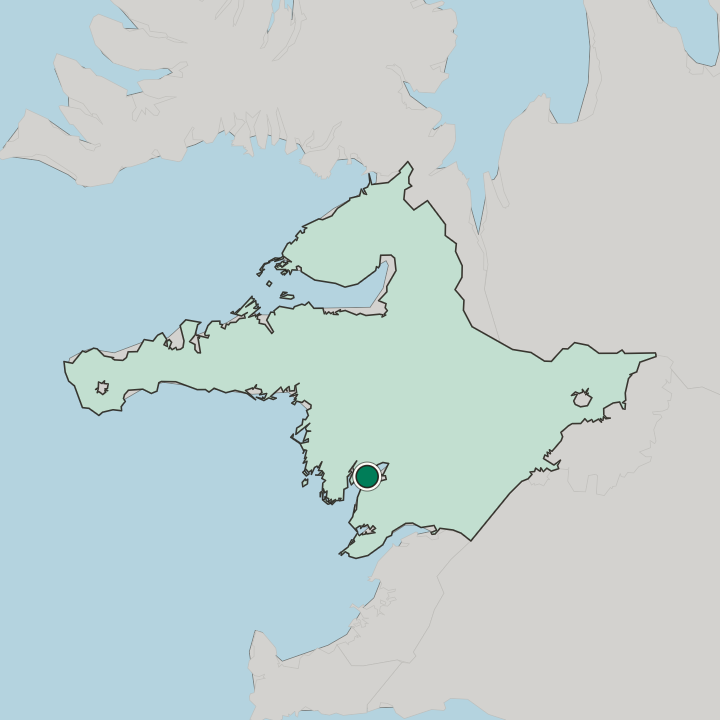
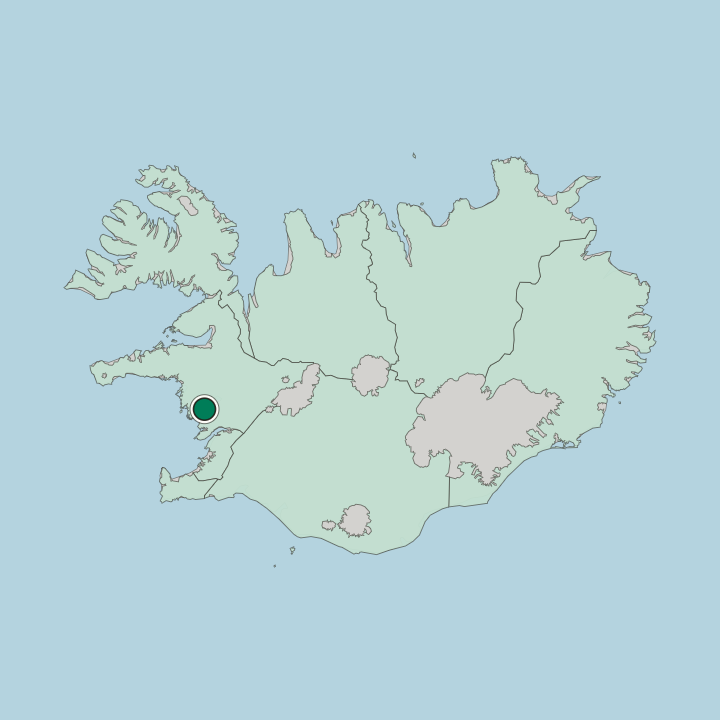
Borgarnes lies on a low spit reaching into a fjord in the north-eastern part of Vesturland, in western Iceland. The town spreads along the narrow headland with water on either side, the farming country of the Western Region rolling inland to the east and the open coast falling away to the west beyond the fjord. Mountains rise behind it.
Green valleys such as the country around Hvanneyri stretch up into the highlands of the region, while the spit itself holds the town close to the tide on its sheltered inland shore.
What is the climate of Borgarnes?
Borgarnes has a cool maritime climate softened by its sheltered fjord setting. Winters are changeable rather than bitter, with spells of rain, wind, and snow rolling in off the North Atlantic across the farms of Vesturland and the low headland on which the town sits. Summers stay cool and green.
The long northern daylight stretches the evenings late around midsummer, the mildest weeks for walking the spit and driving the farming valleys of the Western Region inland. Wind off the fjord is a constant here.
How do you get to Borgarnes?
Borgarnes sits on the main road north from the capital, easily reached by car. The route crosses the fjord on a long causeway and bridge onto the spit, and most buses heading north and west across western Iceland call at the town along the way. A road still skirts the water.
The nearest airport lies south near the capital, so most visitors arrive by car or bus, the drive carrying them up through the farms of the Western Region to the service town of Vesturland on its headland.
Common questions
What is the best area to stay in Borgarnes?
The spit and town centre: a walkable base on the headland between the two arms of the fjord. Hvanneyri farmland: a quiet farm-stay near the church Hvanneyrarkirkja in the fields of Vesturland. The wider Western Region: drivers touring the farming valleys that fan out from the town.
Good for
Another city in Vesturland
Updated September 2026