
Jamaica: Regions, Cities & Travel Guide
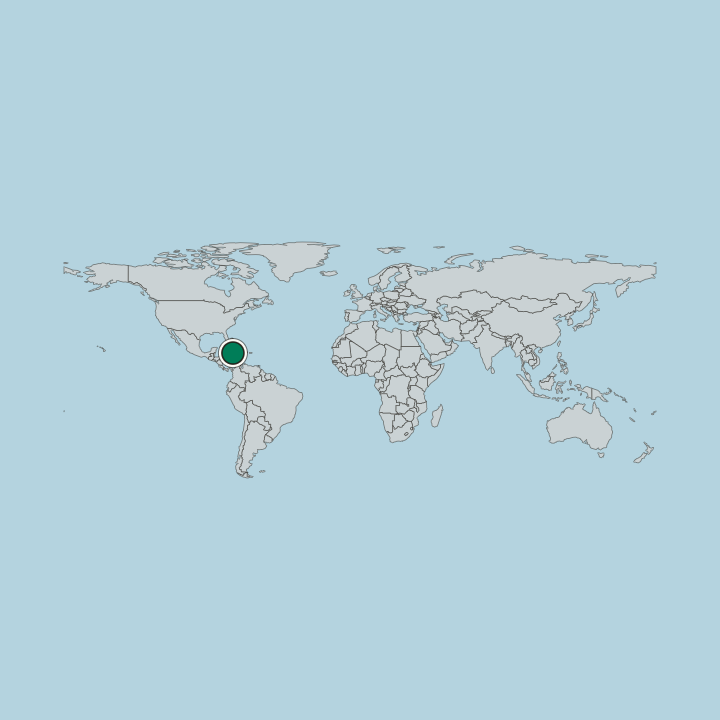
Jamaica is an island country in the Caribbean, south of Cuba, its Blue Mountains rising behind the capital, Kingston.
Hotel links are affiliate links: booking through them may earn us a commission, at no extra cost to you. It never affects how places are ranked. How this works


Top destinations in Jamaica
Cities to start from, then drill into areas and hotels.

 Jamaica
Kingston
Kingston is the largest city of Jamaica, founded in 1692, known for the National Gallery of Jamaica and the old brick of Hibbert House.Where to stay →
 Jamaica
Montego Bay
Montego Bay, or MoBay, is the capital of the parish of Saint James and the second-largest anglophone city in the Caribbean after Kingston.Where to stay →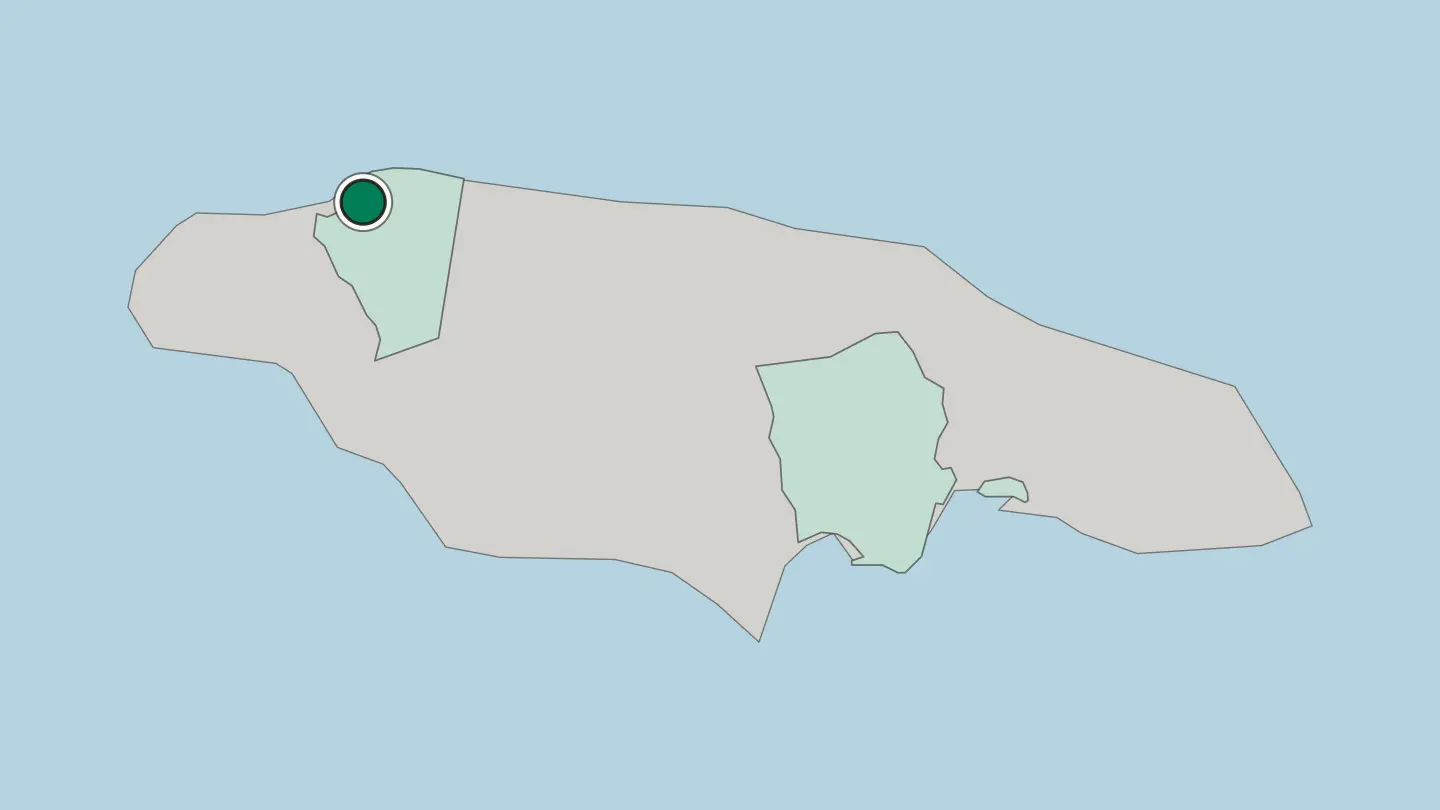
 Jamaica
Spanish Town
Spanish Town is a city of south Jamaica by Kingston, the island's capital for 300 years, of Georgian squares and one of the Caribbean's oldest cathedrals.Where to stay →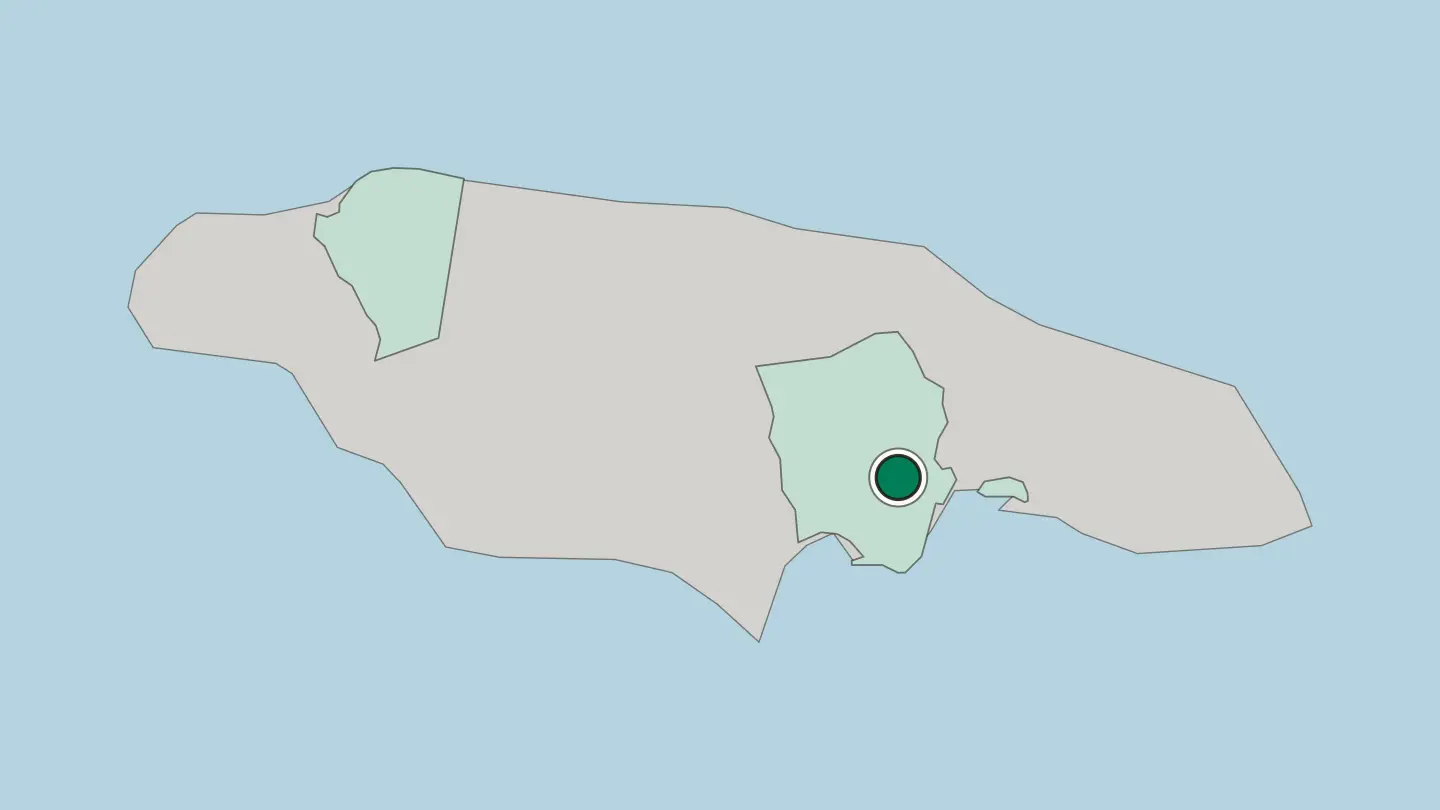
Hotel links are affiliate links: booking through them may earn us a commission, at no extra cost to you. It never affects how places are ranked. How this works
Regions of Jamaica
Jamaica
Kingston
Kingston Parish is the compact urban parish of Jamaica that holds the city of Kingston, the smallest and most built-up division of the island.Towns & cities →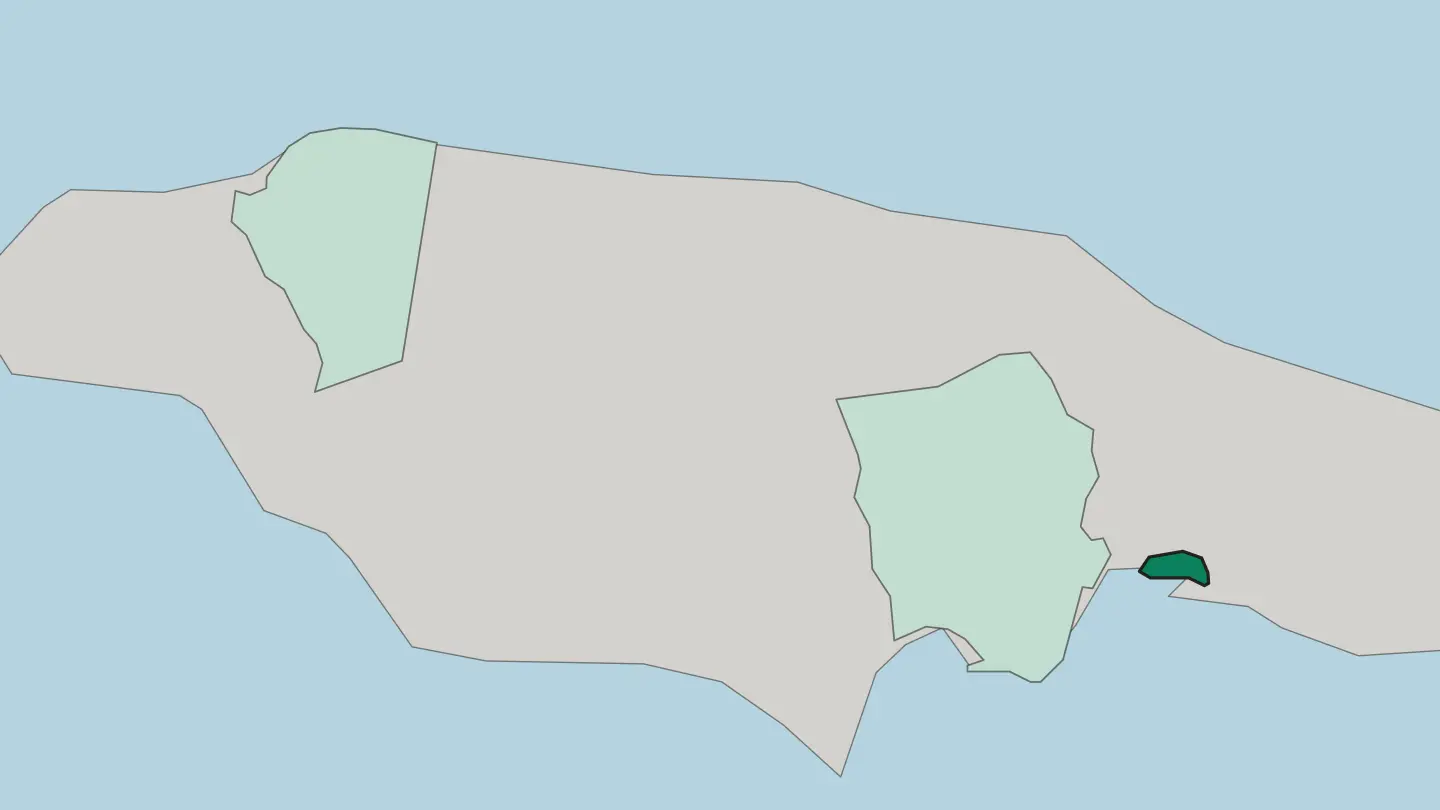 Jamaica
Saint Catherine
Saint Catherine is a parish of Jamaica in the county of Middlesex, and it holds Spanish Town, the island's first capital.Towns & cities →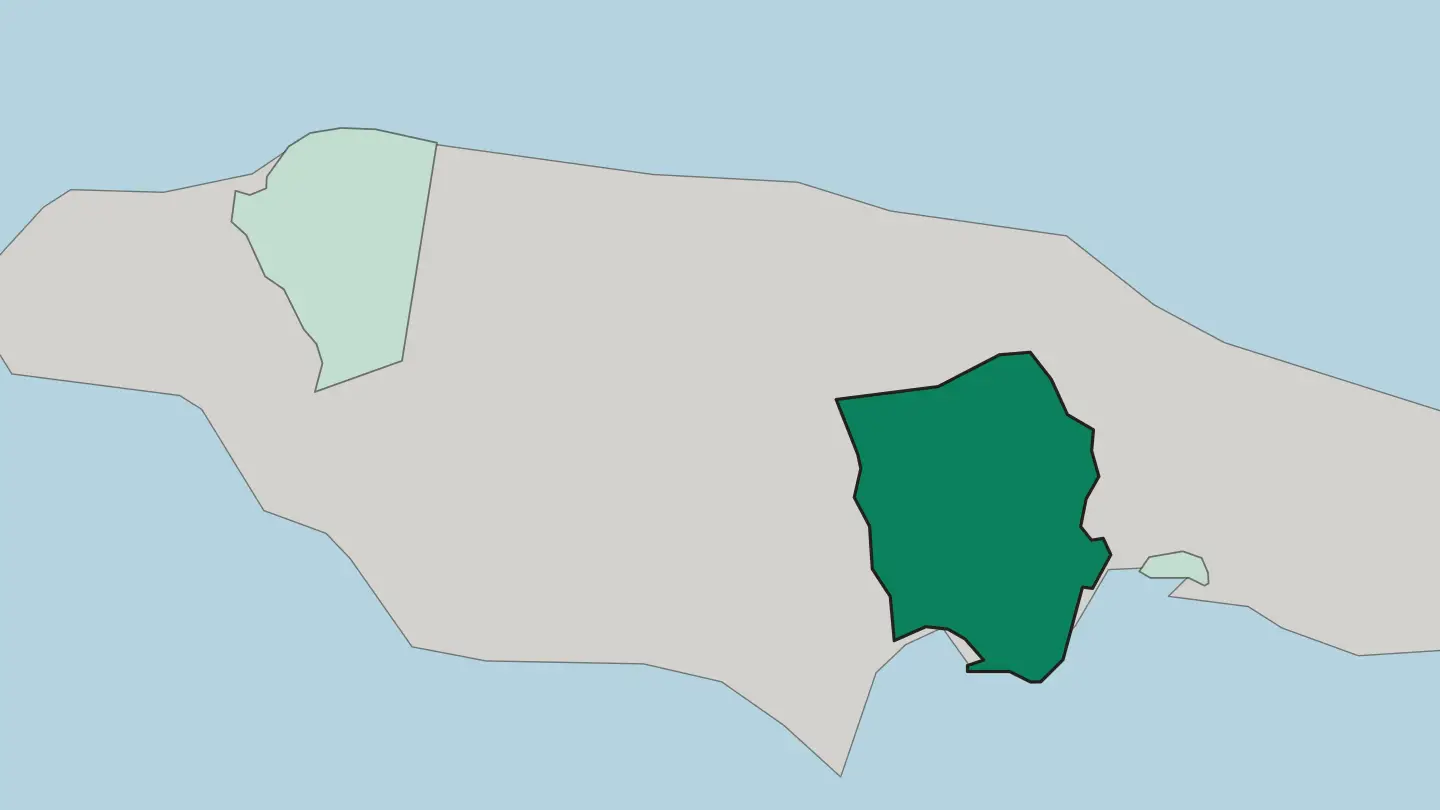 Jamaica
Saint James
Montego Bay is the capital of Saint James, a suburban parish of Jamaica in the county of Cornwall, on the island's north-west end.Towns & cities →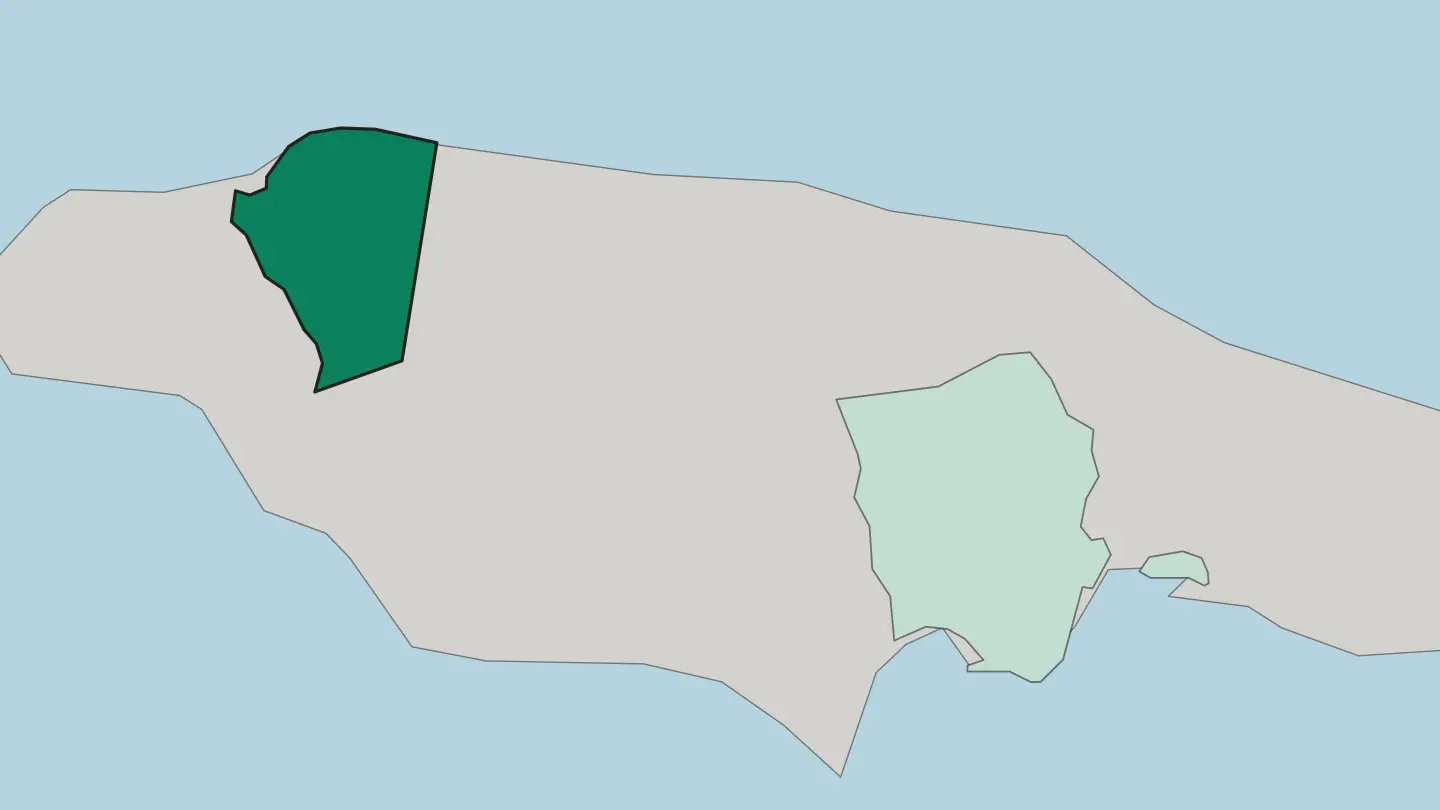
About Jamaica
Jamaica gave the world reggae.
What is Jamaica known for?
Kingston, the capital, is where the sound of Bob Marley and the Wailers took shape before it travelled everywhere, and the city still runs on music. The north coast draws most visitors, from the resorts of Montego Bay and the waterfalls at Ocho Rios to the long sand at Negril. Inland, the Blue Mountains climb to Blue Mountain Peak, whose slopes grow one of the most sought-after coffees anywhere.
Jerk smoke, patois, and Rastafari colour daily life.
Where is Jamaica?
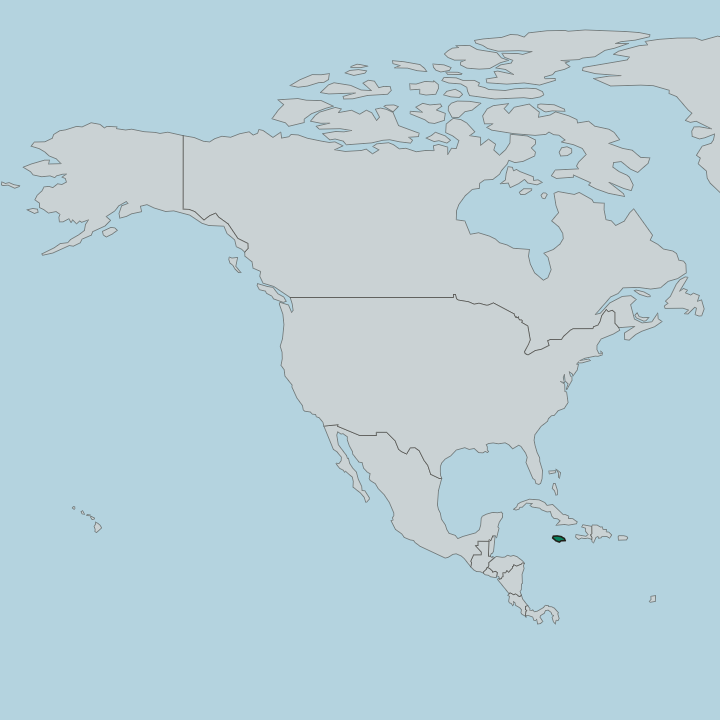
Jamaica is the third-largest island in the Greater Antilles, lying south of Cuba and west of Hispaniola. Its shape is broadly east-west, a spine of limestone hills and mountains running down the middle with narrow coastal plains on either side. The land tilts up as you move inland.
In the east the Blue Mountains climb steeply to Blue Mountain Peak, the highest point on the island, and beyond them the John Crow Mountains fall away toward the wet eastern coast around Port Antonio. Much of the interior is soft limestone, weathered into the strange sinkholes and conical hummocks of the Cockpit Country in the north-west, where rivers vanish underground and resurface miles away. Rivers do the rest of Jamaica's shaping.
The Rio Minho, the island's longest river, drains the southern parish of Clarendon before reaching the Caribbean near Carlisle Bay. The Black River, the longest that boats can travel, winds through St. Elizabeth in the south-west past wide morass and mangrove before reaching the sea. Shorter rivers like the Rio Cobre and the White River drain the highlands, and the Rio Grande carries rafts down from the John Crow slopes near Port Antonio.
The north coast, where Montego Bay, Ocho Rios, and Negril sit, is the tourist face of the island, edged by reef and white sand. The drier south, around Kingston and its great natural harbour, is flatter and more worked. From reef to summit, the distances are short but the changes are sharp.
What is the history of Jamaica?
The Taíno were here first. They called the island Xaymaca, land of wood and water, and lived along the coasts and rivers until Christopher Columbus reached the island in 1494 and Spain claimed it. Spanish rule brought disease and forced labour that all but destroyed the Taíno within a century, and the colony stayed a quiet backwater until England seized it in 1655.
What followed was a brutal transformation. The English turned Jamaica into one of the richest sugar colonies in the world, worked by hundreds of thousands of enslaved Africans shipped across the Atlantic, and Kingston grew into a major port on the trade. Resistance never stopped.
Escaped Africans built free communities, the Maroons, in the mountains and the Cockpit Country, and fought the British to a standstill until treaties recognised their self-rule. Slavery was abolished across the empire in 1834, and the freed population reshaped the island's villages, churches, and land. Jamaica remained a British colony for over a century more.
It won full independence in 1962, keeping the British monarch as head of state while charting its own course. That long chain runs from the Taíno through slavery and rebellion to a sovereign nation whose culture reaches far past its shores.
What is Jamaica like?
Jamaica's culture carries far beyond its size. Music is the engine: ska and rocksteady gave way to reggae in the studios of Kingston in the late 1960s, and reggae in turn spun off dancehall, a sound that now shapes pop worldwide. Bob Marley made the island's message of struggle and unity global, and his voice still stands for Jamaica abroad.
Faith and language run alongside the beat. Rastafari took root here in the 1930s, and Patois, a creole braided from English, West African, and other tongues, is the everyday speech of the street even where standard English is official. Food is its own language of place.
Jerk, meat rubbed with pimento and Scotch bonnet and smoked slow over pimento wood, is the national signature, joined by ackee and saltfish, curried goat, and rice and peas. The kitchen, like the population, is mostly African in root with Spanish, British, Indian, and Chinese threads worked through it. Craft, dub poetry, and a fierce sprinting tradition round out the picture.
Above the coffee-growing Blue Mountains and down in the Kingston studios, the island punches far over its weight. Its influence is out of all proportion to its map.
What is the climate of Jamaica?
Jamaica is tropical and warm year-round. The coasts stay hot and humid, cooled by sea breezes, while the Blue Mountains behind Kingston are markedly cooler and mist-wrapped near the peaks. Rain falls in two wetter spells.
The first comes around May, the second from September into November, with drier and brighter weather stretching from December through April. The island also sits in the hurricane belt, and the late-summer and autumn months carry the real risk of tropical storms. Elevation, not season, changes the air here.
How do you get to Jamaica?
Most visitors fly into Montego Bay. Sangster International Airport on the north-west coast is the island's busiest gateway and the closest to the big resort towns, so travellers bound for Ocho Rios or Negril usually land there. Business and Kingston-bound arrivals more often use Norman Manley International near the capital, on the south coast.
From either airport it is road onward, and cross-island drives take longer than the short map distances suggest. Pick the airport nearest your base.
Good for
Updated September 2026