
Cambodia
Phnom Penh, Cambodia — Towns & Travel Guide
Phnom Penh is the capital region of Cambodia, a compact riverside territory wrapped around the confluence of the Mekong and the Tonlé Sap.
Hotel links are affiliate links: booking through them may earn us a commission, at no extra cost to you. It never affects how places are ranked. How this works


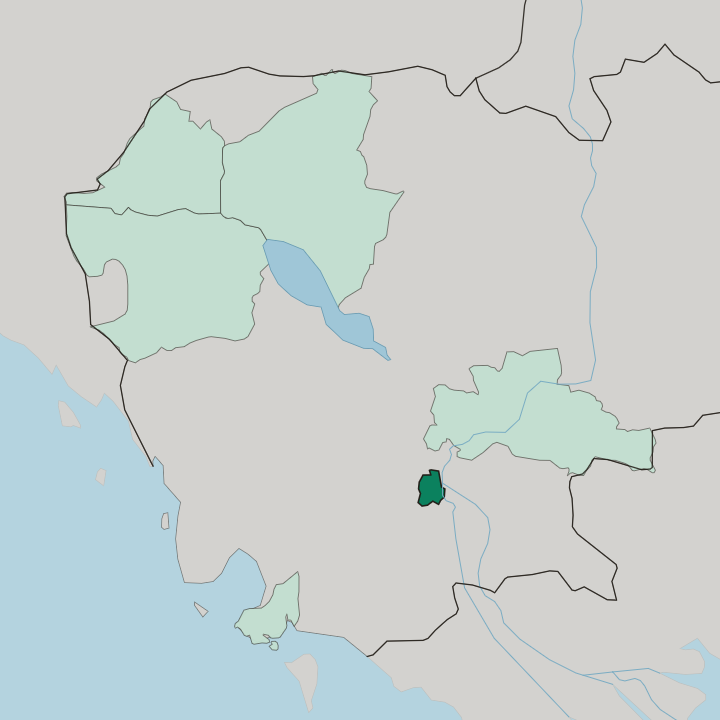
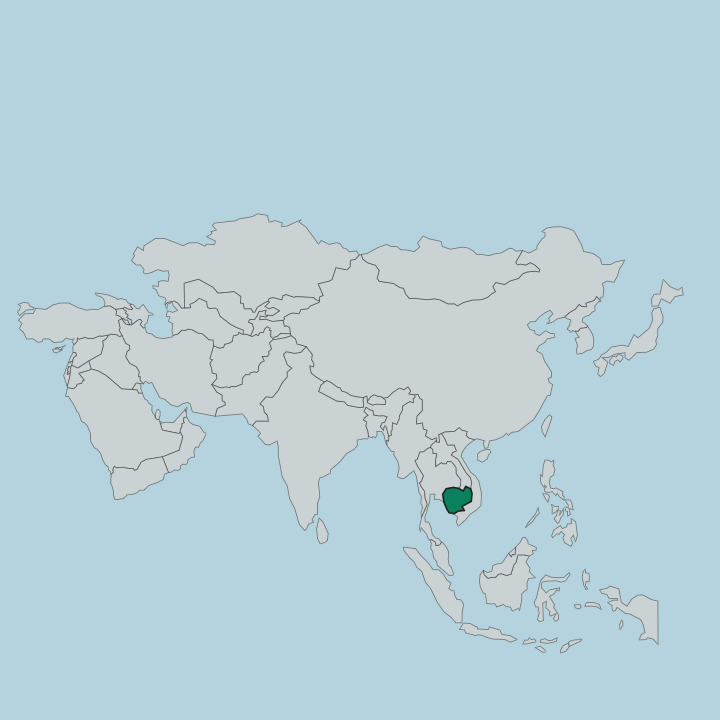
Towns & cities in Phnom Penh
One town here has its own guide — it links to where to stay.
 Cambodia
Phnom Penh
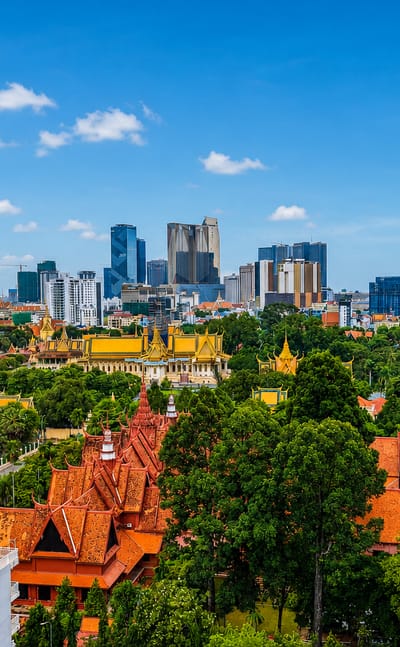
Phnom Penh rises where the Mekong meets the Tonlé Sap in Cambodia, the capital city known for Wat Phnom and the Royal Palace.Where to stay →
Hotel links are affiliate links: booking through them may earn us a commission, at no extra cost to you. It never affects how places are ranked. How this works
About Phnom Penh
What is Phnom Penh known for?
Phnom Penh is known as the capital region of Cambodia, a single-city territory built entirely around its hub. The whole region gathers around the point where the Mekong and the Tonlé Sap join and the Bassac River branches away. It is the seat of the nation.
The government, the monarchy, and the country's main institutions sit within this compact riverside unit, making it the political and cultural centre of Cambodia.
Where is Phnom Penh?
Phnom Penh is a small capital region set on the lowland floodplain of Cambodia, wrapped around the meeting of the Mekong and the Tonlé Sap. The land lies barely above the water. Three river channels frame the territory, because the Bassac River peels off from the junction here and runs south while the two larger rivers carry on toward the sea, so the whole region is a place of banks, quays, and seasonal flood ground rather than hills or ridges.
Flat country reaches out from the confluence in every direction. Water rules the shape of the region. The seasonal rise and fall of the Mekong and the Tonlé Sap governs where the land is dry and where it floods, and the low hill within the hub is the only real relief in an otherwise level tropical basin.
Roads and channels converge on the confluence at the heart of the region, and the surrounding lowland of Cambodia spreads away as farmland and floodplain. The territory is defined less by any border on the land than by the three rivers that gather and divide at its centre.
What is Phnom Penh like?
The culture of the Phnom Penh region centres wholly on its single hub, the capital of Cambodia. Everything gathers here. Khmer is the everyday language across the territory, and the region carries the country's leading museums, its Buddhist temple traditions, and the ceremonial life of the monarchy that keeps its seat within these riverside blocks.
The confluence of the Mekong and the Tonlé Sap has drawn life to this spot for centuries. Wat Phnom gives the region both its name and a living centre of worship. The temple on the low hill anchors a founding story tied to Lady Penh, and around it the capital's cultural institutions cluster along the water and the boulevards.
Markets, monasteries, and civic monuments define the daily texture of the region, and the pull of the rivers shapes festivals timed to the rise and fall of the water. This compact region is, in effect, the cultural heart of Cambodia itself.
What is the history of Phnom Penh?
Phnom Penh region takes its history from the city at its core, founded in 1372 around the temple of Wat Phnom and the tale of Lady Penh. The confluence of the Mekong and the Tonlé Sap made it a natural seat of trade and power. In 1865 it became the national capital.
From that year the territory carried the government and monarchy of Cambodia, and the capital region has held that role through the upheavals of the following centuries, remaining the administrative heart of the country.
What is the climate of Phnom Penh?
Phnom Penh region has a tropical climate ruled by the monsoon rather than by any cold season. Warmth is constant. Heavy rains through the middle of the year swell the Mekong and the Tonlé Sap and raise the water along the Bassac River, flooding the low ground of the capital district.
The dry months that follow leave the rivers low and the lowland of Cambodia bright and hot, a rhythm of wet and dry that governs the whole region.
How do you get to Phnom Penh?
Phnom Penh region is the principal gateway into Cambodia, reached mainly through its hub city. The country's busiest international airport lies within the territory, drawing most arrivals by air. Rivers reach it as well.
Boats work the Mekong and the Tonlé Sap up to the confluence at the capital, and the main highways of Cambodia radiate outward from the region, so travellers arrive by air and move on by road or water from the riverside centre.
Common questions
What is the best area to stay in Phnom Penh?
Confluence quays: staying by the water in the region's only hub.
Good for
More regions in Cambodia
Updated September 2026