
Cambodia: Regions, Cities & Travel Guide
Cambodia is a country in mainland Southeast Asia, built around the Mekong and Tonlé Sap, with Phnom Penh as its capital.
Hotel links are affiliate links: booking through them may earn us a commission, at no extra cost to you. It never affects how places are ranked. How this works


Top destinations in Cambodia
Cities to start from, then drill into areas and hotels.
 Cambodia
Phnom Penh
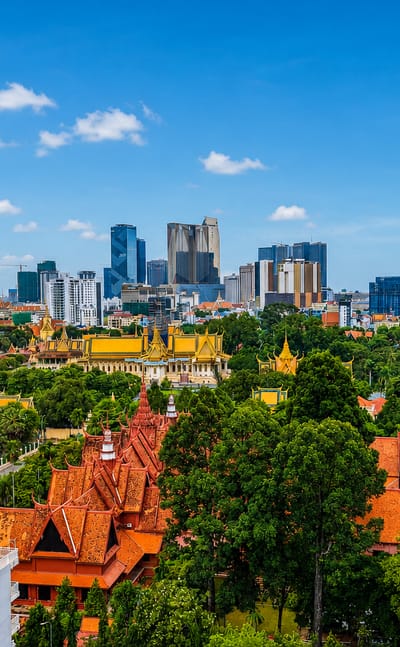
Phnom Penh rises where the Mekong meets the Tonlé Sap in Cambodia, the capital city known for Wat Phnom and the Royal Palace.Where to stay →
 Cambodia
Siem Reap
Siem Reap is a town in northern Cambodia, the base for the temples of Angkor, from Ta Prohm to the terraces of Phnom Bakheng.Where to stay →
 Cambodia
Sihanoukville
Sihanoukville is a city of south Cambodia on the Gulf of Thailand, the country's main seaport and beach resort, the way out to the islands of Koh Rong.Where to stay →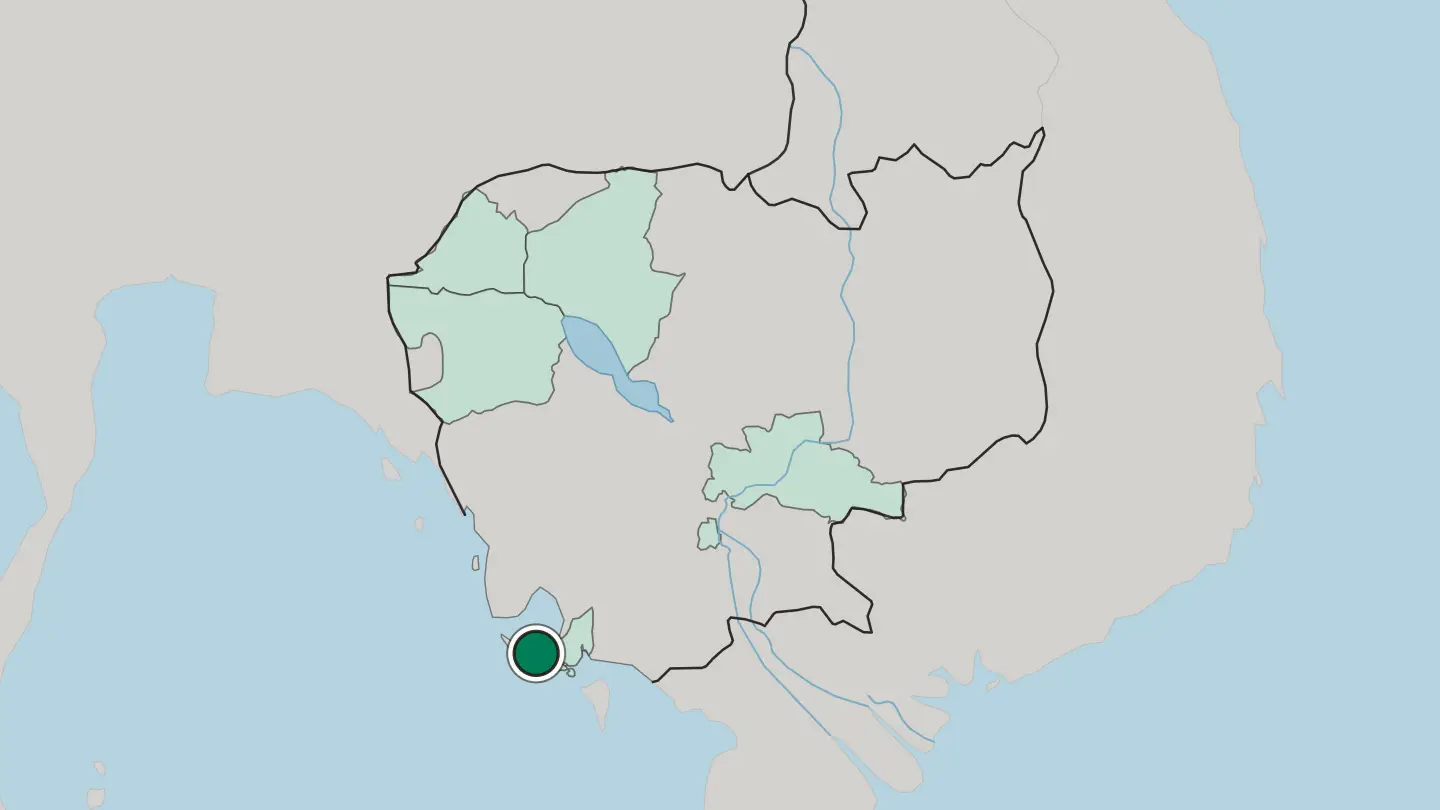
 Cambodia
Battambang
Battambang is a riverside city of northwestern Cambodia, an elegant old French-colonial town in the heart of the country's rice bowl.Where to stay → Cambodia
Paoy Paet
Paoy Paet, also written Poipet, holds Cambodia's main border crossing with Thailand, facing Aranyaprathet across the frontier.Where to stay →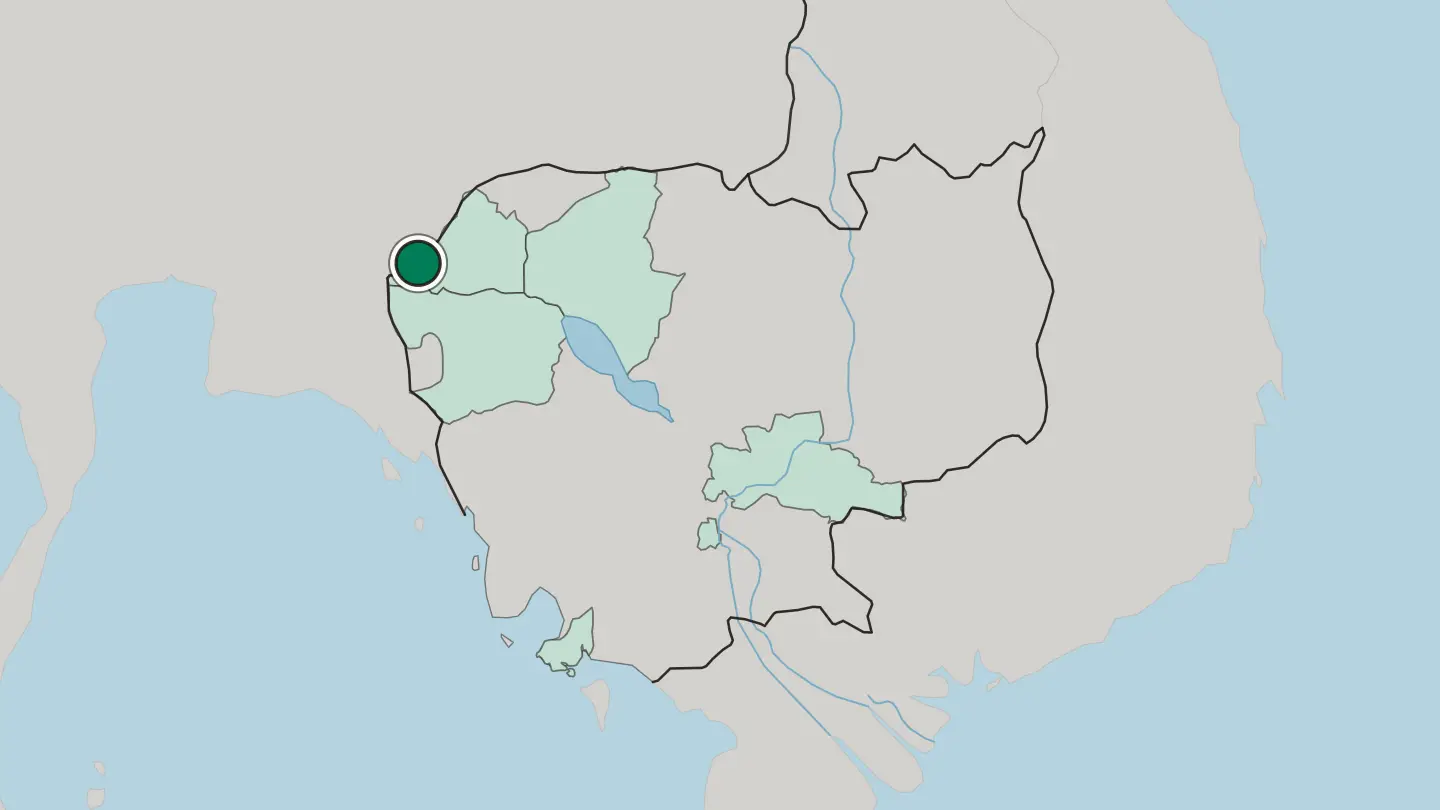
 Cambodia
Kampong Cham
Kampong Cham sits on the Mekong River northeast of Phnom Penh, the provincial capital where Banteay Prey Nokor and the French Lighthouse stand.Where to stay →
Hotel links are affiliate links: booking through them may earn us a commission, at no extra cost to you. It never affects how places are ranked. How this works
Regions of Cambodia
Cambodia
Banteay Meanchey
Banteay Meanchey is a province of Cambodia on the Thailand border, with Serei Saophoan as its capital and Siem Reap and Battambang alongside.Towns & cities →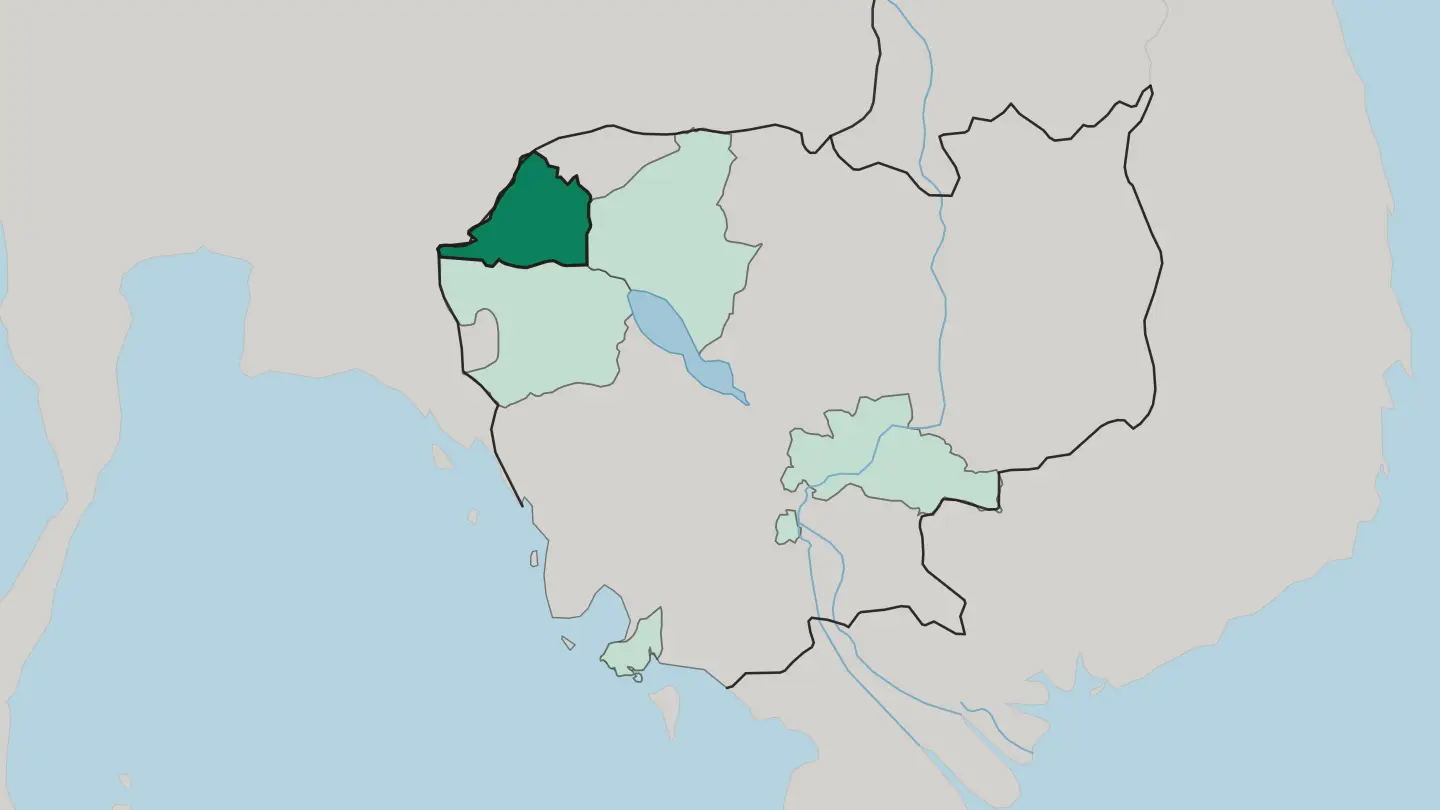 Cambodia
Battambang
Battambang names both a province of Cambodia and its capital, the country's second largest city, with Tonlé Sap on part of the north-eastern edge.Towns & cities →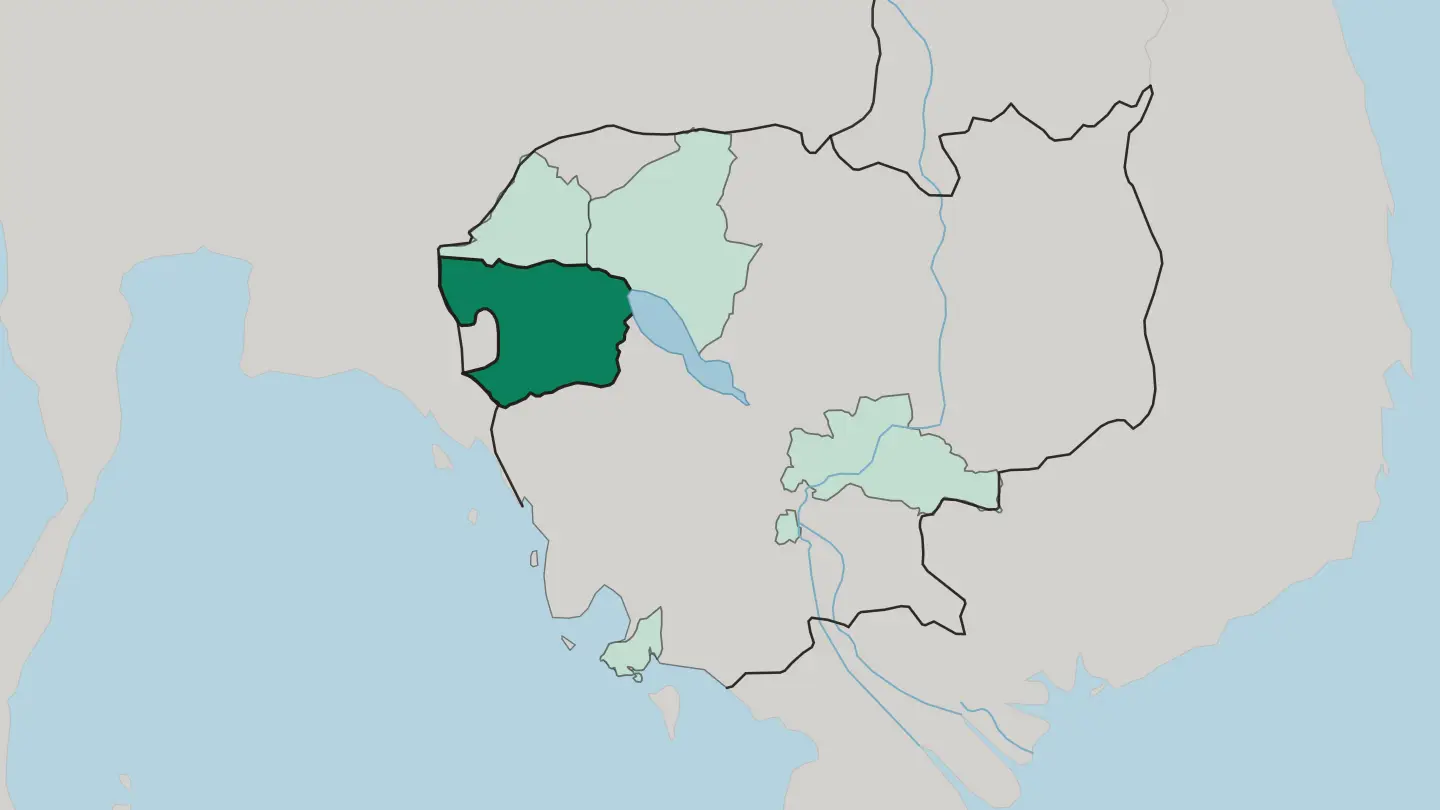 Cambodia
Kampong Cham
Kampong Cham is a province of Cambodia on the central lowlands of the Mekong, with Kandal and Prey Veng to the south and Kratié to the north.Towns & cities →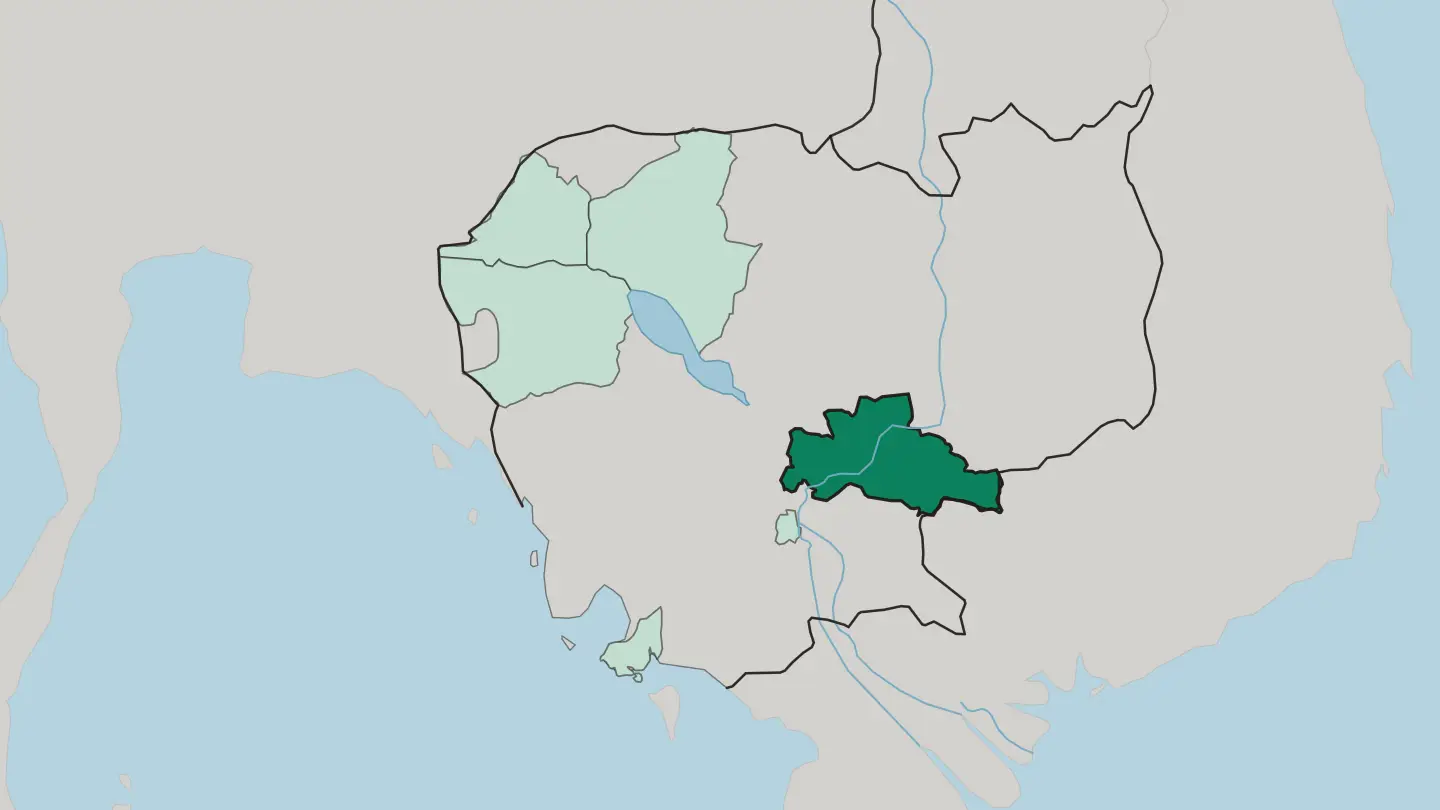 Cambodia
Phnom Penh
Phnom Penh is the capital region of Cambodia, a compact riverside territory wrapped around the confluence of the Mekong and the Tonlé Sap.Towns & cities →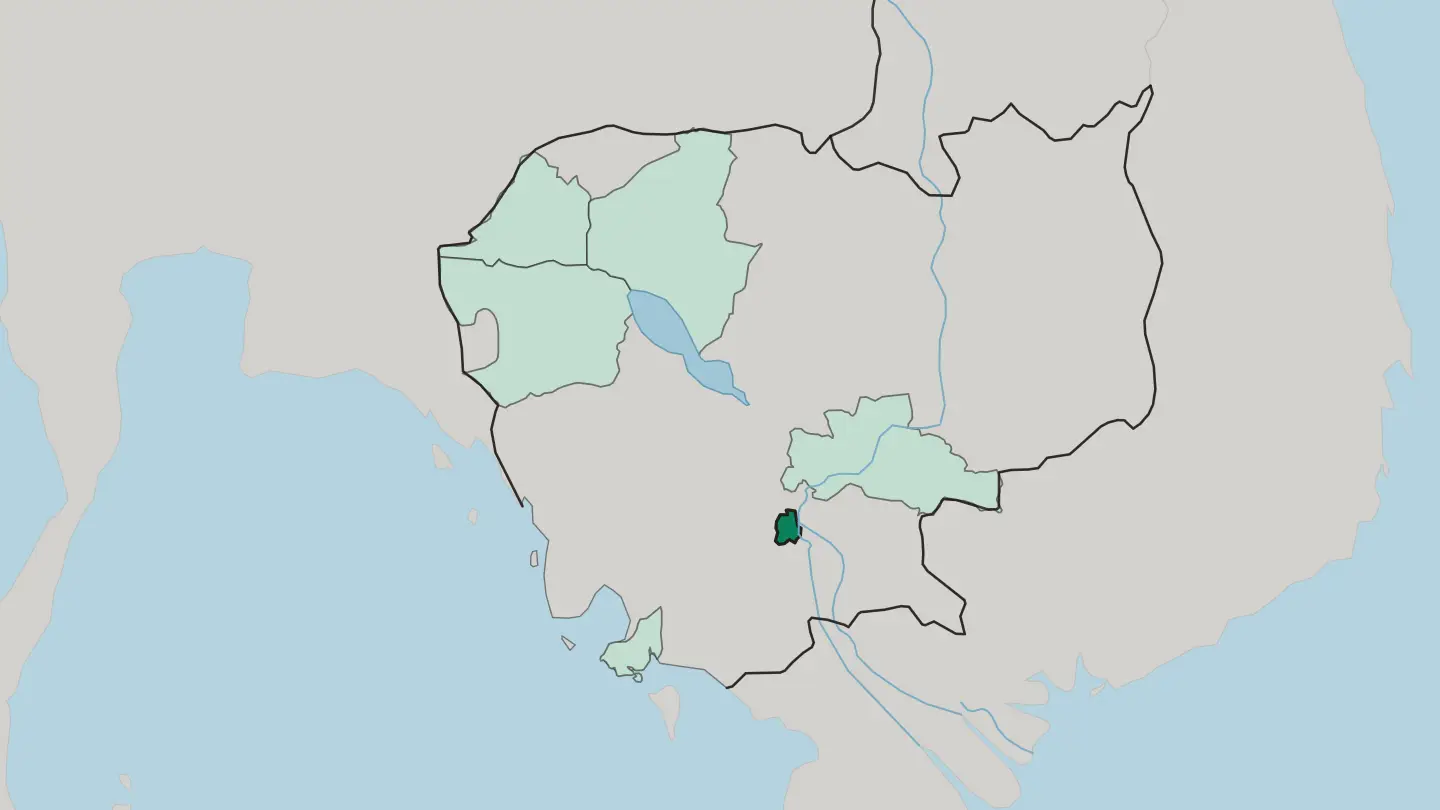 Cambodia
Preah Sihanouk
Preah Sihanouk is a province of Cambodia on the Gulf of Thailand, named for its capital Sihanoukville, a deep water port on an elevated peninsula.Towns & cities →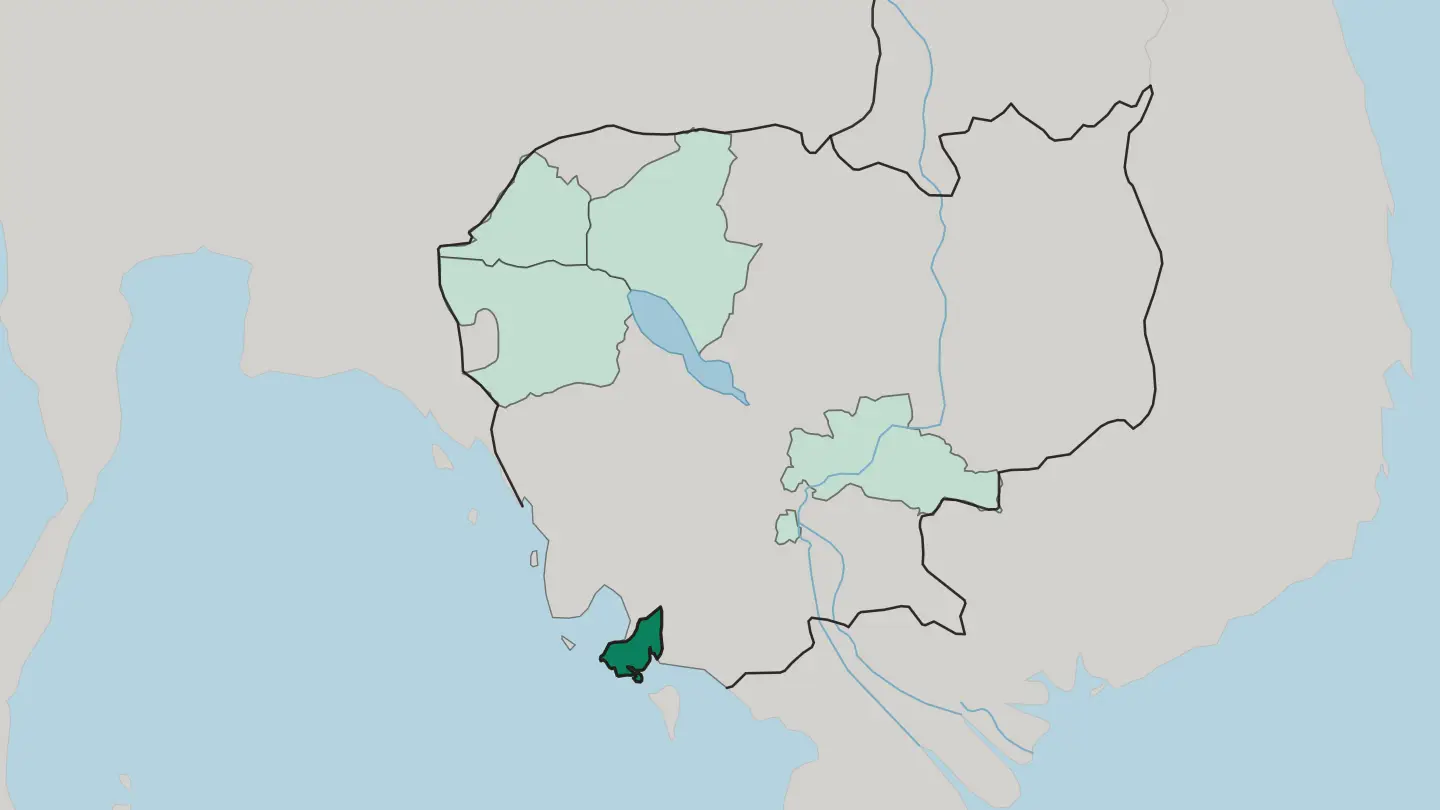 Cambodia
Siem Reap
Siem Reap is the Cambodian province holding the Angkor Archaeological Park, with its capital city of the same name as the way in.Towns & cities →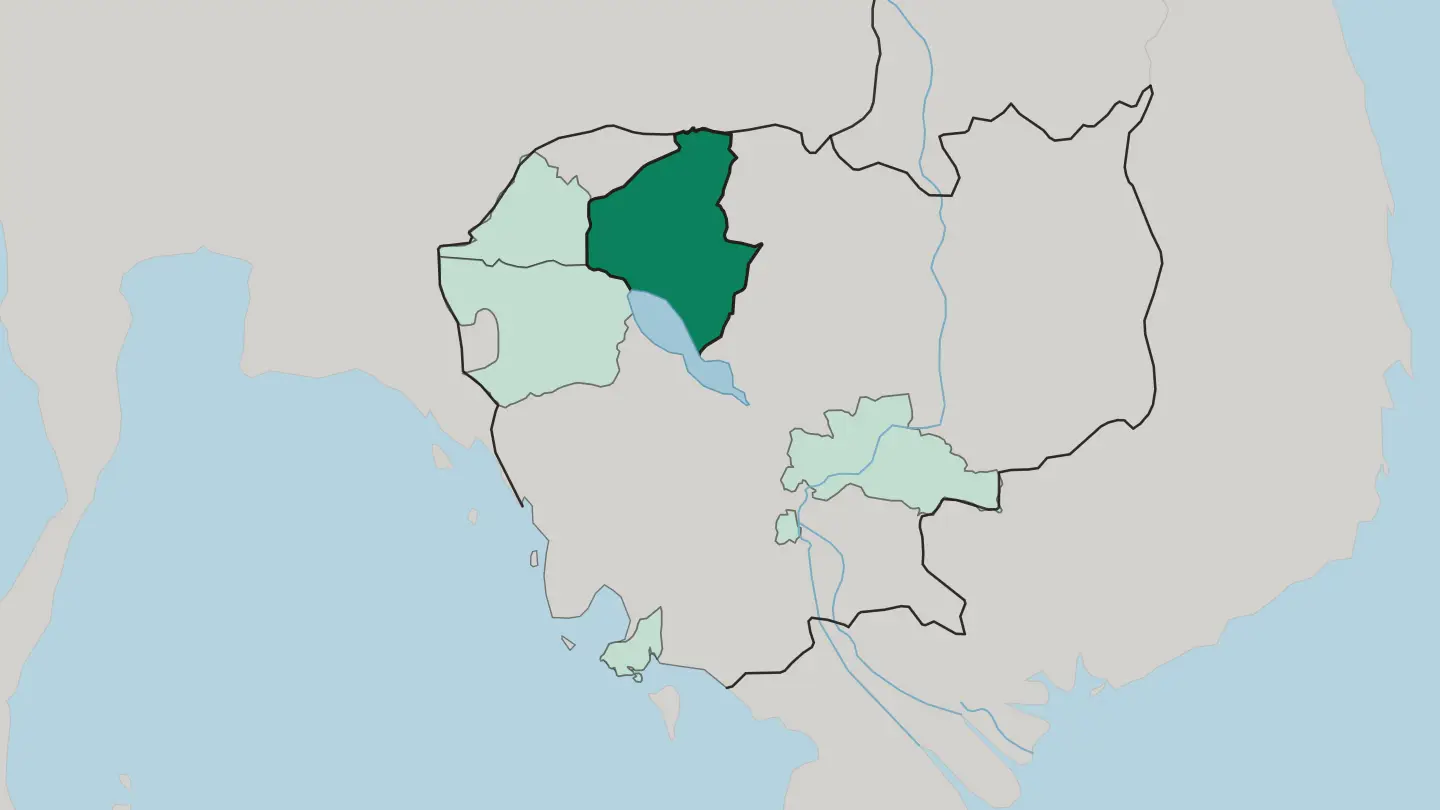
About Cambodia
Angkor is the reason most travellers come.
What is Cambodia known for?
The temple city of the Khmer Empire spreads over the plain north of Siem Reap, and Angkor Wat remains the single most recognised monument in the country. Cambodia is more than its ruins, though. The Mekong and the Tonlé Sap shape daily life across the centre, the Cardamom Mountains rise green in the south-west, and the Gulf coast scatters into islands like Koh Rong.
Khmer food, temples, and river country round out the picture.
Where is Cambodia?
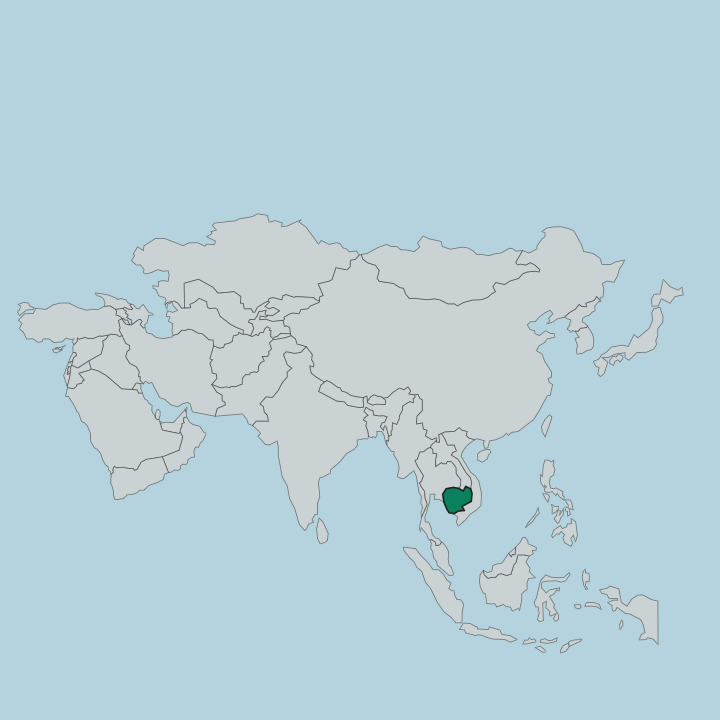
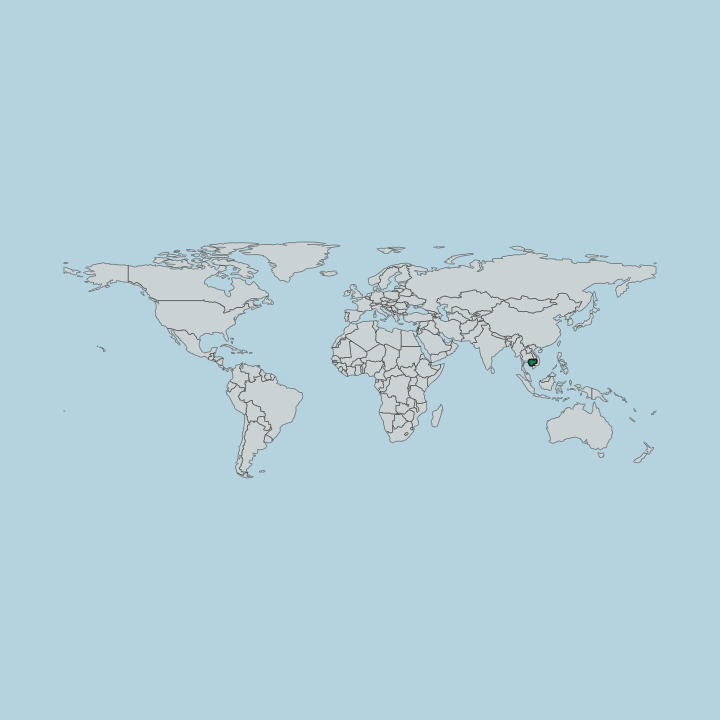
Cambodia sits in mainland Southeast Asia, bordered by Thailand to the north-west, Laos to the north, and Vietnam to the east, with a coastline along the Gulf of Thailand in the south-west. A low central plain dominates the country. It is built around the lower Mekong flood-plain and the vast basin of the Tonlé Sap, the largest freshwater lake in Southeast Asia, and this plain accounts for the greater share of the land.
Mountains frame the plain on three sides. The Cardamom Mountains rise in the south-west, joined by the Elephant Mountains along the south, while the Dângrêk range marks the northern edge against Thailand. Water governs the rhythm of the interior.
Each wet season the swollen Mekong forces the channel linking it to the Tonlé Sap to reverse its flow, draining back into the lake and swelling it to several times its dry-season size before it drains again. That annual pulse floods the surrounding forest, feeds one of the world's most productive inland fisheries, and lays down the silt that makes the central rice country so fertile. The rivers meet at Phnom Penh, where the Mekong, the Tonlé Sap river, and the Bassac converge.
From flooded forest to forested ridge, the terrain stays low and green.
What is the history of Cambodia?
Cambodia's story runs back through the Indianised kingdoms of Funan and Chenla, which took shape along the lower Mekong in the early centuries of the first millennium. The Khmer Empire followed. It is dated from 802, when Jayavarman II proclaimed himself god-king and founded a state that would rule much of mainland Southeast Asia for six centuries.
At its height the empire built its capitals at Angkor, raising the temple-mountains and reservoirs that still stand north of the Tonlé Sap. Angkor Wat, begun in the twelfth century, is the largest of them. After the fifteenth century the empire declined, its power squeezed between rising neighbours.
The modern era brought foreign rule and catastrophe. Cambodia became a French protectorate in 1863, and after Japanese occupation in the Second World War it declared independence in 1953. Then came the darkest chapter.
The Khmer Rouge seized power in 1975 and, until Vietnamese forces ousted them in 1979, carried out the genocide that killed a large part of the population and emptied Phnom Penh. Recovery has been slow but real. The temples endured, the capital refilled, and the country reopened to the wider world.
What is Cambodia like?
Khmer culture threads back to Angkor and forward into every living village. The great majority of Cambodians are ethnically Khmer, and they speak the Khmer language, an Austroasiatic tongue written in a script descended from the scholars and temple-builders of the empire. Theravada Buddhism shapes the calendar and the landscape.
A wat stands at the heart of nearly every community, monks in saffron are part of the ordinary street, and the merit-making of festivals like Khmer New Year and Pchum Ben orders the year. The arts carry the same long memory. The classical apsara dance, its slow hand gestures and gold headdresses, brings to life the celestial dancers carved in stone across the walls of Angkor Wat.
Cambodian food is quieter than that of its neighbours, but distinct. Fish amok, a delicate curry steamed in banana leaf, and prahok, the pungent fermented fish paste that seasons much of Khmer cooking, both come straight from the fisheries of the Tonlé Sap and the Mekong. Rice underlies every meal.
The result is a culture that reads its past in stone and eats it fresh from the river.
What is the climate of Cambodia?
Cambodia runs on the monsoon. The climate is tropical and warm the year round, split into two clear seasons rather than four. The dry months, roughly November to April, bring cooler air and clear skies, and this is when most travellers walk the temples of Angkor.
Then the rains arrive. From about May to October the south-west monsoon soaks the country, greening the rice plain and lifting the Tonlé Sap to its full flood. Heat holds steady throughout.
How do you get to Cambodia?
Flying is how most travellers reach Cambodia. Phnom Penh, the capital, and Siem Reap, the base for Angkor, both run international airports, and many travellers land at one and leave from the other. Overland routes matter too.
Buses and river boats cross the borders with Thailand, Laos, and Vietnam, and the road along the Mekong links the main cities. The country is compact, so distances between Phnom Penh, Siem Reap, and the southern coast are measured in hours rather than days.
Good for
Updated September 2026