Comoros: Regions, Cities & Travel Guide
The Comoros is a three-island nation in the Indian Ocean, off East Africa, with Moroni its capital on Grande Comore.
Hotel links are affiliate links: booking through them may earn us a commission, at no extra cost to you. It never affects how places are ranked. How this works


Top destinations in Comoros
One city to start from, then drill into its areas and hotels.

 Comoros
Moroni
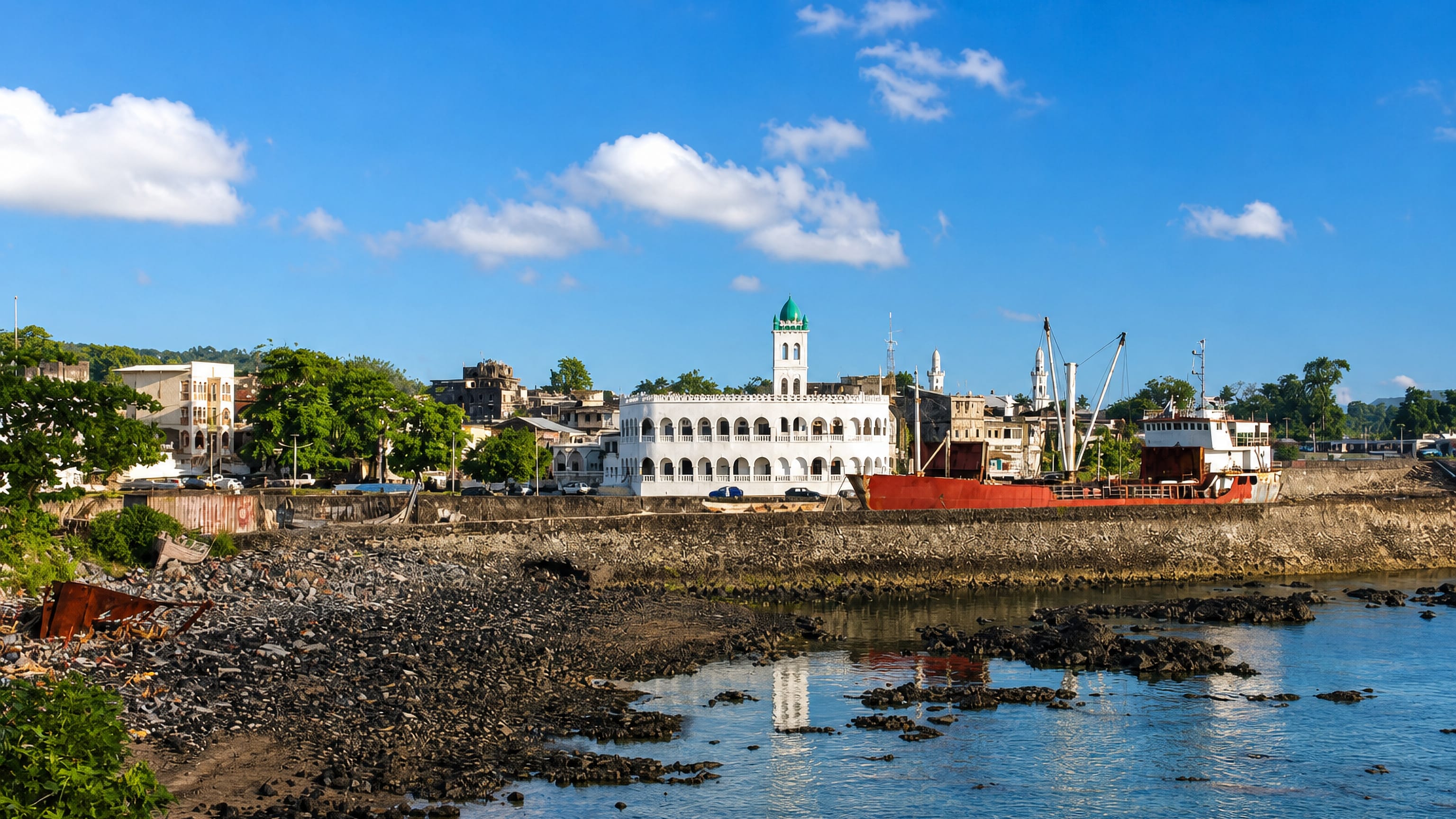
Moroni, capital of the Comoros, is a port on the Indian Ocean coast of Ngazidja, the largest of the archipelago's three main islands.Where to stay →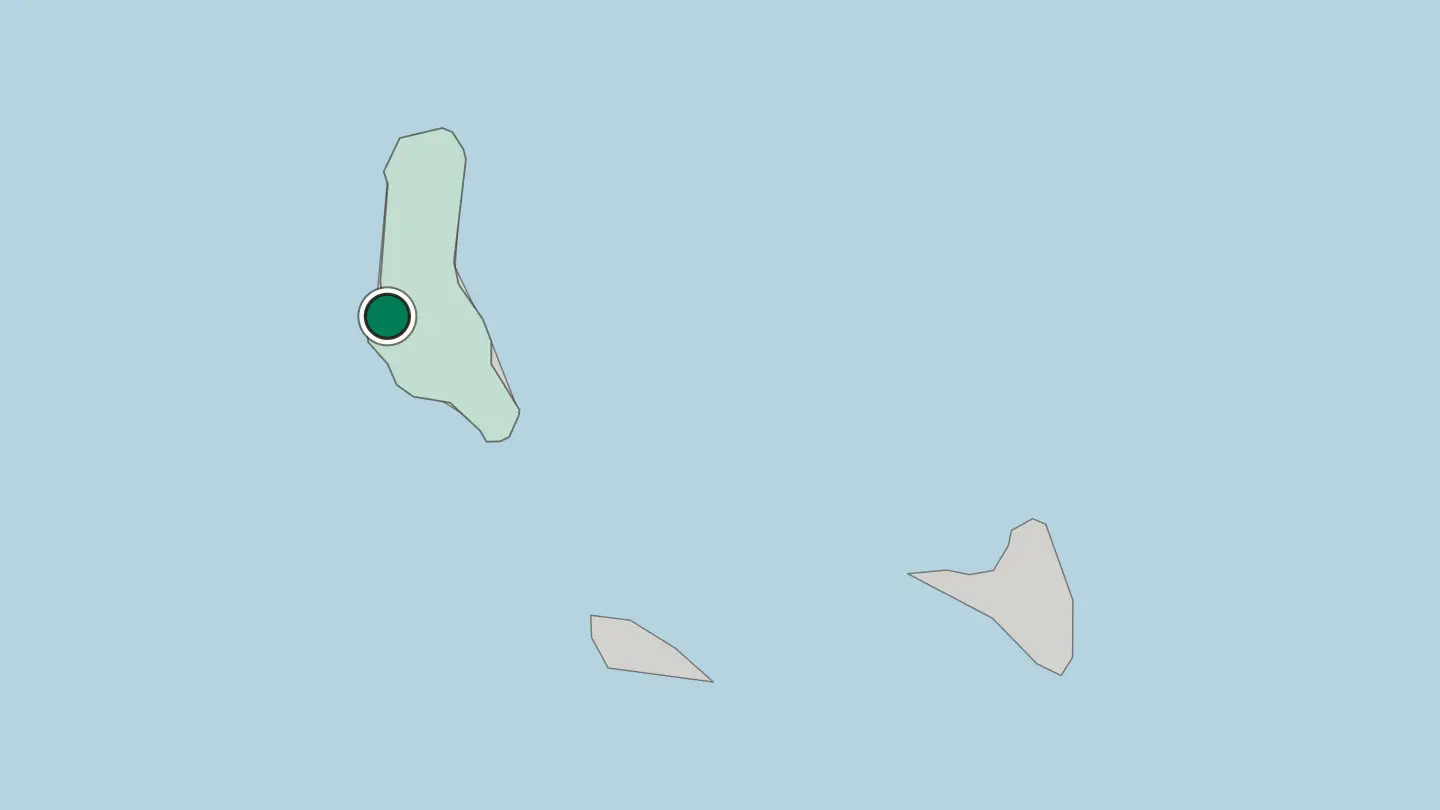
Hotel links are affiliate links: booking through them may earn us a commission, at no extra cost to you. It never affects how places are ranked. How this works
Browse by region
One region so far — open it to see its cities and towns.
About Comoros
Perfume made these islands famous.
What is Comoros known for?
The Comoros grows ylang-ylang, vanilla, and cloves for export, and the flower distilleries of Grande Comore scent the whole crop-picking season. Volcanoes shaped the land: Mount Karthala still smoulders above Moroni, one of the most active shield volcanoes anywhere. Offshore, the reefs and turtle beaches of Mohéli draw divers, while Mutsamudu on Anjouan guards a Swahili-Shirazi old town of carved doors and a hilltop citadel.
Where is Comoros?
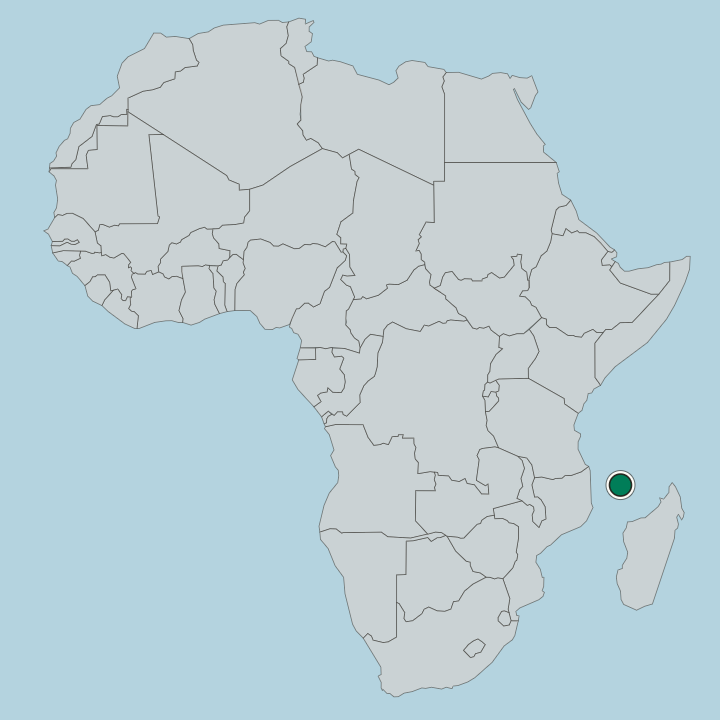
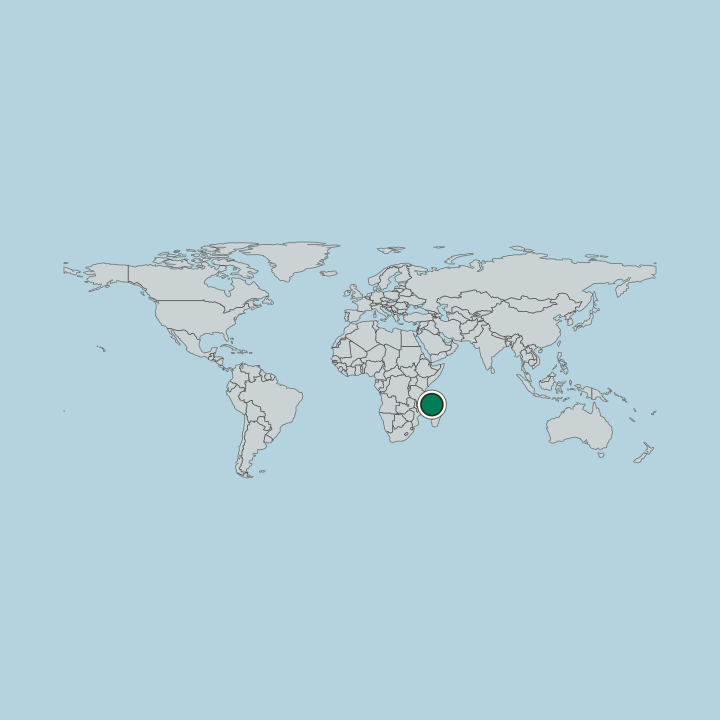
The Comoros is a volcanic archipelago at the northern mouth of the Mozambique Channel, set in the Indian Ocean between the East African mainland and the top of Madagascar. Three main islands make up the union. Grande Comore, known locally as Ngazidja, is the largest and youngest, a raw basalt shield still crowned by the active summit of Mount Karthala, the country's highest point at some 2,361 metres.
Its lava flows are so recent that whole stretches of the west coast have little topsoil, and rainwater sinks straight through the porous rock rather than running in rivers. East of it lies Anjouan, older and more eroded, a triangular island of steep ridges, deep valleys, and terraced clove and ylang-ylang plantations that climb the slopes above Mutsamudu. Mohéli, the smallest, is a low green plateau fringed by the islets and coral shallows of its marine park.
The three sit close together but stay strikingly different. Where Grande Comore is bare young rock, Anjouan is folded and green, and Mohéli is soft and flat. All of it rose from the sea floor along the same volcanic line running up the channel, and the reefs, black-sand coves, and mangrove shores that ring the coasts belong to one Indian Ocean world.
On these islands the Indian Ocean is always within reach.
What is the history of Comoros?
People reached these islands by sea. Bantu-speaking settlers from the East African coast arrived more than a thousand years ago, and later waves brought Austronesian sailors, Arab and Persian traders, and Malagasy from nearby Madagascar, fusing into the Comorian people and their Shikomori tongue. Islam took root early through the Indian Ocean trade, and by the fifteenth century rival sultanates ruled from stone towns like Domoni and Mutsamudu, growing wealthy on the traffic in cloth, slaves, and spices between the Swahili coast and Arabia.
France drew the archipelago into its orbit through the nineteenth century, annexing the islands and running vanilla, clove, and ylang-ylang plantations that reshaped the coastal lowlands. Independence came in a rush. On 6 July 1975 the Comorian parliament declared the union independent, though the fourth island, Mayotte, voted to remain French and stayed under Paris.
What followed was turbulent. The young republic weathered a long run of coups and secession crises, including a breakaway attempt on Anjouan, before the current federal union of the three islands was framed in 2001, each island keeping its own presidency in rotation. That constitutional settlement gave the modern state its shape.
The perfume plantations, the mosque-anchored towns, and the memory of the sultanates all still colour daily life. History here washed in on the tide.
What is Comoros like?
Comorian culture faces both the African mainland and the wider Muslim world. The people speak Shikomori, a Bantu language written in Arabic and Latin script, alongside the official Arabic and French, and Islam orders the rhythm of the week from the coral-stone mosques of every village. Weddings sit at the heart of it.
The grand marriage, the anda, is a lavish and costly ceremony a man may spend years saving for, and completing it confers standing and the right to speak in community affairs. Music and dance carry the same mixed inheritance, blending Swahili taarab, Arab melody, and African drumming, while women wear the bright shiromani wrap and dab their faces with fragrant msindzano sandalwood paste. Food tells the crossroads story plainly.
Rice cooked with cloves and cardamom, coconut flatbread, and langouste à la vanille, the lobster in vanilla sauce claimed as a national dish, all draw on the very spices the islands export. Craftsmen still carve the heavy studded doors that mark the old merchant houses of Mutsamudu and Domoni. Poetry, proverb, and the authority of elders run deep.
It is a small nation with an outsized ceremonial life. The islands wear their history openly.
What is the climate of Comoros?
The Comoros stays warm year-round. A hot, wet monsoon season runs from November to April, when the north-westerly kashkazi wind drives heavy rain and the odd cyclone across the islands, drenching the green slopes of Anjouan and the summit forests of Mount Karthala. The cooler, drier season from May to October, driven by the south-easterly kusi, is the easier time to travel and dive.
Humidity rarely lets up. The coasts stay tropical while the high volcanic ground of Grande Comore turns markedly cooler and mistier with height.
How do you get to Comoros?
Nearly all arrivals land at Moroni. Prince Said Ibrahim International Airport, north of the capital near Hahaya on Grande Comore, is the country's main gateway, with connections through regional hubs across the Indian Ocean and East Africa. From there, small inter-island flights and passenger boats cross to Anjouan and Mohéli.
Sea crossings can be rough. Distances between the three islands are short, but schedules bend to the weather and the monsoon swell, so build in slack.
Good for
Updated September 2026