North Korea · Hwanghae-bukto
Where to Stay in Sariwŏn-si, Hwanghae-bukto
Sariwŏn-si is the capital and largest city of North Hwanghae Province in North Korea, written Sariwon City in Korean.
Find your area →


Where to stay in Sariwŏn-si
How the choice of base plays out on the ground.
Two errands bring people to Sariwŏn. One is the business of Hwanghae-bukto, because the provincial seat sits here and the traffic that any capital of North Hwanghae Province generates arrives on that account before it arrives on any other. The other is Chitamni Site.
Those two purposes pull toward different ends of the city, and a room picked for one of them serves the other only by accident. Beds are not the advertised trade. Sariwŏn-si covers roughly 187 square kilometres, a wide frame for a place whose visitor record runs to a single named site, so the practical division is between the built-up middle and the ground beyond it.
The middle suits you if the errand is official. Everything the city puts on public view sits close together there, and the offices of North Hwanghae Province do too. Outside is for the road.
A traveller crossing Hwanghae-bukto and stopping a night wants space and a way out more than a short walk, and nothing in the record argues against that reading. Detail beyond this is not documented. What the sources support is the shape of the choice in Sariwŏn, not a verdict on individual streets.
About Sariwŏn-si
Provincial rank comes first.
What is Sariwŏn-si known for?
Sariwŏn holds the seat of Hwanghae-bukto, and being both the capital and the largest city of North Hwanghae Province gives the place an administrative weight its short public record does not otherwise advertise. One named site stands on the public record: Chitamni Site. The rest of what the city is known for rests in that provincial role rather than in any list of attractions.
What are the main landmarks in Sariwŏn-si?
One name carries the whole list. Chitamni Site is the only landmark the record attaches to Sariwŏn-si, so a visitor planning around monuments has one name to work with and no second option to weigh against it. Sightseeing is not the reason to come.
What Sariwŏn gives instead is the working centre of Hwanghae-bukto, and Chitamni stands as the single fixed point a visitor can name in advance.
What is the history of Sariwŏn-si?
No founding year is on the record. What the sources fix for Sariwŏn is a standing rather than a date: the city holds the seat of Hwanghae-bukto and is entered as the capital and largest city of North Hwanghae Province. The name carries that rank.
Sariwŏn-si closes on the Korean marker for a city, and the official written form Sariwon City ends on the same syllable, so the administrative grade is built into the name instead of being fixed by a charter. Older ground is attested. Chitamni Site is the only other name the record ties to the city, and it stands for an occupation older than any of the administrative arrangements stacked above it.
Nothing else is dated. There is no charter year, no grant of city standing and no sequence of earlier names on record, which leaves a long stretch of the past unaccounted for in North Korea's own provincial seat. Sariwŏn is described rather than narrated.
The province it heads and the one site it holds are the whole of what can be said without going past the evidence.
Where is Sariwŏn-si?
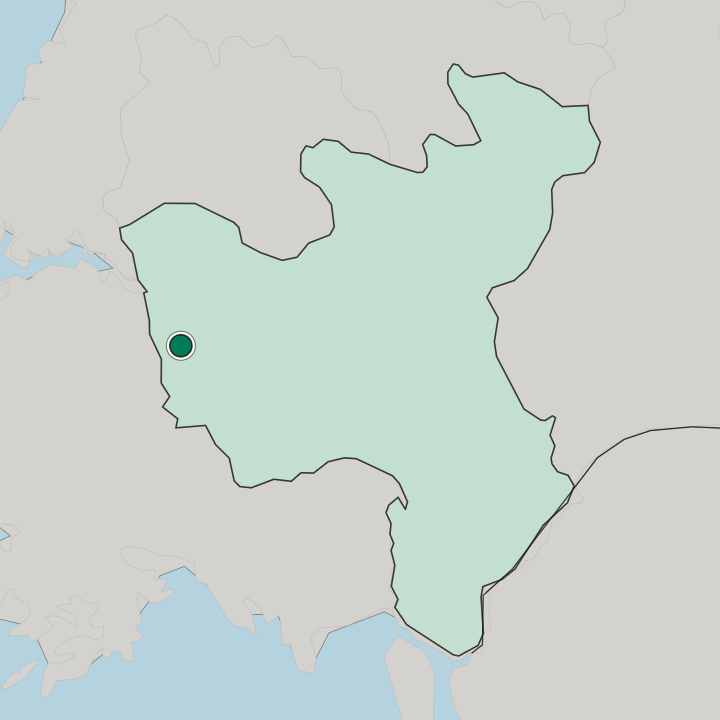
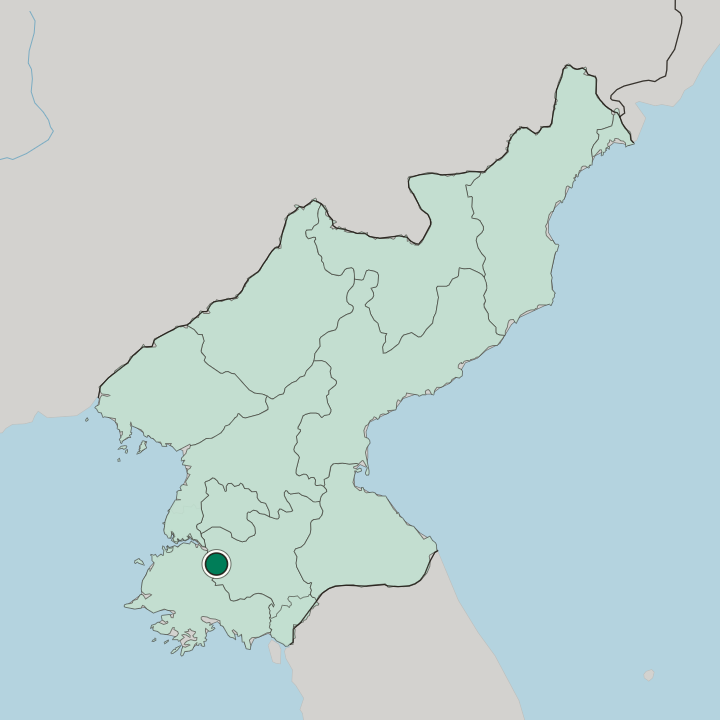
The frame is provincial. Sariwŏn-si covers roughly 187 square kilometres inside Hwanghae-bukto, which is the province the city administers rather than merely sits in, and that double relation is the plainest way to place it. North Hwanghae Province is the unit that matters.
Within North Korea the city is fixed by that relation and by Chitamni Site, and the record offers no river, no range and no coastline to anchor it any further.
What is the climate of Sariwŏn-si?
Weather is the gap on record. Nothing on record fixes a season, a rainfall pattern or a prevailing wind for Sariwŏn-si, so the honest description here is an absence rather than a summary. The province sets the expectation.
Anyone planning a stay works from what is known of Hwanghae-bukto and of North Korea more widely, because the city's own entry adds nothing on the subject, and a claim about its summers or its winters would rest on nothing at all.
How do you get to Sariwŏn-si?
Sariwŏn-si names no terminal of its own. The record fixes no station, no road number and no operator for the city, which leaves the approach to be described by rank rather than by timetable. What follows from rank is plain enough.
A provincial capital is the point its province is organised around, so any route across Hwanghae-bukto that matters to a traveller passes through or ends at the seat of North Hwanghae Province rather than skirting it.
Updated September 2026