North Korea · South Pyongan
Where to Stay in P’yŏngsŏng, South Pyongan
P'yŏngsŏng is the capital of South Pyongan province in North Korea, a city formally established in 1969 a short way northeast of Pyongyang.
Find your area →


Where to stay in P’yŏngsŏng
How the choice of base plays out on the ground.
Rooms are not what P'yŏngsŏng is organised around. The city was formally established in 1969 as the seat of South Pyongan, and its buildings answer to that administrative purpose rather than to a visitor trade, so accommodation is limited and sits close to the provincial centre. Few beds exist to pick from.
Pyongyang is the alternative base. About 32 kilometres separate the two, short enough that many itineraries treat P'yŏngsŏng as a day's move out from the national capital and return the same evening rather than looking for a bed in the province. That decision turns on purpose.
If the reason for coming is provincial business, the centre of P'yŏngsŏng is where you want to be; if it is anything else, Pyongyang carries the wider set of options. South Pyongan province spreads outward from the city. Travel within it is arranged around the provincial capital, so a base in P'yŏngsŏng makes sense for anyone whose days run out into the province rather than back toward Pyongyang each night.
Korean is the working language in both cities.
About P’yŏngsŏng
What is P’yŏngsŏng known for?
P'yŏngsŏng is a provincial capital. South Pyongan province is administered from here, which gives a city formally established in 1969 a standing that its short record alone would not explain. Pyongyang is close.
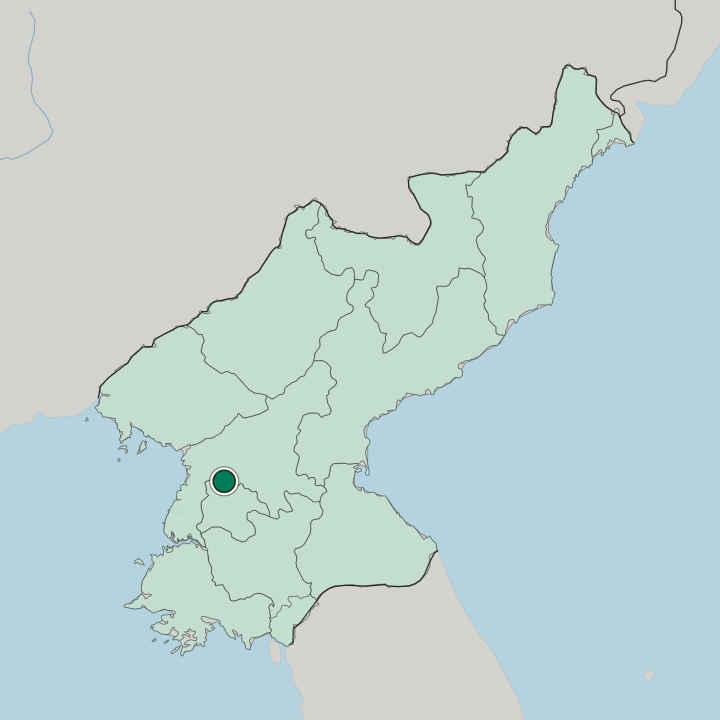
The national capital lies about 32 kilometres away, with P'yŏngsŏng set northeast of it, near enough that the two are bound together and far enough that the provincial administration keeps its own footing.
What are the main landmarks in P’yŏngsŏng?
Named monuments do not appear in the record for P'yŏngsŏng. What the city is documented for is administrative rather than monumental: South Pyongan province is run from here, and the civic buildings that role requires are the fixed points anyone arriving will actually encounter. Pyongyang holds the set pieces.
A visit built on museums or monuments makes the short run of about 32 kilometres to the national capital and comes back to P'yŏngsŏng for the province rather than for its sights.
What is the history of P’yŏngsŏng?
P'yŏngsŏng was formally established in December 1969. That date makes it one of the younger cities in North Korea, a place brought into being by decision rather than grown out of an older settlement, and the provincial role it carries was part of the arrangement from the beginning. South Pyongan needed a seat.
The province is administered from P'yŏngsŏng, and a site about 32 kilometres from Pyongyang put the provincial capital within easy reach of the national one without placing it inside it. The relationship with Pyongyang runs through everything. Proximity of that order shapes what a provincial capital does, because functions the national capital already performs do not need repeating a short drive away, and the work here settles around South Pyongan instead.
Pyongsong is the romanised form. The name appears that way in most English sources, while Pyongsong City is the official Korean form, and both point at the same provincial seat. Beyond those facts, the record stops.
The documented history of P'yŏngsŏng begins with its establishment, so there is no long line of charters, sieges or trading privileges to set out, and what stands in their place is a short administrative record running from 1969 forward.
Where is P’yŏngsŏng?
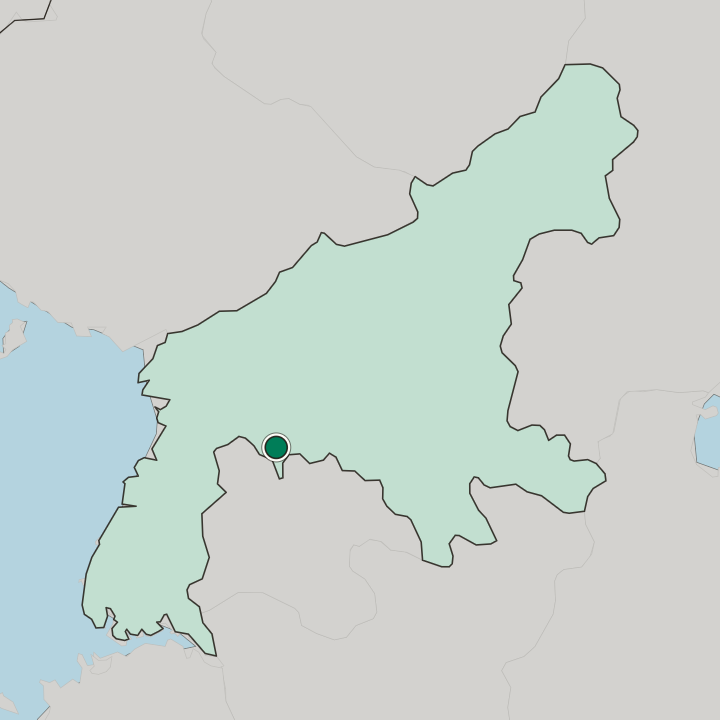
P'yŏngsŏng stands northeast of Pyongyang. About 32 kilometres separate the two cities, close enough that the provincial capital sits within the orbit of the national one while remaining a distinct place on the map of South Pyongan. The province surrounds it.
South Pyongan province is administered from P'yŏngsŏng, so the city's position is best read against the ground it governs rather than against the temperate belt of North Korea as a whole.
What is the climate of P’yŏngsŏng?
P'yŏngsŏng shares Pyongyang's weather. About 32 kilometres do not separate two climates, so whatever the temperate band brings to the national capital arrives at the provincial one on much the same schedule. The seasons are marked.
A temperate position of this kind gives North Korea a clear division between the warm half of the year and the cold, and planning for South Pyongan follows that division rather than any local exception.
How do you get to P’yŏngsŏng?
Arrivals come by way of Pyongyang. About 32 kilometres lie between the two, a short enough run that P'yŏngsŏng is normally reached from the national capital rather than approached directly from anywhere else. The province opens from here.
As the seat of South Pyongan, P'yŏngsŏng is the point at which provincial business is done, and onward movement within the province is organised around it rather than around Pyongyang.
Updated September 2026