South Korea · Chungcheongbuk-do
Where to Stay in Chungju, Chungcheongbuk-do
Chungju keeps stone Buddhas and pagodas across North Chungcheong Province, from Mireukdaewonji to Chungju Tangeumdae.
Hotel links are affiliate links: booking through them may earn us a commission, at no extra cost to you. It never affects how places are ranked. How this works


Where to stay in Chungju
Where the beds are, and what that means for the visit.
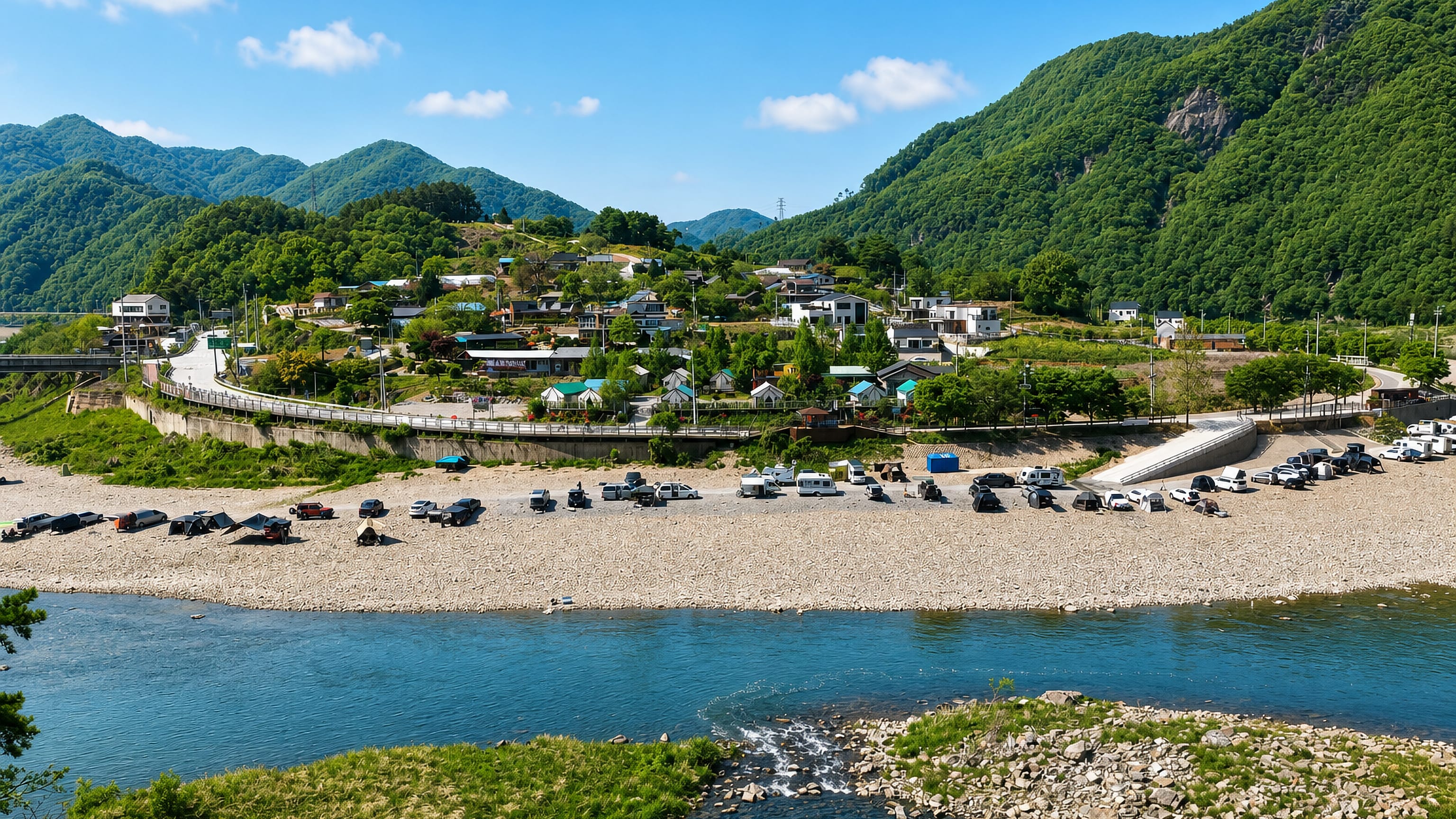
Chungju scatters its interest. The heritage list runs out into villages, Tappyeong-ri, Chupyeong-ri, Gangcheon-ri, Jidang-ri and Munju-ri, rather than gathering in one quarter, so a stay here is planned around which of those a visitor actually intends to reach. Chungju's own centre stays small.
Beds concentrate near the civic ground around Chungju Stadium and Ho-am Gymnasium, and from there every listed site is a drive of its own rather than a walk after breakfast. Mireukdaewonji justifies a night out. The temple ground and the standing figure at Chungju Mireukri Seokjo Yeorae Ipsang make a half-day on their own, and anyone starting from the middle of the city spends the best light on the road instead of on the site.
Chungju Tangeumdae works the same way. It sits on its own listed ground, far enough from the stadium quarter that a bed on that side changes what the morning can hold. Pagodas fill the gaps.
A three-storey pagoda at Danhosa, another at Chupyeong-ri and the seven-storied one at Tappyeong-ri reward a driving day rather than a walking one, and the villages holding them offer little in the way of rooms. Jangmi Sanseong is a day of its own.
Find hotels in Chungju
Direct booking searches for these neighbourhoods.
The Chungju Stadium quarter
The civic side of Chungju, where Chungju Stadium, the Chungju Auxiliary Stadium and Ho-am Gymnasium stand togetherFind hotels in The Chungju Stadium quarterA half-day at Mireukdaewonji and its standing figureToward Mireukdaewonji
Outlying ground near Mireukdaewonji and Chungju Mireukri Seokjo Yeorae Ipsang, well clear of the stadium quarter. Beds are limited here, so book early.Find hotels in Toward MireukdaewonjiFirst light at Chungju TangeumdaeThe Chungju Tangeumdae side
The side of Chungju nearest the listed ground at Chungju Tangeumdae, apart from both the pagoda villages and the centre. Beds are limited here, so book early.Find hotels in The Chungju Tangeumdae sideDriving between Tappyeong-ri, Danhosa and Chupyeong-riThe pagoda villages
Scattered settlement around Tappyeong-ri, Chupyeong-ri and Danhosa, where the pagodas stand and the rooms do not. Rooms are few around here — worth securing early.Find hotels in The pagoda villagesHotel links are affiliate links: booking through them may earn us a commission, at no extra cost to you. It never affects how places are ranked. How this works
Things to do in Chungju
Ranked by global recognition; descriptions from Wikidata (CC0).
Castles & Historic Sites
2- Mireukdaewonji Heritage
- Jangmi Sanseong Heritage
Stadiums & Sports
3- Chungju Stadium
- Chungju Auxiliary Stadium
- Ho-am Gymnasium
worth knowingacross 2 categories in Chungju
About Chungju
Stone carries this city.
What is Chungju known for?
Chungju lists a seven-storied pagoda at Tappyeong-ri, the standing figure recorded as Chungju Mireukri Seokjo Yeorae Ipsang, and the temple ground of Mireukdaewonji among a register that runs heavily to carved and quarried heritage. Pagodas repeat across it. A three-storey pagoda stands at Danhosa and another at Chupyeong-ri, while the stupa of master Bogak at Cheongnyongsa marks a monastic site of its own.
Modern entries are few: Chungju Stadium, the Chungju Auxiliary Stadium and Ho-am Gymnasium.
What are the main landmarks in Chungju?
Seventeen entries, and most are carved. Stone Buddhas stand at Gangcheon-ri and Jidang-ri, the figure at Chungju Mireukri Seokjo Yeorae Ipsang belongs to the same tradition, and Chungju Wonpyeong-ri Seokjo Yeorae Ipsang records another of them under its Korean name. Pagodas account for three.
Tappyeong-ri holds the seven-storied one, Danhosa and Chupyeong-ri the three-storey pair, while the stupa of master Bogak at Cheongnyongsa, the Placenta Chamber of King Gyeongjong and Jangmi Sanseong take the register into other kinds of ground entirely.
What is the history of Chungju?
Stone-carving is the oldest layer here. The temple site at Mireukdaewonji, the stupa of master Bogak at Cheongnyongsa and the standing figure of Chungju Mireukri Seokjo Yeorae Ipsang all belong to a period when this part of North Chungcheong Province was building in stone rather than in anything that has since survived. Pagodas date the same centuries.
Tappyeong-ri, Danhosa and Chupyeong-ri each keep one, and their survival across separate villages says the practice was general here rather than concentrated in a single monastery. Royal record follows. The Placenta Chamber of King Gyeongjong attaches a royal name to this ground, and the Dutiful Memorial Stone of Yeonan Yi clan marks a family commemorated in stone here.
Defence left its own mark. Jangmi Sanseong survives as fortified ground, while the site recorded as Yoji at Munju-ri and the listed Chungju Tangeumdae keep the parts of the story that no single building explains. Modern Chungju is thinner in the record.
Chungju Stadium, the Chungju Auxiliary Stadium and Ho-am Gymnasium are its recent additions, civic works standing at a remove from everything the older register holds, and the only entries on it built for crowds.
Where is Chungju?
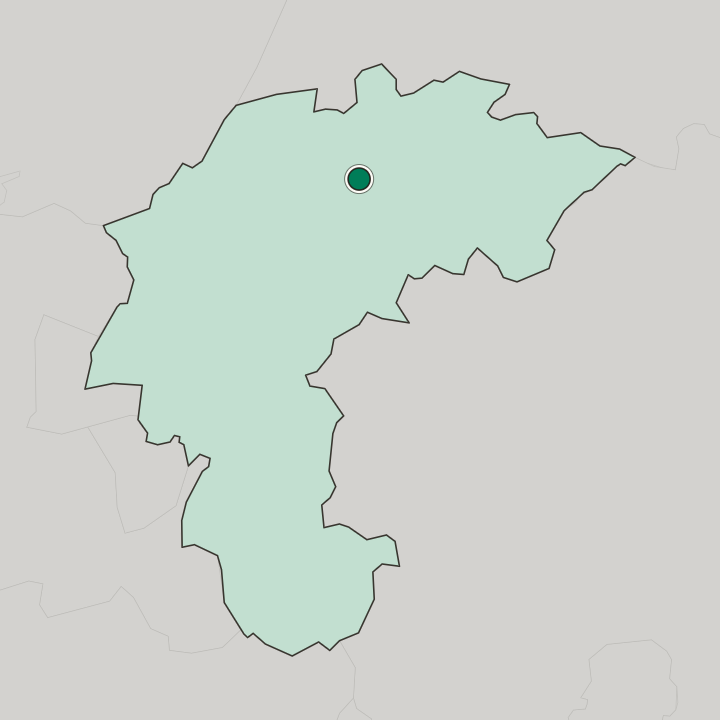
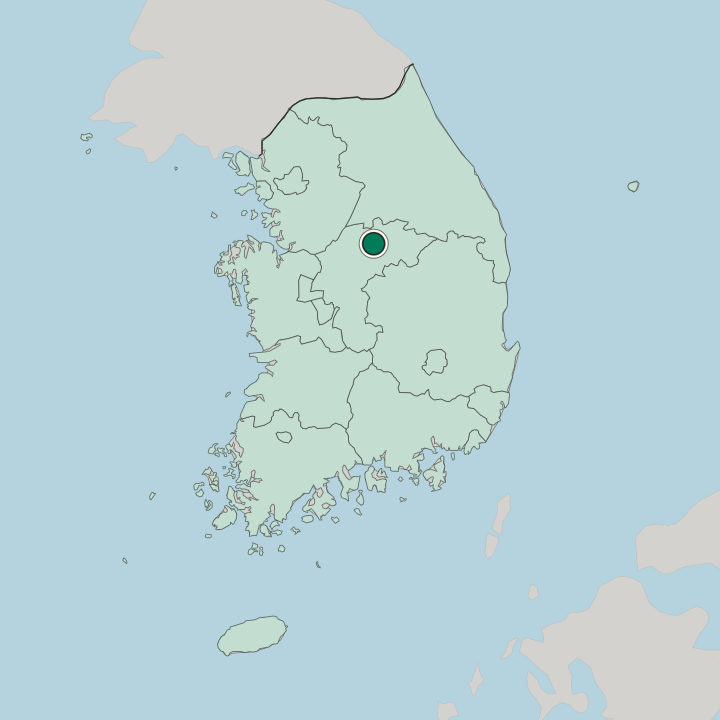
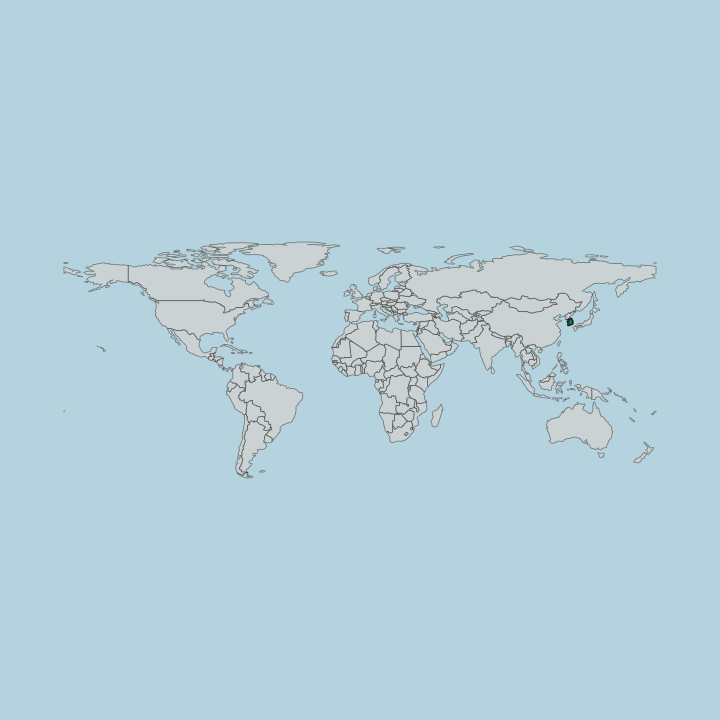
The municipality is small for its list. Chungju covers a modest area of North Chungcheong Province yet spreads its heritage through Tappyeong-ri, Chupyeong-ri, Gangcheon-ri, Jidang-ri and Munju-ri, which means the interest is rural and dispersed while the built city stays tight. Jangmi Sanseong marks another direction.
Chungju Tangeumdae and Mireukdaewonji occupy separate corners again, so any map of the city is really a map of its outlying districts.
What is the climate of Chungju?
Everything worth seeing stands outdoors. Stone Buddhas at Gangcheon-ri and Jidang-ri, the pagodas at Tappyeong-ri and Danhosa, and the fortified ground at Jangmi Sanseong are all exposed, so weather decides the quality of a visit here more directly than it would in a museum city. Seasons here are the usual temperate run.
Ho-am Gymnasium and Chungju Stadium supply the only indoor fallback the register offers, which makes a dry day worth more here than a full week of opening hours.
How do you get to Chungju?
Arrival is the easy part. Chungju sits in North Chungcheong Province with its built centre compact enough to cross quickly, and the roads out of it are what any real itinerary depends on. The sites are the distance.
Reaching Mireukdaewonji, Tappyeong-ri, Chupyeong-ri or Gangcheon-ri means leaving the centre behind, and a visitor without a vehicle will get through fewer of them in a day than the register might suggest. Chungju Stadium and Ho-am Gymnasium are the exceptions, both inside the city itself.
Common questions
What is the best area to stay in Chungju?
The Chungju Stadium quarter: Fixtures at Chungju Stadium or Ho-am Gymnasium. Toward Mireukdaewonji: A half-day at Mireukdaewonji and its standing figure. The Chungju Tangeumdae side: First light at Chungju Tangeumdae. The pagoda villages: Driving between Tappyeong-ri, Danhosa and Chupyeong-ri.
Good for
Another city in Chungcheongbuk-do
Updated September 2026