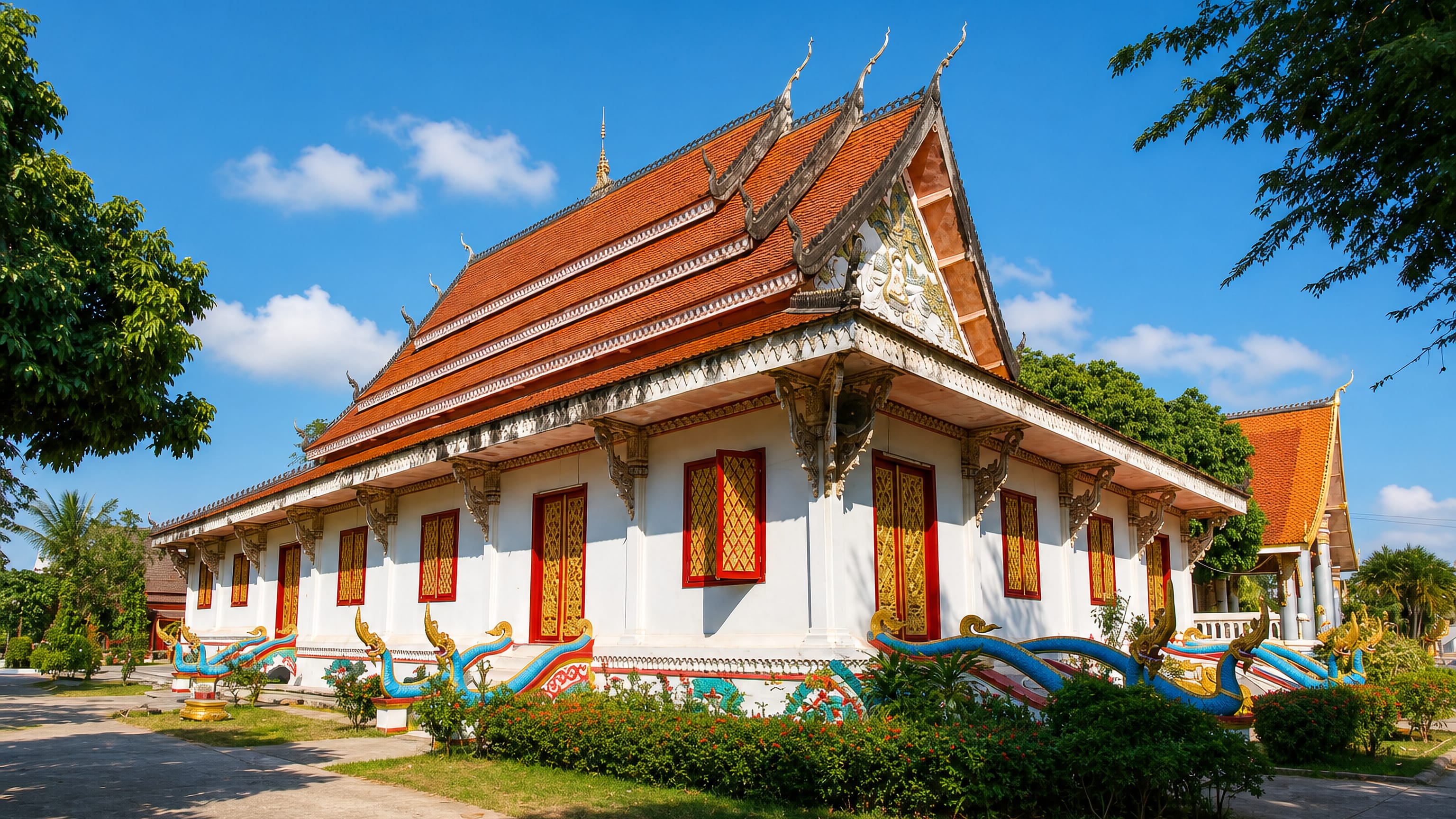
Laos · Khouèng Savannakhét
Where to Stay in Savannakhet, Khouèng Savannakhét
Savannakhet, officially Kaysone Phomvihane since 2005, is the second-largest city in Laos, capital of Savannakhet Province and set on the Mekong River.
Hotel links are affiliate links: booking through them may earn us a commission, at no extra cost to you. It never affects how places are ranked. How this works


Where to stay in Savannakhet
Where the beds are, and what that means for the visit.
The Mekong frontage decides it. Rooms near the river put the Co-Cathedral of St. Therese and the older streets of Khanthaboury within reach on foot, and they also put the water itself at the end of the block, which is the reason most visitors give for choosing that side. The riverside is compact.
A stay there covers the church and the Savannakhet Dinosaur Museum without needing transport for either. The official city is wider than the old core. Kaysone Phomvihane carries the offices and the through traffic of a provincial capital, so beds set back from the Mekong trade the walkable frontage for easier access to the roads running toward Vietnam and toward the Thai side.
That suits you if the stop is a night between long legs rather than a stay in its own right. Transit is the common case here. Savannakhet sits on the line between Vientiane and Pakse as well as on the west-to-east run, and a great many of its guests are between two other places rather than at their destination.
The choice is not really between neighbourhoods. It is between a room that treats the city as a river town with a cathedral and a dinosaur collection, and a room that treats it as a junction to be passed through efficiently.
Find hotels in Savannakhet
Direct booking searches for these neighbourhoods.
The Mekong frontage
The old Khanthaboury side of Savannakhet, where the church and the river frontage sit within a few blocks of each otherFind hotels in The Mekong frontageVisitors here chiefly for the fossil collection rather than the riverAround the Dinosaur Museum
The part of the city built around the Savannakhet Dinosaur Museum, off the water but still inside the walkable coreFind hotels in Around the Dinosaur MuseumOne-night stops between Vientiane, Pakse and the Vietnamese routeThe Kaysone Phomvihane road side
The outer, official half of Kaysone Phomvihane, set back from the Mekong and nearest the roads leaving the provinceFind hotels in The Kaysone Phomvihane road sideHotel links are affiliate links: booking through them may earn us a commission, at no extra cost to you. It never affects how places are ranked. How this works
About Savannakhet
Four directions meet at this city.
What is Savannakhet known for?
Savannakhet works as the hub between the Thai side to the west and Vietnam to the east, and equally between Vientiane to the north and Pakse to the south, which is a rarer position than size alone would give it. Only Vientiane is larger. The Co-Cathedral of St. Therese and the Savannakhet Dinosaur Museum give the place two named draws of very different kinds.
What are the main landmarks in Savannakhet?
Two buildings carry the visitor list. The Co-Cathedral of St. Therese is the city's Catholic seat and its most recognisable piece of built heritage, standing among the older streets rather than out on the modern edge. Fossils fill the other one.
The Savannakhet Dinosaur Museum holds the city's palaeontological collection, and the pairing of a cathedral with a dinosaur hall is what makes the short list here unusual.
What is the history of Savannakhet?
The city has worn three names. Khanthaboury came first, then Savannakhet, and since 2005 the official designation has been Kaysone Phomvihane, so maps, tickets and signs do not always agree on what to call the same place. Savannakhet is the name that stuck in use.
It travels with the province, which shares it, and it remains the form most travellers and most timetables reach for. The river explains the site. A settlement on the Mekong facing the Thai bank had reason to grow into the second city of Laos, because everything crossing between the two countries at this point had to pass through it.
Catholic building followed. The Co-Cathedral of St. Therese stands as the physical record of that later chapter, when a mission church took a permanent seat in a Lao river town. Vientiane stayed larger throughout.
Savannakhet has never displaced the capital in size, but the west-to-east role and the north-to-south one together gave it a weight that its rank alone does not explain. Older ground surfaces here too. The Savannakhet Dinosaur Museum keeps a record far older than any of the city's three names, which is a reminder that the ground around Kaysone Phomvihane was being read for fossils long before it was being read for trade routes.
Where is Savannakhet?
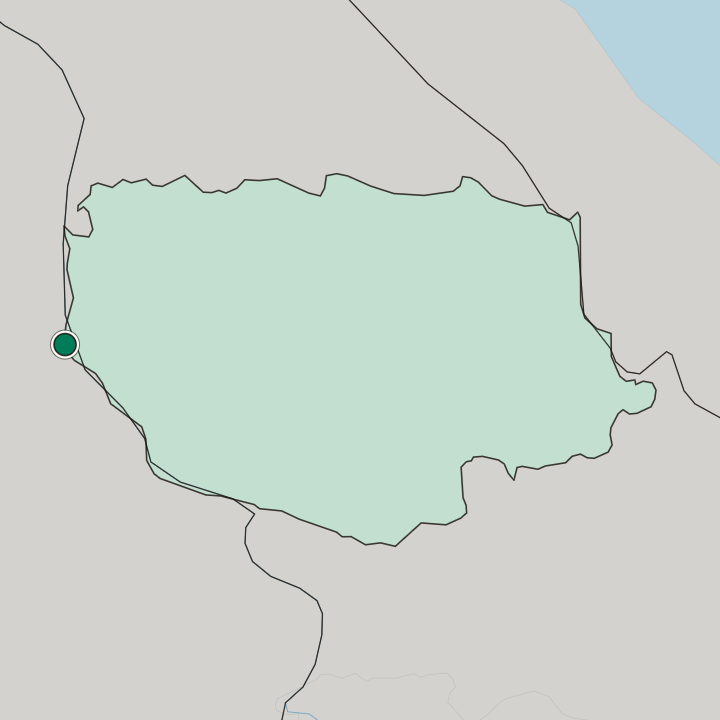
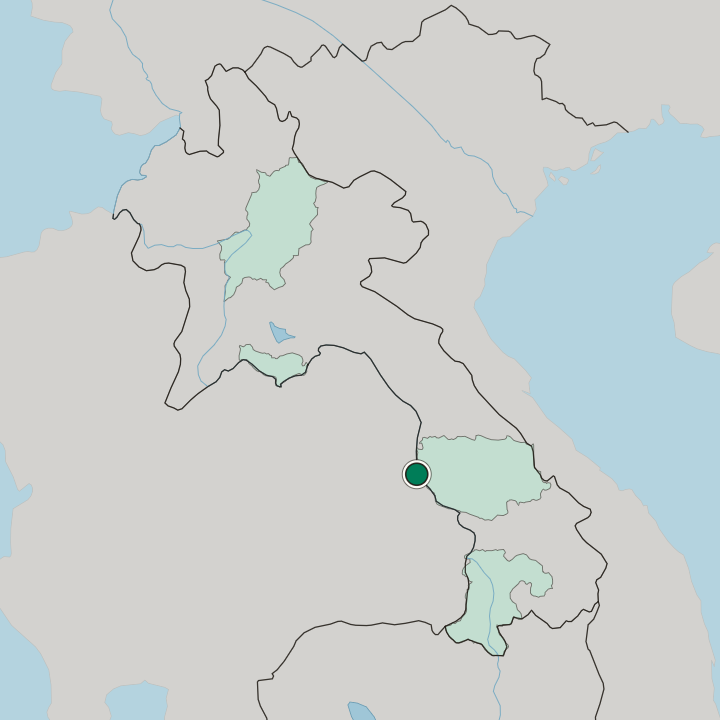
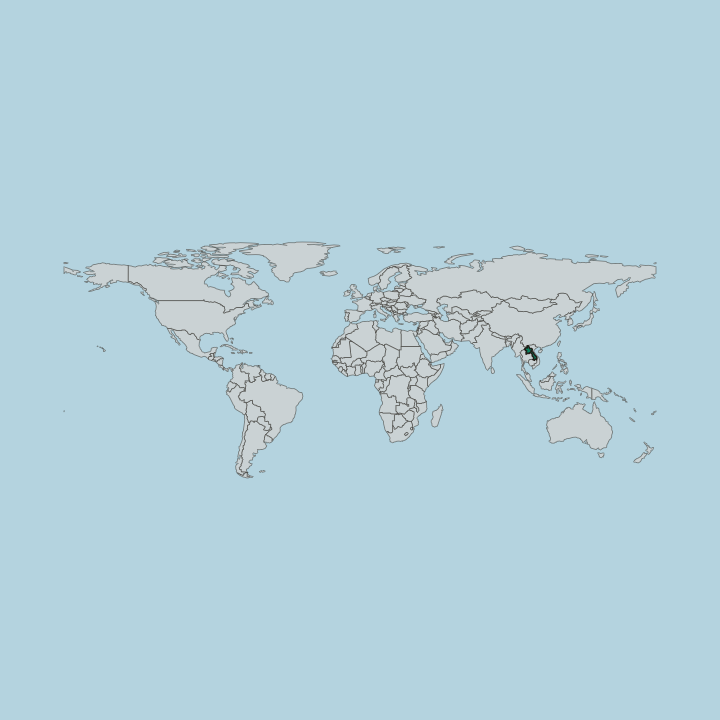
The Mekong forms the western edge. Savannakhet stands on the Lao bank with the Thai side opposite, and the river gives the city both its frontage and the boundary that everything crossing here has to negotiate. Inland the ground opens out.
Savannakhet Province spreads east from the city toward Vietnam, so the capital sits at the western end of a very wide province rather than in the middle of it.
What is the climate of Savannakhet?
The Mekong measures the seasons. Savannakhet lies in the tropical band, where the river's rise and fall against the frontage marks the passage of the year far more clearly than any change in temperature does. Temperature here barely shifts from month to month.
What varies is the rain, and a visit planned around the Co-Cathedral of St. Therese or the Savannakhet Dinosaur Museum is a different proposition in the wet half of the year than in the dry.
How do you get to Savannakhet?
Four routes converge on Kaysone Phomvihane. The Mekong crossing brings traffic from the Thai bank, the eastern road carries on toward Vietnam, and the north-to-south run links Vientiane with Pakse through the same city. Most arrivals are overland.
Savannakhet is reached by road far more often than by any other means, which is what its position between four points of the compass has made of it.
Common questions
What is the best area to stay in Savannakhet?
The Mekong frontage: Walking to the Co-Cathedral of St. Therese with the river at the end of the street. Around the Dinosaur Museum: Visitors here chiefly for the fossil collection rather than the river. The Kaysone Phomvihane road side: One-night stops between Vientiane, Pakse and the Vietnamese route.
Updated September 2026