Morocco · Laâyoune-Sakia El Hamra
Where to Stay in Smara, Laâyoune-Sakia El Hamra
Smara is a Sahrawi city of Western Sahara, founded in 1869 and set inland in the Laâyoune-Sakia El Hamra region.
Find your area →


Where to stay in Smara
How the choice of base plays out on the ground.
Beds in Smara gather near Smara bus station, the arrival point for almost everyone who comes overland. That is the practical anchor. A room within walking distance of the station keeps the departure boards close, and in a town where the onward road to Laâyoune can be refused without warning, that proximity is worth more than any view.
Smara has no hotel quarter. What exists is scattered through the central blocks, and the difference between one street and the next is small enough that nobody should agonise over it. The other pole is Smara Airport, out beyond the built edge.
A bed on that side suits you only if a flight is the reason for the stop rather than the town itself. Beyond those two poles Smara offers little. Standing advice for Smara is to stay out of the residential quarters and the peripheral blocks, where lingering with a camera draws pressure rather than curiosity, so a room booked deep in those streets buys nothing a central one does not.
Sahrawi Smara does not run on visitors. Tourists are rare here, and the rooms that exist answer to traders, officials, and the Moroccan garrison long before they answer to anyone travelling for pleasure.
About Smara
Few tourists come to Smara.
What is Smara known for?
The town carries a strong Sahrawi presence and an equally strong Moroccan military presence, and the friction between those two facts is what a visitor registers first. Attention follows a stranger. It is rarely pushy and never aggressive in the way parts of Morocco can be, but it is steady, and it colours how the streets read to anyone passing through.
What are the main landmarks in Smara?
Smara holds no catalogued monument. Nothing on the public record singles out a building, a square, or a run of wall as the thing to photograph, and standing advice warns against photographing much of the town at all. The sights lie outside.
Laâyoune-Sakia El Hamra runs far past the last streets, and the desert of Western Sahara carries whatever a traveller came for.
What is the history of Smara?
Smara was founded in 1869. That single date does more work than it looks: most settlements across Western Sahara grew out of wells and seasonal camps, and very few of them can name the year they began. The Arabic name is السمارة.
It is the form the town answers to across Laâyoune-Sakia El Hamra, and the one written wherever Smara appears outside a Latin alphabet. Sahrawi life came first and stayed. Nothing in the record suggests the town was ever built for outsiders, and the thin trickle of travellers reaching it has never been what Smara was for.
The later record is administrative. Smara was enumerated in the 2014 Moroccan census, the same exercise that fixed the size of every town in the territory, and it answers on paper to the region of Laâyoune-Sakia El Hamra. On the ground the picture is doubled.
A strong Sahrawi presence fills the streets, an equally strong Moroccan military presence surrounds them, and the friction between the two is the most visible thing about the place. The friction reaches travellers too. People are occasionally turned away from Smara outright, and those let in may find the road to Laâyoune shut behind them, which is a matter of politics rather than of timetables.
Where is Smara?
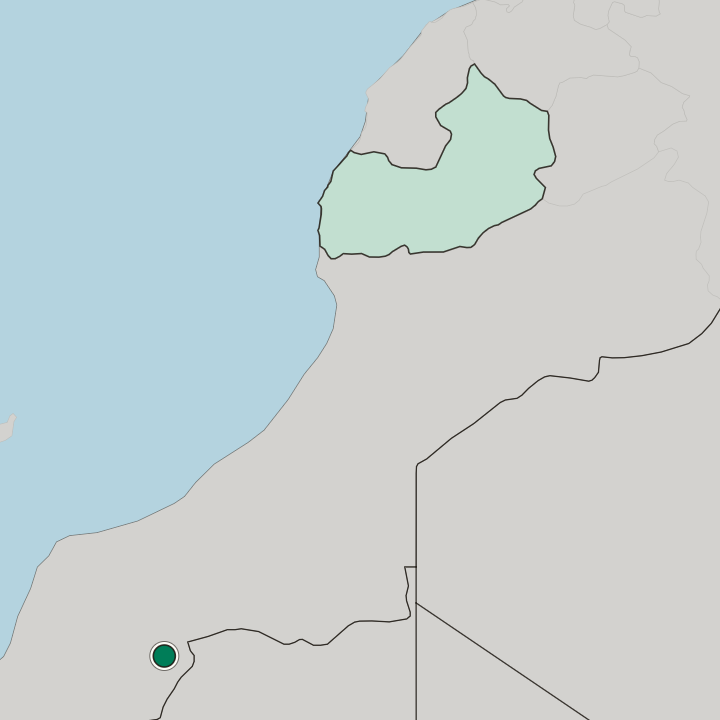
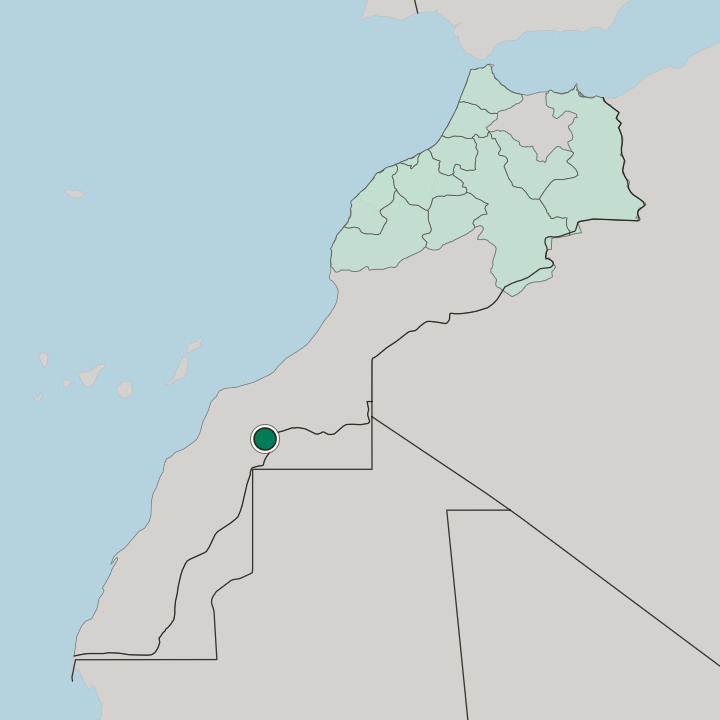
Sand and stone surround Smara. The town sits inland in Western Sahara, a long way from the Atlantic edge of the territory, with the flat ground of Laâyoune-Sakia El Hamra running out from its last streets. Water is the constraint.
Shade is scarce, the horizon stays low and unbroken, and the desert starts again where the streets of Smara stop.
What is the climate of Smara?
The Sahara sets the terms. Smara lies far enough from the Atlantic that the cool sea air moderating the coast of Western Sahara thins out long before it arrives, leaving the town to open desert heat. Rain is an event, not a season.
Nights drop hard, days run dry, and dust travels the wind across Laâyoune-Sakia El Hamra whenever it blows off the interior.
How do you get to Smara?
Smara Airport handles the flights. Overland arrivals come through Smara bus station, and the road that matters most is the one running between the town and Laâyoune. That road can close.
Access to Smara is occasionally refused outright, and onward travel to Laâyoune is not guaranteed once a stranger has arrived, so the way out deserves as much thought as the way in.
Updated September 2026