Mauritania
Assaba, Mauritania — Towns & Travel Guide
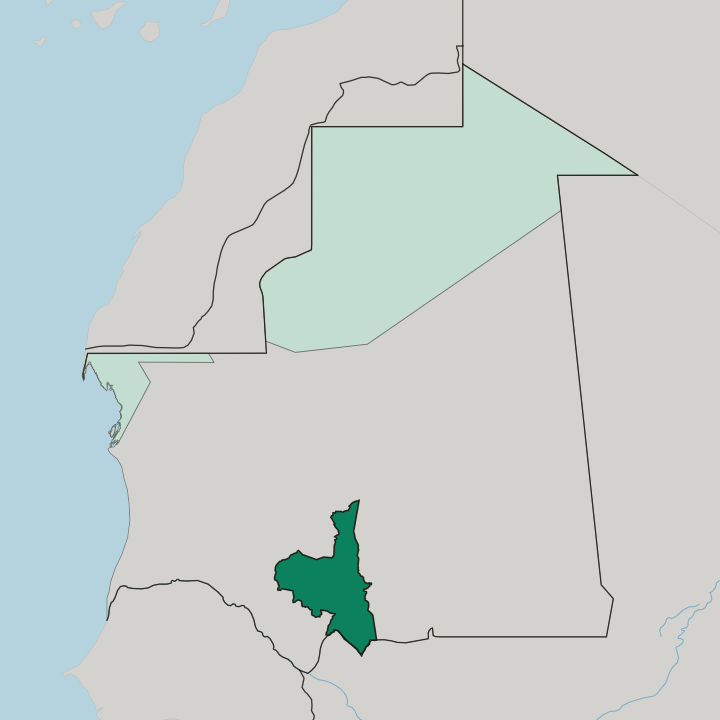
Kiffa is the capital of Assaba, a region of southern Mauritania that borders Mali and five other Mauritanian regions.
Hotel links are affiliate links: booking through them may earn us a commission, at no extra cost to you. It never affects how places are ranked. How this works


Towns & cities in Assaba
One town here has its own guide — it links to where to stay.

 Mauritania
Kiffa
Kiffa is a large town in the far south of Mauritania, capital of Assaba and the name of an administrative area inside the region.Where to stay →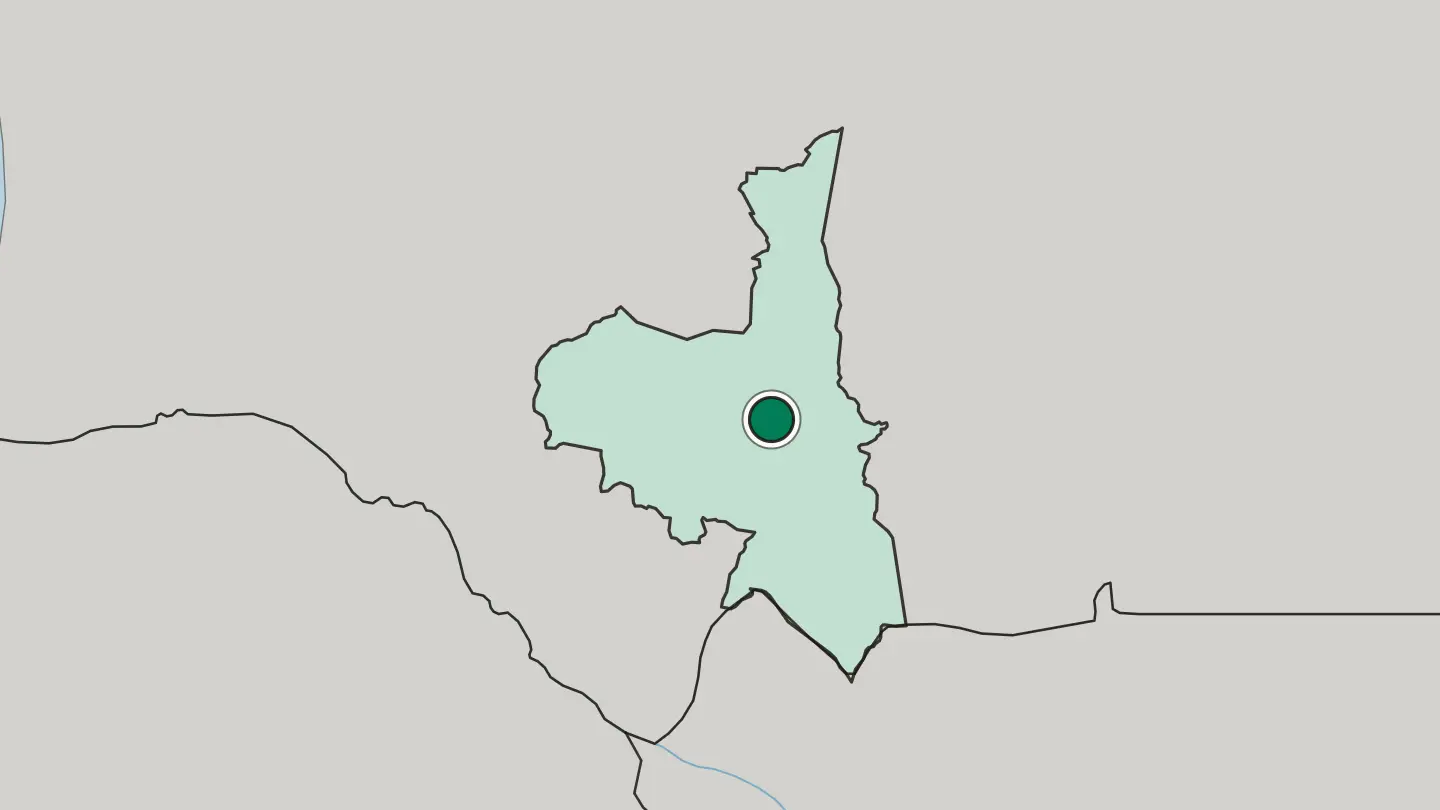
Hotel links are affiliate links: booking through them may earn us a commission, at no extra cost to you. It never affects how places are ranked. How this works
About Assaba
Kiffa anchors the region.
What is Assaba known for?
Assaba runs across southern Mauritania as an administrative unit rather than as a landscape with one famous feature, and its towns, Kiffa at the head of the administration and Guerou among the larger settlements, carry most of what a visitor actually deals with. Borders do the rest of the work. Brakna and Tagant close the region off to the north, Hodh El Gharbi lies to the east, Gorgol and Guidimaka to the west, and Mali begins beyond the southern edge.
Where is Assaba?
Assaba is an inland region. Every one of its edges meets land: Brakna and Tagant to the north, Hodh El Gharbi to the east, Gorgol and Guidimaka to the west, and the boundary with Mali running along the south. That leaves it as an interior crossing point, since movement between Gorgol and Guidimaka on one side and Hodh El Gharbi on the other passes through Assaba rather than around it.
Distances are large. The region covers a wide stretch of southern Mauritania, and travelling from one of its borders to the far one is a day's undertaking rather than an errand, which shapes how any visit gets planned. Kiffa sits at the centre of that arrangement.
The capital is the point the region's roads and administration converge on, and Guerou stands among the other towns of any size, so the settled pattern is a small number of places separated by long open ground. Mali is the one foreign neighbour. Its border gives Assaba a southern frontier that the Mauritanian regions ringing the rest of it do not provide, and that difference matters for anything crossing into or out of the country by land.
What is Assaba like?
Life in Assaba is organised around a few towns. Kiffa carries the functions of a capital and Guerou stands among the larger settlements, and between them lies the open country that gives the region its scale, so what happens in those towns reaches much further than their own streets. The pattern is not accidental.
A region this wide, bounded by Brakna, Tagant, Hodh El Gharbi, Gorgol and Guidimaka, concentrates its offices and services where the roads already meet. No shoreline belongs to Assaba. The frame of reference is inland, made up of the regions that ring Assaba and the border with Mali, not any shoreline.
The southern edge points outward. Mali lies immediately beyond it, and a national border of that kind gives the south of the region a set of connections that its northern and eastern sides, facing other parts of Mauritania, do not share. Assaba's sheer width does the rest.
Because the neighbouring regional capitals are far off, Assaba's own centre counts for more in daily business than it would in a compact country, and Kiffa's position is a practical fact rather than a ceremonial one. Visitors notice it in the pace of travel between towns, where an errand in Kiffa and an appointment in Guerou are unlikely to fit into one morning.
What is the history of Assaba?
Assaba exists as an administrative creation. The division of Mauritania into regions gave it a capital at Kiffa and a set of limits drawn against Brakna, Tagant, Hodh El Gharbi, Gorgol and Guidimaka, with the frontier with Mali forming the southern side. Older layers go undated.
What has carried forward is the arrangement itself, a capital and a boundary line that still decide how the region is described and governed.
What is the climate of Assaba?
Assaba lies wholly inland. Every side of the region is land, with Brakna and Tagant above it, Hodh El Gharbi across to the east, Gorgol and Guidimaka to the west and Mali below, so nothing here is tempered by open water. Interior conditions follow from that.
Travel across the region is planned around the middle of the day and around the length of road between Kiffa and Guerou, which counts for more in practice than any seasonal label.
How do you get to Assaba?
Arrival in Assaba is overland. Roads come in from the neighbouring Mauritanian regions, Brakna and Tagant from the north, Hodh El Gharbi from the east, Gorgol and Guidimaka from the west, and from Mali across the southern border. Kiffa is the usual destination.
The regional capital is where those approaches converge, and Guerou sits along the routes as one of the few towns large enough to break a long drive.
Common questions
What is the best area to stay in Assaba?
Kiffa: Business that runs through Assaba's regional capital. Guerou: An overnight stop away from Kiffa on the eastern side of Assaba.
More regions in Mauritania
Updated September 2026