Mauritania: Regions, Cities & Travel Guide
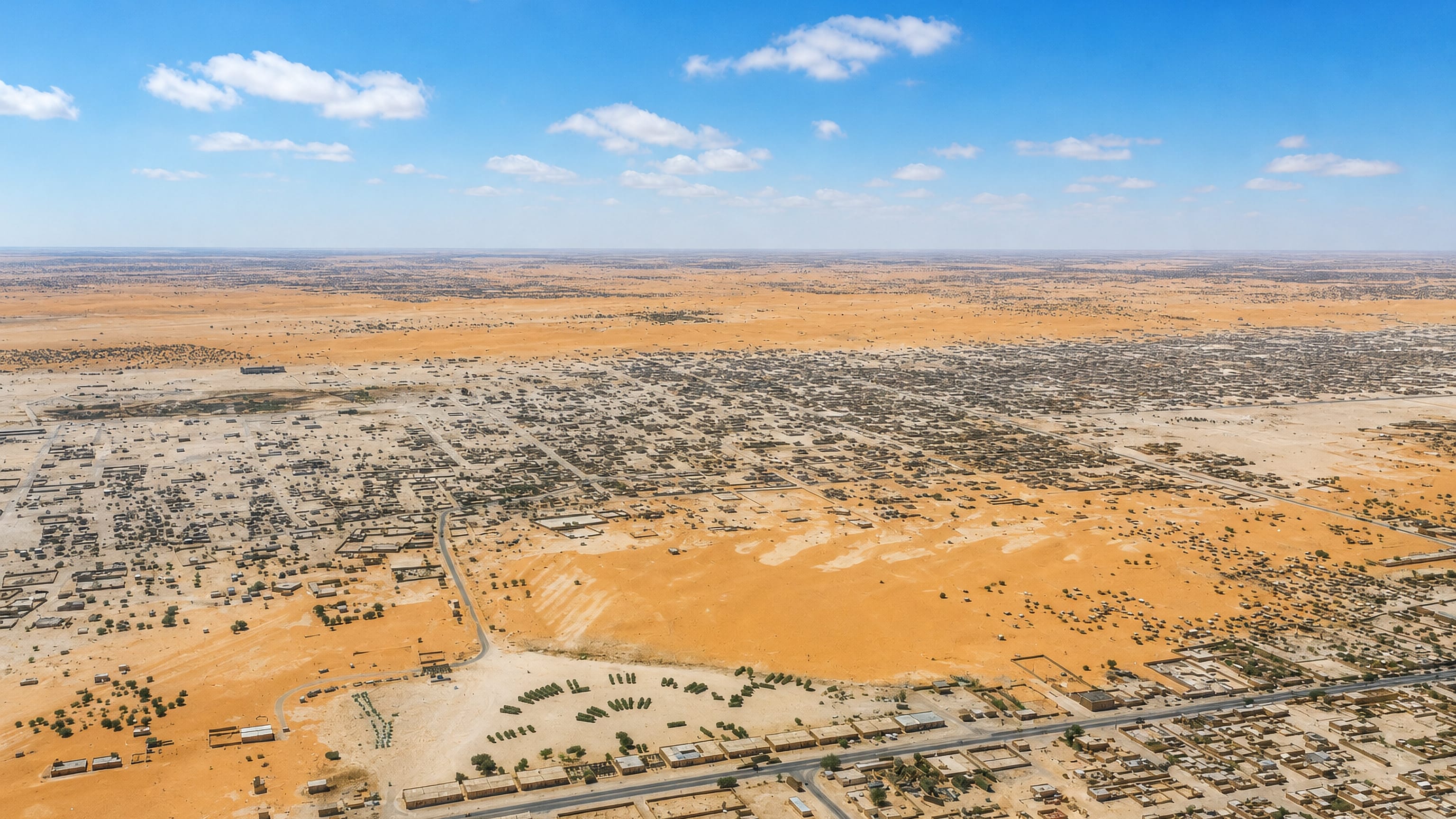
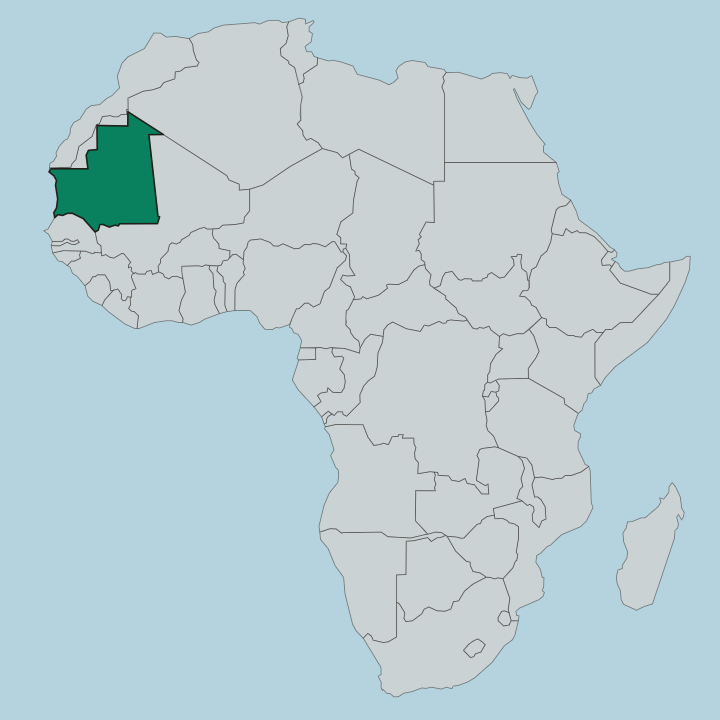
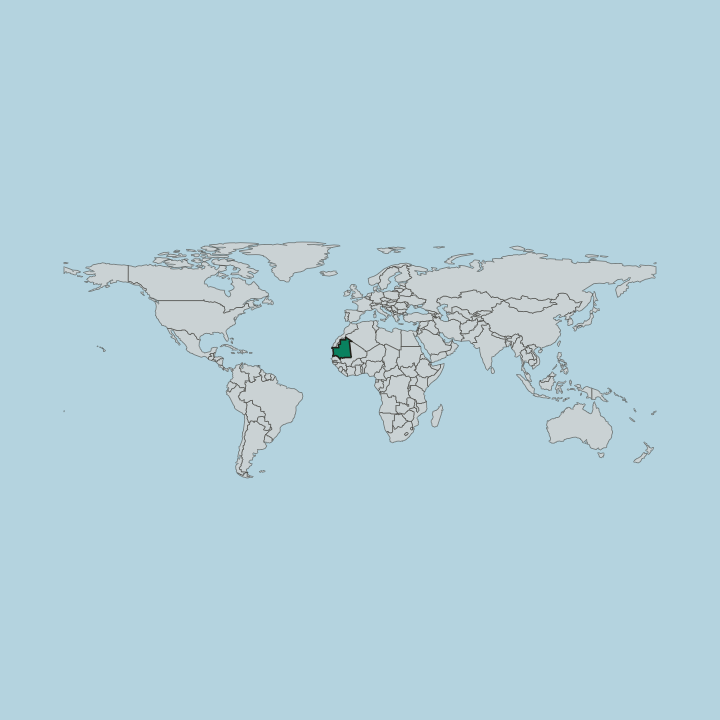
Mauritania is a Saharan republic on West Africa's Atlantic edge, its desert plateaus running down to an ocean coast anchored by Nouakchott.
Hotel links are affiliate links: booking through them may earn us a commission, at no extra cost to you. It never affects how places are ranked. How this works


Top destinations in Mauritania
Cities to start from, then drill into areas and hotels.
 Mauritania
Nouakchott
Sand meets sea at Nouakchott, the capital of Mauritania and one of the largest cities in the Sahara, home to the National Museum of Mauritania.Where to stay →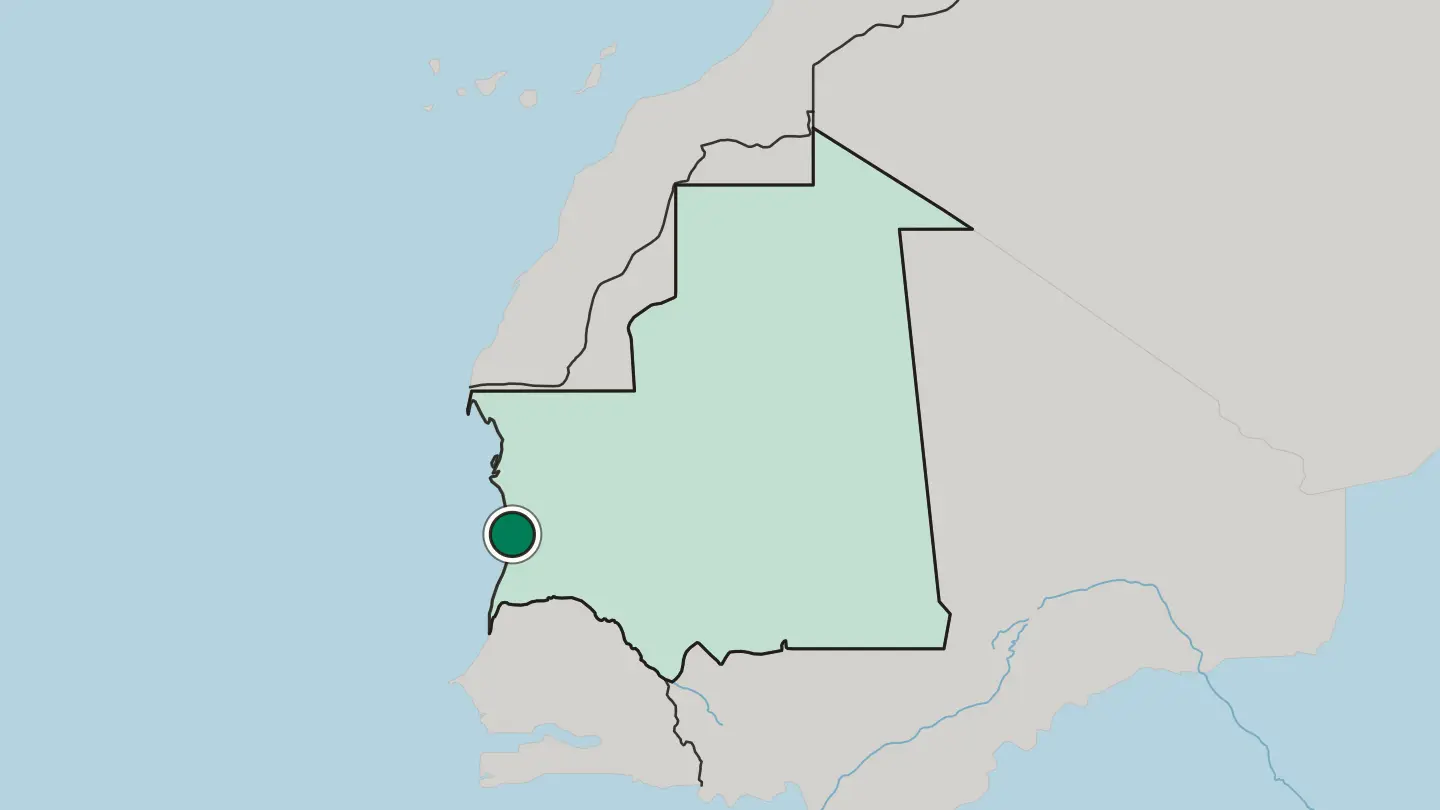
 Mauritania
Nouadhibou
Nouadhibou is a city of northern Mauritania on the Atlantic, a fishing and iron-ore port on a desert peninsula, end of one of the longest trains on earth.Where to stay →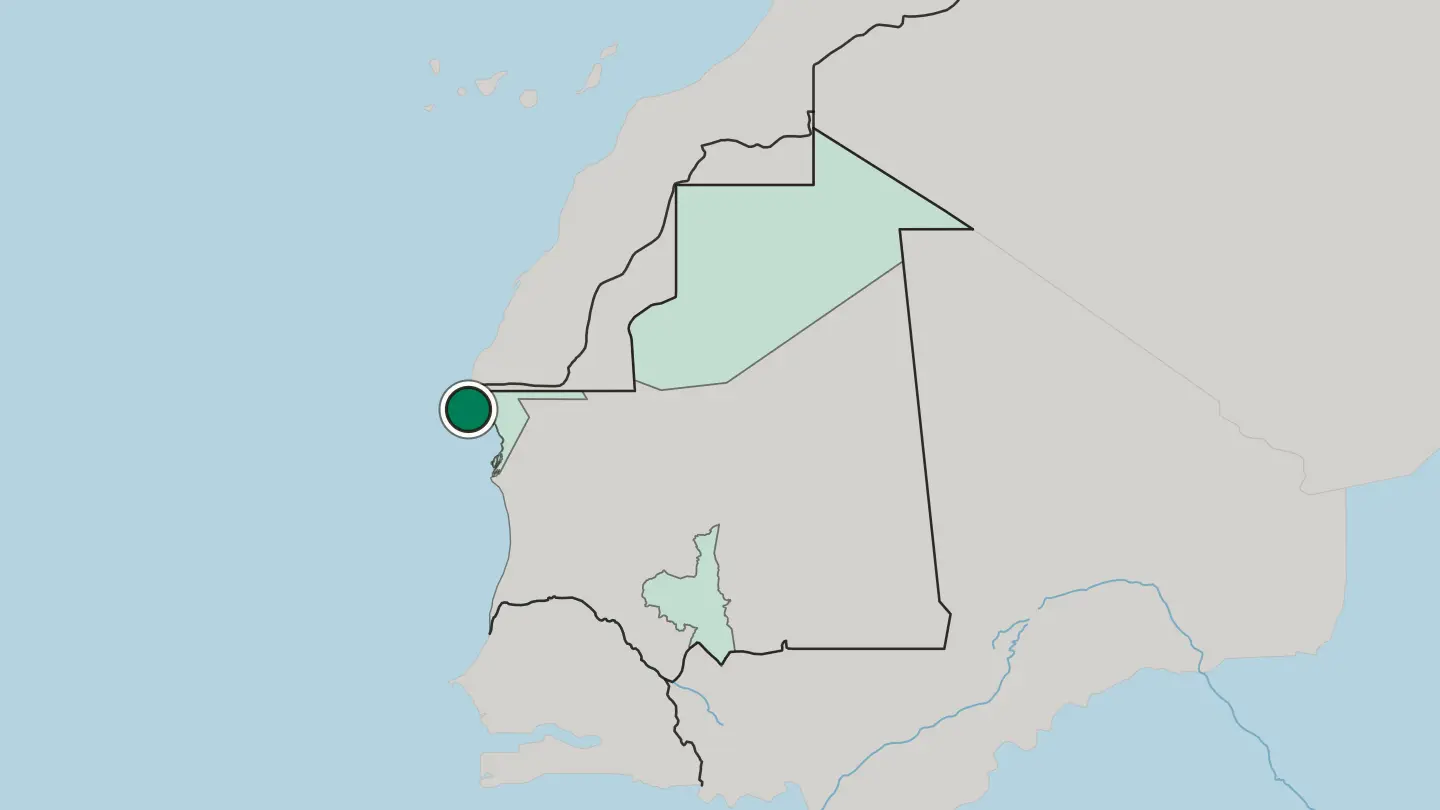 Mauritania
Zouérat
Zouérat is the largest town in northern Mauritania and the capital of Tiris Zemmour, at the eastern end of the Mauritania Railway.Where to stay →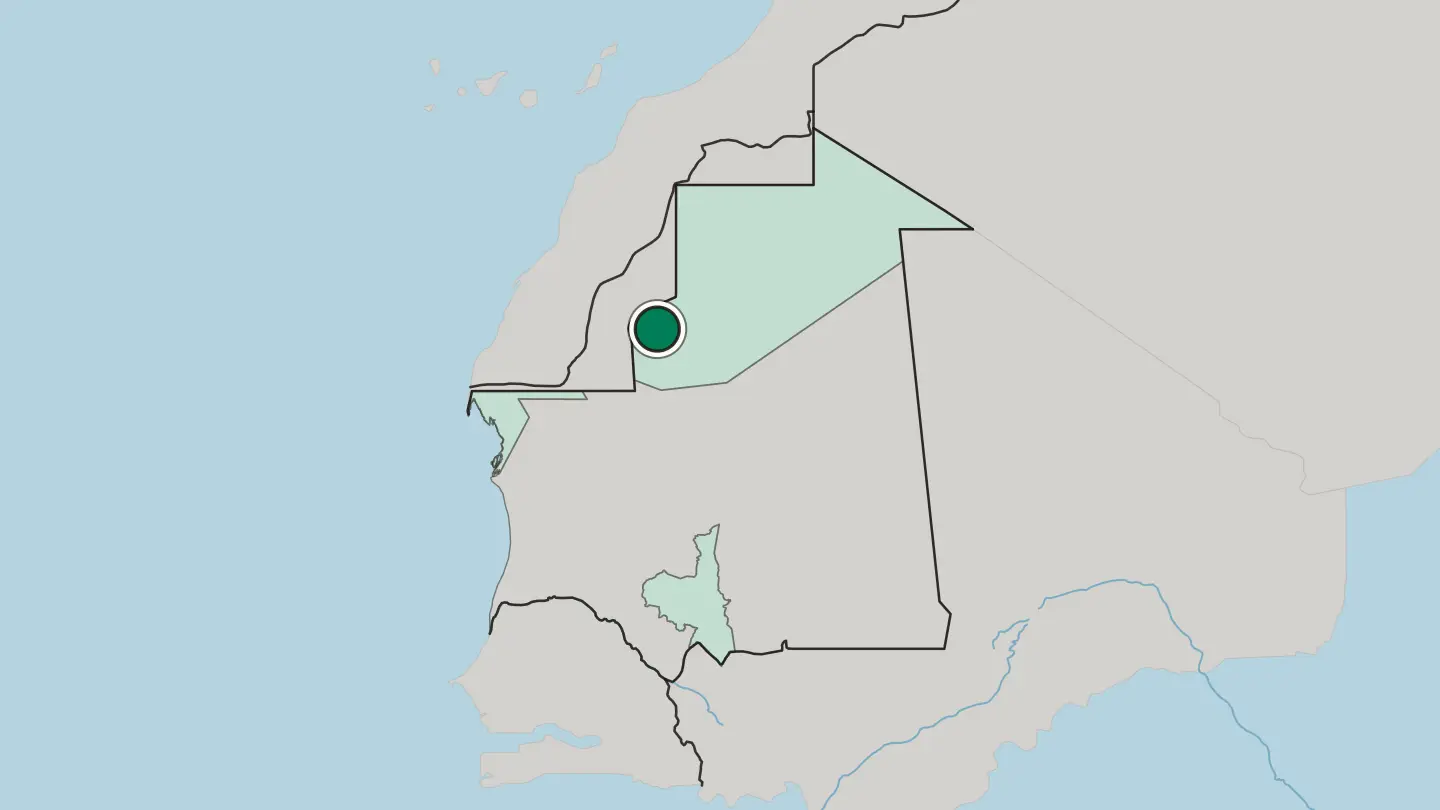
 Mauritania
Kiffa
Kiffa is a large town in the far south of Mauritania, capital of Assaba and the name of an administrative area inside the region.Where to stay →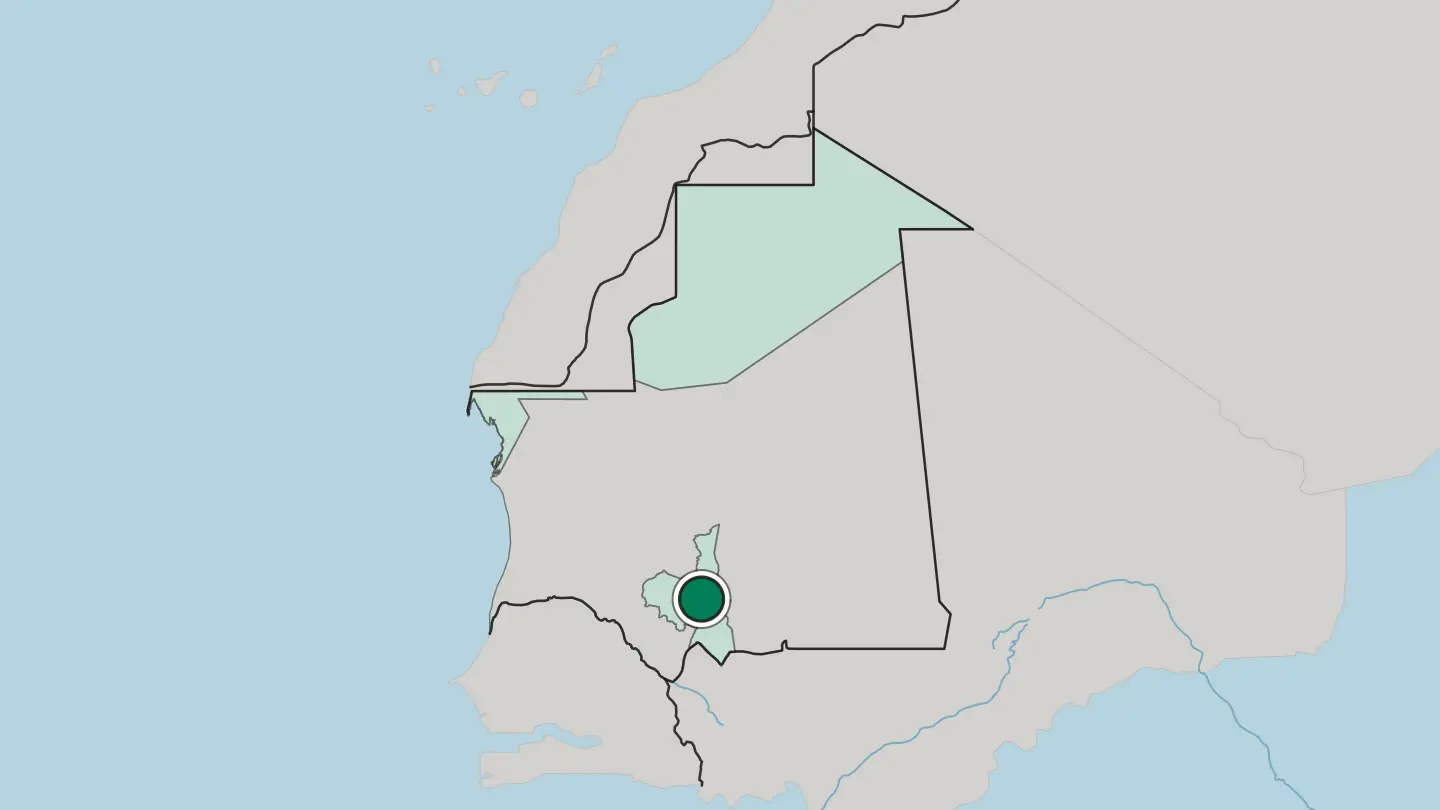
Hotel links are affiliate links: booking through them may earn us a commission, at no extra cost to you. It never affects how places are ranked. How this works
Regions of Mauritania
Mauritania
Assaba
Kiffa is the capital of Assaba, a region of southern Mauritania that borders Mali and five other Mauritanian regions.Towns & cities →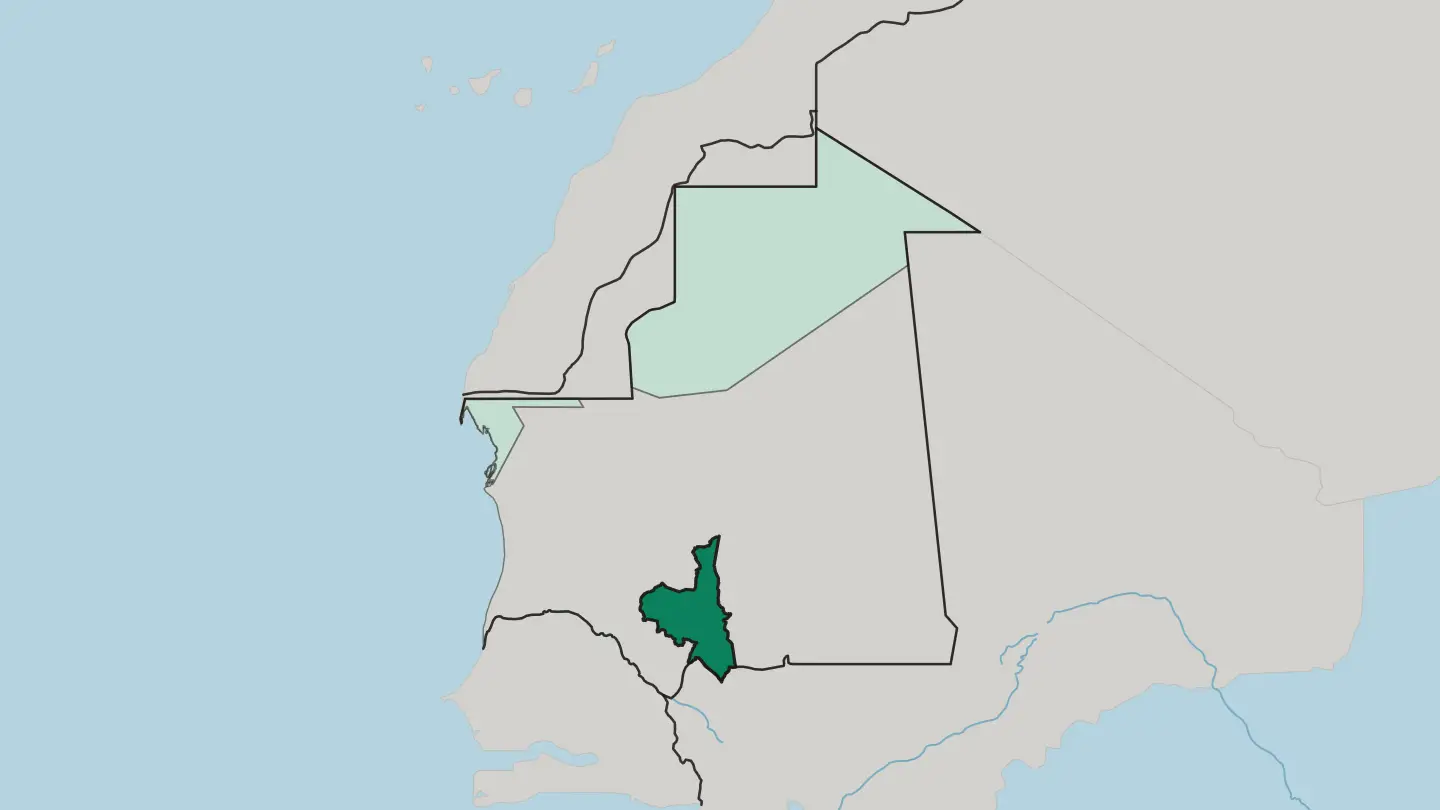 Mauritania
Dakhlet Nouadhibou
Dakhlet Nouadhibou is a coastal region of Mauritania; its capital, Nouadhibou, stands at the region's north-western end.Towns & cities →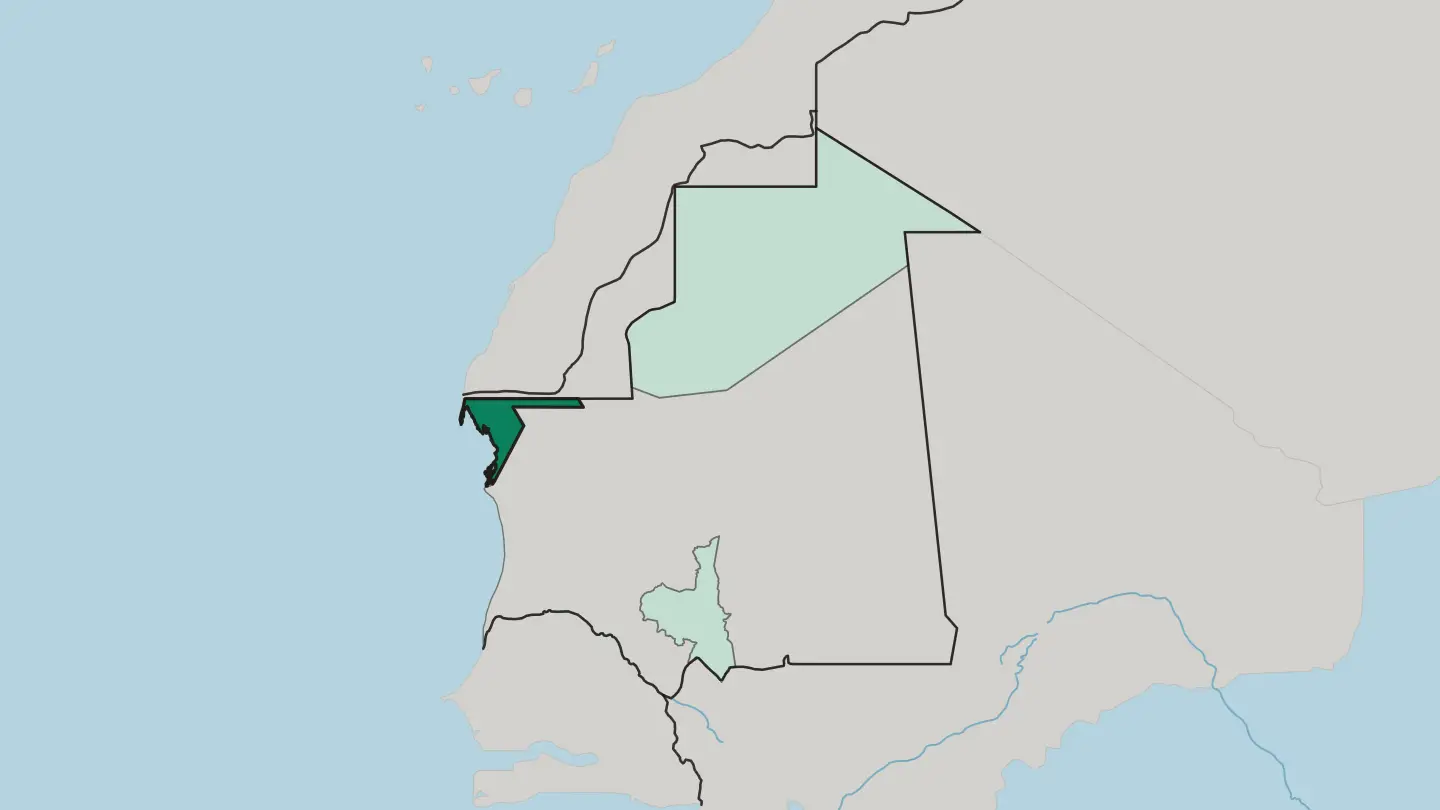 Mauritania
Tiris Zemmour
Tiris Zemmour is the northernmost region of Mauritania, with Zouérat as its capital and borders facing Algeria, Mali and Western Sahara.Towns & cities →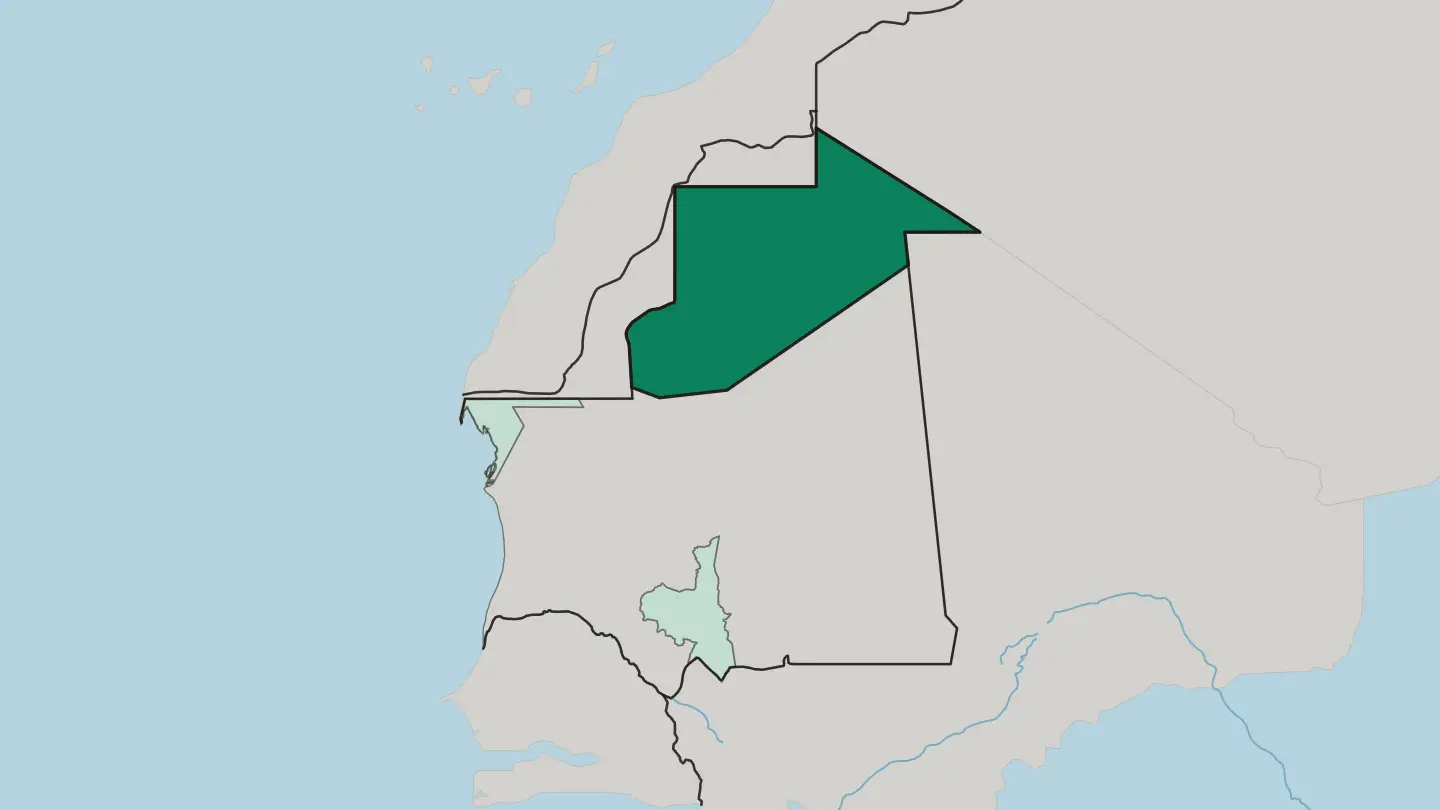 Mauritania
Nouakchott
Sand meets sea at Nouakchott, the capital of Mauritania and one of the largest cities in the Sahara, home to the National Museum of Mauritania.Where to stay →Hotel links are affiliate links: booking through them may earn us a commission, at no extra cost to you. It never affects how places are ranked. How this works
About Mauritania
Mauritania is known for its sand.
What is Mauritania known for?
Nine tenths of the country lies within the Sahara, and its signature landscapes rise on the Adrar Plateau, where the medieval caravan towns of Chinguetti and Ouadane still guard shelves of Arabic manuscripts. Along the Atlantic, the tidal flats of Banc d'Arguin draw millions of migrating birds each winter. Inland, an iron-ore train grinds hundreds of kilometres from the mines at Zouérat down to the port at Nouadhibou.
Desert and ocean define the whole country.
Where is Mauritania?
Mauritania is a broad slab of the western Sahara pressed against the Atlantic, and the desert claims roughly nine tenths of its ground. From the coast the land rises inland through gravel plains and shifting dunes to the sandstone escarpments of the Adrar and the date-palm shelves of the Tagant, the two plateaus that give the interior its shape. Cliffs break the flat expanse.
The great erg sand seas roll east toward Mali, and here and there a spring feeds a hidden oasis such as Terjit, a thread of green in the rock. The country's living edge is in the south. There the Senegal River draws the border with its neighbour and waters a narrow belt of farmland and grazing, the Sahelian zone where most Mauritanians actually live.
Between that river valley and the northern desert lie four contrasting ecological bands: the deep Saharan interior, the semi-arid Sahel, the fertile river valley, and the cool, foggy Atlantic coast. Along that shore the cold Canary Current feeds one of the richest fishing grounds on earth, and the shallows of Banc d'Arguin spread for miles at low tide. From dune to delta the ground keeps changing.
What is the history of Mauritania?
Mauritania's past is written along the trade routes that crossed the Sahara. Much of the country once sat inside the Ghana Empire, the gold-and-salt power whose heartland straddled modern Mauritania and Mali, and whose caravans linked the Maghreb to the forests of the south. In the eleventh century Berber confederations of the western desert coalesced into the Almoravid movement, which swept both north into the Iberian Peninsula and south across the Sahel.
Islam took firm root in that age. Desert towns became scholarship, not just commerce. Chinguetti and Ouadane grew rich on that traffic, their libraries filling with manuscripts as pilgrims and scholars passed through on the road toward Mecca.
Over centuries the Hassani Arab tribes moved west into the Sahara and mixed with the Berbers, and from that meeting the Moorish culture of the country emerged. France drew the territory into French West Africa in the early twentieth century, holding little beyond the coast and the caravan tracks. Independence came in 1960, and a new capital was raised at Nouakchott, then barely more than a village on the dunes.
The old desert cities still stand as the country's deepest memory.
What is Mauritania like?
Mauritania sits at the seam of Arab-Berber and Black African worlds, and its culture carries both. The Moors of the desert speak Hassaniya, an Arabic dialect thick with Berber words, while Pulaar, Soninke, and Wolof are spoken along the Senegal River in the south, where communities look toward the wider Sahel. Music binds these strands together.
Griots pass down praise poetry and history on the ardin harp and the tidinit lute, and their songs still open weddings and gatherings across the country. Hospitality here runs on tea. Sweet green tea is brewed strong and poured in three rounds, each glass frothed and served in turn, a ritual that can stretch a whole afternoon.
The kitchen leans on rice and fish along the coast, and thieboudienne, a rich rice-and-fish stew shared from a common platter, counts as the national dish. Dress marks the same divide: men in the flowing pale-blue boubou, women wrapped in the bright melhfa. Faith orders daily life, and Chinguetti is counted among Islam's holy cities of the western desert.
Old ways and new cities meet without friction.
What is the climate of Mauritania?
Heat and dryness rule most of Mauritania. Across the Saharan interior the harmattan blows off the desert through a long rainless season, days scorch, and nights on the Adrar can turn sharply cold. The south is different: the Sahel and the Senegal River valley catch a brief summer rainy season, enough to green the pastures and feed the millet fields.
The Atlantic coast stays cooler and often foggy, tempered by the ocean while the interior bakes. Travellers come in the northern winter, when the desert days are mild.
How do you get to Mauritania?
Most travellers fly into Nouakchott, whose international airport is the country's main door and the hub for onward desert travel. A second gateway sits at Atar in the Adrar, where seasonal flights land travellers within a day's drive of the old stone towns of Chinguetti and Ouadane. Overland routes cross from the south at Rosso on the Senegal River and run down the coast from the border with Western Sahara.
Distances between towns are Saharan. Beyond the paved arteries, a guide and a four-wheel-drive do the rest.
Updated September 2026