Maldives: Regions, Cities & Travel Guide
The Maldives is an archipelagic nation of 26 atolls scattered across the Indian Ocean, southwest of Sri Lanka, with Malé as its capital.
Hotel links are affiliate links: booking through them may earn us a commission, at no extra cost to you. It never affects how places are ranked. How this works


Top destinations in Maldives
One city to start from, then drill into its areas and hotels.
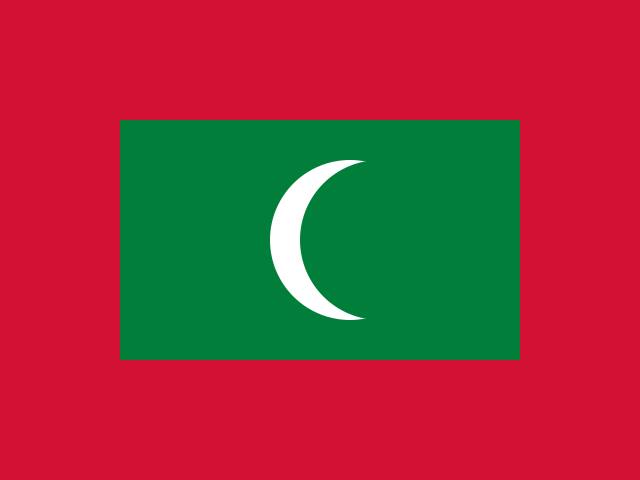 Maldives
Male
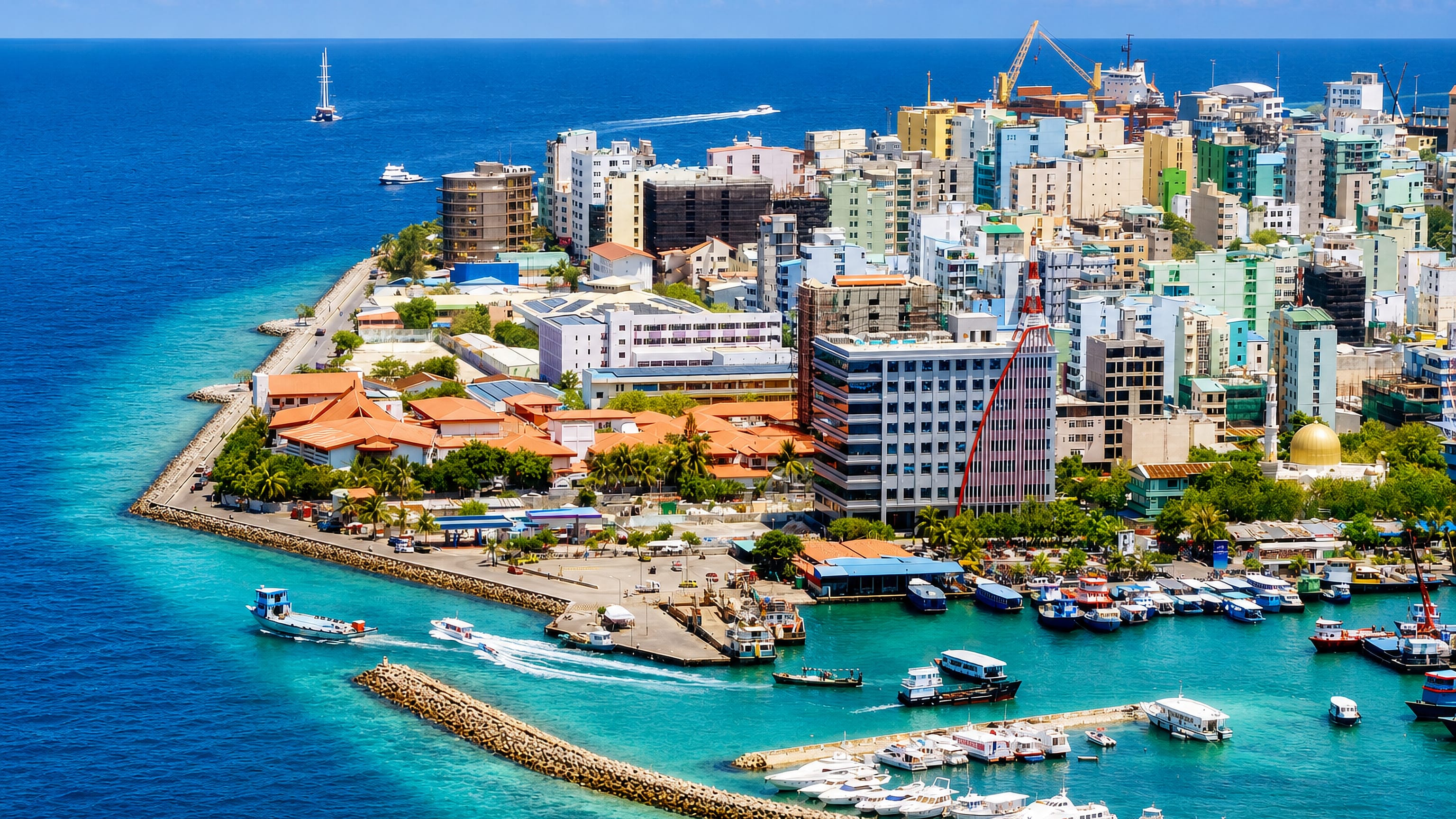
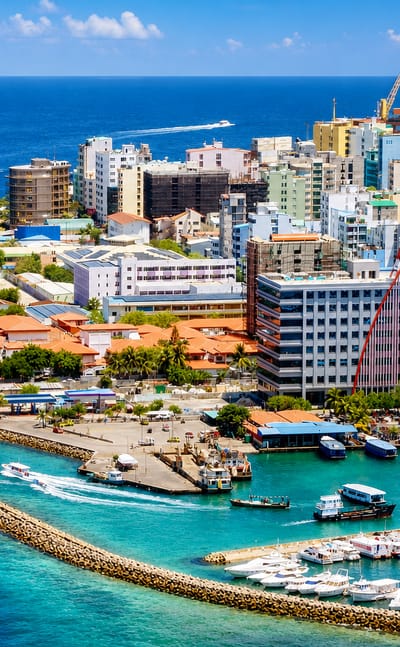
Narrow streets and colourful houses pack the islet of Malé, capital of the Maldives, at the southern rim of North Malé Atoll in Kaafu Atoll.Where to stay →
Hotel links are affiliate links: booking through them may earn us a commission, at no extra cost to you. It never affects how places are ranked. How this works
Browse by region
One region so far — open it to see its cities and towns.
About Maldives
Coral reefs define this country.
What is Maldives known for?
The chain of 26 atolls carries over a thousand low islands, and the water between them holds more than two thousand species of fish, which is why divers and snorkellers keep returning to Ari Atoll and Baa Atoll. Malé, the crowded capital, sits on its own island in Kaafu Atoll. Beyond it lie the resort islands.
Manta rays and whale sharks cruise the outer edges.
Where is Maldives?
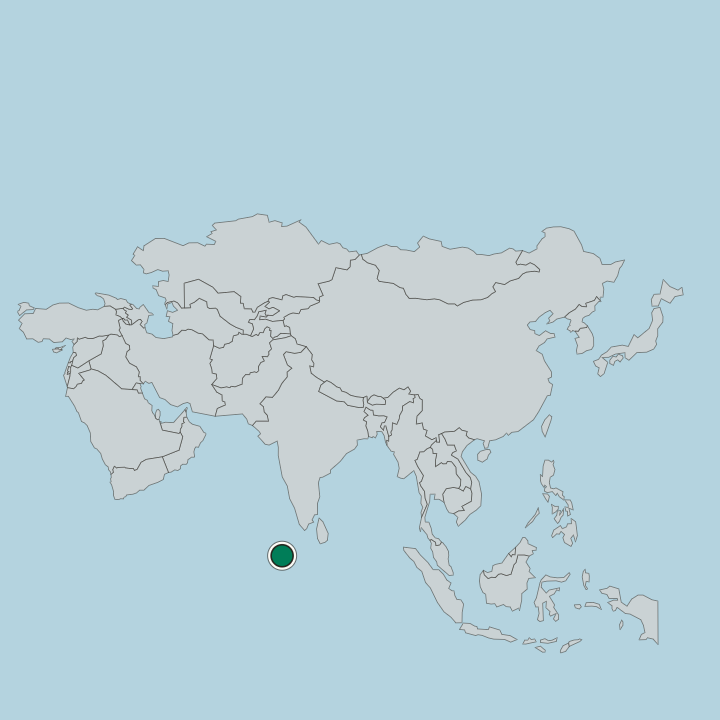
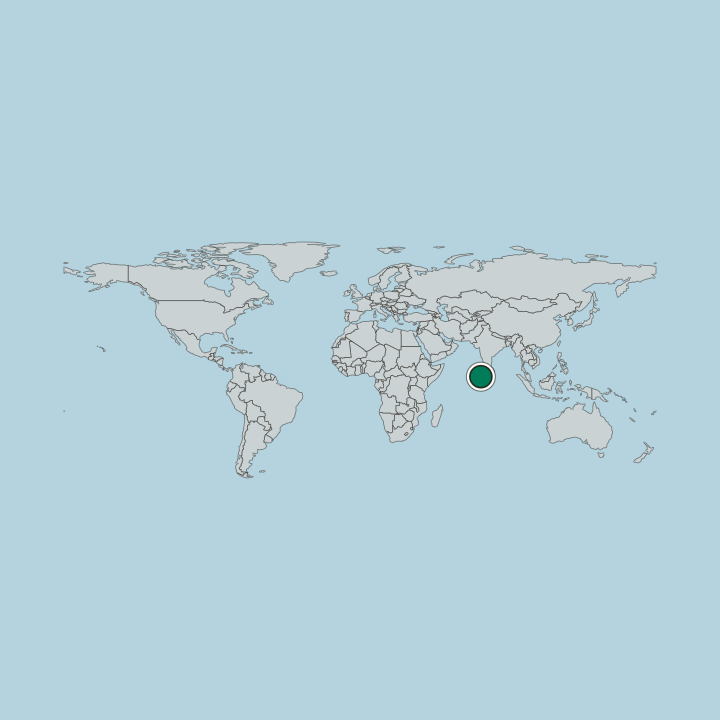
The Maldives is an archipelagic country in South Asia, strung across the Indian Ocean about 750 kilometres southwest of the Asian mainland and just beyond the southern tip of Sri Lanka. Its 26 atolls form a long north-to-south chain that straddles the equator, running from Ihavandhippolhu Atoll at the northern end to Addu Atoll in the far south. The land is barely land at all.
Coral reefs enclose shallow lagoons, and inside those rings sit more than a thousand small islands, few of them rising much above the reach of a high tide. This is among the flattest and lowest countries on earth, and the sea is never far in any direction. Each atoll is its own coral ring.
Kaafu Atoll frames the capital and the busiest waters, while Ari Atoll and Baa Atoll spread west and north with their own reefs and channels. Farther south, past the wide sea-gap of the Equatorial Channel, Fuvahmulah stands alone as a single-island atoll, and Addu City curls around the southernmost reef of all. Deep water separates one atoll from the next.
The islands themselves are made of coral sand and little else.
What is the history of Maldives?
Seafarers found these atolls early, drawn by their position on the trade routes that crossed the Indian Ocean between Arabia, India, and the ports of Sri Lanka. For centuries the islands were a Buddhist kingdom, and ruined stupas and coral-stone relics still turn up on scattered atolls. That order ended in the twelfth century.
Around 1153 the last Buddhist king converted to Islam, and from that conversion grew a sultanate that would rule the archipelago for roughly 815 years, an unusually long unbroken line for so small a state. Outside powers circled the trade wealth. Portuguese, Dutch, and finally British influence reached the islands, and the Maldives became a British protectorate that kept its sultan but ceded its foreign affairs.
Independence came on 26 July 1965, when Britain relinquished control and the country took its own seat among nations. The monarchy did not last long after that. A referendum ended the sultanate, and on 11 November 1968 the Maldives was declared a republic, closing more than eight centuries of royal rule.
From Buddhist kingdom to island republic, the thread is the sea that made it reachable.
What is Maldives like?
Maldivian culture grew from the sea trade that touched every atoll. The national language is Dhivehi, an Indo-Aryan tongue cousin to the Sinhala of Sri Lanka, written in the Thaana script that runs right to left and was devised only in the eighteenth century. Islam sits at the centre of daily life.
Since the twelfth-century conversion the country has been Sunni Muslim, and the mosque is the heart of most island communities. Yet the culture is not only inward-looking. Listen for the drums.
Bodu beru, meaning "big drum," carries clear East African roots, and a performance builds from a slow pulse on coconut-wood drums into a fast, communal dance that pulls in singers and onlookers alike. The kitchen leans hard on two ingredients the reef and the palm provide. Tuna and coconut anchor almost everything, from the shredded-fish breakfast salad called mas huni eaten with flatbread to fish curries simmered across the atolls.
Fishing shaped the calendar for generations. Craft traditions of lacquerwork and fine mat-weaving survive on particular islands. The result reads as South Asian, Arab, and African at once.
What is the climate of Maldives?
The Maldives is hot all year. Sitting on the equator in the Indian Ocean, the country runs on two monsoons rather than four seasons, and the difference between them is rain, not temperature. The dry northeast monsoon holds from roughly January into April, bringing the clearest skies and calmest water.
The wet southwest monsoon then takes over from May through October, warmer still and far stormier, with the northern atolls generally catching less rain than the south. Warm water is the one constant.
How do you get to Maldives?
Nearly everyone arrives through one gateway. Velana International Airport sits on its own island in Kaafu Atoll, minutes across the water from the capital, Malé, and it handles the long-haul flights that connect the archipelago to Asia, the Gulf, and Europe. From there the journey becomes a boat or a plane.
Resorts on the nearer atolls run guests over by speedboat, while those farther out send seaplanes that land on the lagoon, and the southern atolls like Addu City take a domestic hop first. The last leg is always over water.
Good for
Updated September 2026