Namibia
Khomas, Namibia — Towns & Travel Guide
Khomas is a region of central Namibia on the Khomas Highland, the high plateau that gives it its name and holds the capital, Windhoek.
Hotel links are affiliate links: booking through them may earn us a commission, at no extra cost to you. It never affects how places are ranked. How this works


Towns & cities in Khomas
One town here has its own guide — it links to where to stay.
 Namibia
Windhoek
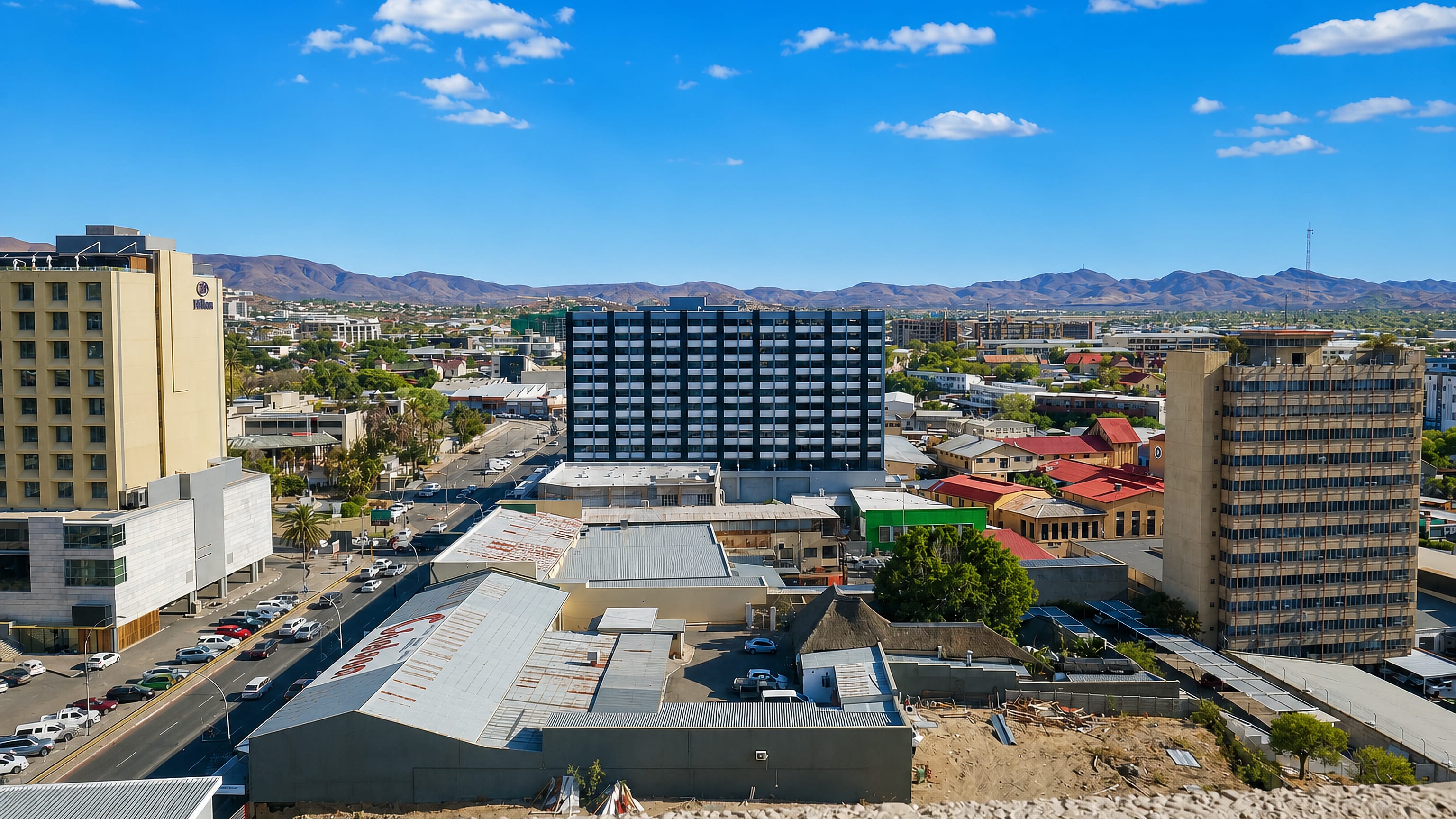
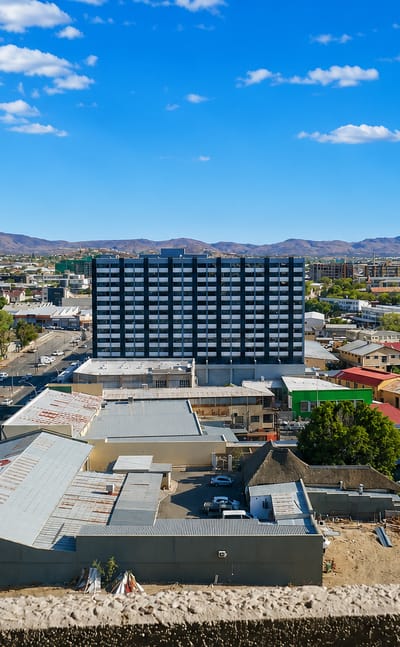
Windhoek sits on the Khomas Highland plateau at the centre of Namibia, the country's capital, known for Christ Church and the Alte Feste.Where to stay →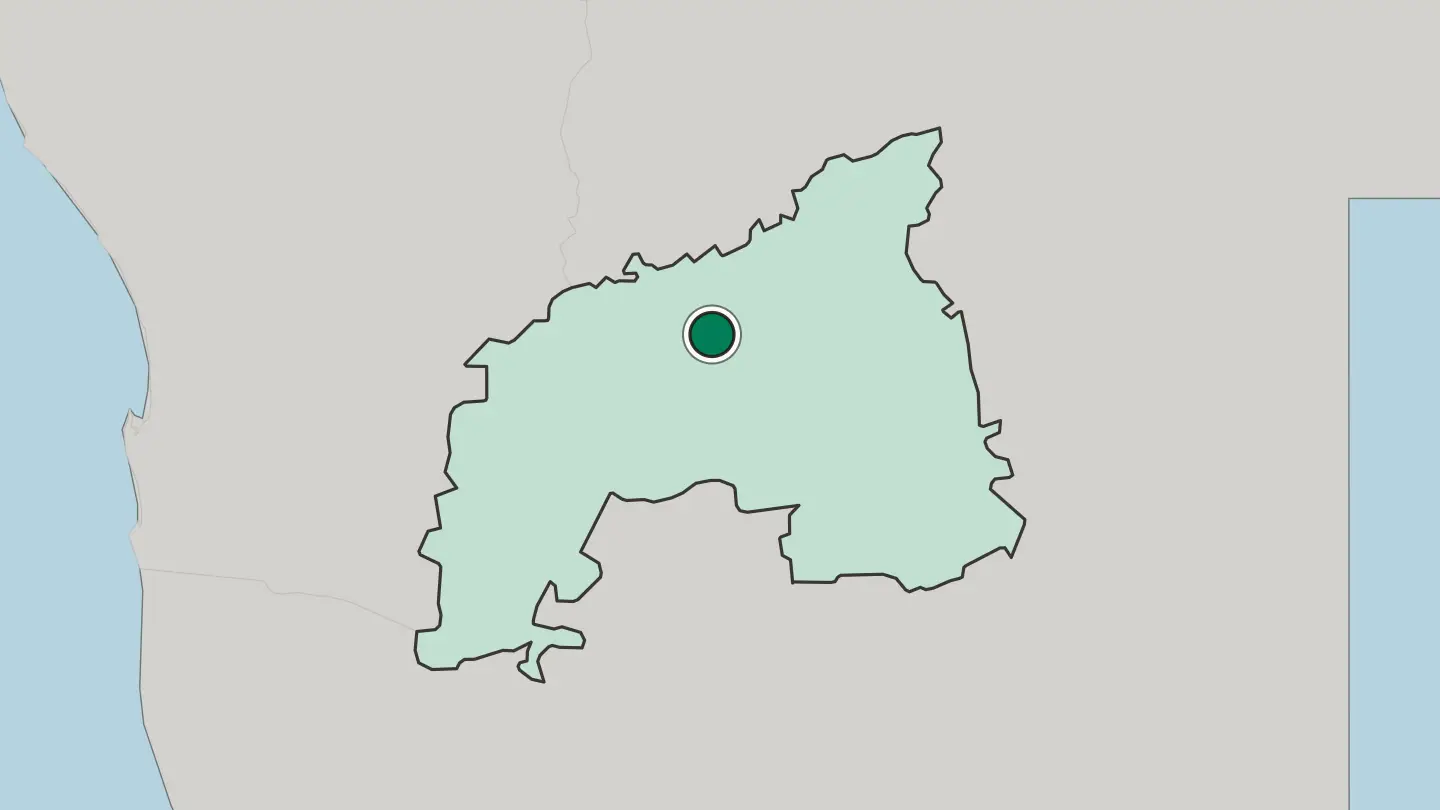
Hotel links are affiliate links: booking through them may earn us a commission, at no extra cost to you. It never affects how places are ranked. How this works
About Khomas
What is Khomas known for?
Khomas is known as the region built around Windhoek, the capital of Namibia, on the high plateau of the central highlands. The Khomas Highland defines it. Its name comes straight from that plateau landscape, and Khomas is one of only three regions of Namibia with neither shoreline nor a foreign border, a purely inland region held together by the hills and valleys of the highland.
Where is Khomas?
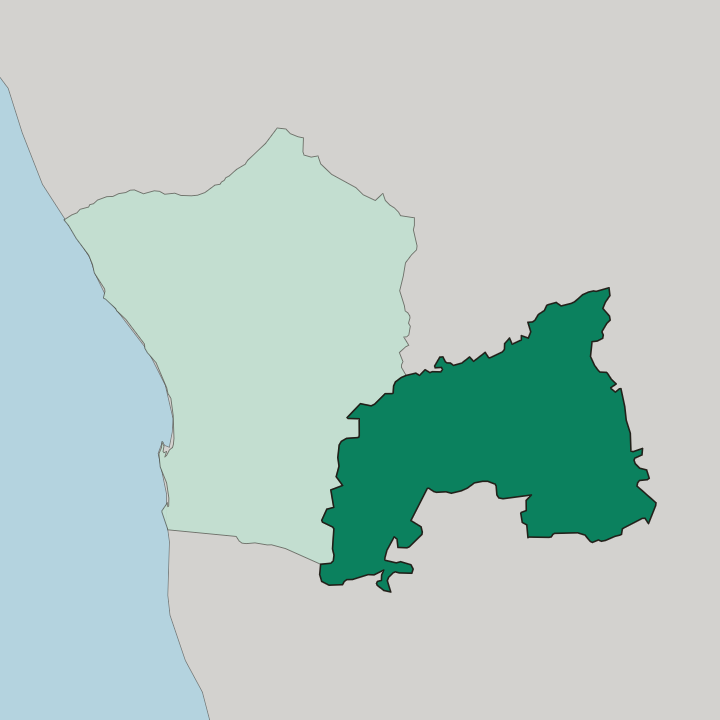
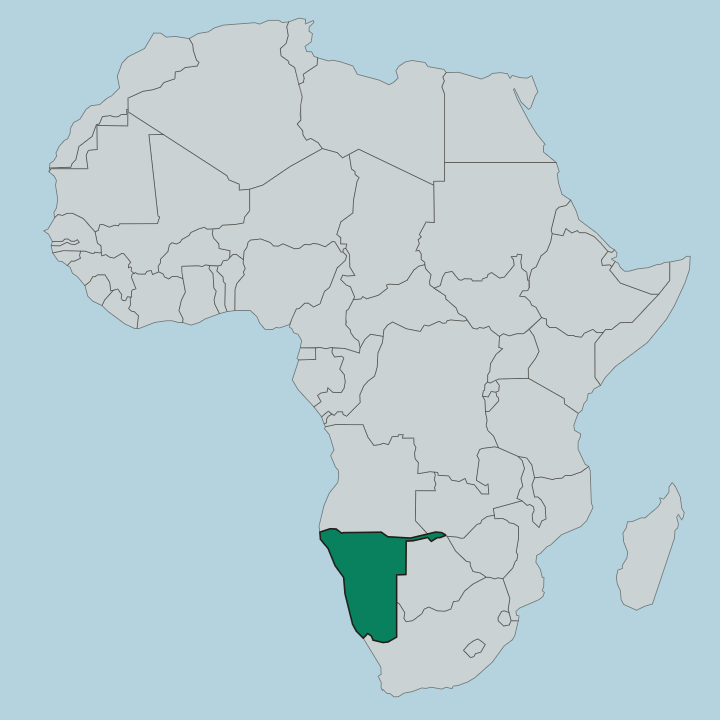
Khomas occupies the central highlands of Namibia, a landlocked region set high on the Khomas Highland plateau. Hills and valleys define it. The countryside is hilly and broken by many valleys across the plateau, and Khomas sits well inland, one of only three regions of Namibia with neither a shoreline nor a foreign border along any edge.
Windhoek anchors the region from its centre. Around the capital the plateau rolls outward toward the region's neighbours, meeting Erongo to the west and northwest, Otjozondjupa to the north, Omaheke to the east, and Hardap to the south. The land stays high throughout.
This is the elevated heartland of the country, where the Khomas Highland gives the whole region both its terrain and its name.
What is Khomas like?
Khomas carries the cultural life of the region that surrounds the national capital, shaped by Windhoek at its centre. Windhoek shapes the character of Khomas. English is the working language here, and the region gathers people from across Namibia who have converged on the plateau where the country's institutions sit, giving Khomas an outward-facing character rooted in the capital.
Much of that identity flows through Windhoek. As the seat of national government on the Khomas Highland, the capital draws the trade, finance, and administration that give the region its developed economic sectors and its role as the country's hub. Life is concentrated at the centre.
Beyond the capital, the region keeps the quieter rhythms of the highland countryside, where scattered communities work the hills and valleys of the central plateau of Namibia.
What is the history of Khomas?
Khomas takes its history from Windhoek, the capital it surrounds on the Khomas Highland. The city drew the first settlement to the plateau. As Windhoek grew at the centre of the country, the surrounding highland became the administrative core of Namibia, and Khomas came to hold the seat of national government among the fourteen regions of the country.
What is the climate of Khomas?
Khomas has a semi-arid highland climate, dry and mild across the Khomas Highland plateau. Sunshine rules the year. Warm days cool sharply after dark on the high ground, and the sparse rain arrives in the warmer months as brief storms over the central highlands, before the long dry season settles again across the inland region of Namibia.
How do you get to Khomas?
Khomas is reached through Windhoek, the capital at its centre and the main point of entry to Namibia. Most journeys begin in the capital. Because the region holds the national hub, it enjoys superior transport links, and highways spread from Windhoek across the Khomas Highland to connect the central plateau with the coast and the rest of the country.
Common questions
What is the best area to stay in Khomas?
Windhoek, the regional hub: Travellers basing in the capital before crossing the Khomas Highland.
Another region in Namibia
Updated September 2026