Netherlands · Provincie Groningen
Where to Stay in Groningen, Provincie Groningen
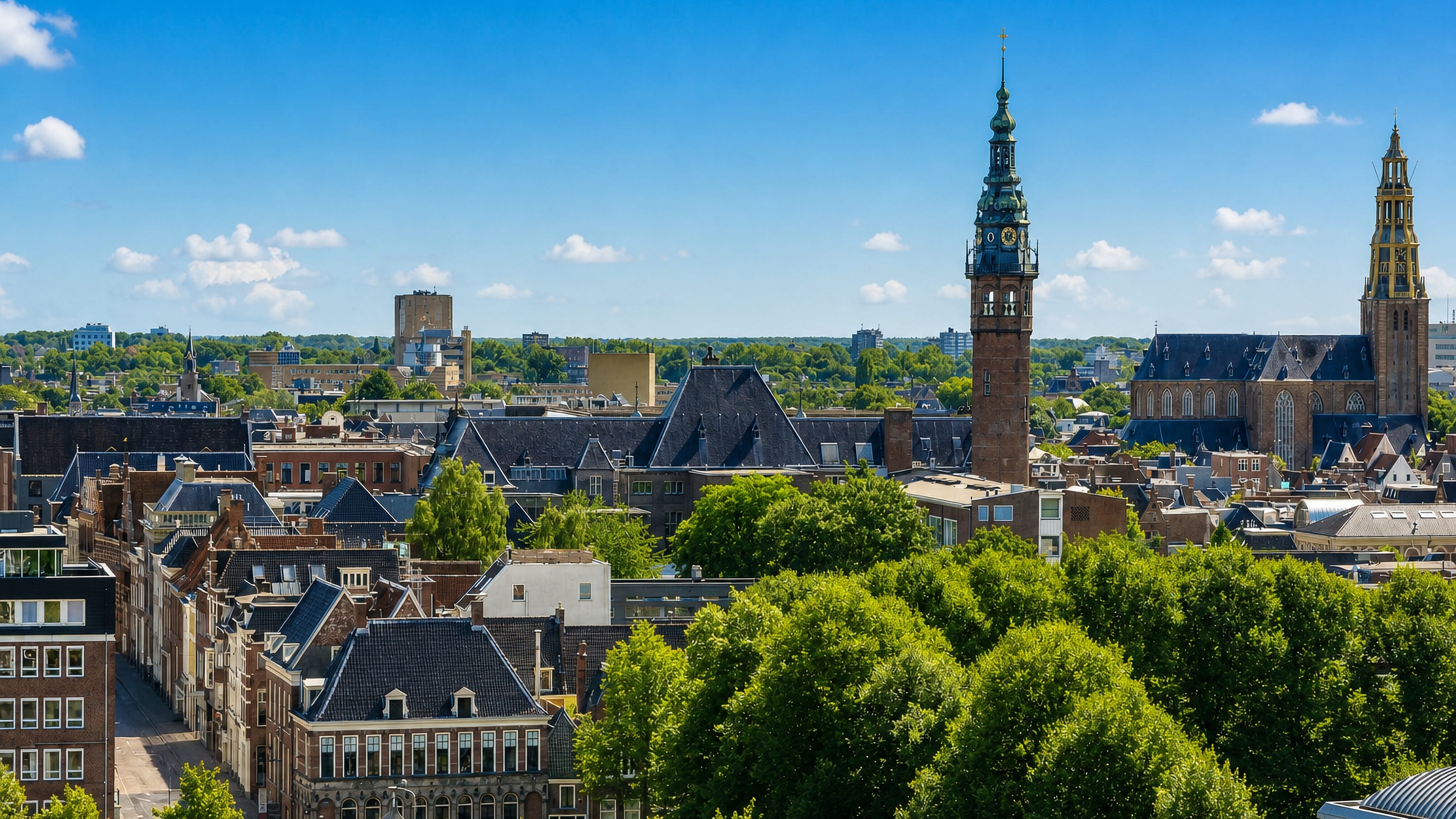
Groningen is the largest city of the Dutch north, a university town built around a medieval market square and a daring modern-art museum.
Hotel links are affiliate links: booking through them may earn us a commission, at no extra cost to you. It never affects how places are ranked. How this works


Where to stay in Groningen
The right area depends on your trip — here's what each neighbourhood is best for.
 GroningenNetherlands
Korrewegwijk
Korrewegwijk is a district of Groningen, recorded also as Oud-Noord, with the Nieuwe Kerk and the Werkman Bridge among its named ground.Where to stay →GroningenNetherlandsSelwerd
Selwerd is a district of Groningen whose ground carries the names of Kasteel Selwerd and Klooster Selwerd.Where to stay → GroningenNetherlands
Helpman
Helpman is a district of Groningen holding the Helperkerk, the San Salvatorkerk and the listed buildings of the Van Mesdagkliniek.Where to stay →GroningenNetherlandsVinkhuizen
Vinkhuizen is one of the districts of Groningen, in the Netherlands, and the record fixes only two named entries to its ground.Where to stay →Hotel links are affiliate links: booking through them may earn us a commission, at no extra cost to you. It never affects how places are ranked. How this works
Find hotels in Groningen
Direct booking searches for these neighbourhoods.
Binnenstad
The medieval core around the Martinikerk, walkable to every museum, cafe, and market stall.Find hotels in Binnenstada quieter canal-side base near the old harbourA-Kwartier
The former shipping quarter by the Der Aa-kerk and the Noordelijk Scheepvaartmuseum, calm yet central.Find hotels in A-Kwartierarriving by train with heavy bagsStationsgebied
Newer hotels clustered by the Groninger Museum and the rail station, steps from the platforms.Find hotels in StationsgebiedHotel links are affiliate links: booking through them may earn us a commission, at no extra cost to you. It never affects how places are ranked. How this works
Things to do in Groningen
Ranked by global recognition; descriptions from Wikidata (CC0).
Museums & Galleries
3- Stadspark Groningen Heritage
- Groninger Museum
- Nederlands Stripmuseum
Churches & Religious Sites
8- Martinikerk Heritage
- Der Aa-kerk Heritage
- Nieuwe Kerk Heritage
- Oosterkerk Heritage
- Sint-Franciscuskerk Heritage
Show 3 more →
- San Salvatorkerk Heritage
- Pelstergasthuiskerk Heritage
- Helperkerk Heritage
Castles & Historic Sites
2- Kasteel Selwerd Heritage
- Terrein met voormalig Benedictijner nonnenklooster Maria Virgo Heritage
Landmarks & Notable Places
8- Gotisch huis (Groningen) Heritage
- Huize Maas Heritage
- Canterhuis Heritage
- Oude Boteringestraat 23 (Groningen) Heritage
- Ossenmarkt 5 (Groningen) Heritage
Show 3 more →
- Hoge der A 16 (Groningen) Heritage
- Directors' houses of Van Mesdagkliniek Heritage
- Jailers' houses of former prison / Van Mesdagkliniek Heritage
worth knowingacross 4 categories in Groningen
About Groningen
Students set the tone here.
What is Groningen known for?
Some fifty thousand of them fill a compact centre that Groningen has kept lively without losing its medieval bones, and the mix of youthful energy and old brick gives the city its particular pull. The Groninger Museum floats on the water by the station, a clash of colour and angular pavilions. Around the Grote Markt rise the Martinikerk and its tower, long the emblem of the north.
Comics, ships, and university treasures each claim a museum of their own.
What are the main landmarks in Groningen?
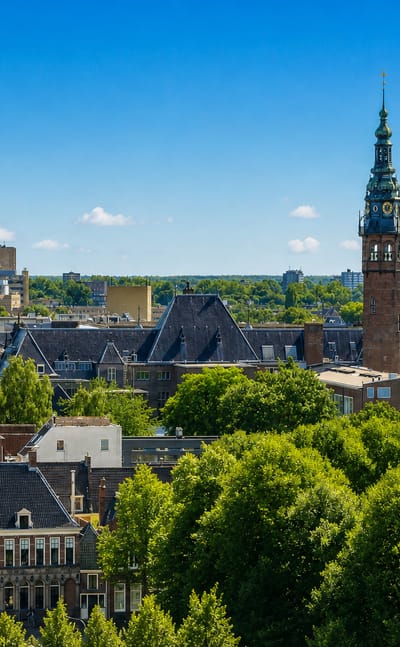
The churches carry the skyline. The Martinikerk and the Der Aa-kerk anchor two old squares, brick towers that have marked the town for centuries, and the Nieuwe Kerk stands guard over the quarter north of them. Colour arrives at the water.
The Groninger Museum breaks the old palette with its clashing pavilions, while the Nederlands Stripmuseum turns comics into a day out and the Noordelijk Scheepvaartmuseum tells the shipping story from inside medieval houses.
What is the history of Groningen?
Groningen grew rich on trade. Merchants raised the Martinikerk and the Der Aa-kerk over the medieval town, and the brick gables of the Canterhuis still mark where their money once sat by the water. The city held the grain staple for a wide hinterland, forcing farmers across the north to sell through its market before anywhere else.
Power followed the grain. Barges came up the canals to load it, warehouses crowded the quays, and the profits paid for the churches that now crown the centre. For centuries the surrounding province looked to the Grote Markt for law, faith, and coin.
A university turned the town outward. Scholars arrived, printers set up shop, and the Nieuwe Kerk rose as the settlement pushed past its old walls. Learning reshaped the streets.
The University Museum Groningen still keeps the instruments and curiosities gathered over those long centuries of study, a record of a small northern city that punched well above its size. War and land reclamation redrew the country beyond the ramparts. Yet the core held its medieval shape.
That stubborn inheritance is what visitors walk through now.
Where is Groningen?
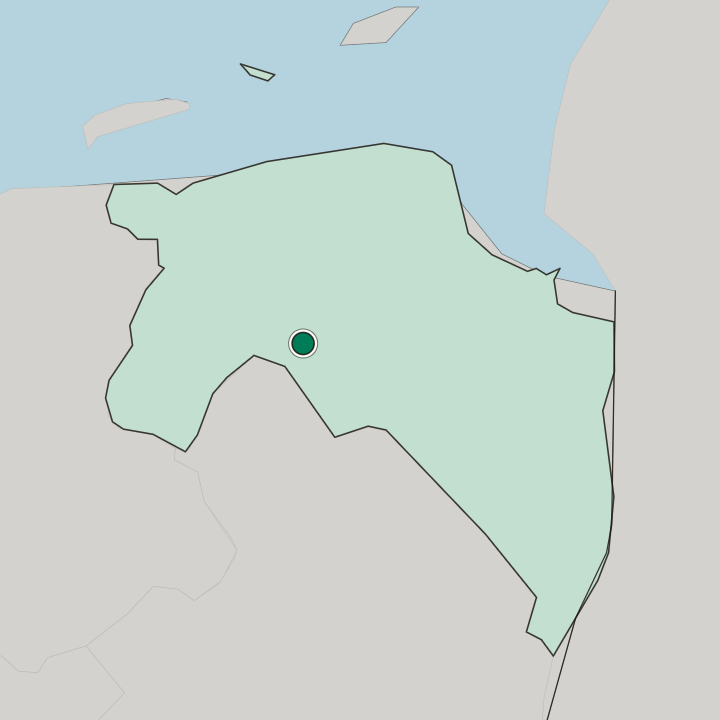
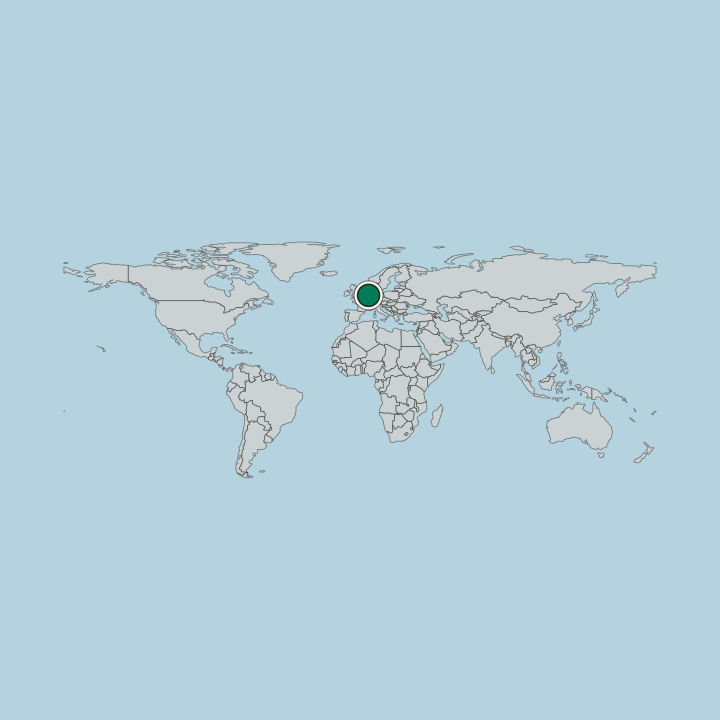
Groningen sits on the flat clay plain of the far north, low and open to the wind. Canals thread the old centre, ringing the Binnenstad and feeding the harbours that once carried its trade. Green edges soften the grid.
The Stadspark Groningen spreads south of the streets, a broad park of water and lawn, while beyond the ring the farmland runs to the horizon almost without a rise. Little of the ground climbs. What height there is belongs to the church towers.
What is the climate of Groningen?
Weather here comes off the sea. Damp westerlies sweep the open plain around Groningen, so grey skies and sudden showers arrive year-round, and the flat land offers nothing to break the gusts. Winters run cold but rarely harsh.
Frost settles on the canals in the coldest spells, then lifts. Long summer evenings stay light well into the night this far north, and rain is never far behind the sun.
How do you get to Groningen?
Most arrivals here come by rail. Groningen's station sits at the top of the national network, with fast services running south to the Randstad and its airports, and slower regional lines fanning out across the north. The ride south takes a couple of hours.
Bikes cover the rest. Nearly everyone rolls the last stretch on two wheels, since the compact centre and the flat land make cycling quicker than any car, and racks crowd every corner near the Grote Markt.
Common questions
What is the best area to stay in Groningen?
Binnenstad: first-time visitors who want the Grote Markt at the door. A-Kwartier: a quieter canal-side base near the old harbour. Stationsgebied: arriving by train with heavy bags.
Good for
Updated October 2026