Netherlands
Provincie Groningen, Netherlands — Towns & Travel Guide
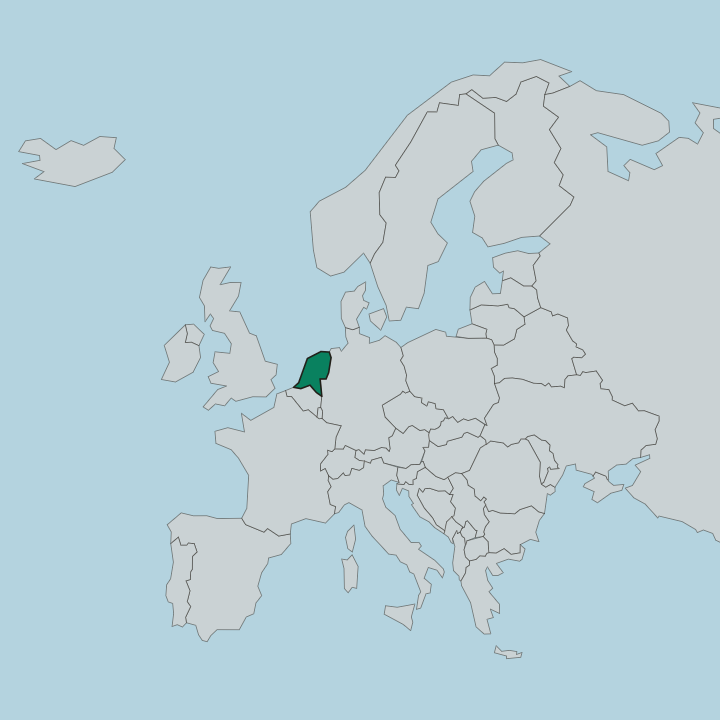
Groningen is the northeasternmost province of the Netherlands, flat polder country between the Wadden Sea and the German border.
Hotel links are affiliate links: booking through them may earn us a commission, at no extra cost to you. It never affects how places are ranked. How this works


Towns & cities in Provincie Groningen
One town here has its own guide — it links to where to stay.
 Netherlands
Groningen
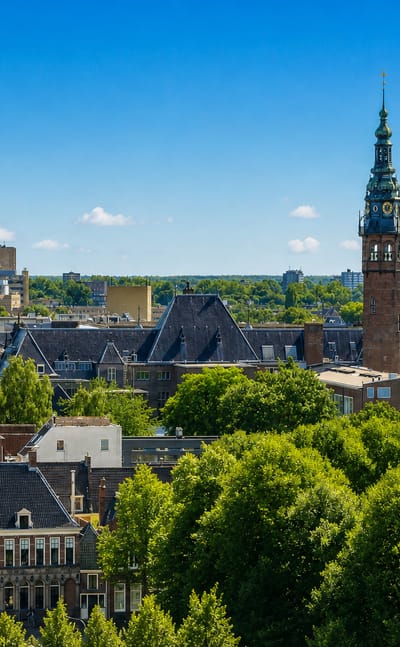
Groningen is the largest city of the Dutch north, a university town built around a medieval market square and a daring modern-art museum.Where to stay →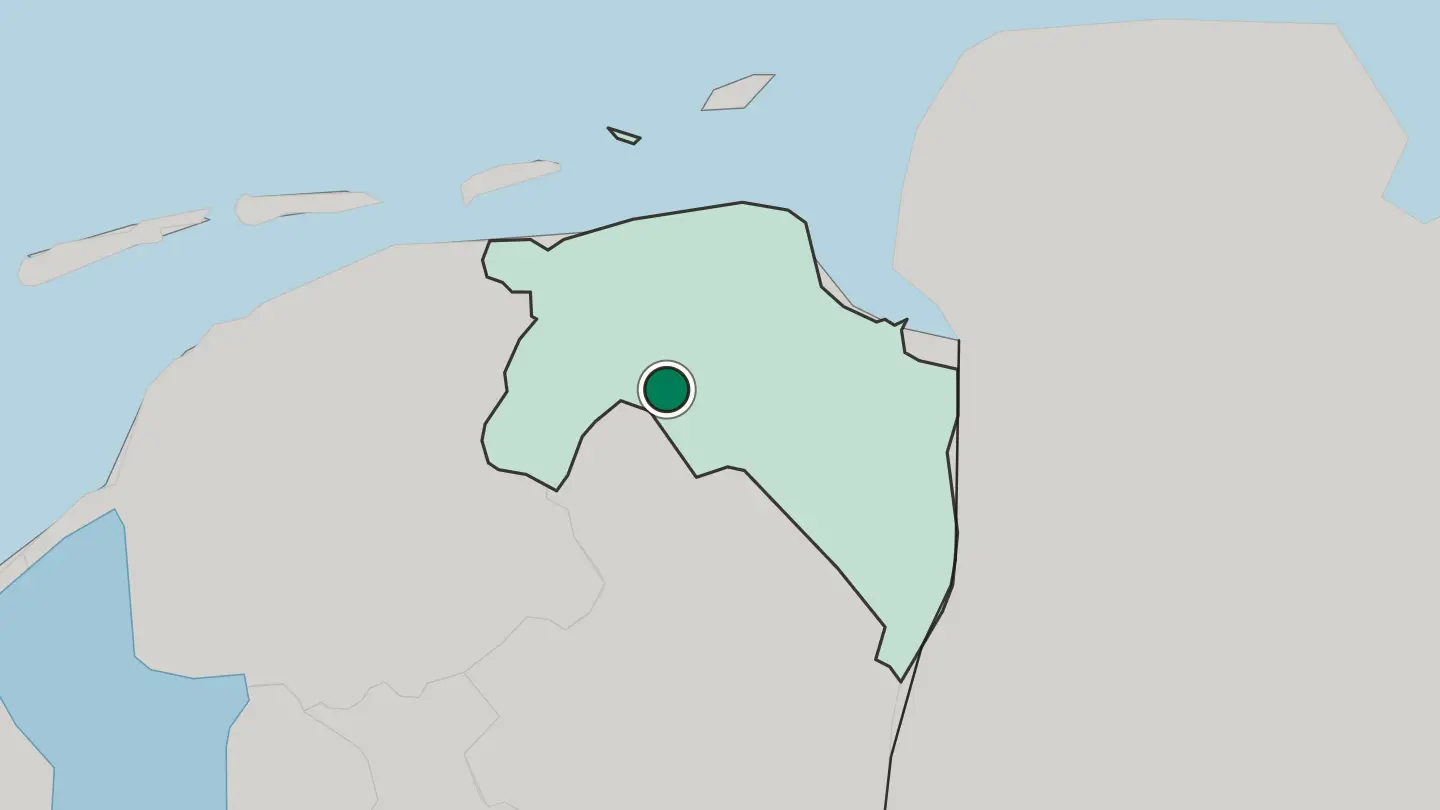
Hotel links are affiliate links: booking through them may earn us a commission, at no extra cost to you. It never affects how places are ranked. How this works
About Provincie Groningen
The province takes its name from its capital.
What is Provincie Groningen known for?
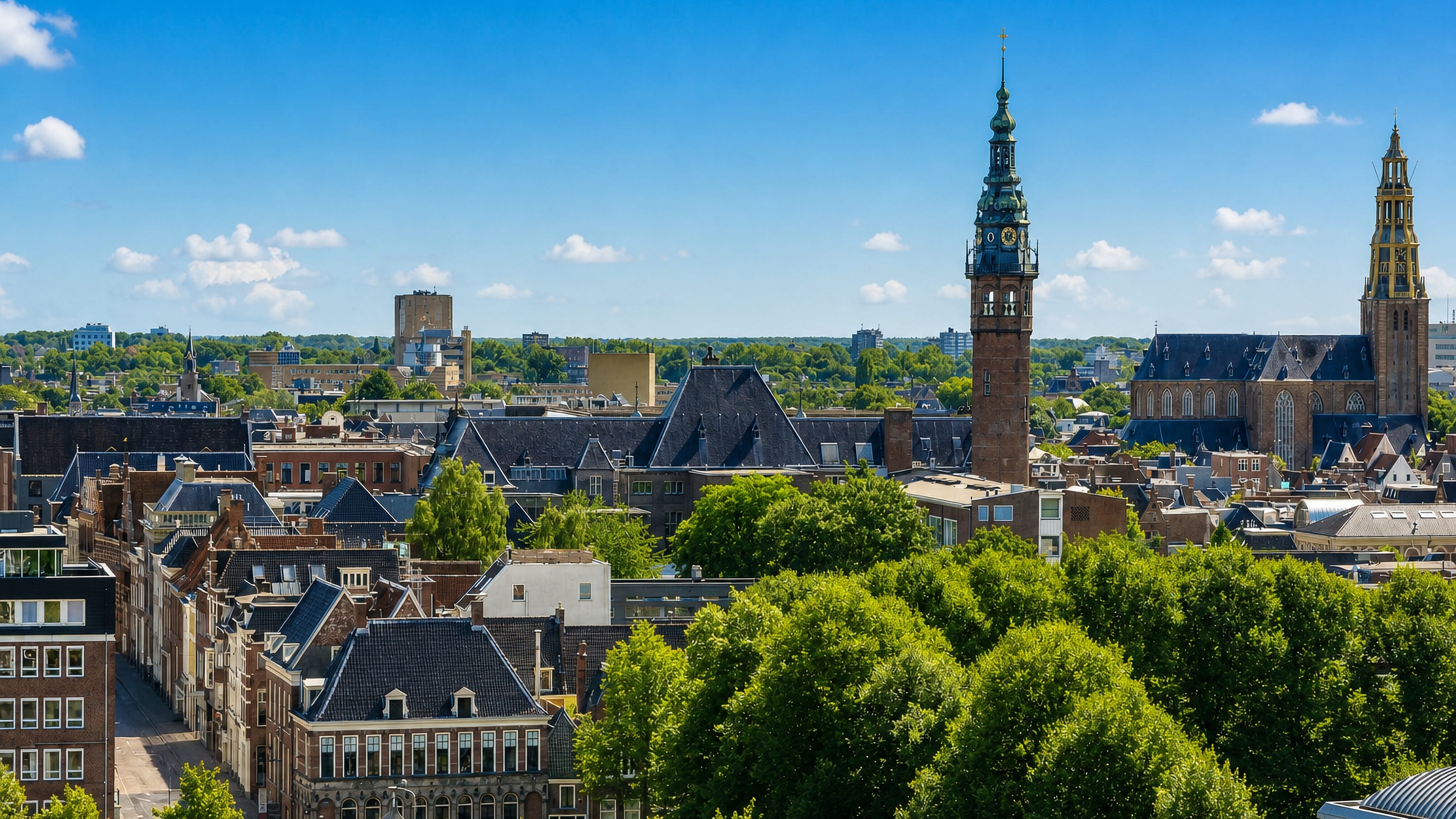
Groningen is the largest city in the north of the Netherlands and its economic and cultural anchor, a university town whose brick Martinitoren rises almost 97 metres over the Grote Markt. Beyond the city the land flattens into polders and farmland, edged along the top by the tidal flats of the Wadden Sea. Under those fields sits the Groningen gas field near Slochteren, one of the largest in the world.
Where is Provincie Groningen?
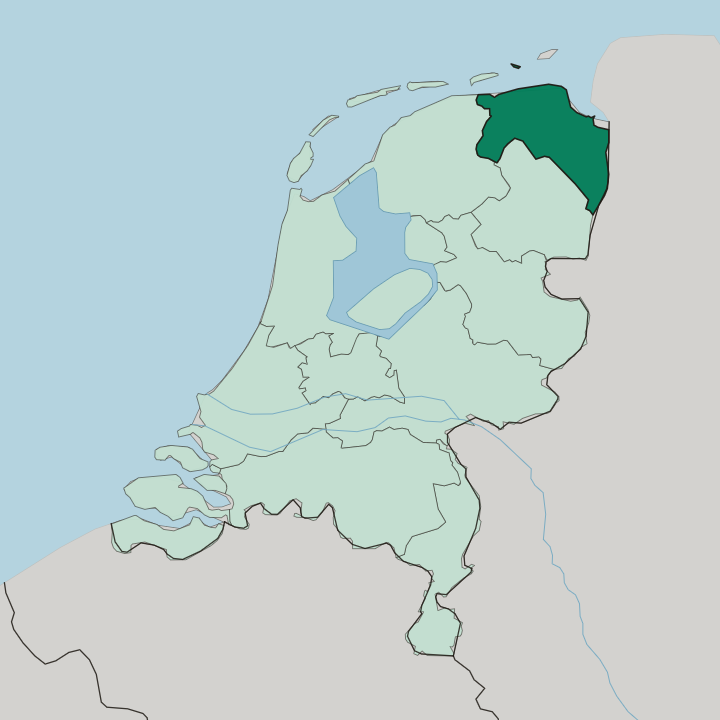
Groningen fills the northeastern corner of the Netherlands. It is bordered by Friesland to the west and Drenthe to the south, while the German state of Lower Saxony lies to the east and the Wadden Sea washes the whole northern edge. The eastern boundary follows the Ems, whose estuary widens into the Dollart bay before it reaches the North Sea.
This is low, level country. Much of it is reclaimed polder, drained fields laced with canals and ditches that sit at or below the level of the water they hold back. The north is the flattest part, wrung from the sea over centuries.
Farmers there raised their villages and churches onto artificial mounds, the wierden, to keep them clear of the tides before the dykes were built. Along the top edge the Wadden Sea spreads its tidal flats and salt marshes, a UNESCO World Heritage site, sheltering the uninhabited Rottum islands offshore. Toward the southwest, in the Westerkwartier, the ground rises a little onto sandy soils and begins to resemble neighbouring Drenthe.
On the Friesland border the Lauwersmeer marks where a sea inlet was dammed and turned to freshwater lake and reserve. Water made this province, and water still defines it.
What is Provincie Groningen like?
Groningen's character is set by its capital, and its capital is set by its students. The University of Groningen, the second oldest in the Netherlands, was founded in 1614, and tens of thousands of students give the city a young, restless energy that spills into its cafés, music venues and bicycle-packed streets. Art has a home here too.
The Groninger Museum, its three coloured pavilions moored in the canal by the station, holds old masters and contemporary work behind a startlingly modern shell. Beyond the ring road the tone turns rural. Here people speak the Gronings dialect, and centuries of wresting farmland from the sea have left their mark on the land and the mood alike.
In the Oldambt, wide brick farmhouses of old landowners stand alone in the fields. They are proof of the grain wealth this heavy clay soil once produced, when the district shipped its harvests out along the canals. Medieval churches perch on their wierden across the Hogeland, brick-built and squat, their frescoes and organs long outlasting the villages that raised them.
Festivals, markets and a strong maritime and agricultural tradition run through the countryside. City and land pull apart, and that tension is much of the appeal.
What is the history of Provincie Groningen?
The province is often called Stad en Ommelanden, the City and the Surrounding Lands, and that phrase carries its history. For centuries the city of Groningen ran as a near-independent power, joining the Hanseatic League in the fourteenth century and dominating the farming districts, the Ommelanden, around it. The two quarrelled almost constantly over trade and control.
A newer chapter opened in 1959. That year one of the world's largest natural gas fields was discovered near Slochteren, bringing decades of wealth to the province and eventually the earth tremors that cracked houses across the north and forced production to wind down.
What is the climate of Provincie Groningen?
Groningen has a mild, temperate maritime climate shaped by the North Sea and the westerly winds off the Wadden Sea. Winters are cool rather than harsh and summers stay moderate, with rain spread fairly evenly through the year and a wetter run in autumn. The wind is the constant here.
It sweeps unchecked across the flat polders and the open coast, which is why the province now carries turbines and once turned windmills. Grey, changeable skies are the usual bargain.
How do you get to Provincie Groningen?
Most visitors come by train. Groningen city sits at the end of the intercity line up from Amsterdam and Schiphol Airport, a ride of a little over two hours, and its station is the hub for the whole province. Groningen Airport Eelde, just over the Drenthe border to the south, handles a modest schedule of flights.
Ferries add a third way in. From Eemshaven on the Wadden Sea coast, boats cross to the German island of Borkum in well under an hour, and within the province buses and one of the densest cycling networks in the Netherlands fill in the rest.
Common questions
What is the best area to stay in Provincie Groningen?
Groningen city: a first visit taking in the Martinitoren. The Wadden Sea coast: tidal flats and wide skies. Lauwersmeer: birdwatching and dark skies.
Good for
More regions in Netherlands
Updated September 2026