Netherlands · Provincie Noord-Brabant
Where to Stay in Roosendaal, Provincie Noord-Brabant
Roosendaal is a city of North Brabant and a railway junction on the Amsterdam to Antwerp main line, the last Dutch stop for trains bound for Belgium.
Hotel links are affiliate links: booking through them may earn us a commission, at no extra cost to you. It never affects how places are ranked. How this works


Where to stay in Roosendaal
How the choice of base plays out on the ground.
Rail decides it for many guests. A bed near the station in Roosendaal makes sense for anyone whose trip involves onward trains, since the Amsterdam to Antwerp line and the branches to Vlissingen and Nijmegen all leave from the same junction and the walk back after a late arrival is short. Timetables reward proximity here.
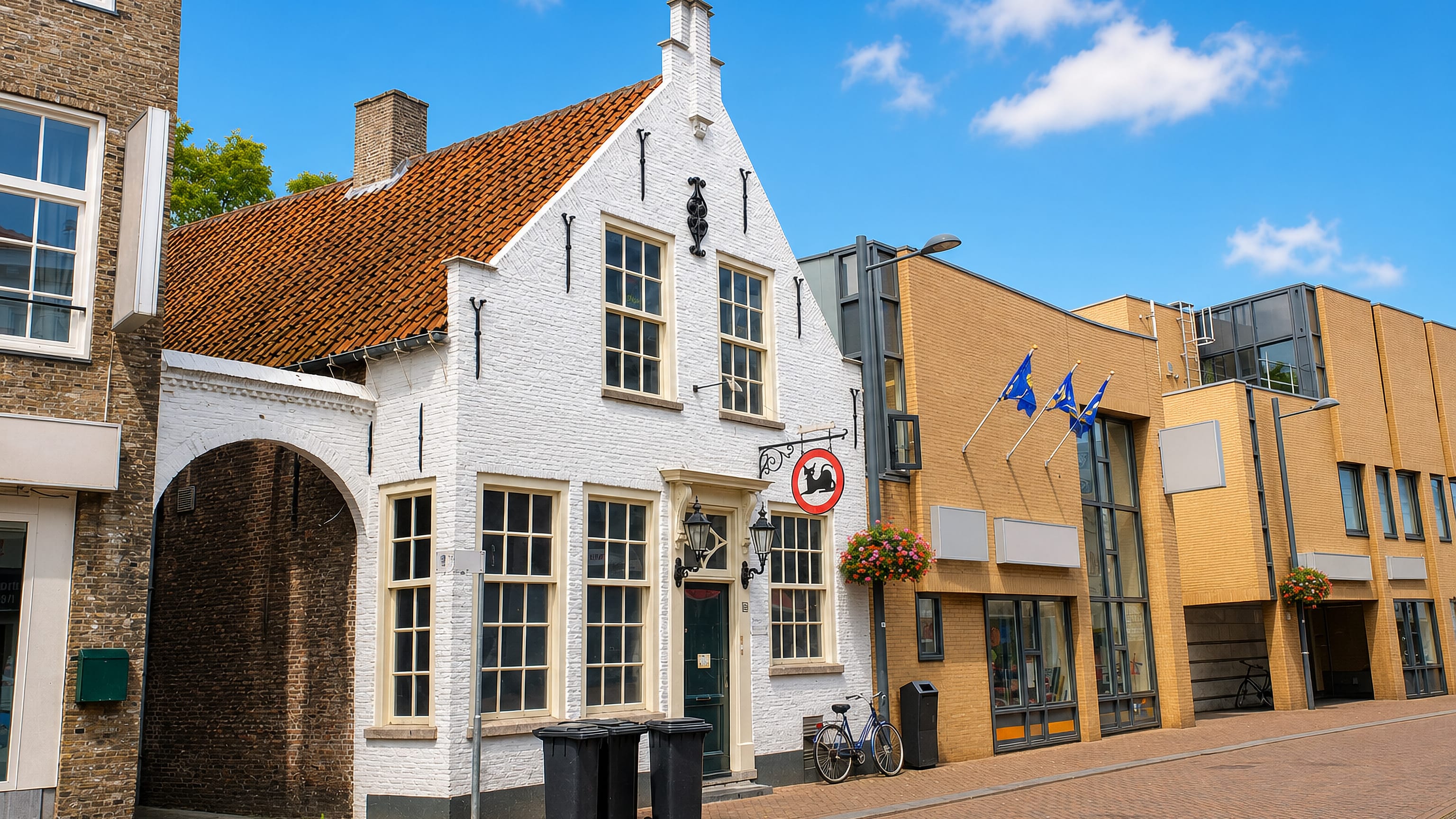
The station district is not the prettiest part of the town, but it removes the one variable that spoils a rail journey, and for a night's stopover between Brussels and the north it is difficult to argue against. The older streets make the better case for a longer stay. Museum Tongerlohuys, Sint Jan de Doper and the frontage at Raadhuisstraat 26 stand close together, and the domestic architecture that gives the register its character, De Cleyne Cat and the Emile van Loonhuis among it, is spread through the same few blocks.
Walking is enough there. Out at Mariadal the convent buildings, the Kapel klooster Mariadal and the Kloostertuin Mariadal make a quieter setting, though beds are thin on that side and the shops are back in the middle. Guests who want quiet should look there anyway.
The municipality runs to some hundred and seven square kilometres, so a room in the outer villages means driving in for everything, including the Heilig Hartkerk and Saint Joseph's Church.
Find hotels in Roosendaal
Direct booking searches for these neighbourhoods.
By the junction
The Amsterdam to Antwerp line and both branch routes leave from the junction a few minutes' walk away.Find hotels in By the junctionStays built around Museum Tongerlohuys and Sint Jan de DoperThe old streets by the Tongerlohuys
Museum Tongerlohuys, Sint Jan de Doper and the Raadhuisstraat 26 frontage stand within the same few blocks.Find hotels in The old streets by the TongerlohuysQuiet nights near the Kapel klooster Mariadal and its cloister gardenMariadal
The Mariadal convent keeps its chapel and the Kloostertuin Mariadal apart from the shopping streets. Beds are limited here, so book early.Find hotels in MariadalHotel links are affiliate links: booking through them may earn us a commission, at no extra cost to you. It never affects how places are ranked. How this works
Things to do in Roosendaal
Ranked by global recognition; descriptions from Wikidata (CC0).
Museums & Galleries
1- Museum Tongerlohuys
Churches & Religious Sites
8- Sint Jan de Doper, Roosendaal Heritage
- Saint Joseph's Church Heritage
- Heilig Hartkerk, Roosendaal Heritage
- Onze-Lieve-Vrouw van Altijddurende Bijstandkerk Heritage
- Onze-Lieve-Vrouw-van-Fatimakerk Heritage
Show 3 more →
- Nederlands Hervormde Kerk Roosendaal Heritage
- Mariadal, Roosendaal Heritage
- Kapel klooster Mariadal Heritage
Landmarks & Notable Places
8- Emile van Loonhuis Heritage
- De Cleyne Cat Heritage
- Raadhuisstraat 26, Roosendaal Heritage
- Dubbel woonhuis in chaletstijl Heritage
- Mariagaard woningen Heritage
Show 3 more →
- Woonhuis in Neo-Renaissancestijl Heritage
- Woonhuis met kenmerken van de Art-Nouveau Heritage
- Woonhuis waarvan de lijstgevel in Eclectische stijl is uitgevoerd. Tussen 1825 en 1872 bestond het huis in combinatie met een winkel Heritage
worth knowingacross 3 categories in Roosendaal
About Roosendaal
Every international train stops here.
What is Roosendaal known for?
The main line from Amsterdam to Antwerp and Brussels passes through the town, the secondary routes to Vlissingen and Nijmegen branch away from the same junction, and that traffic is what Roosendaal is known for beyond North Brabant. Museum Tongerlohuys holds the local collections. Sint Jan de Doper and the convent buildings at Mariadal supply the older fabric, while a run of Art Nouveau, chalet-style and Neo-Renaissance houses fills out the rest of the listed register.
What are the main landmarks in Roosendaal?
Museum Tongerlohuys is the only museum listed. Churches take the bulk of the register, among them Sint Jan de Doper, the Heilig Hartkerk, Saint Joseph's Church and the Onze-Lieve-Vrouw-van-Fatimakerk, together with the convent buildings at Mariadal and the Kapel klooster Mariadal and Kloostertuin Mariadal beside them. Houses matter as much here.
De Cleyne Cat, the Emile van Loonhuis and the frontage at Raadhuisstraat 26 stand for a domestic architecture that Roosendaal has listed street by street.
What is the history of Roosendaal?
Houses tell most of it. What Roosendaal has put on its heritage register is overwhelmingly domestic, a sequence of frontages in Art Nouveau, chalet and Neo-Renaissance styles that records how an ordinary Brabant town chose to build for itself rather than how it defended itself. One listed house on the register stood in combination with a shop from 1825 until 1872.
Another row was raised for the Dutch life insurance company Antverpia. The Mariagaard woningen belong to the same habit of building in groups. Religion supplies the second layer.
Sint Jan de Doper, the Sint-Antonius van Paduakerk, the Onze-Lieve-Vrouw van Altijddurende Bijstandkerk and the Nederlands Hervormde Kerk Roosendaal cover both the Catholic dedications and the Protestant one, while Mariadal, its chapel and its cloister garden held the conventual life that ran beside the parish life. Then came the trains. Roosendaal stands on the main line from Amsterdam to Antwerp and Brussels, with secondary routes reaching Vlissingen and Nijmegen, and being the last stop in the Netherlands for international services towards Belgium gave the town a permanent share in traffic that was never going to stay.
Museum Tongerlohuys keeps the local account of all this, and De Cleyne Cat and the Emile van Loonhuis show what the town's own money built when it had some.
Where is Roosendaal?
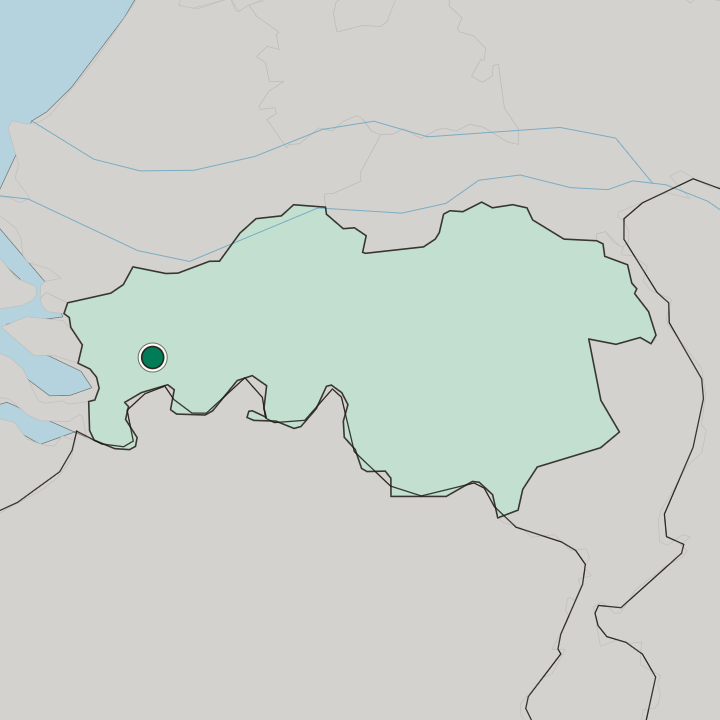
The municipality of Roosendaal takes in some hundred and seven square kilometres of the southern Netherlands, in North Brabant, with the built-up town at its centre and farmland and villages filling out the rest. Belgium is close. Close enough, in fact, that international trains running down from Amsterdam make their last stop in the Netherlands here before continuing towards Antwerp and Brussels.
The ground gives the eye nothing to climb.
What is the climate of Roosendaal?
Grey days outnumber bright ones. Roosendaal keeps the temperate pattern of the southern Netherlands, with damp cold months, moderate warm ones and rain distributed through the year instead of concentrated in a single wet season. Wind crosses it freely.
Nothing between the town and the open country towards Belgium slows the weather coming through, so conditions can turn twice within an afternoon while the year as a whole repeats itself closely from one turn to the next.
How do you get to Roosendaal?
On a timetable Roosendaal is a junction first. The main line from Amsterdam to Antwerp and Brussels runs through the town, the secondary routes to Vlissingen and Nijmegen branch off it, and international services towards Belgium make their last Dutch stop here, which puts a good part of two countries within a single ride. Arrivals are easy.
Once off the train the centre is small enough to cross on foot to Museum Tongerlohuys or Sint Jan de Doper, though the outlying villages of the municipality need a car.
Common questions
What is the best area to stay in Roosendaal?
By the junction: Rail travellers changing for Antwerp, Vlissingen or Nijmegen. The old streets by the Tongerlohuys: Stays built around Museum Tongerlohuys and Sint Jan de Doper. Mariadal: Quiet nights near the Kapel klooster Mariadal and its cloister garden.
Good for
More cities in Provincie Noord-Brabant
Updated September 2026