Norway · Møre og Romsdal fylke
Where to Stay in Batnfjordsøra, Møre og Romsdal fylke
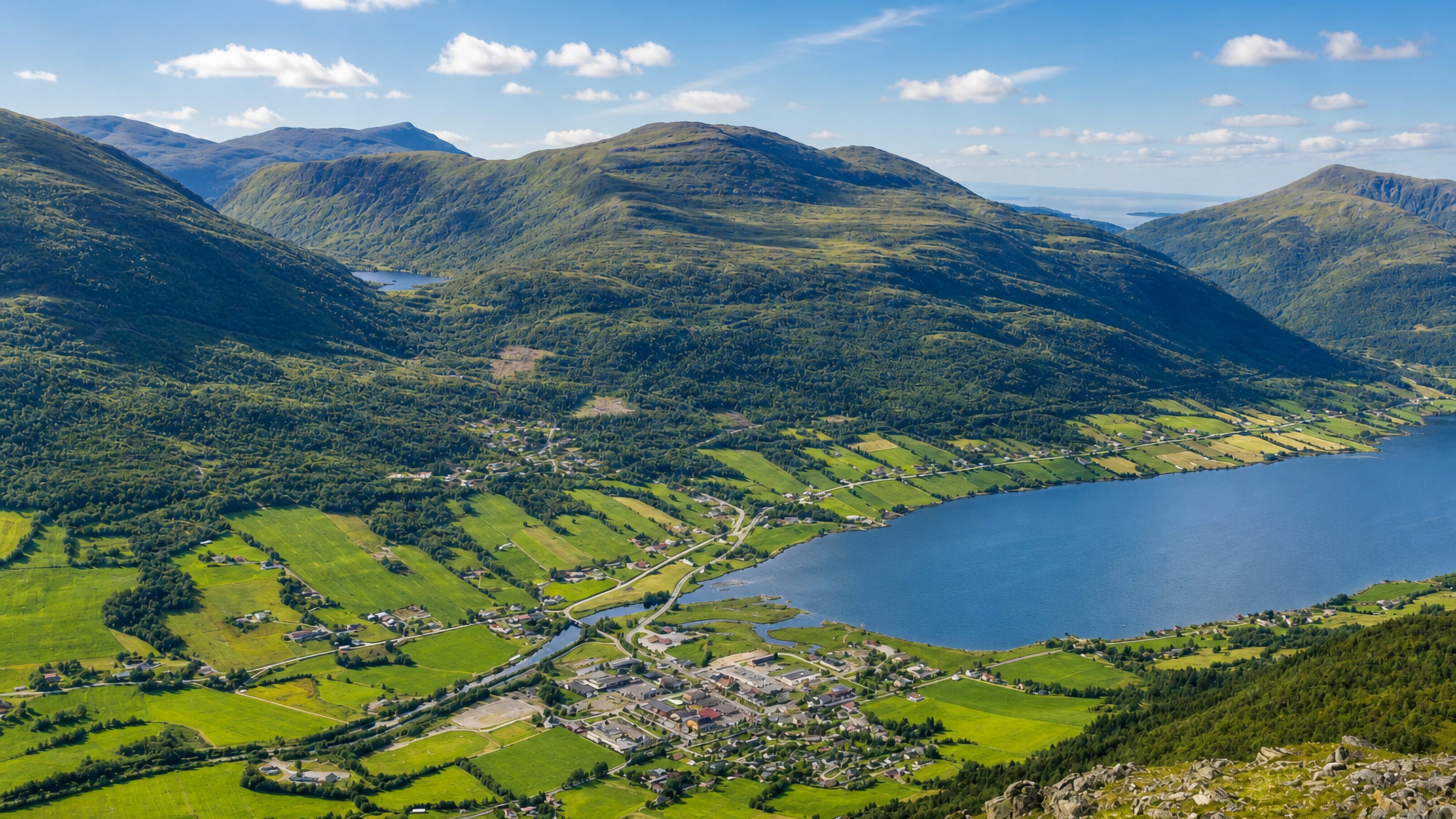
Batnfjordsøra is the seat of Gjemnes Municipality, at the head of the Batnfjorden in western Norway.
Hotel links are affiliate links: booking through them may earn us a commission, at no extra cost to you. It never affects how places are ranked. How this works


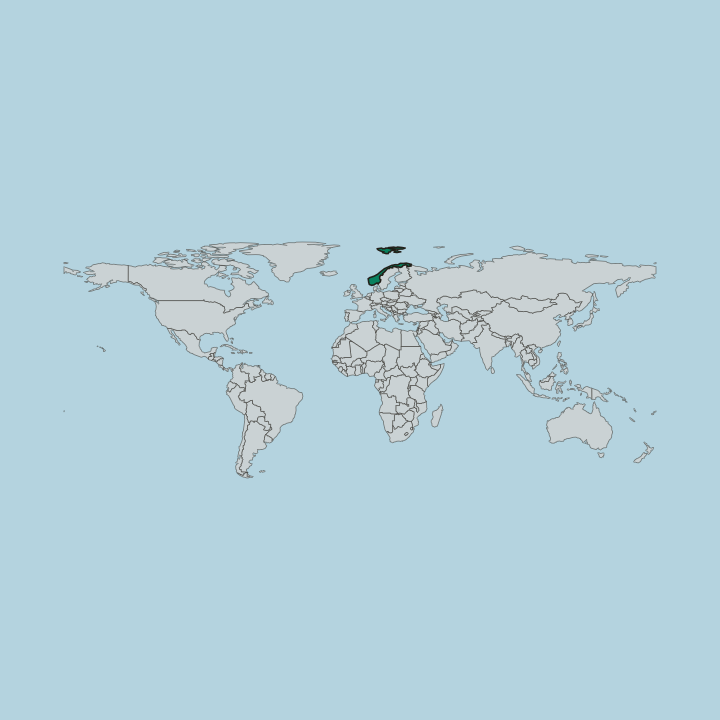
Where to stay in Batnfjordsøra
Where the beds are, and what that means for the visit.
Most beds in Batnfjordsøra gather in the village centre at the head of the Batnfjorden, where the few guest rooms and roadside lodgings stand near the shore and the mouth of the river Batnfjordelva. The centre suits travellers who want the fjord, the parish and the through road on the doorstep. The fjord-head centre is the obvious footing.
Along the European Route E39 toward Molde and Trondheim, motels and cabins sit handy for drivers crossing the north-eastern part of Møre og Romsdal, the rooms filling as the long coastal route carries summer traffic through Gjemnes Municipality. Stock thins past the centre. Out toward Øre kirke and the older parish on the water, farm stays and holiday houses spread thin among the fields, a quiet base for those touring this stretch of western Norway by car.
Reserve well ahead in the warm season, when the fjord and the through road draw visitors to this corner of Møre og Romsdal.
Find hotels in Batnfjordsøra
Direct booking searches for these neighbourhoods.
Village head of the Batnfjorden
guest rooms near the Batnfjordelva mouth and the Batnfjordsøra shoreFind hotels in Village head of the Batnfjordendrivers crossing between Molde and TrondheimEuropean Route E39 corridor
roadside motels along the E39 through Gjemnes MunicipalityFind hotels in European Route E39 corridorthose driving the E39 past BatnfjordenØre parish on the water
farm stays near the old Øre kirke on the fjord shore. Few places to stay nearby — book ahead.Find hotels in Øre parish on the waterHotel links are affiliate links: booking through them may earn us a commission, at no extra cost to you. It never affects how places are ranked. How this works
About Batnfjordsøra
What is Batnfjordsøra known for?
Batnfjordsøra stands at the head of the Batnfjorden, where the river Batnfjordelva runs down into the sea, and it serves as the administrative centre of Gjemnes Municipality in the north-eastern part of Møre og Romsdal. The fjord made the village. The European Route E39 threads through on its long run between Molde and Trondheim, carrying the traffic of western Norway past the quiet shore where Gjemnes kirke marks the parish above the water.
What are the main landmarks in Batnfjordsøra?
Gjemnes kirke marks the parish at Batnfjordsøra. The listed church stands above the head of the Batnfjorden and gives the village its fixed point of worship. Heritage protects more than one here. Øre kirke rises on the older parish ground along the fjord, while Øra Stadion gives the village its playing field by the shore, the three sights that anchor this seat of Gjemnes Municipality in the north-eastern part of Møre og Romsdal.
What is the history of Batnfjordsøra?
Batnfjordsøra grew at the head of the Batnfjorden, where the river Batnfjordelva carries the inland water down to the sea. The farms gathered on the flat ground at the fjord head, and the parish raised its churches above the shore to serve the scattered holdings of this corner of Møre og Romsdal. The fjord drew the people. Øre kirke stands among the older parish ground along the water, while Gjemnes kirke came to mark the village that grew at the river mouth in the north-eastern part of the county.
The through road changed the village. The European Route E39 was led along the shore on its run between Molde and Trondheim, and Batnfjordsøra was drawn together as the administrative centre of Gjemnes Municipality on the long coastal route. Trade and traffic carried the place through the years, and the village settled into its role as the market and parish seat at the head of the Batnfjorden, with Øra Stadion and the churches marking the small community on this reach of western Norway.
Where is Batnfjordsøra?
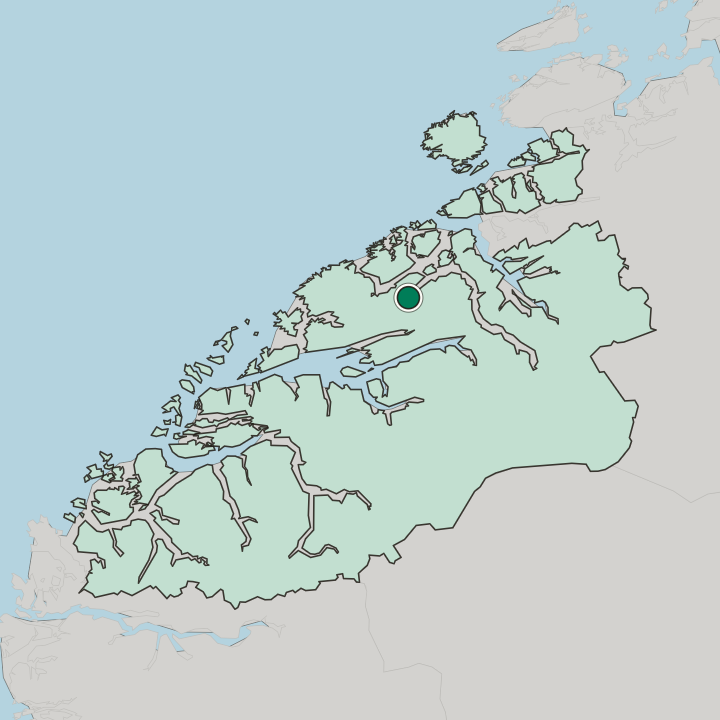
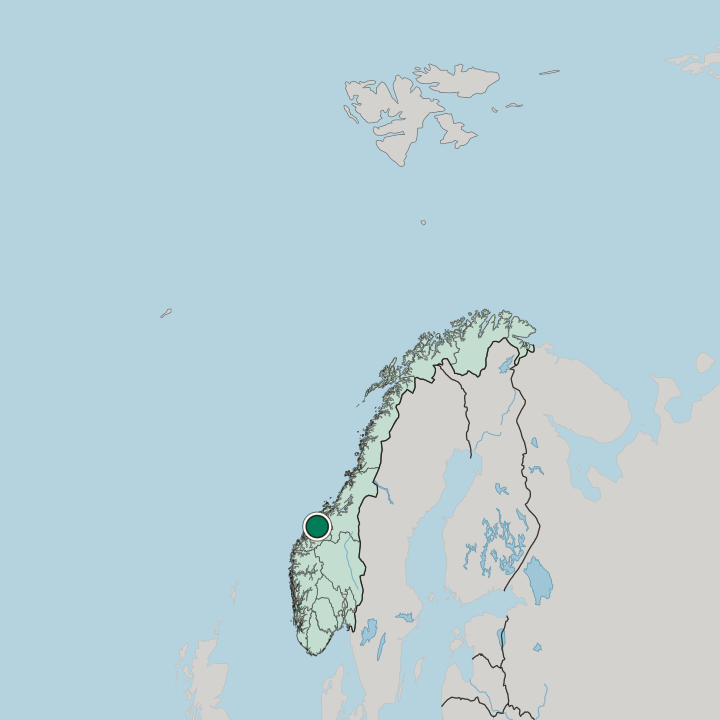
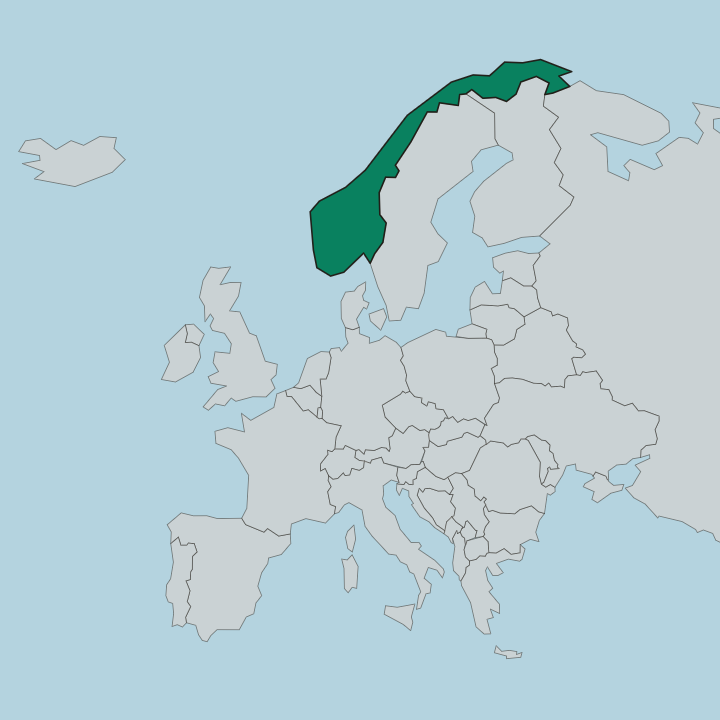
Batnfjordsøra lies at the head of the Batnfjorden, in the north-eastern part of Møre og Romsdal, in western Norway. The village stands on the flat ground at the river mouth, where the Batnfjordelva runs down into the inner fjord and the parish gathers around Gjemnes kirke above the shore. Water and hills frame the place.
The European Route E39 follows the fjord through the village, and the older parish ground around Øre kirke spreads along the water beyond the built-up edge of Gjemnes Municipality.
What is the climate of Batnfjordsøra?
Batnfjordsøra has the cool, wet maritime climate of the inner fjords of western Norway. Winters stay milder than the far northern reach would suggest, the water of the Batnfjorden holding hard frost off the low ground at the fjord head through most of the season. The summers run cool and green.
The inner fjord tempers the warmth and feeds the wind under the long northern daylight, while cloud and rain off the coast reach this north-eastern corner of Møre og Romsdal in every month of the year.
How do you get to Batnfjordsøra?
Batnfjordsøra sits on the European Route E39 in the north-eastern part of Møre og Romsdal. The long coastal road runs through the village on its way between Molde and Trondheim, carrying most travellers past the head of the Batnfjorden and the parish at Gjemnes kirke. Most come by car.
The road network of Gjemnes Municipality binds the village to the wider towns of the county, while the regional crossings of western Norway bring those reaching the fjord head from further afield.
Common questions
What is the best area to stay in Batnfjordsøra?
Village head of the Batnfjorden: travellers wanting the fjord and the river mouth. European Route E39 corridor: drivers crossing between Molde and Trondheim. Øre parish on the water: those driving the E39 past Batnfjorden.
Good for
More cities in Møre og Romsdal fylke
Updated September 2026