Nepal
Sudurpashchim Pradesh, Nepal — Towns & Travel Guide
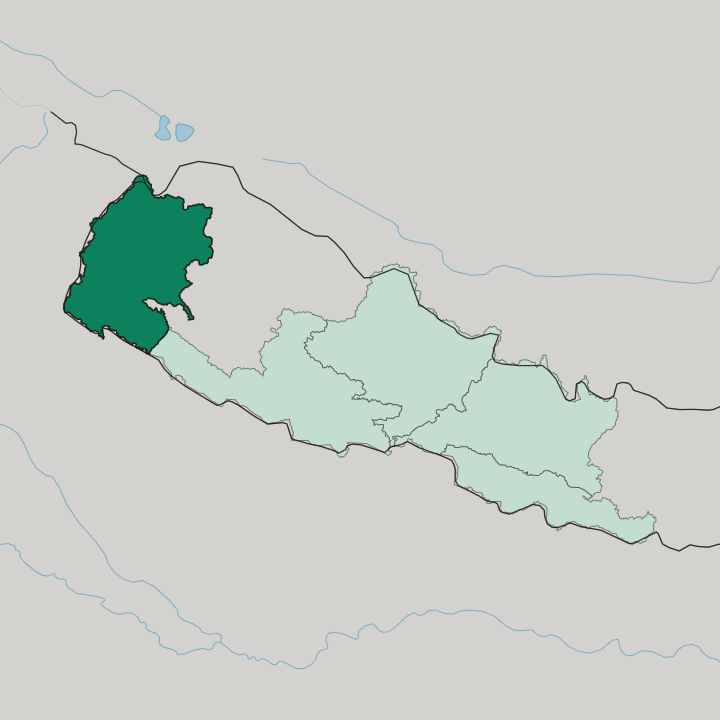
Sudurpashchim Pradesh is one of the seven provinces of Nepal, bordered by Karnali Province, Lumbini Province, Uttarakhand and Uttar Pradesh.
Hotel links are affiliate links: booking through them may earn us a commission, at no extra cost to you. It never affects how places are ranked. How this works


Towns & cities in Sudurpashchim Pradesh
One town here has its own guide — it links to where to stay.
 Nepal
Nepal
Dhangaḍhi̇̄
Dhangaḍhi̇̄ is a sub-metropolitan city and headquarters of Kailali District, strung along the Bhimdutta Highway in Sudurpashchim Province.Where to stay →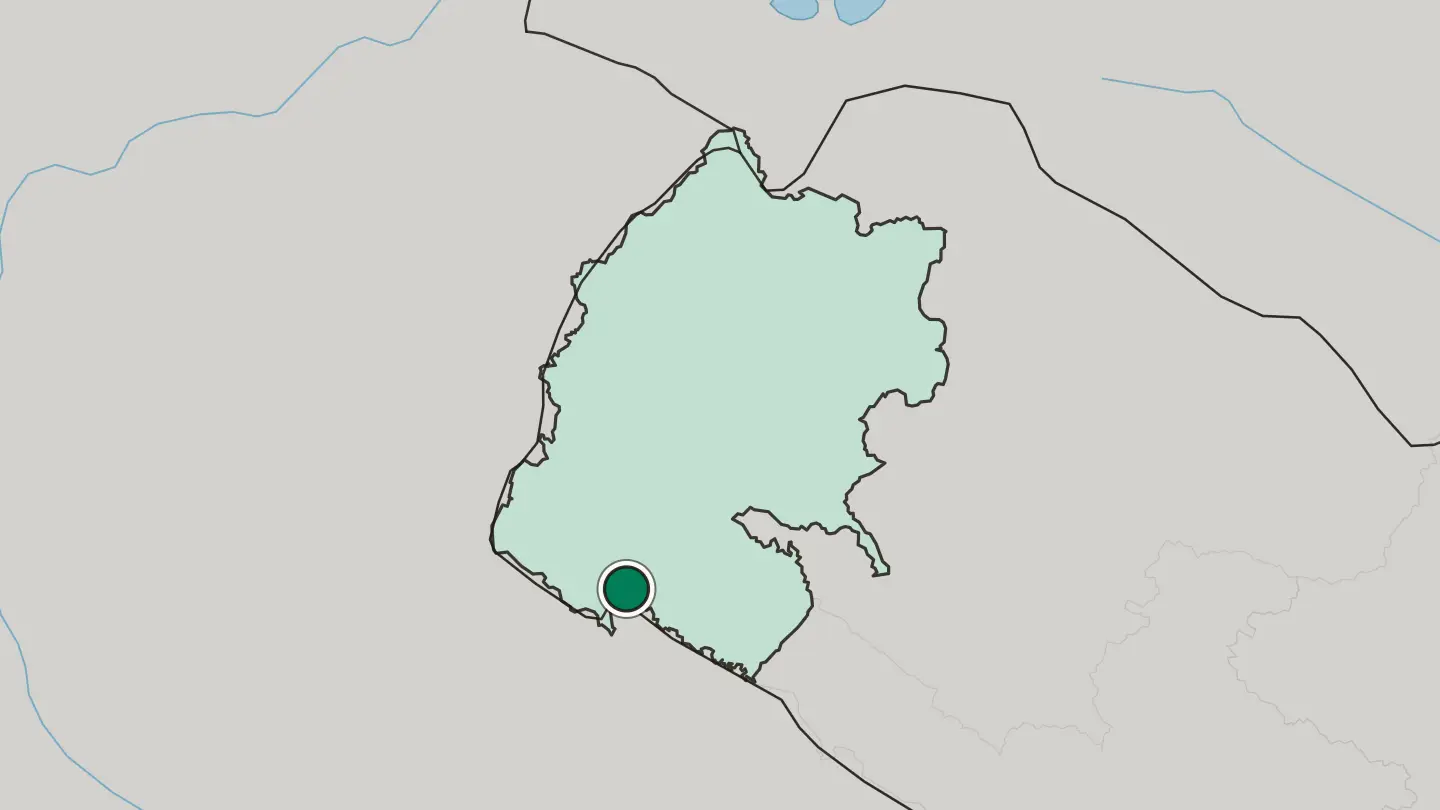
Hotel links are affiliate links: booking through them may earn us a commission, at no extra cost to you. It never affects how places are ranked. How this works
About Sudurpashchim Pradesh
What is Sudurpashchim Pradesh known for?
Four borders account for most of what the record says about Sudurpashchim Pradesh: the Tibet Autonomous Region of China to the north, Karnali Province and Lumbini Province to the east, and India's Uttarakhand and Uttar Pradesh to the west and south. It is a constitutional creation. The province was established with six others under the constitution Nepal adopted on 20 September 2015.
Area is the other figure the record carries, and the province covers well over a tenth of Nepal's total area.
Where is Sudurpashchim Pradesh?
Sudurpashchim Pradesh occupies a corner of Nepal where three separate jurisdictions meet its boundary. China is one of them. The Tibet Autonomous Region of China runs along the northern limit, and no feature of any kind is named along it.
Two provinces of Nepal take the eastern side, Karnali Province and Lumbini Province, so the boundary there is internal rather than international. India takes the remaining two sides. Uttarakhand lies to the west and Uttar Pradesh to the south, which leaves the province with more international frontier than internal, an unusual proportion for a unit of this size.
Area is the one measurement given. Sudurpashchim Pradesh covers well over a tenth of Nepal's total ground, one of the seven provinces the constitution created. No river is named for it, no mountain, no lake and no national park.
The interior is blank in the sources, which for a province bordering the Tibet Autonomous Region on one side and Uttar Pradesh on the other leaves a great deal of ground undescribed. Karnali Province is the nearest named neighbour to the east, with Lumbini Province beside it.
What is Sudurpashchim Pradesh like?
Nepali is the language recorded for Sudurpashchim Pradesh, and it is the only cultural entry the sources carry. That leaves a great deal unsaid. A province with an international boundary on three of its four sides, the Tibet Autonomous Region of China above it, Uttarakhand to the west, Uttar Pradesh to the south, sits against three different neighbours, and the record does not describe what that has meant.
Karnali Province and Lumbini Province face it from inside Nepal. Those are the names the sources give, and no festival, no craft and no local practice appears beside them. The province itself is young.
Nepal's constitution, adopted on 20 September 2015, created seven provinces at once, and Sudurpashchim Pradesh is one of them rather than an inherited region with a name of its own standing. A cultural identity older than the boundary would not show up in a record built from that constitution and an area figure. Sudurpashchim Province is the other form of the name.
Both refer to the same unit, and the shift between them is the only variation the sources offer.
What is the history of Sudurpashchim Pradesh?
A constitution made this province. Nepal adopted a new constitution on 20 September 2015, and seven provinces came into being with it, Sudurpashchim Pradesh among them. Everything before that date is absent from the record, which gives no kingdom, no dynasty and no earlier administrative name for the ground inside the boundary.
Its borders are described, not dated. The Tibet Autonomous Region of China to the north, Karnali Province and Lumbini Province to the east, and India's Uttarakhand and Uttar Pradesh beyond the west and south are given as limits, with no account of how they came to be there.
What is the climate of Sudurpashchim Pradesh?
The record carries no weather. There is no sea near Sudurpashchim Pradesh, no named range inside it and no wind or monsoon system in the sources, which leaves nothing to point at as the agent behind a season here. Only the neighbours are fixed.
China lies beyond the northern boundary and India beyond the western and southern ones, and a province spanning that much country would not have one climate in any case.
How do you get to Sudurpashchim Pradesh?
Three international frontiers, one internal. That is the shape of arrival in Sudurpashchim Pradesh, because the record names no airport, no highway number and no rail line anywhere inside the province. Uttarakhand and Uttar Pradesh sit on the Indian side, to the west and the south respectively, which makes them the likeliest approach for anyone coming from that direction.
The north is the Tibet Autonomous Region of China. Karnali Province and Lumbini Province take the eastern side, and an approach from within Nepal comes through one of those two.
Common questions
What is the best area to stay in Sudurpashchim Pradesh?
The northern edge toward the Tibet Autonomous Region: Travellers heading for the border with the Tibet Autonomous Region. The eastern side by Karnali Province and Lumbini Province: Stays timed around a move into Karnali Province or Lumbini Province. The flank facing Uttarakhand and Uttar Pradesh: Arrivals crossing from Uttarakhand or Uttar Pradesh into Nepal.
More regions in Nepal
Updated September 2026