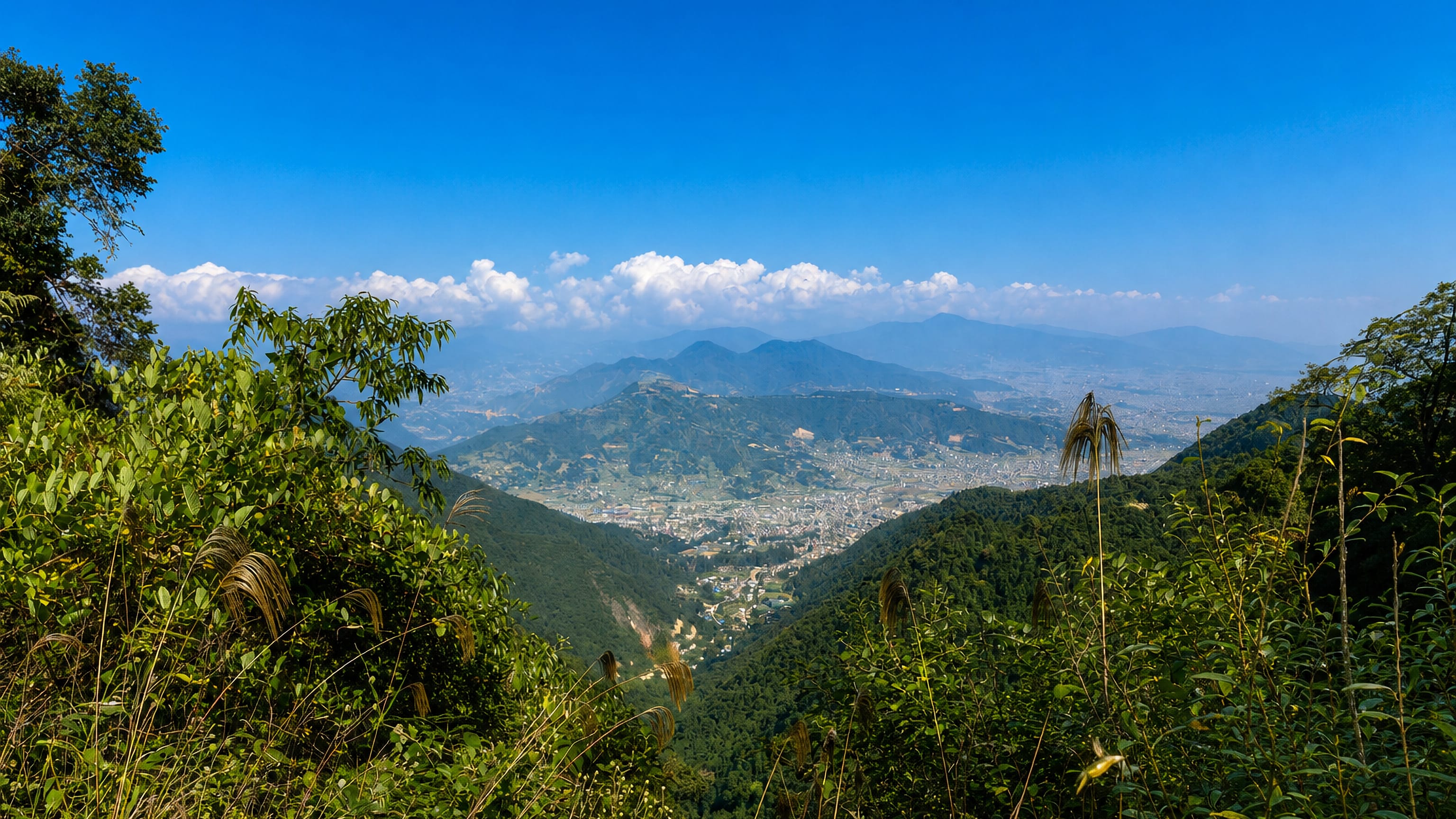
Nepal: Regions, Cities & Travel Guide
Nepal is a Himalayan country between India and Tibet, holding Everest and Kathmandu, its temple-filled capital.
Hotel links are affiliate links: booking through them may earn us a commission, at no extra cost to you. It never affects how places are ranked. How this works


Top destinations in Nepal
Cities to start from, then drill into areas and hotels.
 Nepal
Nepal
Kathmandu
Temple roofs rise above the Kathmandu Valley at Kathmandu, capital of Nepal in Bagmati Province, known for Narayanhiti Palace and the old core of Kantipur.Where to stay →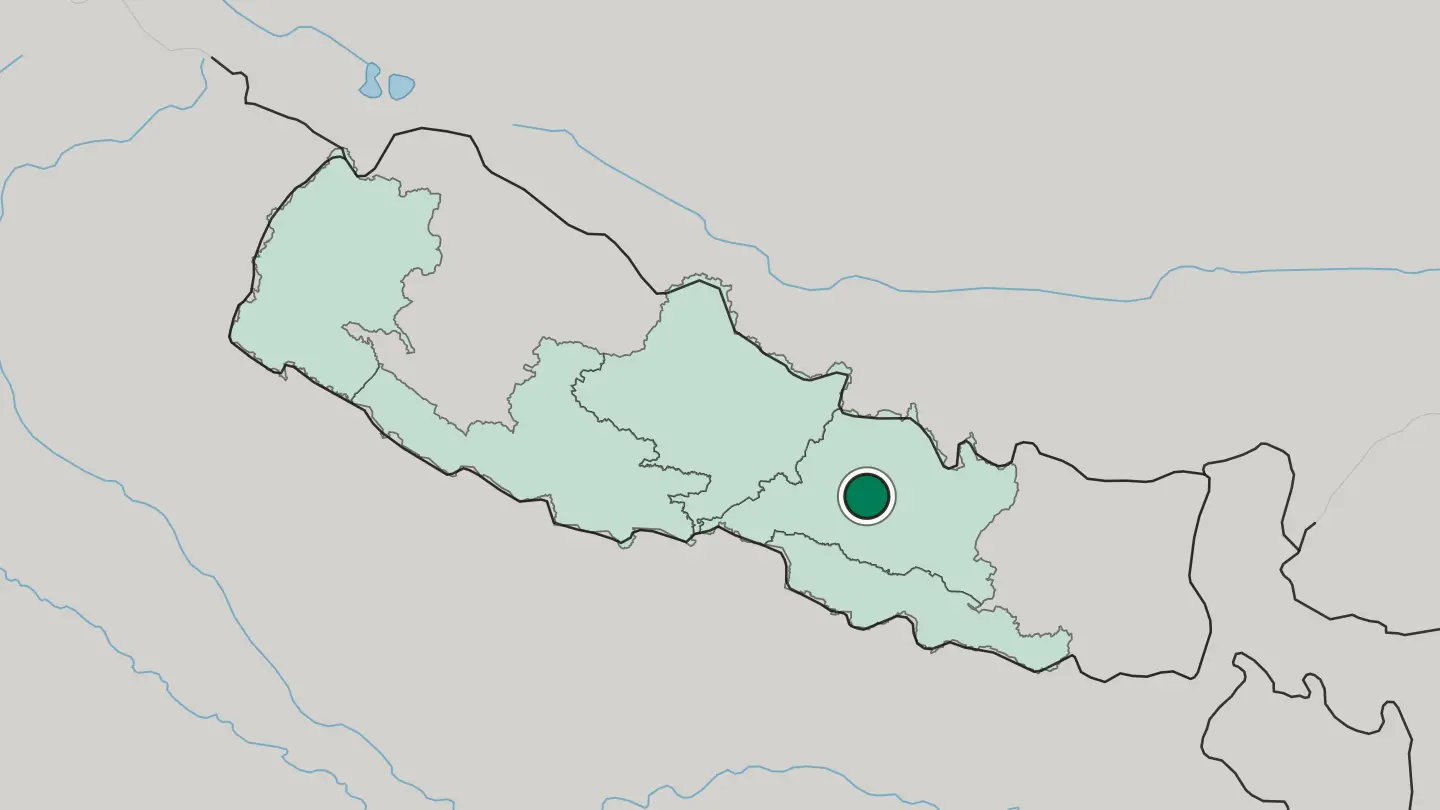
 Nepal
Nepal
Pokhara
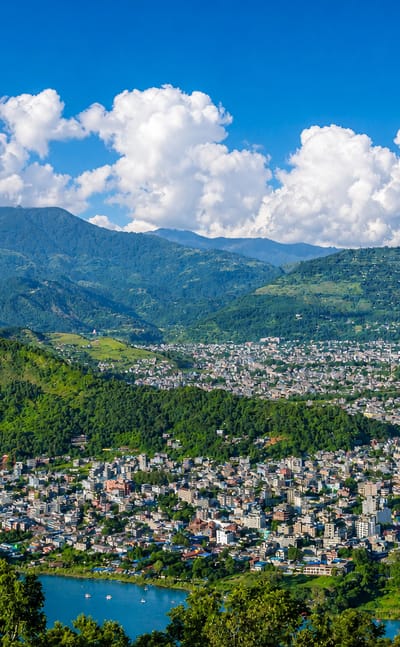
Fewa Lake mirrors the Annapurna peaks at Pokhara, capital of Gandaki Province in central Nepal and the trailhead for treks into the Annapurna area.Where to stay →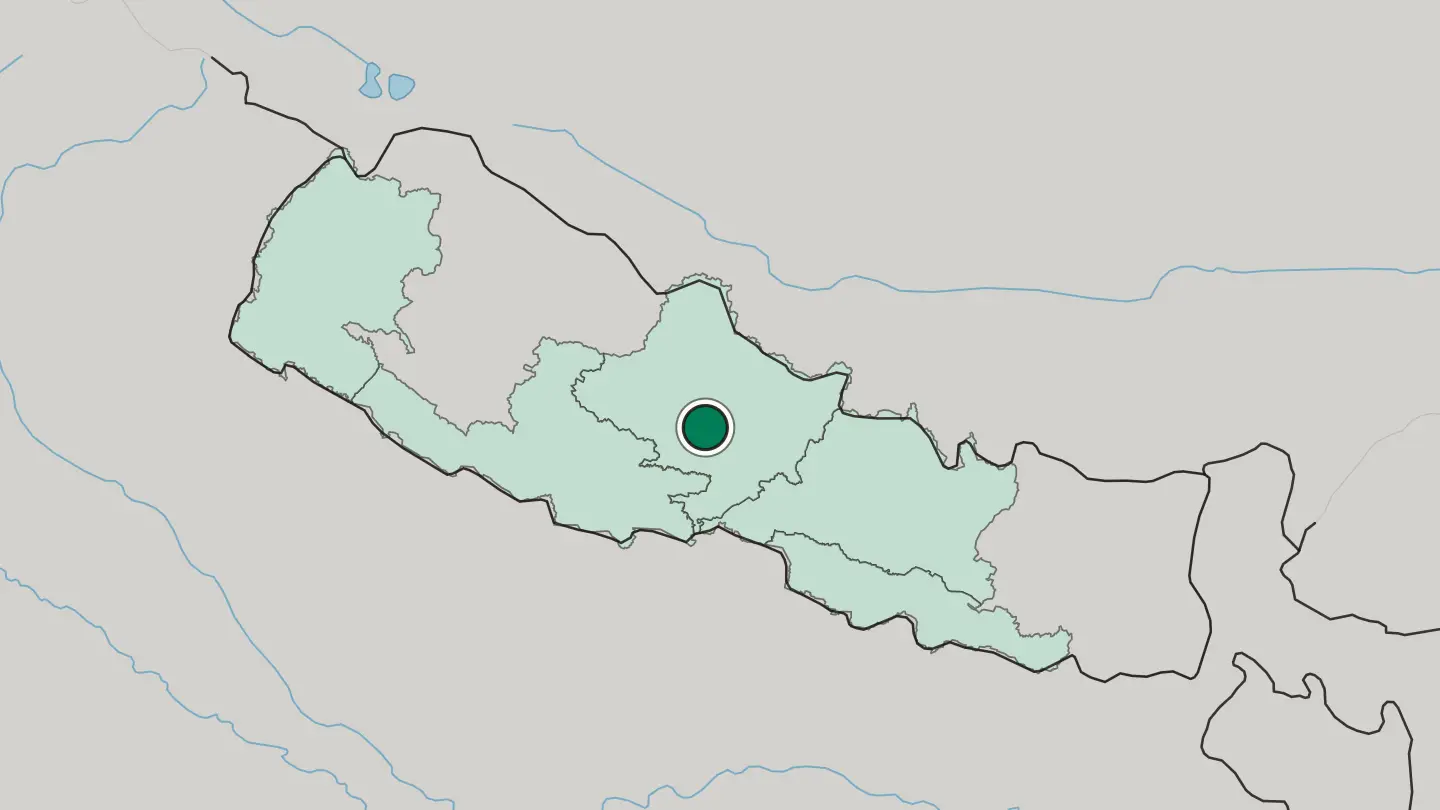
 Nepal
Nepal
Janakpur
Janakpur is a holy city of the Nepali Terai, the reputed birthplace of Sita and the site of the great Janaki Mandir, a centre of the Maithili people.Where to stay →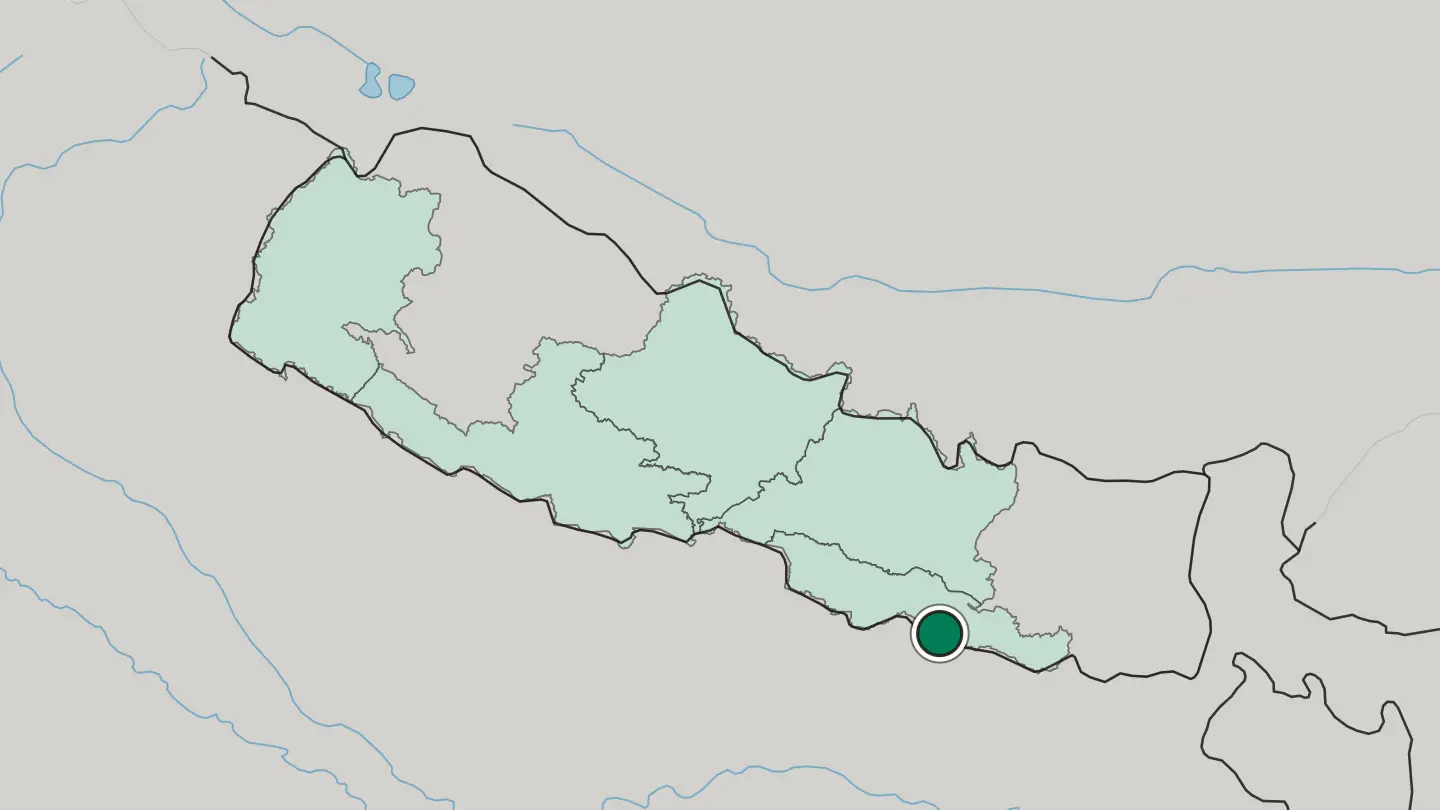
 Nepal
Nepal
Biratnagar
Biratnagar is a city of the eastern Terai of Nepal near the Indian border, the country's old industrial heart, a flat plains town below the eastern hills.Where to stay →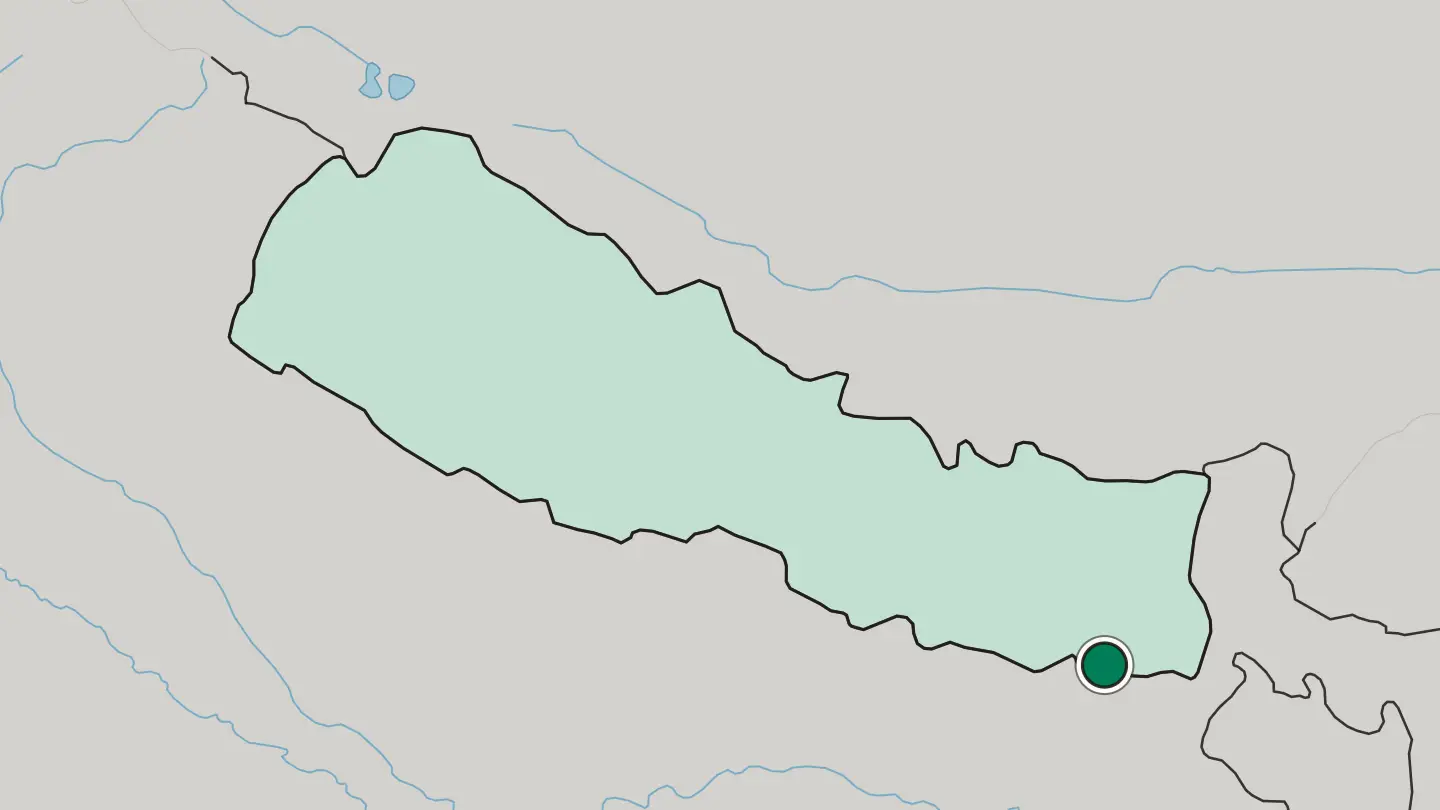
 Nepal
Nepal
Pātan
Pātan is one of the three royal cities of the Kathmandu Valley in Nepal, famed for its Newar temples and craftsmen.Where to stay →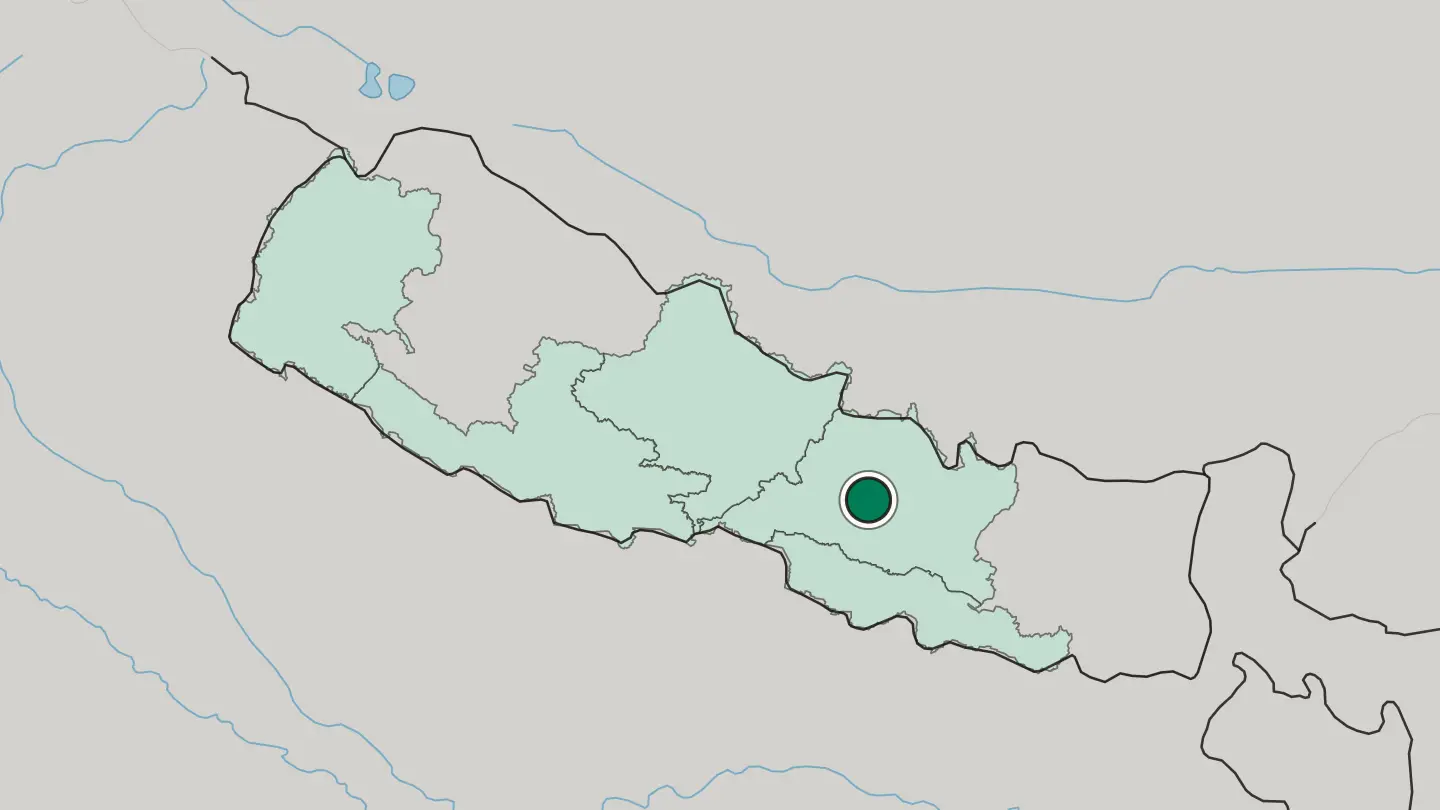
 Nepal
Nepal
Butwāl
Butwal is a city of the western Terai of Nepal, a market town where the plain rises to the hills, near the birthplace of the Buddha at Lumbini.Where to stay →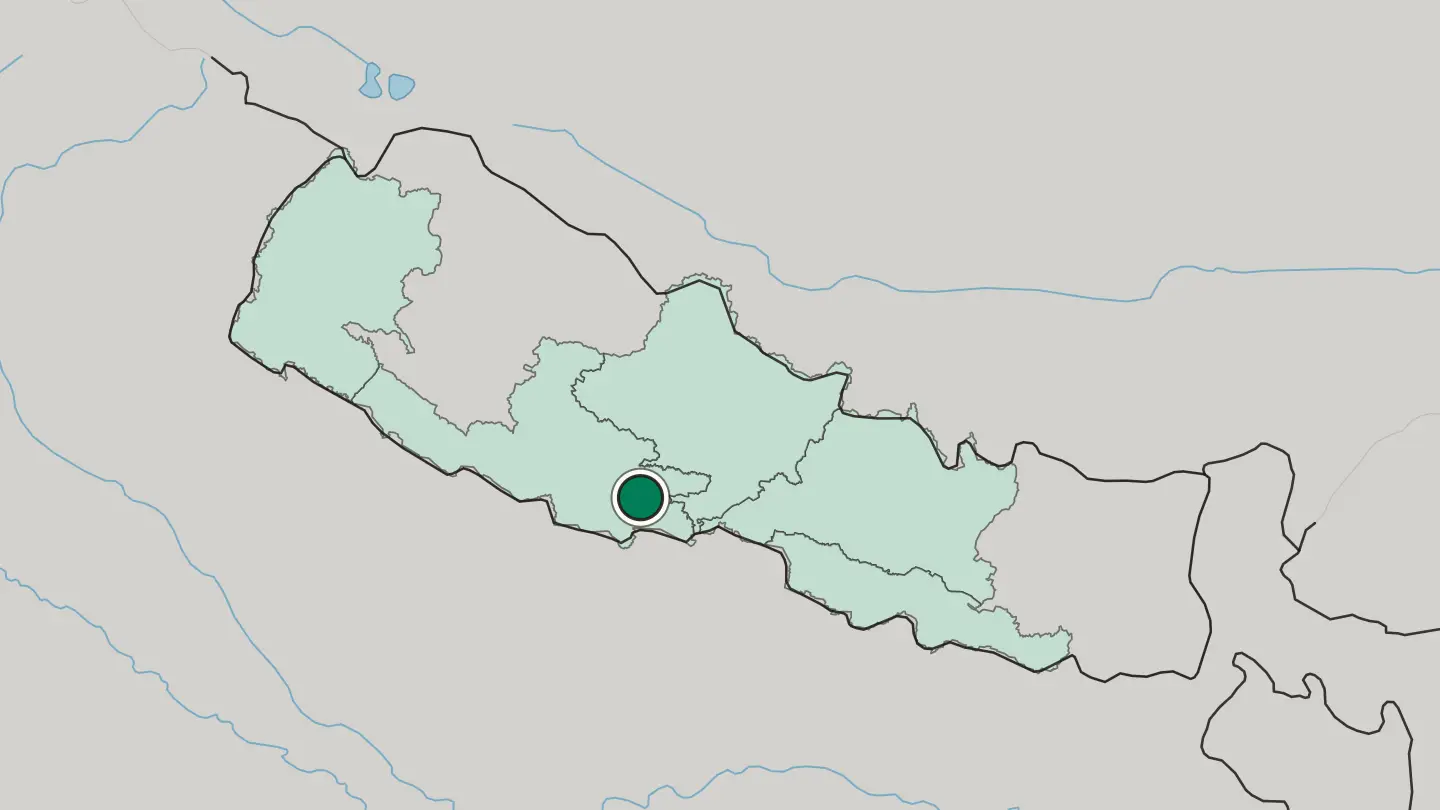
 Nepal
Nepal
Birgañj
Birgañj is a metropolitan city in Parsa District, the trade crossing between Nepal and the Indian town of Raxaul, known as the Gateway of Nepal.Where to stay →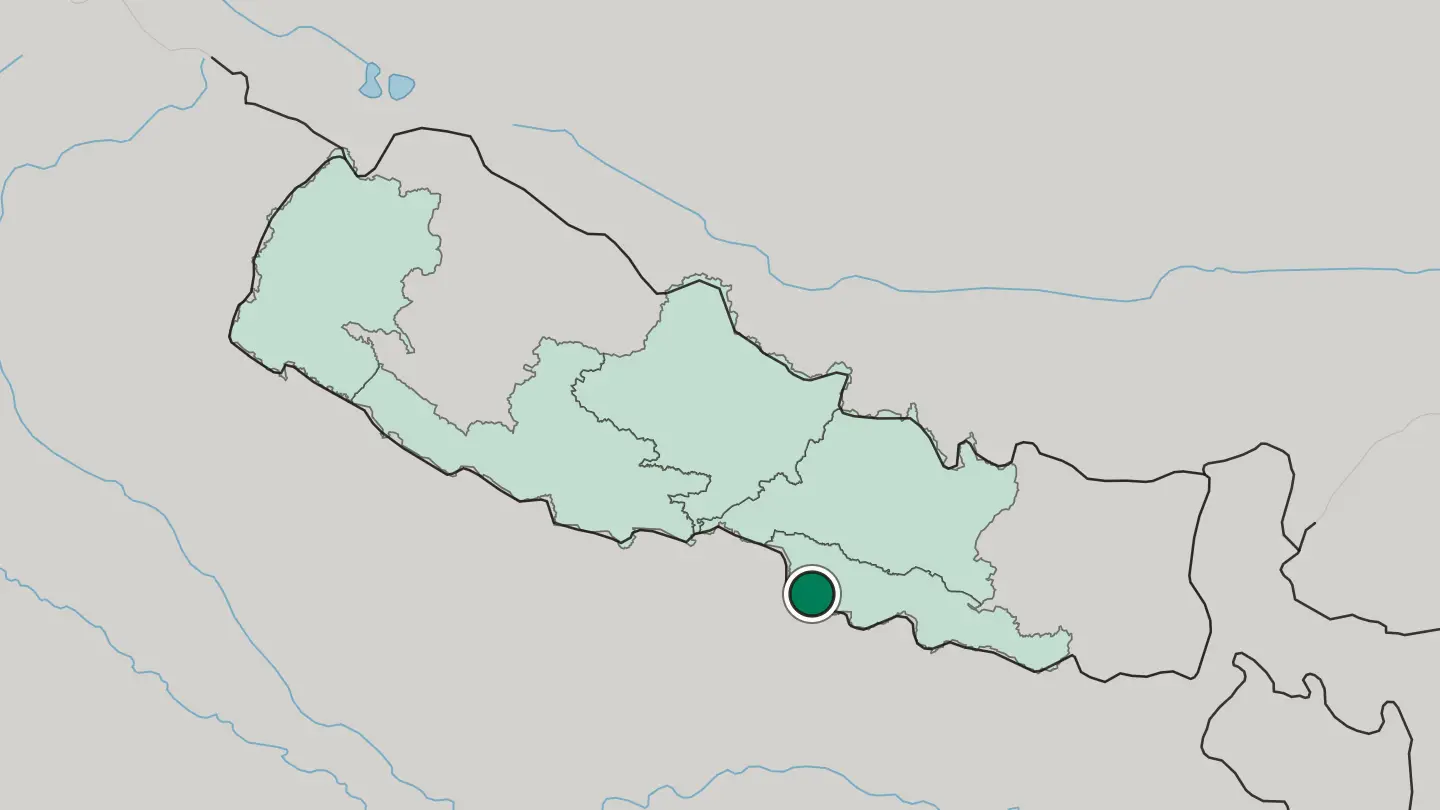
 Nepal
Nepal
Dharān
Dharān is a sub-metropolitan city of Sunsari District in Koshi Province, Nepal, named with the Nepali word for a saw pit.Where to stay →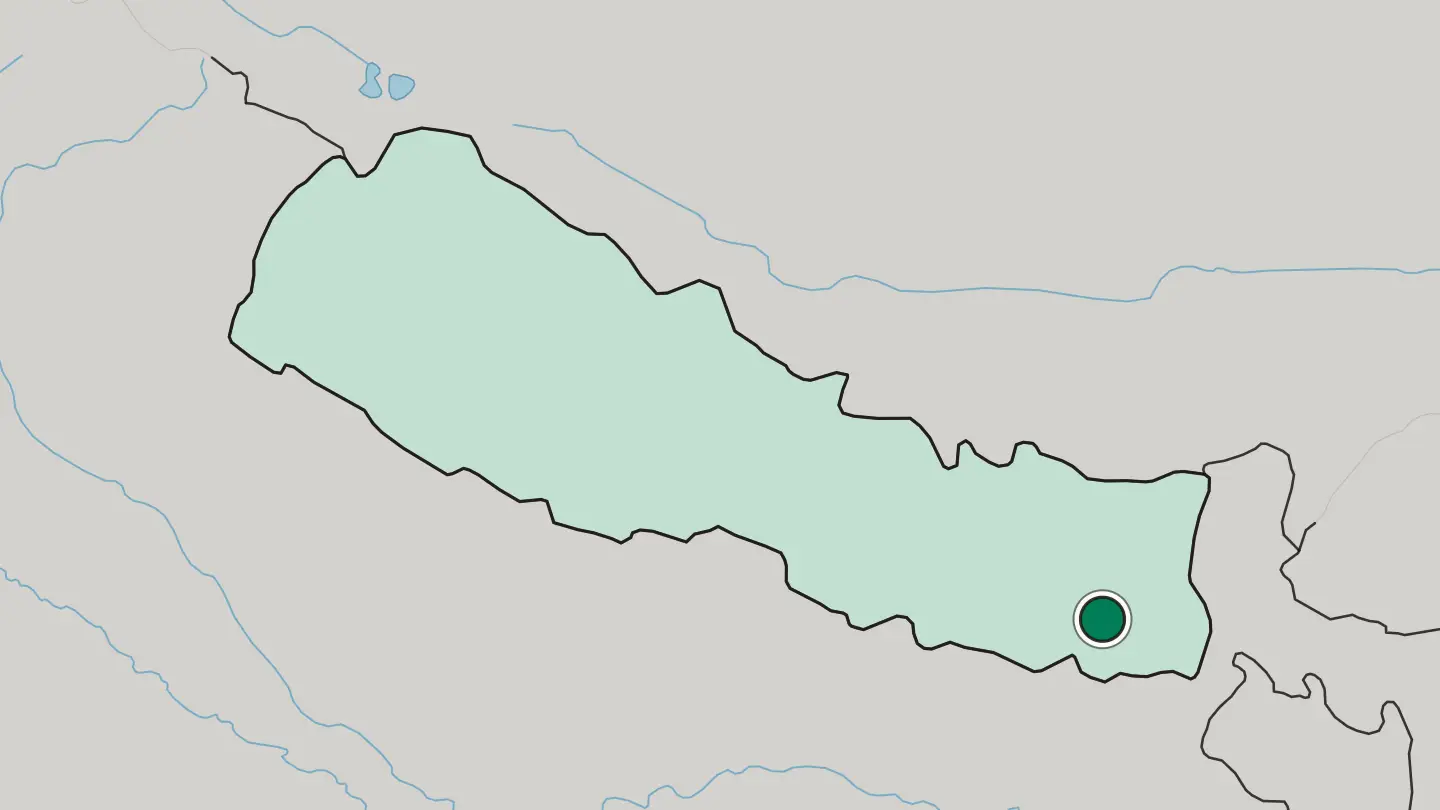
 Nepal
Nepal
Bharatpur
Bharatpur is a city of central Nepal on the Narayani river, the town beside Chitwan National Park, where lowland jungle shelters rhinos and tigers.Where to stay →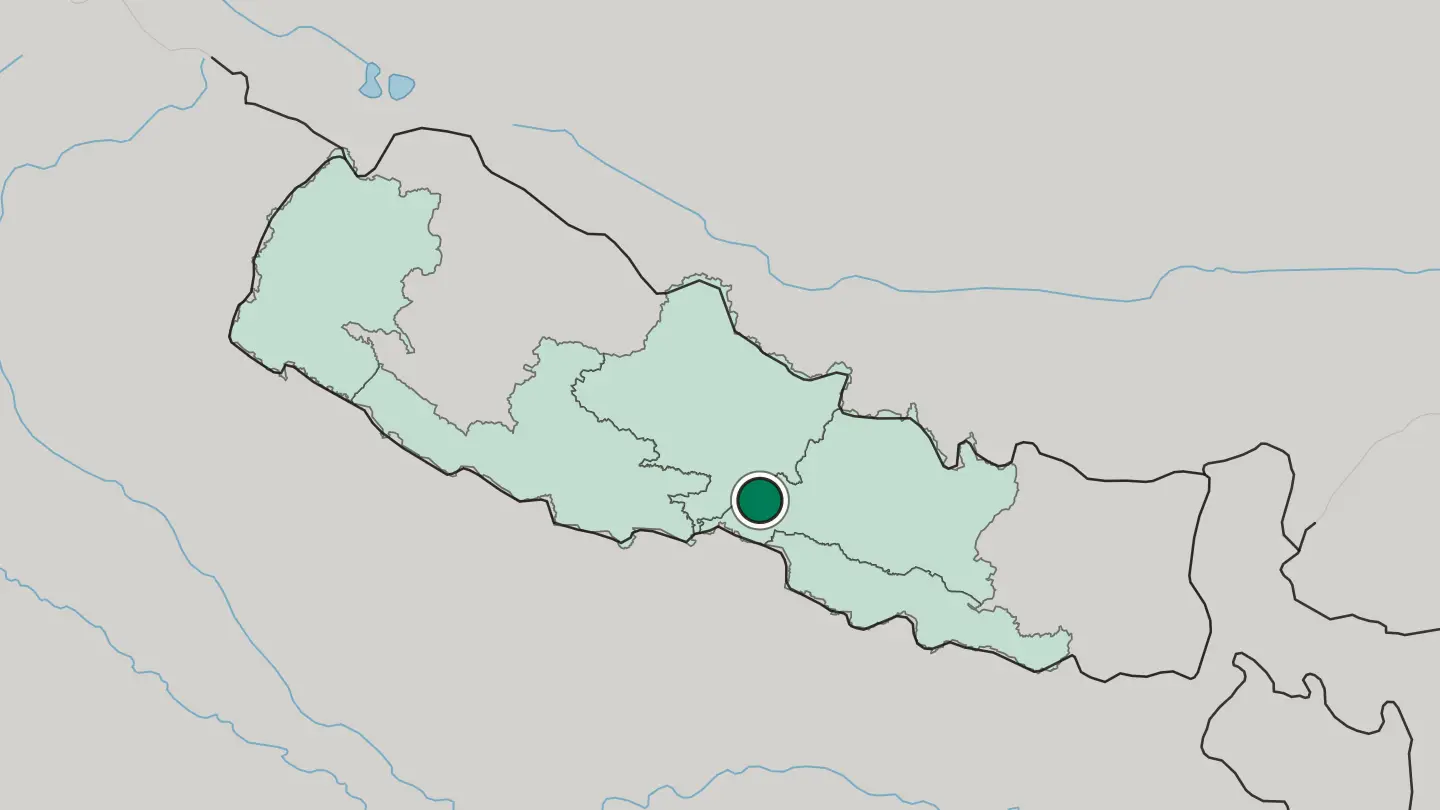
Hotel links are affiliate links: booking through them may earn us a commission, at no extra cost to you. It never affects how places are ranked. How this works
Regions of Nepal
Nepal
Bagmati Province
Hill country climbs toward the peaks in Bagmati Province, a province of Nepal that holds the capital Kathmandu and rises to Gaurishankar and Langtang.Towns & cities →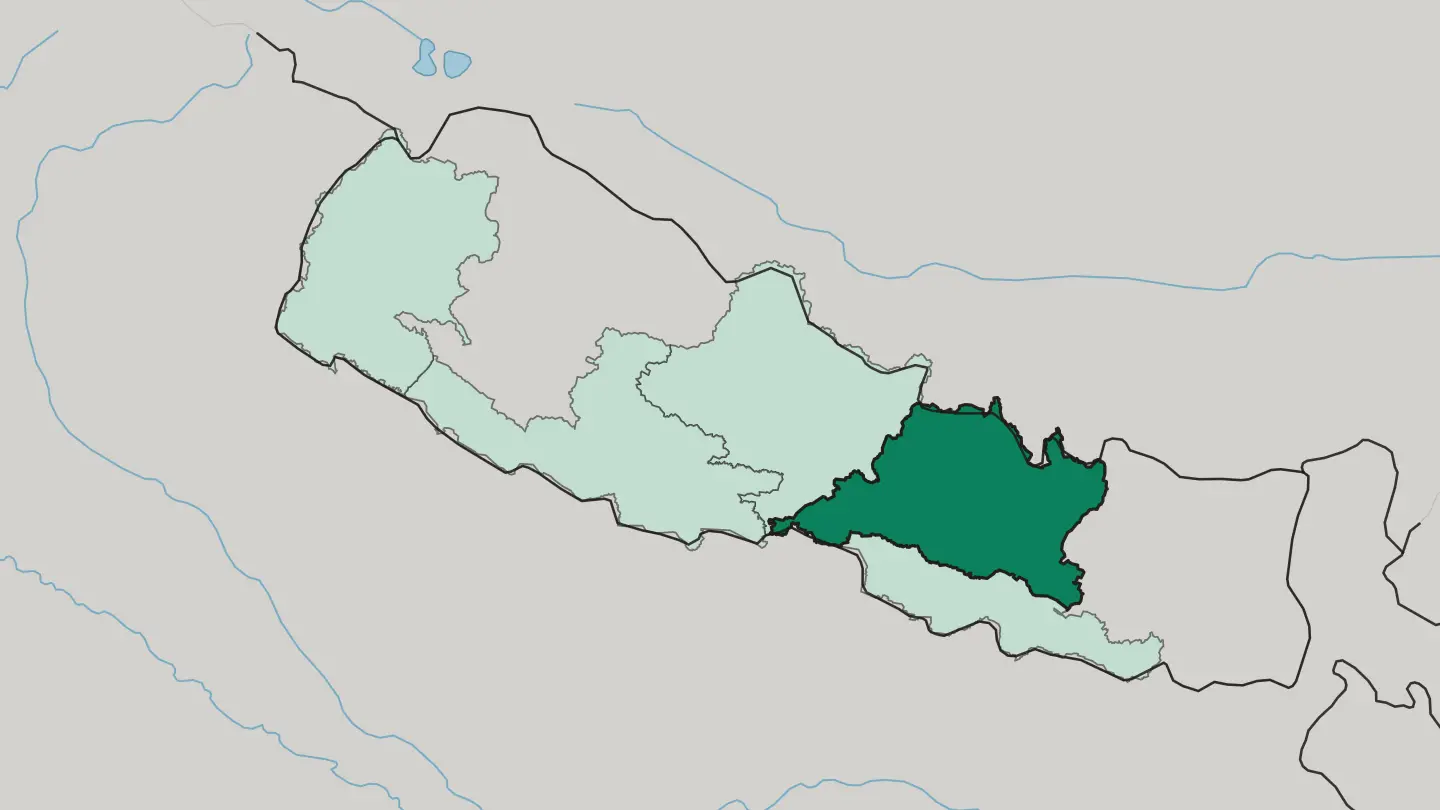 Nepal
Nepal
Gandaki Pradesh
Himalayan ridges fall to river valleys across Gandaki Pradesh, a federal province of Nepal centred on Pokhara and bordering the Tibet Autonomous Region.Towns & cities →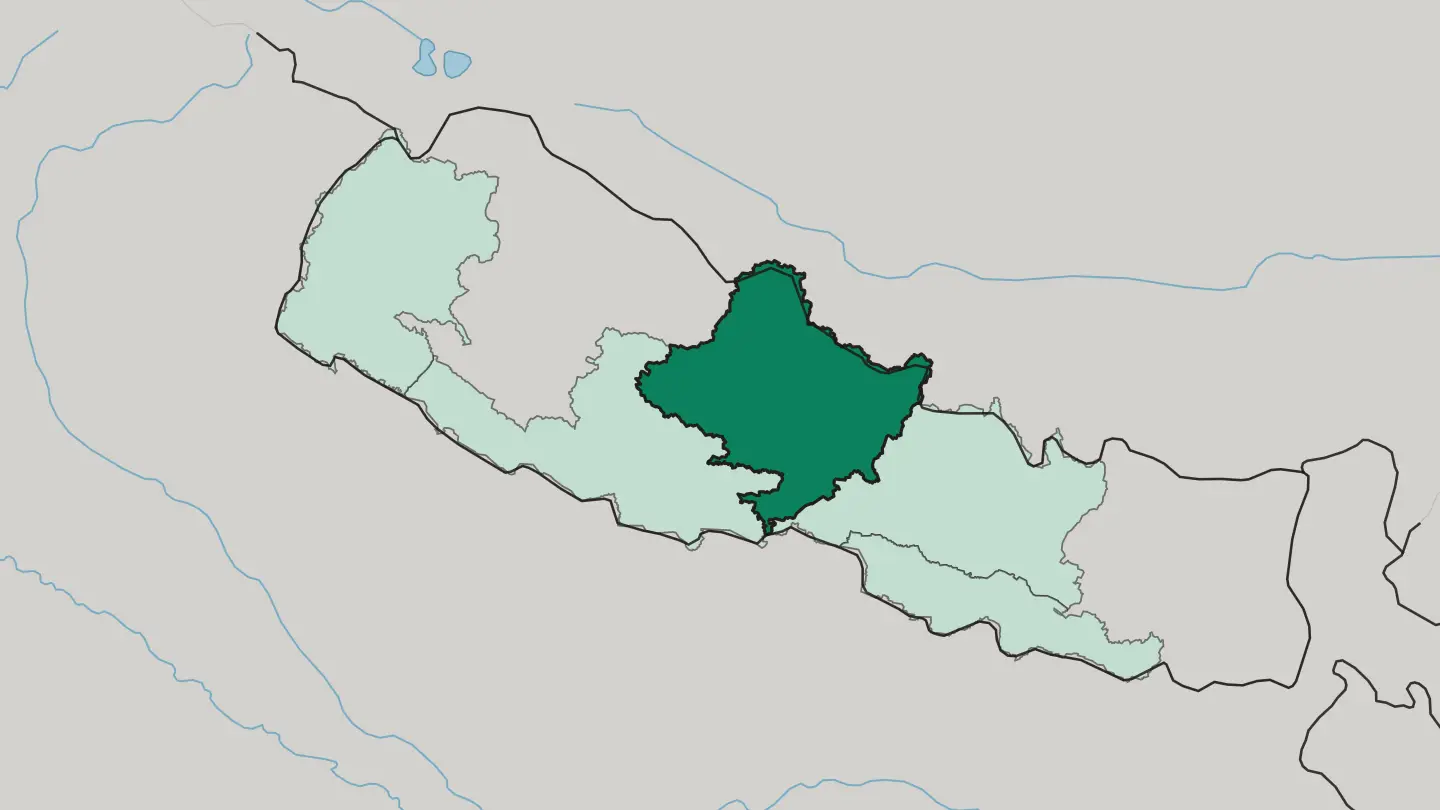 Nepal
Nepal
Lumbini Province
Lumbini Province is one of Nepal's provinces, holding the World Heritage Site of Lumbini, birthplace of Gautama Buddha in Buddhist tradition.Towns & cities →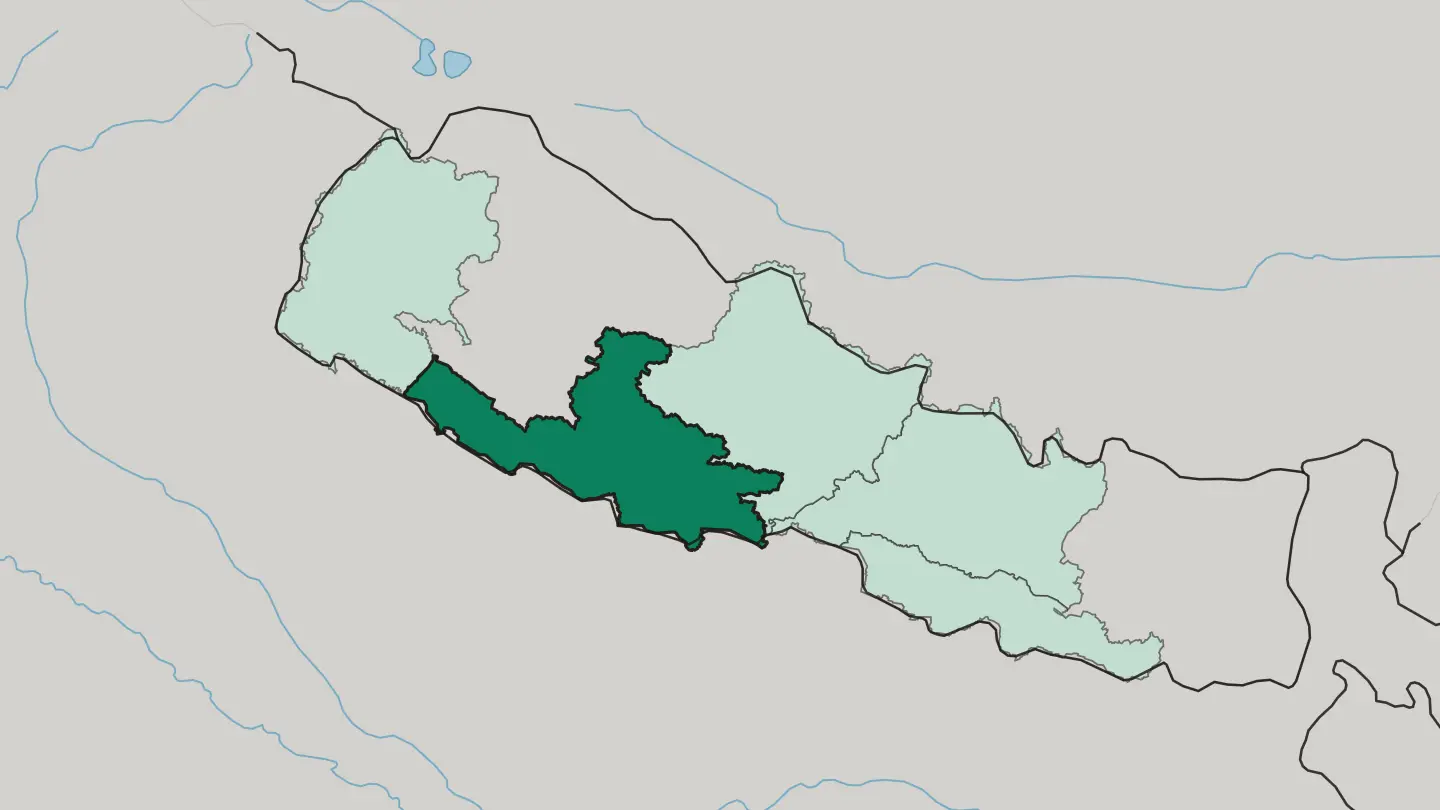 Nepal
Nepal
Madhesh
Madhesh Province is Nepal's smallest province by area, a Terai plain running from Parsa in the west to Saptari in the east.Towns & cities →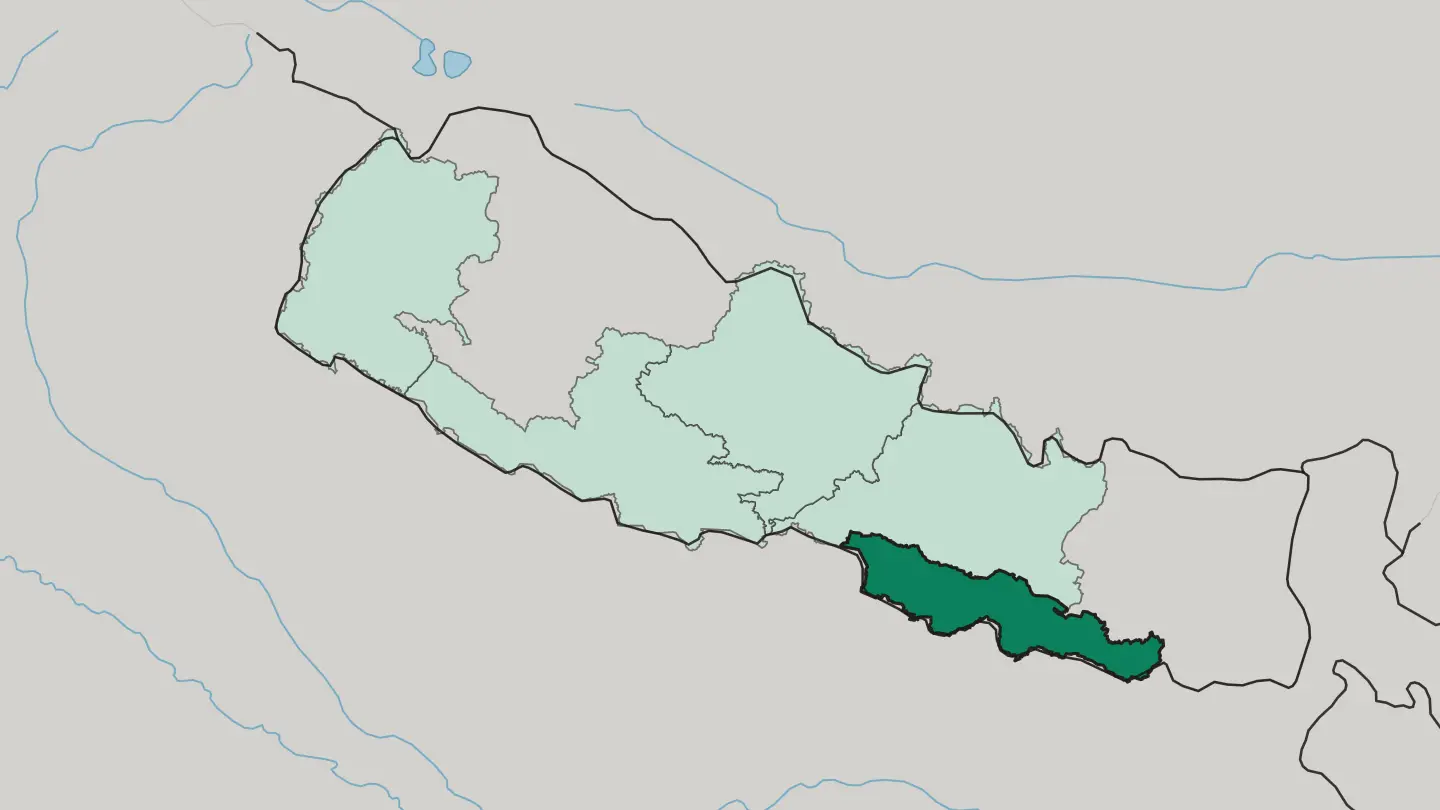 Nepal
Nepal
Sudurpashchim Pradesh
Sudurpashchim Pradesh is one of the seven provinces of Nepal, bordered by Karnali Province, Lumbini Province, Uttarakhand and Uttar Pradesh.Towns & cities →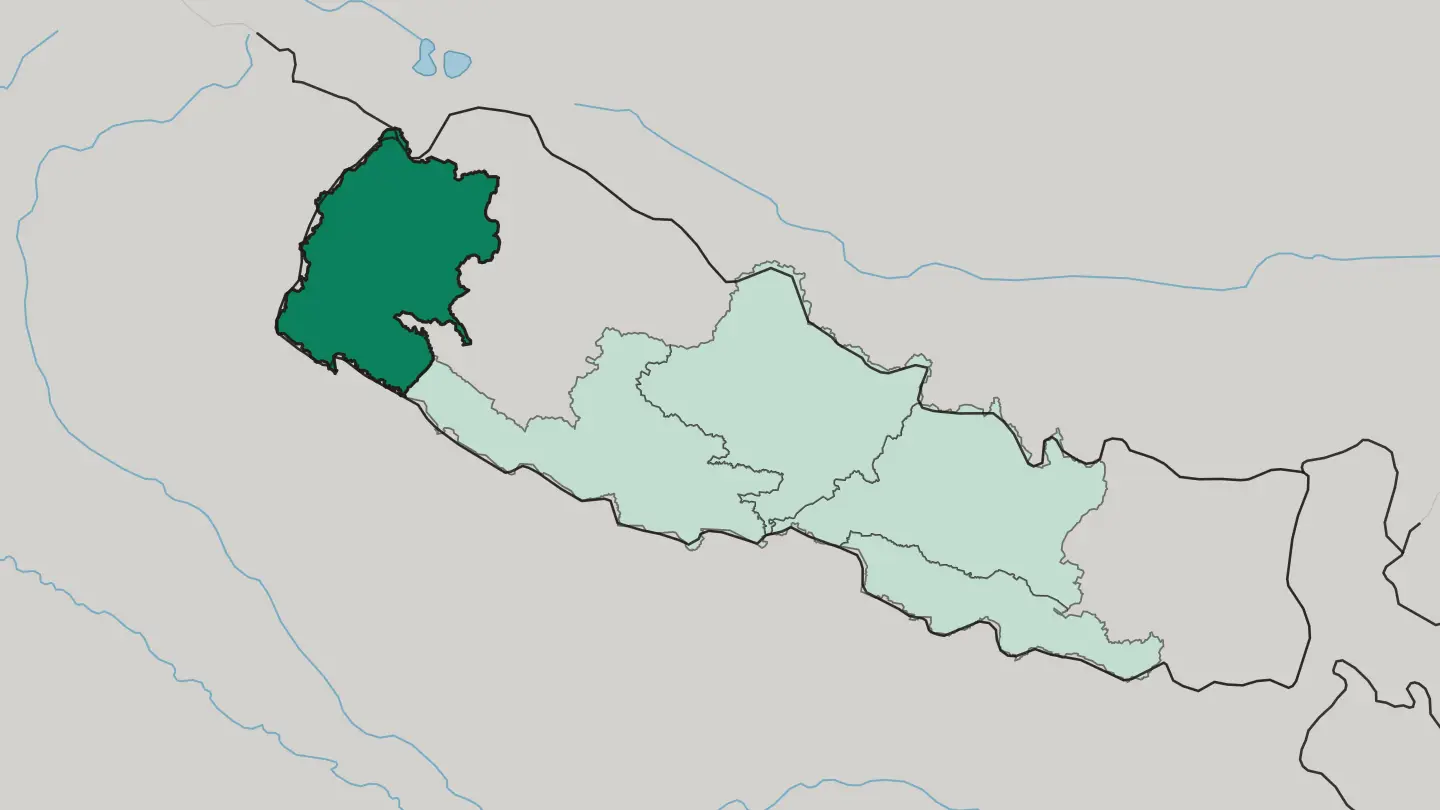 Nepal2 cities
Koshi
Koshi is a region of Nepal sharing its name with the Kosi River, the Saptakoshi formed by the Arun, Tamur and Sun Koshi.Towns & cities →About Nepal
Nepal is mountain country.
What is Nepal known for?
Eight of the world's ten highest peaks rise along its northern edge, including Everest, Kangchenjunga, and the ring of ice that forms the Annapurna range above Pokhara. The old cities carry equal weight, from the temple squares of Kathmandu and Bhaktapur to Lumbini, where the Buddha was born on the southern plain. Trekkers come for the trails; pilgrims come for the shrines.
Both find a country of astonishing vertical range.
Where is Nepal?
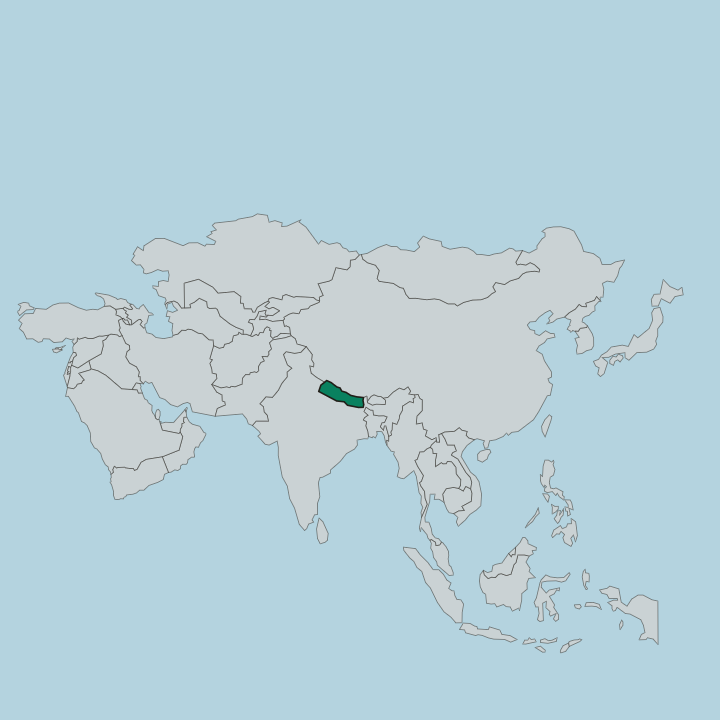
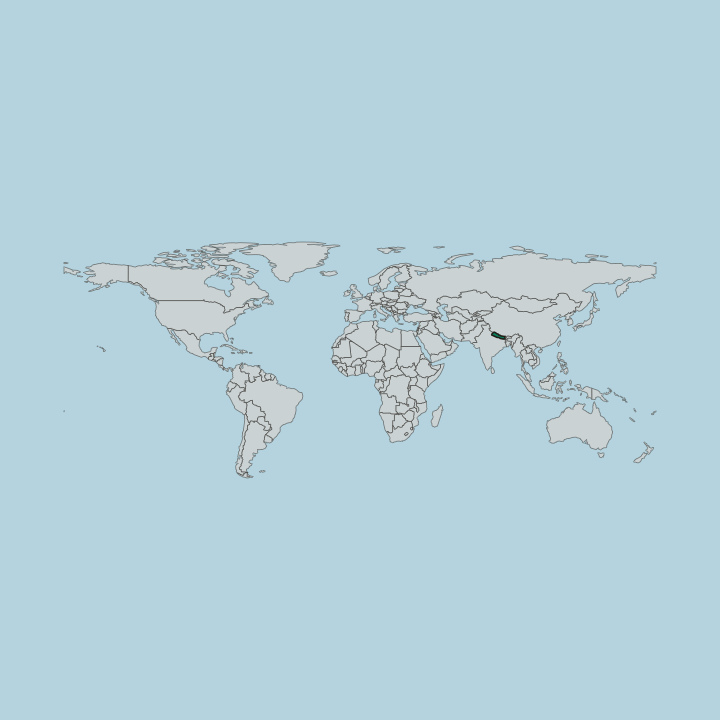
Nepal is landlocked, wedged between the Tibet Autonomous Region of China to the north and India along the south, east, and west. Its map reads as three long belts stacked from the plains to the sky. The land falls hard.
The northern belt is the Himalayas, where eight of the world's ten highest peaks stand, among them Everest on the Tibetan border and Kangchenjunga in the far east. South of that ice wall lies the hill country, a folded middle band of ridges and river valleys that holds most of the population and the two largest cities. Kathmandu sits in a broad bowl in these hills, on the Bagmati River, while Pokhara rests west of it beneath the Annapurna massif.
The southernmost belt is the Terai, a strip of flat, fertile lowland along the Indian frontier that carries the country's farms and its warmest, most crowded districts. Four great river systems drain the whole slope. The Koshi, the Gandaki, the Karnali, and the Mahakali all gather Himalayan meltwater and run south toward the Ganges plain.
From the plain to the highest point on earth, the rise is stupendous.
What is the history of Nepal?
Before there was a Nepal, there were the three rival Malla kingdoms of the Kathmandu Valley, ruling from Kathmandu, Bhaktapur, and Lalitpur. Their craftsmen built the pagoda temples and carved courtyards that still fill those cities. The country was assembled from outside.
Prithvi Narayan Shah, the king of the small hill state of Gorkha, conquered the valley and proclaimed a unified kingdom in 1768, founding the Shah dynasty that would rule for the next two centuries. That kingdom outlasted the British Empire that surrounded it, keeping its independence where its neighbours lost theirs. Power did not always sit with the crown.
For much of the nineteenth and early twentieth centuries the hereditary Rana prime ministers ran the country while the Shah kings reigned in name. The twentieth century swept the Ranas from power and, in time, unseated the monarchy itself. A decade-long Maoist insurgency and mass protests forced the end of royal rule, and in 2008 the elected constituent assembly abolished the throne and declared Nepal a federal republic.
Two and a half centuries of kings had closed. The country the Shahs stitched together, though, endured.
What is Nepal like?
Nepal is Hindu and Buddhist at once, and the two faiths share its shrines rather than dividing them. Pilgrims circle the great white dome of Boudhanath and file through the Shaivite riverside temple of Pashupatinath, both in Kathmandu, often within the same day. Faith sets the calendar.
The autumn brings Dashain, the longest festival of the year, when families across the country return home, and Tihar follows soon after with rows of oil lamps and marigold garlands. The Kathmandu Valley is the heartland of the Newar people, whose brick-and-timber architecture, feast cooking, and craft guilds shaped the look of the old cities. Beyond the valley the country is a mosaic of peoples: Sherpas and other groups in the high mountains, Gurungs and Magars in the hills, Tharu communities across the Terai.
Nepali is the shared official language, but dozens of others are spoken at home. Food ties it together. The everyday meal is dal bhat, lentils and rice with vegetable and pickle, eaten twice a day, while steamed momo dumplings turn up at every roadside stall.
Lumbini, on the southern plain, is revered worldwide as the birthplace of the Buddha. One small country holds many worlds.
What is the climate of Nepal?
Nepal's weather is stacked by height as much as by season. The lowland Terai stays hot and humid, the middle hills around Kathmandu and Pokhara run mild, and the high Himalayas are cold and snowbound through the year. One monsoon governs the calendar.
From June into September it drenches the country and hides the peaks behind cloud, so most trekkers wait for the clear, dry skies of October and November, or the spring window of March and April. Winter turns the mountains bitter while the plains stay warm.
How do you get to Nepal?
Nearly all air travellers land at Tribhuvan International Airport in Kathmandu, the country's one busy international gateway and the hub for domestic flights on to Pokhara and the mountain airstrips. The land route matters too. Nepal shares an open border with India, and travellers cross by road at points like Sunauli and Birgunj, no flight needed.
Overland from the north is far harder, since the Tibetan frontier runs along the high Himalayas. Book the short domestic hops early. Weather grounds them often.
Good for
Updated September 2026