Philippines · Autonomous Region in Muslim Mindanao
Where to Stay in Jolo, Autonomous Region in Muslim Mindanao
Jolo is the capital of Sulu, a Tausug town on Jolo Island where Spain built the smallest walled city in the world.
Hotel links are affiliate links: booking through them may earn us a commission, at no extra cost to you. It never affects how places are ranked. How this works


Where to stay in Jolo
Where the beds are, and what that means for the visit.
Eight barangays divide the town, and choosing among them is mostly a question of what should be within walking distance. The Walled City is the administrative core, the quarter Spain laid out, and it holds Our Lady of Mount Carmel Cathedral along with the municipal business a working visit tends to involve. Trade concentrates in Tulay.
Tulay Central Mosque stands there, the largest in Sulu, and the lanes around it carry the heaviest daily commerce in Jolo. Chinese Pier faces the water instead. Its wharves inherited the boat traffic that once tied the town to Zamboanga and Singapore, which makes the barangay a practical base when arrival or departure happens by sea.
Bus-Bus, Asturias, Alat, San Raymundo, and Takut Takut hold the rest of the municipality. Ground out there is quieter, and a stay in any of them means arranging a ride back into the centre each day rather than walking it. Beds are scarce in all eight.
Sulu supports nothing like the hotel trade of the larger towns on Mindanao, so booking early counts for more than picking the perfect barangay. The built town occupies only a small part of the municipal ground on the north-west side of Jolo Island, so moving between the cathedral, the mosque, and the pier takes minutes.
Find hotels in Jolo
Direct booking searches for these neighbourhoods.
Walled City
The quarter Spain walled holds the cathedral and the municipal offices, so nothing official sits more than a few streets away. Few places to stay nearby — book ahead.Find hotels in Walled CityStays within earshot of Tulay Central Mosque and the market lanes behind itTulay
Tulay Central Mosque, the largest in Sulu, anchors the barangay that carries most of the town's daily commerce. Few places to stay nearby — book ahead.Find hotels in TulaySea crossings and freight moving through the Jolo wharvesChinese Pier
The pier barangay keeps the waterfront that once carried Jolo's trade to Zamboanga and Singapore. Beds are limited here, so book early.Find hotels in Chinese PierHotel links are affiliate links: booking through them may earn us a commission, at no extra cost to you. It never affects how places are ranked. How this works
About Jolo
The Sultanate of Sulu made its fortune here.
What is Jolo known for?
Jolo worked as an entrepot between Singapore, Zamboanga, and the wider Sulu Archipelago, and Chinese merchants from Fujian came to dominate that trade in the last decades of Spanish rule. Tausug custom runs deeper than commerce. The town is the urban centre of the Moro homeland called Bangsamoro, where Pangalay is danced at weddings that can run for weeks and the customary law of the Adat still colours family obligation.
What are the main landmarks in Jolo?
Three religious buildings mark the town. Tulay Central Mosque is the largest in Sulu, Our Lady of Mount Carmel Cathedral the biggest church, and Jolo Alliance Evangelical Church the first Protestant congregation in the archipelago. Spain left walls too.
The Walled City barangay carries the line of what the Spanish built as the smallest walled city in the world, and the sultans' Astana Putih, the White Palace, stands further out at Umbul Duwa in Indanan.
What is the history of Jolo?
Arab traders reached the island in the 14th century and brought Islam with them. Karim ul-Makhdum, who came to Sulu in 1380, is remembered as the missionary through whom the Tausug became the first Filipinos to take up the faith, and the other missionaries named beside him are Rajah Baguinda and the Arabian scholar Sayid Abu Bakr, the first Sultan of Sulu. The Sultanate of Sulu was centred on Jolo politically and economically, with the royal seat at Astana Putih until the capital moved to Maimbung during the 1800s.
Spain never took the sultanate whole. Jolo was burned in 1876, and the Sulu Protocol of 1877 had England and Germany recognise Spanish rights over Sulu, while the Treaty of Peace of 1878 left that sovereignty confined to garrisons and pockets of settlement. Colonel Juan Arolas struck at Maimbung in 1887.
Chinese traders had been slipping Enfield and Spencer rifles past the Spanish blockade to the datus, and after the raid their property was destroyed and they were deported to Jolo. Storms in 1892 sank three steamers on the Singapore run, and the entrepot role went with them. The Treaty of Paris handed the islands to the United States in 1899, the Moro Rebellion followed, and the Sultanate of Sulu was abolished in 1936.
Recovery came after World War II. Then the Moro National Liberation Front took the town in 1974, the Philippine Army laid siege, and the Battle of Jolo left damage that drove capital and skilled families out.
Where is Jolo?
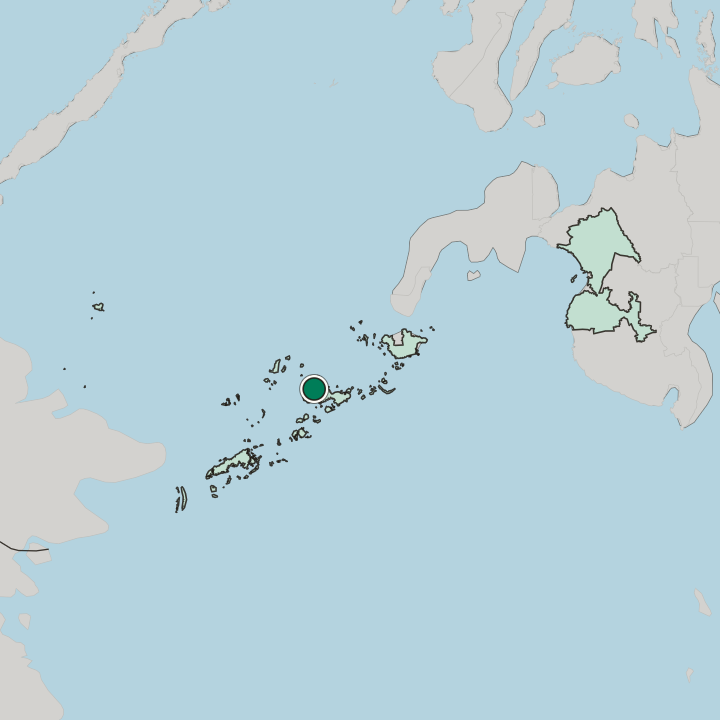
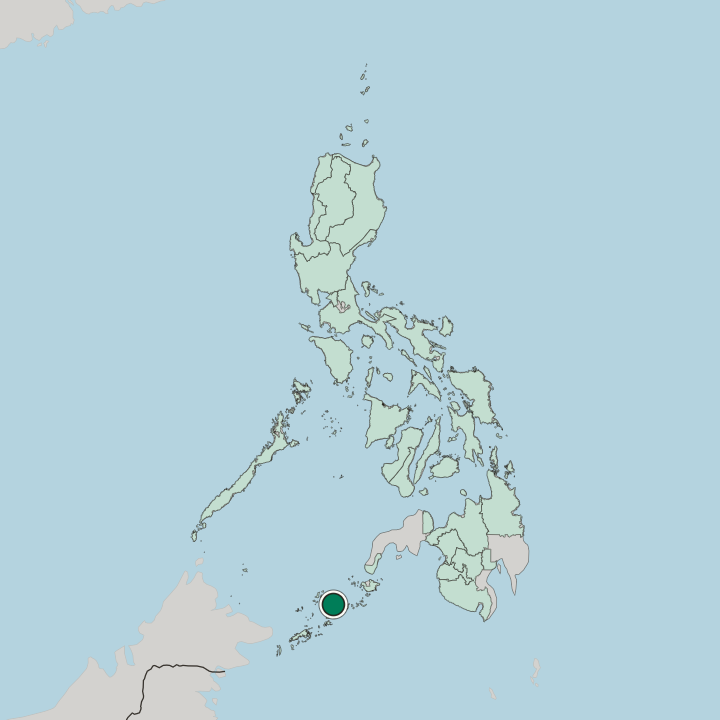
Jolo Island is volcanic, and the town keeps its north-west side. The island lies south-west of the tip of the Zamboanga Peninsula on Mindanao, between Basilan and Tawi-Tawi, with the Sulu Sea along the northern edge of the chain and the Celebes Sea along the southern. Craters ring the town.
Volcanoes are numerous across the 890 square kilometres of an island set at the centre of the Sulu Archipelago, and the last known activity, in 1897, raised tsunamis across the archipelago and western Mindanao.
What is the climate of Jolo?
Rain is the only real variable. Warmth holds through every month on Jolo Island, oppressive humidity with it, and the wet tropical rainforest pattern of the Köppen Af type leaves the town no cool season to plan around. The seas do the levelling.
Sulu Sea to the north and Celebes Sea to the south keep the range narrow, though the Sulu region carries a long record of erratic rainfall and drought that once held its farming back.
How do you get to Jolo?
Water sets the approach. Jolo lies on the north-west shore of Jolo Island, off the tip of the Zamboanga Peninsula, so getting in means a crossing of the Sulu Sea rather than a road from Mindanao. Chinese Pier says the rest.
That barangay took its name from the wharf trade that once linked the town to Zamboanga and Singapore, and the waterfront it fronts is still the side of Jolo that faces the sea lanes.
Common questions
What is the best area to stay in Jolo?
Walled City: Official errands inside the old Spanish walls, beside Our Lady of Mount Carmel Cathedral. Tulay: Stays within earshot of Tulay Central Mosque and the market lanes behind it. Chinese Pier: Sea crossings and freight moving through the Jolo wharves.
More cities in Autonomous Region in Muslim Mindanao
Updated October 2026