Portugal · Distrito de Setúbal
Where to Stay in Setúbal, Distrito de Setúbal
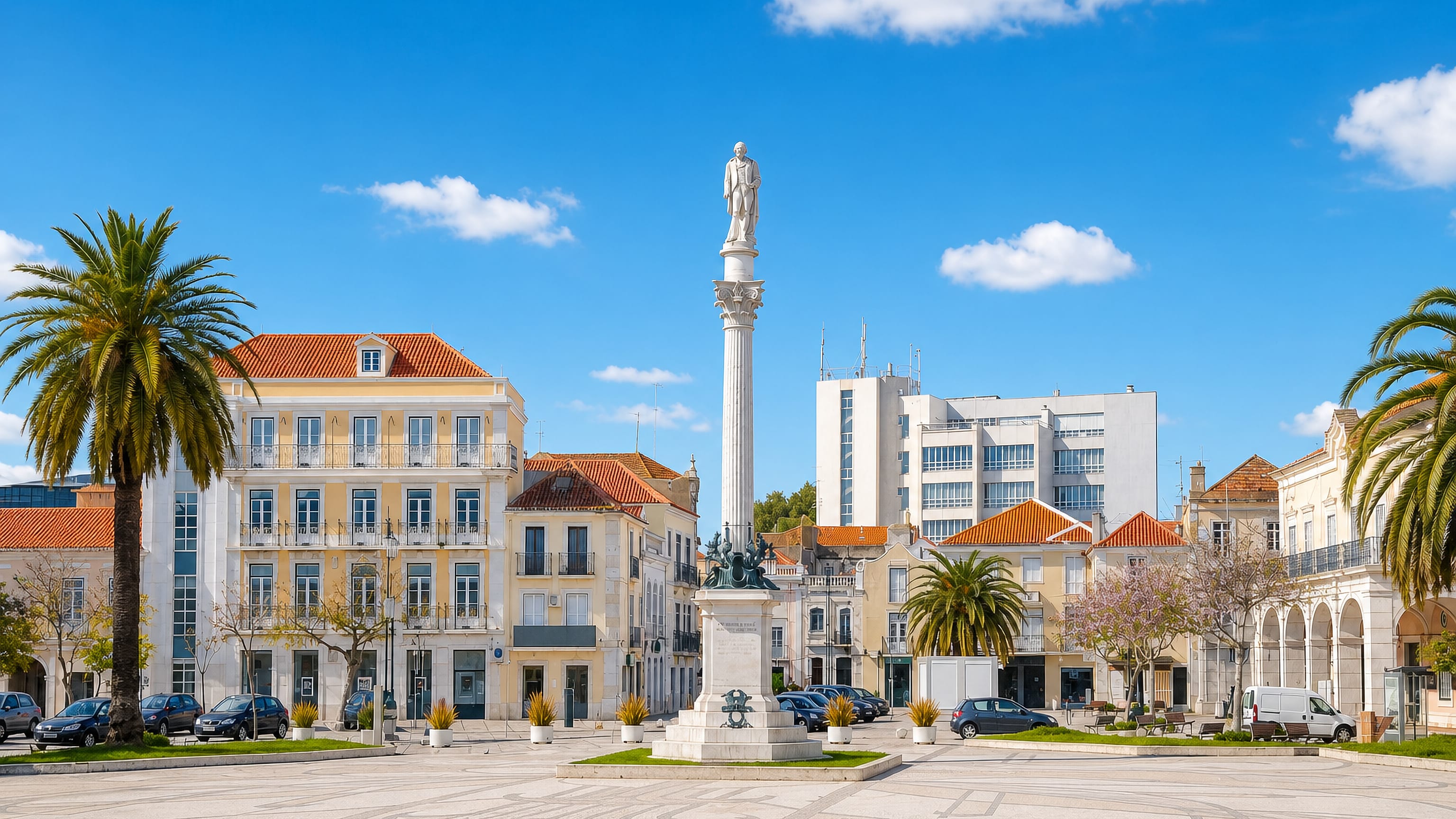
Setúbal is a Portuguese city on the Sado Estuary, with Castelo de São Filipe on the height above and Mercado do Livramento at its heart.
Hotel links are affiliate links: booking through them may earn us a commission, at no extra cost to you. It never affects how places are ranked. How this works


Where to stay in Setúbal
Where the beds are, and what that means for the visit.
Rooms cluster near Mercado do Livramento, and that is where most visitors should start, within reach of the Igreja de São Julião, the Casa de Bocage, and the Monumento a Bocage on the same short circuit of streets. The market opens early. Staying here suits you if mornings matter, because the fish counters and the produce halls fill long before the rest of the city has stirred.
Casa das Quatro Cabeças and the Galeria Municipal do Banco de Portugal are close by too. Castelo de São Filipe changes the calculation. The fort stands apart from the centre, and a bed on that side trades easy walking for the wider outlook over the Sado Estuary that no room among the market streets gives.
The Anunciada parish, around the Igreja Paroquial da Anunciada, keeps a quieter and more ordinary feel. São Sebastião does the same, near its own Igreja Paroquial de São Sebastião. Rooms are scarcer out at Comenda.
Anyone staying near the Casa da Quinta da Comenda and the Sítio Arqueológico da Comenda should expect to drive in for dinner, since the ground there is far quieter than the streets by the market.
Find hotels in Setúbal
Direct booking searches for these neighbourhoods.
Mercado do Livramento
Market streets that put the Igreja de São Julião and the Casa de Bocage on one short circuit.Find hotels in Mercado do LivramentoThe wider outlook over the Sado EstuaryCastelo de São Filipe
The fort side, set apart from the centre and turned toward the estuary water. Few places to stay nearby — book ahead.Find hotels in Castelo de São FilipeOrdinary parish streets by the Anunciada churchAnunciada
Blocks around the Igreja Paroquial da Anunciada, quieter than the market end of town.Find hotels in AnunciadaA base beside the São Sebastião parish churchSão Sebastião
Ground around the Igreja Paroquial de São Sebastião, off the visitor circuit entirely.Find hotels in São SebastiãoEstate ground at the Sítio Arqueológico da ComendaComenda
Outlying land shared by the Casa da Quinta da Comenda and the Comenda excavation. Few places to stay nearby — book ahead.Find hotels in ComendaHotel links are affiliate links: booking through them may earn us a commission, at no extra cost to you. It never affects how places are ranked. How this works
Things to do in Setúbal
Ranked by global recognition; descriptions from Wikidata (CC0).
Museums & Galleries
2- Galeria Municipal do Banco de Portugal Heritage
- Casa do Corpo Santo Heritage
Churches & Religious Sites
6- Church of the Monastery of Jesus of Setúbal Heritage
- Our Lady of Grace Cathedral, Setúbal Heritage
- Igreja de São Julião (Setúbal) Heritage
- Igreja Paroquial de São Sebastião Heritage
- Igreja Paroquial da Anunciada Heritage
Show 1 more →
- Igreja e claustro do antigo Convento de São João Baptista Heritage
Castles & Historic Sites
3- Castelo de São Filipe Heritage
- Glorieta a Luísa Todi Heritage
- Sítio Arqueológico da Comenda Heritage
Landmarks & Notable Places
4- Mercado do Livramento Heritage
- Casa das Quatro Cabeças Heritage
- Casa da Quinta da Comenda, ou Palácio da Comenda, e respetivo património móvel integrado Heritage
- Casa de Luísa Todi Heritage
worth knowingacross 4 categories in Setúbal
About Setúbal
Mercado do Livramento anchors the city.
What is Setúbal known for?
Its tiled halls stand within a few minutes of the Igreja de São Julião, and the two together give the centre a rhythm that runs from fish counters at dawn to stone arcades at dusk. Castelo de São Filipe holds the ground above the city. Bottlenose dolphins live in the Sado Estuary, and the Interpretation Center of the Common Bottlenose Dolphin of Sado Estuary is given over to them.
What are the main landmarks in Setúbal?
Stone and tile dominate. The Church of the Monastery of Jesus of Setúbal and Our Lady of Grace Cathedral carry the ecclesiastical weight, joined by the Igreja e claustro do antigo Convento de São João Baptista. Mercado do Livramento is the civic counterpart.
Memory of two figures runs through the rest: Casa de Bocage and the Monumento a Bocage, then the Casa de Luísa Todi and the Glorieta a Luísa Todi. Monumento a João Vaz completes the set. Casa do Corpo Santo stands nearby.
What is the history of Setúbal?
Setúbal's oldest traces sit outside its streets. Sítio Arqueológico da Comenda records occupation on the Comenda ground long before the city took the shape it holds now, and the Casa da Quinta da Comenda later rose on the same estate. Religion built the core.
The Church of the Monastery of Jesus of Setúbal, Our Lady of Grace Cathedral, and the Igreja de São Julião mark three separate foundations in the old centre, and the Convento de São João Baptista left its church and cloister standing. Igreja Paroquial da Anunciada and Igreja Paroquial de São Sebastião served the parishes beyond it. Castelo de São Filipe belongs to a military chapter rather than a devotional one.
Houses carry the rest of the record. Casa das Quatro Cabeças and Casa do Corpo Santo survive from the older domestic city, while Casa de Bocage and Casa de Luísa Todi attach two names that Setúbal has kept in its street furniture ever since. Monumento a Bocage, the Glorieta a Luísa Todi, and the Monumento a João Vaz put those names in public stone.
Mercado do Livramento serves the working city. The Galeria Municipal do Banco de Portugal occupies a building that once belonged to banking rather than to art, and the Interpretation Center of the Common Bottlenose Dolphin of Sado Estuary is newer still.
Where is Setúbal?
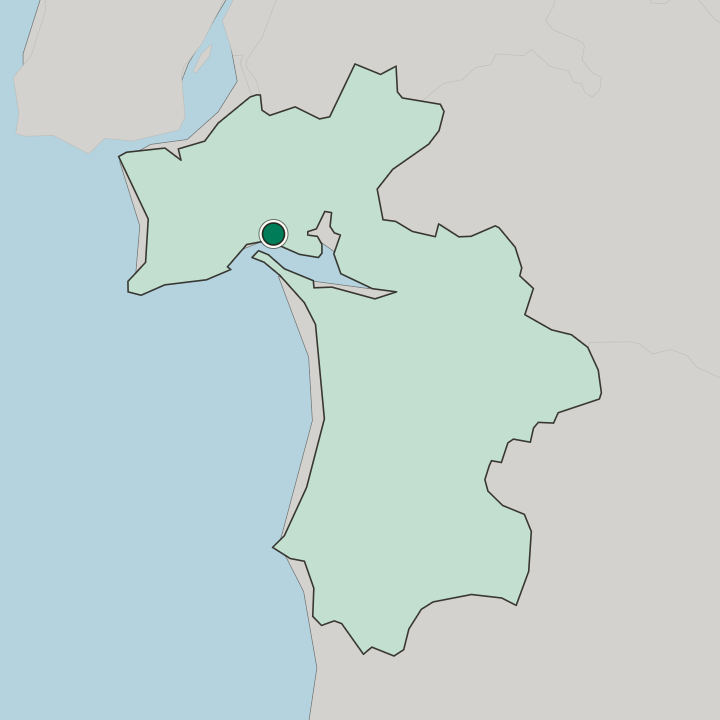
The Sado Estuary sets the terms here. Setúbal spreads along the estuary's edge, with the ground rising behind the built streets toward Castelo de São Filipe and falling away again to the water below the market. Comenda lies out beyond the built-up part, where the Sítio Arqueológico da Comenda and the Casa da Quinta da Comenda share an older stretch of ground.
The Distrito de Setúbal takes its name from the city.
What is the climate of Setúbal?
The Sado Estuary softens Setúbal's year at both ends. Water beside the city keeps the cold months from biting and takes some of the edge off the warm ones, so the difference between the seasons feels smaller than the calendar suggests. Temperate is the honest word.
Walking between Mercado do Livramento and Castelo de São Filipe stays comfortable across most of the year.
How do you get to Setúbal?
Approaches converge on the estuary. Roads from the wider Distrito de Setúbal feed the city from the landward side, and they end, for most visitors, in the streets around Mercado do Livramento. Castelo de São Filipe needs a climb or a car, since the fort sits well clear of the centre and the last stretch up to it is longer than the walk between the churches.
The rest is walkable.
Common questions
What is the best area to stay in Setúbal?
Mercado do Livramento: Early mornings at the fish counters. Castelo de São Filipe: The wider outlook over the Sado Estuary. Anunciada: Ordinary parish streets by the Anunciada church. São Sebastião: A base beside the São Sebastião parish church. Comenda: Estate ground at the Sítio Arqueológico da Comenda.
Good for
Another city in Distrito de Setúbal
Updated October 2026