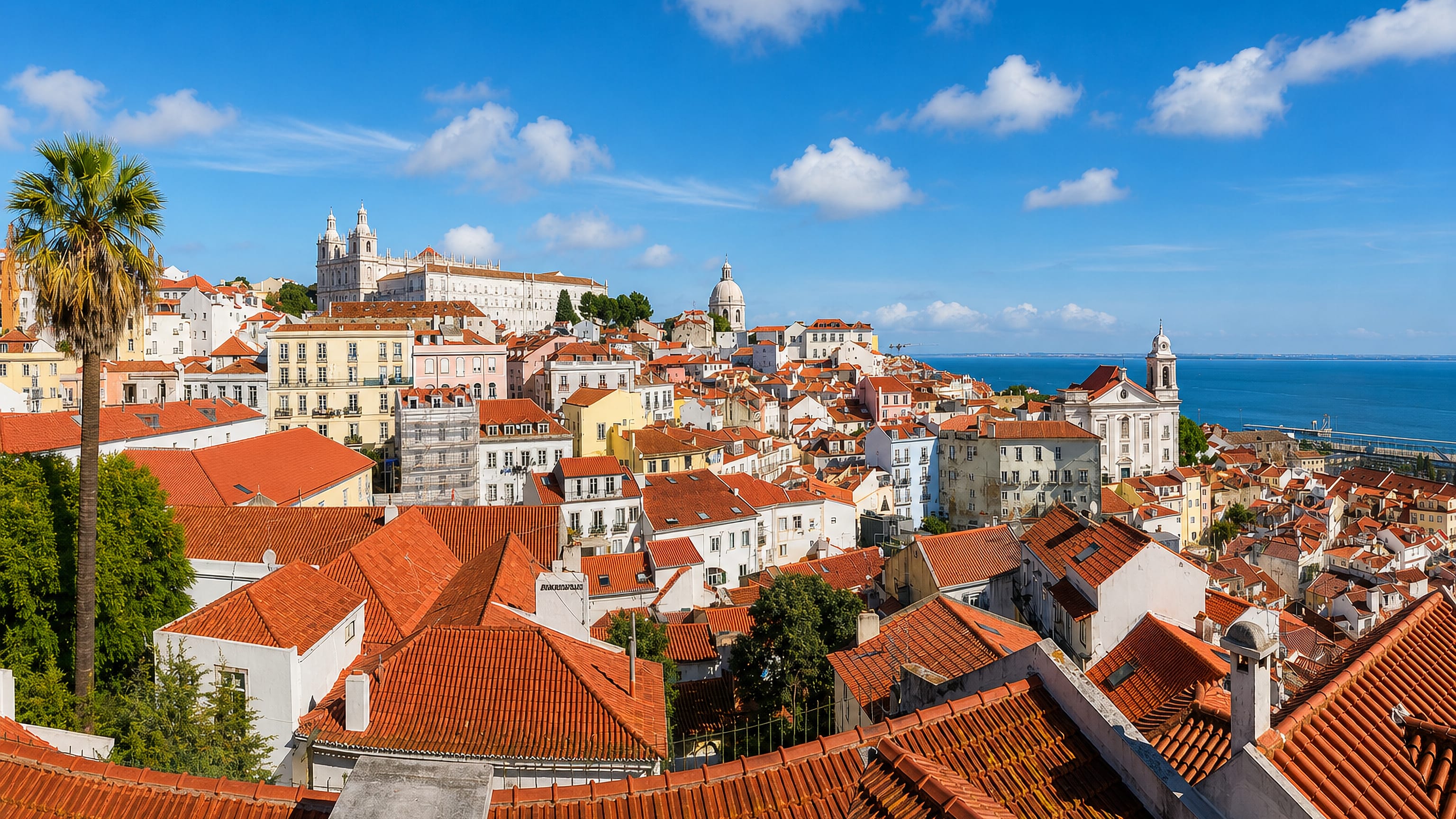
Portugal: Regions, Cities & Travel Guide
Portugal edges the Atlantic on the Iberian Peninsula, from the Douro's terraces to the Algarve, with Lisbon as its capital.
Hotel links are affiliate links: booking through them may earn us a commission, at no extra cost to you. It never affects how places are ranked. How this works


Top destinations in Portugal
Cities to start from, then drill into areas and hotels.
 Portugal
Lisbon
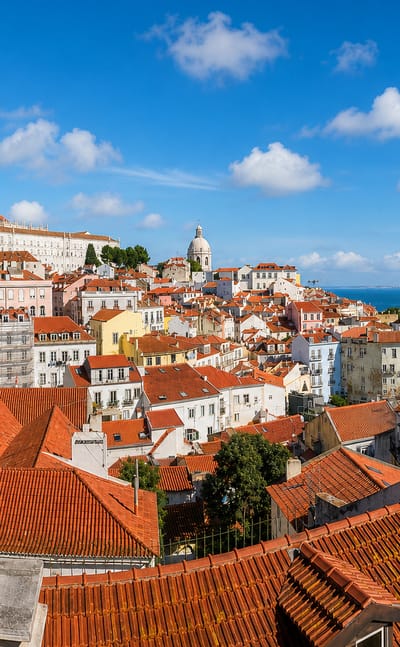
Lisbon is the capital of Portugal, a city set across seven hills at the wide mouth of the river Tagus on the western Iberian Peninsula.Where to stay →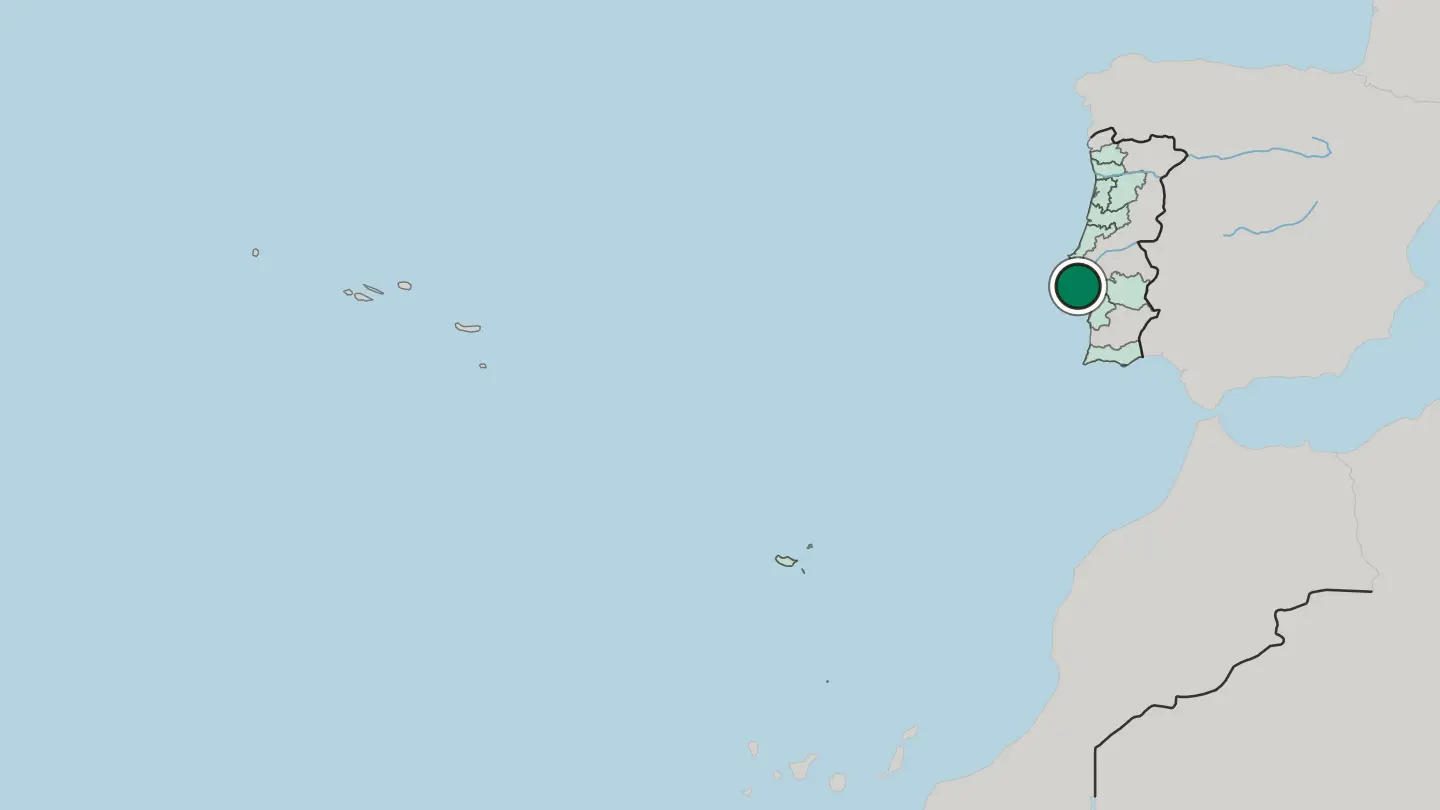 Portugal
Porto
Bell towers stand over the granite bluff above the Douro in Porto, a city in Distrito do Porto, Portugal, known for Clérigos Church and port wine.Where to stay →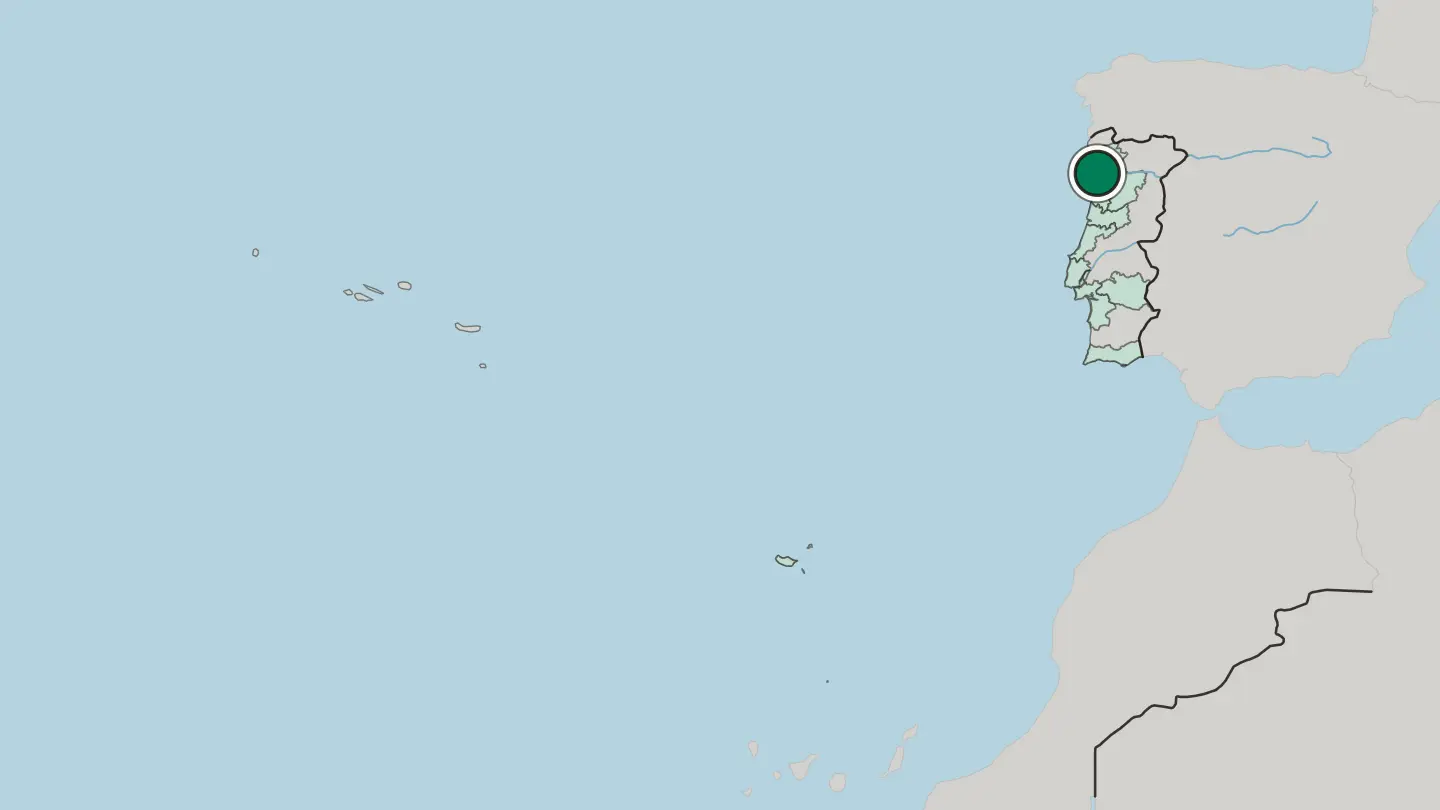
 Portugal
Funchal
Funchal is Madeira's capital, an Atlantic city of cathedral streets, sugar-trade museums, and a working cruise port.Where to stay →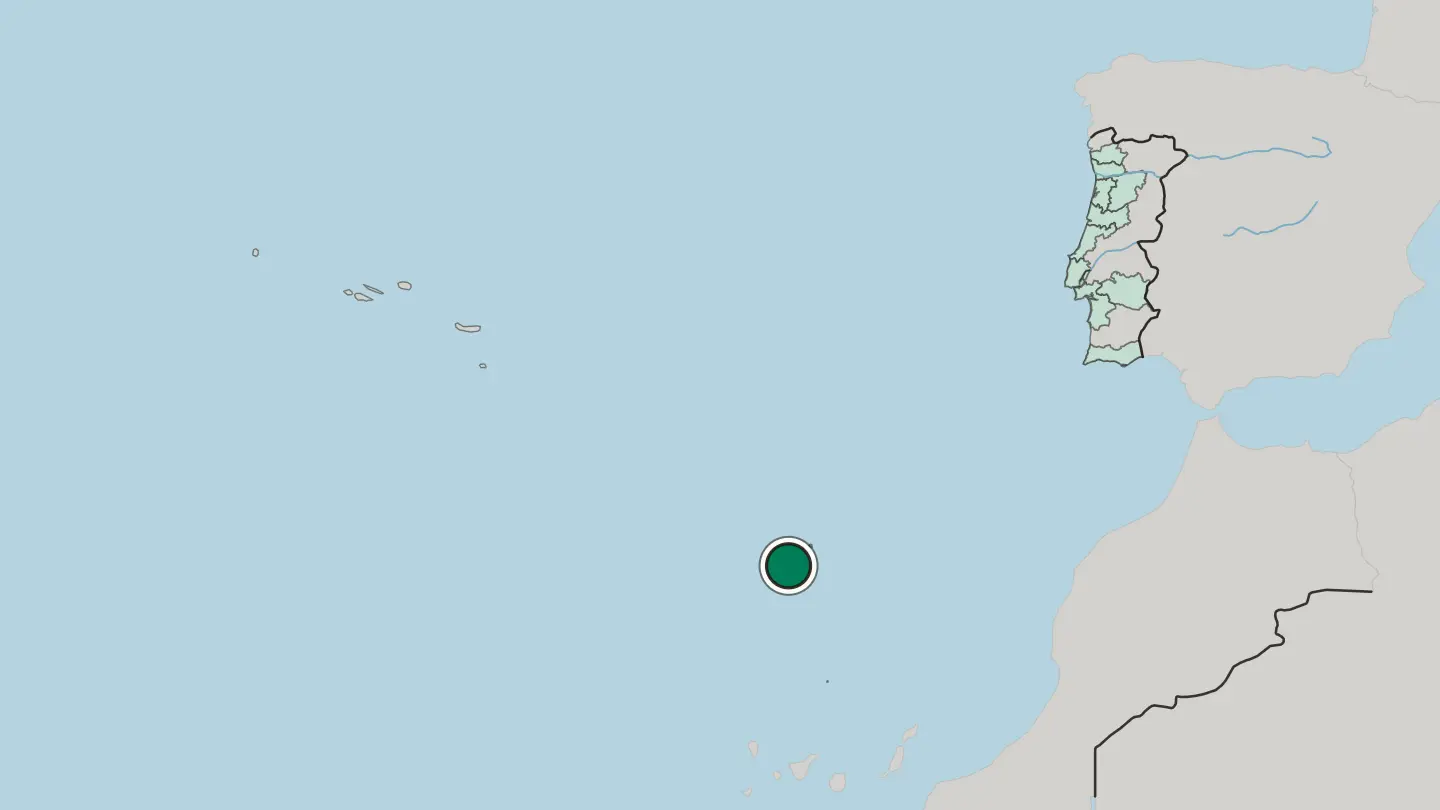
 Portugal
Braga
Braga holds a cathedral, a castle and three museums inside one compact core, and gives its name to the Distrito de Braga around it.Where to stay →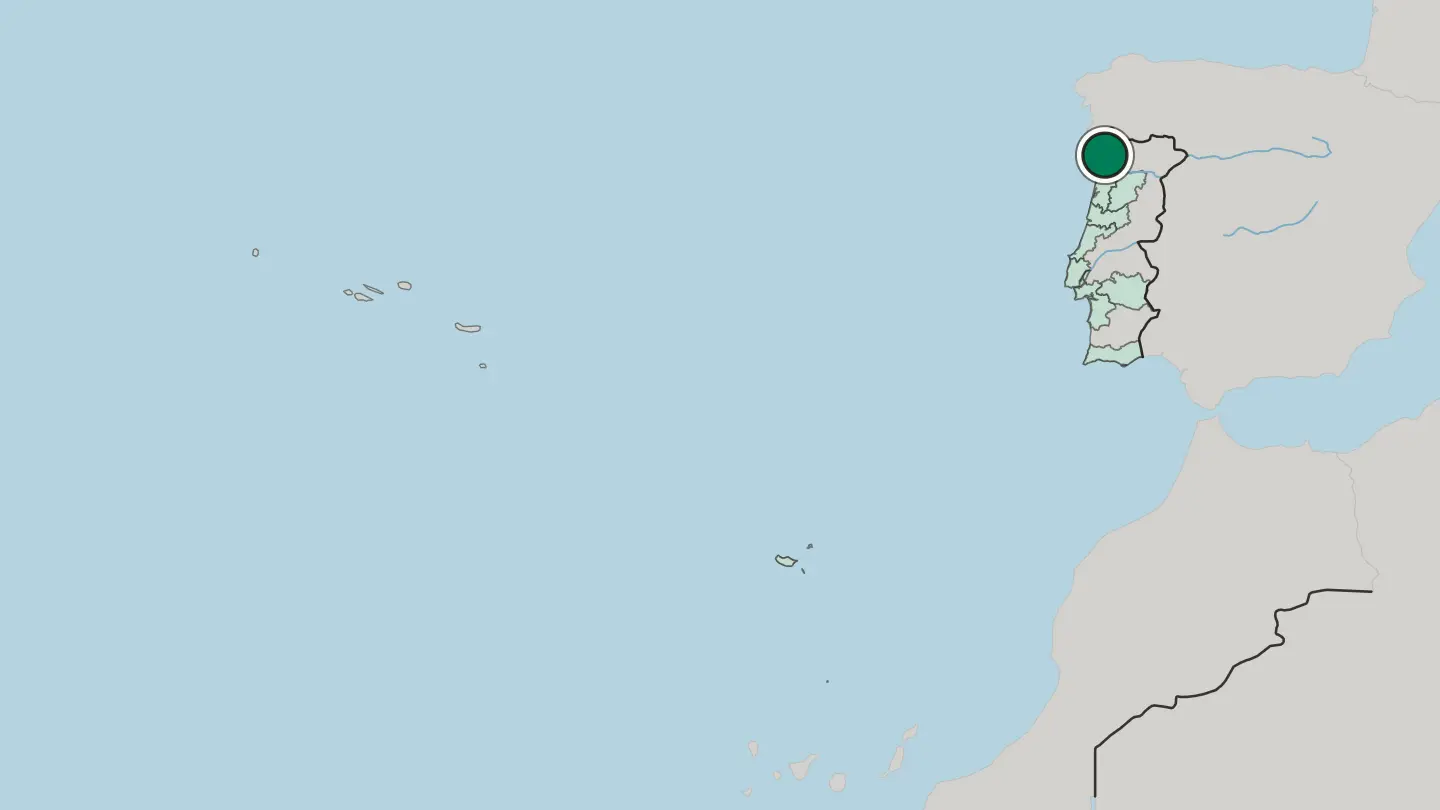
 Portugal
Coimbra
Coimbra carries an Old Cathedral and a New Cathedral, the Monastery of Santa Cruz, and a university that lends its name to a science museum.Where to stay →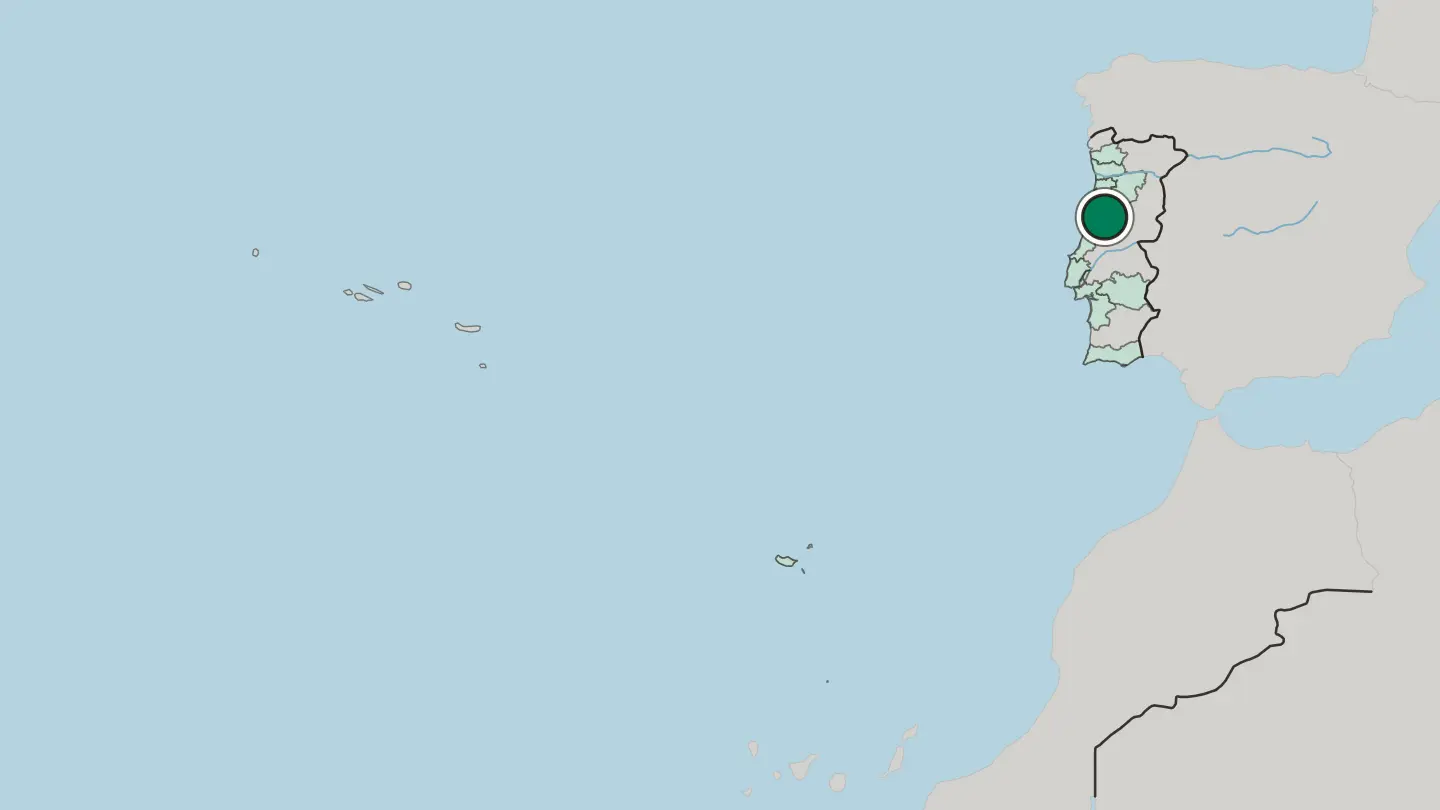
 Portugal
Aveiro
Aveiro puts a cathedral and the Mosteiro de Jesus alongside the Museu Arte Nova and a run of listed residences in the Distrito de Aveiro.Where to stay →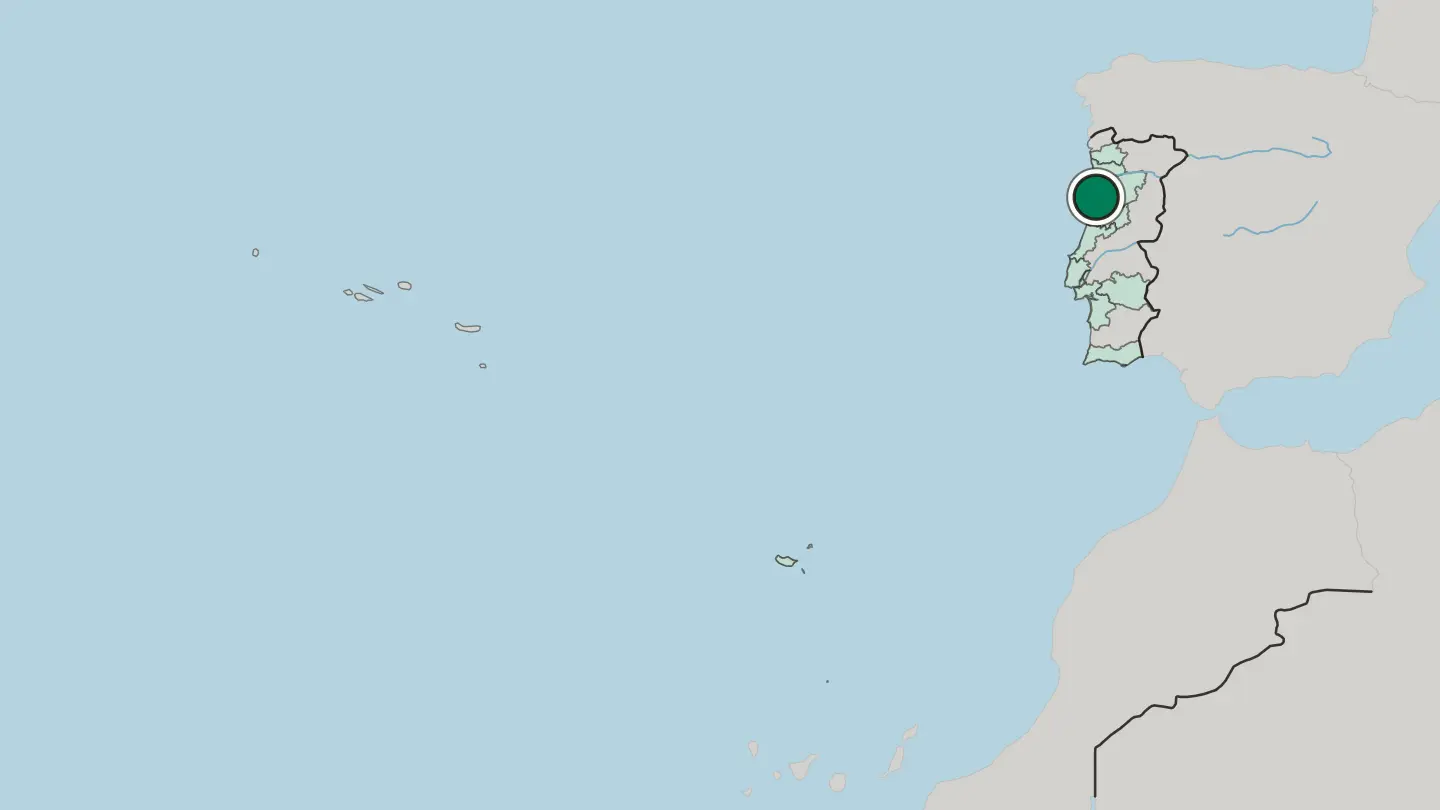
 Portugal
Évora
Évora is a walled Portuguese city in the Distrito de Évora, its Roman baths, cathedral, and painted noble houses set in one dense core.Where to stay →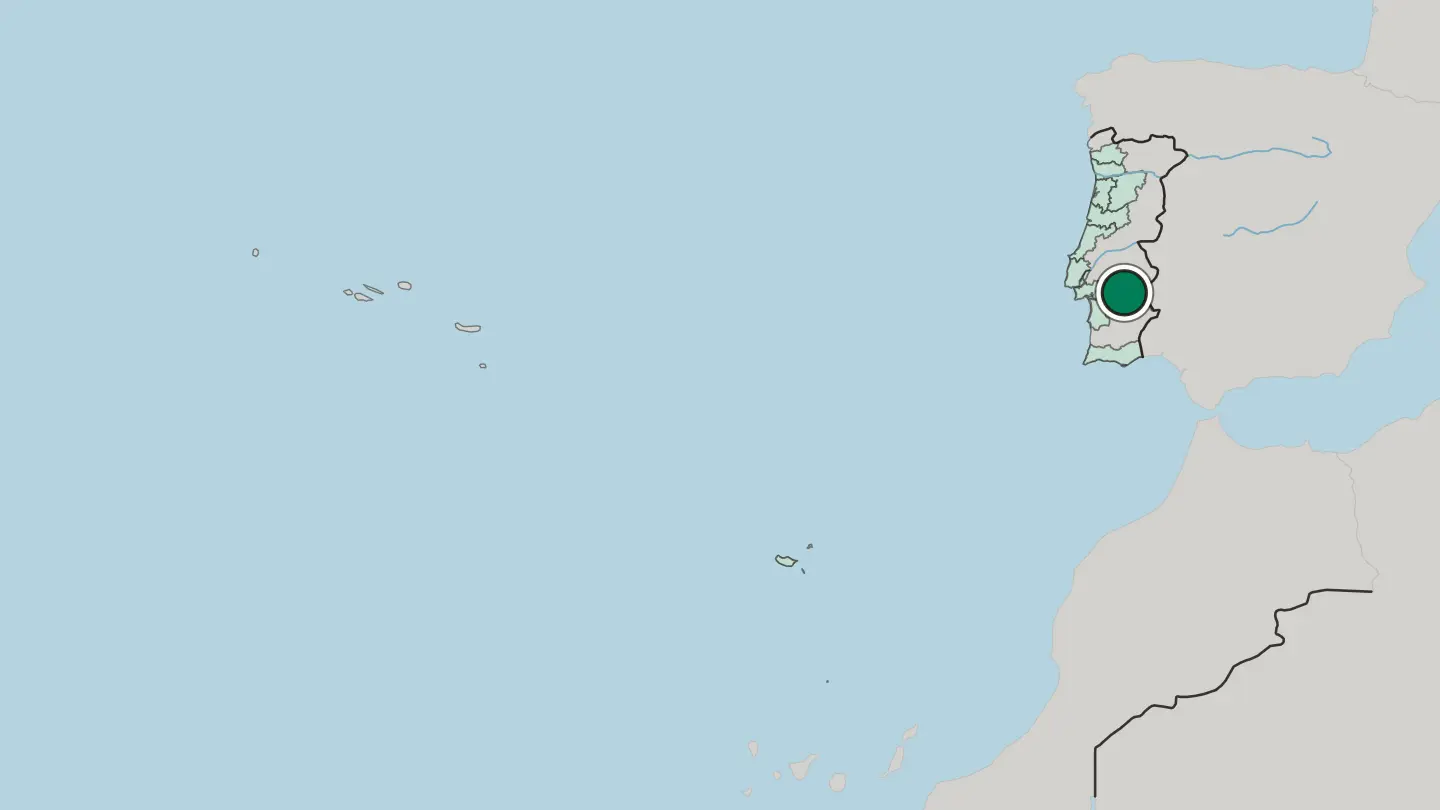
 Portugal
Viseu
Viseu gives its name to the Distrito de Viseu, and its old core still sits inside the Muralhas de Viseu around Viseu Cathedral.Where to stay →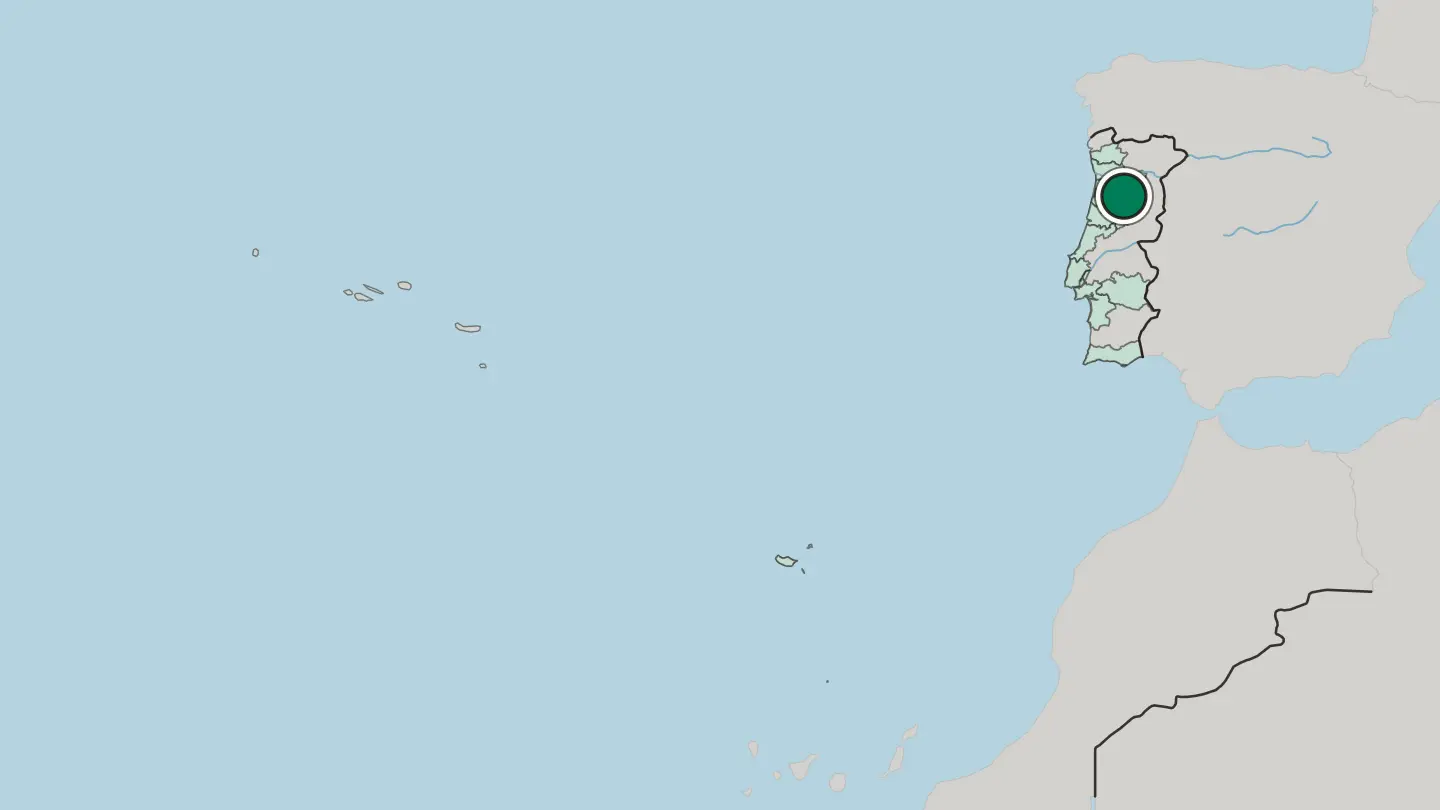
 Portugal
Leiria
Leiria is a Portuguese city beneath the Castle of Leiria, its centre holding a cathedral, a paper mill, and rows of merchant houses.Where to stay →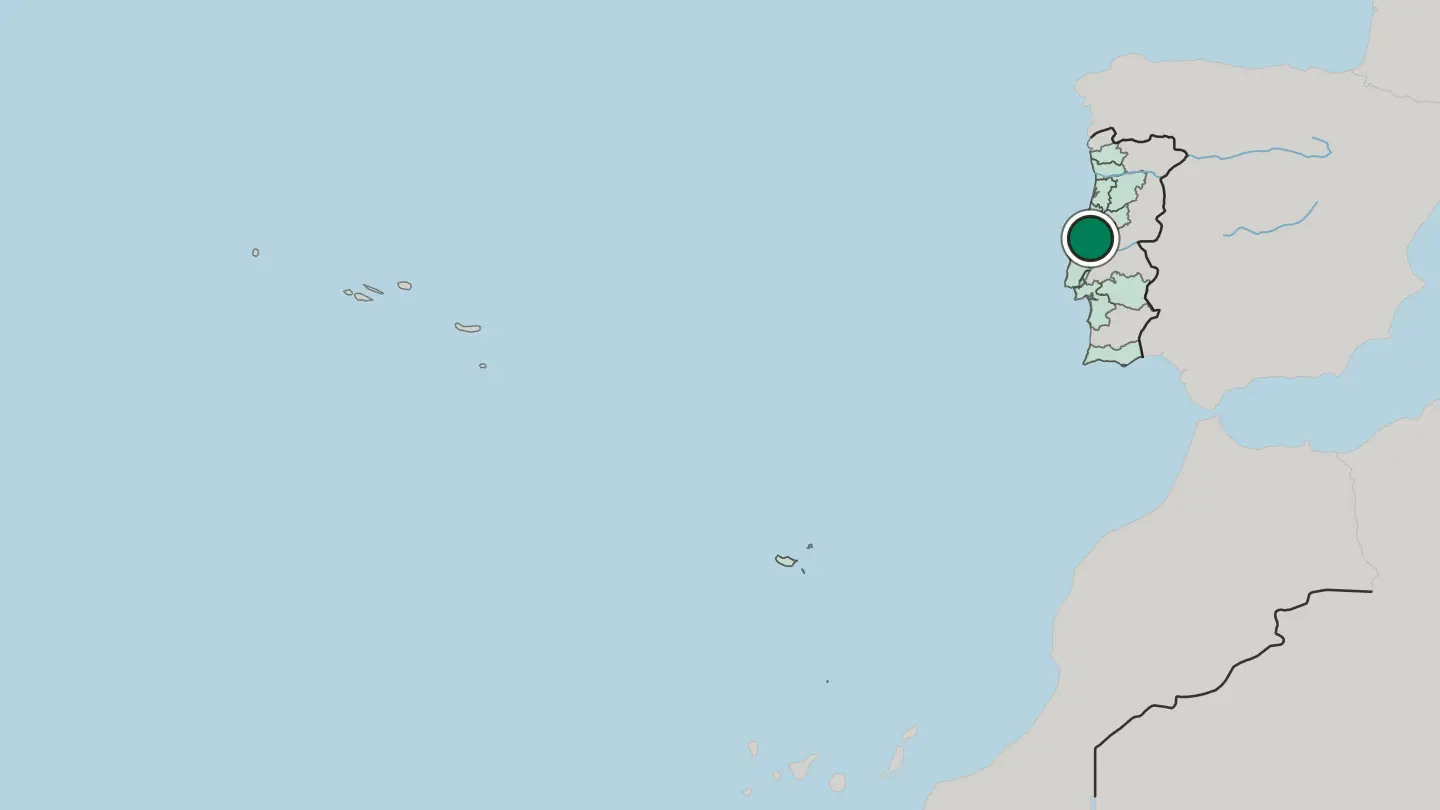
Hotel links are affiliate links: booking through them may earn us a commission, at no extra cost to you. It never affects how places are ranked. How this works
Regions of Portugal
Portugal
Distrito de Aveiro
One name covers three things. Aveiro District sits on Portugal's central coast, with the city of Aveiro as its capital.Towns & cities →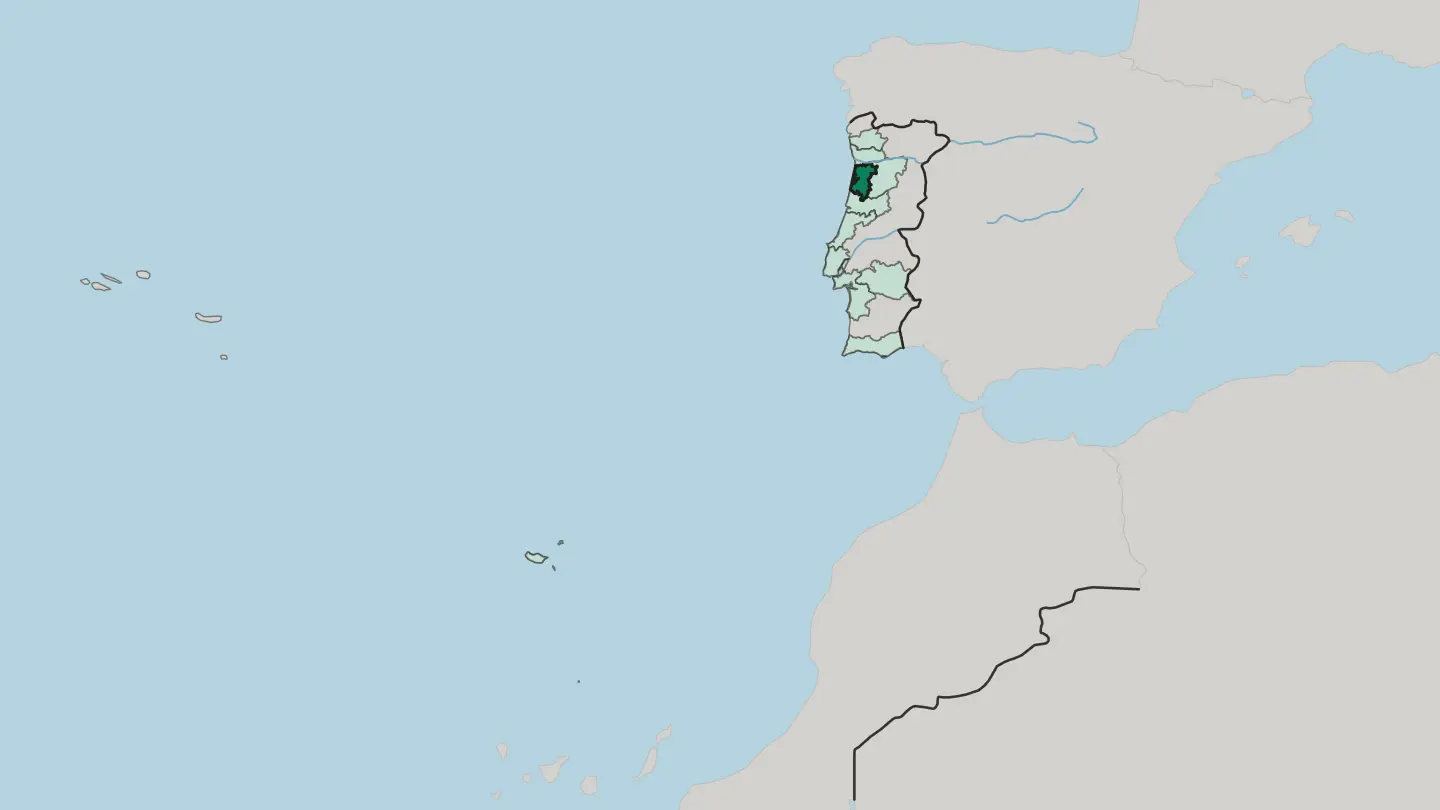 Portugal
Distrito de Braga
The Bracarii left the name. Braga District carries it still, with the city of Braga as capital and Galicia bordering to the northeast.Towns & cities →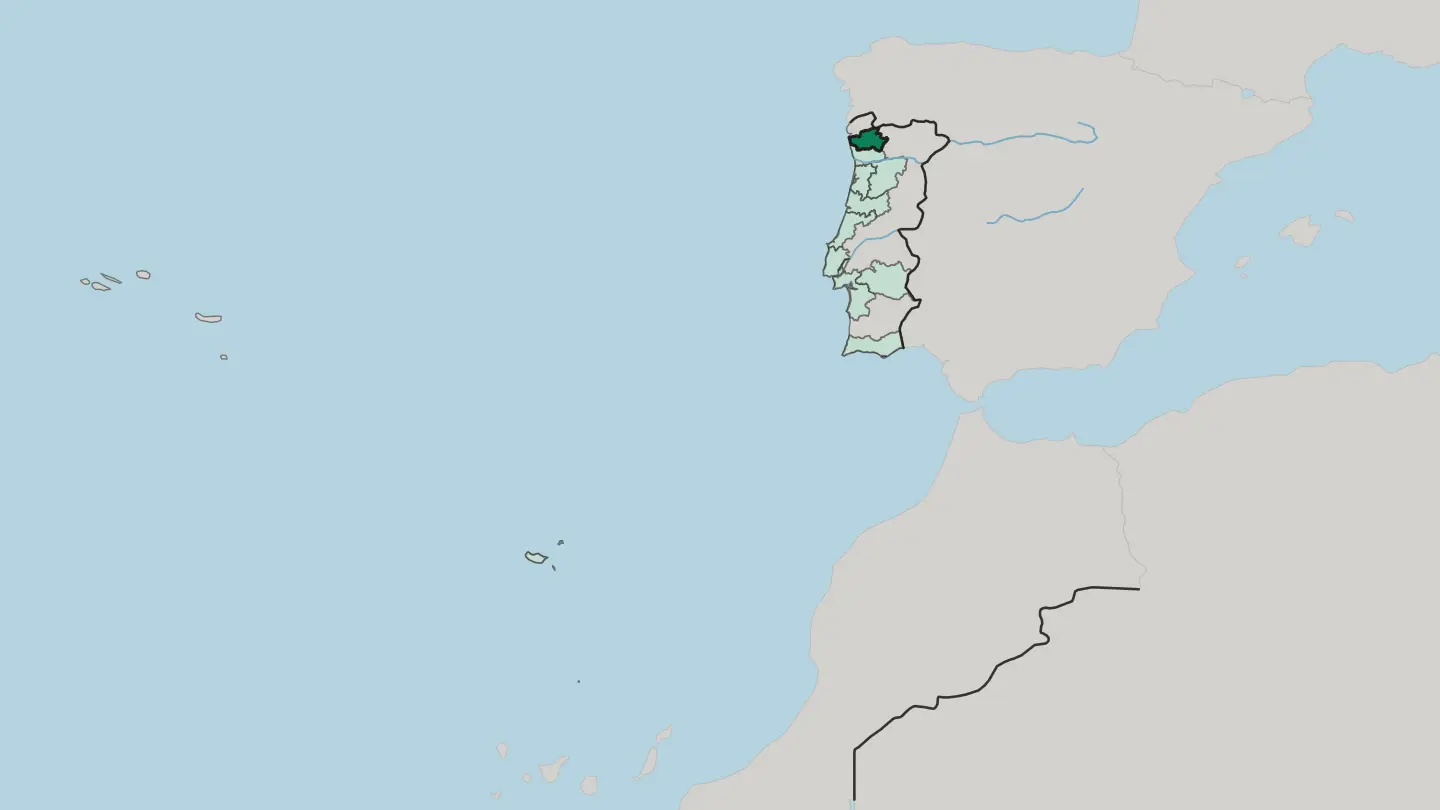 Portugal
Distrito de Coimbra
Inside the Centro region. Coimbra District draws both its name and its capital from the city of Coimbra.Towns & cities →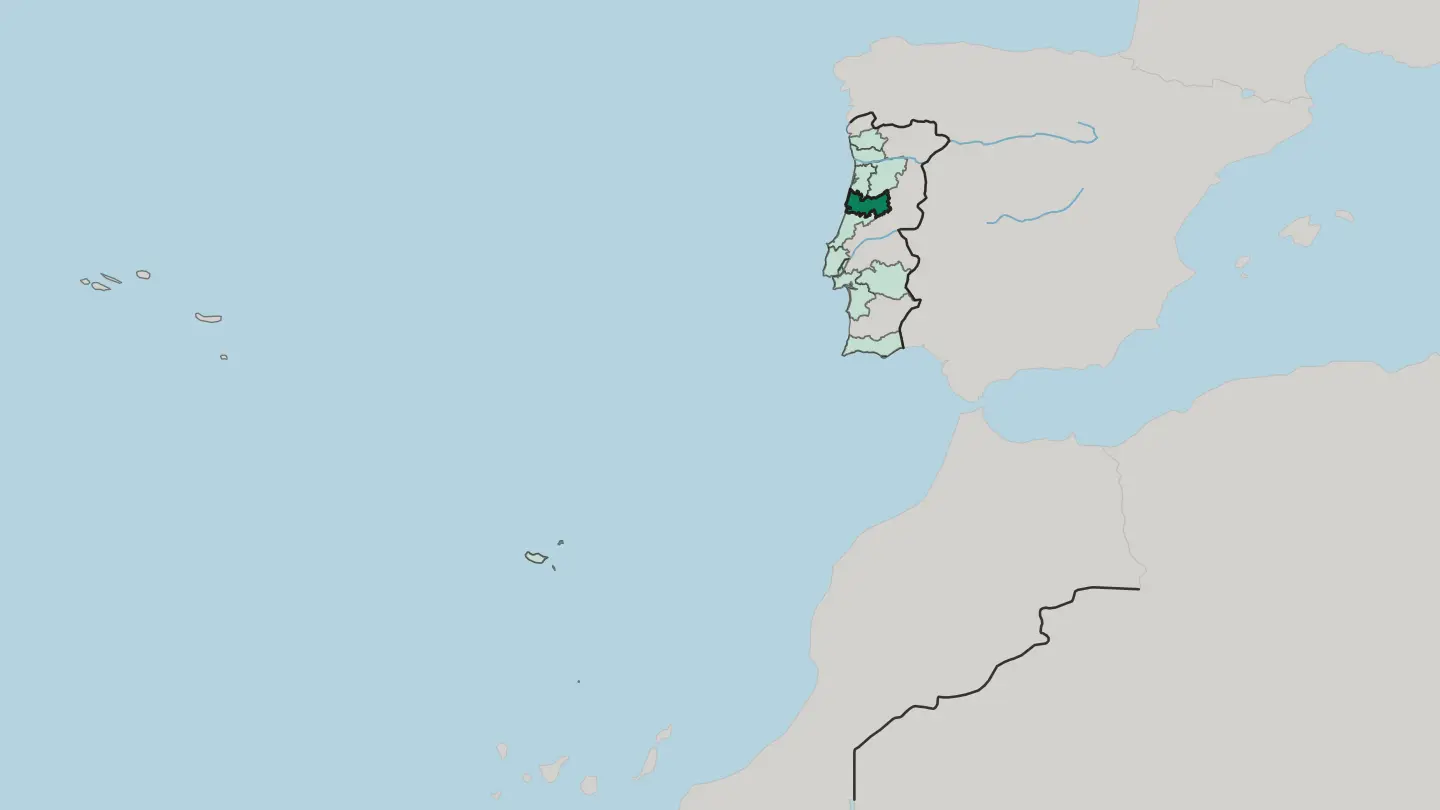 Portugal
Distrito de Faro
Distrito de Faro is the southernmost district of Portugal, covering the same ground as the Algarve region and seated in the city of Faro.Towns & cities →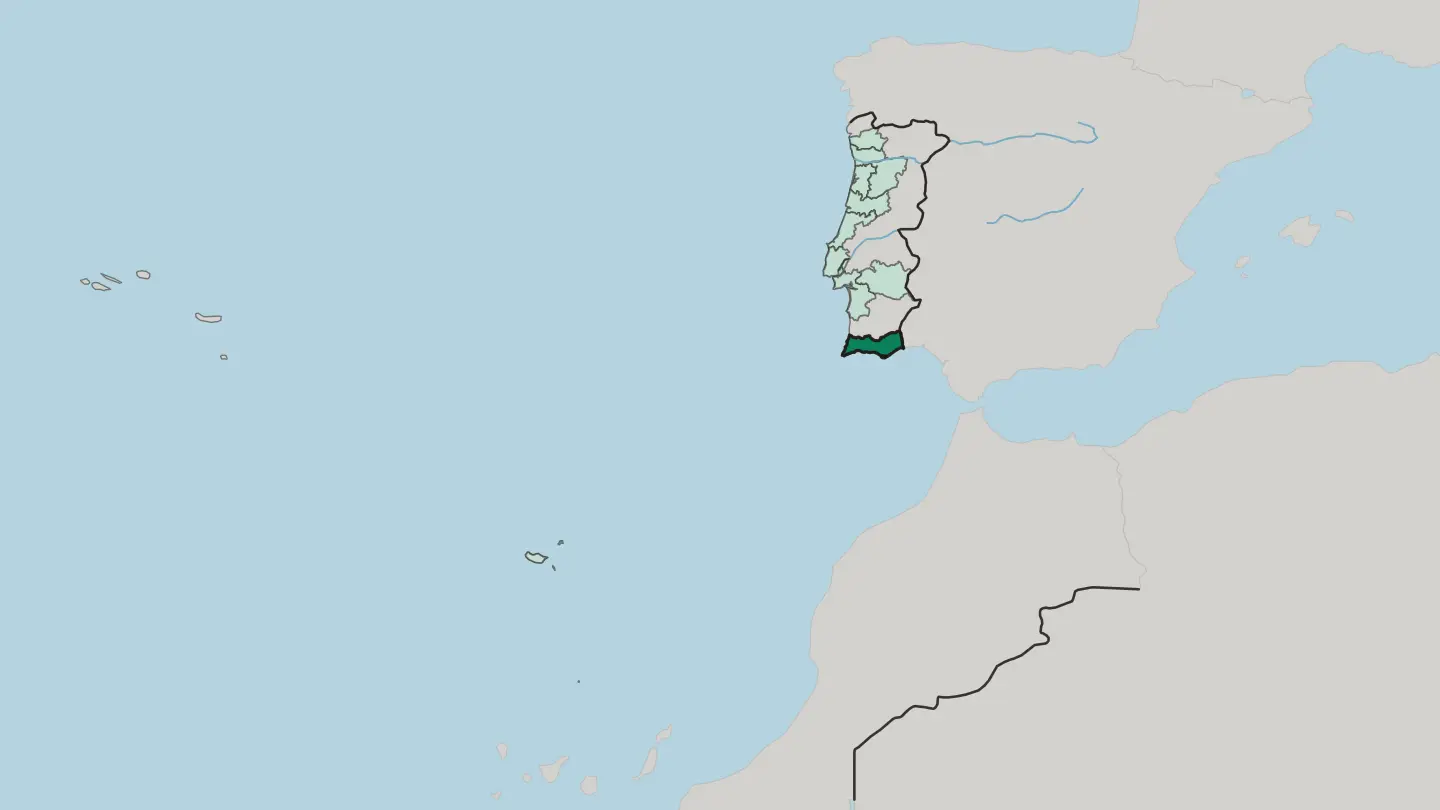 Portugal
Distrito de Leiria
Distrito de Leiria runs from the Atlantic Ocean inland across the divide between the Oeste e Vale do Tejo and Centro regions, seated at Leiria.Towns & cities →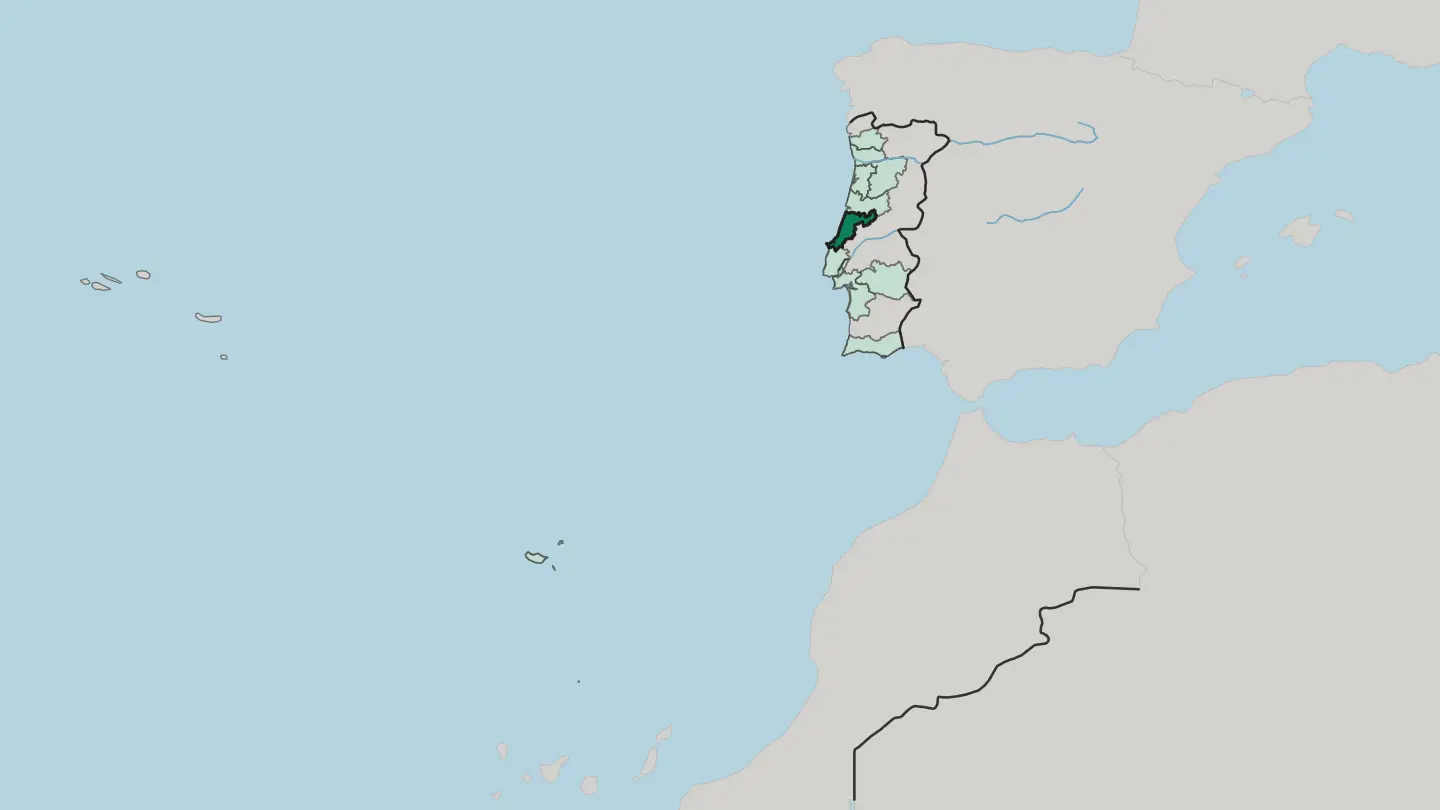 Portugal
Distrito de Lisboa
Distrito de Lisboa runs along the western coast of Portugal, a district built around the city of Lisbon at the wide mouth of the river Tagus.Towns & cities →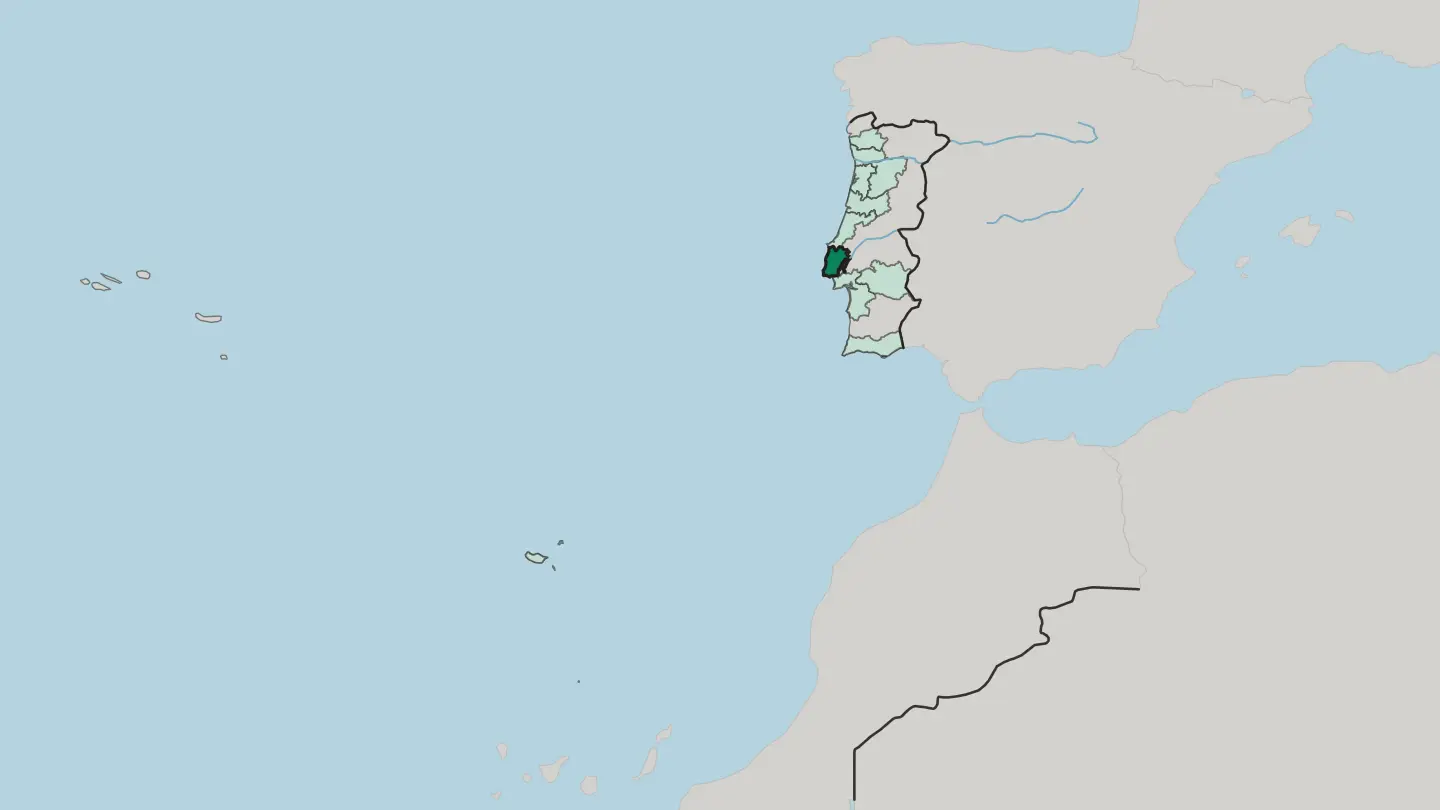
 Portugal
Distrito de Setúbal
Distrito de Setúbal lies in the south-west of Portugal, an administrative district named for its capital, the city of Setúbal.Towns & cities →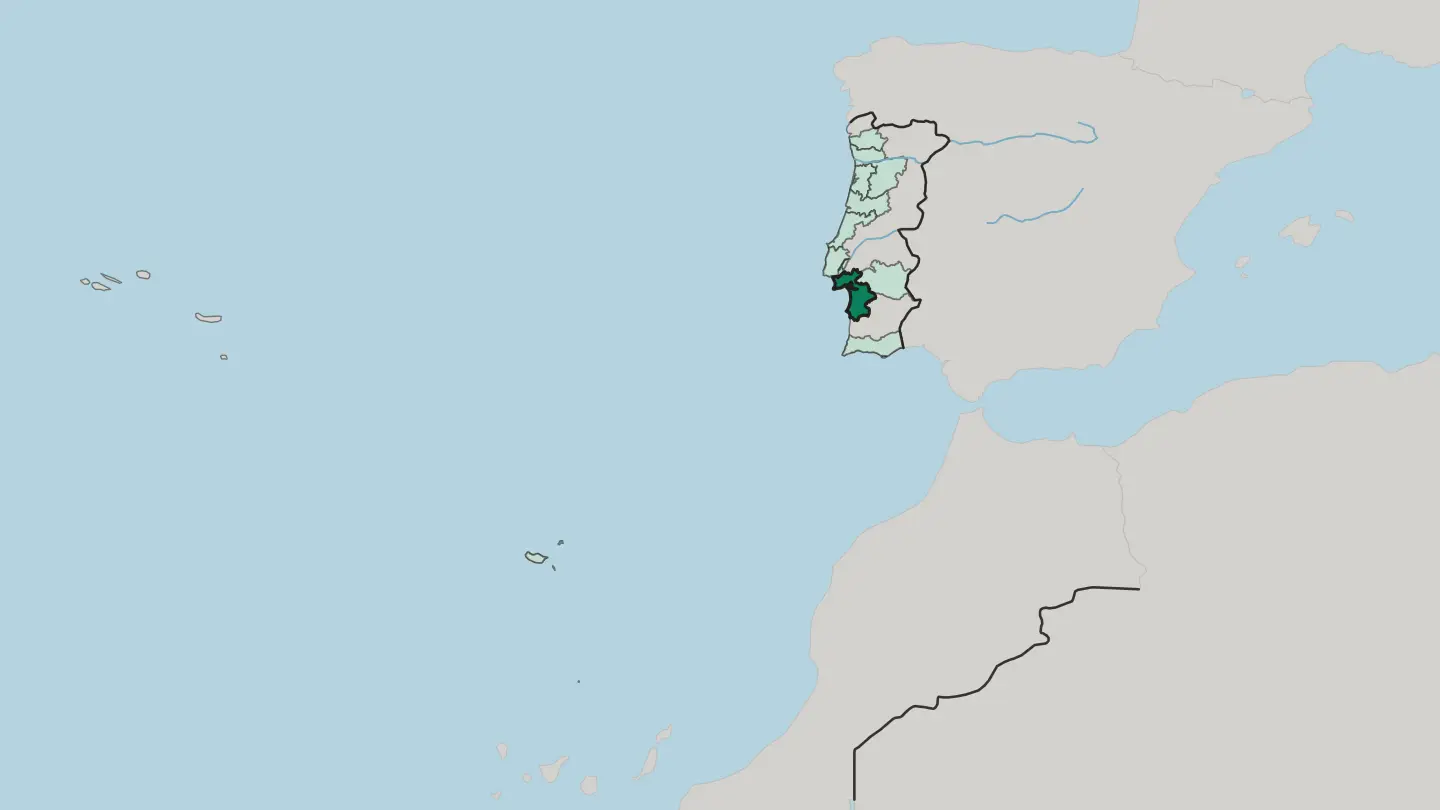 Portugal
Distrito de Viseu
Distrito de Viseu is an inland district of Portugal, drawn across the Central Inland of the country and administered from the city of Viseu.Towns & cities →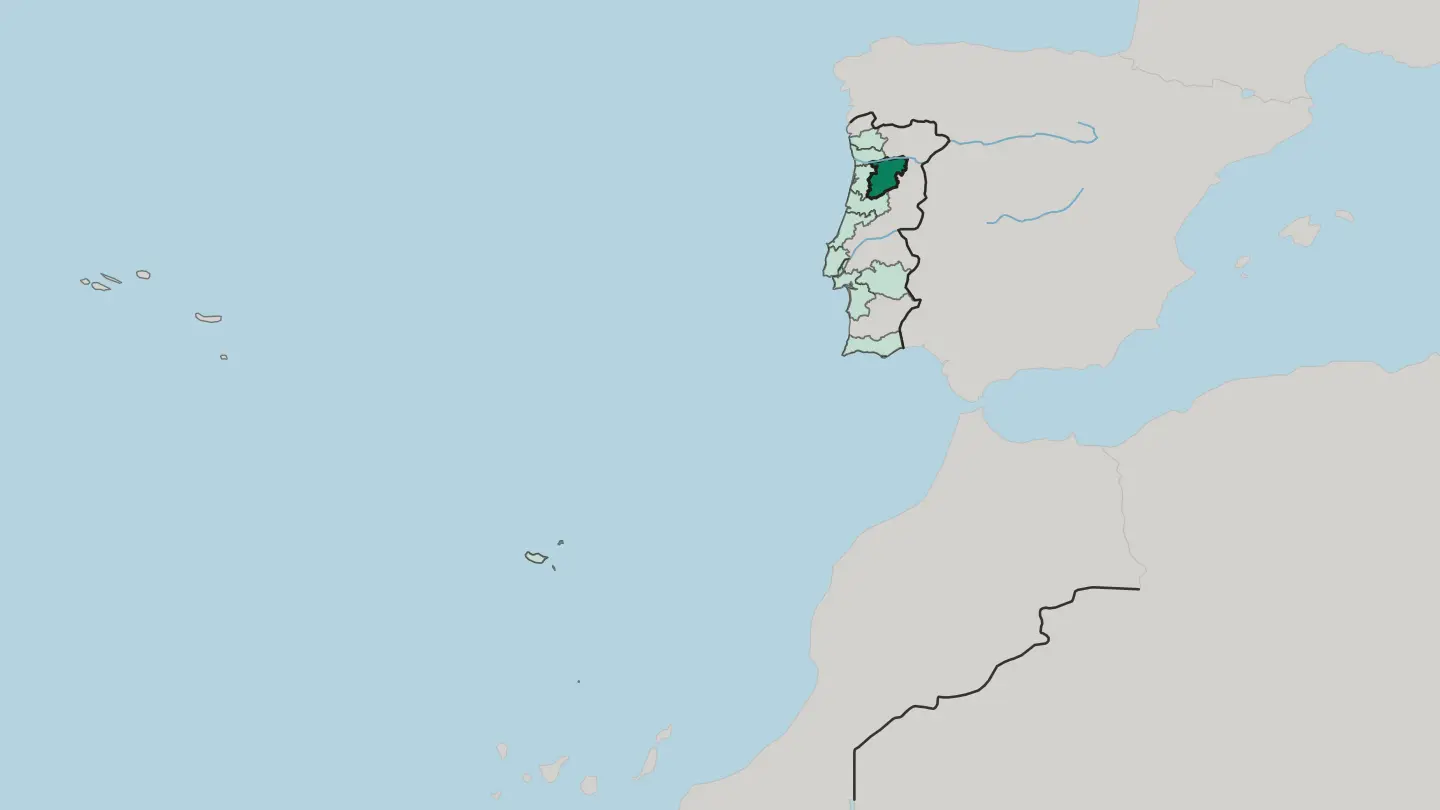 Portugal
Distrito de Évora
Distrito de Évora covers a stretch of Alentejo in southern Portugal, reaching the frontier with Spain and administered from the city of Évora.Towns & cities →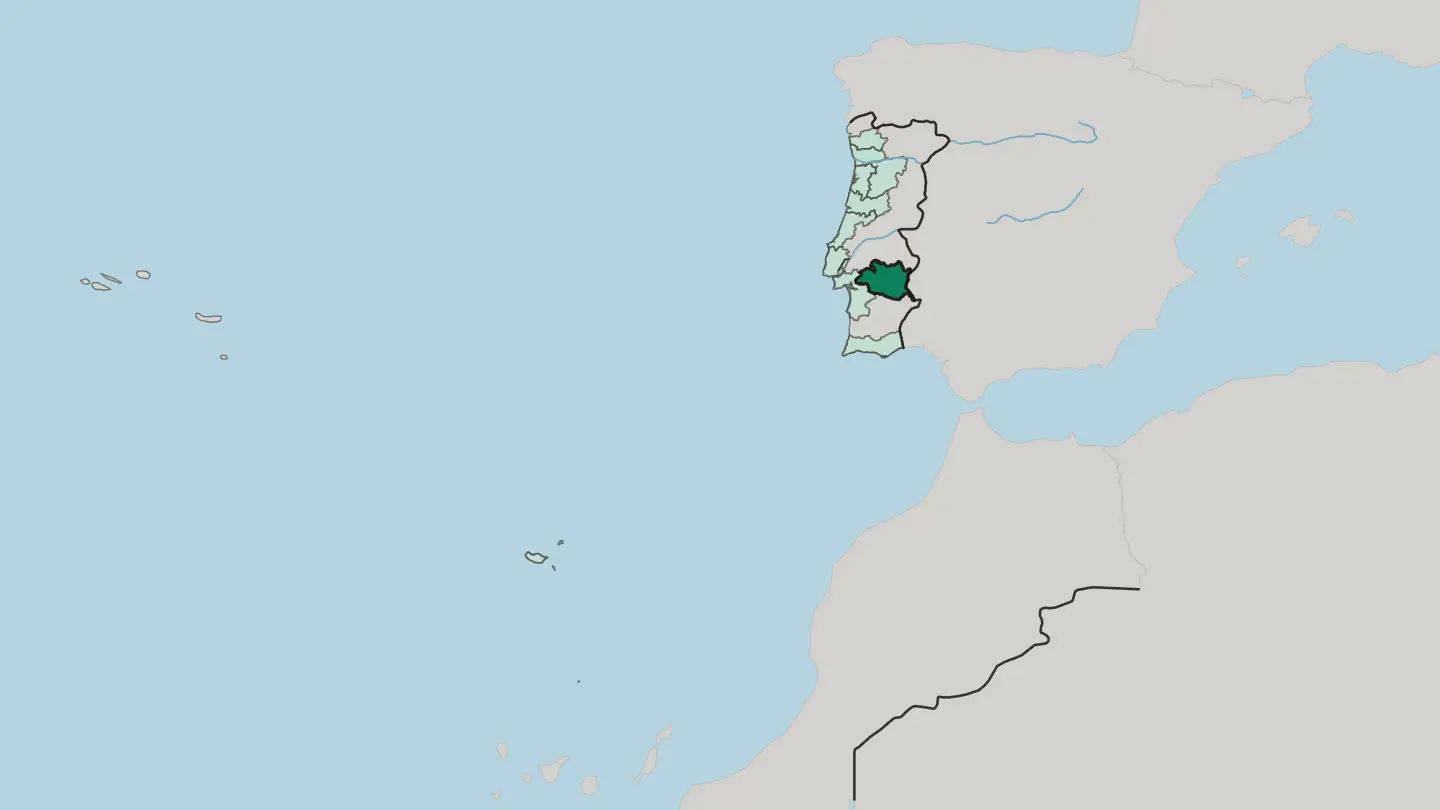 Portugal
Distrito do Porto
Distrito do Porto sits on the north-west coast of Portugal, headed by Porto, the second largest city in the country.Towns & cities →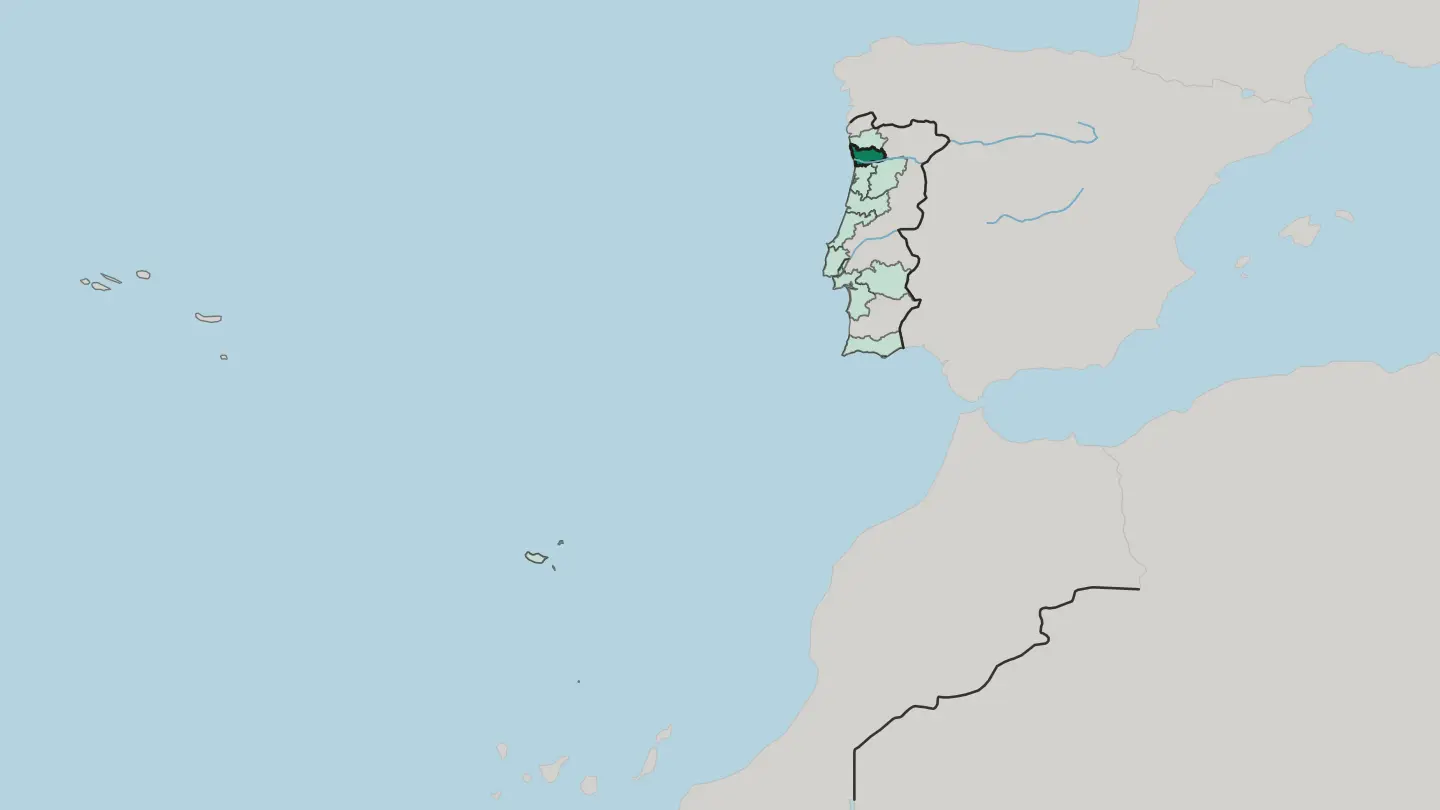 Portugal
Madeira
Madeira is a sub-tropical Atlantic archipelago and an autonomous region of Portugal, made up of Madeira, Porto Santo, the Desertas and the Selvagens.Towns & cities →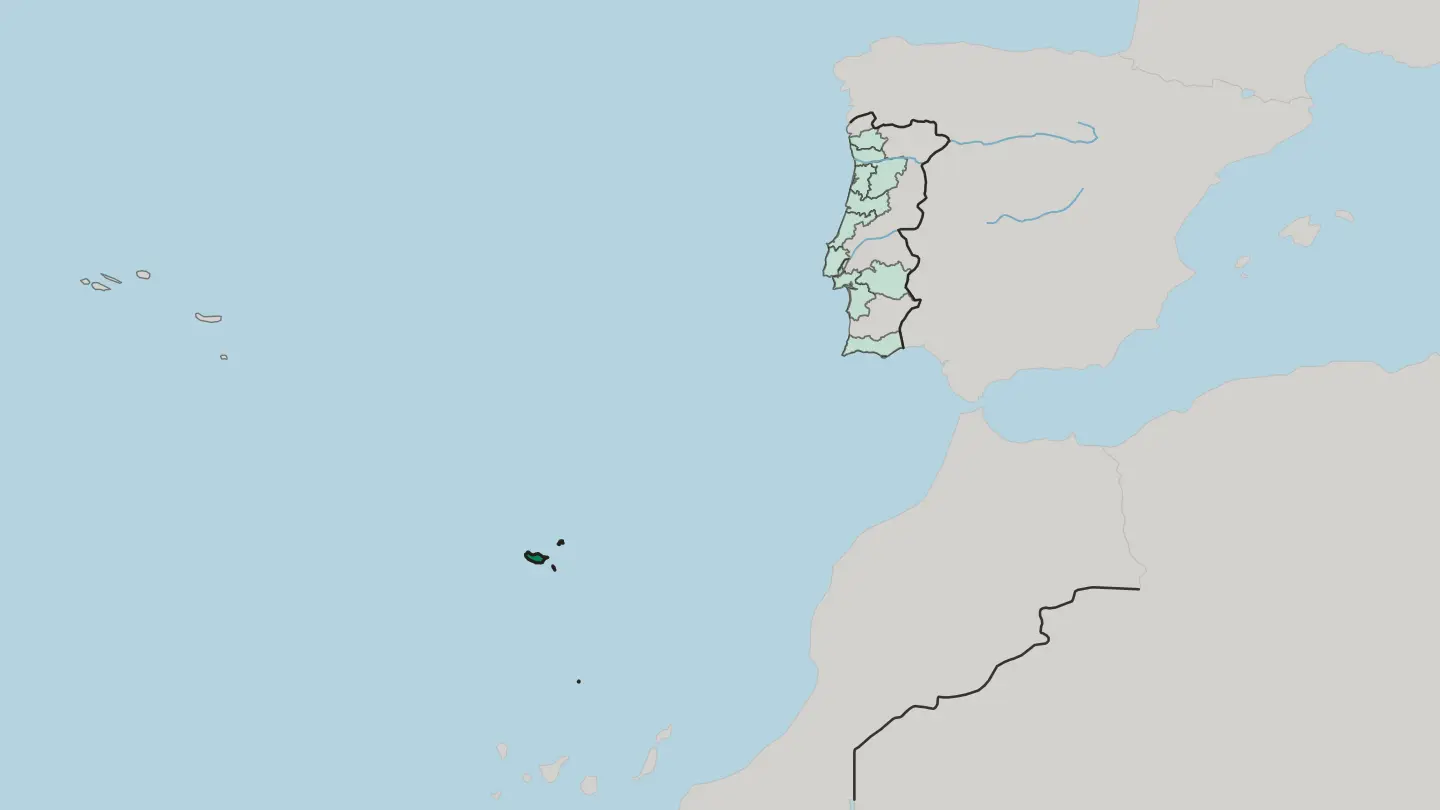
Explore by experience
Not sure which place? Start from how you want to travel.
About Portugal
What is Portugal known for?
Portugal launched the Age of Discovery, and its caravels still colour how the country sees itself. Lisbon and Porto anchor the coast. The Douro Valley terraces port wine above a river that carved them.
Fado drifts out of the Alfama tavernas, blue azulejo tiles sheath whole facades, and long lines of pilgrims still walk the roads to the shrine at Fátima. Far out in the Atlantic sit the volcanic Azores and subtropical Madeira. The sea shaped all of it.
Where is Portugal?
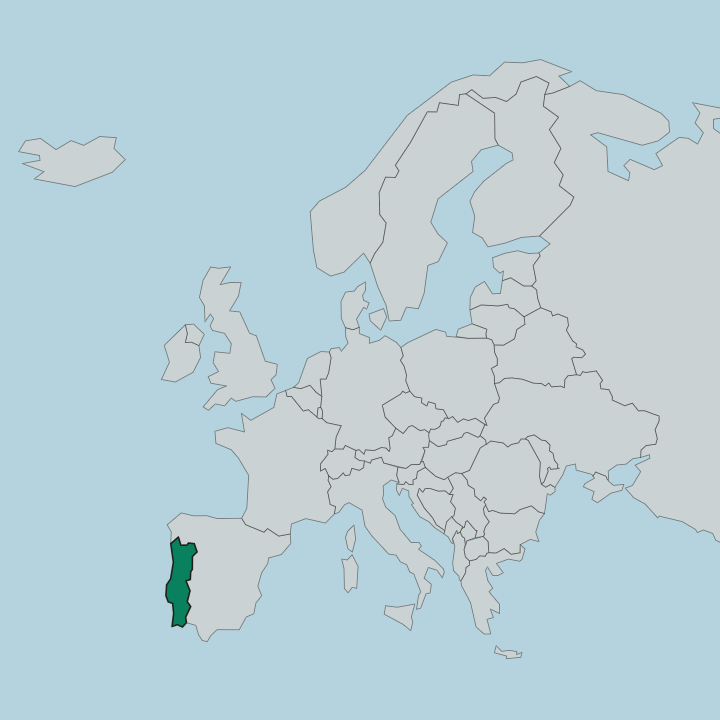
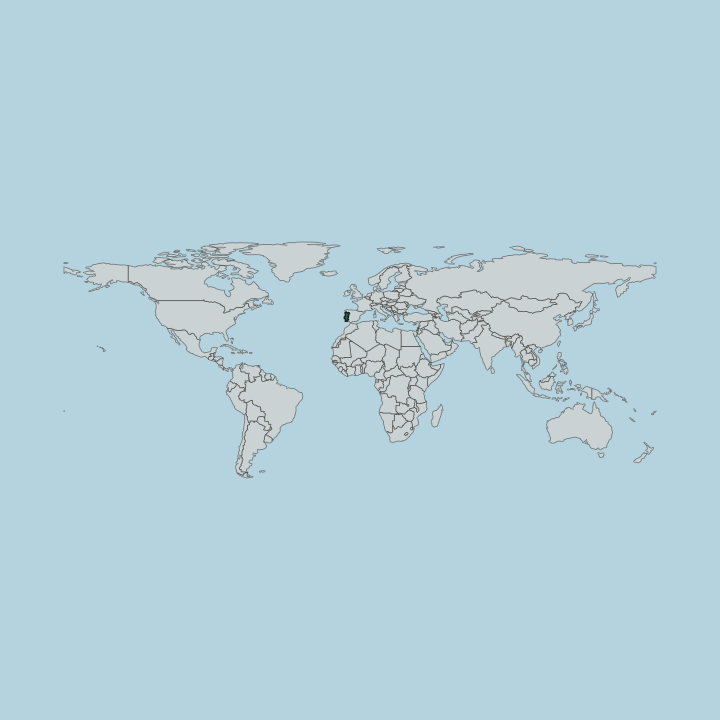
Portugal occupies the western edge of the Iberian Peninsula, sharing its only land frontier with Spain to the north and east while the Atlantic runs the whole length of its west and south. The Tagus splits the mainland. North of the river the land is hillier, greener, and wetter, cut by the Douro as it descends from Spain through terraced gorges to reach the sea at Porto.
South of the Tagus the country flattens into the wide plains of Alentejo, cork oak and wheat country that covers close to a third of the mainland and counts among the emptiest corners of Europe. The Mondego, the only large river that rises entirely within the country, gathers its water in the Serra da Estrela. Those mountains form the high spine of the mainland.
Their granite tops carry the highest ground on the Portuguese mainland and hold snow through winter. Down in the far south the Guadiana marks part of the border before the coast bends west into the Algarve, where limestone cliffs and coves face the ocean. Two Atlantic archipelagos complete the map.
Volcanic Madeira lies off the coast of Africa, and the nine islands of the Azores rise mid-ocean, far out toward the middle of the Atlantic. From wet northern valleys to dry southern plains, the ground keeps changing.
What is the history of Portugal?
Portugal counts among Europe's oldest nation-states, its borders barely changed for centuries. Afonso Henriques declared himself king in 1139, wresting the young kingdom free of León, and the Holy See recognised the crown in 1179. Reconquest carried the frontier south until the Algarve was taken and the mainland reached the shape it still holds.
Then the ocean called. From the early fifteenth century Portuguese caravels felt their way down the African coast, and the voyages became the Age of Discovery. Vasco da Gama opened the sea route to India in 1498, Pedro Álvares Cabral reached Brazil in 1500, and Lisbon grew rich on spice and the trade that flowed through it.
Wealth did not last unbroken. A great earthquake levelled much of Lisbon in 1755, and the Marquis of Pombal rebuilt the lower city on a strict grid that still defines it. The monarchy fell in 1910, and a long authoritarian Estado Novo followed.
That order ended almost bloodlessly. On the twenty-fifth of April in 1974 the Carnation Revolution overthrew the dictatorship, soldiers carrying red carnations in their rifle barrels, and Portugal turned toward democracy and later joined the shared project of Europe. The past is close to the surface here.
It shows in the caravel motifs, the tiled churches, and place names that map an empire once spread across four continents.
What is Portugal like?
Portugal wears its history on its walls and hears it in its music. Fado carries the culture's core mood, a song of saudade and longing born in the Alfama lanes of Lisbon and now protected as intangible heritage. Sound is only half of it.
Blue-and-white azulejo tiles sheathe churches, palaces, and whole railway halls, a craft that arrived through Moorish and later Dutch influence and never left. Food anchors daily life just as firmly. Bacalhau, salt cod said to have a recipe for every day of the year, appears at Christmas and Easter tables, and the pastel de nata custard tart travelled from a Lisbon monastery to the whole world.
The Douro Valley terraces the port wine that made the country's name abroad, while the vineyards of Alentejo and the coastal cellars near Porto pour their own reds and whites. Religion still fills the calendar. Pilgrims cross the country on foot to the shrine at Fátima, Lisbon throngs for the June feast of Santo António, and Porto answers with the bonfires and street revelry of São João.
Each region cooks, sings, and celebrates a little differently. One small country holds many.
What is the climate of Portugal?
Portugal's weather turns on the Atlantic. The north and the coast north of Lisbon draw a wetter, greener Atlantic climate, with stormy winters and mild summers, while the south and the interior lean Mediterranean, hot and dry through long rainless summers. The Algarve counts among the sunniest coasts in Europe.
High in the Serra da Estrela the winters bring snow and a ski lift, the one place in the country where they run. Out in the ocean the islands stay temperate, Madeira mild the year round and the Azores wetter and cooler. Sea air keeps the extremes in check.
How do you get to Portugal?
Most visitors to Portugal come in by plane. Lisbon is the main gateway, Porto serves the north, and Faro takes the holiday traffic for the Algarve. Trains and motorways link the mainland cities, so a base in Lisbon or Porto reaches most of the country in a few hours.
The islands are their own journeys. Funchal on Madeira and Ponta Delgada in the Azores connect by short Atlantic flights rather than any bridge or ferry from the mainland. Pick the airport nearest your region.
Good for
Updated September 2026