Portugal · Distrito do Porto
Where to Stay in Porto, Distrito do Porto
Bell towers stand over the granite bluff above the Douro in Porto, a city in Distrito do Porto, Portugal, known for Clérigos Church and port wine.
Hotel links are affiliate links: booking through them may earn us a commission, at no extra cost to you. It never affects how places are ranked. How this works


Where to stay in Porto
One neighbourhood here has its own guide — here's what it is best for.
 PortoPortugalAtlantic evenings where the Douro finally lets go
Foz do Douro
The seaward end of Porto, reached along the river road by the tram that passes the Porto Tram MuseumFoz do Douro →Hotel links are affiliate links: booking through them may earn us a commission, at no extra cost to you. It never affects how places are ranked. How this works
Find hotels in Porto
Direct booking searches for these neighbourhoods.
Porto Cathedral and the quays
The oldest slope in the city, dropping from Porto Cathedral to the Port Wine Museum and the working water below itFind hotels in Porto Cathedral and the quaysBookshops and late tables under the Clérigos towerClérigos and Carmo
The flat upper town between the Igreja do Carmo and the Cadeia da Relação, where the Centro Português de Fotografia now occupies the old prisonFind hotels in Clérigos and CarmoCheaper rooms two streets from the Igreja da TrindadeAround the Church of Saint Ildefonso
The eastern edge of the centre, tiled at ground level around the Church of Saint Ildefonso and unbothered about visitorsFind hotels in Around the Church of Saint IldefonsoA park address beside the Casa de SerralvesSerralves
Level western avenues around the Serralves Museum of Contemporary Art and the Kadoorie Synagogue, residential and silent after darkFind hotels in SerralvesHotel links are affiliate links: booking through them may earn us a commission, at no extra cost to you. It never affects how places are ranked. How this works
Things to do in Porto
Ranked by global recognition; descriptions from Wikidata (CC0).
Museums & Galleries
3- Casa de Serralves Heritage
- Episcopal Palace, Porto Heritage
- Port Wine Museum Heritage
Churches & Religious Sites
8- Porto Cathedral Heritage
- Church of São Francisco Heritage
- Church of Saint Ildefonso Heritage
- Igreja do Carmo Heritage
- Igreja de Santa Clara Heritage
Show 3 more →
- Kadoorie Synagogue Heritage
- Igreja dos Carmelitas Descalços Heritage
- Church of São Martinho de Cedofeita Heritage
Castles & Historic Sites
1- Monument to Pedro IV (Porto) Heritage
Stadiums & Sports
1- Dragão Arena
Landmarks & Notable Places
4- Torre de Pedro-Sem Heritage
- Casa Richard Wall Heritage
- Casa de Margarida Rosa Pereira Machado Heritage
- Casa dos Oliveira Maya Heritage
worth knowingacross 5 categories in Porto
About Porto
Porto gave port wine its name.
What is Porto known for?
The trade runs on the Douro, and the Port Wine Museum keeps the record of it on the quay, a short walk from the churches that crowd the slope above the water. Clérigos Church carries the tower that fixes the skyline. Inside the Church of São Francisco the Gothic stonework disappears under carved and gilded wood, while the Serralves Museum of Contemporary Art and the Casa de Serralves hold the modern half of the city in a park to the west.
What are the main landmarks in Porto?
Porto Cathedral holds the high ground, a fortress of a church with the Episcopal Palace built against its flank. Below it the Church of São Francisco lines a Gothic nave with gilt. Clérigos Church raises the tower that the whole city steers by, the Igreja do Carmo and the Igreja dos Carmelitas Descalços stand wall to wall on the upper town, and the Igreja da Misericórdia do Porto keeps its front on the old merchant street.
Two collections round out the list. The National Museum Soares dos Reis holds the painting and sculpture, and the Centro Português de Fotografia sits in the cells of the Cadeia da Relação.
What is the history of Porto?
Porto grew on the last granite bluff before the Douro reaches the sea, and the river paid for everything built above it. The cathedral came first, a fortified church on the height with the bishops' Episcopal Palace beside it, and the merchants built downhill toward the water. Friars followed them.
The Church of São Francisco went up in Gothic plainness and was later buried under gilded carving paid for by Brazilian gold, while the Igreja da Misericórdia do Porto served the brotherhood that ran the city's hospital and its alms. Wine made the modern place. Casks came down the Douro from the vineyards upriver to the cellars at the mouth, and the trade that carried the city's name abroad also paid for the Baroque of Clérigos Church and the Igreja do Carmo.
Justice and photography share one address. The Cadeia da Relação held the courts and the prison before the Centro Português de Fotografia moved into its granite cells, and the nineteenth century added the Monument to Pedro IV and the National Museum Soares dos Reis. Later arrivals kept the record open, from the Kadoorie Synagogue to the Holocaust Museum of Oporto.
Serralves closed the sequence at the western edge, putting a museum of contemporary art in the grounds of the Casa de Serralves.
Where is Porto?
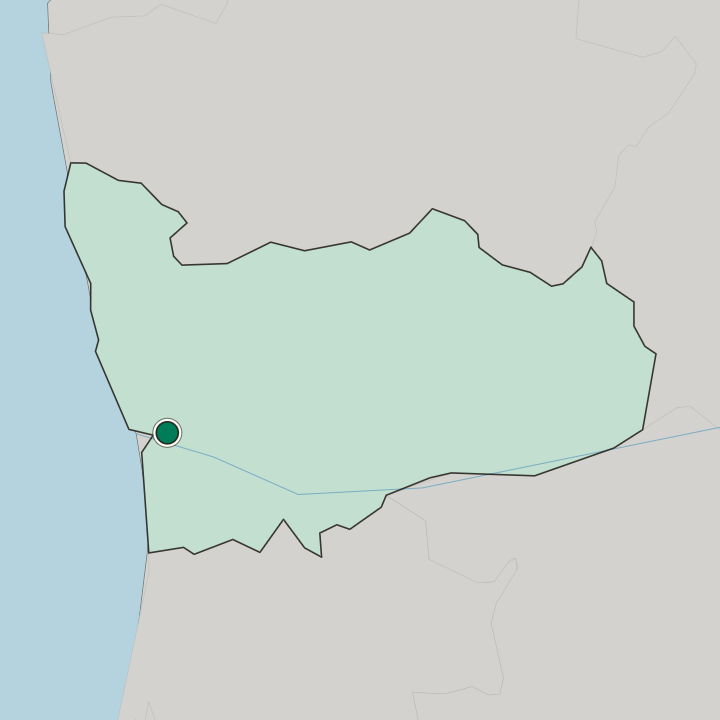
Porto stands on the north bank of the Douro a short way in from the Atlantic, where the river runs deep between granite slopes. The old town climbs that cut. Foz do Douro holds the seaward end, where the water widens over a shifting bar, and the western districts run level from there past the park at Serralves.
Inland the ground lifts again into the hills of Distrito do Porto, while the eastern edge around the Dragão Arena flattens for the railway.
What is the climate of Porto?
The Atlantic runs Porto's weather. Rain arrives in long grey systems off the ocean from autumn into early spring, and the granite of the old town stays dark with it for weeks together. Summers keep their edge off.
Sea fog can lie over Foz do Douro and the river mouth while the upper town above the Douro is dry and bright, and the real heat, when it comes, arrives on an easterly off the interior rather than from the water.
How do you get to Porto?
Trains from Lisbon end in the east of Porto beside the Dragão Arena, and the Douro line climbs inland up the valley from the same platforms. Francisco Sá Carneiro airport sits north of the city, with a metro line running in from it. One tram still matters.
It works the river road past the Porto Tram Museum and out to Foz do Douro, slower than the bus and worth the hour it takes.
Common questions
What is the best area to stay in Porto?
Porto Cathedral and the quays: Sleeping above the Douro cellars, under the cathedral terrace. Clérigos and Carmo: Bookshops and late tables under the Clérigos tower. Around the Church of Saint Ildefonso: Cheaper rooms two streets from the Igreja da Trindade. Foz do Douro: Atlantic evenings where the Douro finally lets go. Serralves: A park address beside the Casa de Serralves.
Good for
Another city in Distrito do Porto
Updated October 2026