Russia · Khanty-Mansiyskiy Avtonomnyy Okrug-Yugra
Where to Stay in Khanty-Mansiysk, Khanty-Mansiyskiy Avtonomnyy Okrug-Yugra
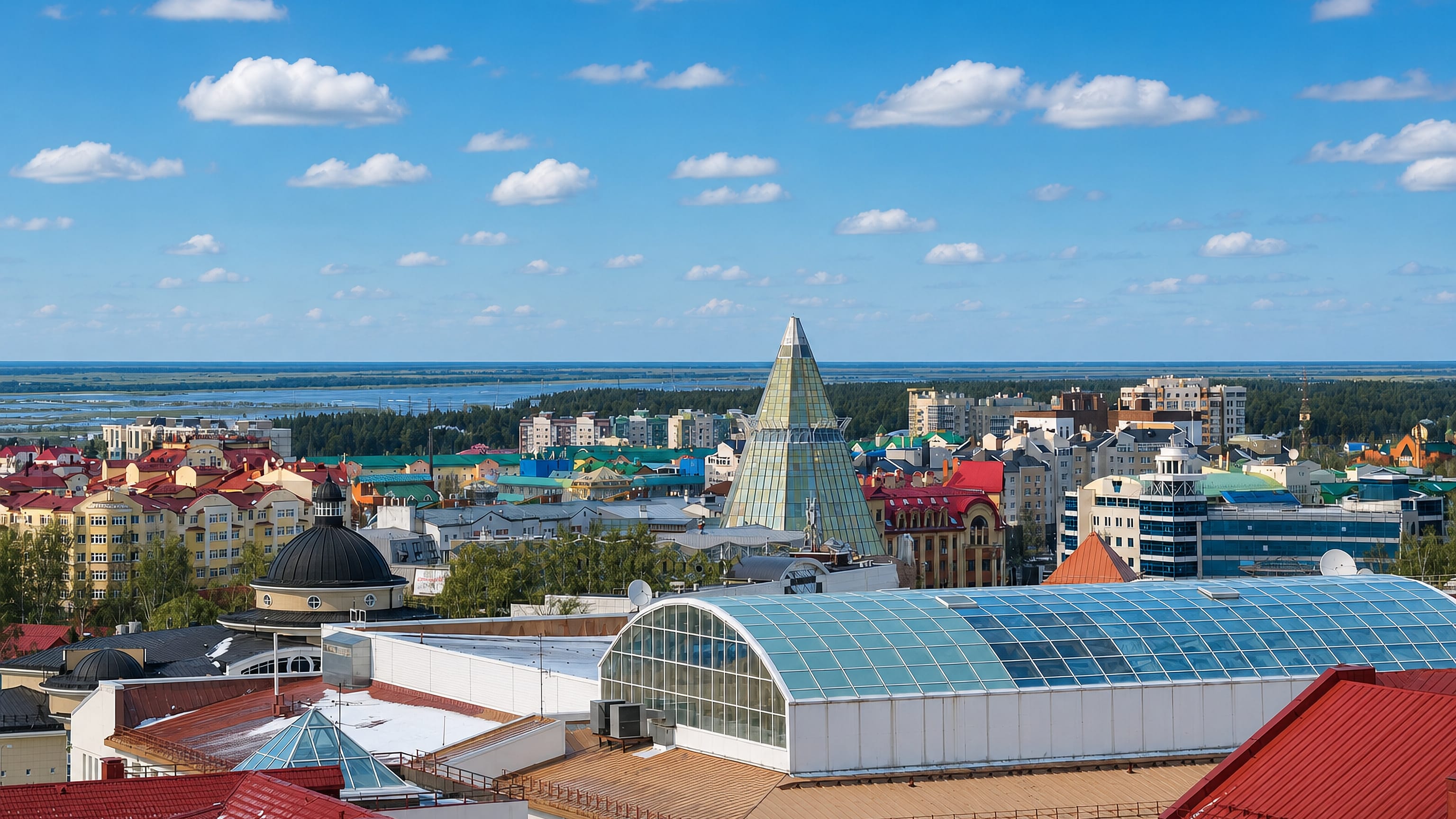
Khanty-Mansiysk stands on the eastern bank of the Irtysh River, 15 kilometres from its confluence with the Ob, and dates from 1582.
Find your area →


Where to stay in Khanty-Mansiysk
Where the beds are, and what that means for the visit.
Khanty-Mansiysk is a capital in miniature. Its territory covers 338 square kilometres, but the part that matters to a visitor is the compact centre holding the Ugra State Art Museum, the Museum of Nature and Humanity and Знаменская церковь within a walk of one another. Археопарк pulls the other way. It is the site people come outside for, which makes the choice of a bed a choice between museum ground and open ground rather than between one quarter and the next.
You take the museum side if the collections are the reason for the trip, and the Археопарк side if the point is to be outdoors. Either side leaves the other within easy reach. A city serving as administrative centre for both Khanty-Mansiysky District and Khanty-Mansi Autonomous Okrug-Yugra carries beds for official travel, and that keeps the supply steadier than the size of the place would suggest. Археопарк and the bank of the Irtysh River are the two open-air options, and across 338 square kilometres they are where the difference between one address and another is actually felt.
Winter shortens the options. The subpolar band makes the walk between the river and the centre a different proposition in the dark months, so a central room earns its place here in a way it would not in a milder city.
Things to do in Khanty-Mansiysk
Ranked by global recognition; descriptions from Wikidata (CC0).
Museums & Galleries
2- Museum of Nature and Humanity
- Ugra State Art Museum
Churches & Religious Sites
1- Знаменская церковь (Ханты-Мансийск)
Landmarks & Notable Places
2- Здание первой электростанции Ханты-Мансийска (Ханты-Мансийск) Heritage
- Здание пожарного депо (Ханты-Мансийск) Heritage
worth knowingacross 3 categories in Khanty-Mansiysk
About Khanty-Mansiysk
Two museums anchor everything worth seeing here.
What is Khanty-Mansiysk known for?
The Museum of Nature and Humanity and the Ugra State Art Museum between them hold the natural record and the picture collection of Khanty-Mansi Autonomous Okrug-Yugra, which is the administrative role this city performs for a very large territory. Археопарк sits outside all that. It is the open-air name on every list of the city's sites, and Знаменская церковь is the older counterweight to it.
What are the main landmarks in Khanty-Mansiysk?
Six names make the list. Археопарк, the Museum of Nature and Humanity and the Ugra State Art Museum are the ones a visitor plans a day around, while Знаменская церковь carries the religious record of the city. Two utility buildings complete it. Здание первой электростанции Ханты-Мансийска and Здание пожарного депо are named for the first power station and the fire depot, which puts municipal infrastructure among the sites worth naming.
What is the history of Khanty-Mansiysk?
The founding year is 1582. That places Khanty-Mansiysk among the older settlements of Western Siberia, four centuries ahead of the oil that would eventually make the surrounding region the reason outsiders knew the name at all. Ханты-Мансийск is the Russian form. The rivers frame the site: the eastern bank of the Irtysh River, 15 kilometres from the confluence with the Ob, puts the city inside reach of both waterways. Знаменская церковь carries the religious record.
Everything else the city names belongs to its later municipal life, and Здание первой электростанции Ханты-Мансийска and Здание пожарного депо record the arrival of electric power and organised fire cover, which is the infrastructure a place acquires once it stops being a village. Administration came with that. Khanty-Mansiysk is an independent city that also serves as the administrative centre of Khanty-Mansiysky District and of Khanty-Mansi Autonomous Okrug-Yugra, three roles held at once.
Oil arrived much later than any of it. Western Siberia is oil-rich country, and that wealth is the plainest explanation for collections on the scale of the Ugra State Art Museum and the Museum of Nature and Humanity turning up in a city of the subpolar band. Археопарк belongs to the same building era. Khantia-Mansia, the wider name the okrug carries, groups this city with a territory far larger than the 338 square kilometres it administers from the Irtysh River.
Where is Khanty-Mansiysk?
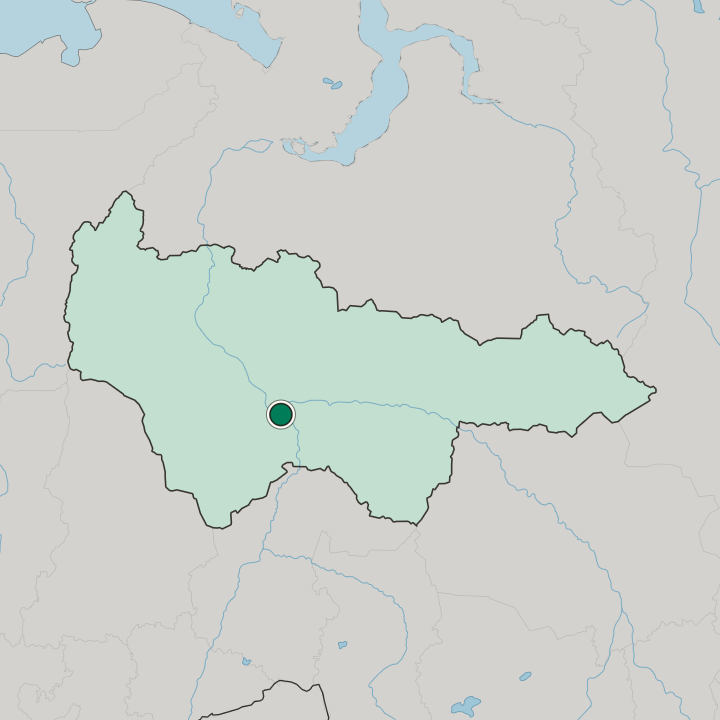
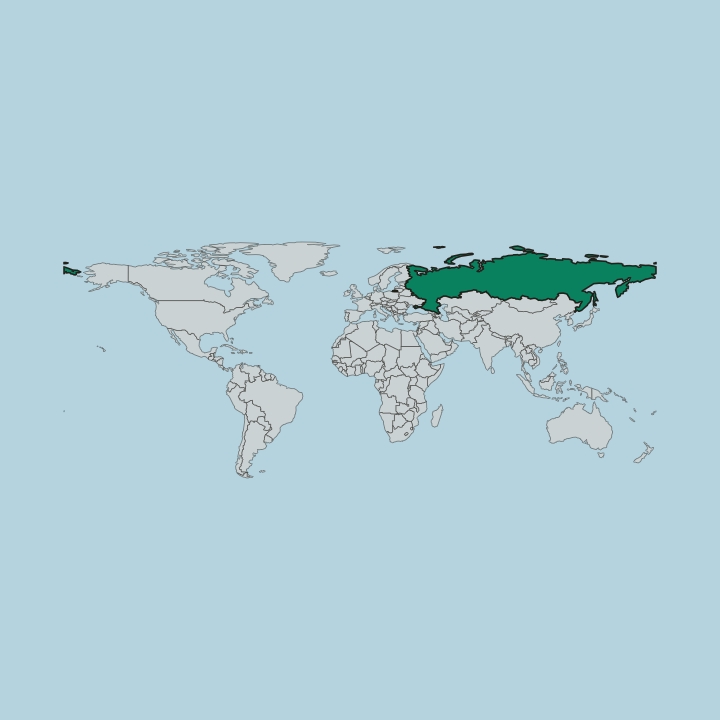
The Irtysh River sets the ground plan. Khanty-Mansiysk holds its eastern bank 15 kilometres from the confluence with the Ob, on territory running to 338 square kilometres of Khanty-Mansi Autonomous Okrug-Yugra. The subpolar band applies.
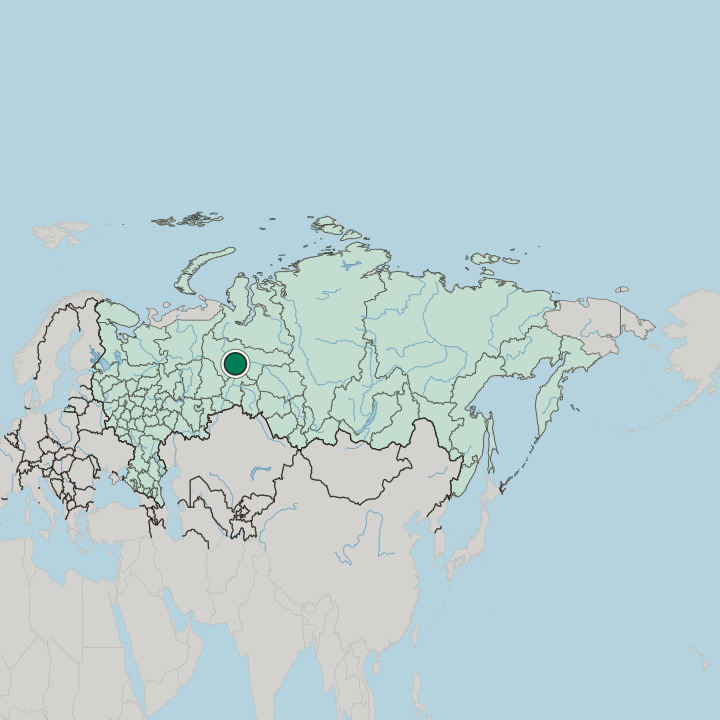
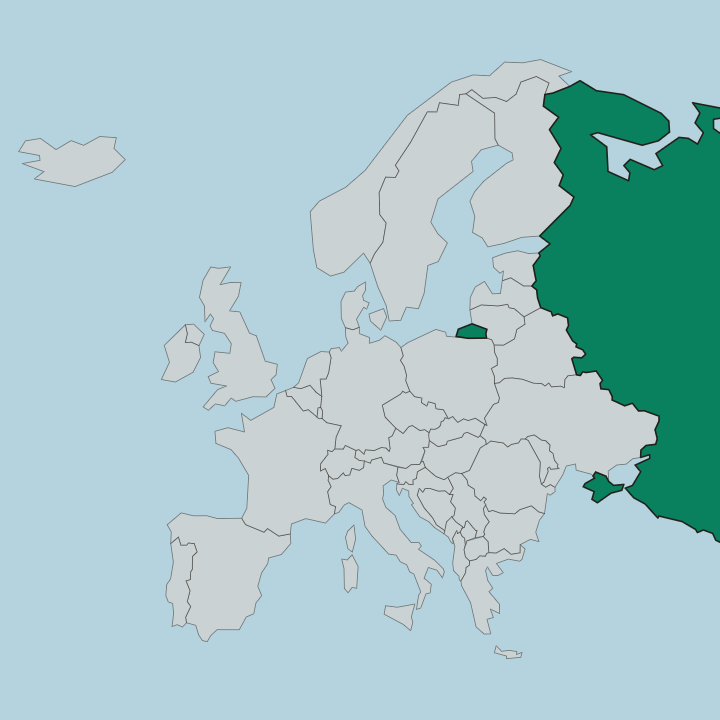
Khantia-Mansia names the same okrug, the Urals region takes it in, and Russia contains all of it.
What is the climate of Khanty-Mansiysk?
The subpolar band shapes everything else. Freeze-up on the Irtysh River runs long here, and it governs how the city is used far more than any difference between one museum's opening hours and another's. Interiors carry the cold months.
The Ugra State Art Museum, the Museum of Nature and Humanity and Знаменская церковь are all indoor propositions, and Археопарк is the one site the weather can genuinely spoil.
How do you get to Khanty-Mansiysk?
Arrival means reaching the okrug capital. Khanty-Mansiysk is the administrative centre for Khanty-Mansi Autonomous Okrug-Yugra and for Khanty-Mansiysky District, and that pair of roles brings most traffic to the eastern bank of the Irtysh River in the first place. The rivers are the old route.
Anything moving on the Ob passes within 15 kilometres of the city.
Good for
More cities in Khanty-Mansiyskiy Avtonomnyy Okrug-Yugra
Updated September 2026