Russia · Krasnodarskiy Kray
Where to Stay in Kropotkin, Krasnodarskiy Kray
Romanovsky until 1921, Kropotkin is a Krasnodar Krai rail town on the right bank of the Kuban River. Kavkazskaya train station anchors it.
Find your area →


Where to stay in Kropotkin
The practical side of choosing where to sleep.
Kropotkin sorts itself into three usable ends, and none of them is far from the others. The first is railway ground. Kavkazskaya train station sits at the centre of a quarter that grew from locomotive and carriage depots, and a room among those streets means the platform is a walk rather than a taxi ride, which matters because the Vladikavkaz Railway line that made the town still carries most of the people who arrive on it.
Work travel takes a steady share of those beds. Book ahead. The second end is the Kuban River.
Kropotkin took the high right bank, and the Leytenantsky Pogon memorial stands there above the water, raised for the cadets of the Uryupinsk Military Infantry School who fell defending the town in 1942. An evening on that bank is the closest thing here to a promenade. The third is greener still: the Park of the 30th Anniversary of Victory, where the Alley of Glory carries the names of the townspeople lost in the Great Patriotic War, and the surrounding blocks are quieter than anything near the tracks.
Distances are small. Anyone using Kropotkin as a base for Kavkazsky District and the wider Krasnodar Krai will get more out of the station end, while a single night between trains can be taken wherever a bed is free. The town has never carried spare capacity, being a place of grain elevators, food plants and building-materials works, and the rooms that exist were built for people with business here.
About Kropotkin
Two things made the name.
What is Kropotkin known for?
Kavkazskaya train station put the settlement on the map when the Vladikavkaz Railway ran its first train out in 1874, and the town has answered to a timetable ever since. The other is the name itself: Pyotr Alexeyevich Kropotkin, geographer and anarchist, replaced Romanovsky on the signboards in 1921. Grain and building materials fill the yards.
Kropotkin works as a market and factory town for the farm country of the Kuban, not as a stop for sightseers.
What are the main landmarks in Kropotkin?
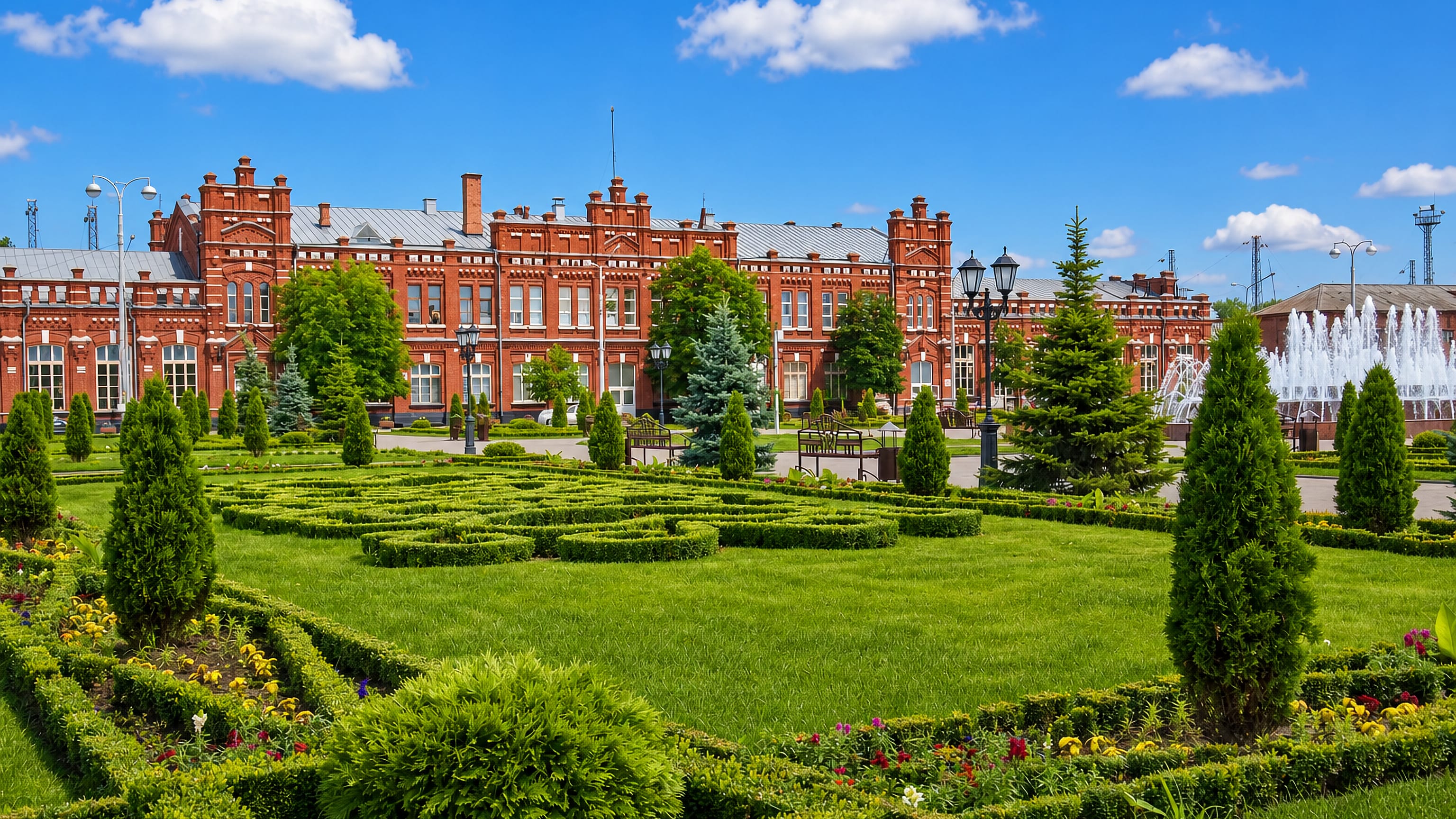
The station building is the monument here. Kavkazskaya train station took its present hall in 1905, and it is counted among the architectural monuments of the North Caucasus Railway rather than merely among its stops. Memorials do the rest of the work.
The Leytenantsky Pogon memorial stands on the Kuban bank, the Alley of Glory runs through the Park of the 30th Anniversary of Victory, and Kazanskaya Hill carries the memory of the mass shootings of 1942.
What is the history of Kropotkin?
Suvorov drew the first line here. Appointed to command the Kuban Corps in 1777, Alexander Suvorov laid out a cordon along the river, and one of its works, the post at Gorely Dub, watched the ford that Circassian raiders used. Romanovsky Post followed in 1778.
A year later the settlers around it became the khutor of Romanovsky, on land belonging to stanitsa Kavkazskaya and named for Romanovskaya, the Don stanitsa its Cossacks had come from. The Stavropol Shlyakh, the road joining Yekaterinodar to Stavropol, passed through and gave the place its first trade. Rails changed the scale.
The first train left the station on the Vladikavkaz Railway in 1874, a second route reached Stavropol from Yekaterinodar in 1901, and by 1917 the khutor had locomotive and carriage depots, an elevator and a first-class station. Town status came on 4 February 1921, with the name of Pyotr Alexeyevich Kropotkin attached to it. German troops took the town on 4 August 1942.
Resistance ran through the depots: the driver Vasily Zhizhko threw his locomotive off the turntable in January 1943 to strand the German trains massed at Kavkazskaya, and paid for it in the Gestapo. Liberation came on 29 January 1943, when the 11th Rifle Corps under Ivan Rubanyuk closed on the town from three sides. Administration kept shifting afterwards.
Kropotkin passed from Armavir Okrug to Azov-Black Sea Krai, landed in Krasnodar Krai when that was split off in 1937, and since 2008 has formed the Kropotkinskoye Urban Settlement inside Kavkazsky District.
Where is Kropotkin?
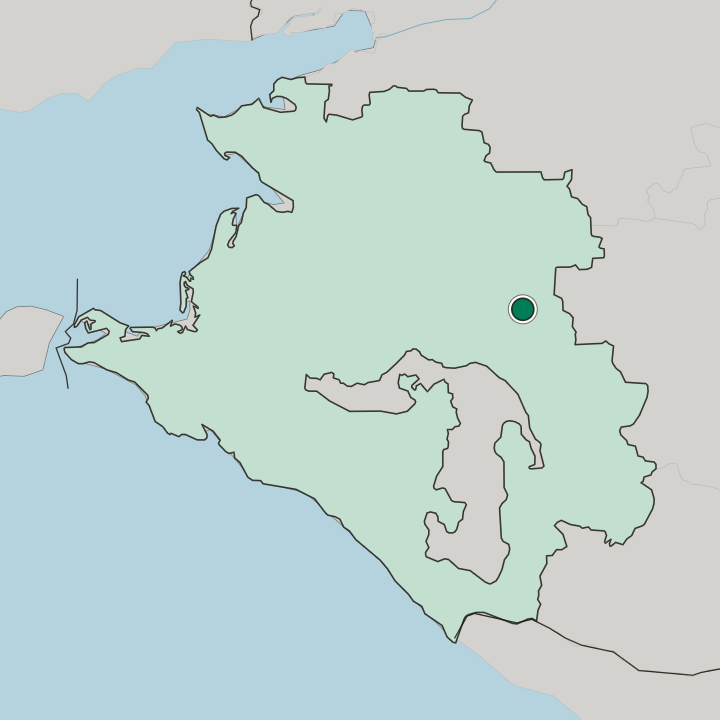
Flat country, one high edge. Kropotkin sits on the Kuban-Azov Lowland, where the plain breaks off at the raised right bank of the Kuban River, and that bank is the only relief the town has. The town stands about 133 km north-east of Krasnodar.
Two through-routes intersect at the town: the R-217 Kavkaz federal highway and the North Caucasus Railway, whose Caucasus line crossed the Kuban at this spot and made Kavkazskaya a junction.
What is the climate of Kropotkin?
The Kuban-Azov Lowland leaves the town open. No ridge shelters Kropotkin from the air moving across the plain, so the gap between a midsummer afternoon and a January morning is a wide one. The Kuban River softens little.
A visit in July and a visit in January want almost opposite luggage, and the northern-hemisphere calendar puts the cold at the turn of the year rather than in the middle of it.
How do you get to Kropotkin?
Rail first. Kavkazskaya train station is a junction on the North Caucasus Railway, where the Vladikavkaz Railway route of 1874 joins the line opened towards Stavropol in 1901, and it stands close enough to the middle of Kropotkin that arriving passengers are already in the town. Road traffic uses the R-217 Kavkaz.
That federal highway runs through Kropotkin, with Krasnodar lying to the south-west.
More cities in Krasnodarskiy Kray
Updated September 2026