Russia · Ulyanovsk Oblast
Where to Stay in Dimitrovgrad, Ulyanovsk Oblast
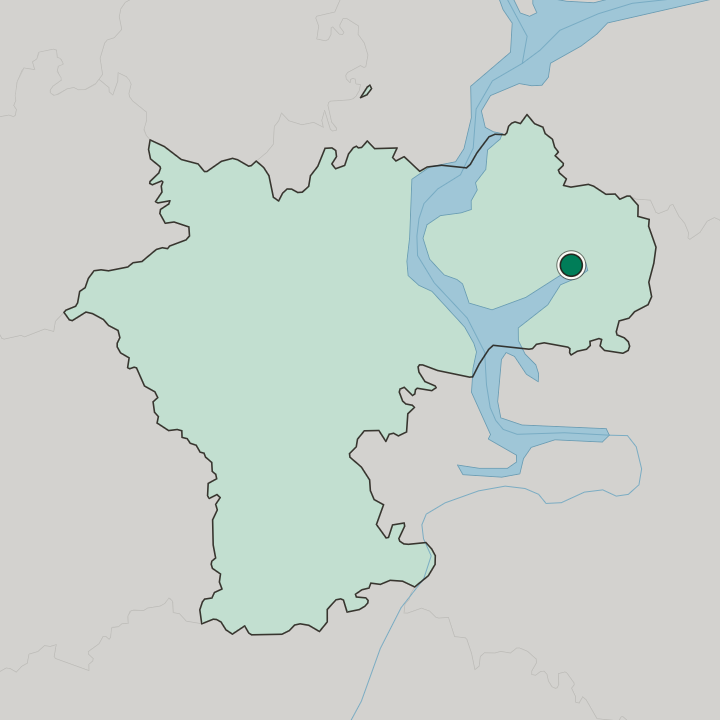
Dimitrovgrad stands where the Melekesska meets the Bolshoy Cheremshan in Ulyanovsk Oblast, and answered to the name Melekess until 1972.
Find your area →


Where to stay in Dimitrovgrad
Where visitors usually base themselves, and why.
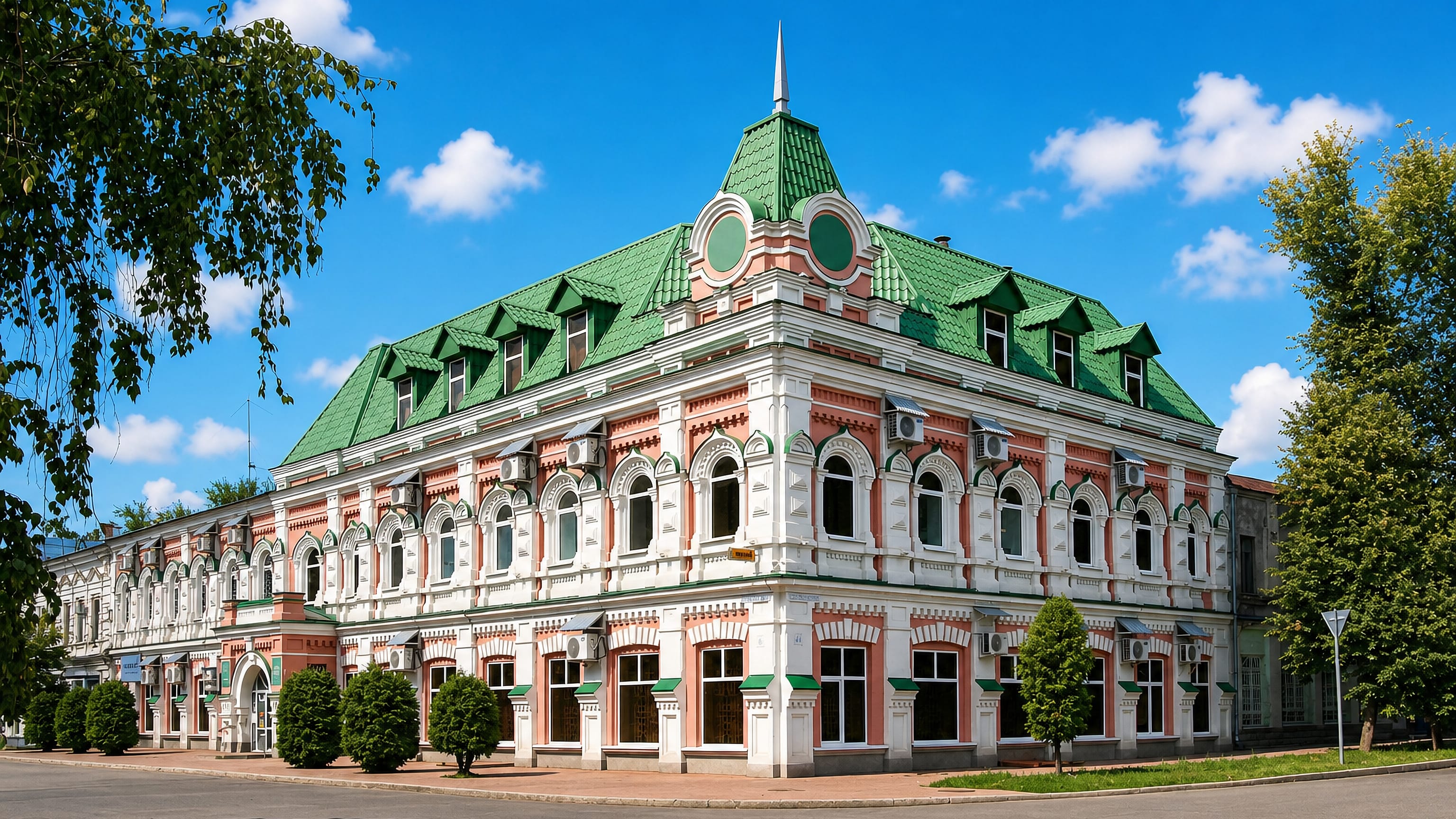
The old streets make the case. Third International Street runs through the middle of the protected inventory, and Gagarin Street, Dzerzhinsky Street, and Kuybyshev Street add their own listed addresses within a few minutes of it. A stay here is a walking one.
The Markov Distillery and the Bechin groats mill stand close enough to fold into the same afternoon, and the Dimitrovgrad Mosque is not much further off. Beds are ordinary and adequate. The Dimitrovgrad railway station shapes the second option.
Trains from Ulyanovsk and the rest of Ulyanovsk Oblast come in here, and the streets around the platforms suit anyone arriving late or leaving before the town wakes. Nothing about it is scenic. It is convenient.
If you want an early train more than an old frontage, the blocks within sight of the station serve better. Water lies at the far edge. The Melekesska River joins the Bolshoy Cheremshan River there, and the Bolshoy Cheremshan carries on toward the Volga River through the flat country of the Volga Region.
Rooms are thin on that side. Anyone staying out there trades the listed streets for open ground and a walk back into the centre of Dimitrovgrad. Most visitors stay among the streets.
Things to do in Dimitrovgrad
Ranked by global recognition; descriptions from Wikidata (CC0).
Churches & Religious Sites
1- Dimitrovgrad Mosque Heritage
Landmarks & Notable Places
8- Dimitrovgrad railway station Heritage
- Markov Distillery, Dimitrovgrad Heritage
- The groats mill of the merchant F.V. Bechin Heritage
- Dzerzhinsky Street 27, Dimitrovgrad Heritage
- Dzerzhinsky Street 29, Dimitrovgrad Heritage
Show 3 more →
- Gagarin Street 11, Dimitrovgrad Heritage
- Gagarin Street 13, Dimitrovgrad Heritage
- Gagarin Street 19, Dimitrovgrad Heritage
worth knowingacross 2 categories in Dimitrovgrad
About Dimitrovgrad
One street carries the heritage list.
What is Dimitrovgrad known for?
Third International Street alone holds a dozen protected addresses in Dimitrovgrad, with more along Gagarin Street, Dzerzhinsky Street, and Kuybyshev Street. Industry left the rest, from the Markov Distillery and the Bechin groats mill to a weaving mill and the two water towers that still stand over the older quarters. The Dimitrovgrad Mosque stands among them.
Rivers meet at the edge of it all.
What are the main landmarks in Dimitrovgrad?
Dimitrovgrad keeps a long and plain heritage list. Most of it is houses: whole runs of Third International Street, along with numbers on Gagarin Street, Dzerzhinsky Street, and Kuybyshev Street, protected as a group rather than one by one. Two water towers break the roofline.
The Markov Distillery and the Bechin groats mill survive from the merchant trade, and a weaving mill stands from the same industrial years. The Dimitrovgrad Mosque and the Dimitrovgrad railway station finish the roll.
What is the history of Dimitrovgrad?
The town dates from 1698. It carried the name Melekess for most of that span, and the older official form of that name, Мелекесский Завод, points to a works rather than a village at the beginning. Industry came early.
The Bechin groats mill and the Markov Distillery belong to the merchant era, when grain and spirits moved out of the town toward the Volga River. Timber gave way to brick. Streets were laid out to match.
Third International Street, Gagarin Street, Dzerzhinsky Street, and Kuybyshev Street carry the houses that survive from those decades, and most of the protected list is made up of them. Two water towers served the growing works. A weaving mill joined the older trades, and the Dimitrovgrad railway station tied Melekess into the network crossing the Volga Region.
The Dimitrovgrad Mosque stands among that fabric. The name changed in 1972. Melekess became Dimitrovgrad, and the city took the administrative role for Melekessky District while remaining outside the district itself as an independent city in Ulyanovsk Oblast.
Only Ulyanovsk is larger in the oblast. The old streets kept their houses through all of it, which is why a town built on factories still reads as a merchant settlement along its central blocks. The rivers still meet below it.
Where is Dimitrovgrad?
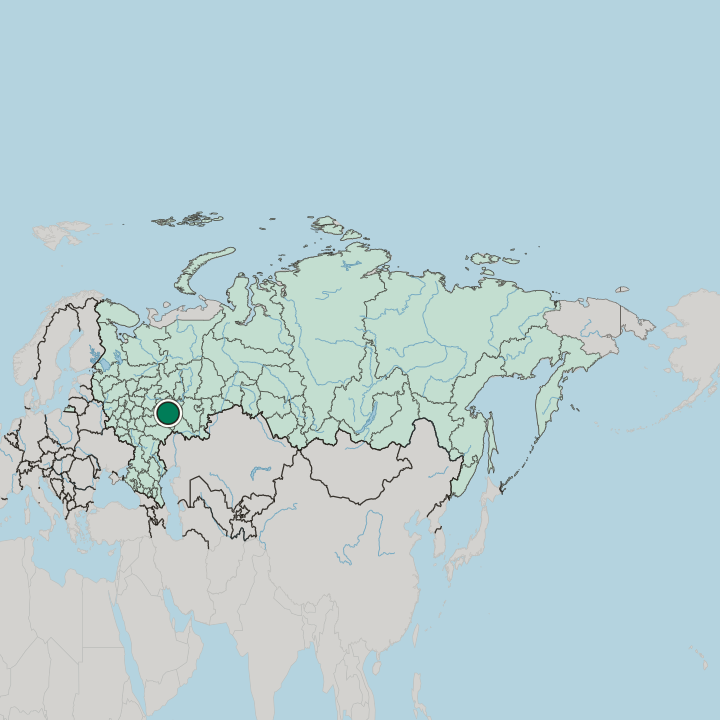
Dimitrovgrad sits at the confluence of the Melekesska River and the Bolshoy Cheremshan River. The Bolshoy Cheremshan feeds the Volga River. Flat ground of the Volga Region runs out around the city, which spreads over roughly 42 square kilometres between the two watercourses and the country beyond them.
Ulyanovsk Oblast holds it all. Melekessky District lies around the edges.
What is the climate of Dimitrovgrad?
The Volga Region sets a hard continental year. Winter closes over Dimitrovgrad early, and the cold holds across that flat country without much interruption until the thaw arrives. Then the melt runs fast.
Summers turn hot and dry over the same open ground, and the two rivers below the town matter more in those weeks than in any other. Shoulder seasons barely register.
How do you get to Dimitrovgrad?
The Dimitrovgrad railway station is the front door. Trains run in from Ulyanovsk and across Ulyanovsk Oblast, and the station building itself sits on the protected list alongside the houses of the central streets. Road links carry everything else.
They cross the flat country of the Volga Region toward the Volga River and the larger centres beyond. Central Dimitrovgrad is small enough to cross on foot.
Another city in Ulyanovsk Oblast
Updated October 2026