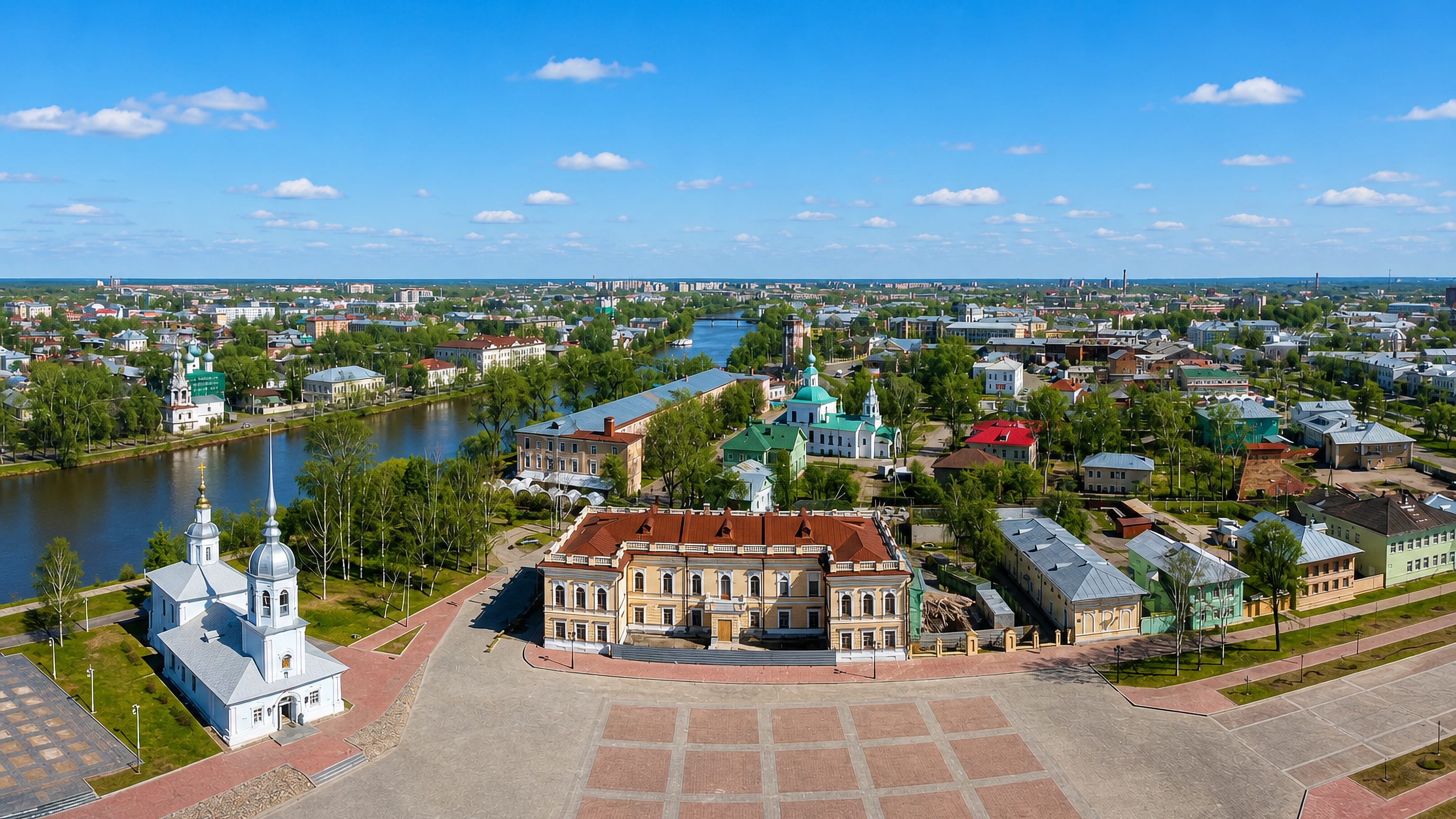
Russia · Vologda Oblast
Where to Stay in Vologda, Vologda Oblast
Vologda stands on the river Vologda in Northwestern Russia, a Silver Ring city founded in 1147 and known for its Kremlin and Saint Sophia Cathedral.
Find your area →


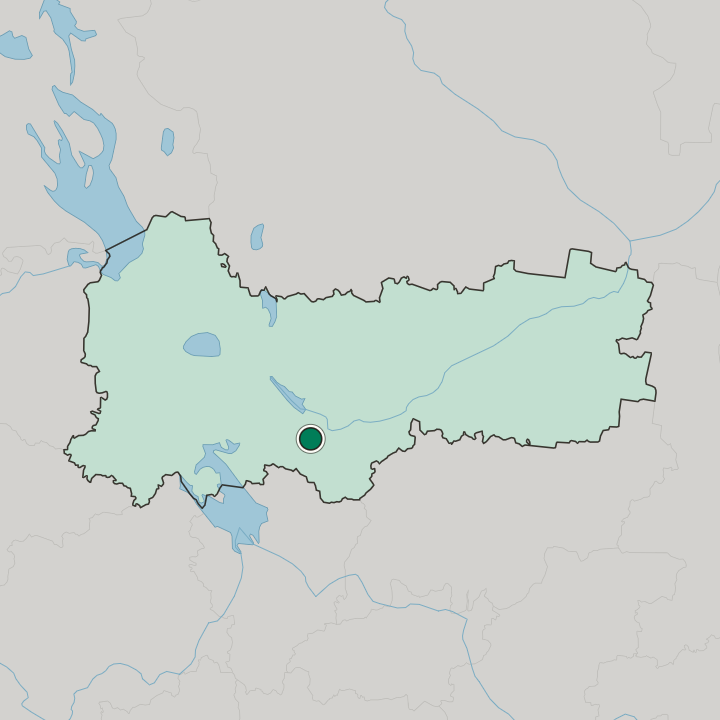
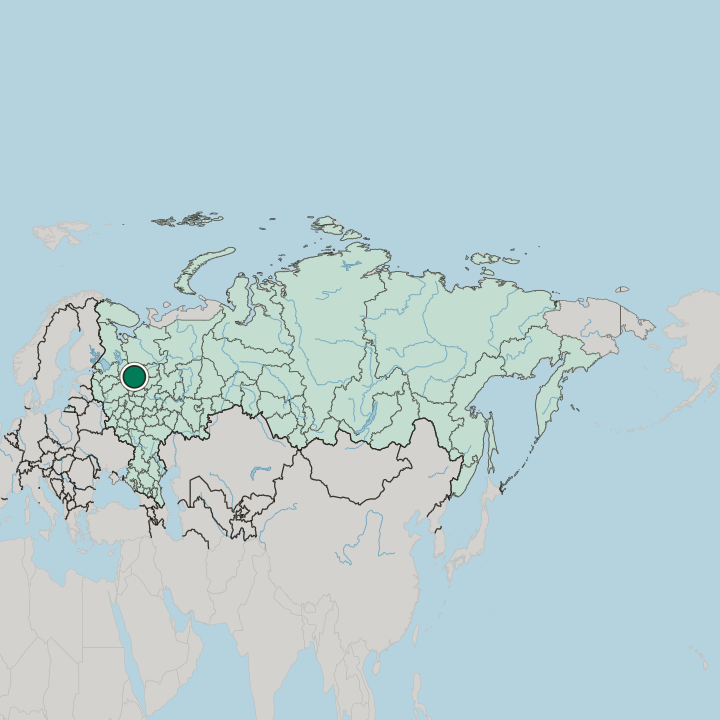
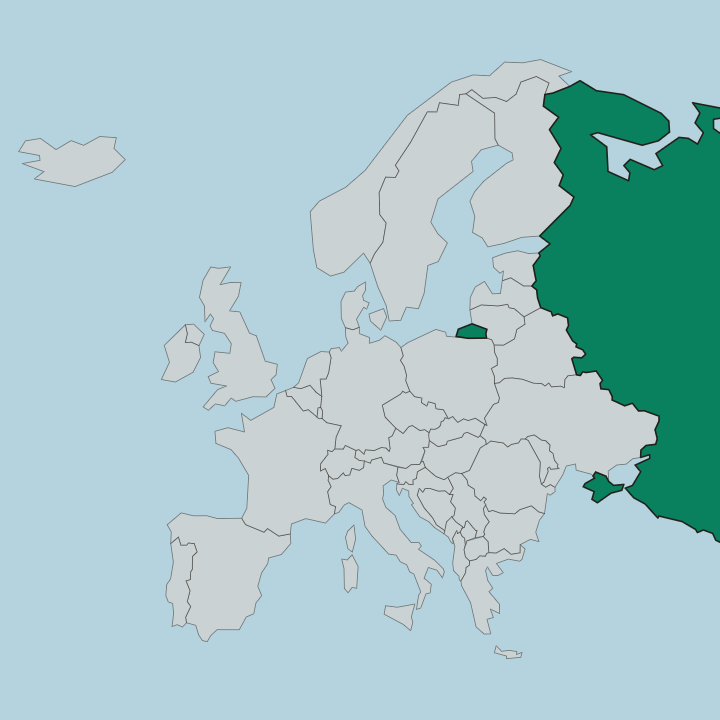
Where to stay in Vologda
How the choice of base plays out on the ground.
Where you stay in Vologda turns on how close you want to be to the Kremlin and the river Vologda. The old centre is the heart. Its cathedrals, convent and wooden mansions gather near the water, and most visitors base themselves within walking distance of the historic core in this Silver Ring city.
Around the Vologda Kremlin you are steps from the Saint Sophia Cathedral and the Bishop's Court, the best base for anyone who wants the old town on foot. Near the riverbank you sit close to the water and the Church of Dimitry Prilutsky on Navolok, a quieter choice beside the river Vologda. Vologda's old centre is compact enough to cross on foot.
A stay near the civic core of Vologda Oblast suits first-time visitors who want the Resurrection Cathedral, the museums and Shalamov's house a short walk apart, while the leafier residential streets suit those content to trade the busy centre for calm.
Things to do in Vologda
Ranked by global recognition; descriptions from Wikidata (CC0).
Museums & Galleries
3- Vologda museum-preserve Heritage
- Shalamov's house
- Vologodskai︠a︡ oblastnai︠a︡ kartinnai︠a︡ galerei︠a︡
Churches & Religious Sites
8- Saint Sophia Cathedral Heritage
- Resurrection Cathedral, Vologda Heritage
- Church of Dimitry Prilutsky on Navolok Heritage
- Alexander Nevsky Church, Vologda Heritage
- Church of Nikolai Thaumaturgus in Vladichnaya sloboda Heritage
Show 3 more →
- Vladimirskaya Icon Churches in Vologda Heritage
- Church of Elijah the Prophet Heritage
- Church of Cyril of Belozersk in Vologda Heritage
Castles & Historic Sites
5- Bishop's Court, Vologda Heritage
- Zasetsky House, Vologda Heritage
- Volkov's House in Vologda Heritage
- Vologda Hillfort Heritage
- Maslennikov House Heritage
Landmarks & Notable Places
8- Vologda Kremlin Heritage
- Gorne-Uspensky Convent Heritage
- Zolotoy Yakor, Vologda Heritage
- Orlov House, Vologda Heritage
- Sokovikov House (Vologda) Heritage
Show 3 more →
- Vologda Men Gymnasium Heritage
- Vologda Science Library Heritage
- Blagoveshchenskaya Street 23, Vologda Heritage
worth knowingacross 4 categories in Vologda
About Vologda
What is Vologda known for?
Vologda is known as a historic city of Northwestern Russia, part of the Silver Ring of cultural and historical centres. Its churches define it. The administrative centre of Vologda Oblast, founded in 1147 on the river Vologda within the watershed of the Northern Dvina, the city is famous for the Vologda Kremlin, the Saint Sophia Cathedral and the wooden houses of its old streets, among them Shalamov's house.
What are the main landmarks in Vologda?
Vologda's landmarks centre on its churches and its old wooden city. The Kremlin anchors them all. Within and around the Vologda Kremlin stand the Saint Sophia Cathedral and the Bishop's Court, while the Resurrection Cathedral, the Church of Dimitry Prilutsky on Navolok, the Gorne-Uspensky Convent, the Alexander Nevsky Church and the writer's home preserved as Shalamov's house extend a dense heritage of cathedrals, convents and timber houses across the town.
What is the history of Vologda?
Vologda traces its recorded life to 1147, when it emerged as a settlement on the river Vologda in what is now Northwestern Russia. Its position was valuable. The town sat on the water routes within the watershed of the Northern Dvina that linked the Russian north to the wider country, and that trade gave it the wealth to build in stone and timber over the centuries that followed.
The city grew into a religious and administrative centre. Both the Vologda Kremlin and the Saint Sophia Cathedral rose during its era of prominence, marking Vologda's standing among the historical centres later grouped as the Silver Ring. Convents, cathedrals and merchant houses multiplied along the streets, and figures of Russian letters left their mark, remembered in places such as Shalamov's house, carrying the city's story from its founding in 1147 into its role as the seat of Vologda Oblast.
Where is Vologda?
Vologda lies on the river Vologda in Northwestern Russia, within the watershed of the Northern Dvina. Water shapes the setting. The city spreads over low, flat country along both banks of the river, whose gentle course threads the old town past the Vologda Kremlin and the churches.
The surrounding lakeland and forest of Vologda Oblast give the city a broad, level horizon under northern skies.
What is the climate of Vologda?
Vologda has a cold continental climate shaped by its northern position in Northwestern Russia. Winter settles in for months, burying Vologda under deep snow. Deep snow settles over the Vologda Kremlin and the wooden houses for months, while summers turn short, mild and green along the river Vologda, giving the city a strong seasonal contrast.
The break-up of the river and a brief crisp autumn mark the turns of the year.
How do you get to Vologda?
Vologda is reached overland across Northwestern Russia, on the road and rail links that serve the Russian north. Rail does most of the work. Trains and roads run in across Vologda Oblast to bring visitors to the old town on the river Vologda, tying the city into the routes of the Silver Ring.
From the station it is a short way to the Vologda Kremlin and the churches.
Good for
Another city in Vologda Oblast
Updated October 2026