Russia
Vologda Oblast, Russia — Towns & Travel Guide
Vologda Oblast is a forest-and-lake region of the Russian North, its monasteries strung along the old river route to the White Sea.
Find your area →


Towns & cities in Vologda Oblast
Pick a town or city — each links to where to stay.
 Russia
Cherepovets
Cherepovets is the largest city in Vologda Oblast, a steel town on the Sheksna River where it opens into the Rybinsk Reservoir.Where to stay →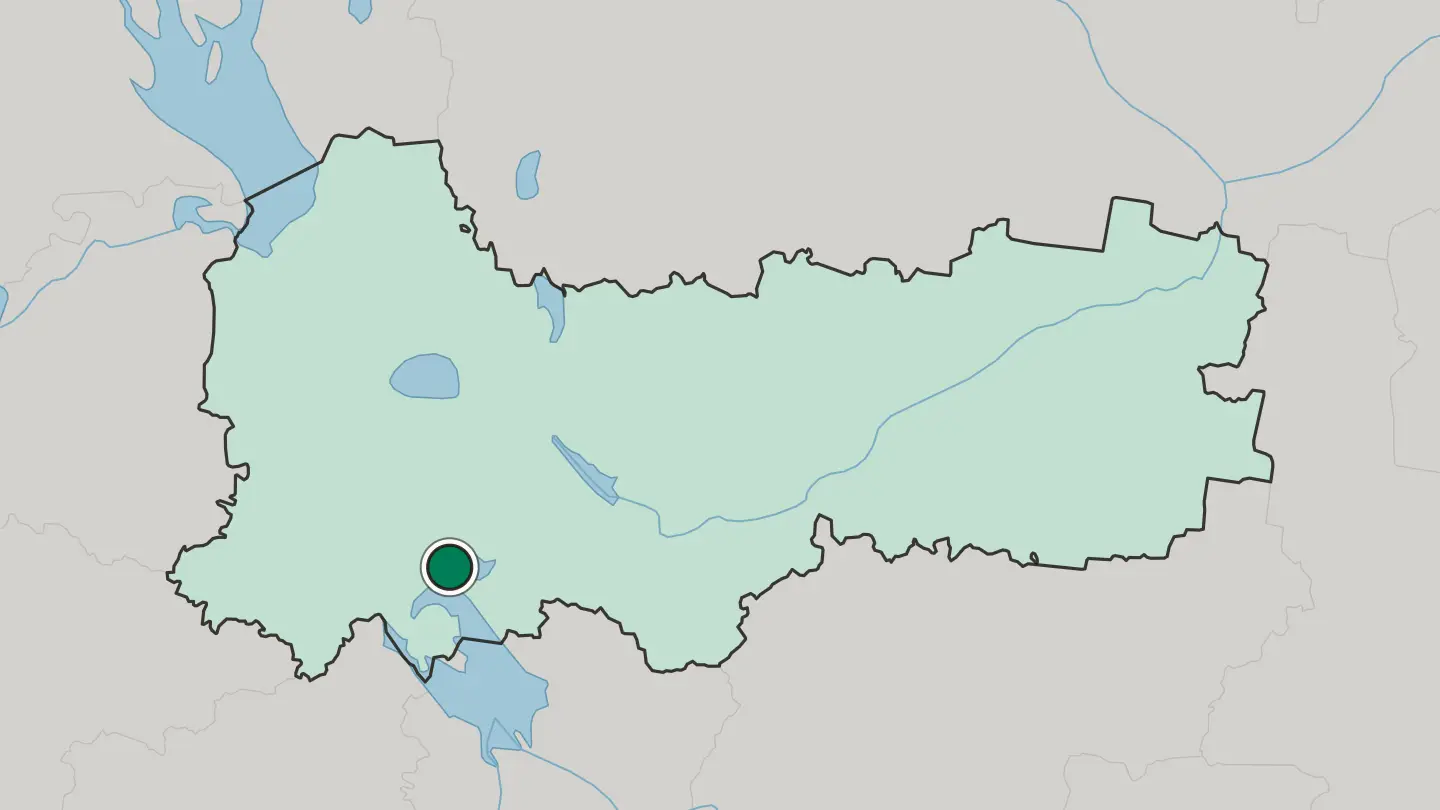
 Russia
Vologda
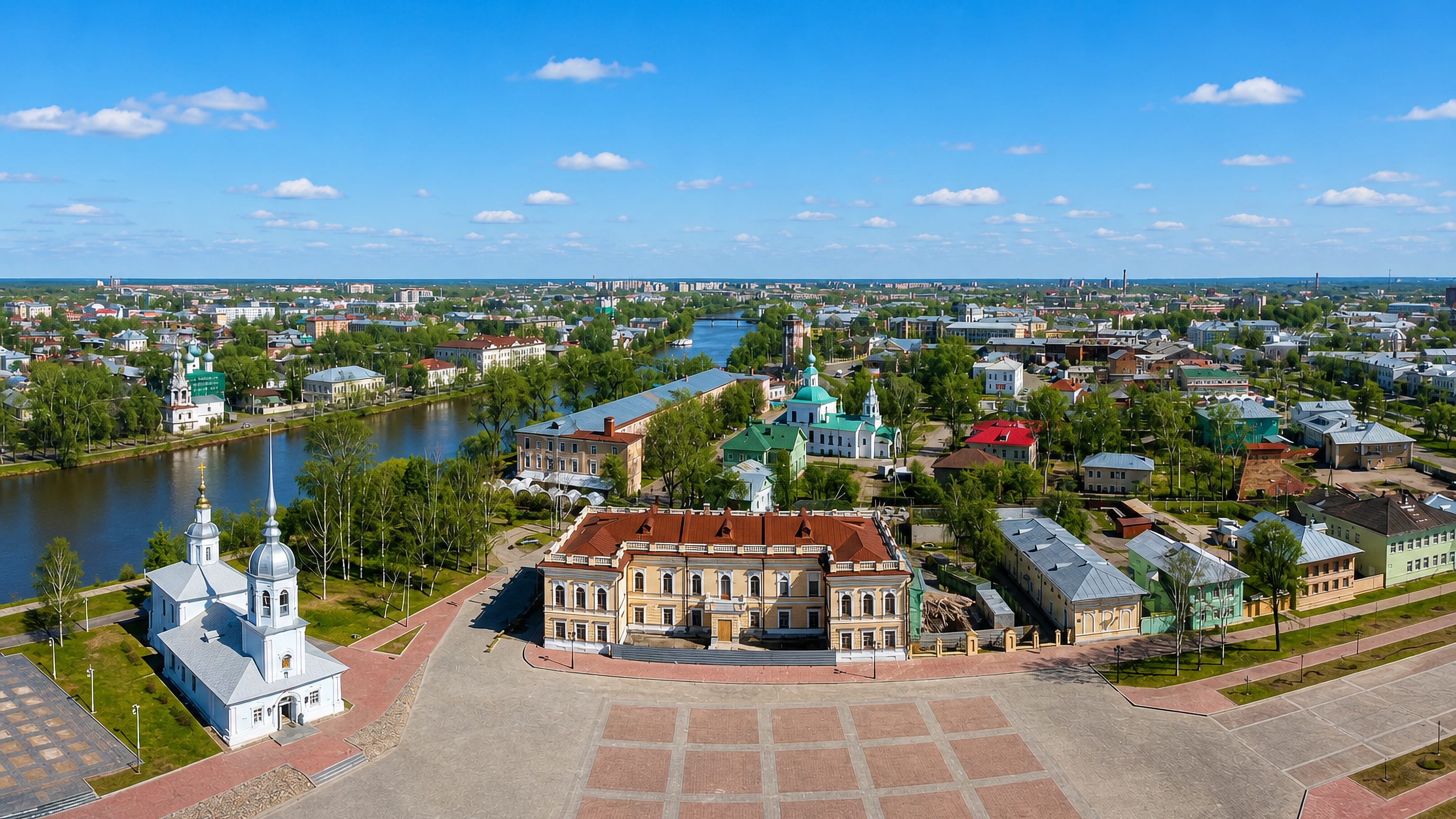
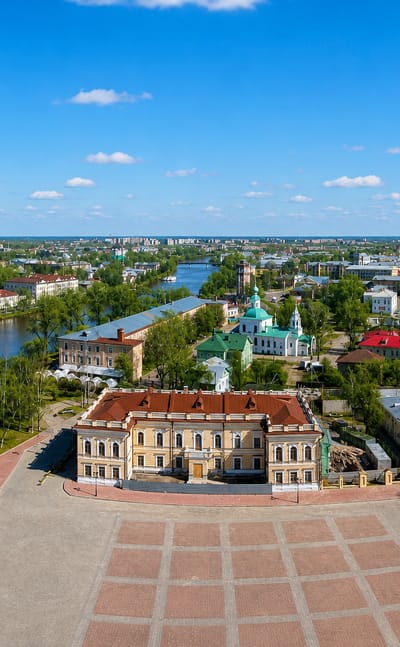
Vologda stands on the river Vologda in Northwestern Russia, a Silver Ring city founded in 1147 and known for its Kremlin and Saint Sophia Cathedral.Where to stay →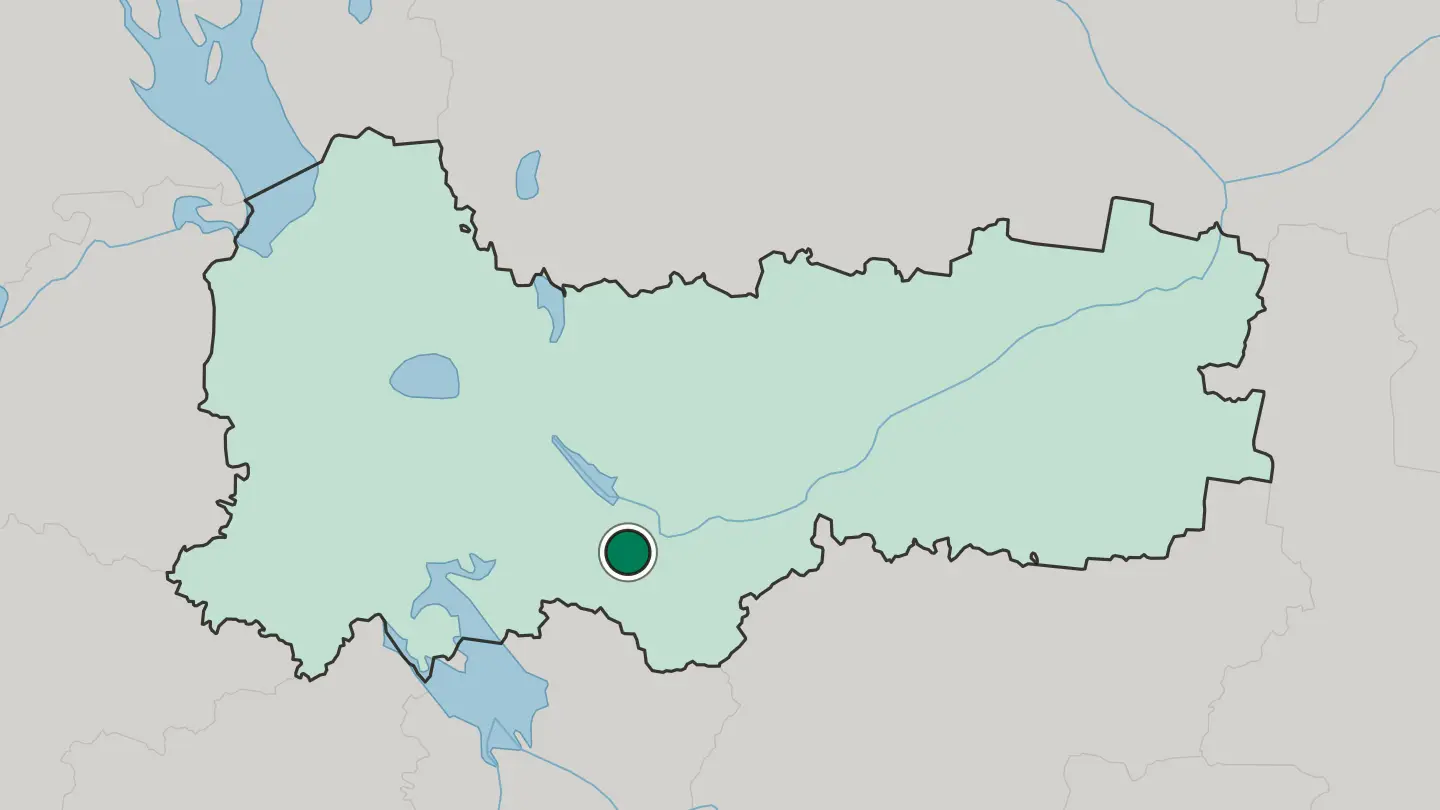
About Vologda Oblast
What is Vologda Oblast known for?
Two names carry the region far beyond it: Vologda lace and Vologda butter. The wider draw is the Russian North itself. Kirillo-Belozersky Monastery rises behind fortress walls above Beloye Lake, and the small Ferapontov Monastery nearby holds frescoes painted by Dionisy that carry a UNESCO listing.
Cherepovets breaks the pattern. The largest city runs to a different rhythm, built around the Severstal steel works rather than around churches.
Where is Vologda Oblast?
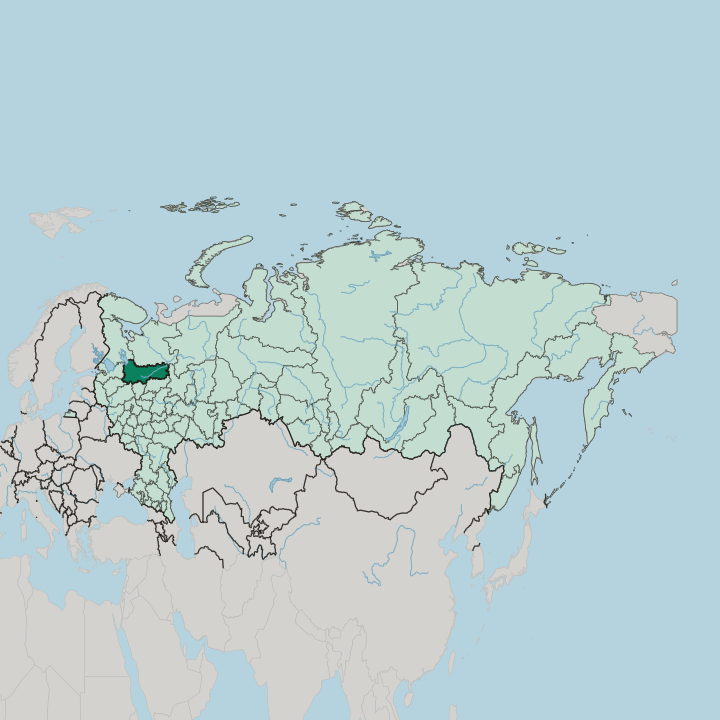
Vologda Oblast sits in the north-west of Russia, a broad lowland of forest, bog and water. Sheer size is the first fact. The land stretches roughly 700 kilometres from west to east, far wider than it is tall, and a low wooded plain runs through most of it, broken only by modest highlands in the west and the Northern Ridge in the east.
Taiga covers much of that ground, spruce and pine and birch, with bog filling the hollows between. Everywhere else, water takes over. Some 4,000 lakes lie scattered across the region, and Beloye Lake in the west is the largest of them.
The rivers matter even more. A low watershed splits the oblast in two: the western streams drain south toward the Volga, while the east belongs to the Northern Dvina system, fed by the Sukhona as it runs down toward Arkhangelsk and the White Sea. Vologda, the capital, stands in the south on its own small river.
Cherepovets lies further west on the Sheksna, near where that river widens into a reservoir. Neighbours ring the region on every side, from Karelia in the north-west to Kostroma and Yaroslavl in the south. That double drainage, half to the Volga and half to the northern sea, is the key to how the region was settled and traded.
What is Vologda Oblast like?
The region calls itself the cultural heart of the Russian North, and the claim rests on craft as much as on scenery. Two products made the name known across the country. Vologda lace is worked in fine white thread on a pillow, its patterns copied and taught for generations; Vologda butter carries a nutty taste that local dairies trace to the meadows along the northern rivers.
Both are more than souvenirs. They are how the region tells its own story. The built heritage runs alongside the crafts.
Wooden houses with carved fronts still line streets in Vologda, and the white stone churches of the monasteries stand as the great monuments of the north. Ferapontov Monastery keeps the frescoes of Dionisy almost as they were painted, a rare survival that earned its UNESCO listing. Russian is the common language, as across the country.
In the far west a small Vepsian community keeps an older Finnic tongue alive, the last trace of the people who lived here before Novgorod's settlers arrived. Museums, lace, butter and frescoes: the culture here is provincial in the good sense, made and kept close to home.
What is the history of Vologda Oblast?
Novgorod came first. Traders and settlers from the Novgorod Republic pushed into this forest from the west in the twelfth century, drawn by furs and the portages that linked the Volga to the northern rivers. Whoever held those portages held the route to the sea, so the land passed in time from Novgorod to Moscow.
For a stretch of the sixteenth and seventeenth centuries the Sukhona and the Northern Dvina were Russia's main road to the outside world, carrying goods north to the White Sea and the port at Arkhangelsk before Saint Petersburg took that trade away. The oblast in its present borders was drawn much later, in 1937.
What is the climate of Vologda Oblast?
Winters here are long and hard. Snow lies for roughly 150 days, deep enough to muffle the taiga, and the cold sets in early across this northern plain. Summers turn short, cool and green, with rain spread through the warmer months rather than falling all at once.
The lakes and the Sukhona freeze over for much of the year, and the whole region shifts from water travel to sledge and ski once the ice takes hold. Spring and autumn are brief and muddy.
How do you get to Vologda Oblast?
For most, the way in is rail. Vologda sits on the main line north from Moscow, and the sleeper trains that run up toward Arkhangelsk stop here, making rail the simplest way in. Cherepovets has the region's airport and its own rail connections to the west.
Once you are inside the oblast, distances are long and roads few, so trains and buses link Vologda with Cherepovets and the smaller monastery towns, while Veliky Ustyug in the far north-east takes real effort to reach.
Common questions
What is the best area to stay in Vologda Oblast?
Vologda: the region's wooden-house old town. Cherepovets: the industrial west and the Sheksna.
Good for
More regions in Russia
Updated September 2026