Chad: Regions, Cities & Travel Guide
Chad is a landlocked country in Central Africa, spanning Sahara sand to Sahel grass, with N'Djamena as its capital.
Hotel links are affiliate links: booking through them may earn us a commission, at no extra cost to you. It never affects how places are ranked. How this works


Top destinations in Chad
One city to start from, then drill into its areas and hotels.
 Chad
Chad
N'Djamena
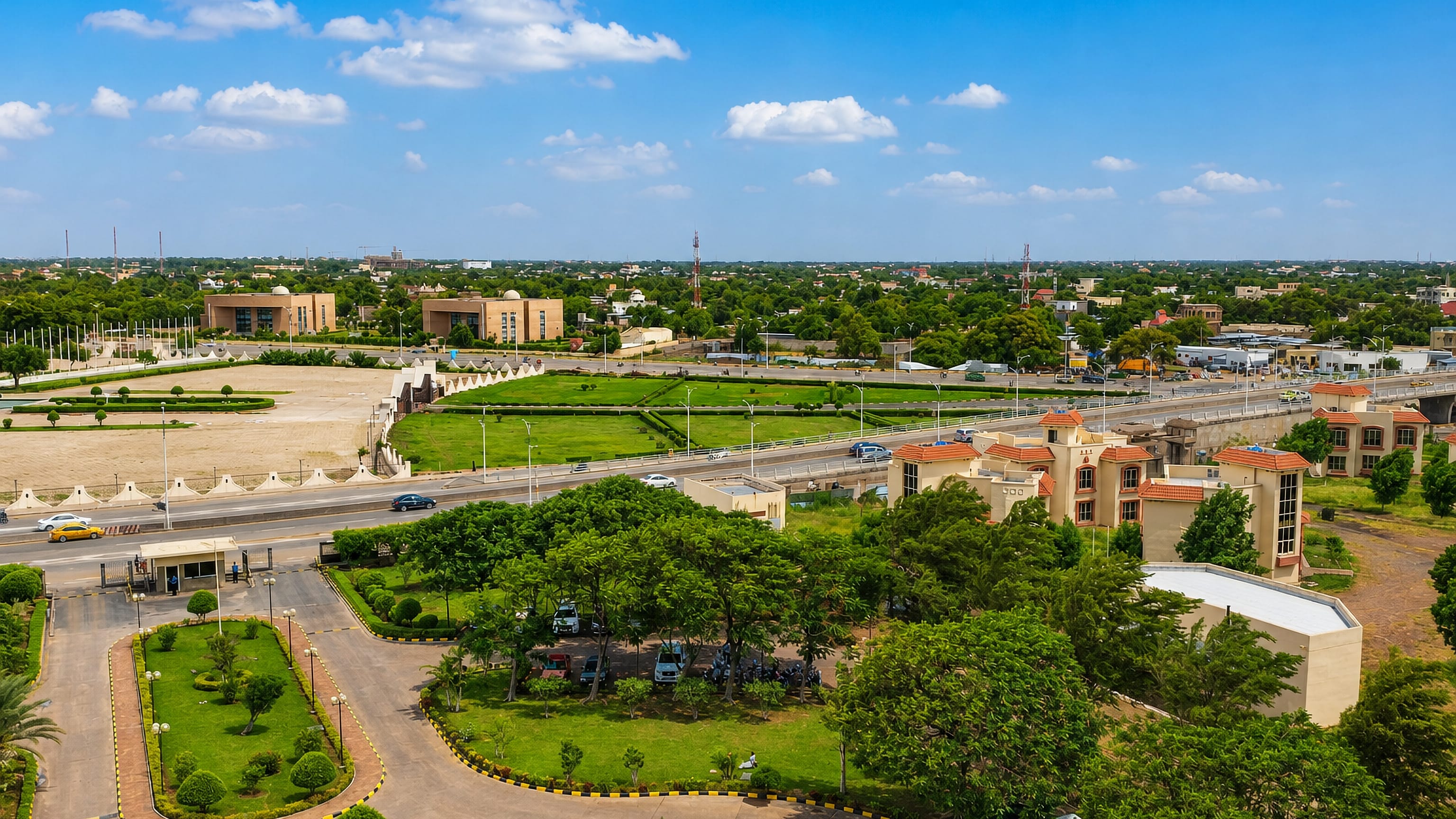
N'Djamena stands where the Chari meets the Logone, the capital of Chad, known for the Chad National Museum and its crossing toward Cameroon.Where to stay →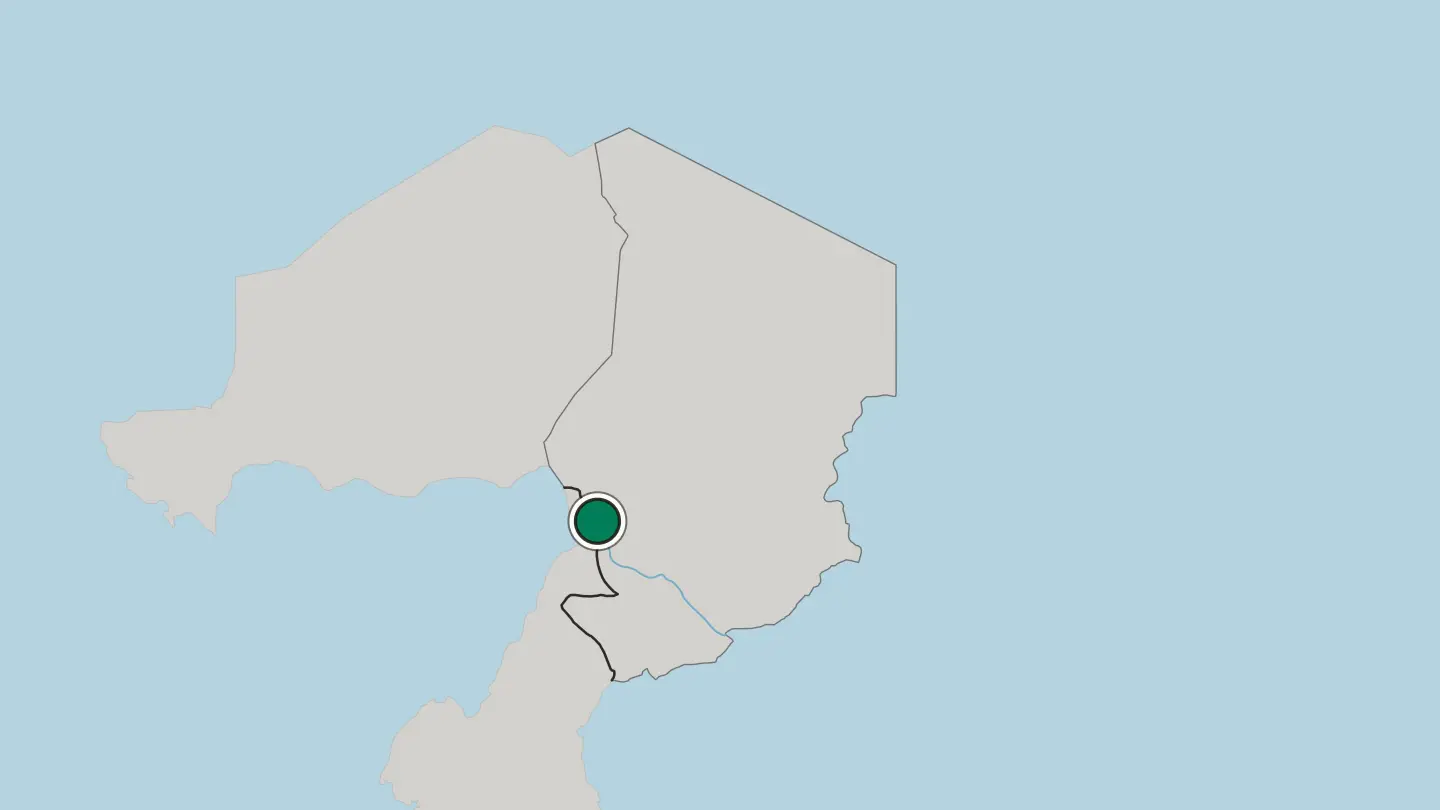
Hotel links are affiliate links: booking through them may earn us a commission, at no extra cost to you. It never affects how places are ranked. How this works
Browse by region
One region so far — open it to see its cities and towns.
About Chad
What is Chad known for?
Chad takes its name from Lake Chad, the shrinking freshwater sea on its western edge. The country trades in extremes. Its far north climbs into the volcanic Tibesti Mountains, crowned by Emi Koussi, the highest summit in the whole Sahara.
To the north-east the sandstone towers and arches of the Ennedi Massif rise from bare desert, near the star-shaped Lakes of Ounianga. Southward, elephants and Kordofan giraffe roam Zakouma National Park. Few countries pack in so much.
Where is Chad?
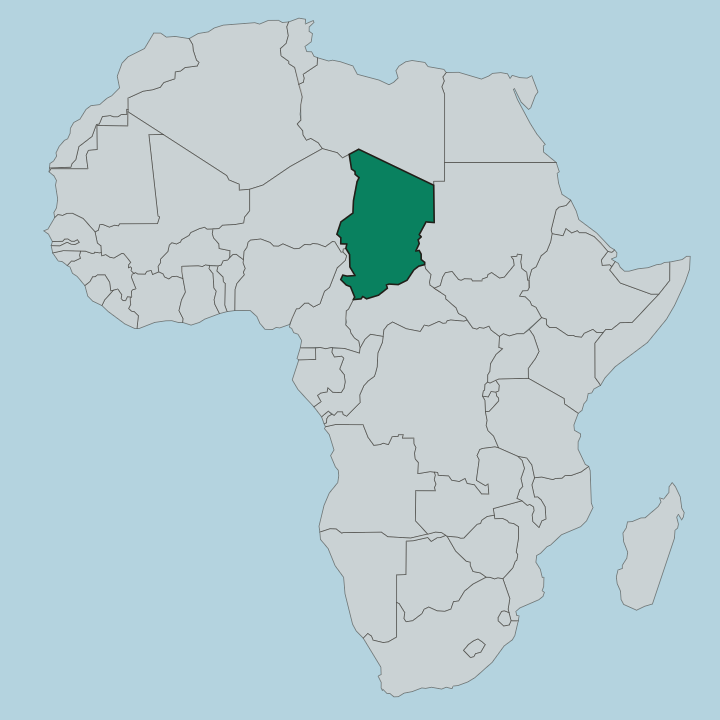
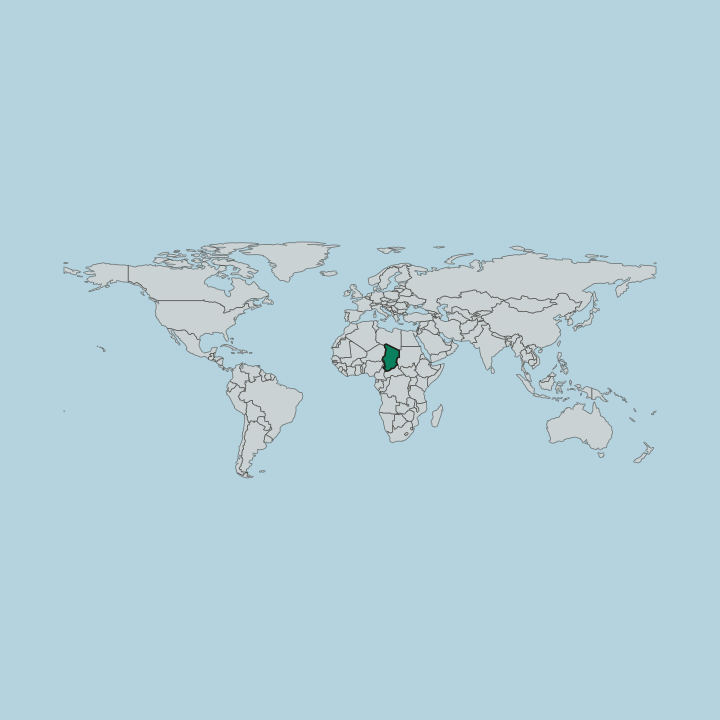
Chad is a landlocked country in Central Africa, and the fifth largest on the continent. Its shape is a shallow basin. The land tilts down toward Lake Chad in the west, then rises again on every side into rimming highlands, so the country reads almost like a bowl seen from above.
Three great uplands frame that basin. In the far north the volcanic Tibesti Mountains break through the Sahara, and their peak, Emi Koussi, stands as the highest point anywhere in the desert. To the north-east the Ennedi Massif lifts a maze of sandstone cliffs, arches, and gorges out of the sand, sheltering pockets of water and the mirror-flat Lakes of Ounianga.
The eastern border ranges rise in the Ouaddaï highlands around the old caravan town of Abéché. Water gathers in the south. The Chari and its tributary the Logone drain the wetter savanna and join at N'Djamena before pushing north into Lake Chad, which the Chari feeds with almost all its inflow.
Climate follows the same north-to-south grain. Bare Saharan dune and rock give way through the semi-arid Sahel to green Sudanian grassland near Moundou. From desert summit to river plain, the country holds three worlds at once.
What is the history of Chad?
Chad's story begins on the trade routes across the Sahara. Long before Europeans arrived, the shores of Lake Chad and the Sahel belt supported a run of states that grew wealthy taxing camel caravans. Foremost among them was the Kanem-Bornu Empire, which controlled the southern end of the trans-Saharan road toward Tripoli and dealt in salt, cloth, and captives.
It endured for roughly a thousand years. Rival sultanates followed, notably Ouaddaï in the east, whose capital at Abéché guarded the desert crossings until French columns pushed inland. France folded the territory into French Equatorial Africa early in the twentieth century and governed it from the far-off south, favouring the cotton lands around Moundou while leaving the Saharan north barely administered.
That imbalance would shape everything after. Chad won its independence in 1960, and the decades that followed brought recurring conflict between the settled, mostly Christian and animist south and the Muslim, pastoral north and centre. Drought and the retreat of Lake Chad added their own pressures across the Sahel.
Through all of it, the older identities of Kanem, Ouaddaï, and the Sara heartland persisted beneath the modern map. The empires are gone. Their trade roads still cross the sand.
What is Chad like?
More than two hundred peoples share Chad, and the country's culture divides broadly along its own geography. In the south around Moundou live the Sara, the largest single group, farmers and cattle-keepers who trace their roots to the ancient Sao of the Chari plains. The northern deserts belong to the Toubou and Arab herders of the Tibesti Mountains and the open Sahel, moving with their camels between wells.
That split runs deep. It shows in language, in faith, and in the daily rhythm of pasture against field. Music binds the country even so, built on hand drums and the wooden-keyed balafon that carries dances at weddings and harvests.
The kitchen tells the same regional story. A stiff sorghum or millet porridge called boule anchors most meals, eaten with sauces like daraba, a slippery stew thickened with okra and groundnut. Cattle and camel markets at Abéché still trade the way caravans once did.
Rock art hidden in the Ennedi Massif records giraffe, cattle, and hunters from a wetter age, some of it thousands of years old. The traditions of desert and river do not blend into one. They coexist, and the coexistence is the culture.
What is the climate of Chad?
Chad's weather sorts itself cleanly from north to south. The Saharan north is hot and almost rainless, its dunes and the Tibesti Mountains baking by day and turning cold after dark. The middle Sahel gets a short, unreliable wet season.
Only the Sudanian south around Moundou draws a real summer downpour, the rains that green its savanna and swell the rivers each year. Then comes the harmattan, a dry desert wind that hazes the country with dust. One nation, three climates.
How do you get to Chad?
Almost every arrival lands at N'Djamena, the capital and site of the country's international airport. Flights connect it to Paris, Addis Ababa, Istanbul, and the hubs of North Africa. Chad is vast and roads are rough.
Reaching Zakouma National Park or the Ennedi Massif usually means a charter flight or a multi-day drive by four-wheel-drive, so most desert and safari trips run through specialist operators. Sort out the capital, then the region. The rest of the country lies a long way beyond the runway.
Good for
Updated September 2026