Ukraine · Donetska Oblast
Where to Stay in Mariupol, Donetska Oblast
The Sea of Azov opens wide at Mariupol, a port city in Donetsk Oblast known for its steelworks and the churches that mark its old centre.
Find your area →


Where to stay in Mariupol
Not every neighbourhood fits every trip — here's what each one is good for.
 MariupolUkraine
Kalmiuskyi
Kalmiuskyi, formerly Illichivskyi District, is the urban district of Mariupol that holds the Azovmash Arena.Where to stay →MariupolUkraineTsentralnyi
Tsentralnyi is an urban district of Mariupol holding the Mariupol Museum of Local Lore and the Greek Catherine Church in Mariupol.Where to stay →MariupolUkraineLivoberezhnyi
Livoberezhnyi, once named Ordzhonikidze District, is an urban district of Mariupol established in 1939 and marked by the builders' monument.Where to stay →MariupolUkrainePrymorskyi
Prymorskyi, an urban district of Mariupol formed in 1938, gathers the city's maritime memorials, from the Memorial anchor to the sea port monument.Where to stay →Things to do in Mariupol
Ranked by global recognition; descriptions from Wikidata (CC0).
Museums & Galleries
3- Museum of the History of the Ilyich Plant
- Галерея дерев'яної скульптури Георгія Короткова
- Азовський морський музей
Churches & Religious Sites
3- Sv.-Nikolaevskiĭ Kafedralʹnyĭ Sobor
- Cathedral of the Holy Virgin Protection
- Saint Konstantin and Elena Orthodox Church in Mariupol
Castles & Historic Sites
8- Monument to the young Kuindzhi Heritage
- Monument to Anatoly Balabukha Heritage
- Monument to Taras Shevchenko Heritage
- Monument to the victims of Holodomor and political repressions, Mariupol Heritage
- Monument to the workers of Azovstal plant, killed in WWII Heritage
Show 3 more →
- Monument to the workers of Illich Steel and Iron Works, killed in WWII Heritage
- Monument to Vladimir Lenin on Svobody Street, Mariupol Heritage
- Afghanistan War memorial in Mariupol Heritage
Stadiums & Sports
1- Azovmash Arena
Parks & Gardens
1- Екстрим-парк (Маріуполь)
Landmarks & Notable Places
1- Houses with spire, Mariupol Heritage
worth knowingacross 6 categories in Mariupol
About Mariupol
What is Mariupol known for?
Mariupol is known as a steel and port city on the Sea of Azov, its working life long tied to the Ilyich Iron and Steel Works. The Museum of the History of the Ilyich Plant records that industrial past across generations. The Azov Marine Museum turns toward the coast and its trade.
Churches ring the old centre. The Monument to Taras Shevchenko stands among them.
What are the main landmarks in Mariupol?
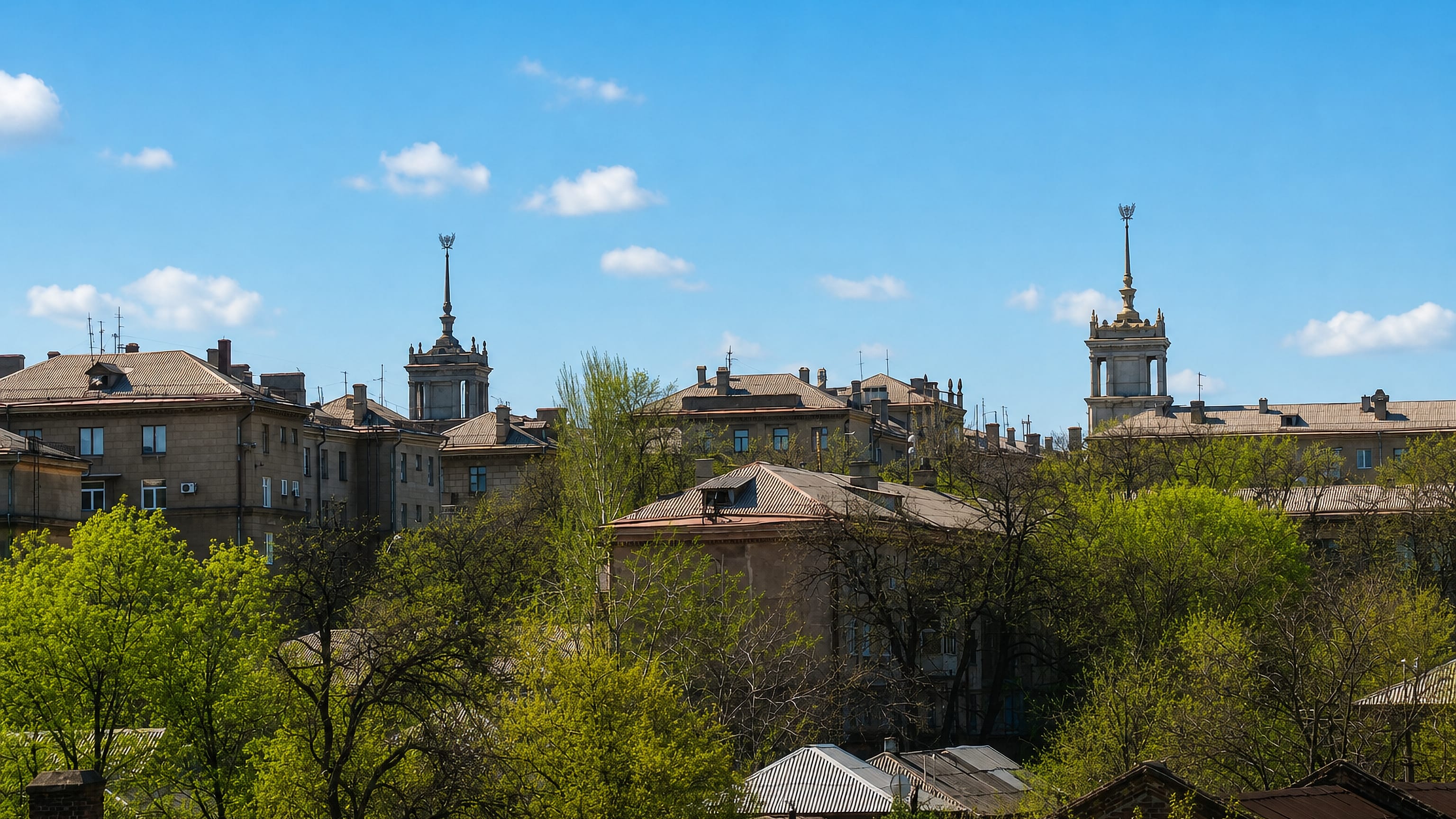
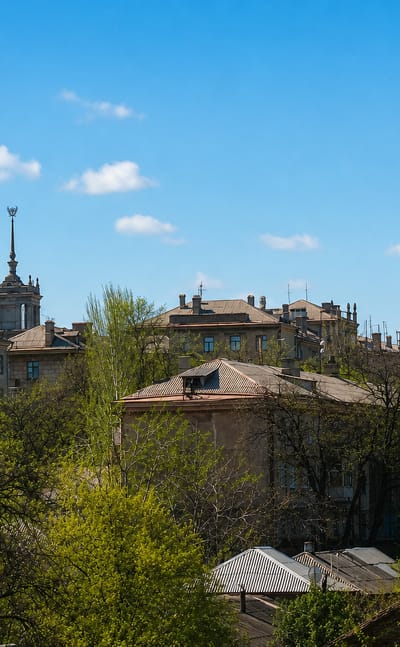
The main landmarks in Mariupol gather in the old centre above the Sea of Azov. Church spires define the skyline here, with the Church of the Nativity of the Virgin, the Church of the Dormition, and the Cathedral of the Holy Virgin Protection rising near the Houses with spire that line the central streets. Industry keeps its own record, in the Museum of the History of the Ilyich Plant, while the Azov Marine Museum holds the coast's story.
The Monument to Taras Shevchenko stands over a central square. Spires and steel frame the view.
What is the history of Mariupol?
Mariupol traces its recorded origins to the early tenth century, growing on the northern shore of the Sea of Azov. For long stretches its fortunes rested on the coast and its harbour, a trading point on the Azov that drew settlers to the water. The land around it, part of what became Donetsk Oblast, carried steppe and sea together.
Industry reshaped the city. The Ilyich Iron and Steel Works rose in the modern era and bound the town to iron and steel, a shift the Museum of the History of the Ilyich Plant sets down in detail. Older faith held on around it, kept by the Church of the Nativity of the Virgin and the Church of the Dormition through those changes.
A cultural memory endures in the Monument to Taras Shevchenko. Sea trade and steelmaking still braid through its past.
Where is Mariupol?
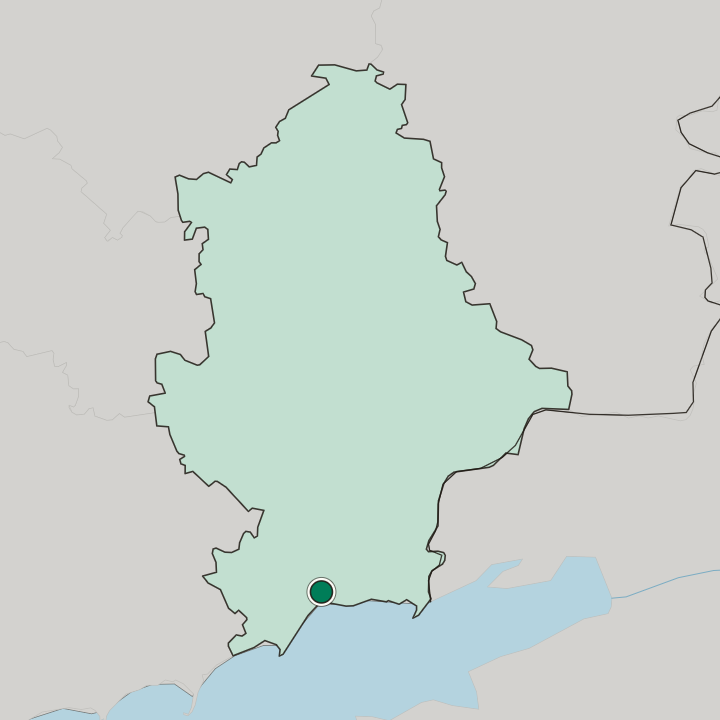
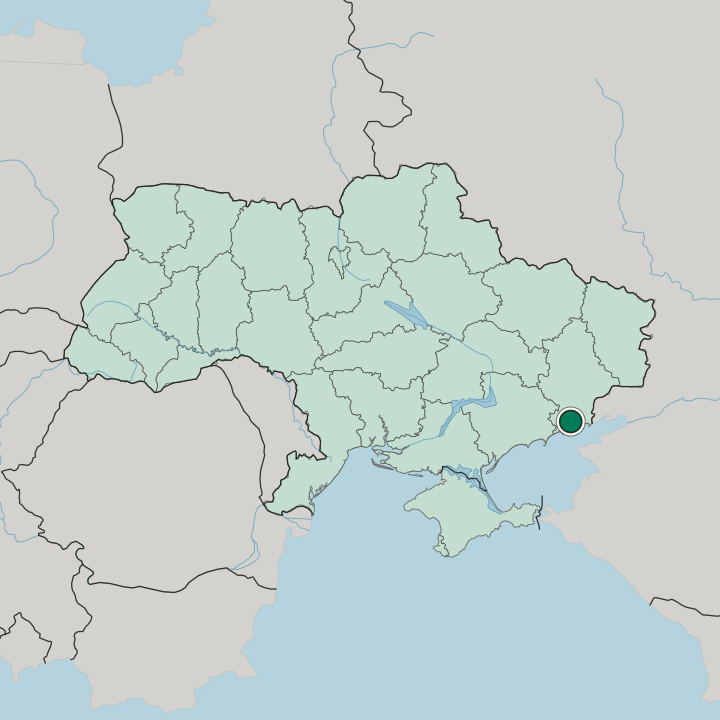
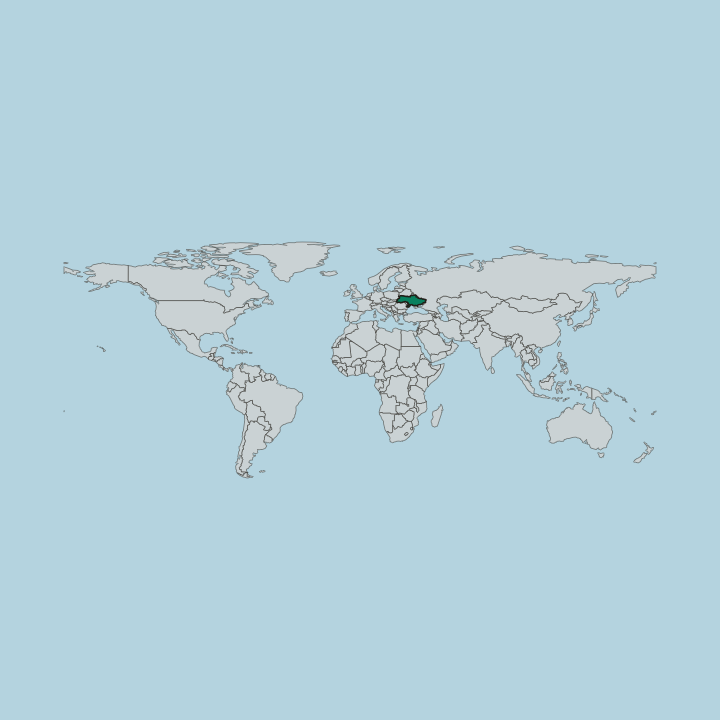
Mariupol lies on the northern coast of the Sea of Azov, within Donetsk Oblast. The city spreads back from a harbour on the shallow, warm waters of the Azov, where low ground rises gently from the shore and the steppe runs down to meet the sea. The sea sets its southern edge.
Open plains of Donetsk Oblast roll inland from the coast.
What is the climate of Mariupol?
Mariupol has a temperate climate moderated by the Sea of Azov. Summers along the Azov coast run warm and largely dry. Winters are cold but tempered by the shallow sea, which holds off the sharpest frost that reaches the open steppe of Donetsk Oblast.
Sea breezes cross the shore. The coast keeps the seasons milder than the plains behind it.
How do you get to Mariupol?
Mariupol sits at the meeting of coastal road and rail routes along the Sea of Azov. Its harbour has long served as a port on the Azov coast, tying the city to sea traffic across the water. Roads run inland to the wider network of Donetsk Oblast.
The port anchors the routes. Rail and coastal roads converge on the shore here.
More cities in Donetska Oblast
Updated October 2026