United States · Georgia
Where to Stay in Albany, Georgia
Albany, founded in 1836, is the seat of Dougherty County, standing on the Flint River as the principal city of the Albany metropolitan area.
Hotel links are affiliate links: booking through them may earn us a commission, at no extra cost to you. It never affects how places are ranked. How this works


Where to stay in Albany
Where visitors usually base themselves, and why.
The river decides it. Albany's older ground faces the Flint River, and a room near it puts the Flint RiverQuarium, Bridge House and the Thronateeska Heritage Center inside one short walk rather than three separate errands. Downtown is compact.
The Georgia Museum of Surveying and Mapping sits among the same blocks, which suits anyone who wants the museums done on foot. History pulls the other way. The Albany Civil Rights Institute and Mount Zion Baptist Church anchor a different part of the city, and travellers who come for the Albany Movement of 1961 usually want beds within reach of both.
Ray Charles has his park. Its statue belongs to the same day out, taken between the Flint River bank and the museum blocks that carry the Thronateeska name. Old houses mark the third choice.
Samuel Farkas House, the W.E. Smith House and the John A. Davis House stand on Albany's register of kept homes, and the streets around them are quieter than the Flint River frontage. Dougherty County holds no other city.
Beds outside Albany mean a drive in from the wider Albany metropolitan area, which only makes sense for a stay built around Southwest Georgia rather than around the city itself.
Find hotels in Albany
Direct booking searches for these neighbourhoods.
The Flint River blocks
The riverside end of downtown Albany, where Flint RiverQuarium, Bridge House and the Thronateeska Heritage Center share a few streets.Find hotels in The Flint River blockstrips built around the Albany Movement of 1961Around the Albany Civil Rights Institute
The part of the city holding the Albany Civil Rights Institute and Mount Zion Baptist Church, where the Albany Movement is recorded. Few places to stay nearby — book ahead.Find hotels in Around the Albany Civil Rights Institutequiet nights near the Samuel Farkas HouseThe kept-house streets
The residential grid carrying the Samuel Farkas House, the W.E. Smith House and the John A. Davis House, set back from the Flint River frontage. Rooms are few around here — worth securing early.Find hotels in The kept-house streetsHotel links are affiliate links: booking through them may earn us a commission, at no extra cost to you. It never affects how places are ranked. How this works
Things to do in Albany
Ranked by global recognition; descriptions from Wikidata (CC0).
Museums & Galleries
2- Albany Civil Rights Institute
- Georgia Museum of Surveying and Mapping
Churches & Religious Sites
1- Mount Zion Baptist Church Heritage
Landmarks & Notable Places
4- Bridge House Heritage
- John A. Davis House Heritage
- Samuel Farkas House Heritage
- W.E. Smith House Heritage
worth knowingacross 3 categories in Albany
About Albany
The Flint River runs through.
What is Albany known for?
Flint RiverQuarium builds its exhibits on that water, and the Albany Civil Rights Institute records the Albany Movement, the desegregation and voters' rights coalition formed in the city in 1961. Ray Charles was born in Albany. A park with a statue remembers him, and the Thronateeska Heritage Center gathers the city's history and science museums under a single name.
What are the main landmarks in Albany?
Eleven names carry the city. Thronateeska Heritage Center accounts for three of them on its own, since the Thronateeska Science Museum and the Thronateeska History Museum are listed separately beside the parent institution. Flint RiverQuarium is the water entry.
Surveying has a museum of its own in the Georgia Museum of Surveying and Mapping. Bridge House, the Samuel Farkas House, the W.E. Smith House and the John A. Davis House are the kept buildings, and Mount Zion Baptist Church stands with the Albany Civil Rights Institute at the civil rights end of the list.
What is the history of Albany?
Albany dates from 1836. The city grew on the Flint River in the part of Georgia that the Plantation Midlands name still marks, inside the Black Belt where cotton plantations spread across the Deep South. Dougherty County formed around it.
Albany is the only incorporated city there, which concentrated the county's commerce and its records in one place. Cotton set the frame. The Black Belt economy shaped who worked the land around Albany, and the whole nineteenth-century town answered to it long before the modern city took its present form.
The year 1961 changed the city's standing. African Americans in Albany founded the Albany Movement, a desegregation and voters' rights coalition, and through 1962 the campaign made the city one of the recognised fronts of the Civil Rights Movement. Mount Zion Baptist Church stands from those years.
The Albany Civil Rights Institute keeps the record beside it. Ray Charles was born here. The musician who wrote and played his own material is remembered in a park with a statue, one of the few Albany landmarks tied to a person rather than to a building.
Preservation did the rest. Bridge House, the Samuel Farkas House, the W.E. Smith House and the John A. Davis House stand among the buildings the city has kept, while the Thronateeska Heritage Center holds what its museums collected.
Where is Albany?
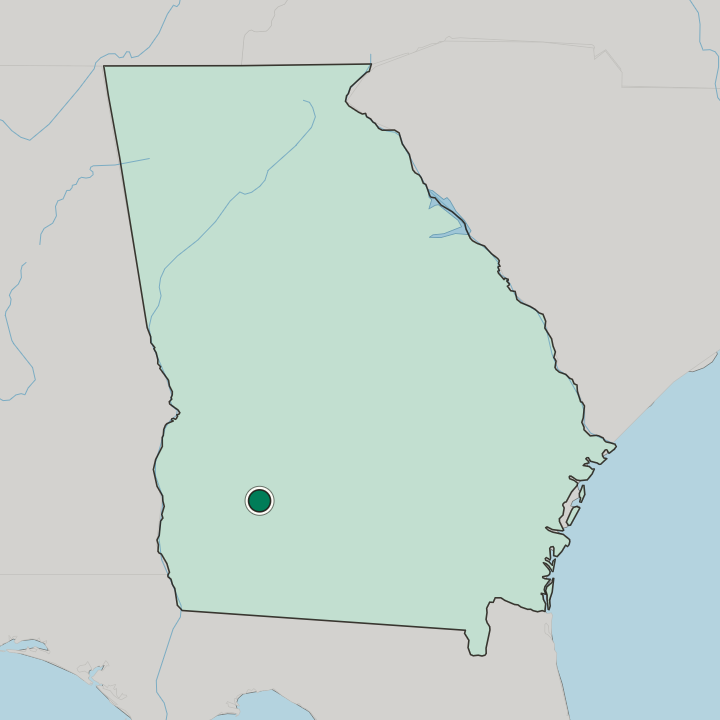
Albany spreads over about 145 square kilometres. The Flint River runs through the city, which sits in the country the Plantation Midlands name covers in Southwest Georgia, subtropical and well inside the northern hemisphere. Dougherty County surrounds it.
Flint RiverQuarium marks the water, and the Albany metropolitan area takes in the farmland beyond the city line.
What is the climate of Albany?
The Flint River keeps it humid. Albany lies in the subtropical band of the northern hemisphere, and its Deep South position in the Plantation Midlands gives the city long warm months instead of sharp seasons. There is no shortage of indoor stops.
Thronateeska Heritage Center, the Albany Civil Rights Institute and Flint RiverQuarium each take an afternoon out of the heat.
How do you get to Albany?
Albany is the principal city of its metropolitan area. Roads across Southwest Georgia converge on Dougherty County, and because Albany is the only incorporated city in it, arrivals from the surrounding farm country end up in the same downtown. The Flint River is the marker.
Bridge House and Flint RiverQuarium are the names to steer by once in, with the Thronateeska Heritage Center a short way from both.
Common questions
What is the best area to stay in Albany?
The Flint River blocks: walking to Flint RiverQuarium and Bridge House from the room. Around the Albany Civil Rights Institute: trips built around the Albany Movement of 1961. The kept-house streets: quiet nights near the Samuel Farkas House.
Good for
More cities in Georgia
Updated September 2026