United States · Georgia
Where to Stay in Macon, Georgia
Macon sits on the Ocmulgee River in Georgia, a music town laid out in 1823 beside the ancient earthworks of Ocmulgee Mounds National Historical Park.
Hotel links are affiliate links: booking through them may earn us a commission, at no extra cost to you. It never affects how places are ranked. How this works




Where to stay in Macon
How the choice of base plays out on the ground.
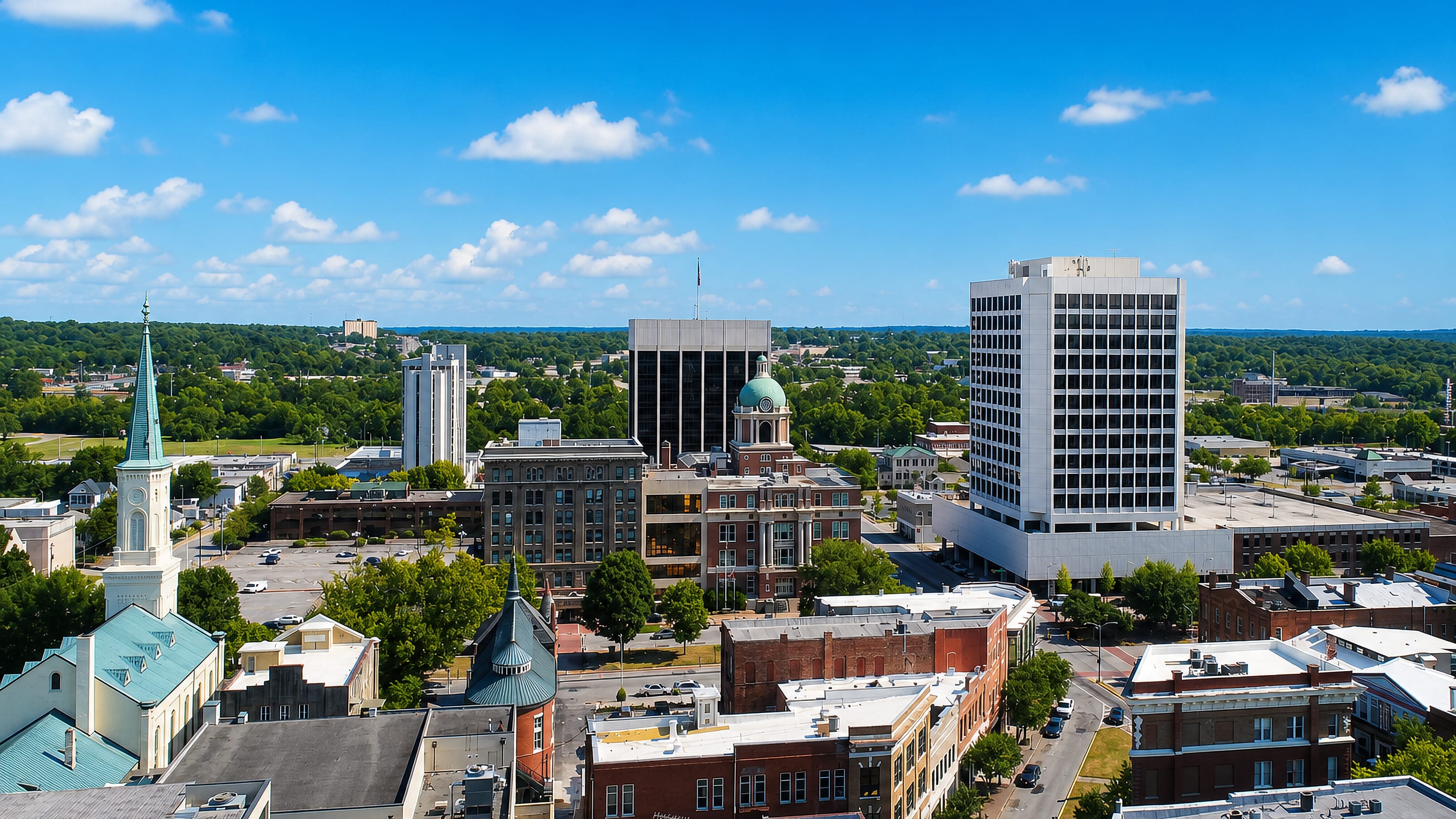
Where you stay in Macon turns on how close you want to be to the old downtown and the river. The historic core, near the Cannonball House and the Johnston-Felton-Hay House, gives the most central footing, with the music museums and antebellum homes within a short walk. Choose this ground if you want the Allman Brothers and Band Museum and the Sidney Lanier Cottage on foot.
Across the Ocmulgee River, the streets near Ocmulgee Mounds National Historical Park offer a quieter base close to the earthworks and the walking trails. Baseball crowds gather at Luther Williams Field on game nights, and rooms nearby suit visitors headed to a match. Each pocket sits a short drive from the next.
The city climbs from the water.
Find hotels in Macon
Direct booking searches for these neighbourhoods.
Historic downtown
Central streets by the Cannonball House and the Johnston-Felton-Hay House, the Allman Brothers and Band Museum close at hand.Find hotels in Historic downtownQuiet by the ancient earthworksRiverside near the mounds
A calmer base across the Ocmulgee River near Ocmulgee Mounds National Historical Park and its trails.Find hotels in Riverside near the moundsGame-night staysBallpark district
Rooms near Luther Williams Field for evenings at a match.Find hotels in Ballpark districtHotel links are affiliate links: booking through them may earn us a commission, at no extra cost to you. It never affects how places are ranked. How this works
Things to do in Macon
Ranked by global recognition; descriptions from Wikidata (CC0).
Museums & Galleries
2- Cannonball House Heritage
- Allman Brothers and Band Museum
Churches & Religious Sites
3- First Presbyterian Church Heritage
- Christ Church Heritage
- Temple Beth Israel
Castles & Historic Sites
1- Ocmulgee Mounds National Historical Park Heritage
Stadiums & Sports
3- Luther Williams Field Heritage
- Moye Complex
- Claude Smith Field
Landmarks & Notable Places
8- Johnston-Felton-Hay House Heritage
- Carmichael House Heritage
- Cowles-Woodruff House Heritage
- Thomas C. Burke House Heritage
- Holt–Peeler–Snow House Heritage
Show 3 more →
- Joseph and Mary Jane League House Heritage
- Hatcher-Groover-Schwartz House Heritage
- Collins-Odom-Strickland House Heritage
worth knowingacross 5 categories in Macon
About Macon
What is Macon known for?
Macon is known for its Southern music and the ancient mounds above the Ocmulgee River. The Allman Brothers and Band Museum keeps the story of the rock band that formed in the town. Across the water, Ocmulgee Mounds National Historical Park preserves earthworks raised long before the city.
The Tubman Museum tells the region's Black history. Song runs through it.
What are the main landmarks in Macon?
The main landmarks in Macon range from ancient mounds to antebellum mansions. Ocmulgee Mounds National Historical Park guards the earthworks across the river, while the Johnston-Felton-Hay House and the Cannonball House stand among the grand old homes downtown. The Allman Brothers and Band Museum and the Sidney Lanier Cottage honour the town's musicians and poets.
The Tubman Museum rounds out the roster. Old stone lines the streets.
What is the history of Macon?
Macon was laid out in 1823 on the west bank of the Ocmulgee River in central Georgia. People had lived on the site for thousands of years, and the earthworks of Ocmulgee Mounds National Historical Park stand from the mound-building cultures that came long before the town. The new settlement grew as a river port and market for the cotton grown across the surrounding land.
Planters raised grand homes such as the Johnston-Felton-Hay House and the Carmichael House. Trade on the water carried the early decades. The Civil War touched the town, and the Cannonball House takes its name from a shell that struck it during the fighting.
The poet Sidney Lanier was born in Macon, and the Sidney Lanier Cottage still stands from those years. In the following century the city became a cradle of Southern music, a story told at the Allman Brothers and Band Museum and the Georgia Sports Hall of Fame nearby. Congregations built the First Presbyterian Church and Temple Beth Israel as the streets filled.
The river shaped it all.
Where is Macon?
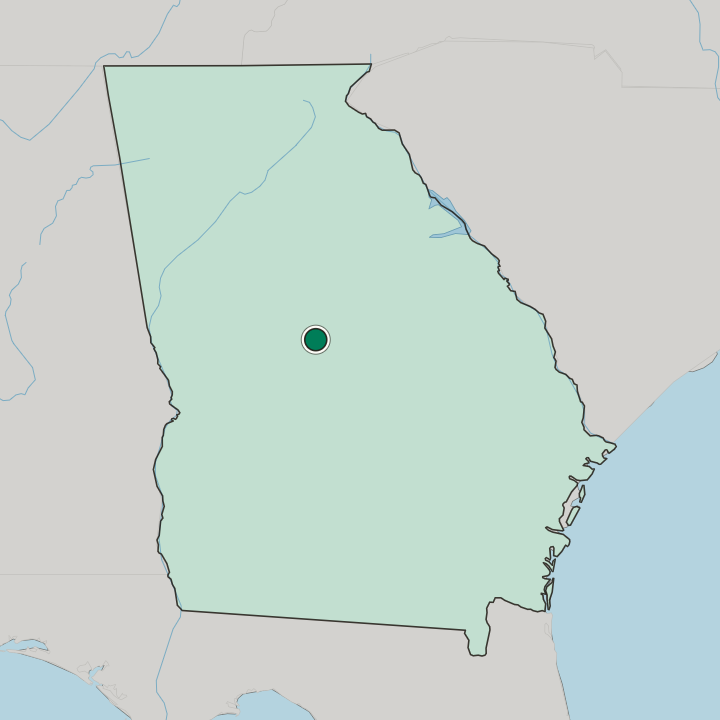
Macon stands on the Ocmulgee River where the rolling hills of central Georgia meet the flatter coastal plain. The old downtown climbs the west bank in low terraces, while the earthworks of Ocmulgee Mounds National Historical Park rise on the bluffs across the water. Pine woods and red-clay hills ring the built-up streets.
The river bends through town. Green presses to the edge.
What is the climate of Macon?
Macon has a humid subtropical climate typical of central Georgia. Summers turn long, hot, and humid along the Ocmulgee River, while winters stay mild with only rare frost. Spring comes early and warm, thick with blossom.
Autumn runs dry and pleasant. The river holds the summer heat.
How do you get to Macon?
Macon sits where two interstates cross near the Ocmulgee River in central Georgia, and most visitors arrive by car. A larger airport lies a short drive to the north, with the region's flights. Highways run out to the surrounding towns of the state.
Buses connect the wider region. Downtown is quick to reach.
Common questions
What is the best area to stay in Macon?
Historic downtown: Music museums and antebellum homes on foot. Riverside near the mounds: Quiet by the ancient earthworks. Ballpark district: Game-night stays.
Good for
More cities in Georgia
Updated September 2026