United States · Hawaii
Where to Stay in Honolulu, Hawaii
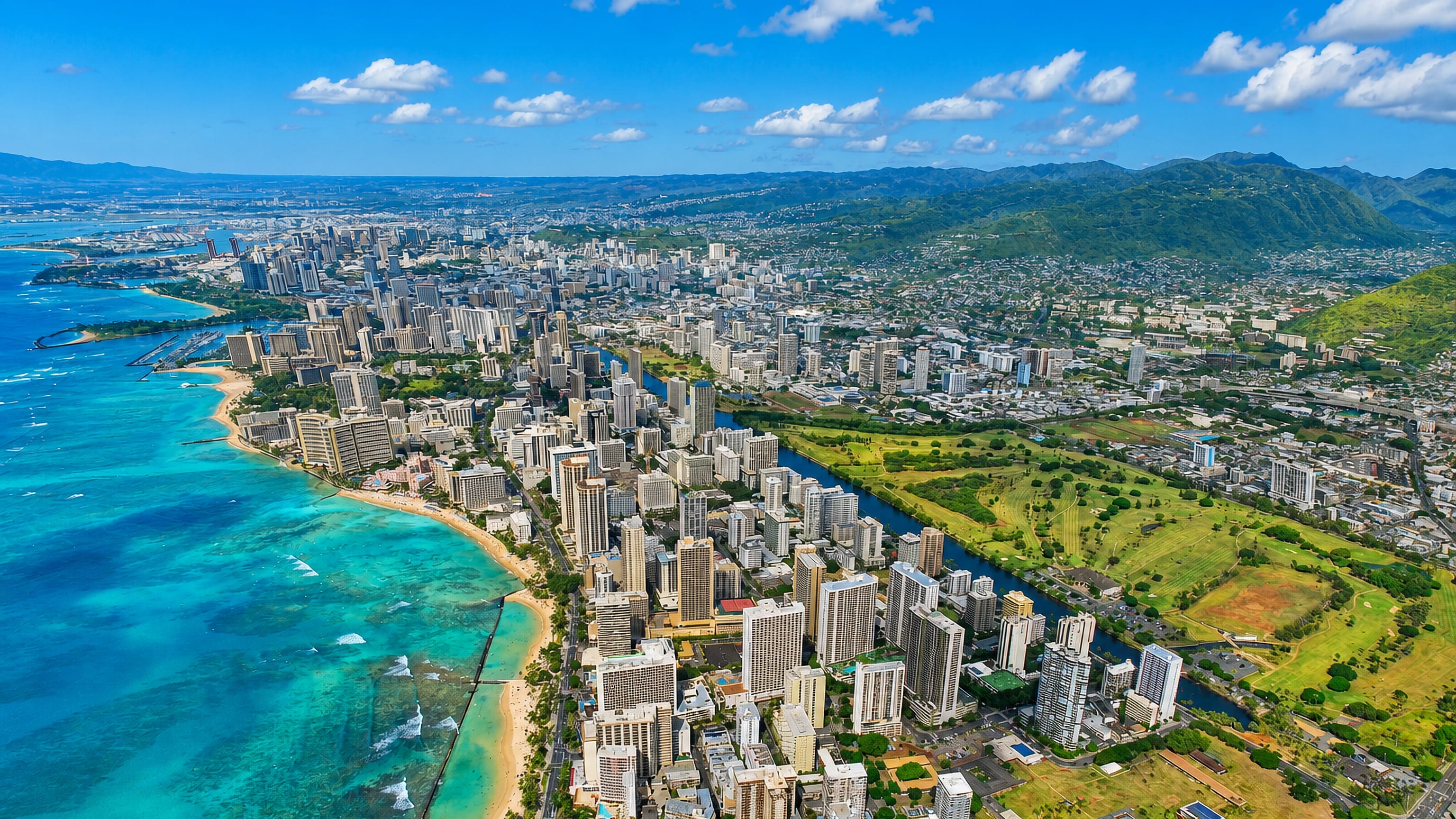
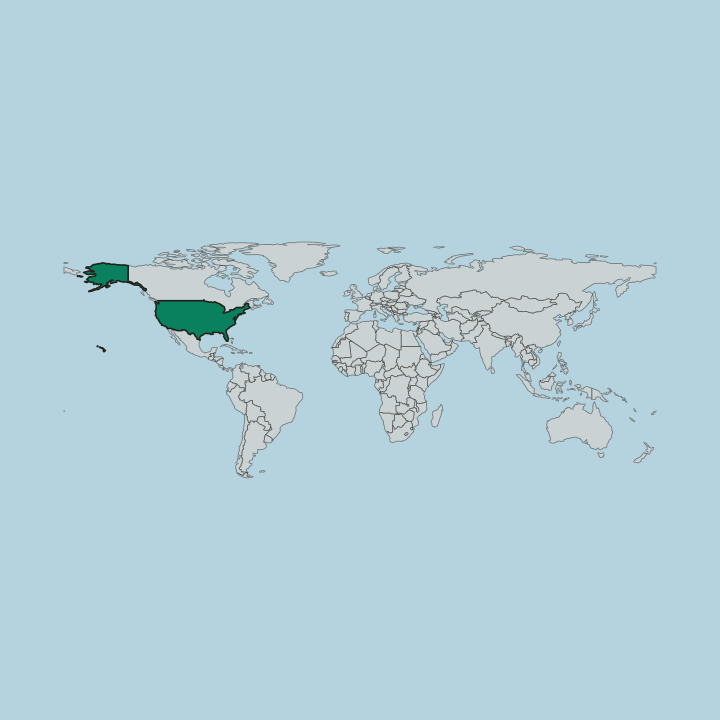
Honolulu is the capital of Hawaii on the southern shore of Oʻahu, a Pacific port city known for Waikiki Beach, the Aloha Tower, and Kawaiahaʻo Church.
Hotel links are affiliate links: booking through them may earn us a commission, at no extra cost to you. It never affects how places are ranked. How this works


Where to stay in Honolulu
Where you base yourself shapes the visit — here's the character of each area.

 HonoluluUnited States
Downtown
Downtown Honolulu holds Hawaii's governmental and commercial core, bounded by Nuʻuanu Stream, Ward Avenue, Vineyard Boulevard and Honolulu Harbor.Where to stay → HonoluluUnited States
Kakaʻako
Kakaʻako is a commercial and retail district of Honolulu, on the southern shore of Oʻahu between Ala Moana and Honolulu Harbor.Where to stay →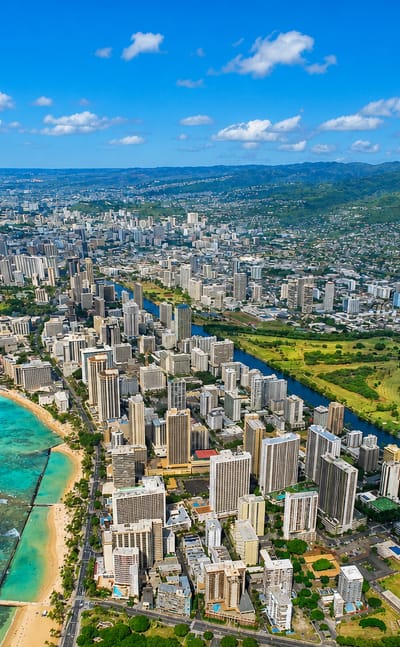 HonoluluUnited States
Ala Moana
Ala Moana is a commercial, retail and residential district of Honolulu, sitting between Waikīkī to the east and Honolulu Harbor to the west.Where to stay → HonoluluUnited States
Kaimukī
Kaimukī is a residential neighborhood of Honolulu, Hawaii, with Saint Patrick Catholic Church and the Lemon Wond Holt House on its streets.Where to stay → HonoluluUnited States
Ford Island
Ford Island is an islet in the center of Pearl Harbor, on Oahu in Hawaii, holding the USS Arizona Memorial and the battleship USS Missouri.Where to stay →Hotel links are affiliate links: booking through them may earn us a commission, at no extra cost to you. It never affects how places are ranked. How this works
Find hotels in Honolulu
Direct booking searches for these neighbourhoods.
Waikiki
The Waikiki Beach strip opens its hotels straight onto the warm Pacific surf and a palm-lined promenade along the southern shore of Oʻahu.Find hotels in WaikikiGuests wanting a civic base near the Aloha Tower and Kawaiahaʻo ChurchDowntown harbour
The downtown blocks around the Aloha Tower and Kawaiahaʻo Church put the historic harbour and the Honolulu Museum of Art within a short walk.Find hotels in Downtown harbourFamilies near the Hawaii Children's Discovery Center and the harbourKakaʻako waterfront
The harbour-side quarter around the Hawaii Children's Discovery Center gives families a shaded day out beside the working waterfront of Oʻahu.Find hotels in Kakaʻako waterfrontHotel links are affiliate links: booking through them may earn us a commission, at no extra cost to you. It never affects how places are ranked. How this works
Things to do in Honolulu
Ranked by global recognition; descriptions from Wikidata (CC0).
Museums & Galleries
3- USS Arizona Memorial Heritage
- Honolulu Museum of Art Heritage
- Mission Houses Museum
Churches & Religious Sites
3- Kaumakapili Church Heritage
- Church of the Crossroads Heritage
- Sacred Heart Church-Punahou Heritage
Castles & Historic Sites
1- Royal Mausoleum State Monument
Stadiums & Sports
1- Berwick Field
Landmarks & Notable Places
8- H. Alexander Walker Residence Heritage
- Alfred Hocking House Heritage
- John Guild House Heritage
- Lemon Wond Holt House Heritage
- George D. Oakley House Heritage
Show 3 more →
- R.N. Linn House Heritage
- George R. Ward House Heritage
- J.P. Mendonca House Heritage
worth knowingacross 5 categories in Honolulu
About Honolulu
What is Honolulu known for?
Honolulu is known first for Waikiki Beach, the shoreline that has drawn visitors to Oʻahu for generations. The Aloha Tower still marks the working harbour that made the city a Pacific gateway, while Kawaiahaʻo Church anchors its historic core. Museums fill out the picture.
The Honolulu Museum of Art and the Hawaii State Art Museum hold the state's leading collections. Above town, the National Memorial Cemetery of the Pacific gives the capital of Hawaii its most solemn landmark, set in a green volcanic crater.
What are the main landmarks in Honolulu?
Honolulu's landmarks run from harbour tower to hilltop memorial. The Aloha Tower stands over the working port, while Kawaiahaʻo Church and the Mission Houses Museum preserve the oldest built heritage of the Hawaiian capital. Art holds the centre.
The Honolulu Museum of Art and the Hawaii State Art Museum keep the state's leading collections downtown, joined by the newer Capitol Modern. High in a green crater above town, the National Memorial Cemetery of the Pacific gives the city a solemn hilltop monument, and the Royal Mausoleum State Monument records the resting place of Hawaiian royalty. Port, church, gallery, and crater tomb layer up across Honolulu.
What is the history of Honolulu?
Honolulu grew from a sheltered harbour on the southern shore of Oʻahu into the political and commercial heart of Hawaii. Its deep-water port drew Pacific trade and, in time, the ships that made it the islands' main gateway. The harbour built the city.
Missionaries and the Hawaiian monarchy left the earliest permanent marks on the young town. The Mission Houses Museum preserves the first Western buildings raised near the waterfront, while Kawaiahaʻo Church stands as a coral-block sanctuary tied to the islands' royal history. Royal ties run deep here.
The Royal Mausoleum State Monument holds the remains of Hawaiian kings and queens, a direct link to the era when Honolulu served as a royal capital and the seat of an island kingdom. Later the Aloha Tower rose above the piers to greet arriving ships, becoming the symbol of the port. Across roughly 177 square kilometres the modern city spread inland from that shoreline toward the volcanic ridges behind it.
That harbour on Oʻahu, more than any single ruler, shaped how Honolulu came to be.
Where is Honolulu?
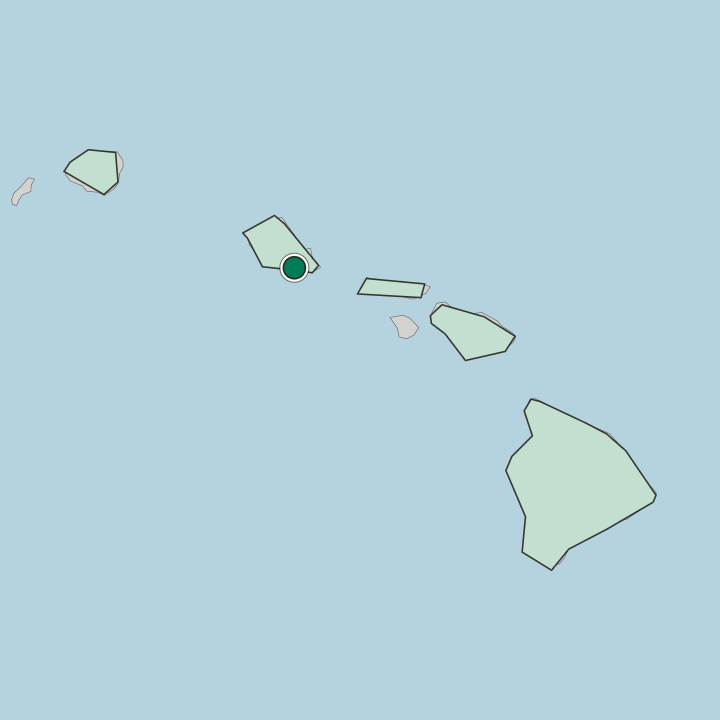
Honolulu sits on the southern shore of Oʻahu, the most populous island of Hawaii, facing the open Pacific. Across roughly 177 square kilometres its streets run from the beaches up into the steep volcanic ridges and green craters behind town. The ocean edges the whole southern side.
That narrow band between reef and mountain, warmed year-round by the tropical sea, gives the city its shape. Waikiki Beach fronts the water at its eastern end.
What is the climate of Honolulu?
Honolulu has a warm tropical climate softened by steady trade winds off the Pacific. Temperatures stay mild and even through the year, with a wetter, cloudier stretch in the cooler months and a drier, sunnier spell in summer. Rain falls heaviest on the ridges inland.
The trade winds cool the coast. Warm ocean water laps Waikiki Beach in every season, and the sharp volcanic slopes above Oʻahu catch far more of the passing showers than the sunlit shoreline below. Sunshine is the rule.
How do you get to Honolulu?
Honolulu is the main point of entry for Hawaii, served by the largest airport in the islands and by the cruise piers at its harbour. Most visitors arrive by air. From downtown near the Aloha Tower it is then an easy ride out to Waikiki Beach and the eastern shore.
The compact city is walkable in parts and simple to cross by road. Getting here means crossing the Pacific.
Common questions
What is the best area to stay in Honolulu?
Waikiki: Beach-first visitors who want Waikiki Beach and the Pacific surf at the door. Downtown harbour: Guests wanting a civic base near the Aloha Tower and Kawaiahaʻo Church. Kakaʻako waterfront: Families near the Hawaii Children's Discovery Center and the harbour.
Good for
Updated October 2026