United States · Mississippi
Where to Stay in Jackson, Mississippi
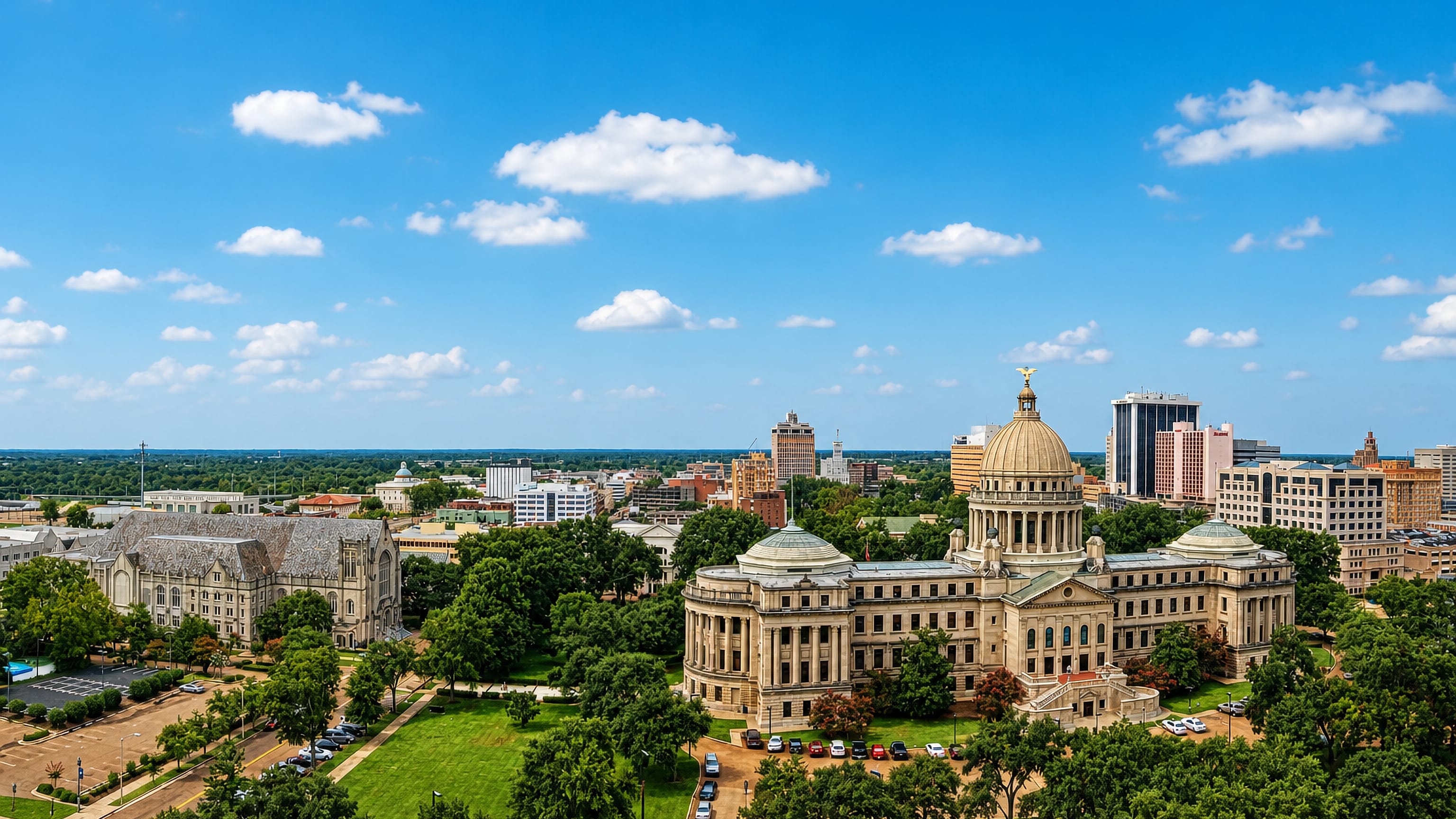
Jackson stands on the Pearl River in Mississippi, the state capital on wooded hills of the coastal plain, known for the Mississippi Civil Rights Museum.
Hotel links are affiliate links: booking through them may earn us a commission, at no extra cost to you. It never affects how places are ranked. How this works


Where to stay in Jackson
How the choice of base plays out on the ground.
Jackson sits on the hills above the Pearl River, and most visitors base themselves downtown or out toward the quieter northern suburbs. Begin your stay in the downtown blocks. The downtown blocks hold the state government buildings, the Mississippi Civil Rights Museum, and the Mississippi Museum of Art within easy reach on foot, the natural base for a first visit to the capital.
Jackson's own Cathedral of St. Peter the Apostle and a run of preserved antebellum houses stand among these streets. Stay here for the museums, the civic core, and evenings close at hand. North of the centre, the residential districts spread green across the hills, quieter and set back from the downtown traffic, with the Mississippi Museum of Natural Science among the parks.
The older neighbourhoods near the Manship House and The Oaks House Museum keep the low porches and gardens of the cotton-era town. The Pearl River winds along the eastern edge of the city. Its bluffs, the wooded hills, and the warm humid air set the whole feel of a stay in Jackson.
Find hotels in Jackson
Direct booking searches for these neighbourhoods.
Downtown capital core
The government blocks around the Mississippi Civil Rights Museum and the Mississippi Museum of Art, walkable and central to the capital.Find hotels in Downtown capital corea quieter green base off the downtown trafficThe northern hill suburbs
The wooded residential hills north of downtown near the Mississippi Museum of Natural Science, set back from the capital's civic bustle.Find hotels in The northern hill suburbsantebellum architecture and a quiet central stayHistoric streets near the Manship House
The old porched neighbourhoods around the Manship House and The Oaks House Museum, a step off the downtown core.Find hotels in Historic streets near the Manship HouseHotel links are affiliate links: booking through them may earn us a commission, at no extra cost to you. It never affects how places are ranked. How this works
Things to do in Jackson
Ranked by global recognition; descriptions from Wikidata (CC0).
Museums & Galleries
3- Mississippi Museum of Natural Science
- Mississippi Museum of Art
- International Museum of Muslim Cultures
Churches & Religious Sites
3- Calvary Baptist Church Heritage
- Cathedral of St. Peter the Apostle
- First Presbyterian Church in Jackson, Mississippi
Stadiums & Sports
1- Braddy Field
Landmarks & Notable Places
7- Manship House Heritage
- Sims House Heritage
- The Oaks House Museum Heritage
- Virden-Patton House Heritage
- Alex Williams House Heritage
Show 2 more →
- Dr. Jacob and Mrs. Daisy Reddix House Heritage
- Galloway-Williams House Heritage
worth knowingacross 4 categories in Jackson
About Jackson
What is Jackson known for?
Jackson is the capital and largest city of Mississippi, set on the bluffs above the Pearl River. Civil rights history runs deep here. The Mississippi Civil Rights Museum and the Mississippi Museum of Art anchor the cultural core downtown, and the Mississippi Museum of Natural Science records the state's landscape and wildlife.
Antebellum houses survive among the government blocks, among them the Manship House and The Oaks House Museum. The wooded hills of the coastal plain roll away from the river on every side of the city.
What are the main landmarks in Jackson?
Jackson's landmarks gather in the capital core. The Mississippi Civil Rights Museum tells the state's civil rights story downtown, paired with the Mississippi Museum of Art nearby, and the Mississippi Museum of Natural Science holds the state's natural collections. Jackson's own Cathedral of St. Peter the Apostle rises among the government blocks.
Preserved houses record the antebellum town across the older streets, among them the Manship House, The Oaks House Museum, and the Sims House with their columned porches. The Margaret Walker Center keeps the writer's papers and legacy.
What is the history of Jackson?
Jackson was founded in 1822 on the bluffs of the Pearl River, chosen as the new capital of Mississippi for its central place in the young state. It was laid out on a grid and named for a general of the day, and government buildings rose among the wooded hills of the coastal plain. Cotton wealth raised the antebellum houses, among them the Manship House and The Oaks House Museum, that still stand across the older streets.
The town grew as the seat of state power through the middle decades of the century. War and struggle marked its later history. Much of the city burned during the Civil War, and Jackson rebuilt on the same river bluffs in the decades that followed.
In the twentieth century it became a centre of the civil rights movement, and that story is now told at the Mississippi Civil Rights Museum downtown alongside the Mississippi Museum of Art and the natural science collections that rose to serve the growing capital. River, cotton, and struggle. Each shaped the city on the bluffs.
Where is Jackson?
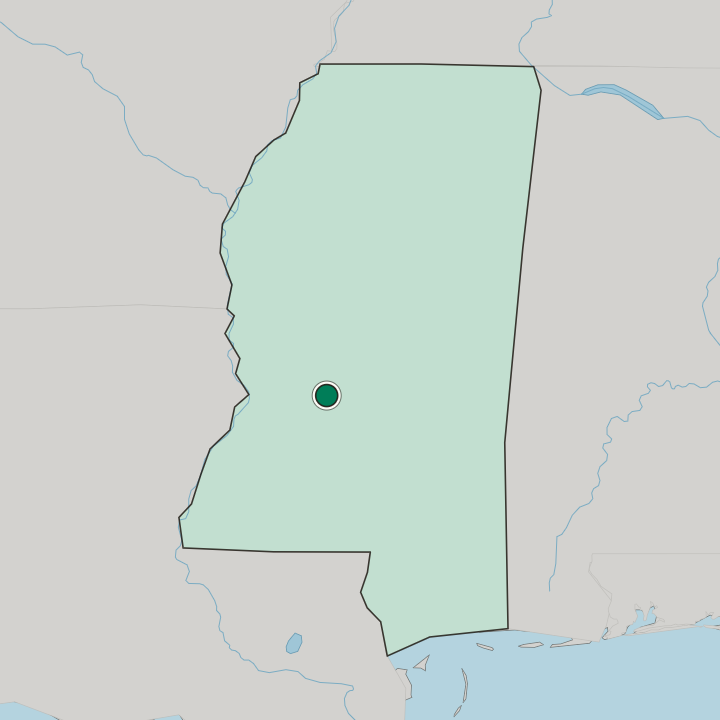
Jackson sits on the bluffs of the Pearl River in Mississippi, on the rolling hills of the coastal plain. The land here is uneven. Low wooded ridges rise and fall across the city, cut by creeks that drain down toward the river along the eastern edge.
The Pearl River winds south from Jackson through the pine country of the plain toward the Gulf. Red clay soil and thick woods cover the hills that ring the built-up ground.
What is the climate of Jackson?
Jackson has a warm humid subtropical climate, with long hot summers and short mild winters on the coastal plain. Summers run hot and wet. Warm moist air off the Gulf settles over the Pearl River hills for much of the year, bringing heavy thunderstorms and the risk of spring severe weather across the plain.
Winters stay mild, with only occasional frost and rare snow reaching the wooded ground. The humidity and the pine woods hold the heat over the river bluffs through the long warm season.
How do you get to Jackson?
Jackson sits at the crossing of the main interstate routes through Mississippi, reached by road from across the state and the wider South. Highways meet here. The interstates cross near the Pearl River and carry traffic north to Memphis and south toward the Gulf, while Jackson-Medgar Wiley Evers International Airport serves the city with regional and connecting flights.
Trains stop in Jackson on the north-south line down the middle of the state. River-bluff roads run out through the wooded hills in every direction.
Common questions
What is the best area to stay in Jackson?
Downtown capital core: first-time visitors walking to the Mississippi museums. The northern hill suburbs: a quieter green base off the downtown traffic. Historic streets near the Manship House: antebellum architecture and a quiet central stay.
Good for
More cities in Mississippi
Updated September 2026