United States
Mississippi, United States — Towns & Travel Guide
Mississippi is a Deep South state of the United States, edged by the Gulf of Mexico and the Mississippi River that names it.
Hotel links are affiliate links: booking through them may earn us a commission, at no extra cost to you. It never affects how places are ranked. How this works


Towns & cities in Mississippi
Pick a town or city — each links to where to stay.
 United States
Jackson
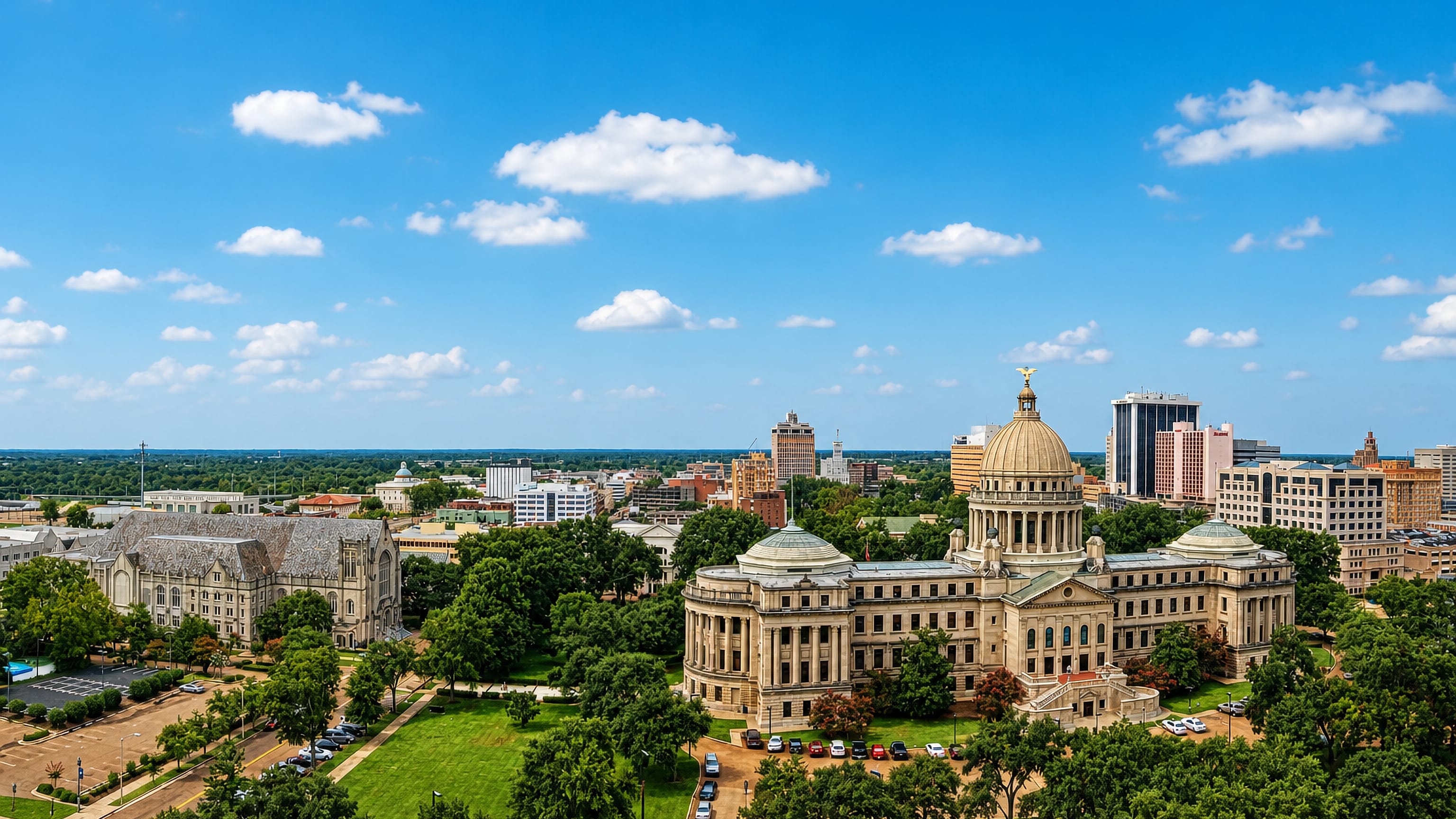
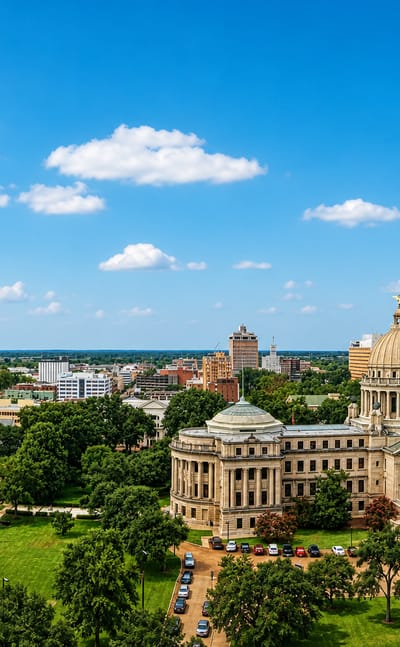
Jackson stands on the Pearl River in Mississippi, the state capital on wooded hills of the coastal plain, known for the Mississippi Civil Rights Museum.Where to stay →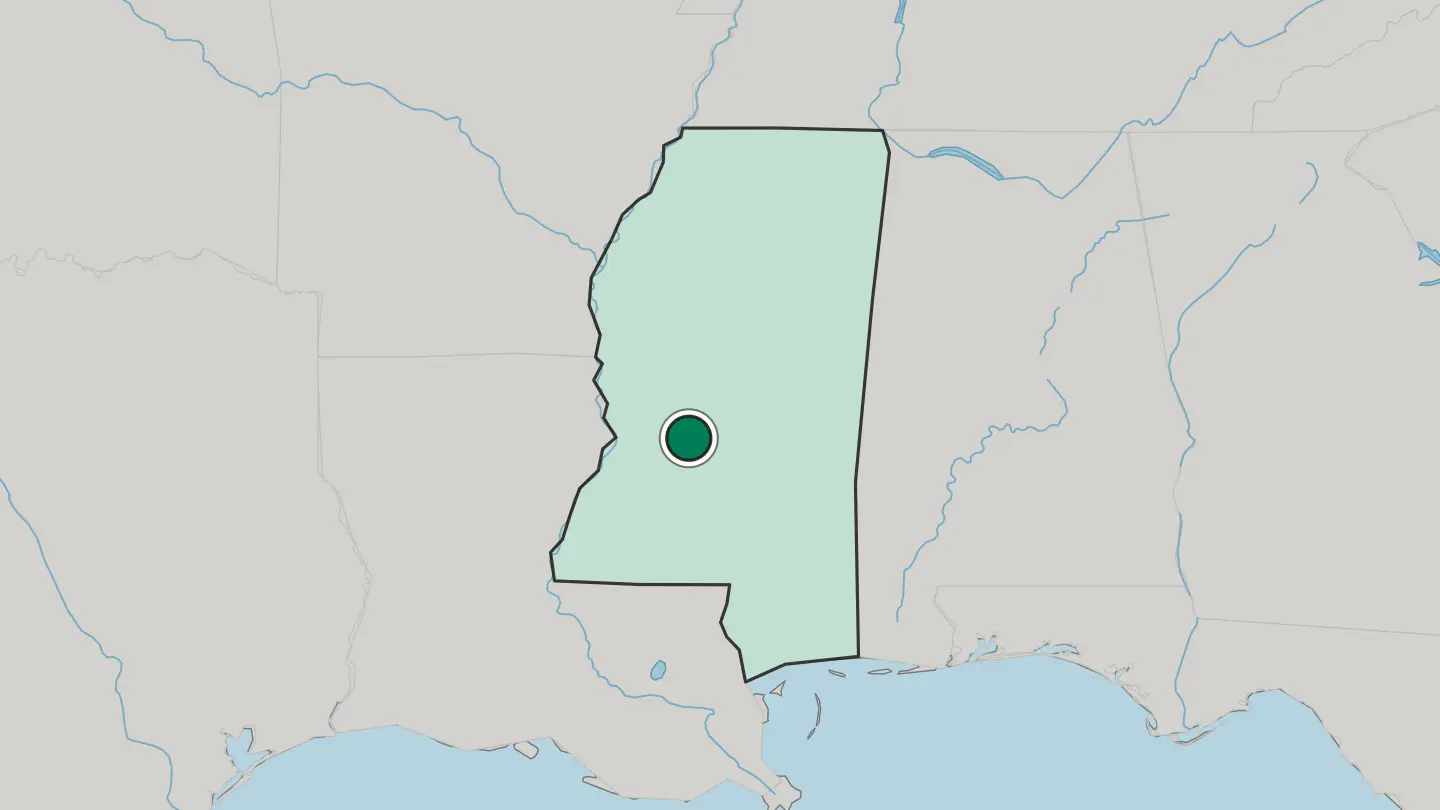
 United States
Gulfport
Gulfport works its port on the Mississippi Sound, a Harrison County seat of 1887 and the second-largest city in Mississippi.Where to stay →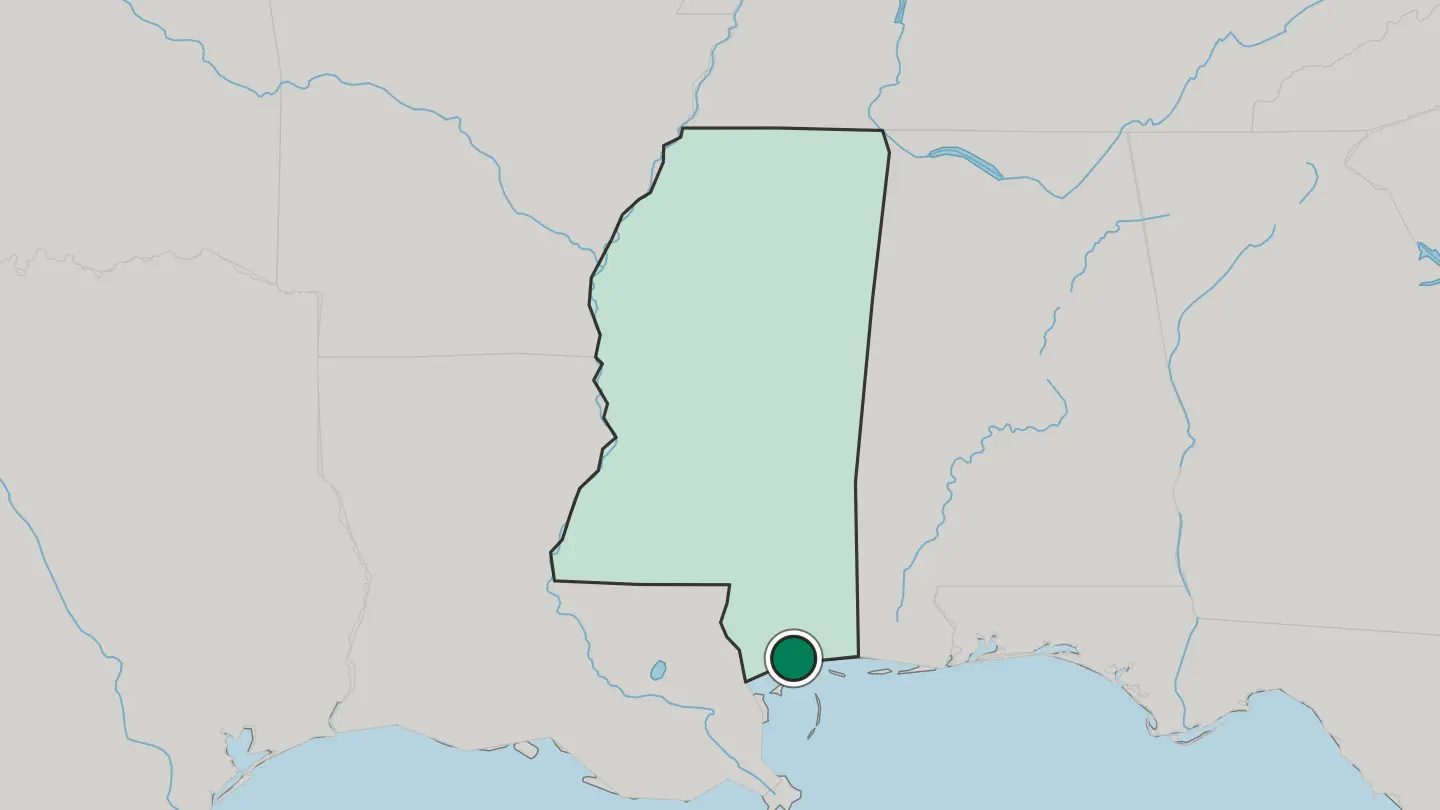
 United States
Southaven
Southaven sits in DeSoto County, Mississippi, the largest of Memphis's suburbs, named for the ground south of Whitehaven and dating from 1980.Where to stay →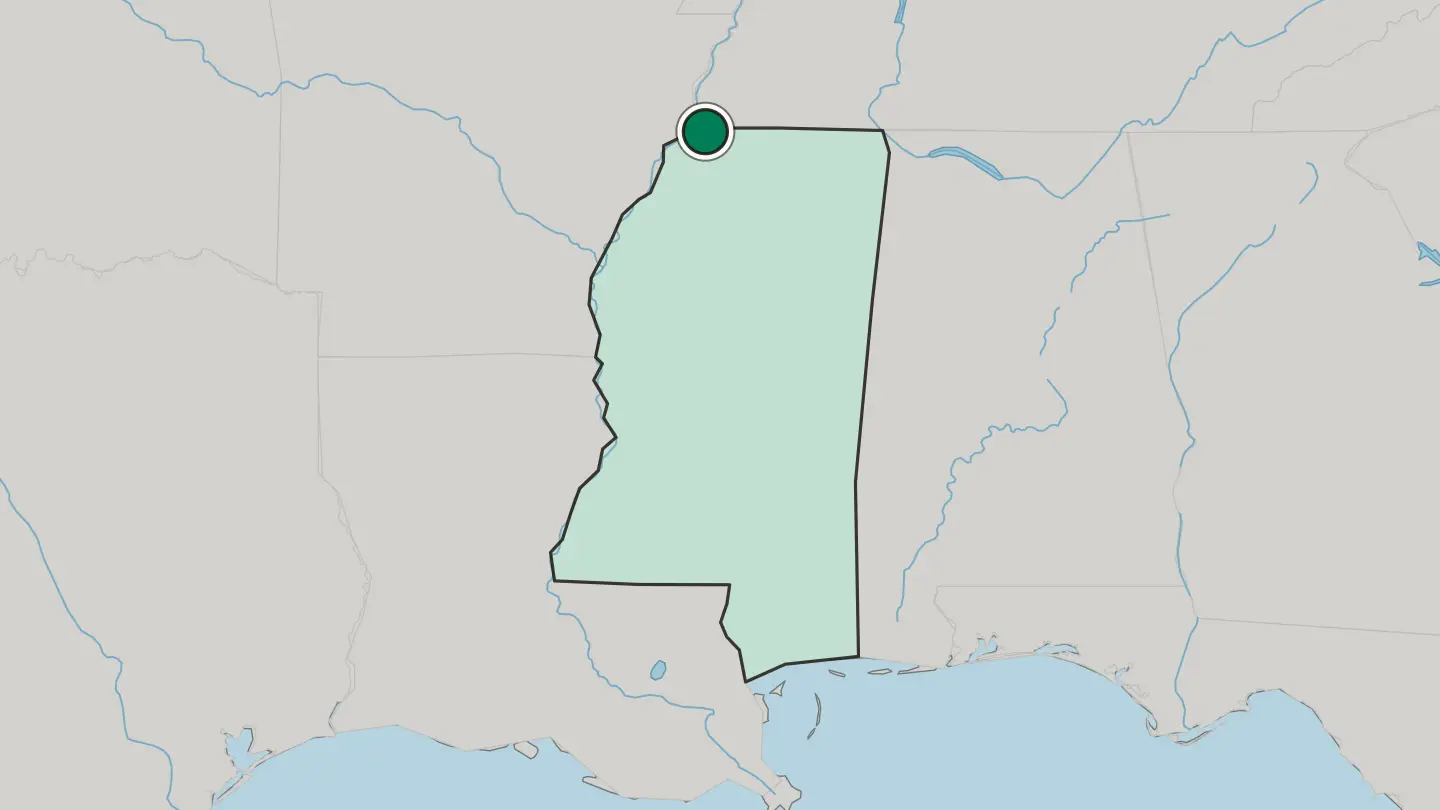
Hotel links are affiliate links: booking through them may earn us a commission, at no extra cost to you. It never affects how places are ranked. How this works
About Mississippi
Mississippi gave the world the blues.
What is Mississippi known for?
The music grew up in the cotton fields of the Mississippi Delta, the flat alluvial plain in the state's northwest, and Clarksdale still trades on that legacy at its crossroads and juke joints. Rock and roll traces back here too, since Elvis Presley was born in Tupelo before his family moved north. The Mississippi River runs the length of the western edge, carrying the barge traffic and the folklore that shaped the whole region.
Where is Mississippi?
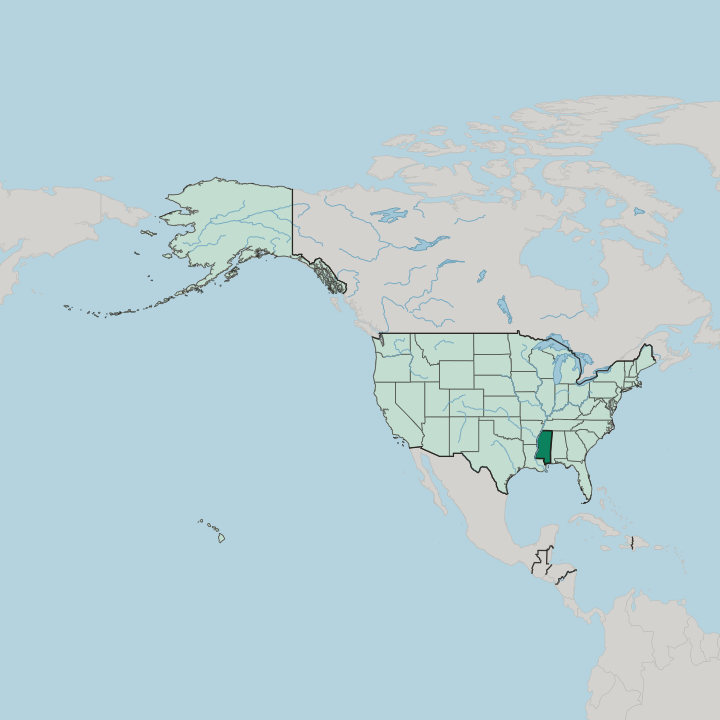
Mississippi lies in the Deep South, in the southeastern United States. Tennessee runs along the north, Alabama forms the eastern line, and Louisiana and Arkansas sit to the southwest and northwest. The southern edge opens onto the Gulf of Mexico. The western boundary is the Mississippi River, which the state was named for, and which drew the border with Louisiana and Arkansas as it wandered its old channels.
Rivers, floodplains, and the Gulf have shaped Mississippi far more than any hill. Rivers, floodplains and the Gulf shaped the land far more than any hill did. The famous ground is the Delta.
Properly the Yazoo-Mississippi Delta, it is a flat alluvial plain in the northwest, laid down by centuries of flooding between the Mississippi River and the Yazoo River, and its black topsoil made the cotton country that bred the blues. A belt of loess bluffs rises along the Delta's eastern rim, cut by deep ravines. South and east of that spread the Piney Woods and the Black Prairie, rolling pine and grassland that cover much of the interior.
Down on the coast, a low marshy shore faces the Gulf of Mexico, screened from the open sea by the barrier islands of Ship Island and Horn Island across the shallow Mississippi Sound. The highest ground, Woodall Mountain, stands away up in the northeast hills.
What is Mississippi like?
Culture here starts with sound. The Delta bred the blues on cotton plantations like Dockery Farms, and the music travelled out through Clarksdale to the rest of the world. The bluesman raised around Indianola carried that sound worldwide, and the interpretive centre there lays out the Delta's whole story.
Writers came out of the same soil. William Faulkner set his invented county in the hills around Oxford, and Eudora Welty wrote from Jackson, giving the state a literary weight far out of proportion to its size. Food is the other language.
Cooks lean on catfish from the Delta ponds, slow barbecue, and the hot tamales that turn up oddly in the cotton towns. The Gulf Coast throws its own festivals, with seafood and a French Catholic streak carried over from the old colonial days. Church runs deep.
This is the Bible Belt, and gospel singing feeds straight back into the blues and the soul music the state exported. Small-town manners and front-porch talk still set the pace. Once a year Natchez opens its antebellum houses to visitors, a ritual that shows how tightly the past is held here.
What is the history of Mississippi?
The first Mississippians were the Choctaw, the Chickasaw and the Natchez. French, Spanish and British rule followed in turn, and the colonial core took shape as the Natchez District on the bluffs above the river. Statehood came in 1817.
Cotton and slavery built the wealth of the twentieth state, and the Choctaw and Chickasaw were driven west along the Trail of Tears in the 1830s. Secession pulled it into the Civil War, and the fall of Vicksburg in 1863 cut the Confederacy in two. A hundred years on it turned into a bloody front line of the civil rights movement.
What is the climate of Mississippi?
The climate across Mississippi is humid subtropical. Summers are long, hot and heavy with humidity pushed up from the Gulf of Mexico, while winters stay short and mild, rarely holding a hard freeze for long. Rain falls through the year rather than in a wet season.
Thunderstorms are frequent. The real threat is tropical: hurricanes drive in off the Gulf of Mexico and strike the coast, and Hurricane Katrina flattened the shoreline around Biloxi and Gulfport in 2005.
How do you get to Mississippi?
Most travellers fly into Jackson, the state's main airport, or into Gulfport-Biloxi on the coast. Bigger hubs at Memphis and New Orleans sit just over the state line and feed a lot of visitors in by car. Interstates do the heavy lifting.
Interstate 55 runs north to south, Interstate 20 crosses east to west, and Interstate 10 hugs the Gulf Coast. Amtrak's City of New Orleans still rolls through the Delta on its way between the lakefront and the north, tracing the same route the blues once travelled.
Common questions
What is the best area to stay in Mississippi?
Jackson: a central base for touring Mississippi. Biloxi and the Gulf Coast: beaches and casino resorts on the Gulf. Natchez: antebellum mansions on the river bluff. Clarksdale: live Delta blues and juke joints. Oxford: literary Mississippi and the courthouse square.
Good for
More regions in United States
Updated September 2026