United States · North Dakota
Where to Stay in Grand Forks, North Dakota
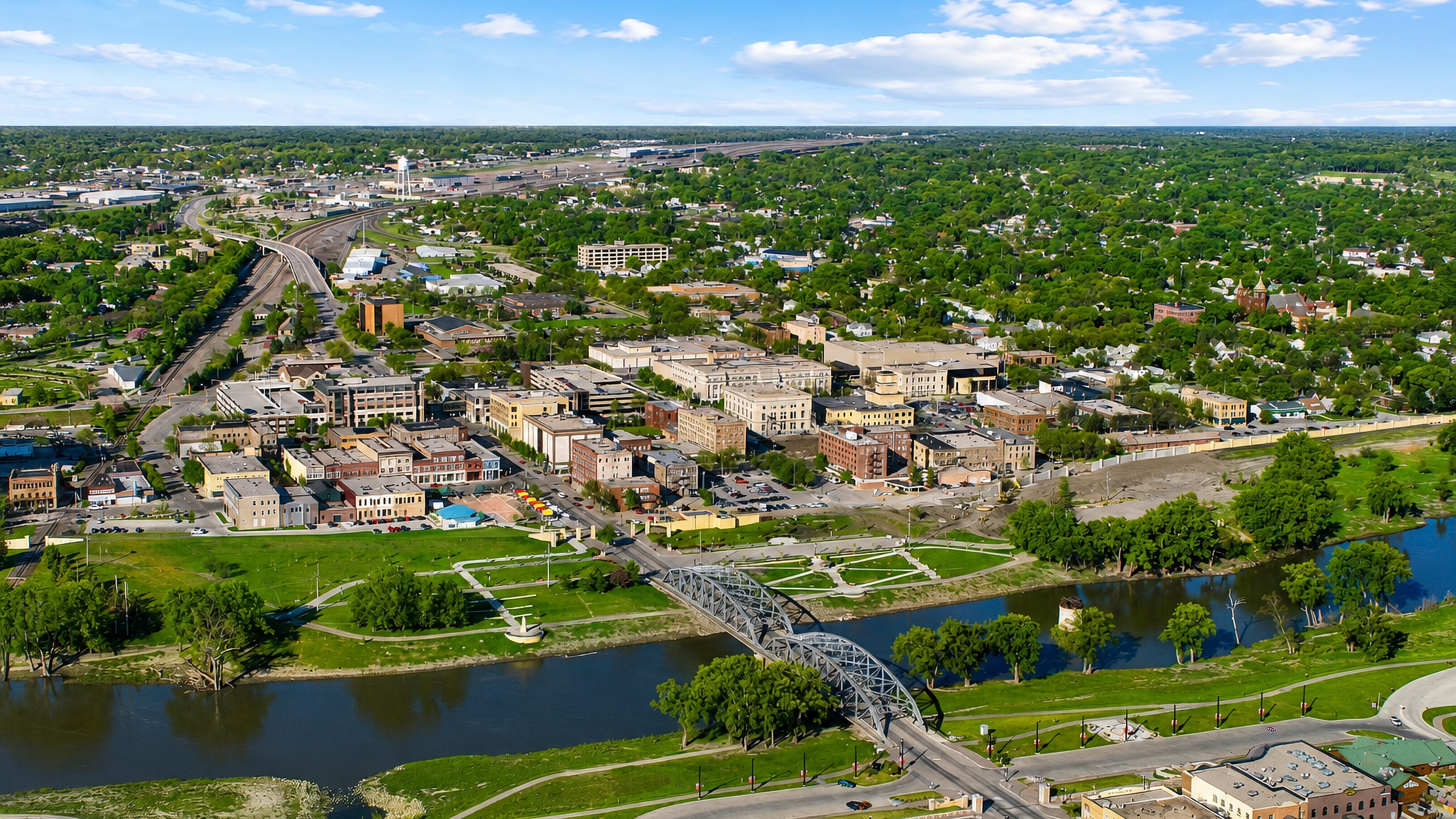
Grand Forks is the seat of Grand Forks County on the Red River, twinned with East Grand Forks across the water in Minnesota.
Hotel links are affiliate links: booking through them may earn us a commission, at no extra cost to you. It never affects how places are ranked. How this works


Where to stay in Grand Forks
Where the beds are, and what that means for the visit.
The Red River decides the halves. Grand Forks holds the North Dakota bank and East Grand Forks the Minnesota one, and a bridge crossing takes so little time that a bed booked on the wrong side of the water costs a traveller almost nothing. Riverside Drive runs the old line.
The House at 1648 Riverside Drive stands among the streets nearest the water, and the North Dakota Museum of Art sits close enough that a room in this part of town covers the river walk and the one gallery worth a detour in Grand Forks County. Game nights change the arithmetic. Memorial Stadium and Harold Kraft Memorial Field pull enough people into town that rooms near them go first, and a visitor arriving without a booking on such a weekend ends up looking across the river.
The church blocks stay quieter. United Lutheran Church and St. Michael's Church mark the part of Grand Forks where the walk to dinner is short and nothing much carries after dark, which suits anyone here for the gallery rather than for a fixture. Older houses line the same streets, the Dr. Henry Wheeler House and the Harriet and Thomas Beare House among them.
Beds in East Grand Forks fill last.
Find hotels in Grand Forks
Direct booking searches for these neighbourhoods.
Riverside Drive by the Red River
The House at 1648 Riverside Drive marks the oldest run of streets along the Red River, with the gallery a short walk onFind hotels in Riverside Drive by the Red RiverFixture weekends at Memorial Stadium or Harold Kraft Memorial FieldAround Memorial Stadium
Memorial Stadium and Harold Kraft Memorial Field empty the nearest rooms in Grand Forks County first whenever a fixture lands. Few places to stay nearby — book ahead.Find hotels in Around Memorial StadiumQuiet nights between United Lutheran Church and the Dr. Henry Wheeler HouseThe church blocks
United Lutheran Church and St. Michael's Church sit among the older Grand Forks streets where dinner is a short walk and evenings go silent. Lodging is scarce in this area; reserve in advance.Find hotels in The church blocksOverflow beds a bridge away from the Red River crossingEast Grand Forks, the Minnesota bank
East Grand Forks holds the Minnesota side of the Red River and takes the traffic Grand Forks itself cannot bed downFind hotels in East Grand Forks, the Minnesota bankHotel links are affiliate links: booking through them may earn us a commission, at no extra cost to you. It never affects how places are ranked. How this works
Things to do in Grand Forks
Ranked by global recognition; descriptions from Wikidata (CC0).
Museums & Galleries
1- North Dakota Museum of Art
Churches & Religious Sites
2- United Lutheran Church Heritage
- St. Michael's Church Heritage
Stadiums & Sports
2- Memorial Stadium
- Harold Kraft Memorial Field
Landmarks & Notable Places
4- Thomas D. Campbell House Heritage
- Dr. Henry Wheeler House Heritage
- Harriet and Thomas Beare House Heritage
- House at 1648 Riverside Drive Heritage
worth knowingacross 4 categories in Grand Forks
About Grand Forks
The flood of 1997 made the name known.
What is Grand Forks known for?
Water off the Red River overwhelmed Grand Forks and East Grand Forks together, and the recovery that followed is the single event most outsiders can attach to the city. Farming supplies the rest. Wheat and sugar beets come off the surrounding fields of Grand Forks County, while the North Dakota Museum of Art gives the place a cultural address that neither Fargo nor Bismarck can quite match.
What are the main landmarks in Grand Forks?
Nine entries make the register. The North Dakota Museum of Art is the one address a visitor would cross the state for, and Memorial Stadium and Harold Kraft Memorial Field carry the sporting half of the list between them. Houses take four places.
The Dr. Henry Wheeler House, the Harriet and Thomas Beare House, the Thomas D. Campbell House and the House at 1648 Riverside Drive record the households of the early streets, while United Lutheran Church and St. Michael's Church close it out.
What is the history of Grand Forks?
Grand Forks dates from 1870. The settlement grew where the Red River gave traffic a reason to stop, and the county that took its name from the place has run its business from here ever since. Farming set the terms.
Wheat and sugar beets off the flat ground around the town paid for the early streets, and the houses that survive from that period, the Dr. Henry Wheeler House and the Harriet and Thomas Beare House and the Thomas D. Campbell House, belonged to the families who profited first. The flood of 1997 is the dividing line. Water from the Red River came through Grand Forks and East Grand Forks at once, and the rebuilding that followed reshaped whole blocks on both banks of the boundary between North Dakota and Minnesota.
The ground offered no defence. All of this country lay under Lake Agassiz once, which is why the land runs flat for as far as anyone can see and why the water, when it rose, had nowhere at all to go. Institutions carried on regardless.
The North Dakota Museum of Art, Memorial Stadium and Harold Kraft Memorial Field belong to the later town, as do United Lutheran Church and St. Michael's Church on the older streets, and the seat of Grand Forks County has stayed where it was put.
Where is Grand Forks?
Lake Agassiz explains the flatness. Its bed underlies Grand Forks County for miles in every direction, which is why the horizon here sits low and unbroken and why the Red River, running slow through the middle of it, has so little fall to work with. Two towns share one crossing.
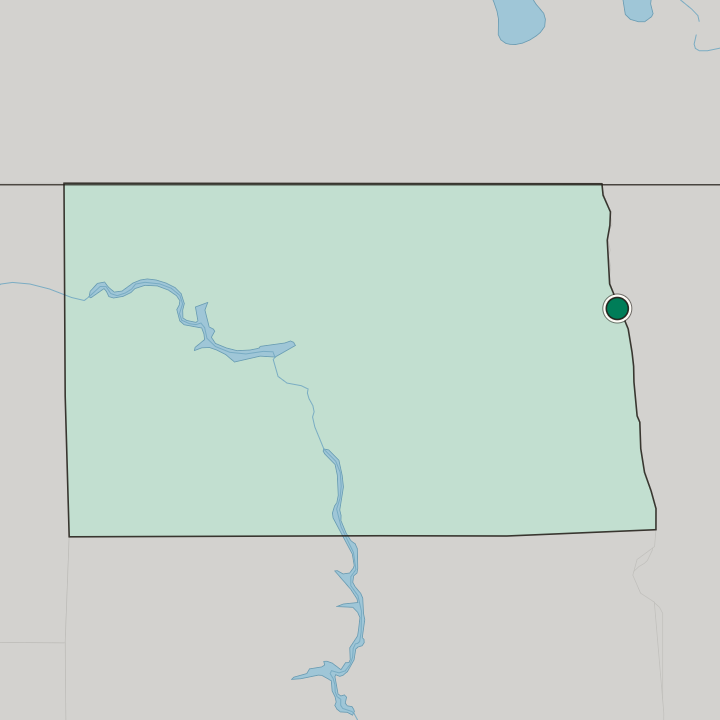
Grand Forks stands on the North Dakota side and East Grand Forks on the Minnesota side, close enough that Greater Grand Forks is treated as a single place.
What is the climate of Grand Forks?
Winter arrives off the open plain. Nothing between Grand Forks and the far side of Grand Forks County breaks the wind, so the cold that settles over the old Lake Agassiz bed in the dark months is the sort that shapes a visit rather than colours it. Spring is the risky season.
Meltwater gathering in the Red River gave the city its worst day in 1997, and the same thaw still governs how East Grand Forks and its twin watch the water each spring.
How do you get to Grand Forks?
Nearly everyone drives into Grand Forks. The bridges over the Red River tie Grand Forks to East Grand Forks so closely that crossing between North Dakota and Minnesota takes minutes, and the farm roads of Grand Forks County run straight for as long as the eye follows them. Crossings are the easy part.
Reaching Fargo or Bismarck means a serious drive across open country, and a car stays useful after arrival, since Memorial Stadium, Harold Kraft Memorial Field and the North Dakota Museum of Art sit well apart from one another.
Common questions
What is the best area to stay in Grand Forks?
Riverside Drive by the Red River: Slow mornings between the Red River bank and the North Dakota Museum of Art. Around Memorial Stadium: Fixture weekends at Memorial Stadium or Harold Kraft Memorial Field. The church blocks: Quiet nights between United Lutheran Church and the Dr. Henry Wheeler House. East Grand Forks, the Minnesota bank: Overflow beds a bridge away from the Red River crossing.
Good for
More cities in North Dakota
Updated September 2026