Uzbekistan · Sirdaryo Region
Where to Stay in Guliston, Sirdaryo Region
Guliston, capital of Sirdaryo Region in eastern Uzbekistan, was called Mirzachul before 1961 and is run as a district-level city.
Hotel links are affiliate links: booking through them may earn us a commission, at no extra cost to you. It never affects how places are ranked. How this works


Where to stay in Guliston
The practical side of choosing where to sleep.
Guliston lists no named quarters. The choice here is made against fixed points rather than districts, and the fixed points are the ones the heritage record supplies: the Statue of Alisher Navoi, the Gafur Gulyam monument, and Saint Nicholas Church (Gulistan). All three sit in the built-up core.
A district-level city of this scale keeps its rooms close to the administrative buildings and the through road, so the practical question is not which quarter but how far from that spine a given address sits. Distances are short either way. Water and rail mark the edge.
The Doʻstlik kanali runs through the area, and the metal bridge built to carry trains across it is itself on the heritage list, as is the Suv saqlash minorasi, a water tower that outlived its job. That combination suits you if you are working across Sirdaryo Region and want a bed in the regional seat instead of a village stop. Book before arriving.
Guliston has no quarter whose name a booking site would recognise, so the address is worth confirming with the property rather than inferred from a map pin, and the Gafur Gulyam monument works better than a street name when directing a driver.
Things to do in Guliston
Ranked by global recognition; descriptions from Wikidata (CC0).
Churches & Religious Sites
1- Saint Nicholas Church (Gulistan)
Castles & Historic Sites
8- Statue of Alisher Navoi Heritage
- Abu Ali Ibn Sino Heritage
- Alisher Navoiy Heritage
- Fyodor Nishurin Heritage
- Nikolay Svinarchuk Heritage
Show 3 more →
- Ulkan-Soylik Heritage
- Joʻraxon Usmonov Heritage
- Andrey Shukin Heritage
worth knowingacross 2 categories in Guliston
About Guliston
The record carries two former names.
What is Guliston known for?
Guliston serves as the administrative seat of Sirdaryo Region, and the public heritage record kept for it runs unusually long for a city of this size: twenty-five listed statues, buildings and busts. The Statue of Alisher Navoi anchors that list, alongside Saint Nicholas Church (Gulistan). Behind them sit the Russian-named survivors, among them Chernyayevning sobiq uy joyi and Alekseyevskiyning sobiq mehmonxonasi, a house and a hotel that the list files as former.
What are the main landmarks in Guliston?
Twenty-five entries carry Guliston in the heritage record. Saint Nicholas Church (Gulistan) and the Former Alexeyevskiy church are the two religious buildings on it, and the word former in the second name is the record's only comment on what became of it. People make up most of the rest.
Elena Stempkovskaya, Ivan Gorbunov, Fyodor Nishurin and Joʻraxon Usmonov each have a monument, while Abu Ali Ibn Sino and Alisher Navoiy stand in for the older canon and Ulkan-Soylik appears with no explanation attached.
What is the history of Guliston?
The record dates the settlement to 1801. For most of the following century and a half the place was known as Mirzachul, and the change to Guliston is recorded at 1961, which makes the working name younger than a great many of the buildings the heritage list protects. A second former name sits in the same entry: Kayrokkum, given as the form in use until 2015.
Names here have moved more than the city has. Sirdaryo Region took its seat here, and the district-level city that resulted is administered as one unit rather than split into boroughs. The oldest fabric carries Russian names.
Alekseyevskiyning sobiq mehmonxonasi and Alekseyevskiyning sobiq uy-joyi repeat one surname across a hotel and a house, Chernyayevning sobiq uy joyi adds a second, and the Former Alexeyevskiy church rounds out the Russian-period entries the list preserves by name alone. The twentieth century left memorials instead of buildings. Askarni urushga joʻnatish haykali marks the sending of soldiers to war, and the record adds Volfas Vilenskiy, Aleksandr Sidorov, Nikolay Svinarchuk and Turgʻun Ahmedov as monuments of their own.
Not one of them carries a date in the record. Engineering is remembered too, in the Suv saqlash minorasi and in the metal bridge thrown across the Doʻstlik kanali for the trains.
Where is Guliston?
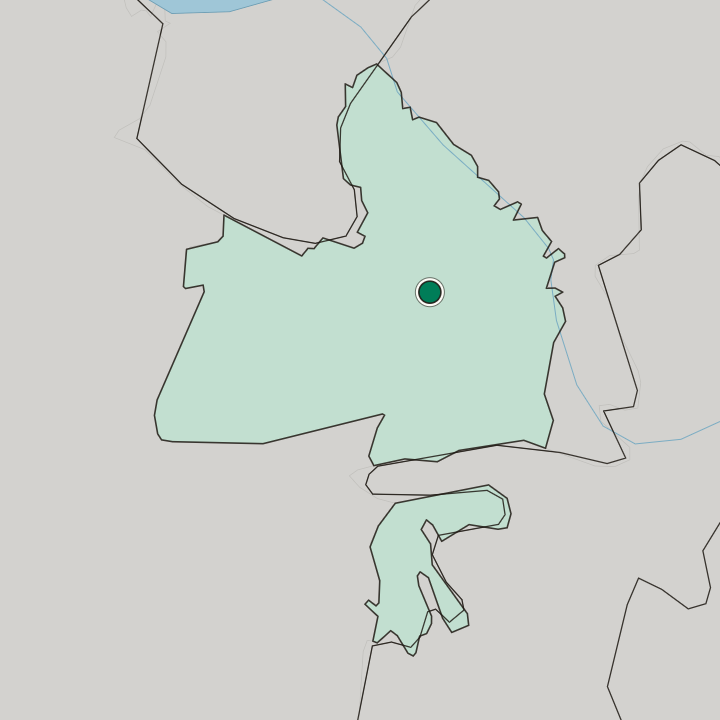
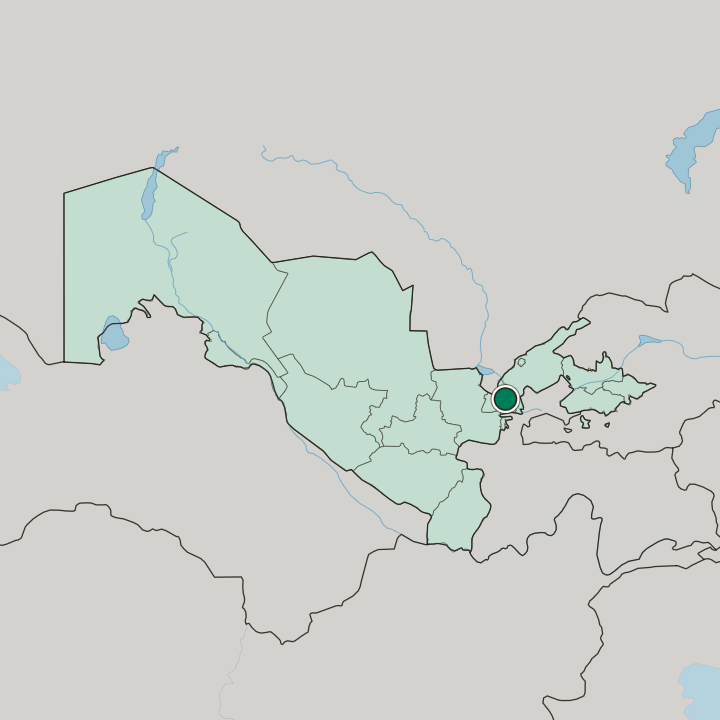
Guliston covers roughly twenty square kilometres of eastern Uzbekistan, well inland, with no coast and no mountain range recorded against it. Sirdaryo Region surrounds it on every side. The one water feature the record names is the Doʻstlik kanali, an irrigation channel significant enough that the bridge carrying the railway over it earned a heritage listing of its own.
Ulkan-Soylik sits in the same list, unexplained.
What is the climate of Guliston?
No sea reaches this part of Uzbekistan. Guliston sits deep in the interior of Sirdaryo Region with nothing larger than the Doʻstlik kanali beside it, and an irrigation channel carries water without doing anything to soften the air above it. The record holds no measurements at all.
What follows is structural rather than numerical: an inland Central Asian city this far from open water takes its weather from the continent, so a traveller does better packing for both ends of the year than trusting a single seasonal average.
How do you get to Guliston?
Rail reaches Guliston. The heritage record lists a metal bridge built to carry trains over the Doʻstlik kanali, which is the clearest evidence in the file that a working line runs through the city rather than past it. Road covers the rest, since Sirdaryo Region administers itself from here and regional traffic converges accordingly.
No airport appears anywhere in the record. Saint Nicholas Church (Gulistan) and the Statue of Alisher Navoi are the two fixed points worth naming to a driver.
Good for
Updated October 2026