Uzbekistan: Regions, Cities & Travel Guide
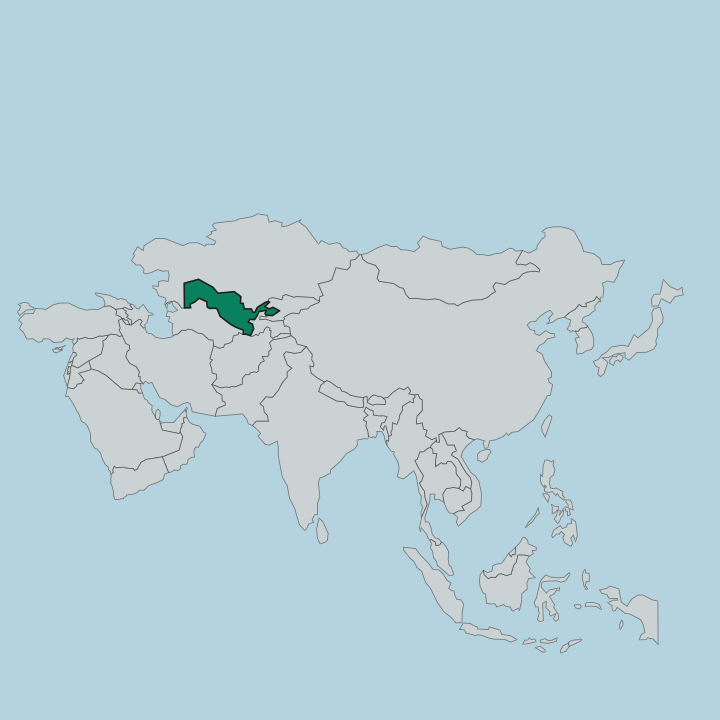
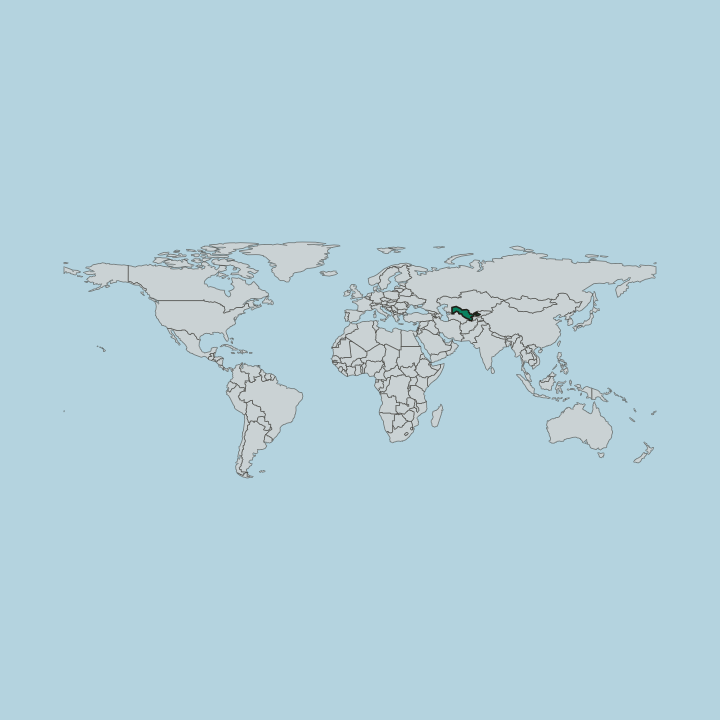
Uzbekistan is a doubly landlocked country in Central Asia, a historic Silk Road land bordered by Kazakhstan, Afghanistan, and Turkmenistan.
Hotel links are affiliate links: booking through them may earn us a commission, at no extra cost to you. It never affects how places are ranked. How this works


Top destinations in Uzbekistan
Cities to start from, then drill into areas and hotels.
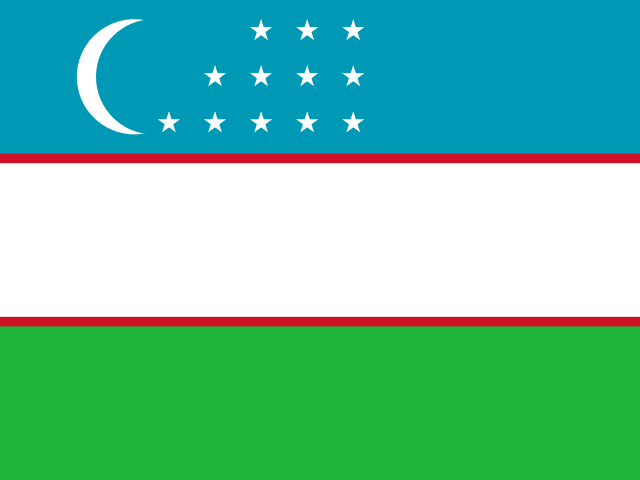 Uzbekistan
Samarkand
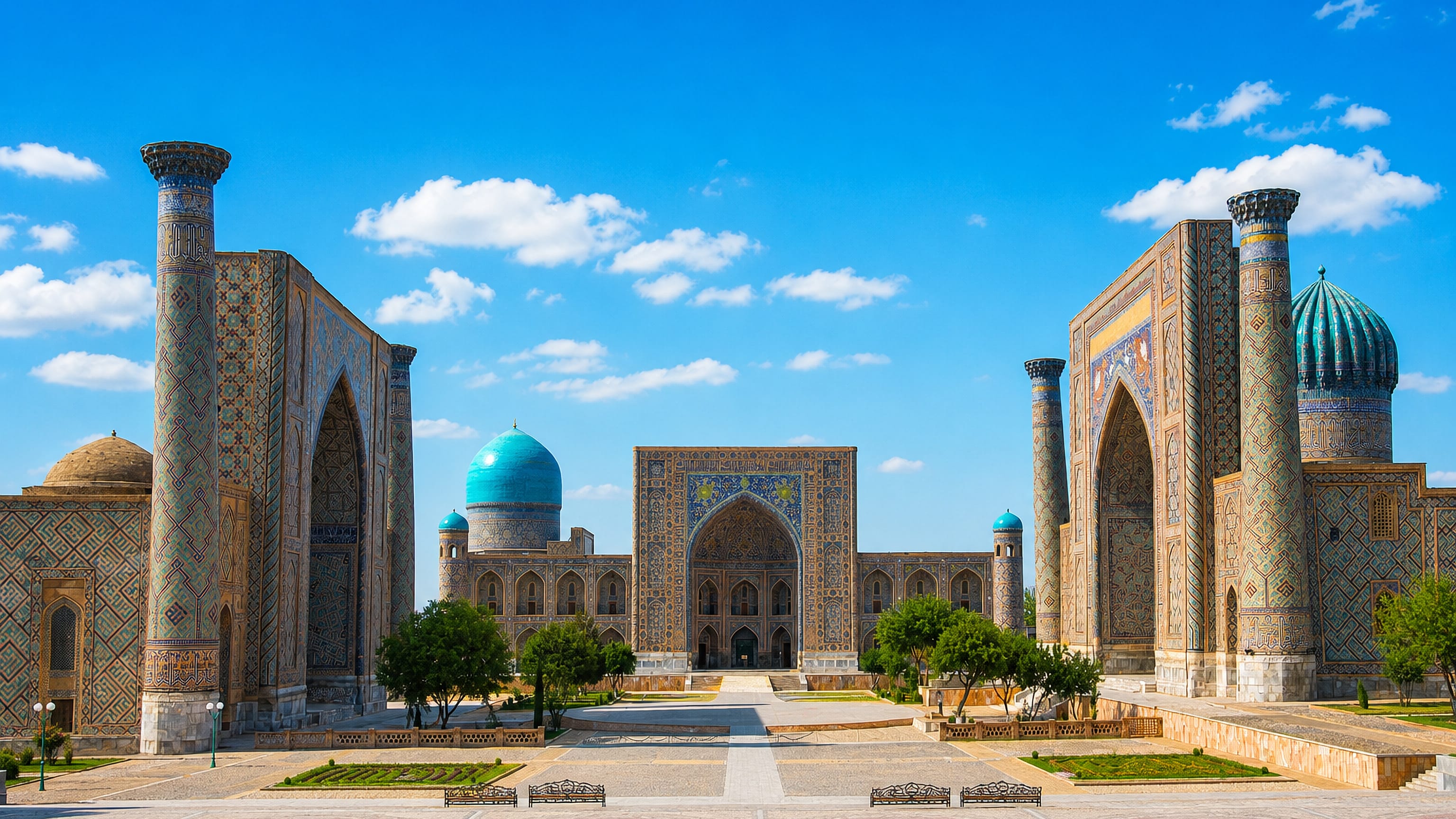
Turquoise domes and tiled minarets crown Samarkand, a Silk Road city in the Samarkand Region of Uzbekistan, known for its Old Town and ancient Afrasiyab.Where to stay →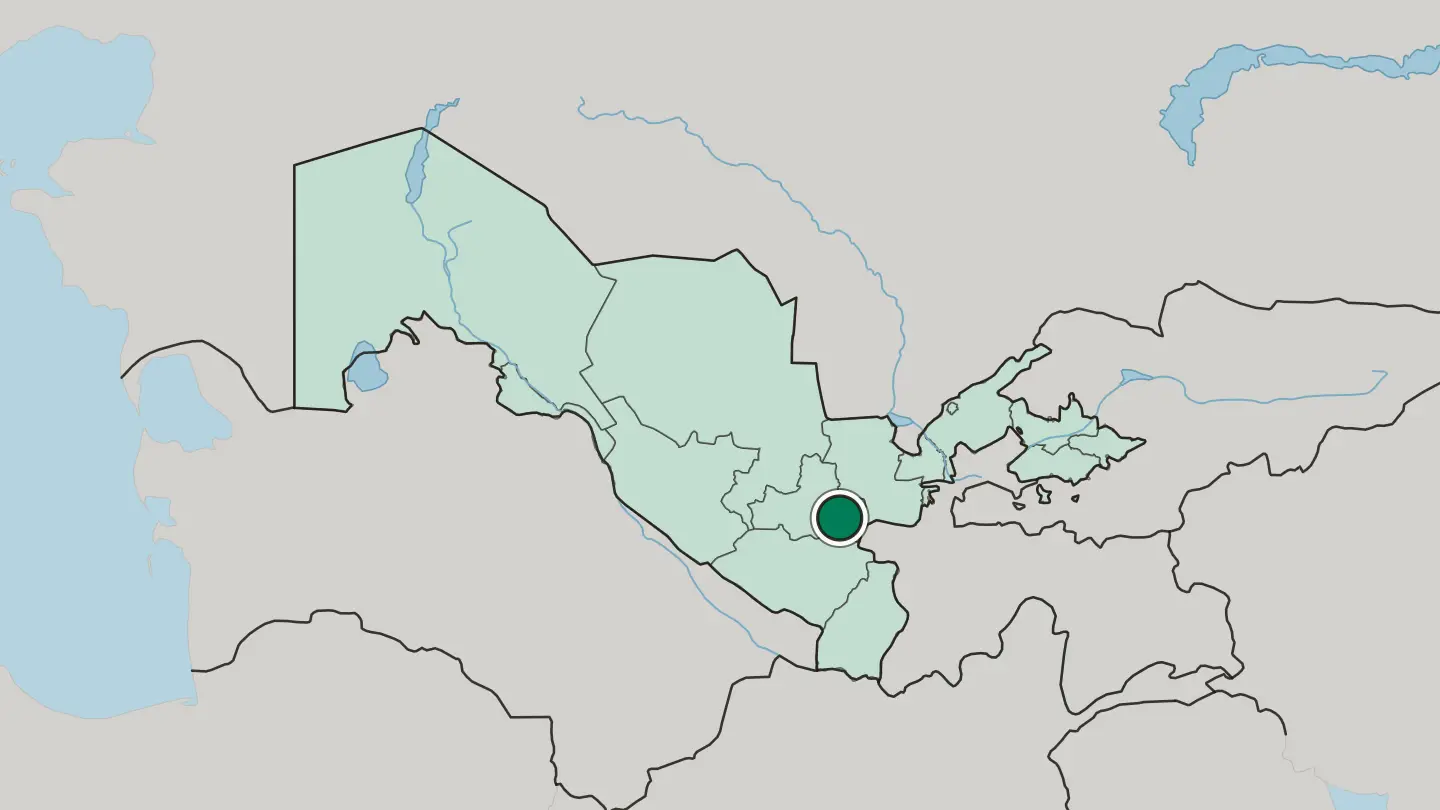
 Uzbekistan
Tashkent
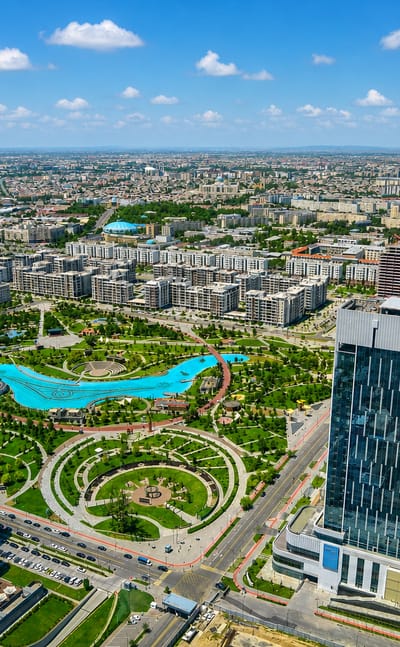
Tashkent is the capital of Uzbekistan, an ancient Silk Road city rebuilt in broad Soviet boulevards around the Kukeldash Madrasah.Where to stay →
 Uzbekistan
Bukhara
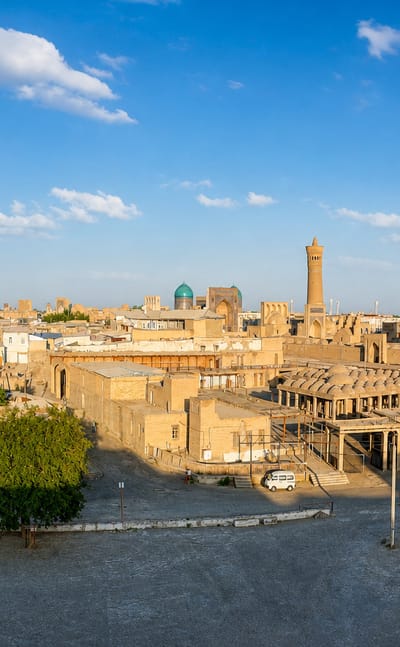
The Kalyan Minaret rises over Bukhara, a Silk Road city in the Bukhara Region of Uzbekistan, known for its walled Old Town of mosques and madrasahs.Where to stay →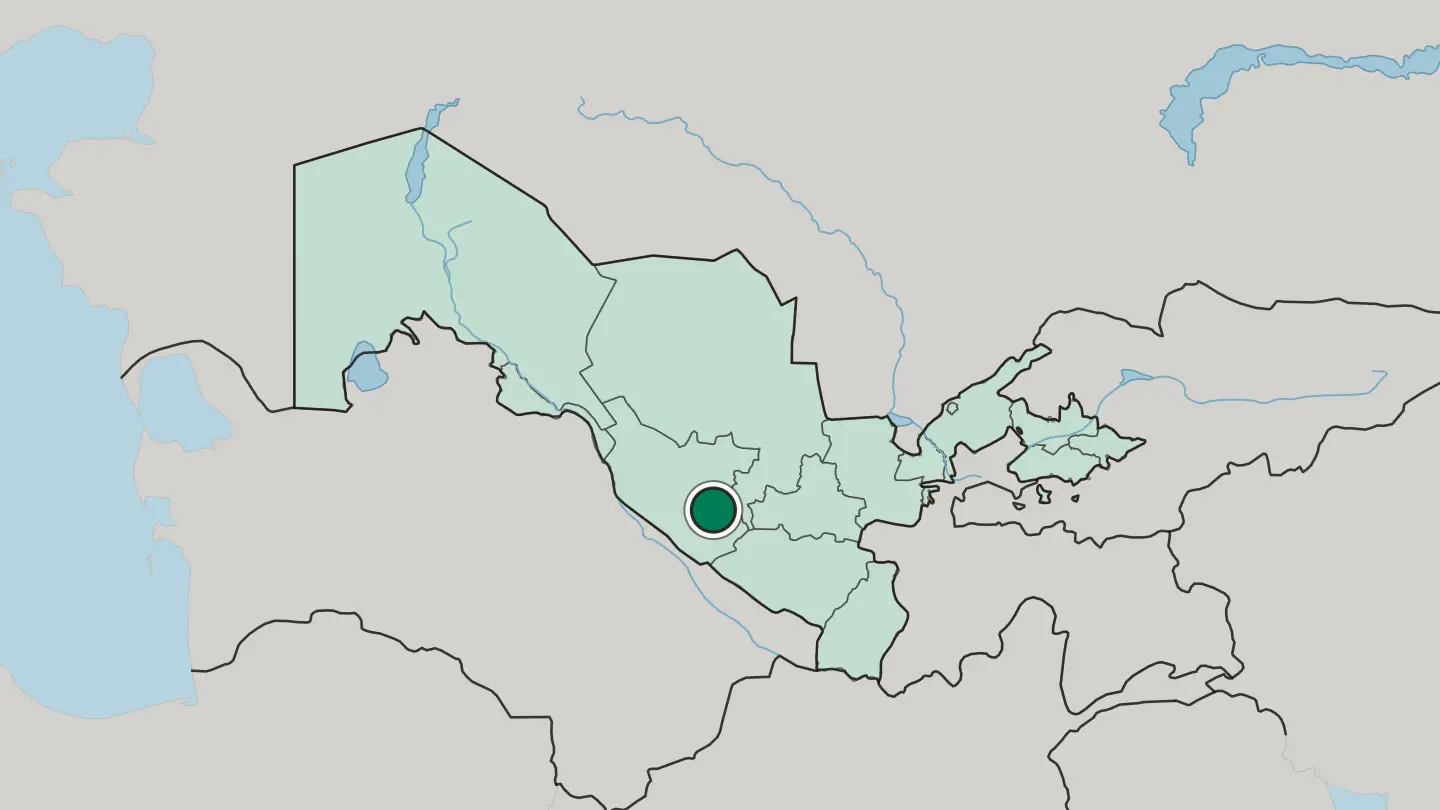
 Uzbekistan
Xiva
Khiva is an ancient walled city in the Khorezm region of western Uzbekistan, its old town of Itchan Kala ringed by mud-brick ramparts.Where to stay →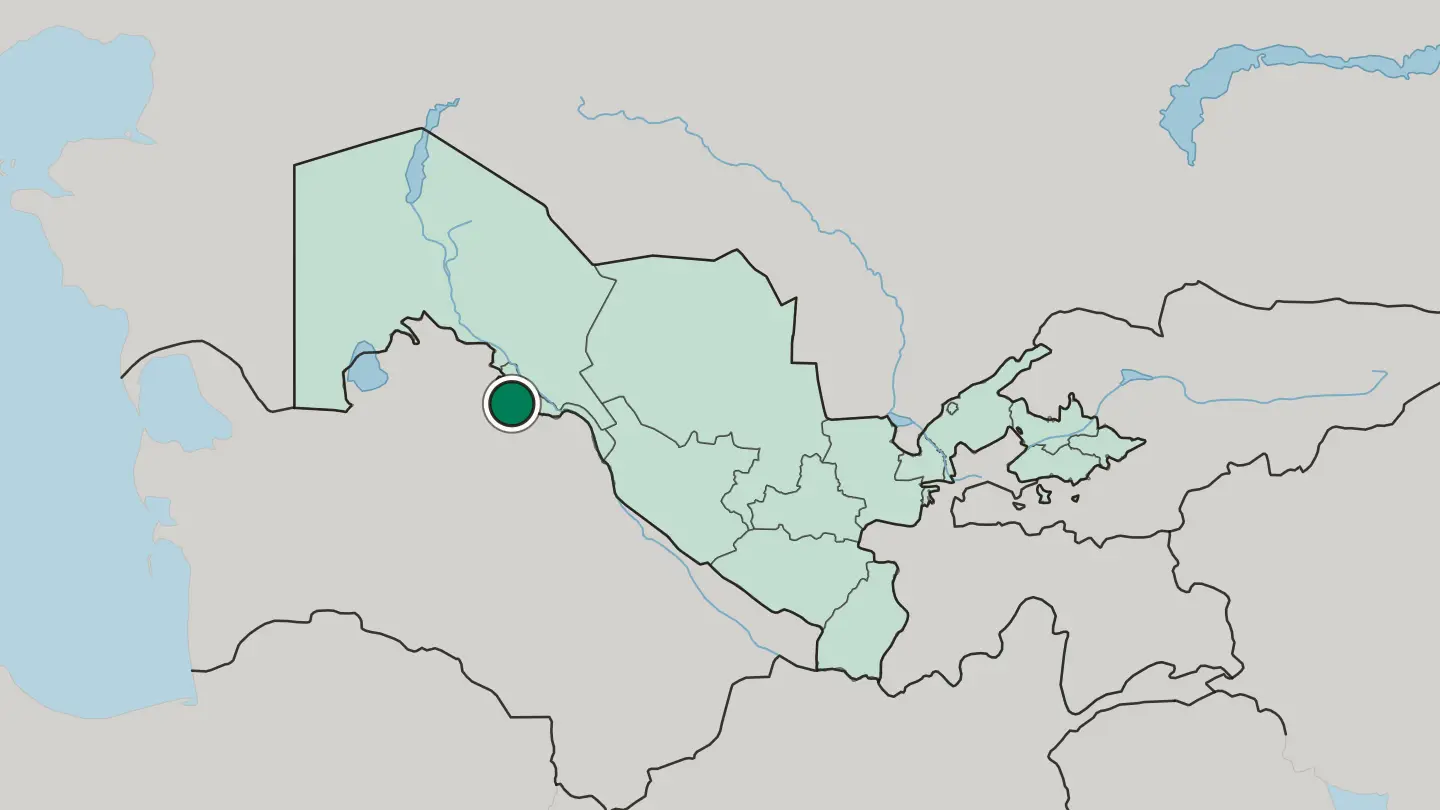
 Uzbekistan
Fergana
Fergana is a garden city of the Fergana Valley in eastern Uzbekistan, a green Russian-planned town of wide avenues ringed by mountains and cotton fields.Where to stay →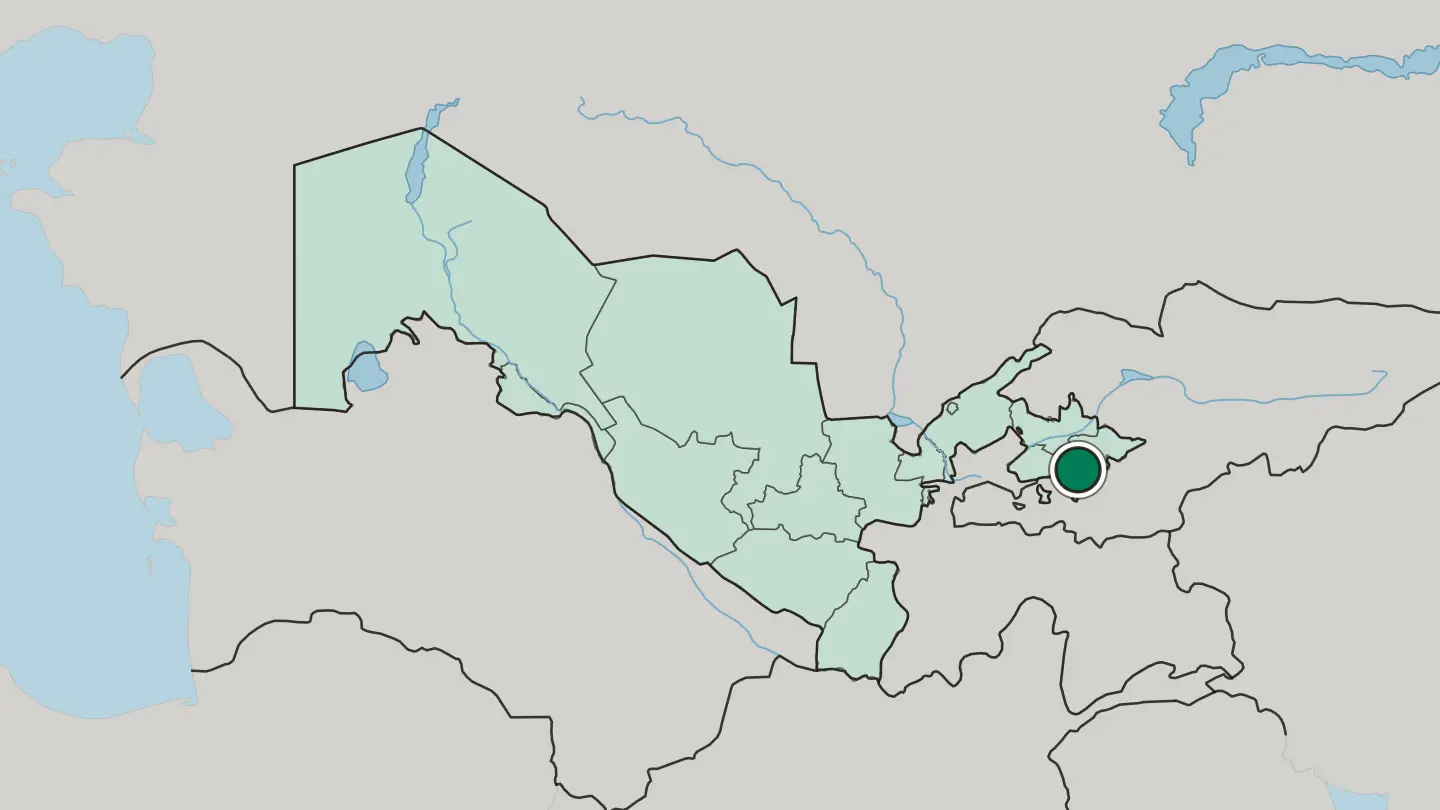 Uzbekistan
Andijon
Andijon is the chief city of the Fergana Valley in eastern Uzbekistan, an old Silk Road town and the birthplace of Babur.Where to stay →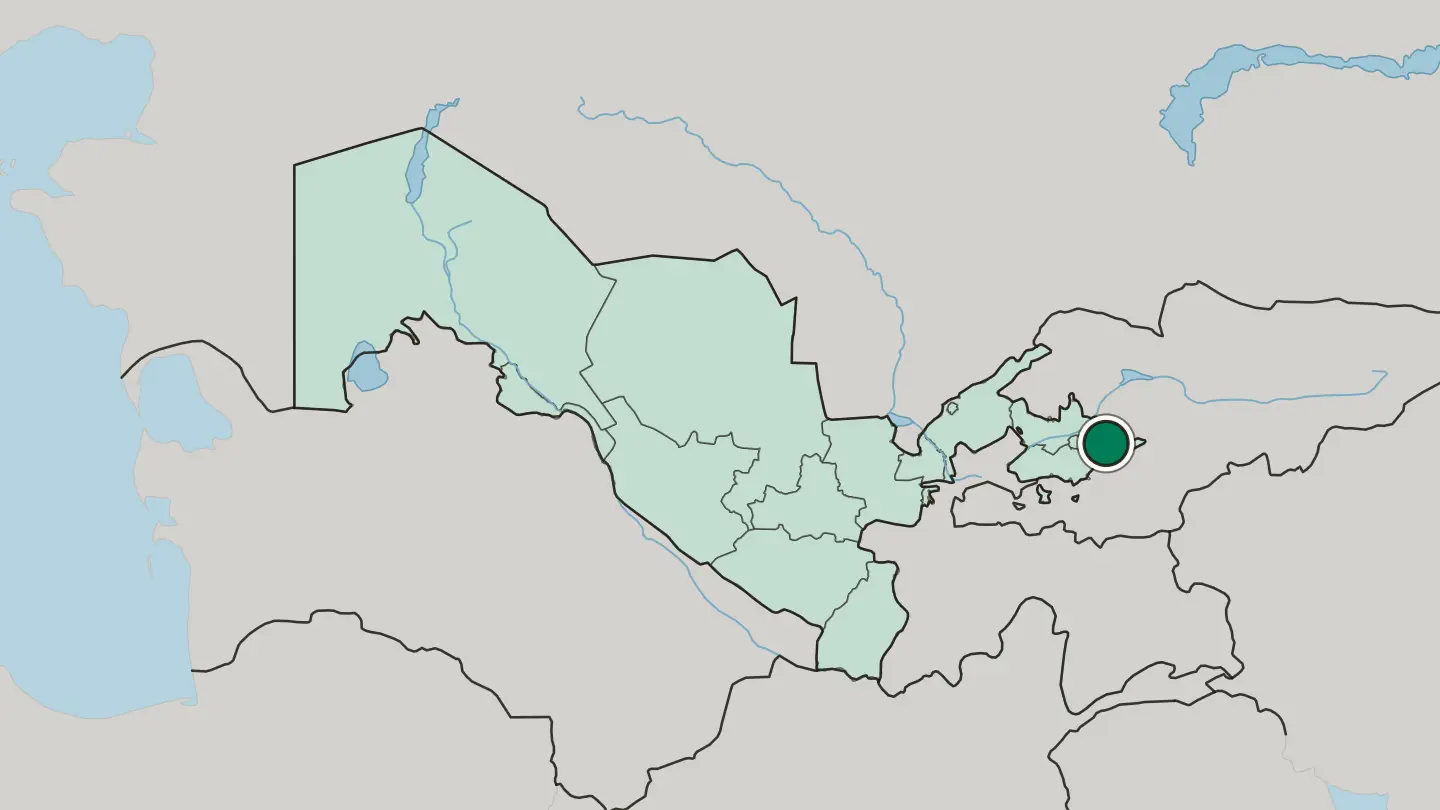
 Uzbekistan
Shahrisabz
Shahrisabz is a historic town in southern Uzbekistan, the birthplace of the conqueror Timur and a treasure of Timurid architecture.Where to stay →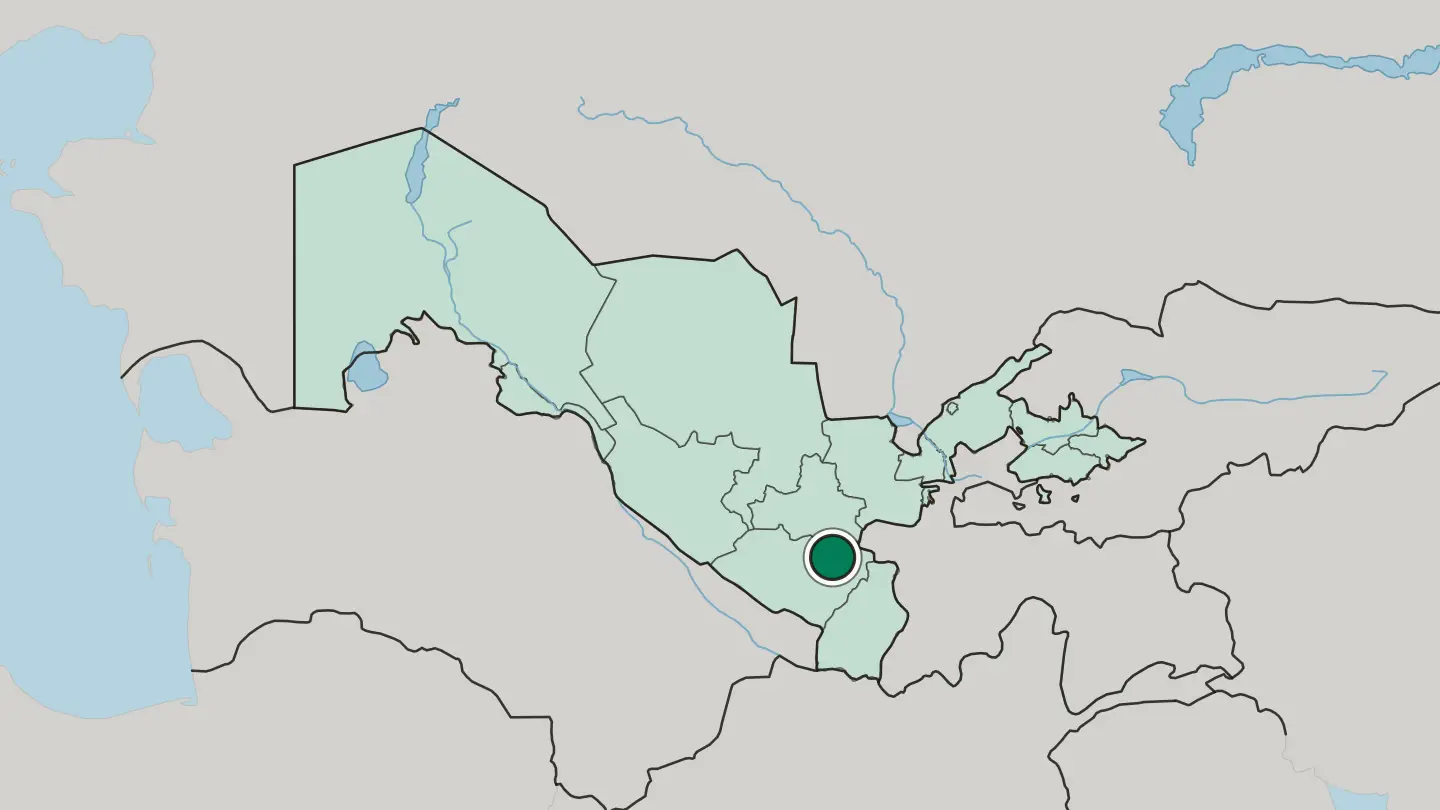
 Uzbekistan
Qo‘qon
Kokand is a historic city in the Fergana Valley of eastern Uzbekistan, the old capital of the Kokand Khanate.Where to stay →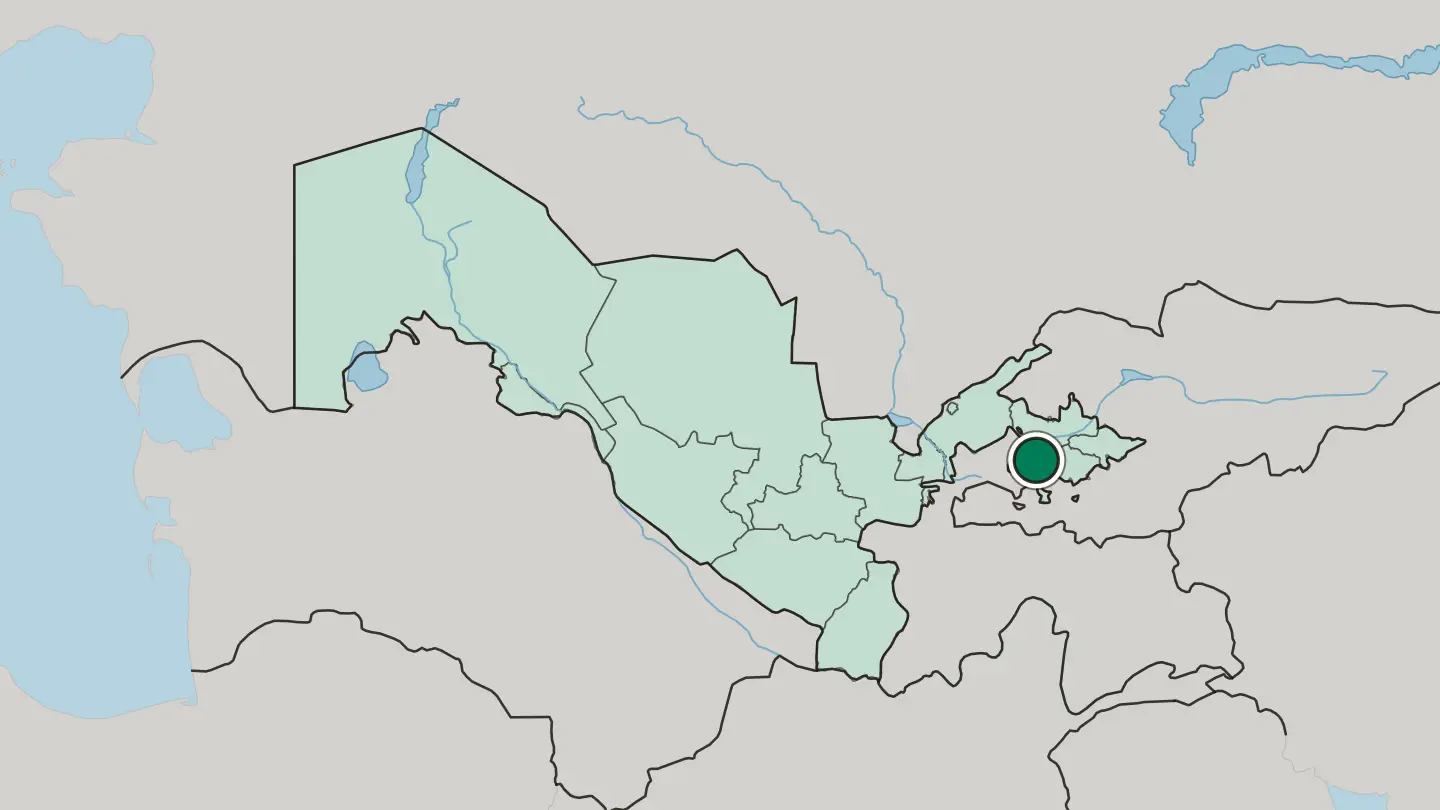
 Uzbekistan
Urganch
Urgench is the capital of the Khorezm region in western Uzbekistan, a modern oasis city on the road to ancient Khiva.Where to stay →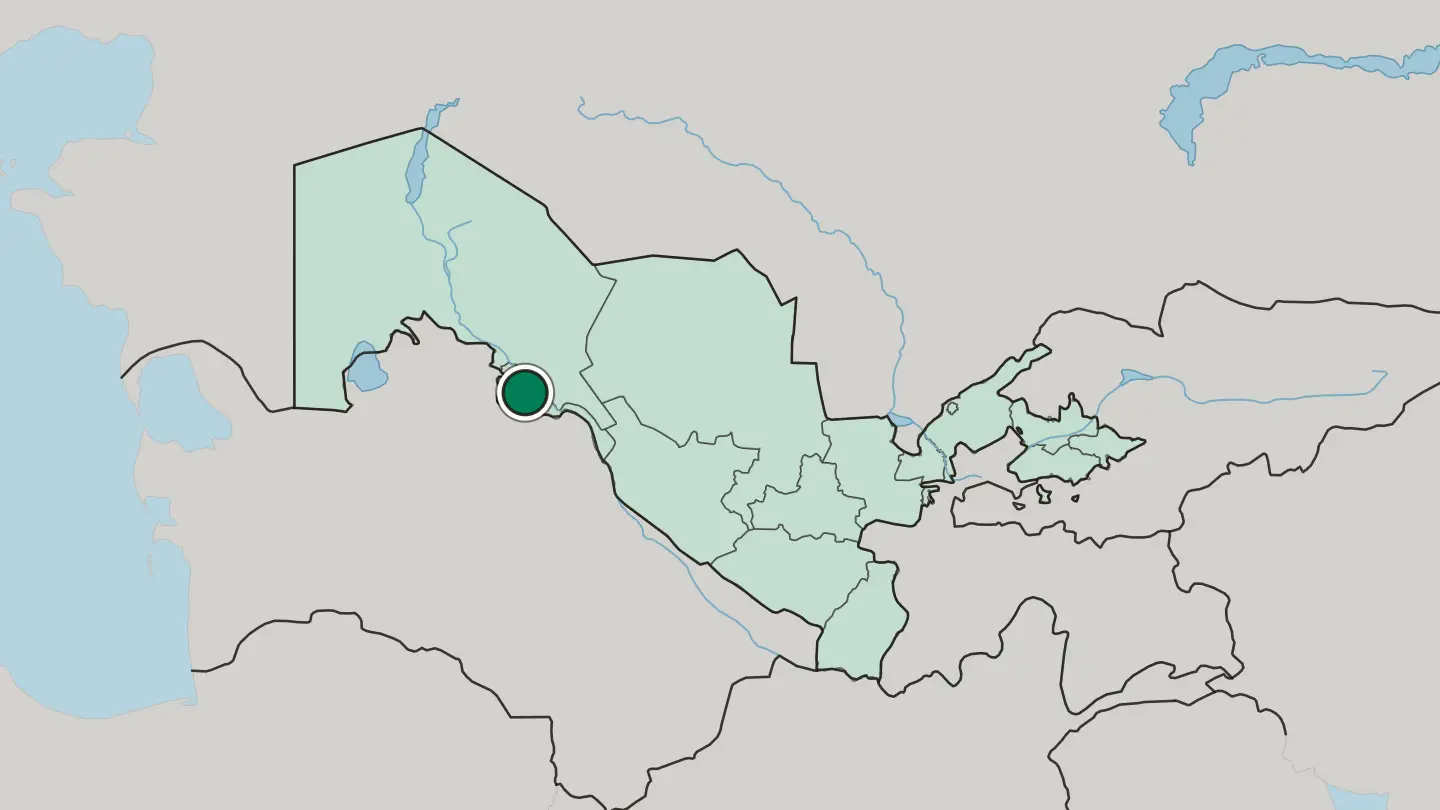
Hotel links are affiliate links: booking through them may earn us a commission, at no extra cost to you. It never affects how places are ranked. How this works
Regions of Uzbekistan
Uzbekistan
Andijan Region
Andijan is Uzbekistan's most crowded region, filling the eastern floor of the Fergana Valley, birthplace of Babur, founder of the Mughal Empire.Towns & cities →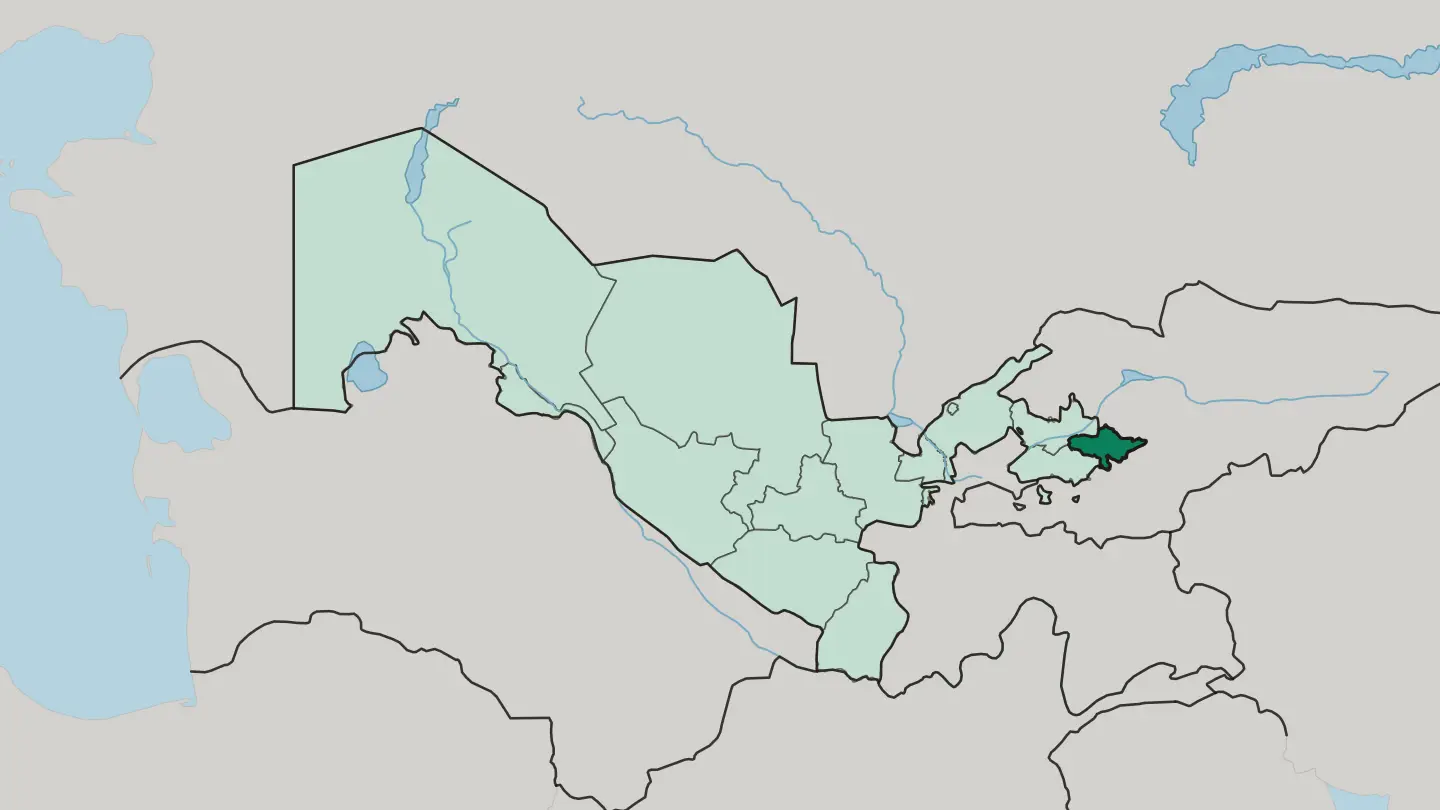 Uzbekistan
Bukhara Region
Bukhara Region is a desert province of western Uzbekistan, built around the Silk Road oasis city of Bukhara on the Zeravshan.Towns & cities →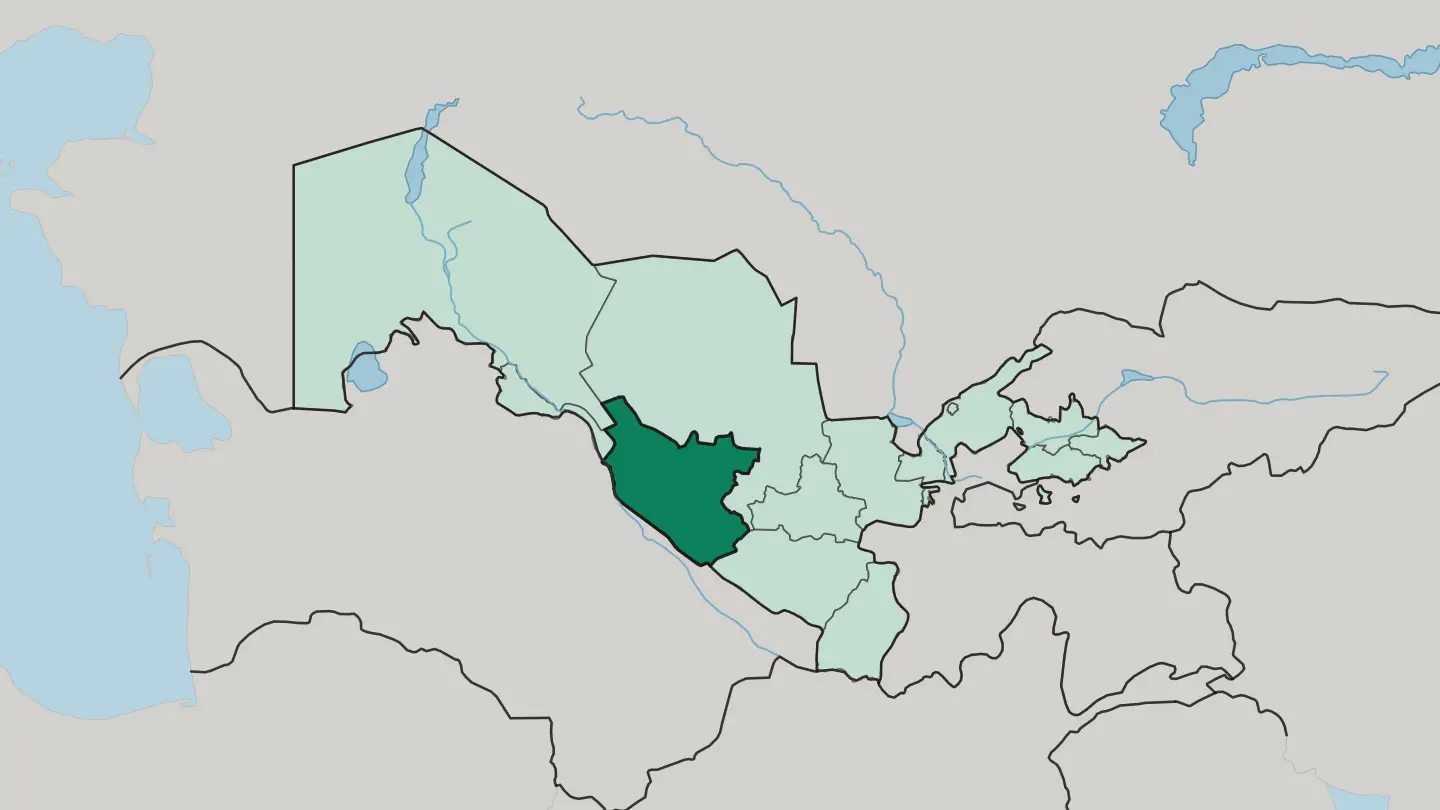 Uzbekistan
Fergana Region
Fergana Region fills the southern floor of the Fergana Valley in far eastern Uzbekistan, silk country ringed by mountains.Towns & cities →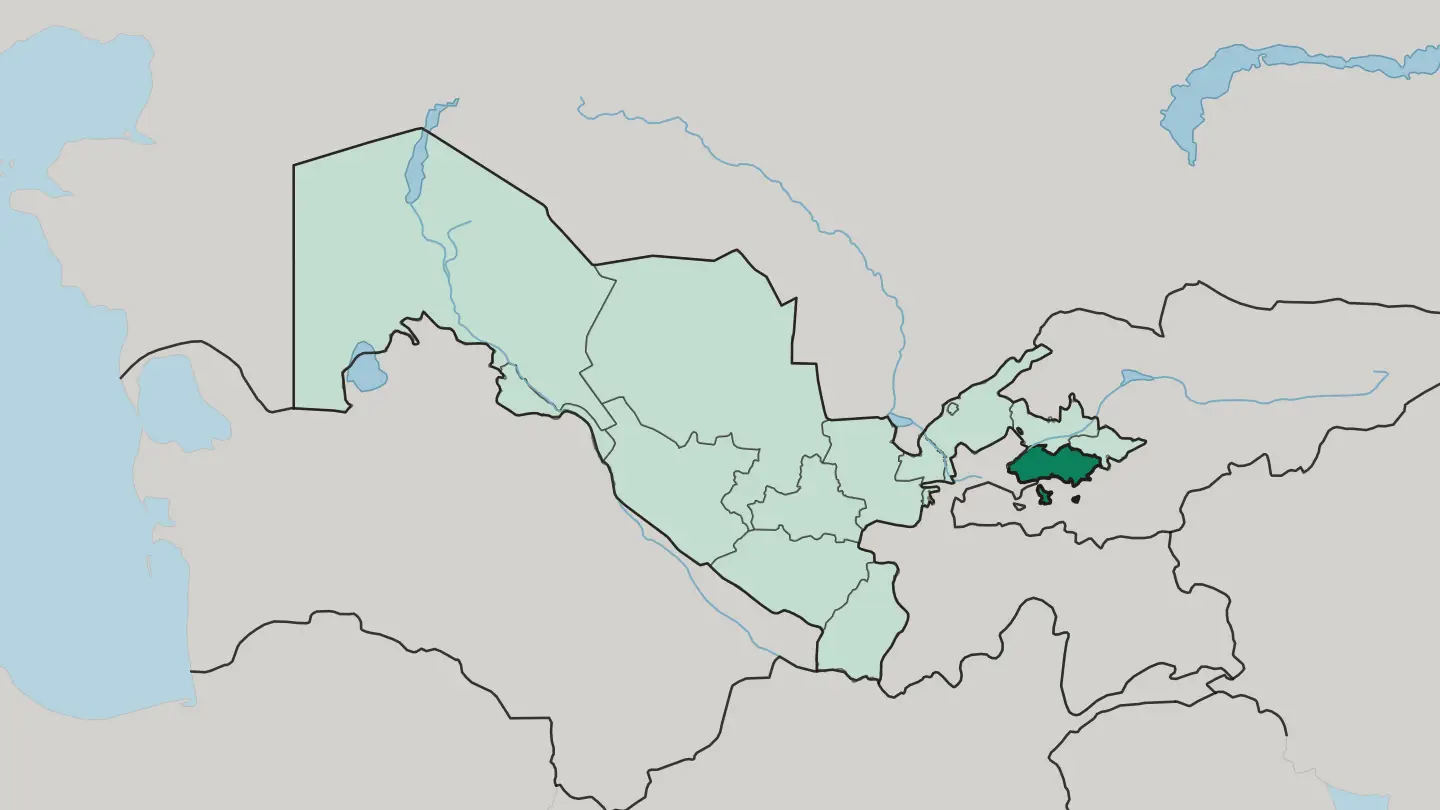
 Uzbekistan
Jizzakh Region
Jizzakh Region spreads across central Uzbekistan, from the irrigated Hungry Steppe up into the Turkestan Range and Zaamin's junipers.Towns & cities →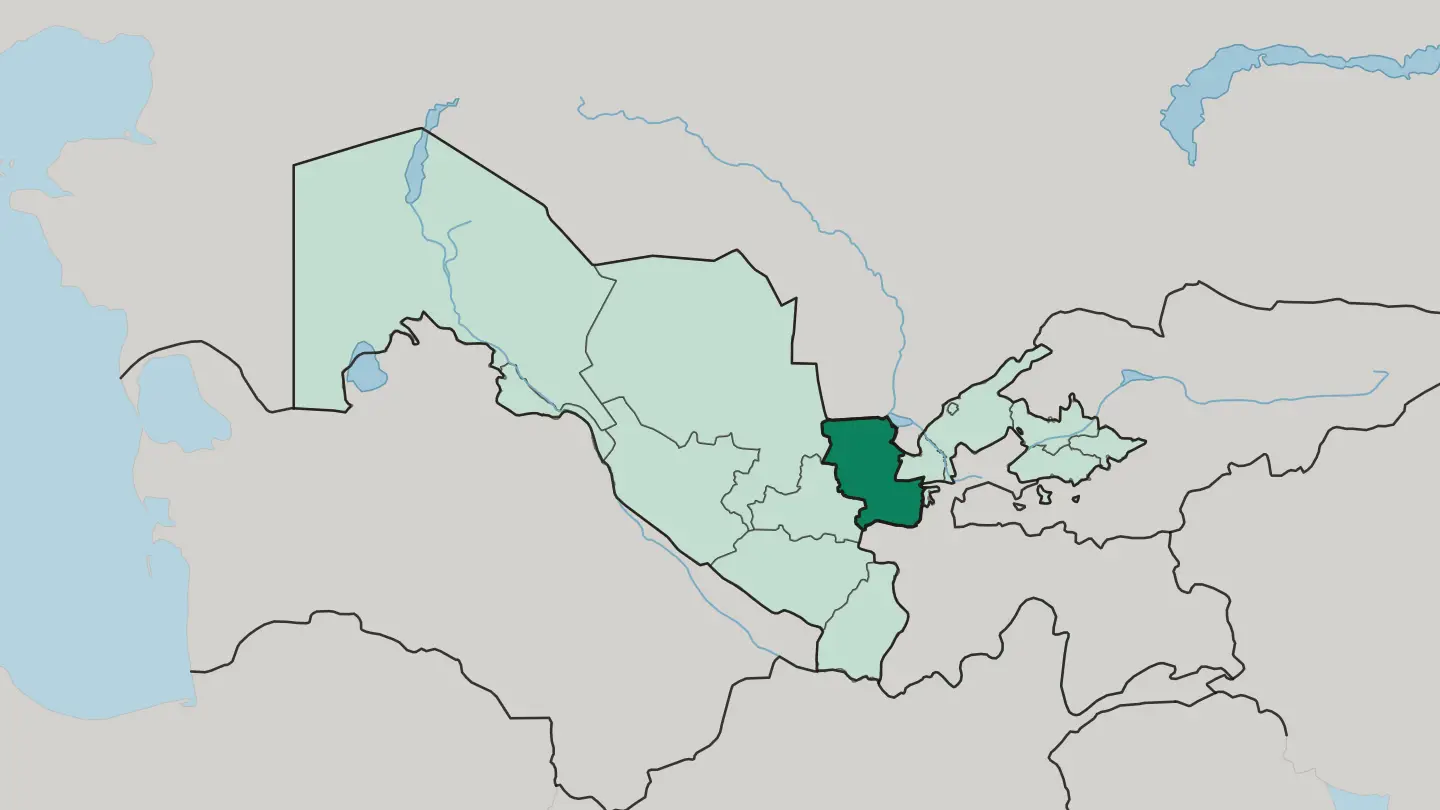
 Uzbekistan
Karakalpakstan
Karakalpakstan is a vast desert republic across northwestern Uzbekistan, holding the shrunken Aral Sea, the Amu Darya delta and the art city of Nukus.Towns & cities →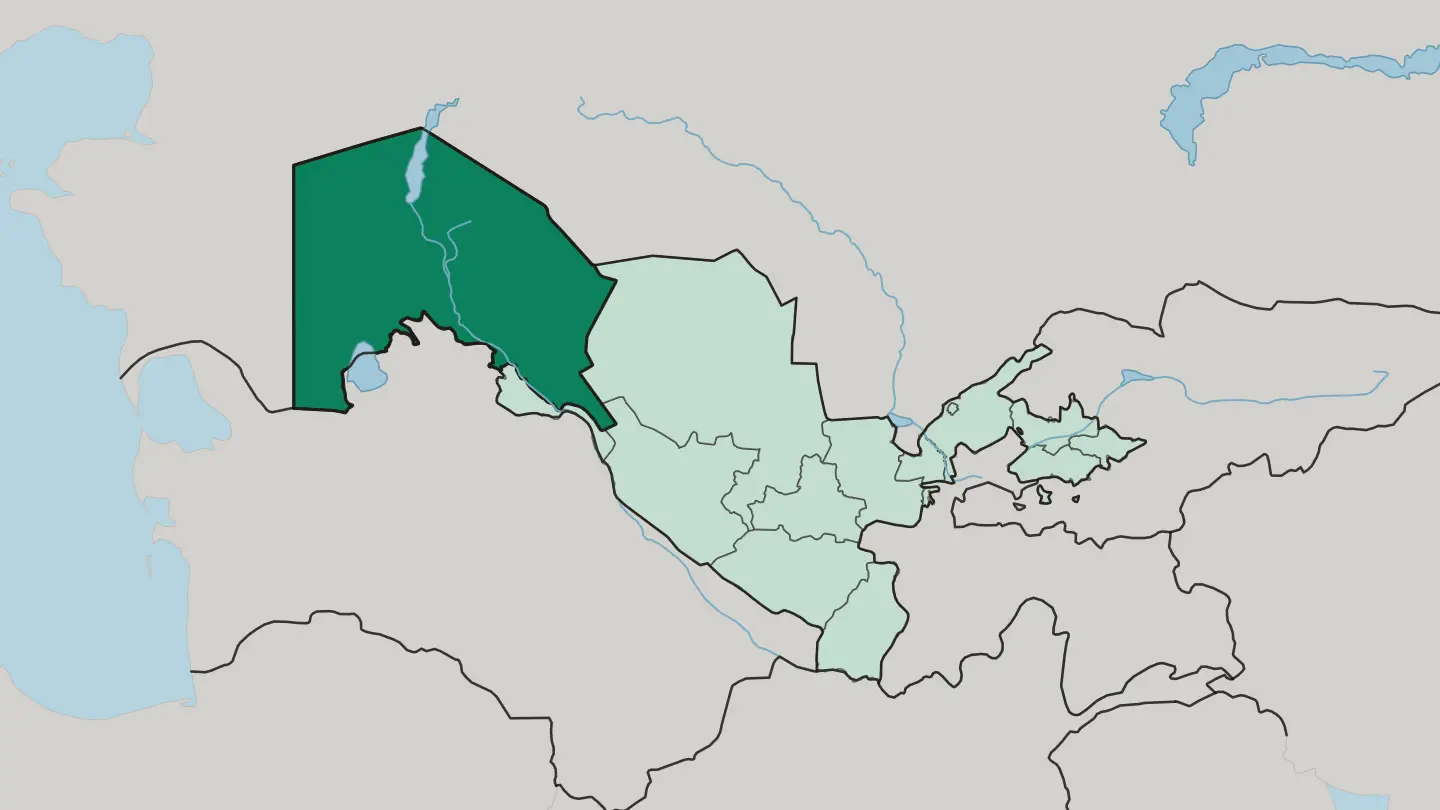
 Uzbekistan
Namangan Region
Namangan is a densely farmed region on the northern edge of the Fergana Valley, Uzbekistan's orchard country between the Syr Darya and the Tian Shan.Towns & cities →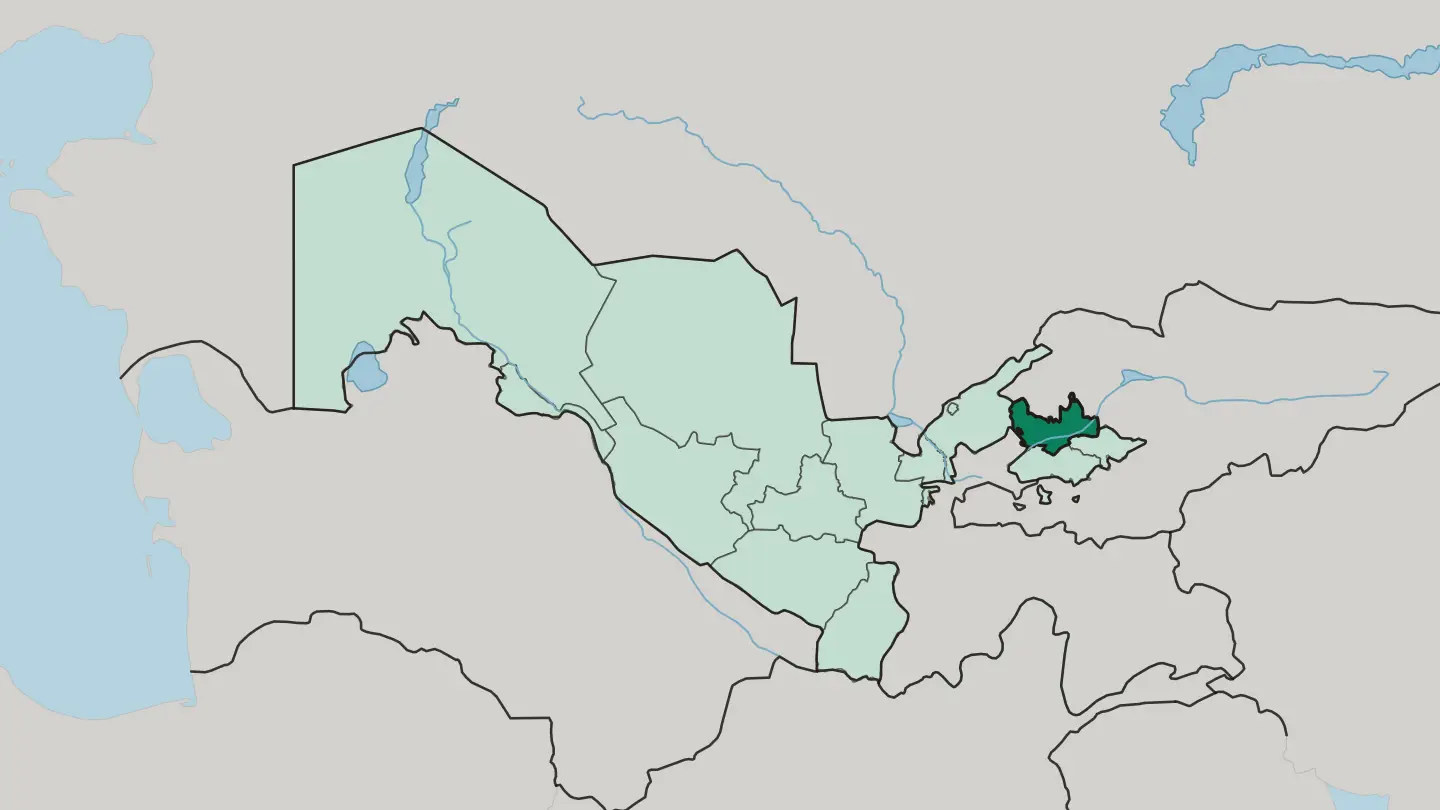
 Uzbekistan
Navoiy Region
Navoiy is a desert region of central Uzbekistan, spanning the Kyzylkum sands from the Muruntau gold pit to the holy spring and yurt camps of Nurata.Towns & cities →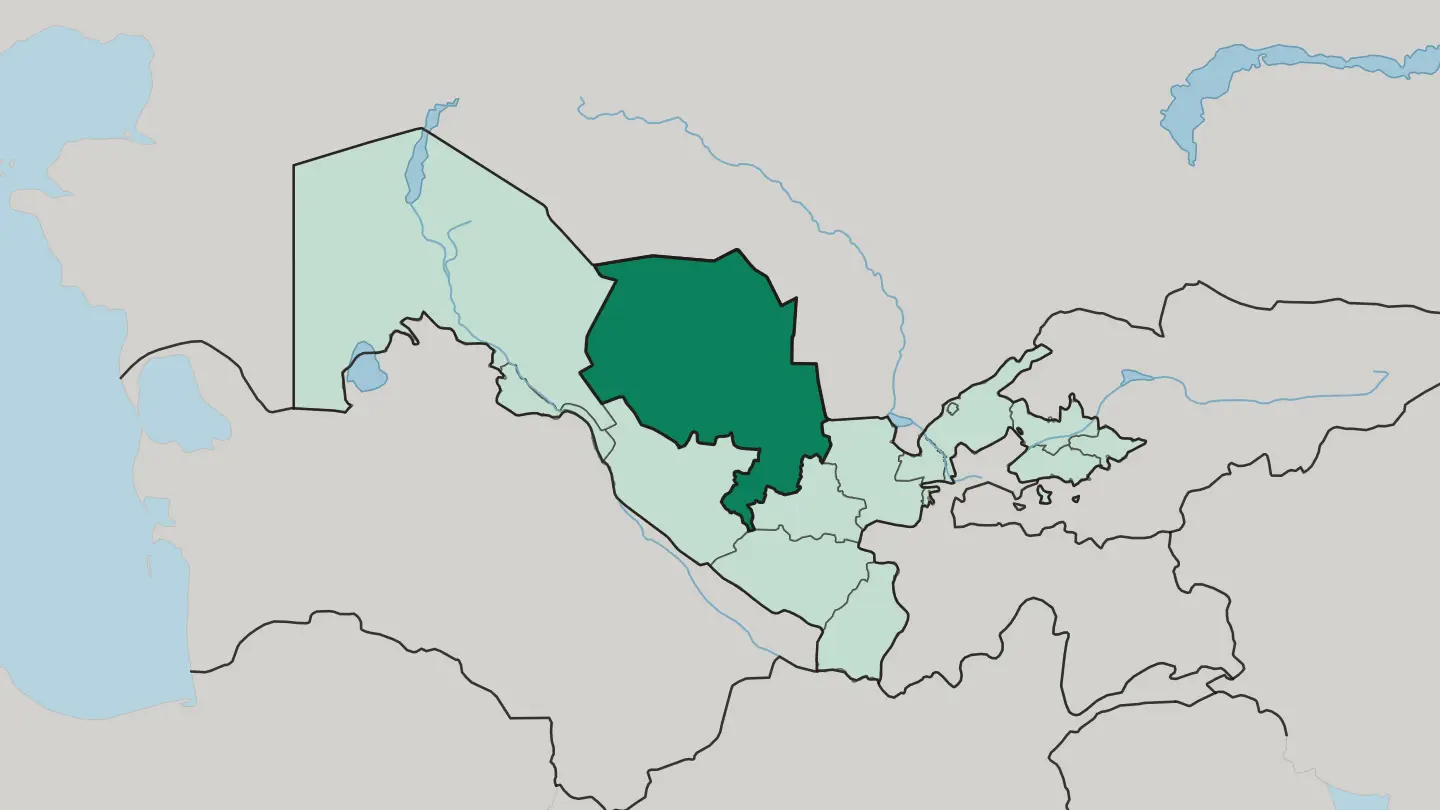 Uzbekistan
Qashqadaryo Region
Qashqadaryo Region spreads across southern Uzbekistan, its Karshi Steppe running up to the Pamir-Alay foothills and Timur's Shahrisabz.Towns & cities →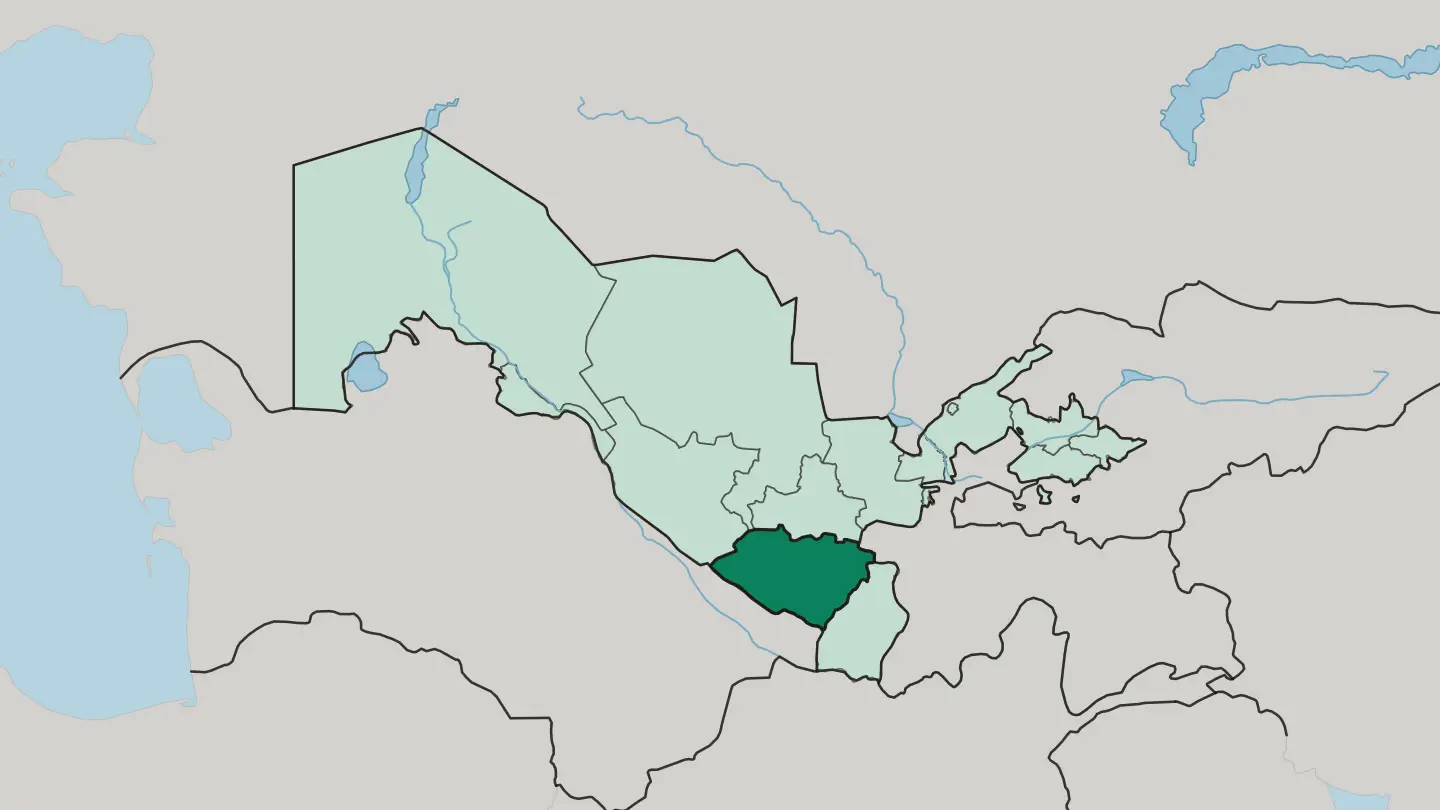 Uzbekistan
Samarqand Region
Samarqand Region is the historic core of Uzbekistan, an oasis along the Zeravshan where Timur's blue-domed capital and old Silk Road towns stand.Towns & cities →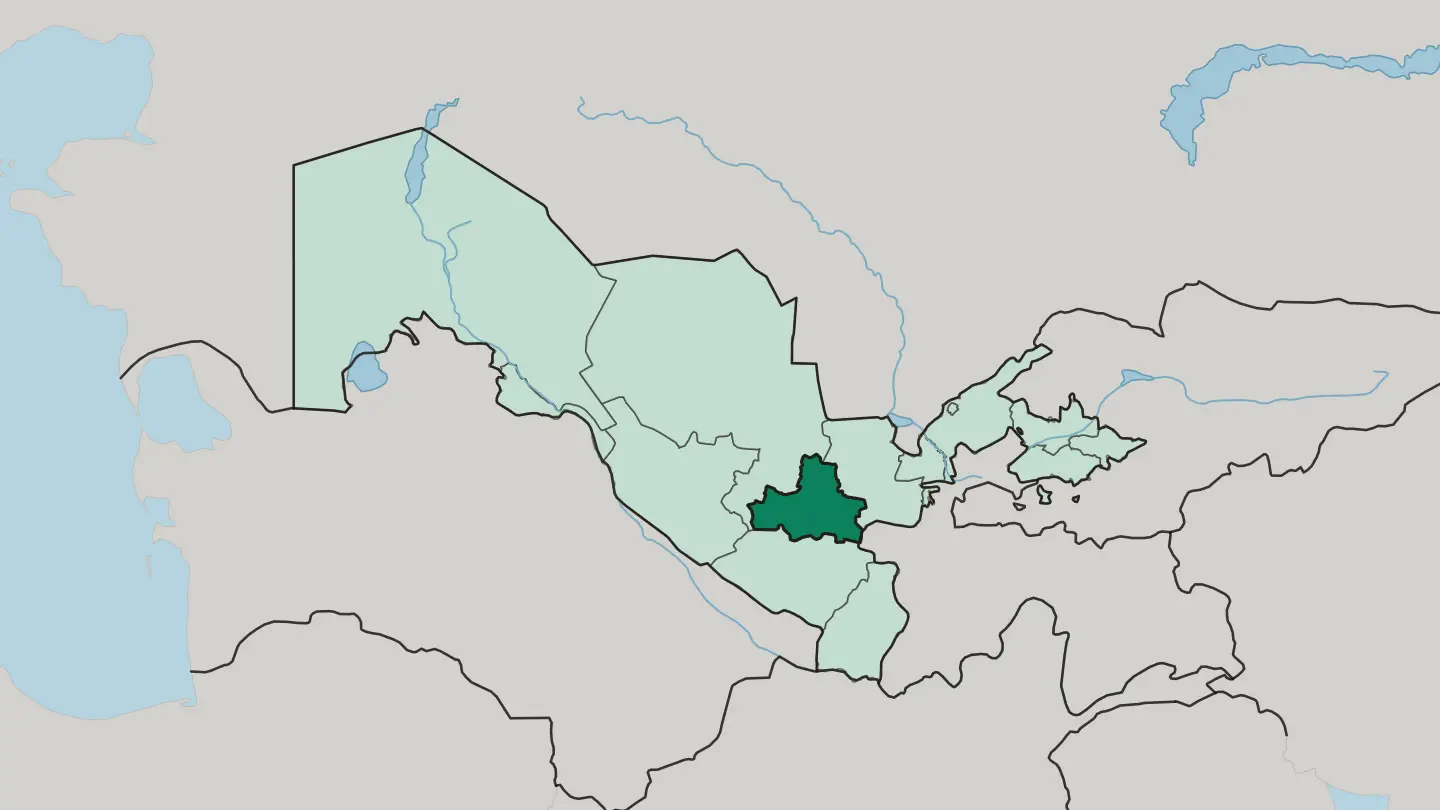 Uzbekistan
Sirdaryo Region
Sirdaryo Region lies on the left bank of the Syr Darya in central Uzbekistan, its cotton fields carved from the Hungry Steppe.Towns & cities →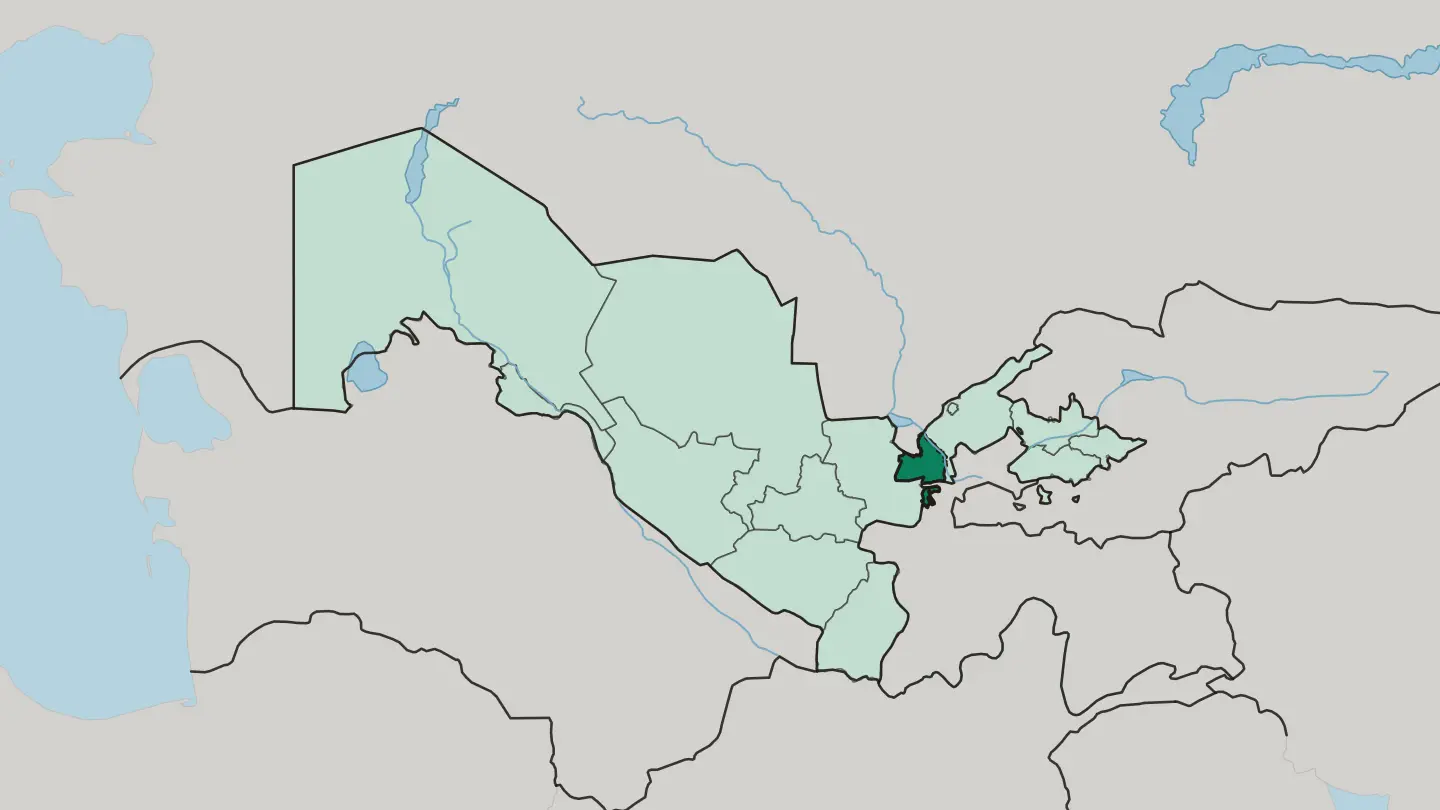
 Uzbekistan
Surxondaryo Region
Surxondaryo Region fills Uzbekistan's hot southern corner, where the Surxondaryo river runs down to the Amu Darya at Termez.Towns & cities →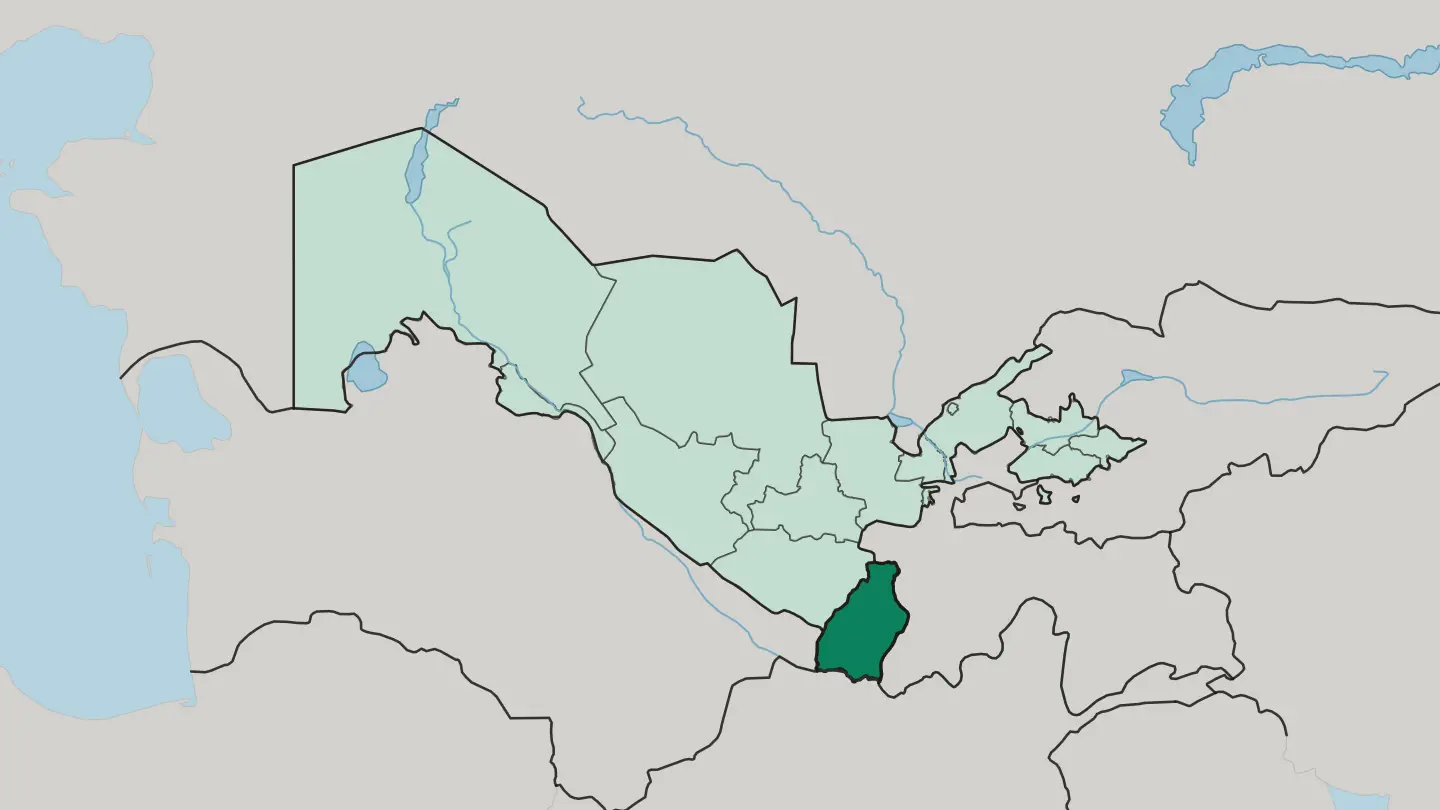 Uzbekistan
Tashkent
Tashkent is the northeastern region of Uzbekistan, the province that surrounds and contains the national capital city of the same name.Towns & cities →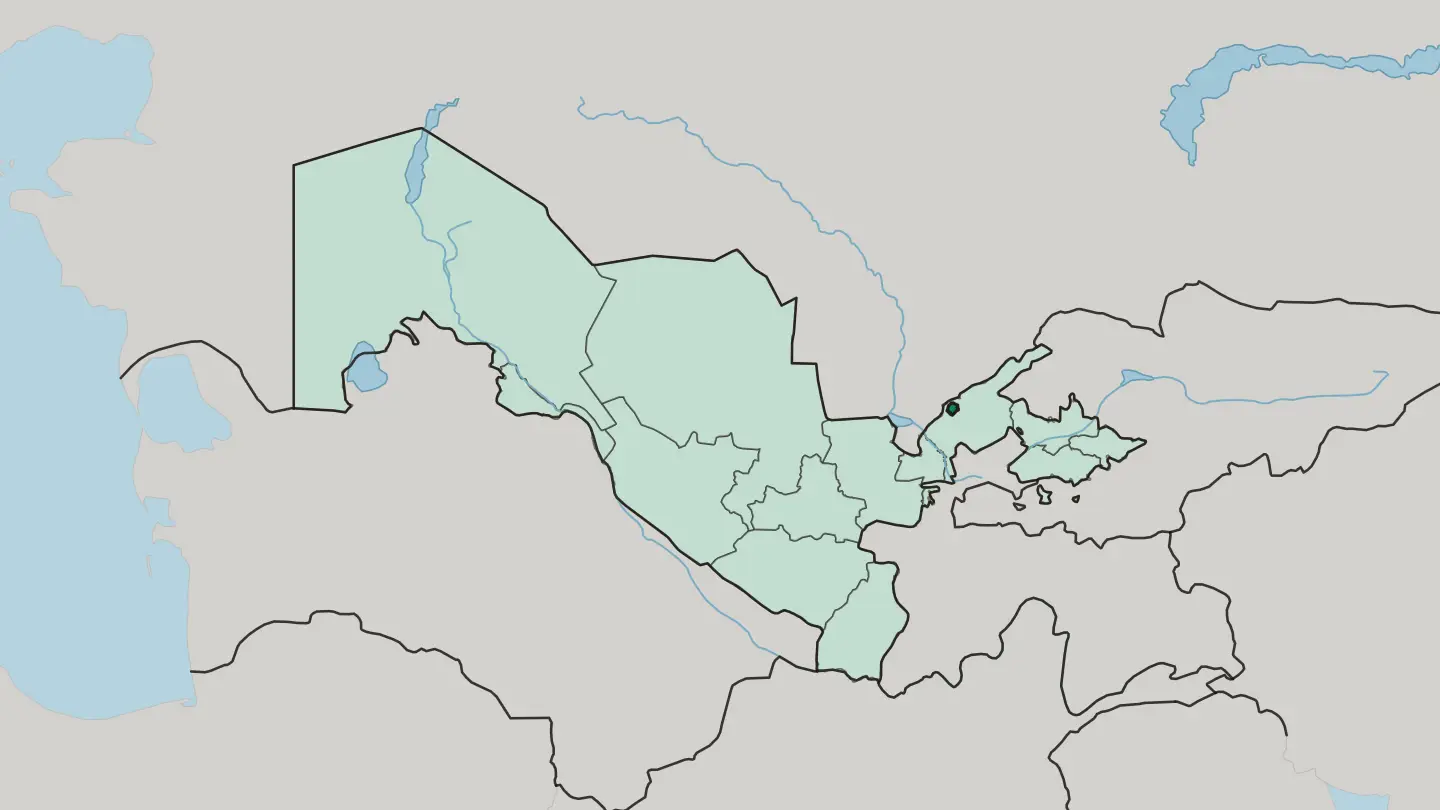
 Uzbekistan
Tashkent Region
Tashkent Region wraps around Uzbekistan's capital, running from the Syr Darya plains up into the Tian Shan.Towns & cities →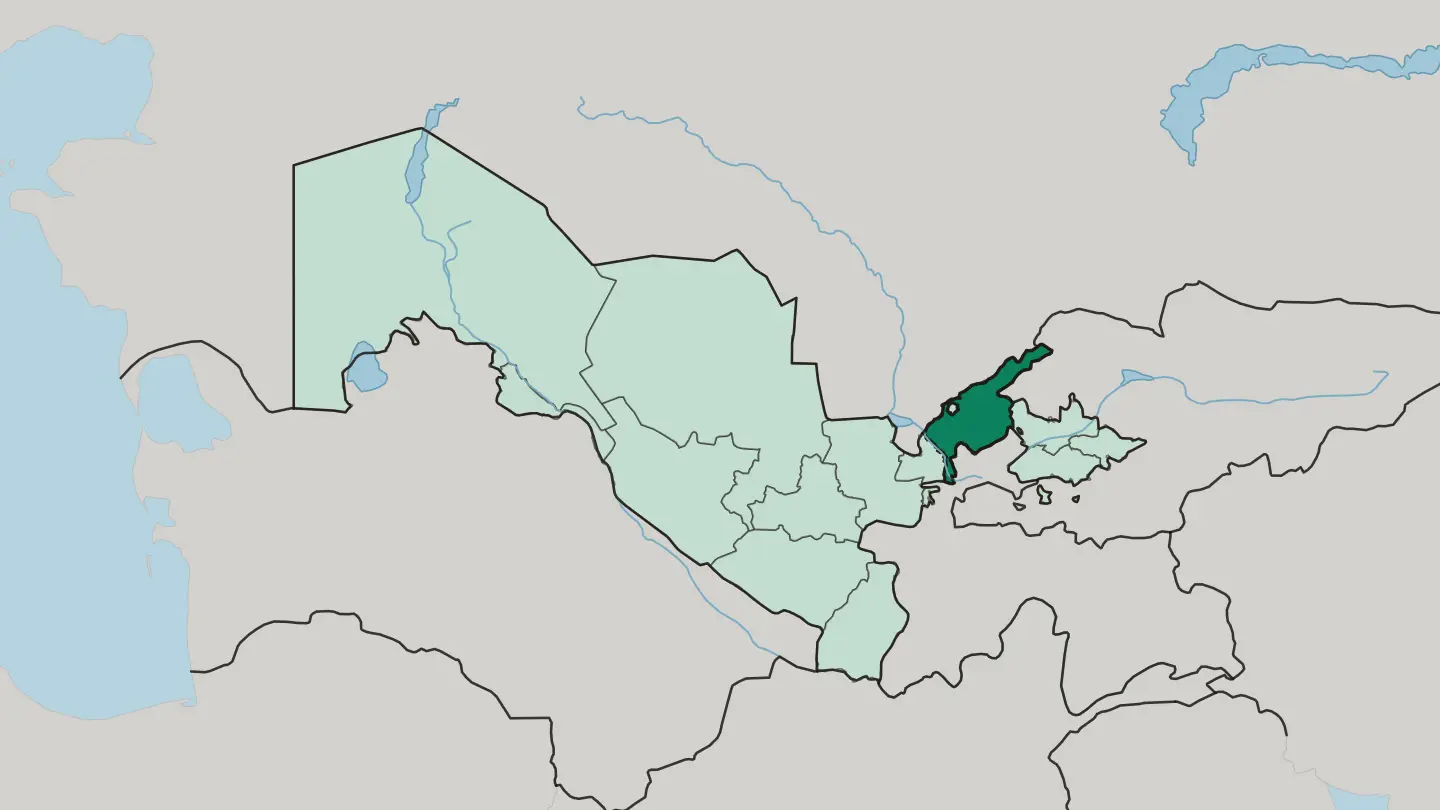 Uzbekistan
Xorazm Region
Xorazm Region is Uzbekistan's Amu Darya oasis in the northwest, home to walled Khiva and its UNESCO old town.Towns & cities →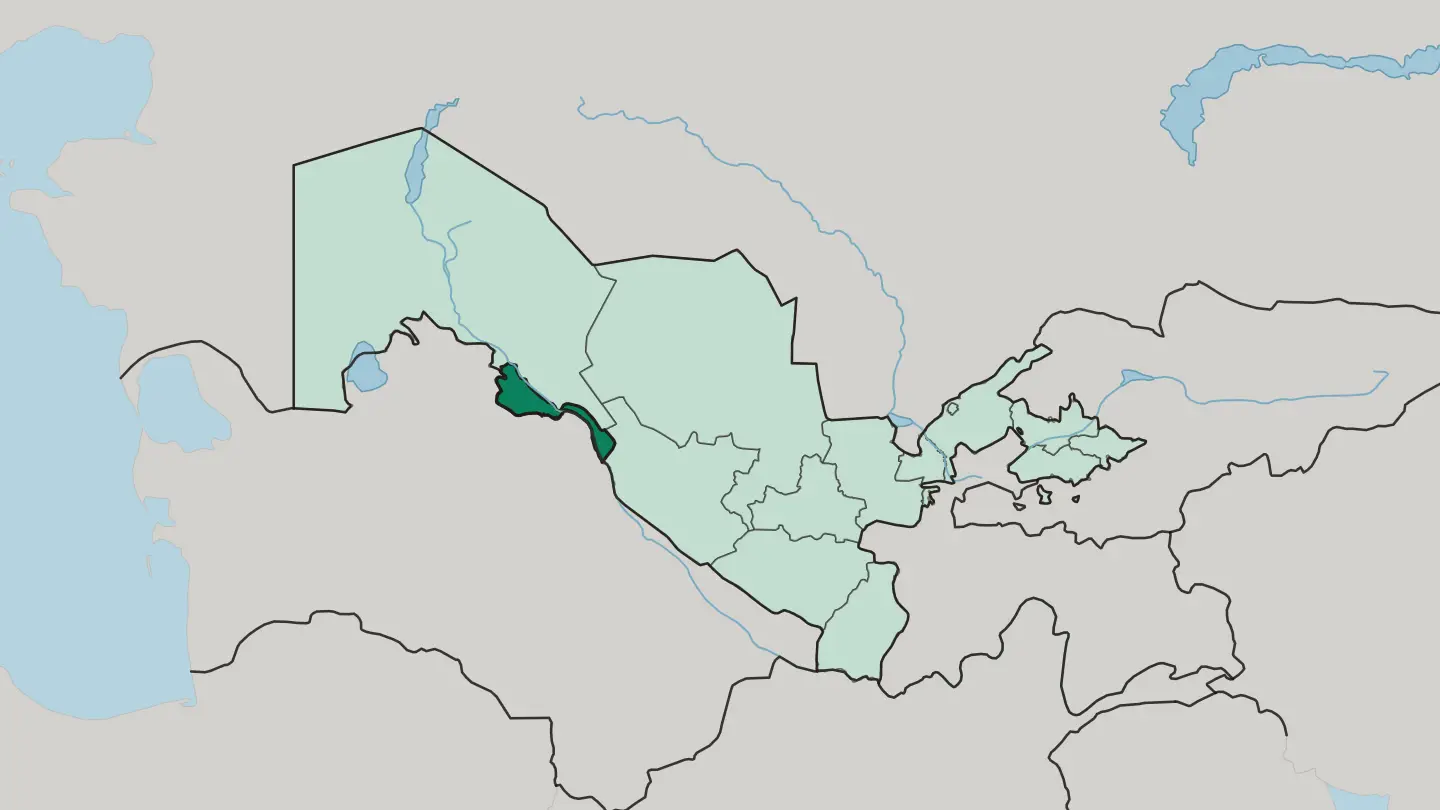
Explore by experience
Not sure which place? Start from how you want to travel.
About Uzbekistan
What is Uzbekistan known for?
Uzbekistan is known above all for the Silk Road, the network of trade routes that once linked China and Europe across Central Asia. The caravans are long gone. Its name still calls up the historic cities of Samarkand and Bukhara, longtime centres of trade whose standing on those routes carried the country's reputation far beyond its own borders for many centuries.
Hospitality runs deep here too.
Where is Uzbekistan?
Uzbekistan is a doubly landlocked country in the heart of Central Asia. Its borders enclose a broad stretch of Central Asia. Kazakhstan lies along its northern border, Kyrgyzstan to the northeast, and Tajikistan to the southeast, while Afghanistan runs along the south and Turkmenistan closes the frontier to the southwest.
Those five neighbours wrap the country on every side, and none of them opens onto an ocean. By land area it ranks among the larger states of the region. The country holds a distinction shared by only one other nation.
It is one of just two doubly landlocked countries on Earth, the other being Liechtenstein, meaning every state that borders it is itself without a coast. To reach open sea from anywhere inside Uzbekistan, a traveller has to cross at least two international frontiers, whichever direction they set out in. That remove from the sea is the single most defining fact of its geography.
At this inland crossroads, Uzbekistan long served as a bridge between East and West. The distances are continental. Its position on the Silk Road, the chain of routes that carried goods between China and Europe across Central Asia, made the territory a meeting point of peoples and trade for many centuries, and that legacy of movement across a landlocked interior still frames how the country is understood.
What is the history of Uzbekistan?
Uzbekistan's history runs back to the era of the Silk Road, when the territory sat astride the trade routes linking China and Europe. Caravans crossed it for centuries. Goods, faiths, and ideas moved along those routes through the cities of Central Asia, and the land that is now Uzbekistan grew wealthy and diverse as a hinge between the eastern and western ends of the continent.
Over the long centuries the region passed through a succession of empires. No single ruler held it for good. Wave after wave of conquerors and dynasties absorbed the territory into larger realms, layering languages and traditions on top of one another, so that Tajik took root in the southern cities of Samarkand and Bukhara while the Uzbek majority spread across the wider country and Russian later came into use as a common tongue.
The modern state is young. Uzbekistan became an independent country in 1991, taking its place among the sovereign nations of Central Asia after generations under outside rule. It later joined the Organization of Turkic States, aligning itself with the wider family of Turkic peoples to which the Uzbek language belongs.
What is Uzbekistan like?
Uzbekistan is a country defined by hospitality and a deep sense of welcome toward visitors. Guests are treated with real warmth. That reputation for open-heartedness is among the first things travellers remark on, and it runs through daily life across the country as a matter of long custom rather than practised display.
Language marks the country's diversity. Uzbek, a Turkic tongue, is spoken by the majority and gives the nation its place within the Organization of Turkic States. Russian serves widely as a shared language between communities, while Tajik is the everyday speech of the southern cities of Samarkand and Bukhara, where Tajik families have long lived.
Three languages. That layering of tongues is itself an inheritance of the old Silk Road, along which peoples from across the continent settled and mixed. Beyond language, the country carries the traditions of a land that spent centuries at the meeting point of East and West.
The mixture is genuine. Faiths, cuisines, and crafts brought along the trade routes took root here and blended with local custom, leaving Uzbekistan with a culture that reads as neither wholly eastern nor western but distinctly its own.
What is the climate of Uzbekistan?
Uzbekistan has a dry continental climate shaped by its position deep inside Central Asia, far from any moderating sea. Across this landlocked country, summer runs long and hot. Winters bring real cold to the interior, and the wide gap between the seasons follows directly from the country's landlocked remove from the ocean, which leaves little maritime air to soften either extreme.
Rain is sparse across much of the land.
How do you get to Uzbekistan?
Reaching Uzbekistan means arriving by air or crossing a land border, since the country touches no sea. There is no coast to sail to. Overland routes lead in from all five neighbours, Kazakhstan, Kyrgyzstan, Tajikistan, Afghanistan, and Turkmenistan, following in places the same corridors that once carried Silk Road traffic across Central Asia.
Most long-haul visitors fly in.
Good for
Updated September 2026