United Arab Emirates · Emirate of Fujairah
Where to Stay in Fujairah, Emirate of Fujairah
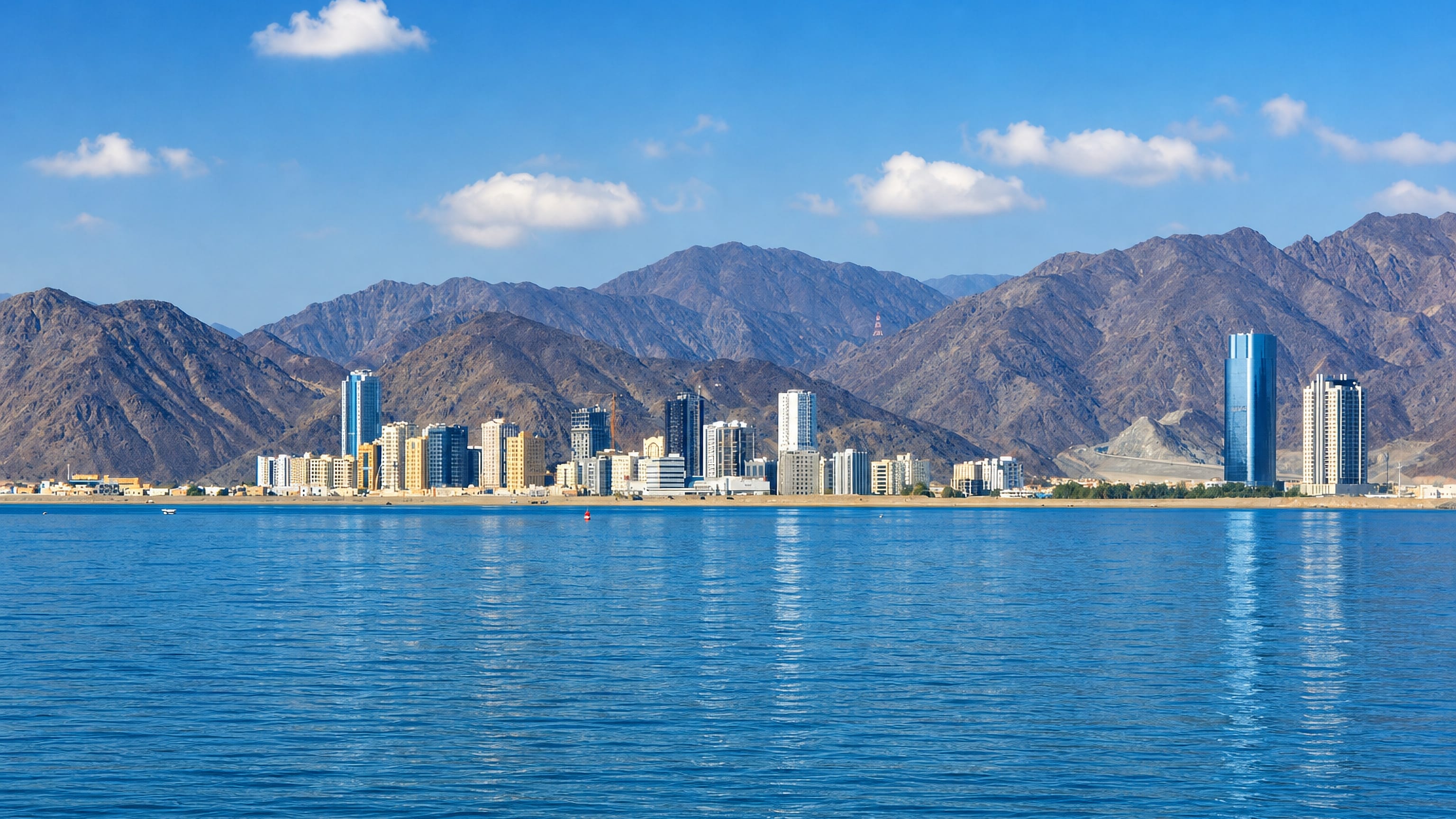
Fujairah stands at the foot of the Hajar Mountains on the Gulf of Oman, capital of the Emirate of Fujairah in the United Arab Emirates.
Hotel links are affiliate links: booking through them may earn us a commission, at no extra cost to you. It never affects how places are ranked. How this works


Where to stay in Fujairah
Where the beds are, and what that means for the visit.
Fujairah Fort and the Fujairah Museum sit close enough to each other that a bed beside one settles the question of the other, and that pairing is the reason most first visits stay in the city proper rather than out along the shore. The mountains are the alternative. Al Hayl Castle belongs to the ground under the Hajar Mountains, away from the commercial streets, and a room taken with the castle in mind buys quiet and a drive in equal measure.
Kalba Fort pulls the other way along the coast entirely. The Gulf of Oman is the third consideration, and it is a real one in a city that faces the west coast of the Indian Ocean rather than the water the rest of the United Arab Emirates looks out on. Sea rooms trade the fort for the swell.
The House of Sheikh Saeed bin Hamad Al Qasimi and the Fujairah Museum both keep to the built centre, so anyone here for the emirate's own record does better inland of the shoreline than on it. الفجيرة is what the signage says. Arabic is the working language of Fujairah, and the split between a harbour-facing stay, a fort-facing stay and a mountain-facing one is the only choice the geography really forces.
Find hotels in Fujairah
Direct booking searches for these neighbourhoods.
The Fujairah Fort and museum quarter
Fujairah Fort and the Fujairah Museum stand near one another in the built centre, which makes this the one part of the city where the emirate's record needs no car.Find hotels in The Fujairah Fort and museum quarterWaking up on the west coast of the Indian Ocean rather than inlandThe Gulf of Oman shoreline
The Gulf of Oman gives Fujairah the only Emirati capital shoreline on this side of the Hajar Mountains, and a room facing it trades the fort quarter for open water.Find hotels in The Gulf of Oman shorelineAl Hayl Castle, high ground and a night away from the commercial streetsUnder the Hajar Mountains at Al Hayl
Al Hayl Castle sits on the mountain ground behind Fujairah, so a stay out this way is quiet, unlit and a drive from everything the harbour side offers. Few places to stay nearby — book ahead.Find hotels in Under the Hajar Mountains at Al HaylHotel links are affiliate links: booking through them may earn us a commission, at no extra cost to you. It never affects how places are ranked. How this works
Things to do in Fujairah
Ranked by global recognition; descriptions from Wikidata (CC0).
Museums & Galleries
1- Fujairah Museum
Churches & Religious Sites
1- كنيسة سيدة المعونة الدائمة، رعية الكنيسة الكاثوليكية، الفجيرة
Castles & Historic Sites
3- Fujairah Fort
- Kalba Fort
- Al Hayl Castle
worth knowingacross 3 categories in Fujairah
About Fujairah
Fujairah works for a living.
What is Fujairah known for?
The city is an industrial and commercial hub on the west coast of the Indian Ocean, and it is the only Emirati capital city on the east coast of the United Arab Emirates. Fujairah Fort answers for the older centuries, with Al Hayl Castle and Kalba Fort completing the three castles counted around the city. الفجيرة is the Arabic form of the name.
What are the main landmarks in Fujairah?
Three castles, two museums, one church. Fujairah Fort holds the built centre, Al Hayl Castle the mountain ground and Kalba Fort the shoreline further along, and between them they account for every fortification counted in the emirate. The Fujairah Museum keeps the collection.
The House of Sheikh Saeed bin Hamad Al Qasimi is the other building on that side of the list, and the single church counted here is the Catholic parish serving الفجيرة.
What is the history of Fujairah?
Defence came first on this coast. Fujairah Fort, Al Hayl Castle and Kalba Fort are the three fortifications the emirate still counts, and their spread from the built centre to the mountain ground and on along the shore says more about how the ground was held than any single one of them does alone. The Hajar Mountains made that spread necessary.
A range at your back divides the country in two. The House of Sheikh Saeed bin Hamad Al Qasimi belongs to the phase after the castles, when a ruling family's house rather than a wall marked where authority sat. It stands in the city.
The Fujairah Museum is the third stage, the point at which the emirate began keeping its own record instead of only living in it, and the museum count here runs to two. Then the sea took over. Fujairah became an industrial and commercial hub on the west coast of the Indian Ocean, the only Emirati capital city facing the Gulf of Oman, and that position rather than any inland connection is what the modern city was built on. الفجيرة remained the name throughout.
Arabic carried it, the United Arab Emirates adopted the emirate under it, and the fort still stands over the streets that grew afterwards.
Where is Fujairah?
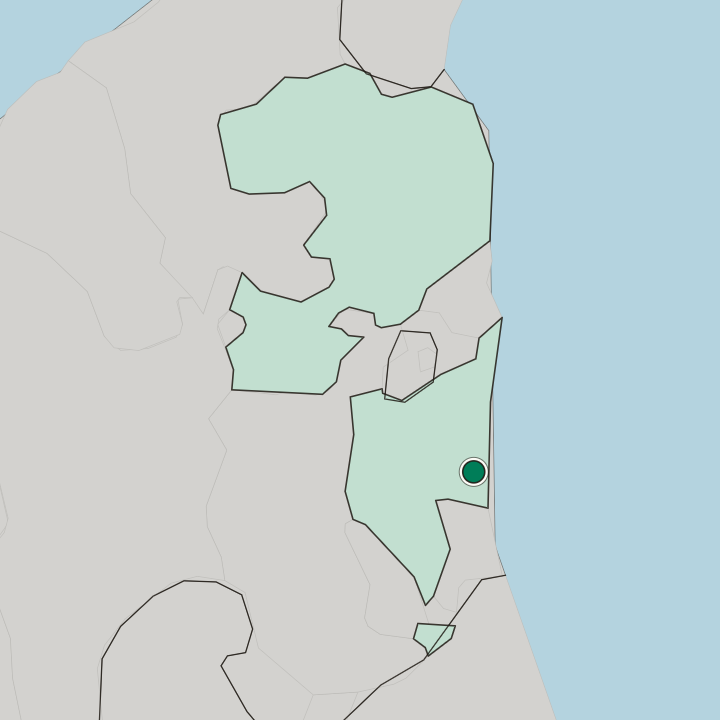
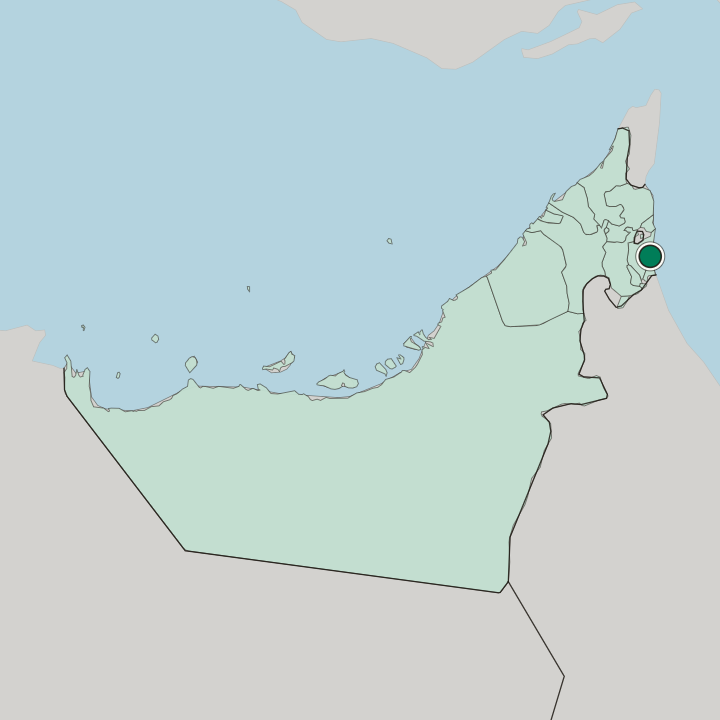
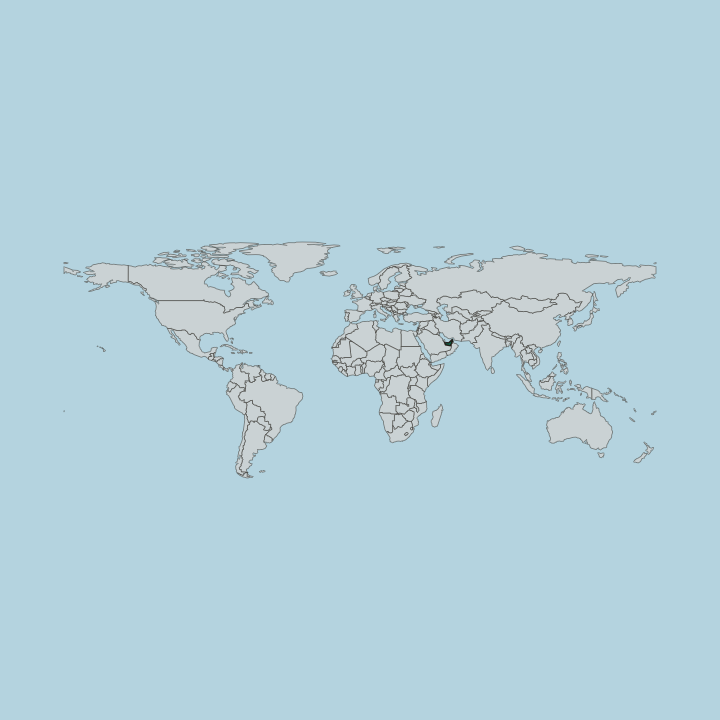
The Hajar Mountains come down to meet the water here, and Fujairah occupies the strip of foothills left between the range and the Gulf of Oman on the east coast of the United Arab Emirates. That strip is narrow. Open ocean lies beyond the gulf, since this shore counts as the west coast of the Indian Ocean rather than as sheltered emirate water, and Kalba Fort marks the same coastline further along.
What is the climate of Fujairah?
Open water does the tempering that the desert cannot. Fujairah faces the Gulf of Oman with the Hajar Mountains at its back, so the air reaching the streets comes off the ocean before it comes off the sand, and the subtropical heat arrives heavy rather than dry. The range blocks the rest.
Al Hayl Castle, set back on higher ground, sits in the cooler half of that arrangement.
How do you get to Fujairah?
Two approaches, and the mountains decide both. Anything coming overland from the rest of the United Arab Emirates has the Hajar Mountains to get past first, because Fujairah is the one Emirati capital city sitting on the far side of the range from the others. The Gulf of Oman is the second way in.
Fujairah Fort, the Fujairah Museum and the House of Sheikh Saeed bin Hamad Al Qasimi are all in the built centre, so an arrival that reaches the city has reached them too.
Common questions
What is the best area to stay in Fujairah?
The Fujairah Fort and museum quarter: Taking Fujairah Fort and the Fujairah Museum in a single unhurried morning. The Gulf of Oman shoreline: Waking up on the west coast of the Indian Ocean rather than inland. Under the Hajar Mountains at Al Hayl: Al Hayl Castle, high ground and a night away from the commercial streets.
Good for
Updated October 2026