
United Arab Emirates: Regions, Cities & Travel Guide
The United Arab Emirates runs from the Persian Gulf to the Empty Quarter desert, a federation of seven emirates led from Abu Dhabi.
Hotel links are affiliate links: booking through them may earn us a commission, at no extra cost to you. It never affects how places are ranked. How this works


Top destinations in United Arab Emirates
Cities to start from, then drill into areas and hotels.
 United Arab Emirates
Dubai
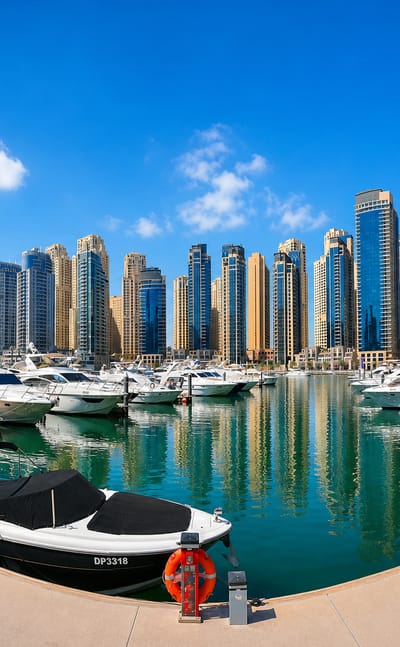
Dubai rises along a creek off the Persian Gulf, the largest city of the United Arab Emirates and a gold-trading port founded in 1833.Where to stay →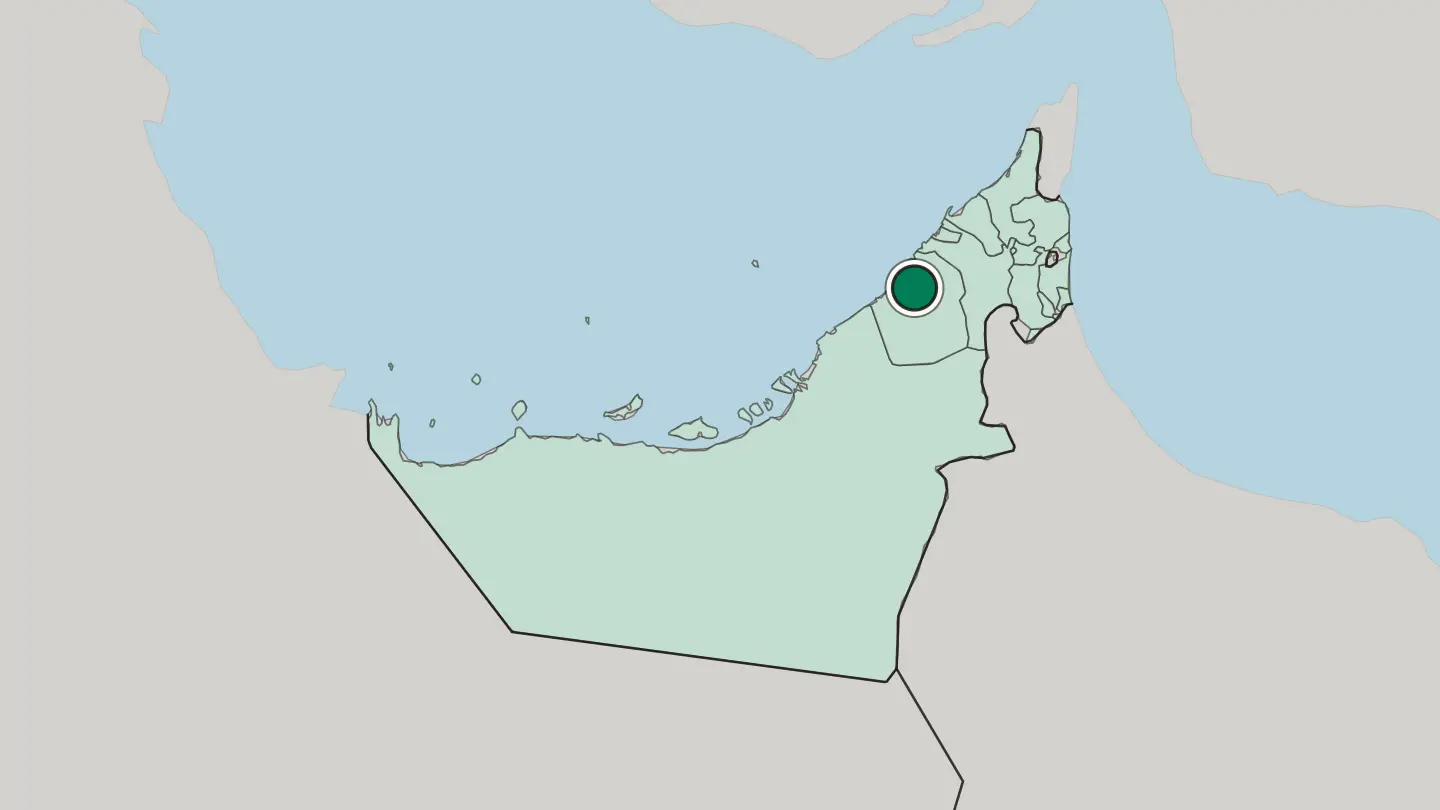
 United Arab Emirates
Abu Dhabi
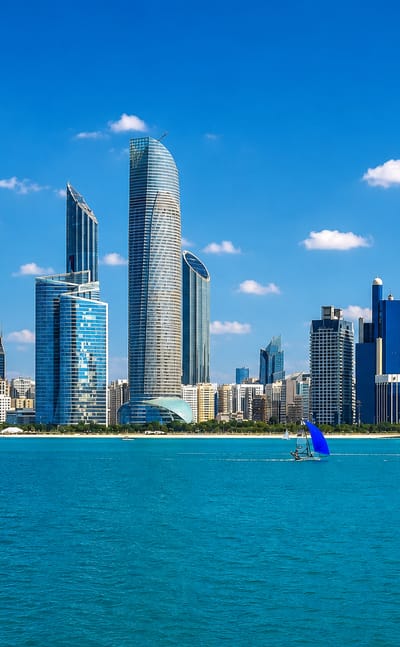
The Persian Gulf wraps a T-shaped island at Abu Dhabi, capital of the United Arab Emirates, known for the Louvre Abu Dhabi and Wahat Al Karama.Where to stay →
 United Arab Emirates
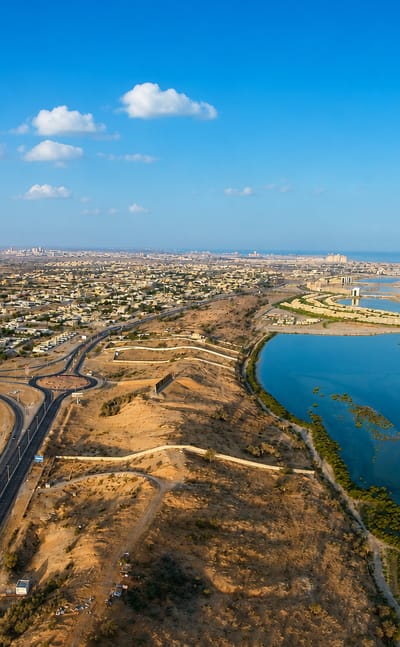
Sharjah
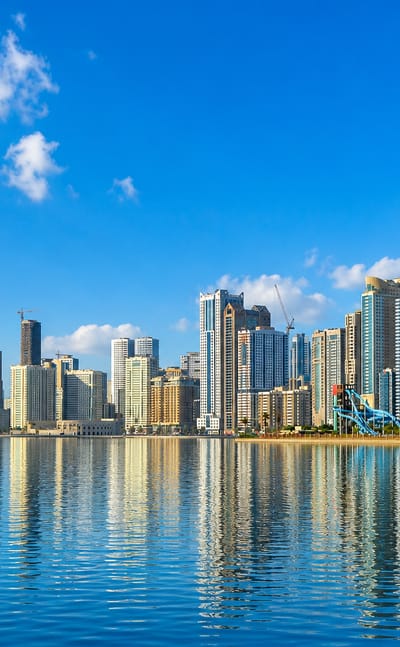
Museums and old courtyard houses ring Sharjah, the port city and capital of the Emirate of Sharjah in the United Arab Emirates.Where to stay →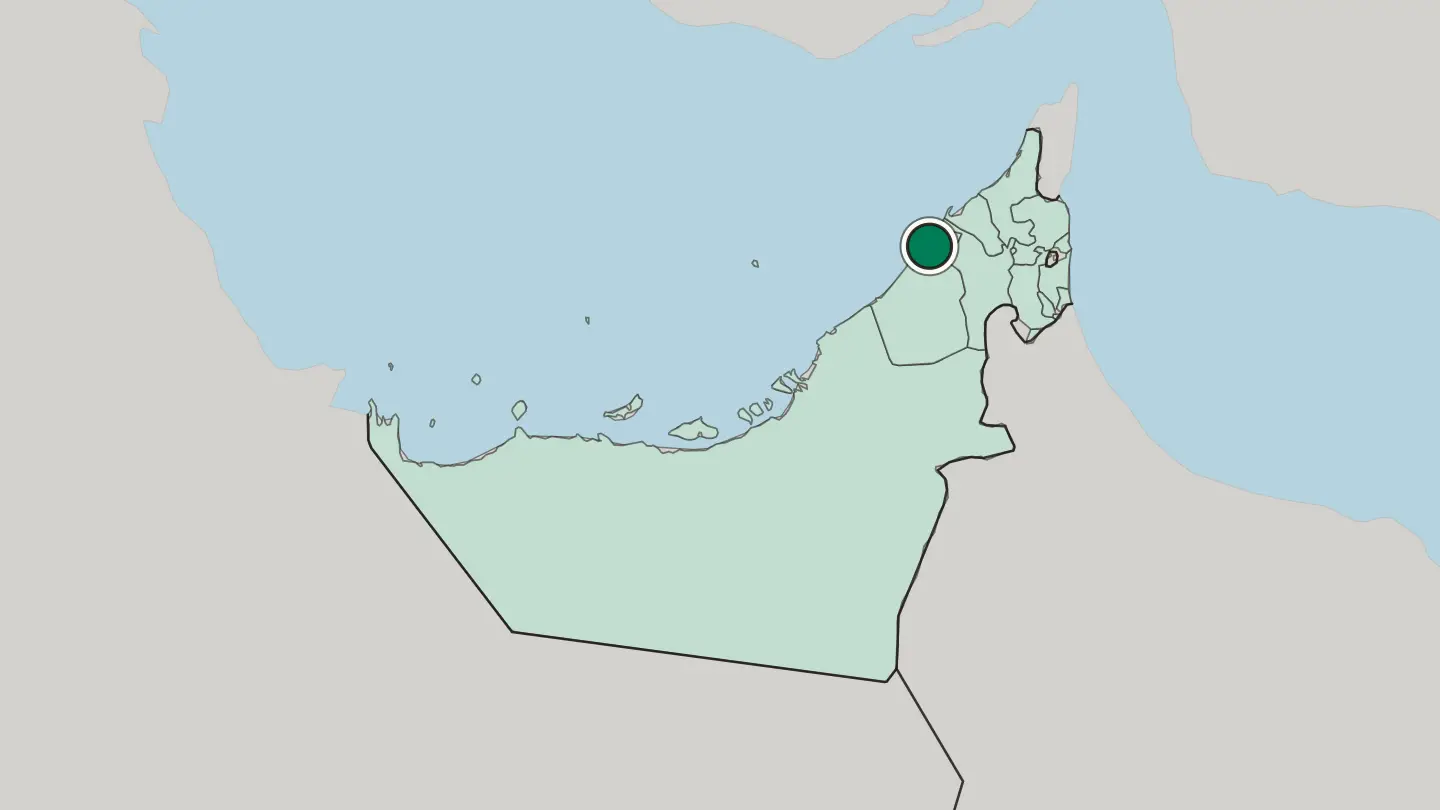
 United Arab Emirates
Ras Al Khaimah
A working creek splits Ras Al Khaimah, the port city and capital of the Emirate of Ras Al Khaimah in the United Arab Emirates.Where to stay →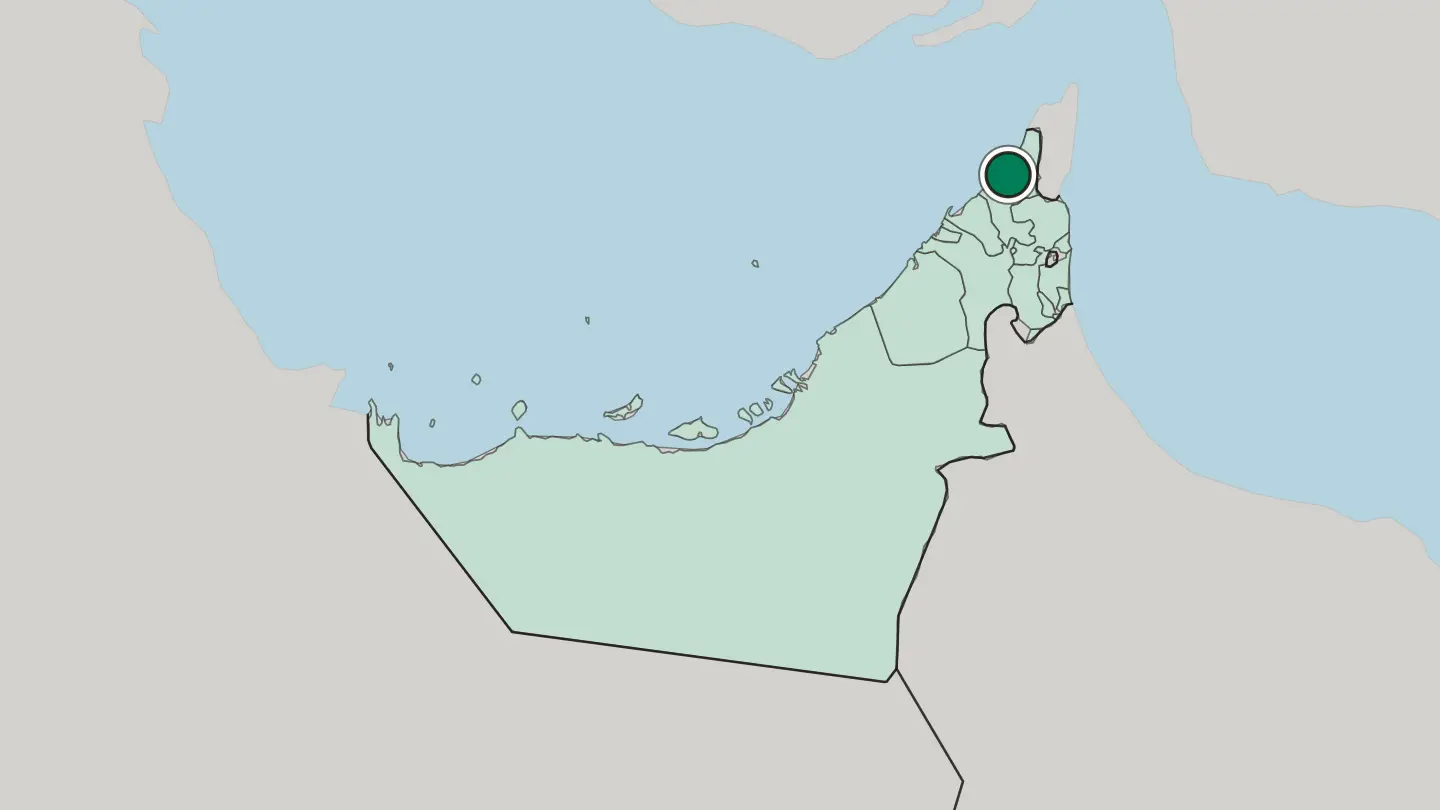
 United Arab Emirates
Al Ain City
Al Ain is the oasis city of the Abu Dhabi emirate, lying inland at the desert's edge by the Oman border in the United Arab Emirates.Where to stay →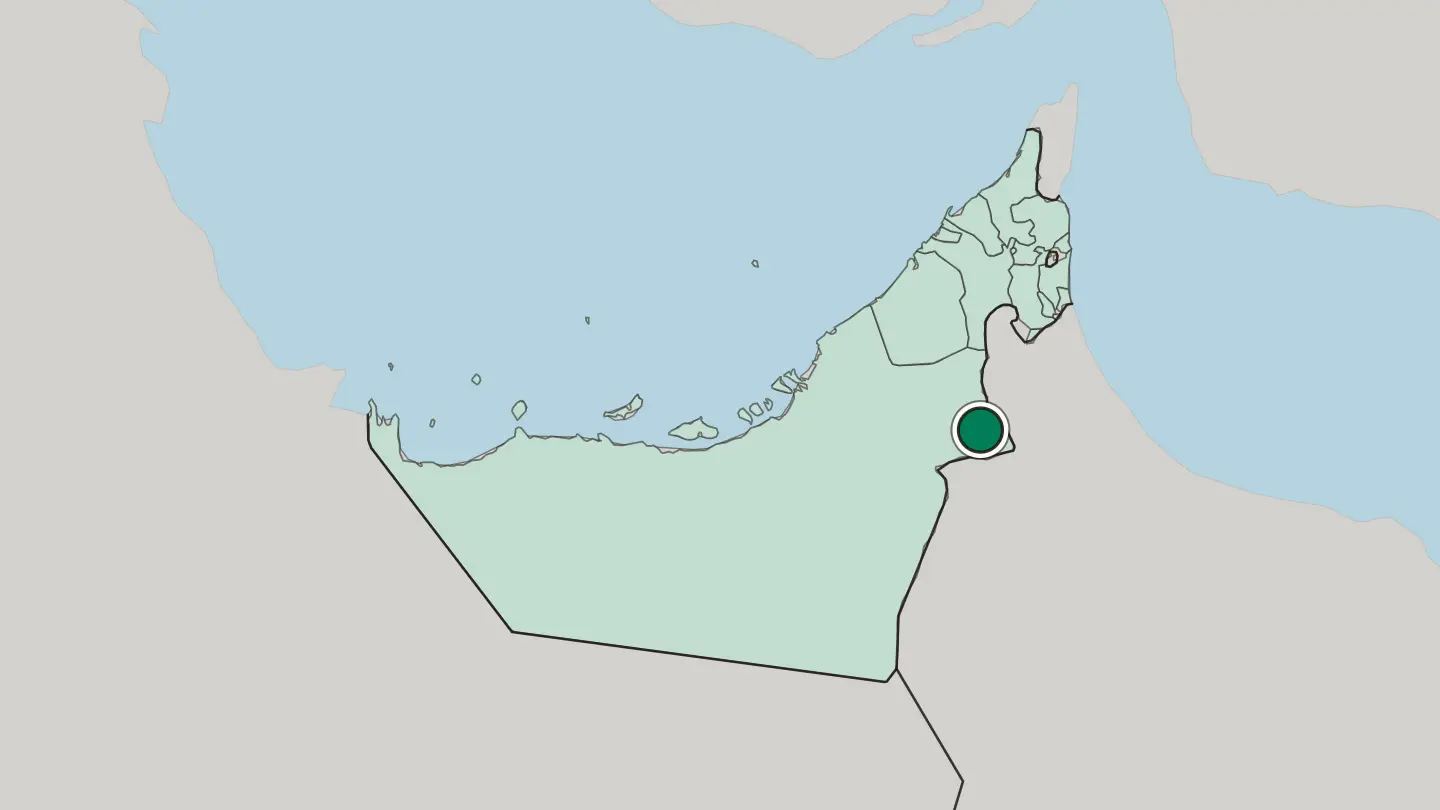
 United Arab Emirates
Ajman
Ajman, capital of the Emirate of Ajman, is bounded by the Persian Gulf on one side and surrounded on land by the Emirate of Sharjah.Where to stay →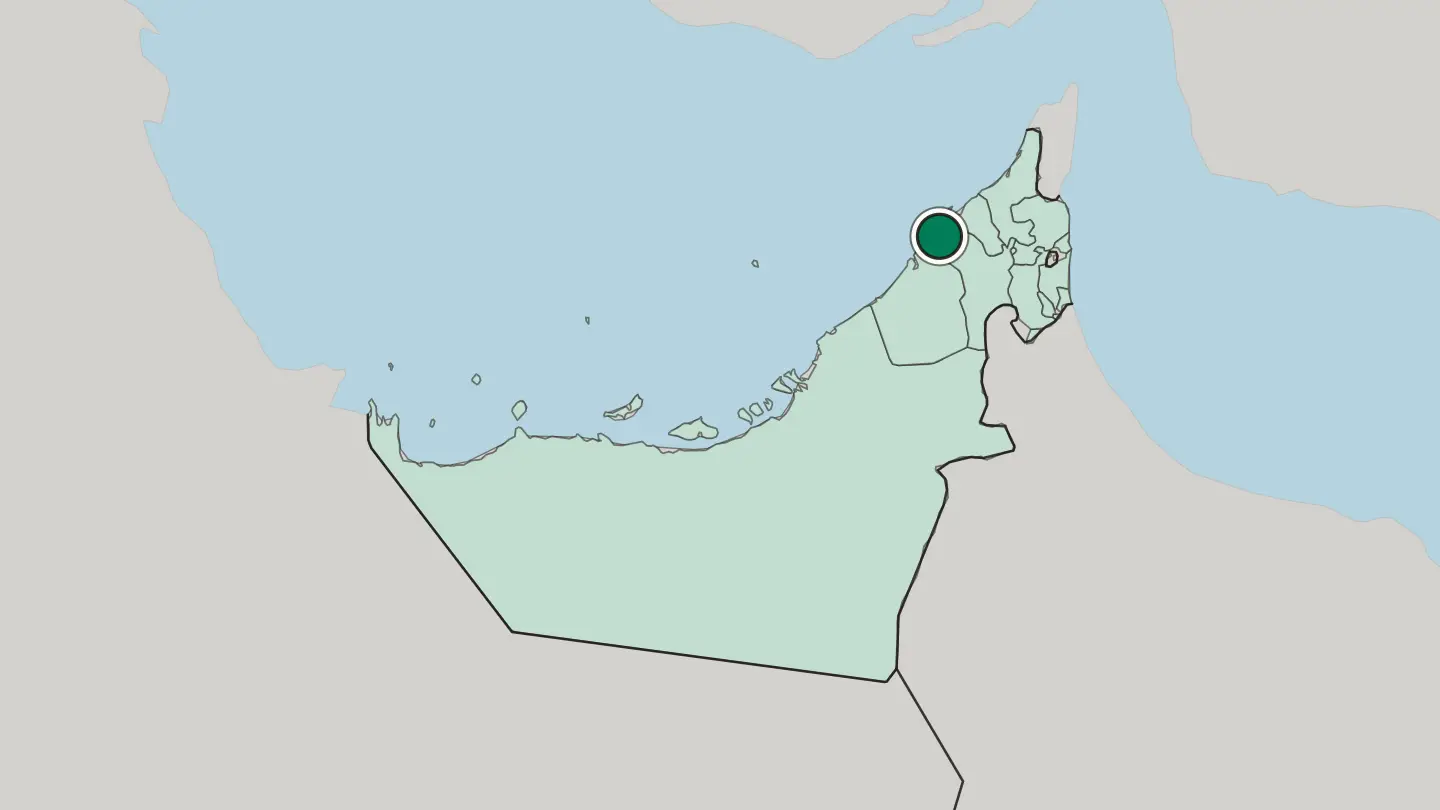
 United Arab Emirates
Fujairah
Fujairah stands at the foot of the Hajar Mountains on the Gulf of Oman, capital of the Emirate of Fujairah in the United Arab Emirates.Where to stay →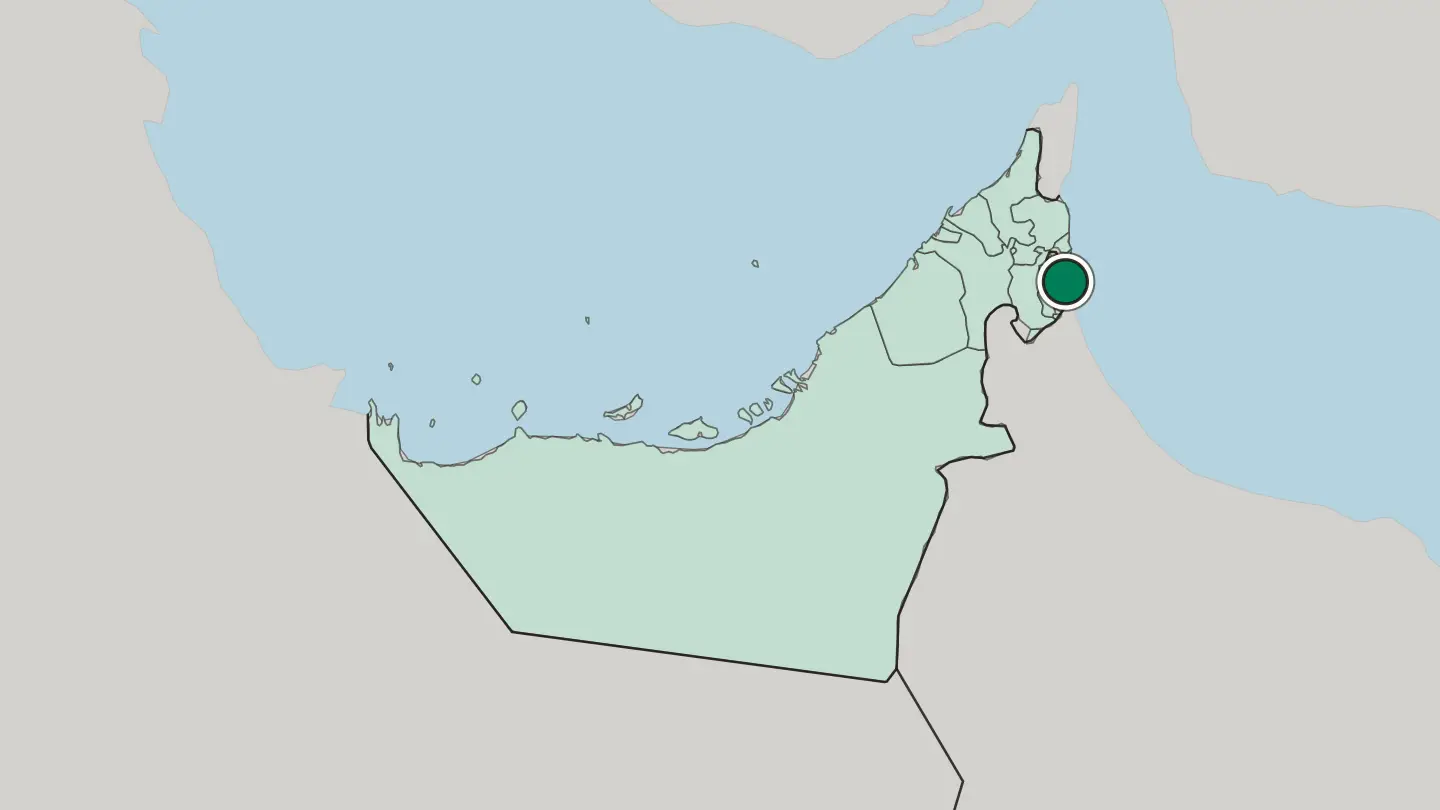
 United Arab Emirates
Umm Al Quwain City
Umm Al Quwain City shares its name with the emirate of Umm al Qaywayn in the United Arab Emirates, and holds Al Mahatta Fort.Where to stay →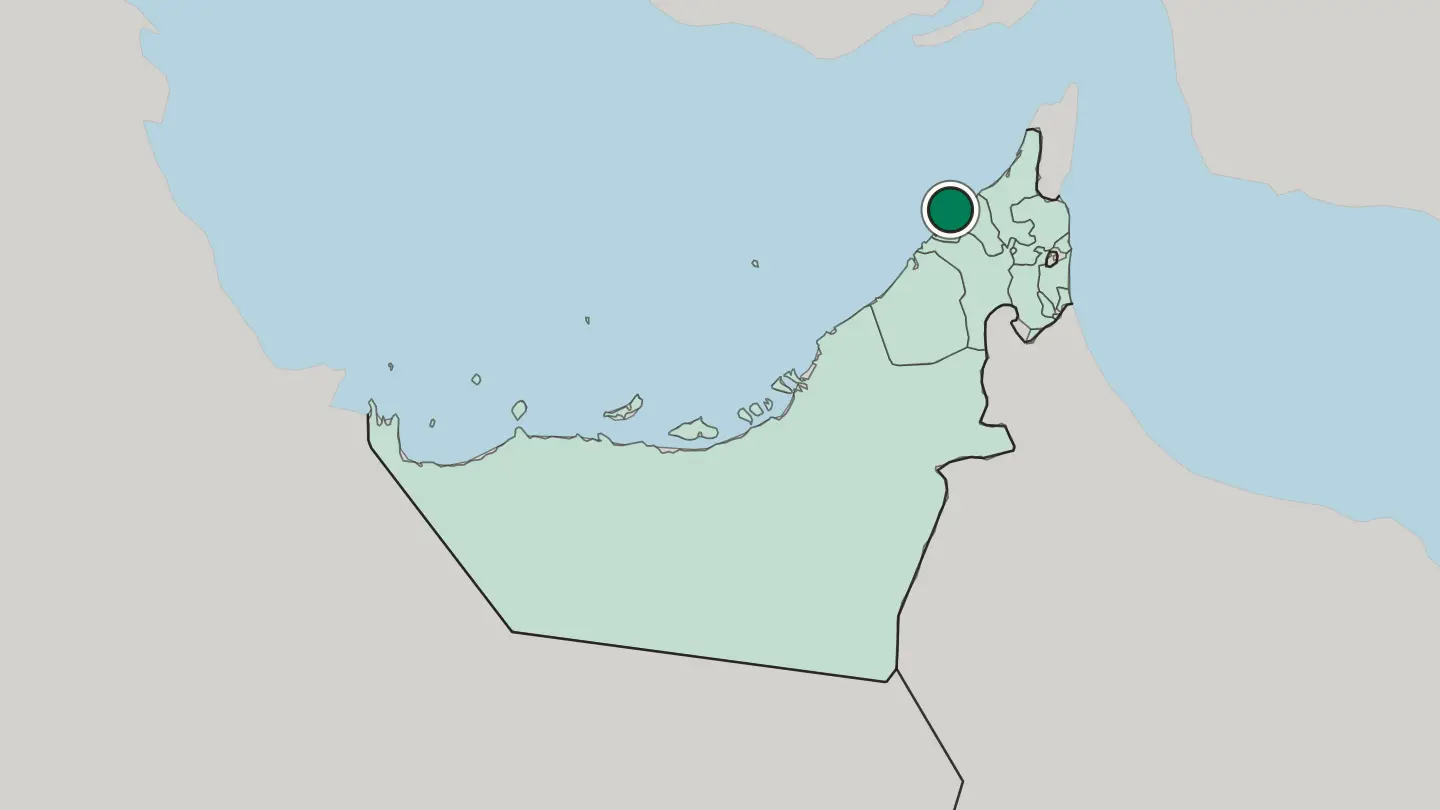
Hotel links are affiliate links: booking through them may earn us a commission, at no extra cost to you. It never affects how places are ranked. How this works
Regions of United Arab Emirates
United Arab Emirates
Abu Dhabi
Abu Dhabi is the largest emirate of the United Arab Emirates, its federal capital spread across a T-shaped island in the Persian Gulf.Towns & cities →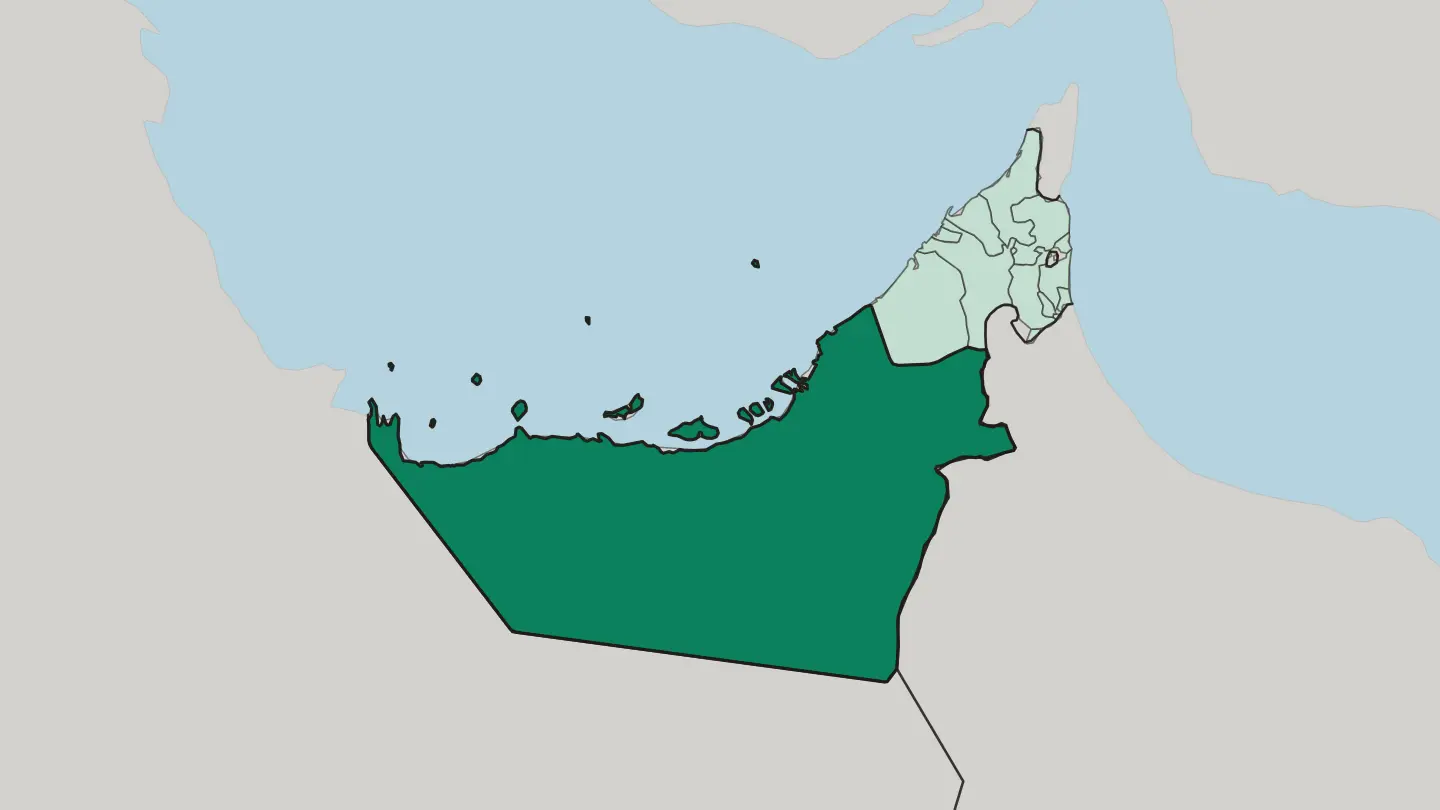 United Arab Emirates
Dubai
The Emirate of Dubai stretches from a Persian Gulf creek into the desert, one of the seven emirates of the United Arab Emirates around Dubai city.Towns & cities →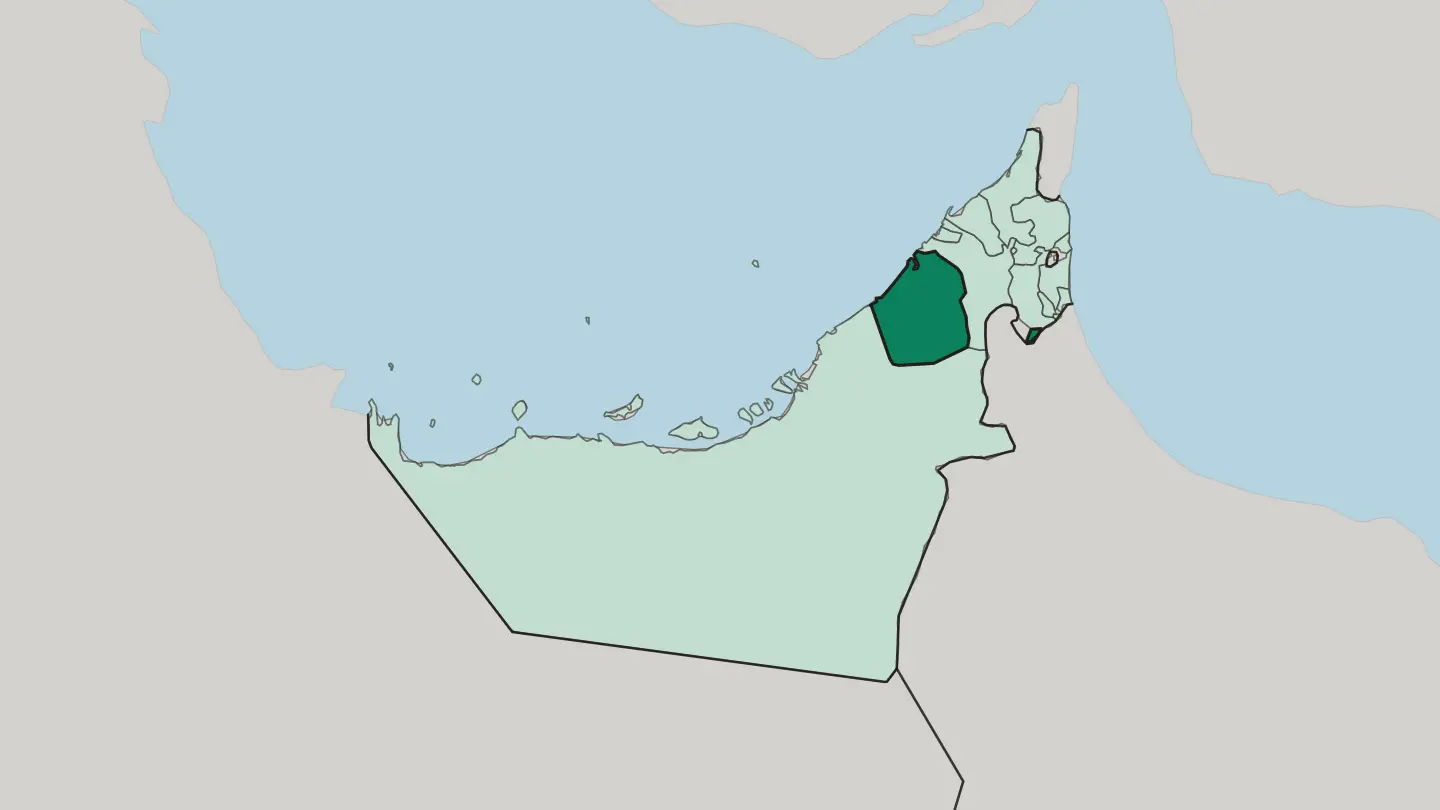 United Arab Emirates
Emirate of Ajman
Emirate of Ajman is the smallest of the seven emirates, a strip of Persian Gulf coast wrapped by Sharjah on three sides.Towns & cities →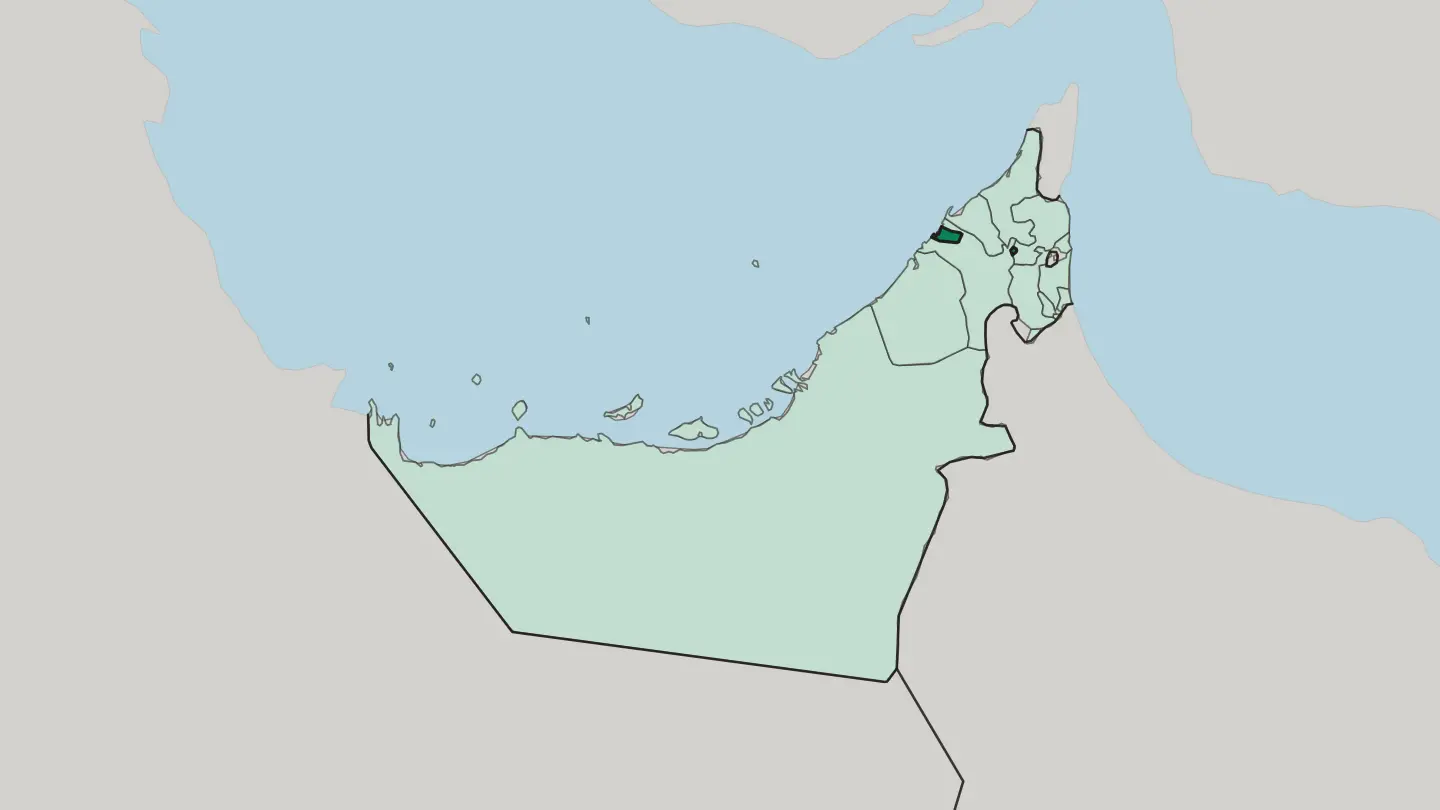 United Arab Emirates
Emirate of Fujairah
Fujairah is the one United Arab Emirates emirate that faces the Gulf of Oman alone, its coast walled by the Hajar Mountains.Towns & cities →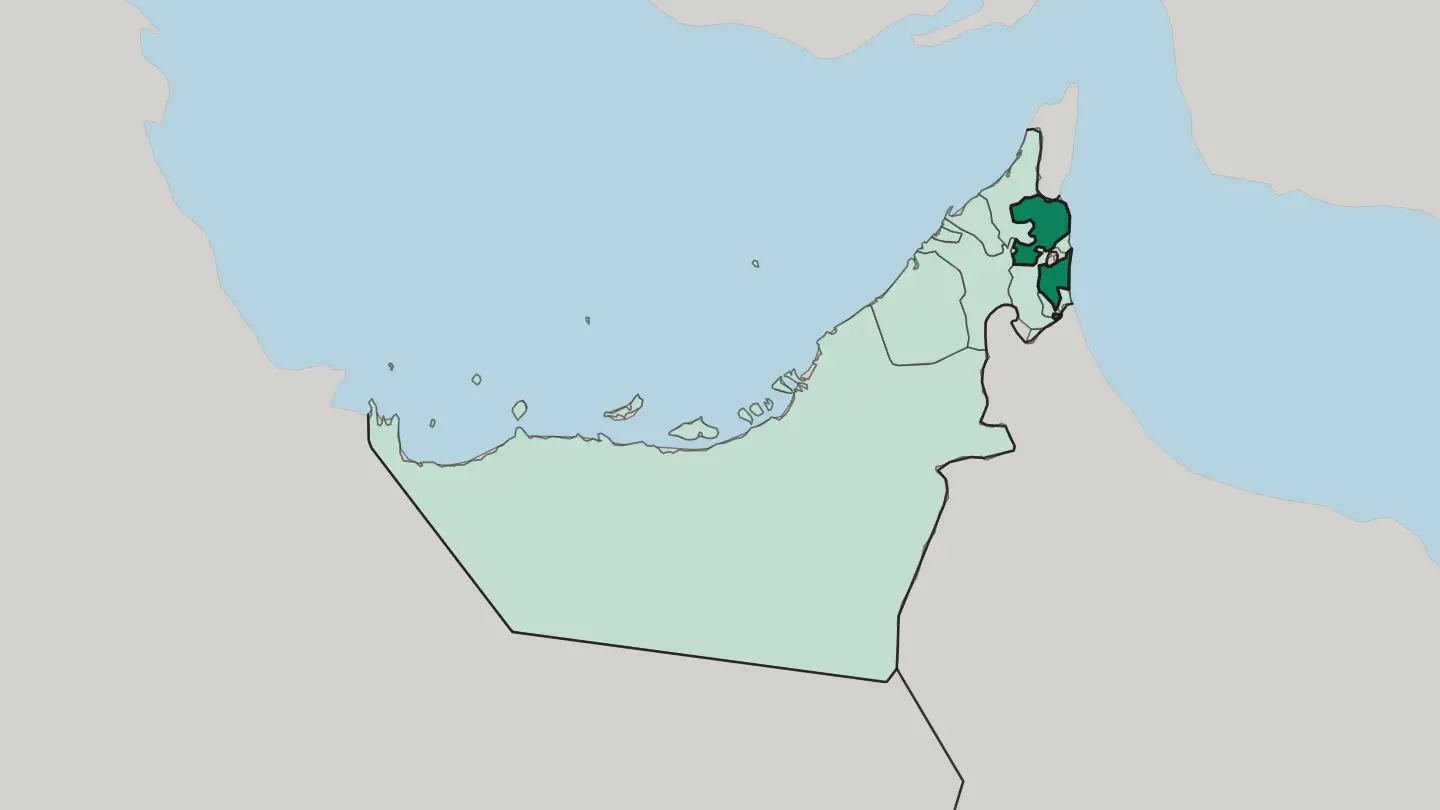 United Arab Emirates
Emirate of Ras Al Khaimah
Ras Al Khaimah is the northernmost of the seven emirates of the United Arab Emirates, backed by the Al Hajar Mountains and edged by the Persian Gulf.Towns & cities →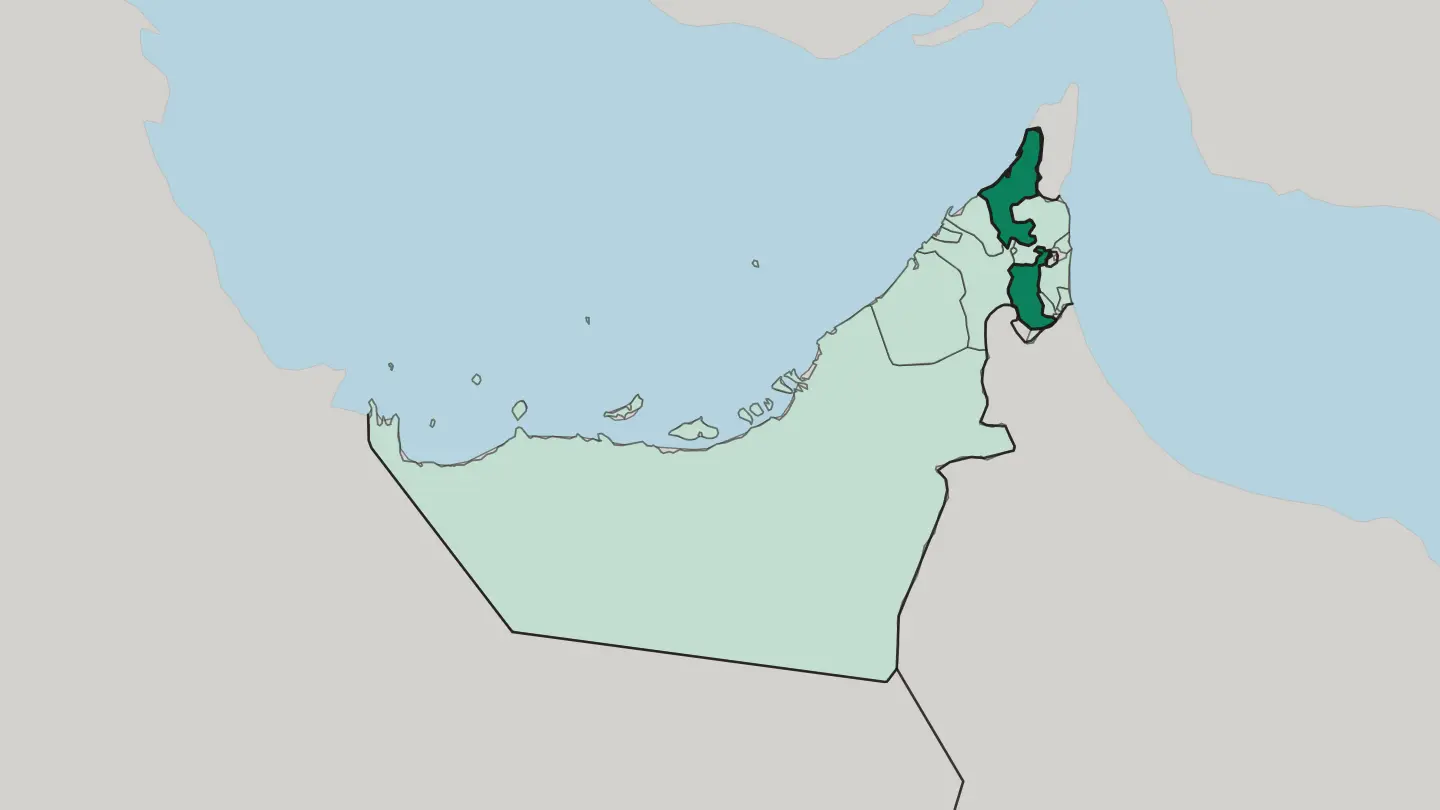 United Arab Emirates
Emirate of Sharjah
Sharjah is the third-largest emirate of the United Arab Emirates, the only one to touch both the Persian Gulf and the Gulf of Oman.Towns & cities →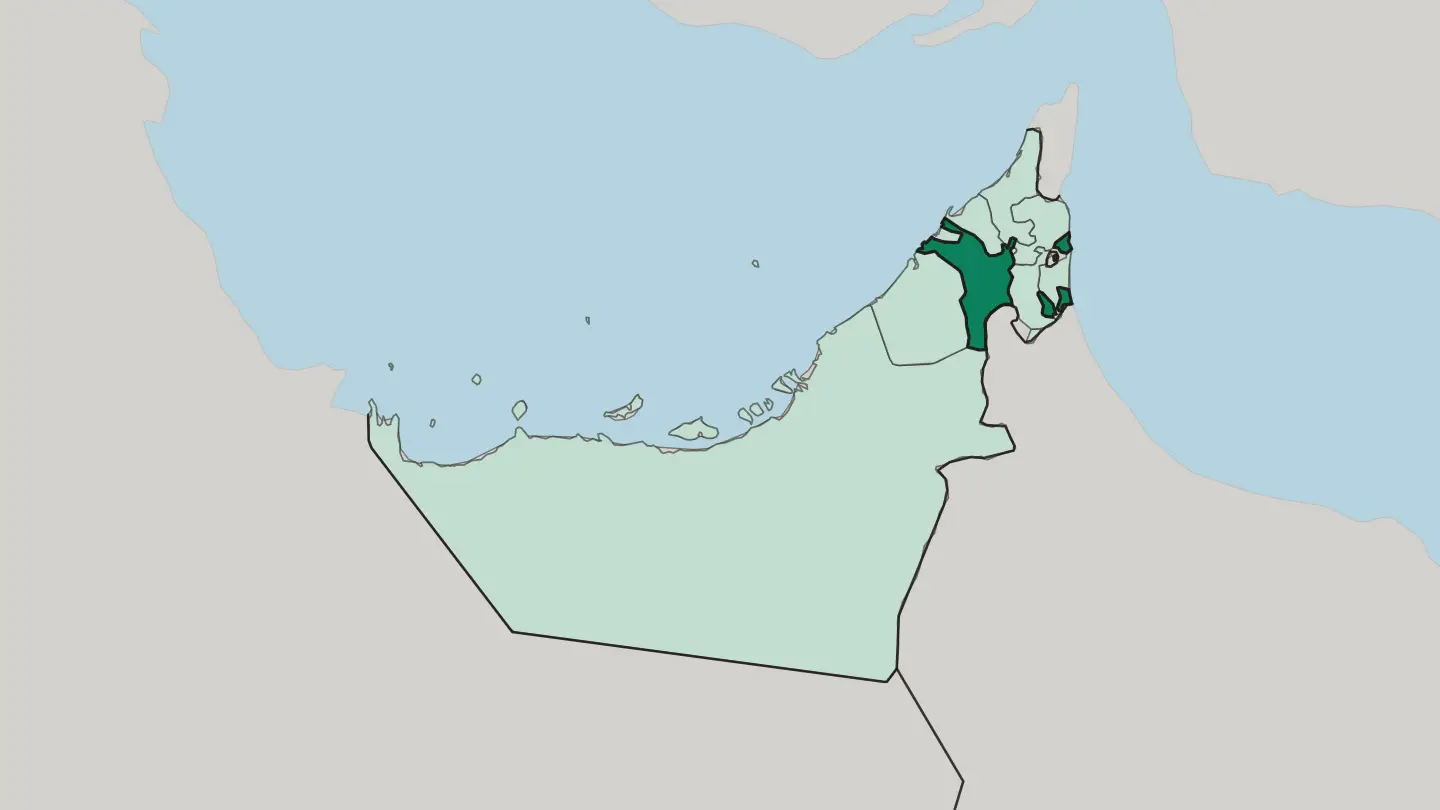 United Arab Emirates
Umm al Qaywayn
Umm al Qaywayn is the least populous of the United Arab Emirates, a fishing emirate on the Persian Gulf north of Dubai.Towns & cities →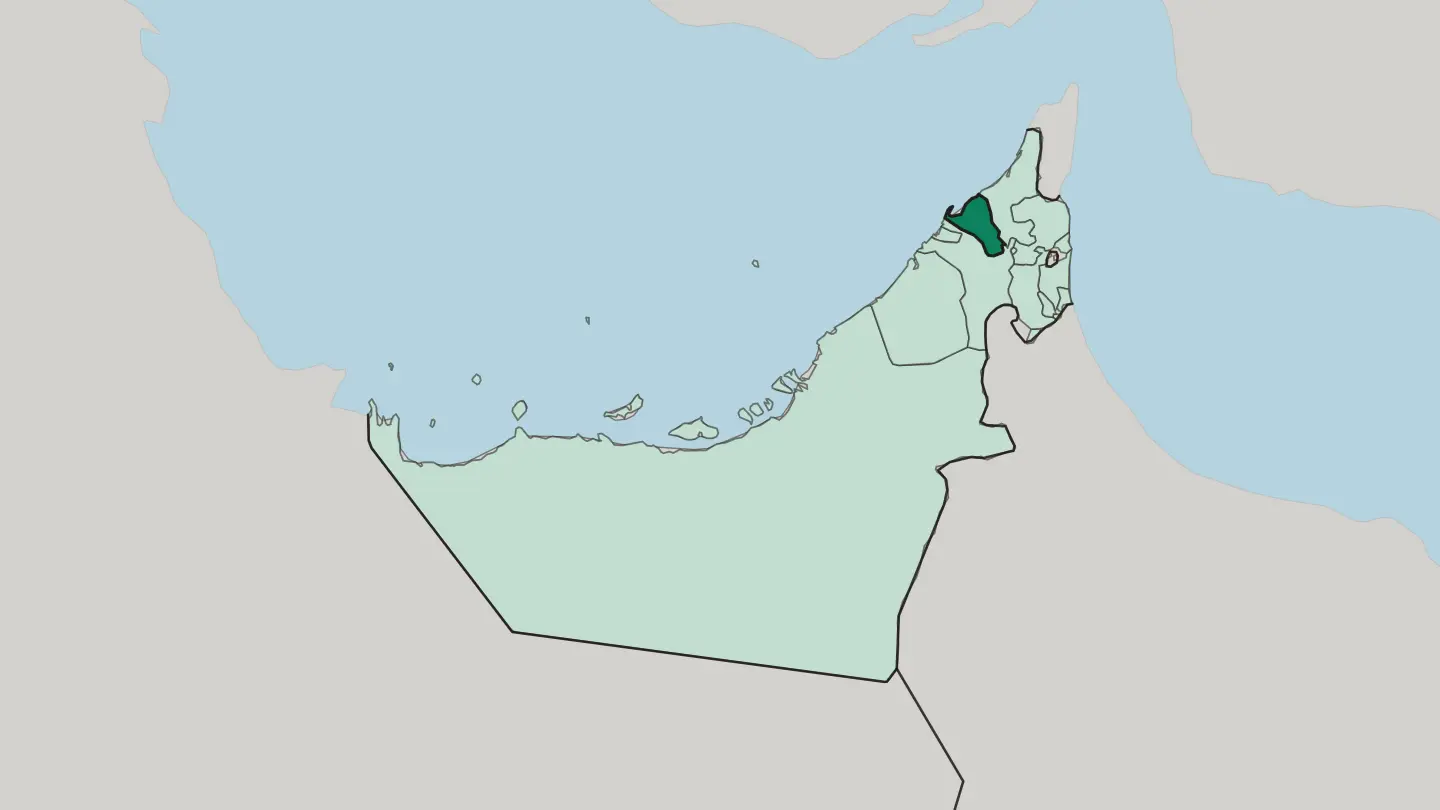
Explore by experience
Not sure which place? Start from how you want to travel.
About United Arab Emirates
What is United Arab Emirates known for?
The United Arab Emirates is known for the twin hubs of Dubai and Abu Dhabi, for the desert expanse of the Empty Quarter, and for its founding as a federation in 1971. Dubai stands as the country's largest city. Abu Dhabi holds the seat of national government, while the surrounding emirates carry an older trading heritage tied to the Persian Gulf.
Arabic gives the country its official voice.
Where is United Arab Emirates?
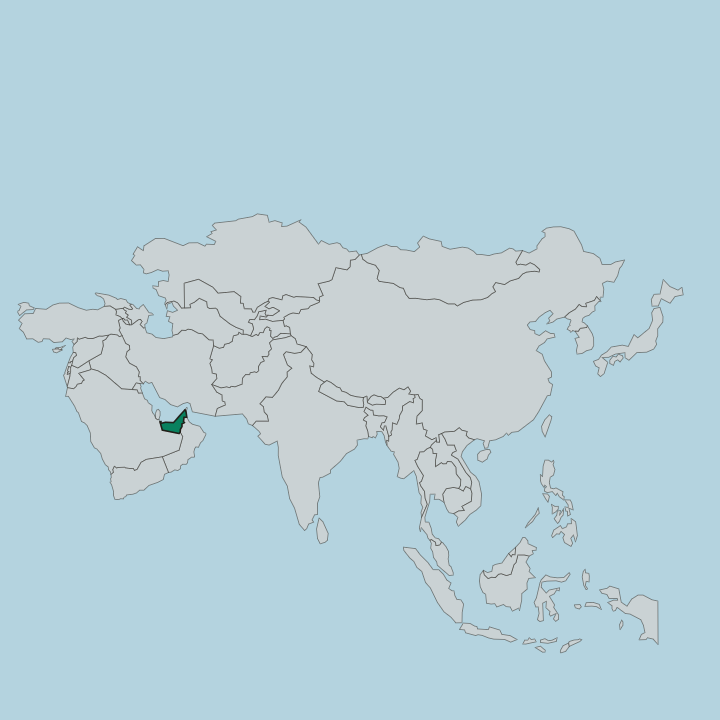
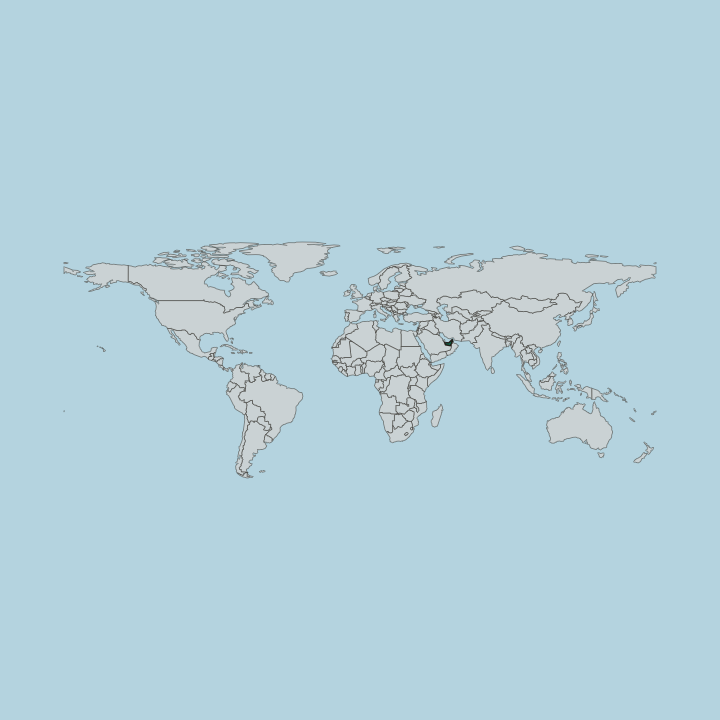
The United Arab Emirates sits at the eastern end of the Arabian Peninsula, in the stretch of West Asia commonly grouped as the Middle East. It stands at the entrance to the Persian Gulf. This sheltered sea forms the country's long northern shore, and the federation faces Qatar and Iran across its waters.
To the east, past a corner of the peninsula, the Gulf of Oman washes the coast and opens toward the wider ocean beyond. Land borders run to Oman in the east and northeast, and to Saudi Arabia in the southwest. The setting is coastal and low.
Inland, the land gives way to sand. The Empty Quarter, one of the largest continuous deserts on earth, spreads across the southern reaches and blurs the boundary with Saudi Arabia. Between desert and coast, the seven emirates share a flat, arid terrain of dune fields and salt flats.
Dubai and Abu Dhabi grew on the narrow band of habitable coast. The smaller emirates hold the rest. The Persian Gulf shaped this land long before oil was ever found, carrying its trade across warm, shallow waters that made the settlements possible.
What is the history of United Arab Emirates?
The United Arab Emirates took its present form in 1971, when seven emirates on the eastern Arabian Peninsula joined as a single federation. Abu Dhabi became the capital of the new state. Each emirate had governed itself before the union, along a coast that had lived by the sea and the trade routes of the Persian Gulf for generations.
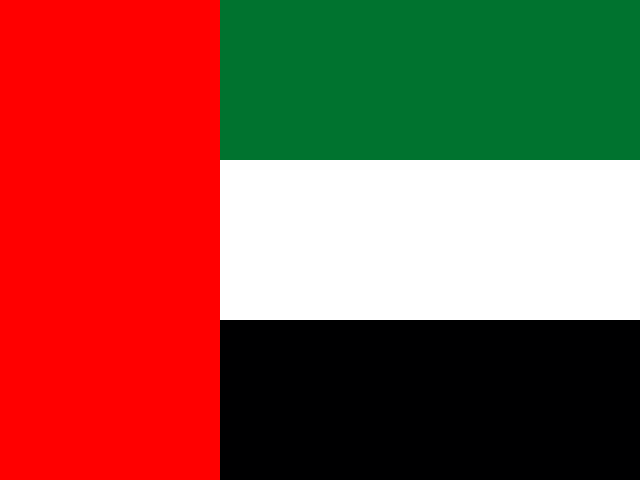
The federation drew these separate territories under one flag. It set Abu Dhabi and Dubai on the path to becoming the country's leading cities. The federal structure took shape as a semi-constitutional monarchy, with each of the seven emirates keeping its own ruler within the union.
Islam had long been the faith of the peninsula, and it became the state religion. Arabic, spoken across the region for centuries, was written into the country as the official language. The desert interior of the Empty Quarter stayed sparsely peopled, while the Persian Gulf shore drew the settlements that would grow into the modern emirates.
History here runs along the water.
What is United Arab Emirates like?
The United Arab Emirates carries the culture of the Arabian Peninsula, shaped by Islam and the Arabic language. Islam is the state religion, and its calendar, customs, and architecture mark daily life across the seven emirates. Arabic is the official tongue.
Yet English is the most widely spoken language and the working language of business, a sign of how many nations meet along this coast. The result is a society rooted in the Gulf and open to the world beyond it. Life divides between the desert and the sea.
The traditions of the Empty Quarter interior, tied to open sand and long horizons, sit alongside the maritime culture of the Persian Gulf ports. Dubai and Abu Dhabi draw people from across the Middle East and far past it, giving the emirates a mixed, layered character. Custom and language shift from one emirate to the next.
Beneath the variety, the shared frame stays constant: the Arabic language, the faith of Islam, and the pull of the Gulf.
What is the climate of United Arab Emirates?
The United Arab Emirates has a hot desert climate across most of its land. Summers on the Persian Gulf coast run long, hot, and humid, while the Empty Quarter interior stays dry and blazing under a subtropical sun. Winters are short and mild, the one season that softens the heat.
Rain falls rarely and briefly. The sea moderates the coast; the desert exaggerates the extremes inland.
How do you get to United Arab Emirates?
Most travelers reach the United Arab Emirates by air, landing at Dubai or Abu Dhabi, the country's two main gateways on the Persian Gulf coast. Overland routes cross the borders it shares with Oman to the east and northeast, and with Saudi Arabia to the southwest. By sea, the Persian Gulf and the Gulf of Oman carry shipping to its ports.
From the coast, roads fan inland toward the desert. Dubai and Abu Dhabi handle most of the arrivals.
Updated September 2026