United Arab Emirates
Emirate of Fujairah, United Arab Emirates — Towns & Travel Guide
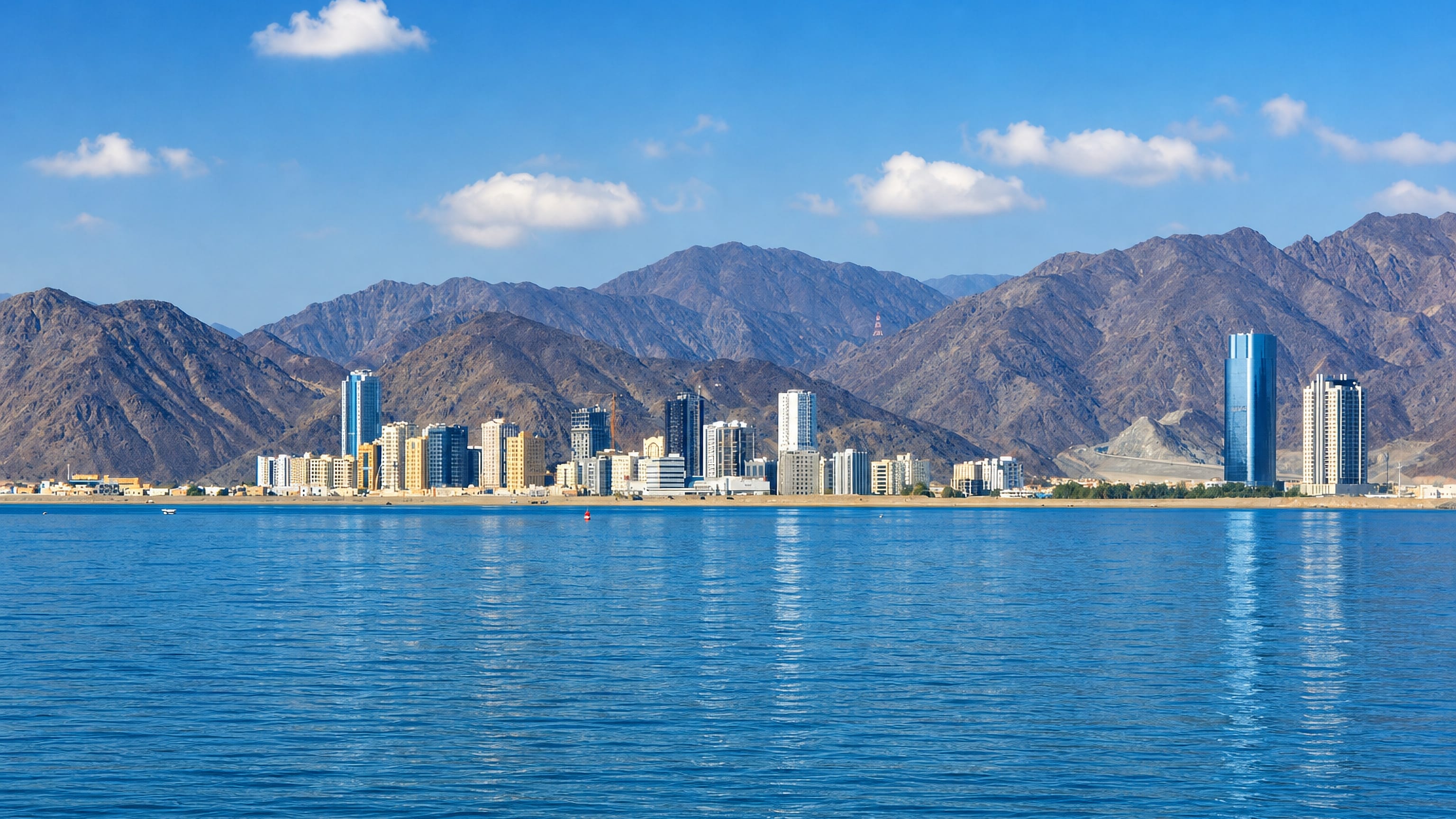
Fujairah is the one United Arab Emirates emirate that faces the Gulf of Oman alone, its coast walled by the Hajar Mountains.
Hotel links are affiliate links: booking through them may earn us a commission, at no extra cost to you. It never affects how places are ranked. How this works


Towns & cities in Emirate of Fujairah
One town here has its own guide — it links to where to stay.

 United Arab Emirates
Fujairah
Fujairah stands at the foot of the Hajar Mountains on the Gulf of Oman, capital of the Emirate of Fujairah in the United Arab Emirates.Where to stay →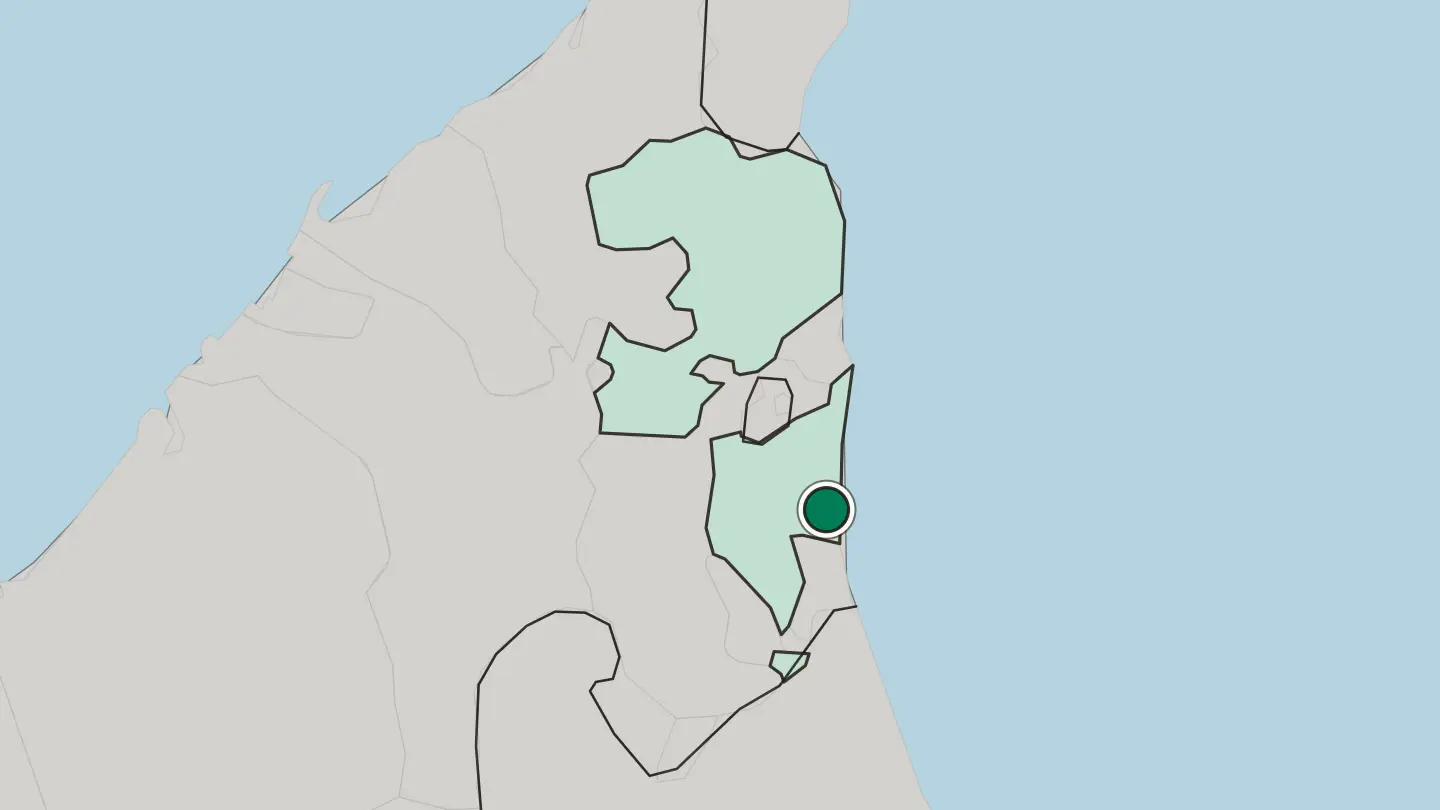
Hotel links are affiliate links: booking through them may earn us a commission, at no extra cost to you. It never affects how places are ranked. How this works
About Emirate of Fujairah
Fujairah is the mountain-and-sea emirate.
What is Emirate of Fujairah known for?
It is the only one of the seven that sits entirely on the Gulf of Oman, with no shore on the Persian Gulf at all. The Hajar Mountains fall almost straight into the water here, so the beaches back onto bare grey ridges rather than desert flats. Its port at Fujairah city is one of the largest bunkering stations for ships in the world, fuelling tankers that round the Strait of Hormuz.
Beach resorts, dive sites, and the fifteenth-century Al Bidyah Mosque draw the visitors.
Where is Emirate of Fujairah?
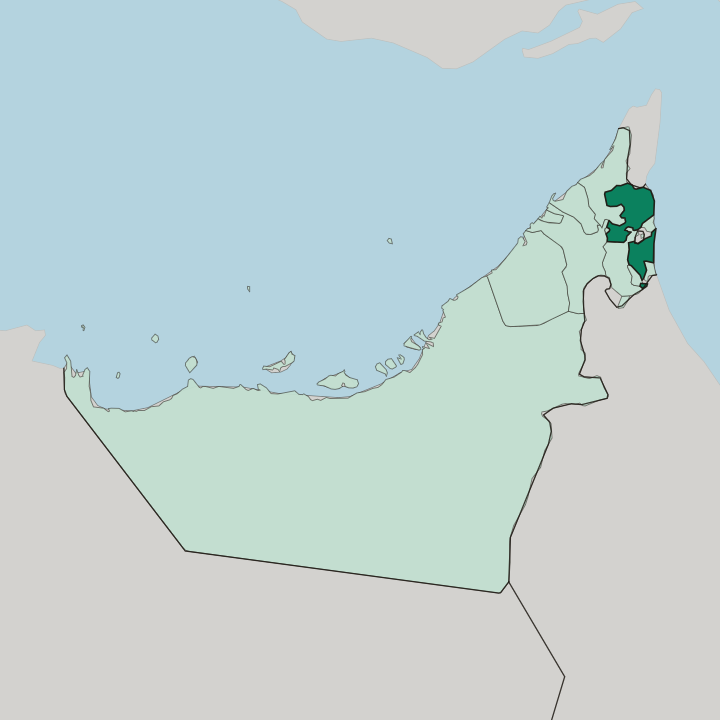
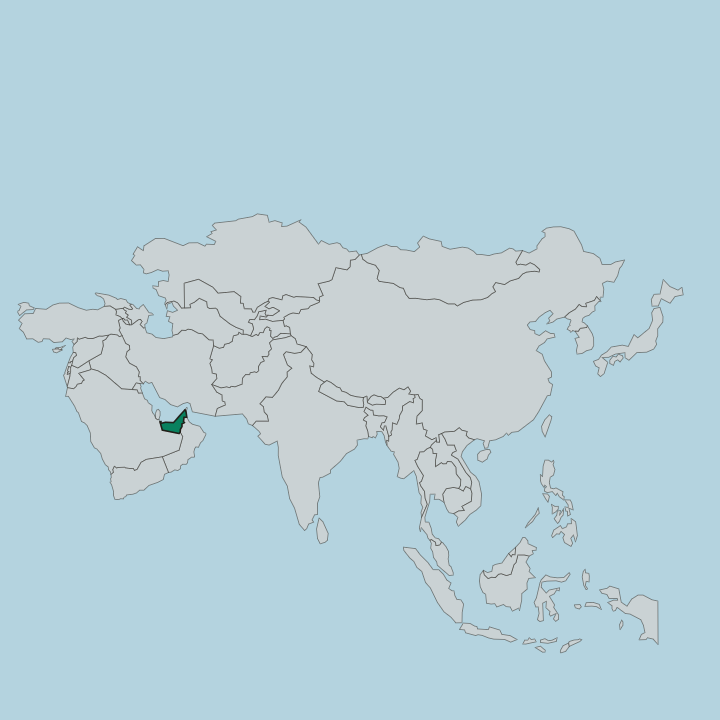
Fujairah takes up the east coast of the United Arab Emirates, the strip of land between the Hajar Mountains and the Gulf of Oman. It is the only emirate of the seven with its whole coastline on that gulf and none on the Persian Gulf behind the range. The mountains are the point.
The Hajar chain runs down the eastern side of the country and drops toward the sea inside the emirate, so Fujairah is the most mountainous of the seven by a wide margin. Its shore reaches roughly seventy kilometres, from the port at Fujairah city in the south up to Dibba Al-Fujairah in the far north. The map here is not tidy.
Fujairah is not one solid block but a scatter of territory laced with pieces of its neighbours, the untidy legacy of old tribal boundaries. Khor Fakkan sits on the coast in the middle of it all, a port town that belongs to the Emirate of Sharjah yet is ringed on land entirely by Fujairah. Between the ridges, seasonal streambeds called wadis cut down toward the coast and carry the mountain rain to the sea.
That rain is why the emirate is greener than the flat desert interior of the country. Fujairah's east coast is the wet side of the mountains.
What is Emirate of Fujairah like?
Fujairah's culture grew out of the Sharqiyin, the tribe that has held this eastern coast for centuries and gave the ruling Al Sharqi family its name. Life here was mountain and sea rather than pearl and desert. The people fished the Gulf of Oman, worked date gardens in the wadis, and traded across the ridges, and that older world still shows in the forts and watchtowers scattered through the emirate.
Arabic is the language, and Islam shapes the calendar and the coast. The emblem of that heritage is the Al Bidyah Mosque, built in the fifteenth century from stone and mud brick and roofed with four low domes carried on a single central pillar. It is the oldest mosque still in use in the country.
Fujairah Fort stands above the old town, a sixteenth-century stronghold of round and square towers that guarded the coast for generations. The emirate also keeps a living custom the rest of the country lost: bull-butting, a bloodless contest of two Brahman bulls pushing head to head, still staged on Friday afternoons near the capital. It is old, loud, and entirely local.
What is the history of Emirate of Fujairah?
For most of its recorded past this coast answered to the Al Qasimi rulers of Sharjah across the mountains. That changed under the Sharqiyin. In 1901 Sheikh Hamad bin Abdullah Al Sharqi broke away and declared Fujairah independent, and though Britain was slow to agree, his family held the ground.
Formal British recognition finally came in 1952, when Fujairah was accepted as an autonomous Trucial state, the last of the seven to win that standing. It joined the other six to form the United Arab Emirates in 1971, and the Al Sharqi have ruled it ever since.
What is the climate of Emirate of Fujairah?
Fujairah has a hot desert climate, but the Hajar Mountains bend it. Summers on the coast are long and fierce, with daytime heat well above forty and thick humidity blowing in off the Gulf of Oman from June through September. Winters are the season to come, mild and dry from December to March, warm by day and cool once the sun drops behind the ridges.
What sets the east coast apart is the rain: the mountains lift the sea air and wring more water from it than the Persian Gulf side ever sees, so the wadis run and the slopes green up after a downpour. It falls mostly in winter.
How do you get to Emirate of Fujairah?
Most travellers arrive by road from the other side of the mountains. The Sheikh Khalifa Highway climbs straight over the Hajar Mountains from Dubai, cutting the drive to Fujairah city to a little over an hour through the passes. Fujairah has its own international airport by the capital, though it carries far less traffic than the big hubs on the Persian Gulf coast.
Once you are here, a coast road links the beach towns from Dibba Al-Fujairah in the north down past Khor Fakkan to the capital. Bring a car.
Common questions
What is the best area to stay in Emirate of Fujairah?
Fujairah city: the capital and the port. Al Aqah and the northern beaches: beach resorts and diving. The Hajar Mountain wadis: mountains and wadis.
Good for
More regions in United Arab Emirates
Updated September 2026