Argentina · Córdoba Province
Where to Stay in Río Cuarto, Córdoba Province
Río Cuarto, founded in 1786 in the south of Córdoba Province, works as a commercial and agricultural hub for the country around it.
Hotel links are affiliate links: booking through them may earn us a commission, at no extra cost to you. It never affects how places are ranked. How this works


Where to stay in Río Cuarto
How the choice of base plays out on the ground.
Work comes before tourism in Río Cuarto. Commerce and farming set the rhythm, and most beds sit in the centre, where the Rio Cuarto Regional Historical Museum and the Museo Municipal De Bellas Artes give a visitor two fixed stops within an easy walk of the same streets. For most visitors, that settles the choice.
Anyone with a car has better reasons to look outward, since the rock shelters on the landmark list, ALERO IRUSTA and ALERO INTIHUASI 5 - CASA PINTADA among them, are not city sights at all. Rail has a museum here. The Museo Del Riel keeps that side of the record, which suits travellers who read a city through its infrastructure rather than through its monuments.
Two buildings carry their own history: the Escuela Normal Superior Justo José de Urquiza and the Comandancia de Fronteras del Ejercito de Línea. The Museo Tecnológico Aeroespacial adds an unexpected subject to an agricultural city's list. Río Cuarto covers about 64 square kilometres, enough that the outer streets are a drive from the middle but not enough to make the choice complicated.
Stay central, drive out.
Find hotels in Río Cuarto
Direct booking searches for these neighbourhoods.
Central Río Cuarto
The Museo Municipal De Bellas Artes and the commercial streets share the middle of Río Cuarto.Find hotels in Central Río CuartoRailway history at the Museo Del RielMuseo Del Riel side
The rail collection gives the city a second indoor subject once the Museo Municipal De Bellas Artes is done.Find hotels in Museo Del Riel sideDay trips to the Capilla de Tegua and the rock sheltersOutward road edge
ALERO IRUSTA and ALERO DE LOS ÑANDUES need a car, and an outer room starts that drive earlier. Lodging is scarce in this area; reserve in advance.Find hotels in Outward road edgeHotel links are affiliate links: booking through them may earn us a commission, at no extra cost to you. It never affects how places are ranked. How this works
Things to do in Río Cuarto
Ranked by global recognition; descriptions from Wikidata (CC0).
Museums & Galleries
3- Museo Tecnológico Aeroespacial
- Museo Del Riel
- Museo Municipal De Bellas Artes
Castles & Historic Sites
3- ALERO DE LA CORAL
- ALERO DE LA MASCARA
- ALERO DE LOS ÑANDUES
Landmarks & Notable Places
3- Capilla de Tegua Heritage
- Comandancia de Fronteras del Ejercito de Línea Heritage
- Escuela Normal Superior Justo José de Urquiza Heritage
worth knowingacross 3 categories in Río Cuarto
About Río Cuarto
Trade and farming carry Río Cuarto.
What is Río Cuarto known for?
The city is a commercial and agricultural hub for the south of Córdoba Province, and its landmark list includes rock shelters as well as buildings: ALERO DE LA CORAL, ALERO DE LA MASCARA and ALERO DE LOS ÑANDUES are overhangs in the ground, not architecture. The Museo Tecnológico Aeroespacial covers a newer subject entirely. Founded in 1786, the city keeps its own record at the Rio Cuarto Regional Historical Museum.
What are the main landmarks in Río Cuarto?
Rock shelters make up most of the list. ALERO DE LA CORAL, ALERO DE LA MASCARA, ALERO DE LOS ÑANDUES, ALERO INTIHUASI 5 - CASA PINTADA and ALERO IRUSTA are the five of them, a set of overhangs recorded as heritage in their own right. The Capilla de Tegua is the chapel on the list.
Museums take the rest: the Rio Cuarto Regional Historical Museum, the Museo Municipal De Bellas Artes, the Museo Del Riel and the Museo Tecnológico Aeroespacial. The Escuela Normal Superior Justo José de Urquiza and the Comandancia de Fronteras del Ejercito de Línea close it. Twelve in all.
What is the history of Río Cuarto?
Río Cuarto dates from 1786. Its official name carries the older form as well: Ciudad de Río Cuarto o Villa de la Concepción del Río Cuarto. The frontier shaped what came next.
The Comandancia de Fronteras del Ejercito de Línea survives as a named landmark, the command of a line army posted at a frontier, and it fixes the city's early role better than any date can. Older ground lies all around it. ALERO DE LA CORAL, ALERO DE LA MASCARA, ALERO DE LOS ÑANDUES, ALERO INTIHUASI 5 - CASA PINTADA and ALERO IRUSTA are heritage rock shelters in the country around, and they record a use of this landscape that has nothing to do with 1786.
Later institutions filled in: the Escuela Normal Superior Justo José de Urquiza for teaching, the Museo Del Riel for the railway, and the Rio Cuarto Regional Historical Museum for the record of the whole. Art and aerospace have their own houses. The Museo Municipal De Bellas Artes and the Museo Tecnológico Aeroespacial cover them, and the Capilla de Tegua keeps a chapel on a list otherwise made of museums and shelters.
Farming and trade did the rest.
Where is Río Cuarto?
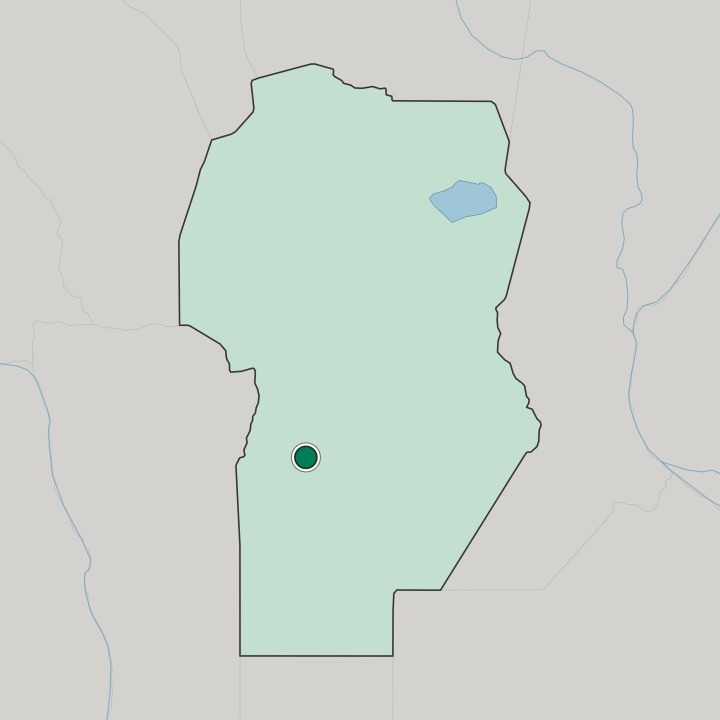
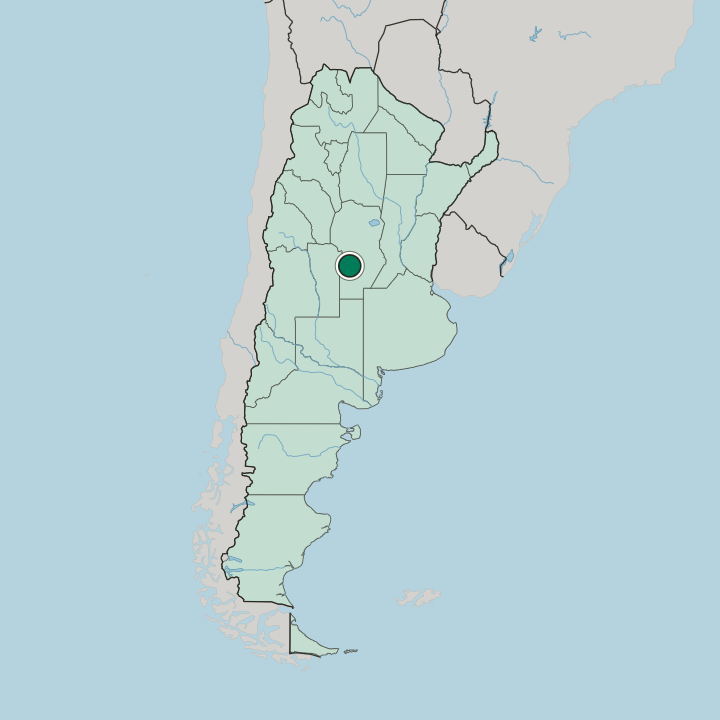
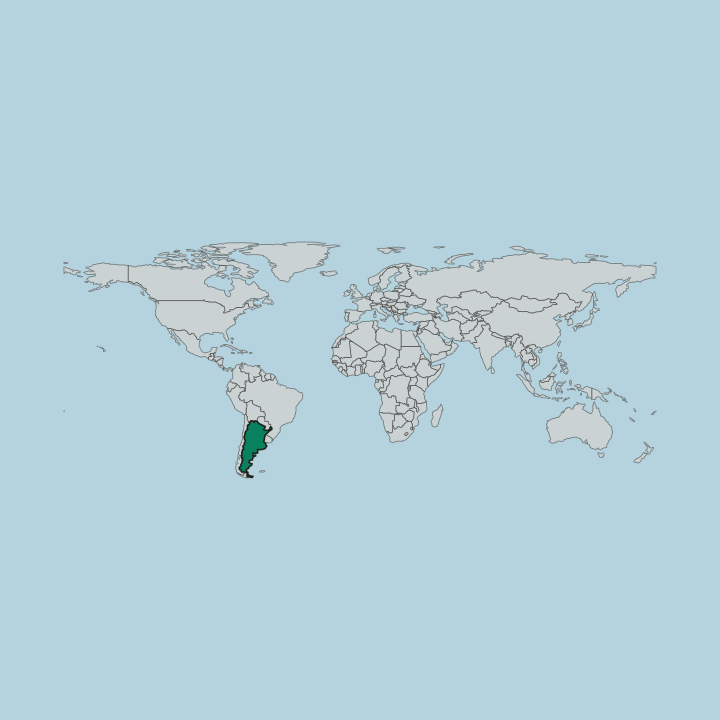
Río Cuarto occupies about 64 square kilometres in the south of Córdoba Province. Farm country runs to the horizon on every side, which is what makes the city a commercial and agricultural hub rather than a market town. No coast anywhere near.
The rock shelters on the city's landmark list, ALERO DE LA MASCARA among them, are the one feature of the surrounding country the record names directly.
What is the climate of Río Cuarto?
Open country sets the weather. Río Cuarto lies in the subtropical band, well inland in the south of Córdoba Province, so the year turns hot around January and cools through the middle months without anything coastal to soften either end. Seasons run southern.
Farm work follows that calendar, and the agricultural hub the city has become depends on it.
How do you get to Río Cuarto?
Everything here arrives by road. Río Cuarto works as a commercial hub for the south of Córdoba Province, which means the traffic of a farming region converges on it from every side of the surrounding country. Rail keeps its own museum here, the Museo Del Riel. Argentina's interior does the rest: everything reaching Río Cuarto crosses farmland first.
Common questions
What is the best area to stay in Río Cuarto?
Central Río Cuarto: Walk-up visits to the Rio Cuarto Regional Historical Museum. Museo Del Riel side: Railway history at the Museo Del Riel. Outward road edge: Day trips to the Capilla de Tegua and the rock shelters.
Good for
More cities in Córdoba Province
Updated September 2026