Brazil · Piauí
Where to Stay in Parnaíba, Piauí
Parnaíba is the second city of Piauí, a delta port on the state's short coast, with Porto das Barcas and an old railway quarter at its centre.
Hotel links are affiliate links: booking through them may earn us a commission, at no extra cost to you. It never affects how places are ranked. How this works


Where to stay in Parnaíba
How the choice of base plays out on the ground.
Porto das Barcas is where the city puts its visitors first. The historical center of Parnaíba runs back from that waterfront, and a room inside it puts the Catedral de Nossa Senhora Mãe da Divina Graça, the Sobrado de Dona Auta, and the Casa de Simplício Dias within a few blocks of the door. Walking works here.
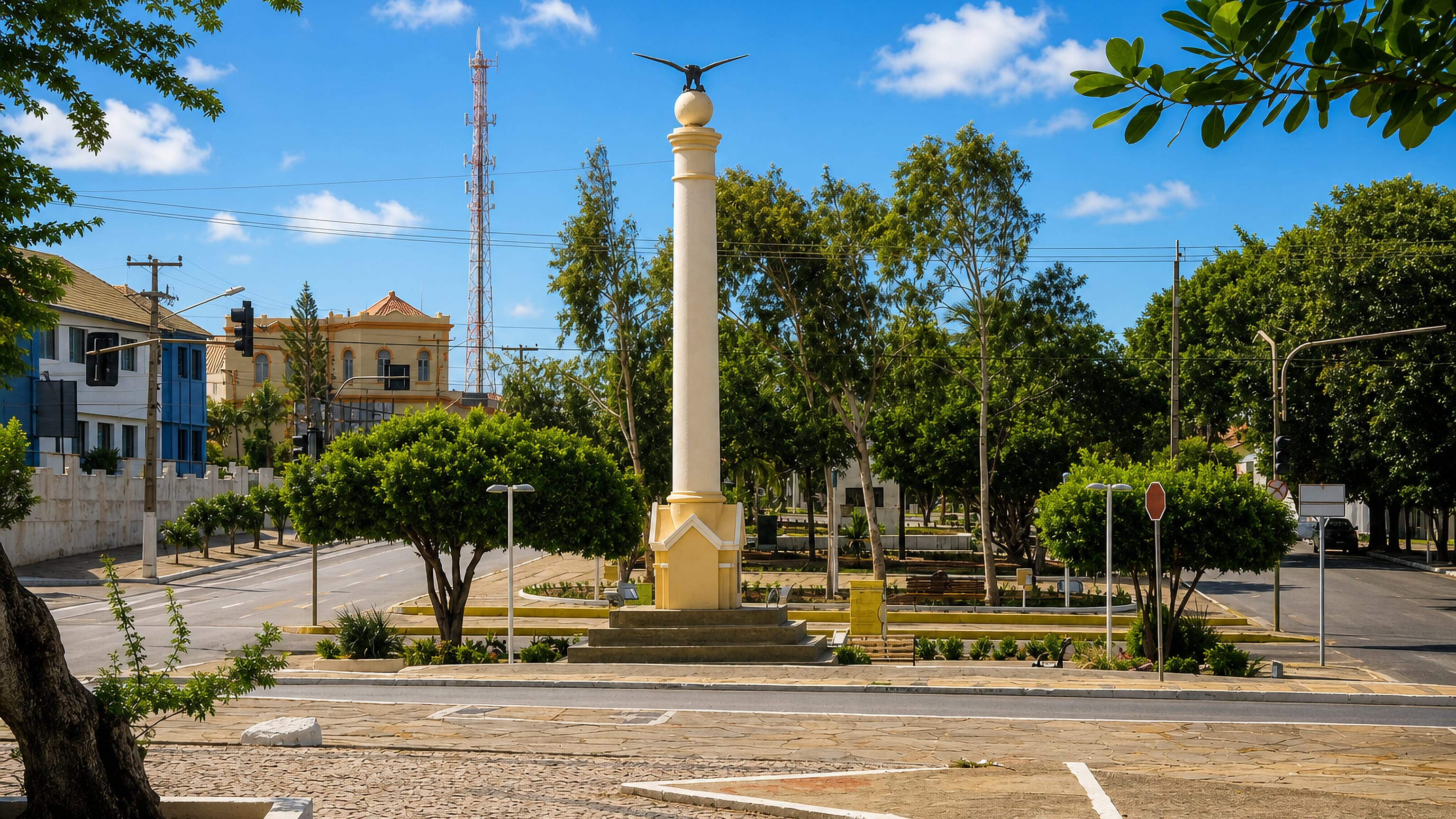
The Obelisco de Parnaíba and the Igreja de Nossa Senhora do Rosário fall on the same short round. The old railway quarter offers a different texture. Antiga Estação Ferroviária de Parnaíba still stands with its Antiga Oficina Ferroviária, its Antiga Cooperativa, and a scatter of sheds and offices, and the Museu do Trem do Piauí sits among them.
Few beds stand here. Anyone drawn to industrial heritage rather than to the delta will still be sleeping in the historical center and walking across, since the quarter is somewhere to spend a morning rather than a night. The delta and the beaches pull stays outward.
Parnaíba is one of four coastal municipalities in Piauí, and hotels toward the shore trade the Museu do Mar and the Esplanada de Parnaíba for sand and quieter water. Departures start at the quay. Travellers using the city as the hinge between Lençois Maranhenses and Jericoacoara often want nothing more than one night near it, which the waterfront supplies without argument.
Find hotels in Parnaíba
Direct booking searches for these neighbourhoods.
The historical center around Porto das Barcas
Porto das Barcas and the Catedral de Nossa Senhora Mãe da Divina Graça stand a few blocks apartFind hotels in The historical center around Porto das BarcasMornings among the Antiga Estação Ferroviária de Parnaíba workshopsThe old railway quarter
The Museu do Trem do Piauí sits among the preserved sheds of the Antiga Oficina Ferroviária. Beds are limited here, so book early.Find hotels in The old railway quarterNights out by the Parnaíba delta rather than in the townThe shore beyond the delta
Parnaíba is one of four coastal municipalities in Piauí and its sand lies past the river mouth. Rooms are few around here — worth securing early.Find hotels in The shore beyond the deltaHotel links are affiliate links: booking through them may earn us a commission, at no extra cost to you. It never affects how places are ranked. How this works
Things to do in Parnaíba
Ranked by global recognition; descriptions from Wikidata (CC0).
Museums & Galleries
2- Museu do Trem do Piauí Heritage
- Museu do Mar Heritage
Churches & Religious Sites
2- Catedral de Nossa Senhora Mãe da Divina Graça, Parnaíba Heritage
- Igreja de Nossa Senhora do Rosário Heritage
Castles & Historic Sites
1- Obelisco de Parnaíba
Landmarks & Notable Places
8- Casa de Simplício Dias Heritage
- Sobrado de Dona Auta Heritage
- Historical center of Parnaíba Heritage
- Almoxarifado da Antiga Estação Ferroviária Heritage
- Antiga Cooperativa Heritage
Show 3 more →
- Antiga Garagem de Veículos e Depósito Heritage
- Antiga Oficina Ferroviária Heritage
- Antigo Armazém Isolado Heritage
worth knowingacross 4 categories in Parnaíba
About Parnaíba
The delta brings most visitors.
What is Parnaíba known for?
Parnaíba stands at the river's mouth, and travellers moving between Lençois Maranhenses and Jericoacoara habitually break the run here to take a boat out among the delta channels. Beaches lie close by. Porto das Barcas, the old port complex on the waterfront, gives the city a centre that repays a couple of days on its own account.
What are the main landmarks in Parnaíba?
The historical center of Parnaíba holds most of the roll. Porto das Barcas leads it, with the Catedral de Nossa Senhora Mãe da Divina Graça, the Igreja de Nossa Senhora do Rosário, the Sobrado de Dona Auta, and the Casa de Simplício Dias standing nearby. The Obelisco de Parnaíba marks the civic side.
Railway buildings make up the rest: the Antiga Estação Ferroviária de Parnaíba, the Antiga Oficina Ferroviária, the Antiga Cooperativa, and the Museu do Trem do Piauí. The Museu do Mar faces the water.
What is the history of Parnaíba?
Parnaíba became a municipality in 1844. River trade explains why: the Parnaíba reaches the sea here, and a port at the mouth served an interior that had no other outlet of its own. Porto das Barcas is what remains of it.
The buildings along that waterfront were raised for the river trade rather than for visitors. Merchant houses survive from the same era. Casa de Simplício Dias and the Sobrado de Dona Auta both carry the names of families rather than institutions, and the historical center of Parnaíba keeps enough of that fabric to read as one continuous quarter.
Churches came with the money. The Catedral de Nossa Senhora Mãe da Divina Graça and the Igreja de Nossa Senhora do Rosário mark two separate strands of worship, while the Obelisco de Parnaíba puts a civic marker among them. The railway arrived and left its whole plant behind.
Antiga Estação Ferroviária de Parnaíba still stands with its Antiga Oficina Ferroviária, its Antiga Cooperativa, and a scatter of sheds, offices, and water tanks that together record how a small terminus actually worked. The Museu do Trem do Piauí keeps the story. Two other collections split the rest of it: the Museu do Mar for the coast, and the Esplanada de Parnaíba for open civic ground. Teresina, the state capital, holds the larger share of Piauí, leaving Parnaíba the coast and the delta.
Where is Parnaíba?
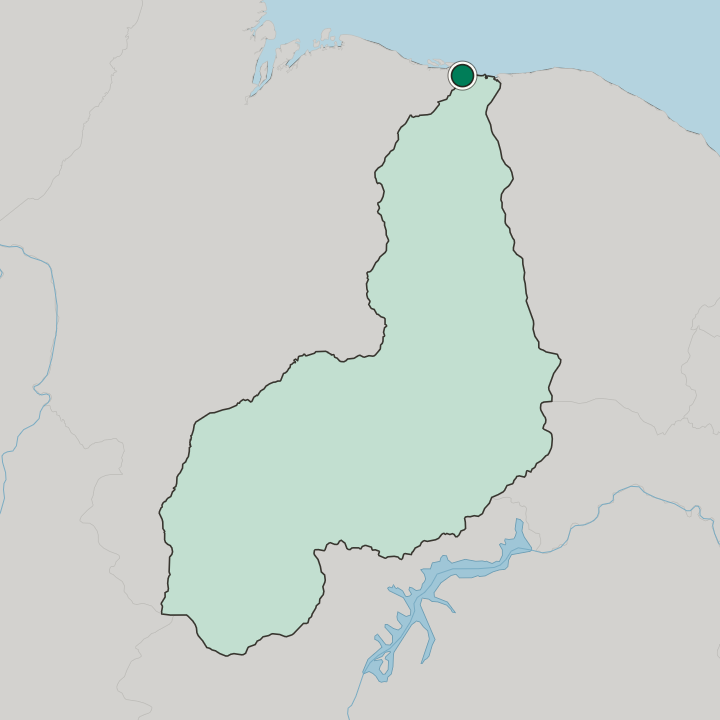
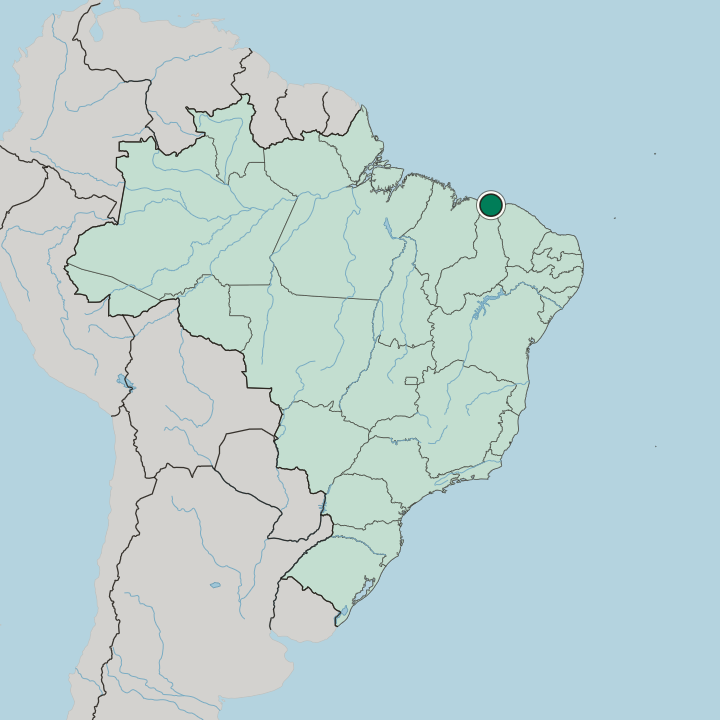
Parnaíba sits at the mouth of the river that shares its name. Its delta breaks into channels and islands before reaching open water, which is the feature most visitors come for and the reason boats matter more than roads on that side of town. The coast is short here.
Piauí has only four coastal municipalities, and Parnaíba is the one with the weight, holding the metropolitan area they jointly make up.
What is the climate of Parnaíba?
The Atlantic keeps Parnaíba honest about heat. Sea air moves up the delta channels and reaches the historical center of Parnaíba, which is why a town this deep in the tropics does not sit as still as the interior of Piauí does. Parnaíba stays warm the year round.
Seasons run on the southern schedule, so the hottest stretch falls around the turn of the year and the mildest in the middle months, though the difference is slight beside the daily pull of the sea breeze.
How do you get to Parnaíba?
Most arrivals are already going somewhere else. The overland route between Lençois Maranhenses and Jericoacoara passes through, and Parnaíba is the practical halfway halt on it rather than the destination at either end. The trains stopped long ago.
Antiga Estação Ferroviária de Parnaíba survives as heritage, so the approach from Teresina and the rest of Piauí is by road.
Common questions
What is the best area to stay in Parnaíba?
The historical center around Porto das Barcas: Walking to the Sobrado de Dona Auta and the Casa de Simplício Dias. The old railway quarter: Mornings among the Antiga Estação Ferroviária de Parnaíba workshops. The shore beyond the delta: Nights out by the Parnaíba delta rather than in the town.
Good for
Another city in Piauí
Updated October 2026