Bhutan: Regions, Cities & Travel Guide
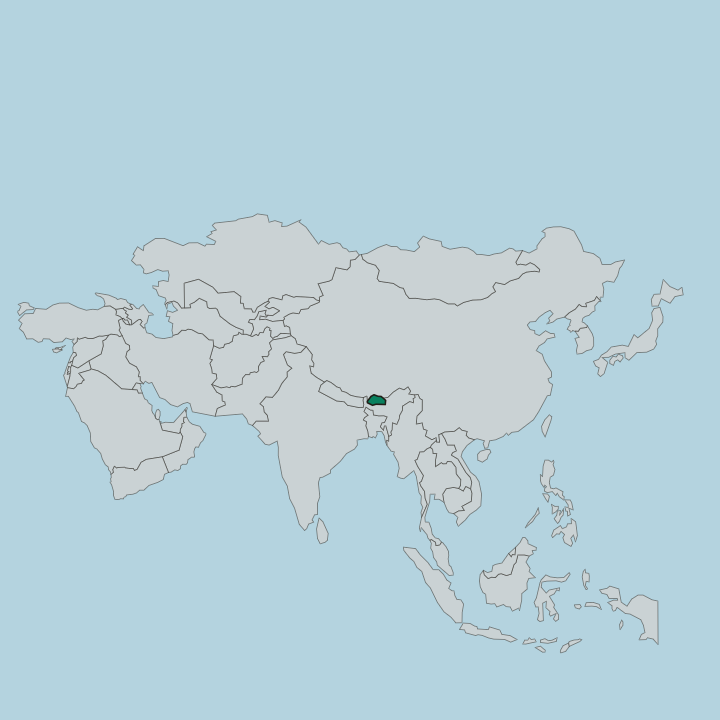
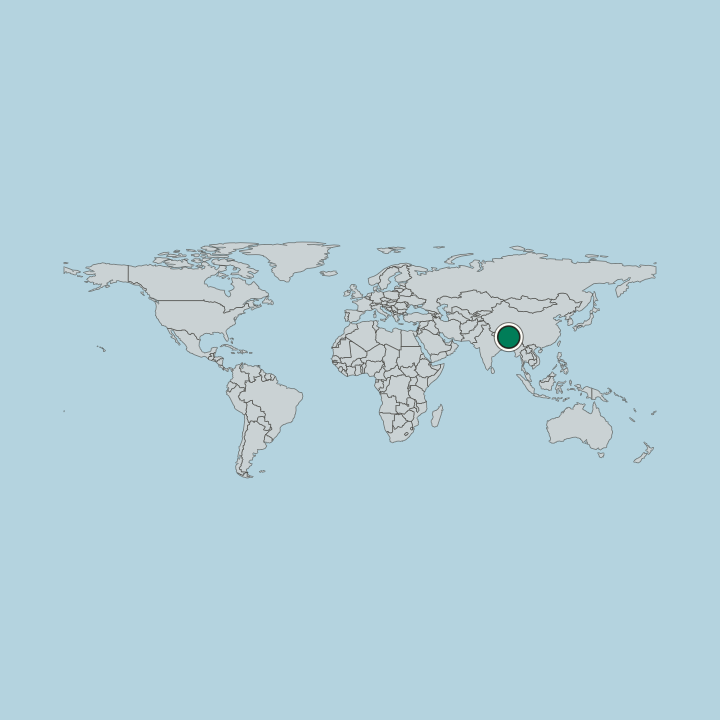
Bhutan is a Himalayan kingdom in South Asia, wedged between Tibet and India, with Thimphu as its capital.
Hotel links are affiliate links: booking through them may earn us a commission, at no extra cost to you. It never affects how places are ranked. How this works


Top destinations in Bhutan
One city to start from, then drill into its areas and hotels.
 Bhutan
Thimphu
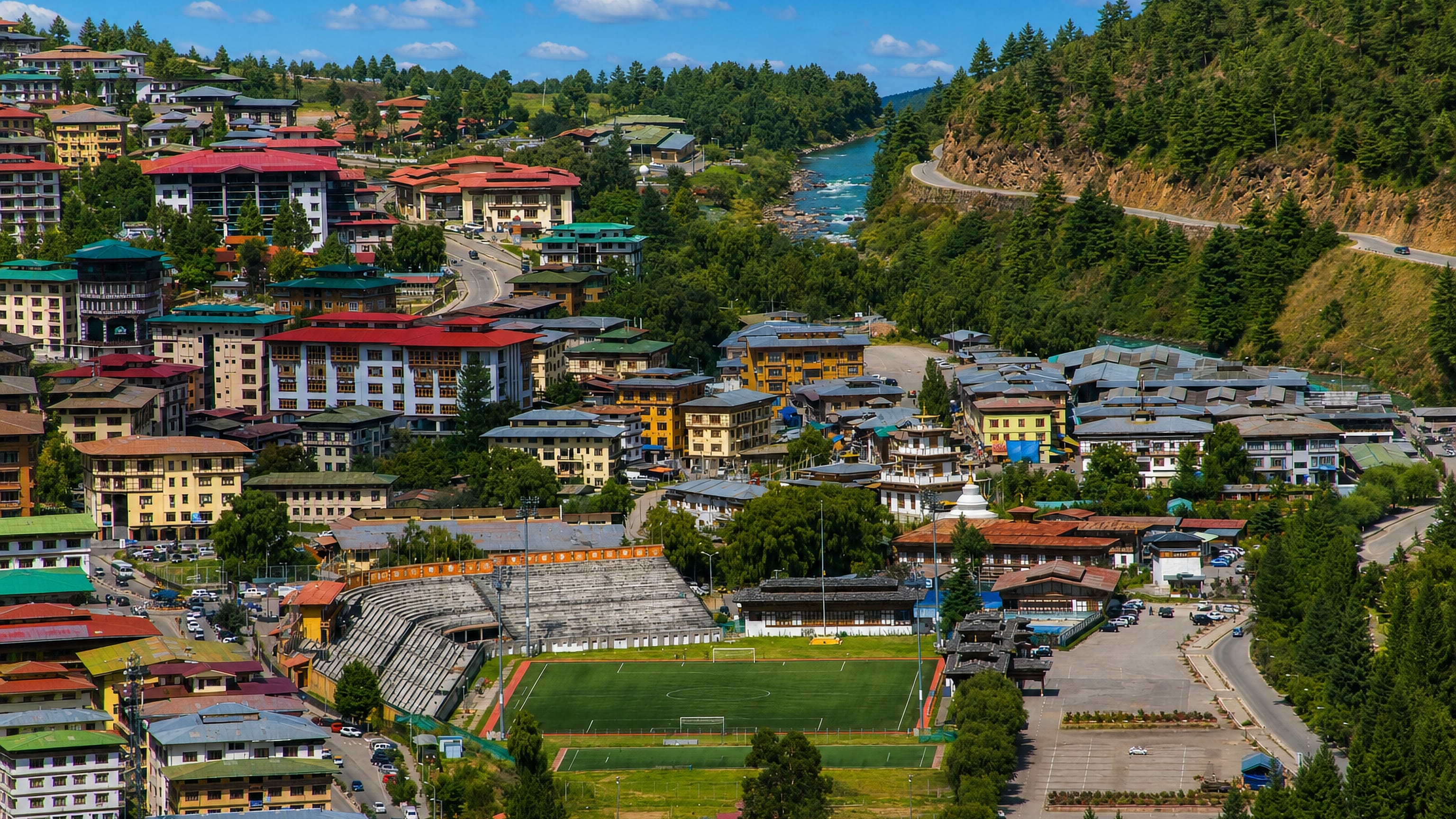
Thimphu fills a mountain valley in western Bhutan, the kingdom's capital and largest city, known for its Folk Heritage Museum and the ring of high ridges.Where to stay →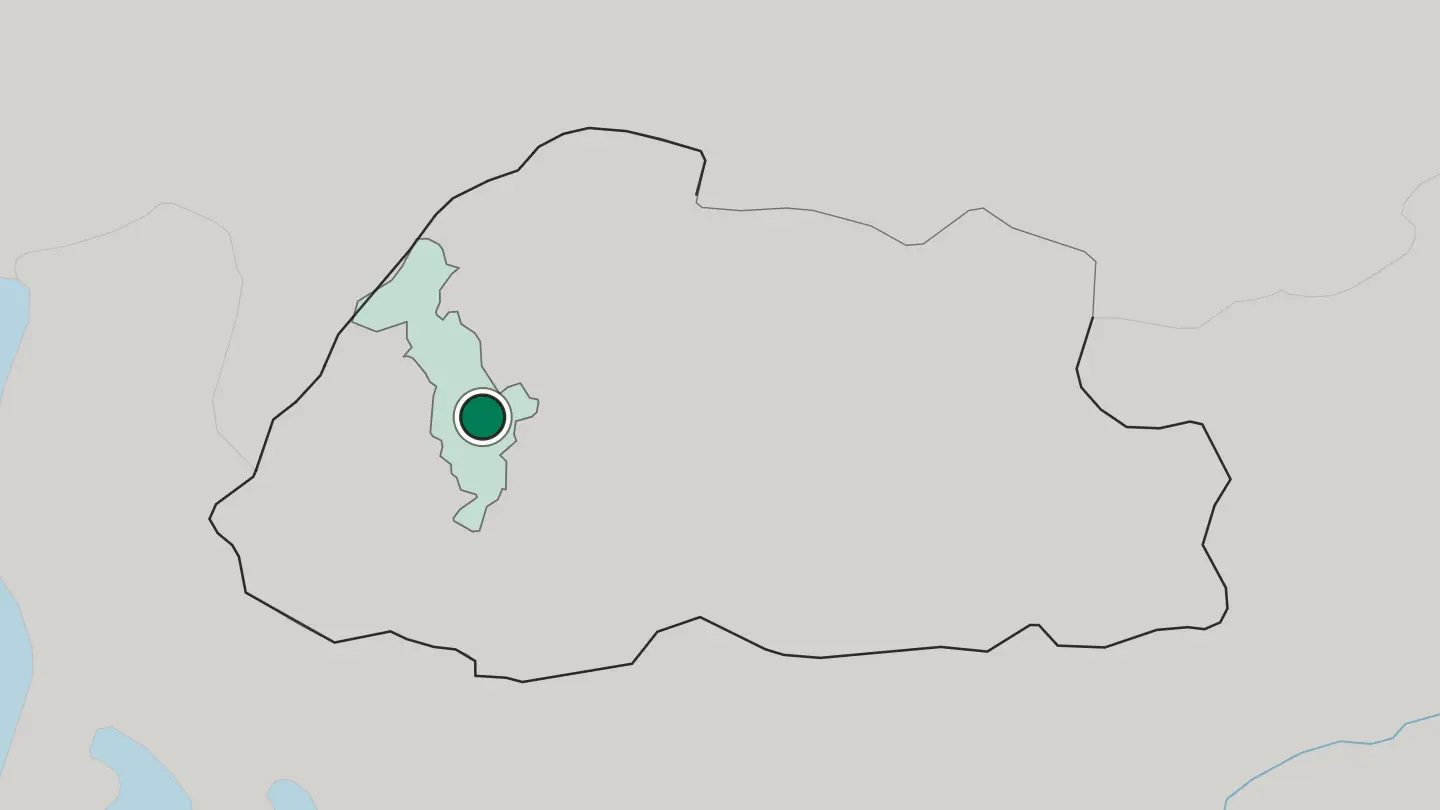
Hotel links are affiliate links: booking through them may earn us a commission, at no extra cost to you. It never affects how places are ranked. How this works
Browse by region
One region so far — open it to see its cities and towns.
About Bhutan
What is Bhutan known for?
Bhutan guards its Vajrayana Buddhist tradition more closely than any other kingdom on earth. Whitewashed dzongs, the fortress-monasteries that double as district administrations, stand over nearly every major valley. The land climbs hard.
From the subtropical Duars along the Indian border it rises to Gangkhar Puensum, the highest unclimbed mountain anywhere, and the country measures its progress by Gross National Happiness rather than output alone. Paro Taktsang, the Tiger's Nest clinging to a cliff above the Paro valley, is the image most travellers carry home.
Where is Bhutan?
Bhutan is a landlocked country in the Eastern Himalayas, bordering Tibet along its northern edge and India to the south. The land is stacked in three tiers that fall away from the high frontier. In the far north the Great Himalayan peaks hold permanent snow, crowned by Gangkhar Puensum, which rises above 7,500 metres and remains unclimbed.
Below them the Inner Himalayan ranges break the country into a run of deep temperate valleys, and it is here that Paro, Thimphu, Punakha, and Bumthang sit, each on its own river. The drop is steep. Along the southern border the ground flattens into the subtropical foothills and the Duars, a humid strip that shades into the great plain of northern India.
Rivers order the whole of it. Nearly every valley is drained by a glacier-fed torrent running south, and at Punakha the Mo Chhu and Pho Chhu meet before continuing toward the lowlands. These waters eventually feed the Brahmaputra in India, which carries them on to the Bay of Bengal.
Forest still covers most of the slopes, from subtropical growth in the south to fir and rhododendron high up. It is a small country folded into an enormous amount of vertical relief. Nowhere here stays flat for long.
What is the history of Bhutan?
Bhutan's story turns on Buddhism arriving over the mountains. Guru Rinpoche, the sage the Bhutanese revere as a second Buddha, is held to have flown to the cliff of Paro Taktsang in the eighth century, and the tantric teachings he carried took permanent root in the valleys. For centuries the land was a scatter of rival lordships and monastic estates.
Then came the unifier. In the seventeenth century the Tibetan lama Ngawang Namgyal, titled the Zhabdrung, welded the valleys into a single state, built the great dzongs that still administer them, and set up a dual rule split between a spiritual head, the Je Khenpo, and a secular ruler. That arrangement held for roughly three hundred years before it wore out.
In 1907 the assembled monks, officials, and clan heads ended the old dual system and enthroned Ugyen Wangchuck as the first hereditary king, founding the House of Wangchuck that reigns still. The kingdom stayed deliberately closed for much of the last century, opening to outside visitors only slowly. Reform came from the throne itself.
The monarchy handed down a written constitution and moved the country to elected government, and Bhutan reframed its own goal as Gross National Happiness rather than raw growth. The past here is not a museum. It runs the districts.
What is Bhutan like?
Bhutan is the last surviving Vajrayana Buddhist kingdom, and the faith governs far more than the temples. Daily life runs on it. The dzong in each district joins monastery and government under one set of whitewashed walls, and once a year each community fills its courtyard for a tshechu, the festival of masked cham dances that honour Guru Rinpoche and are believed to bless those who simply watch.
Dress carries the same weight of tradition. Under the etiquette code known as driglam namzha, men wear the knee-length gho and women the ankle-length kira, and a coloured ceremonial scarf marks rank, saffron reserved for the king alone. The kitchen is unmistakable too.
Ema datshi, chillies stewed with cheese, is treated as the national dish and eaten with the red rice of the Paro and Punakha valleys, where the chilli counts as a vegetable rather than a seasoning. Above all this sits the idea for which the country is best known abroad. A former king declared Gross National Happiness more important than output, and the state now weighs culture, environment, and community alongside the economy.
Old crafts endure across the valleys. Weaving, woodwork, and temple painting are still taught as living trades, not relics.
What is the climate of Bhutan?
Altitude decides the weather here far more than the calendar. The southern foothills and the Duars are humid and subtropical, drenched by the summer monsoon that sweeps up from the Bay of Bengal. The central valleys around Paro, Thimphu, and Bumthang are temperate, with warm days, sharp nights, and cold snowy winters.
Higher still the Great Himalayan crest stays frozen the year round. Rain falls hardest from June to September. Spring and autumn stay clearest, which is why most travellers come then.
How do you get to Bhutan?
Nearly everyone flies into Paro. It holds the country's only international airport, set in a tight valley on the Paro Chhu where the short runway and the surrounding peaks let only a handful of certified pilots make the daylight approach. Two carriers serve it, the national Drukair and Bhutan Airlines, linking Paro to Delhi, Kolkata, Kathmandu, Bangkok, and Singapore.
Land crossings from India through the southern border towns are the alternative. Every visitor also pays a daily sustainability charge that funds conservation and the free public services.
Good for
Updated September 2026