Republic of the Congo: Regions, Cities & Travel Guide
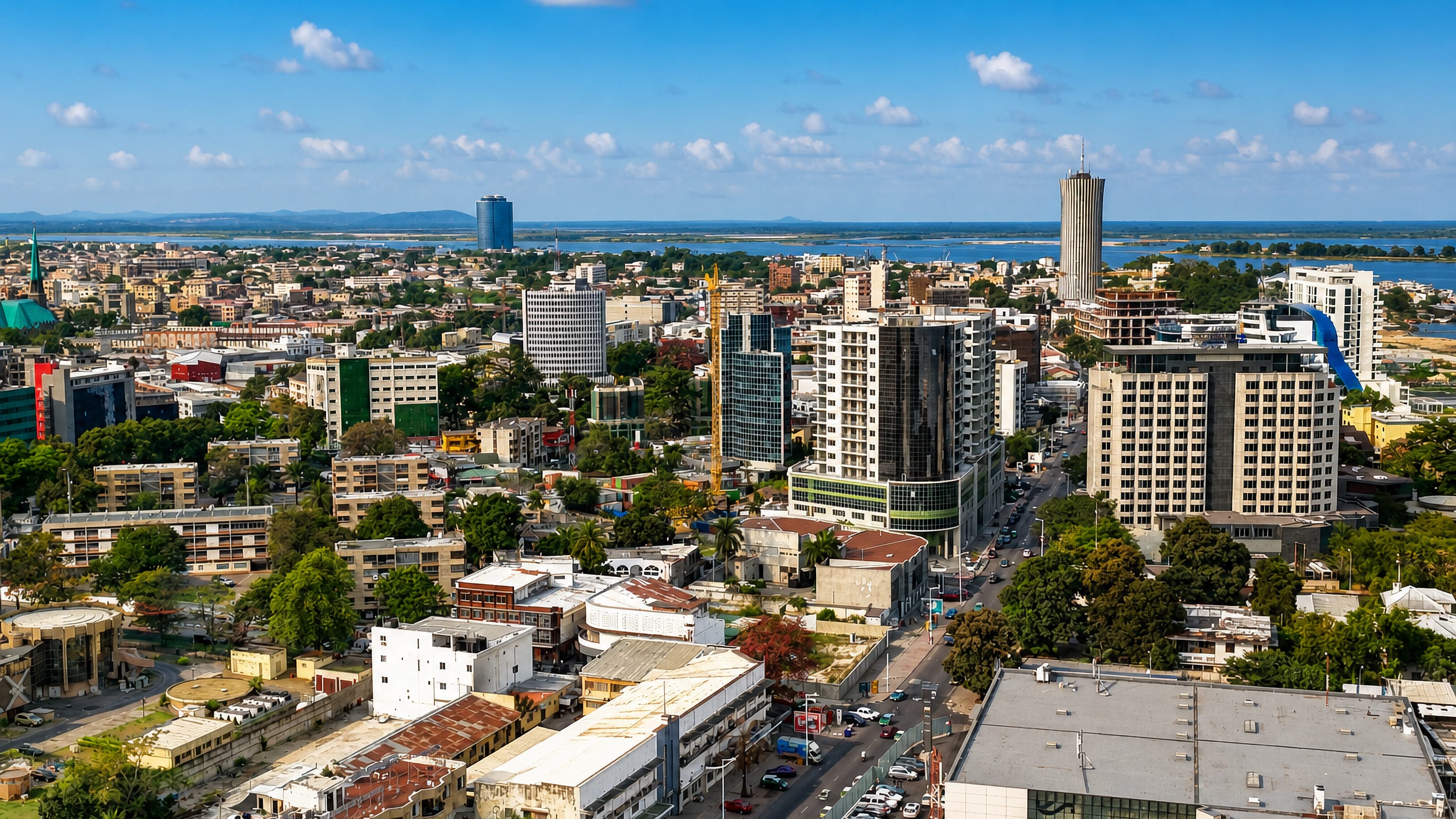
The Republic of the Congo straddles the equator in Central Africa, with Brazzaville facing Kinshasa across the Congo River.
Hotel links are affiliate links: booking through them may earn us a commission, at no extra cost to you. It never affects how places are ranked. How this works


Top destinations in Republic of the Congo
Cities to start from, then drill into areas and hotels.
 Republic of the Congo
Brazzaville
The Congo River curves past Brazzaville, capital of the Republic of the Congo, a river city facing Kinshasa across the water and founded in 1880.Where to stay →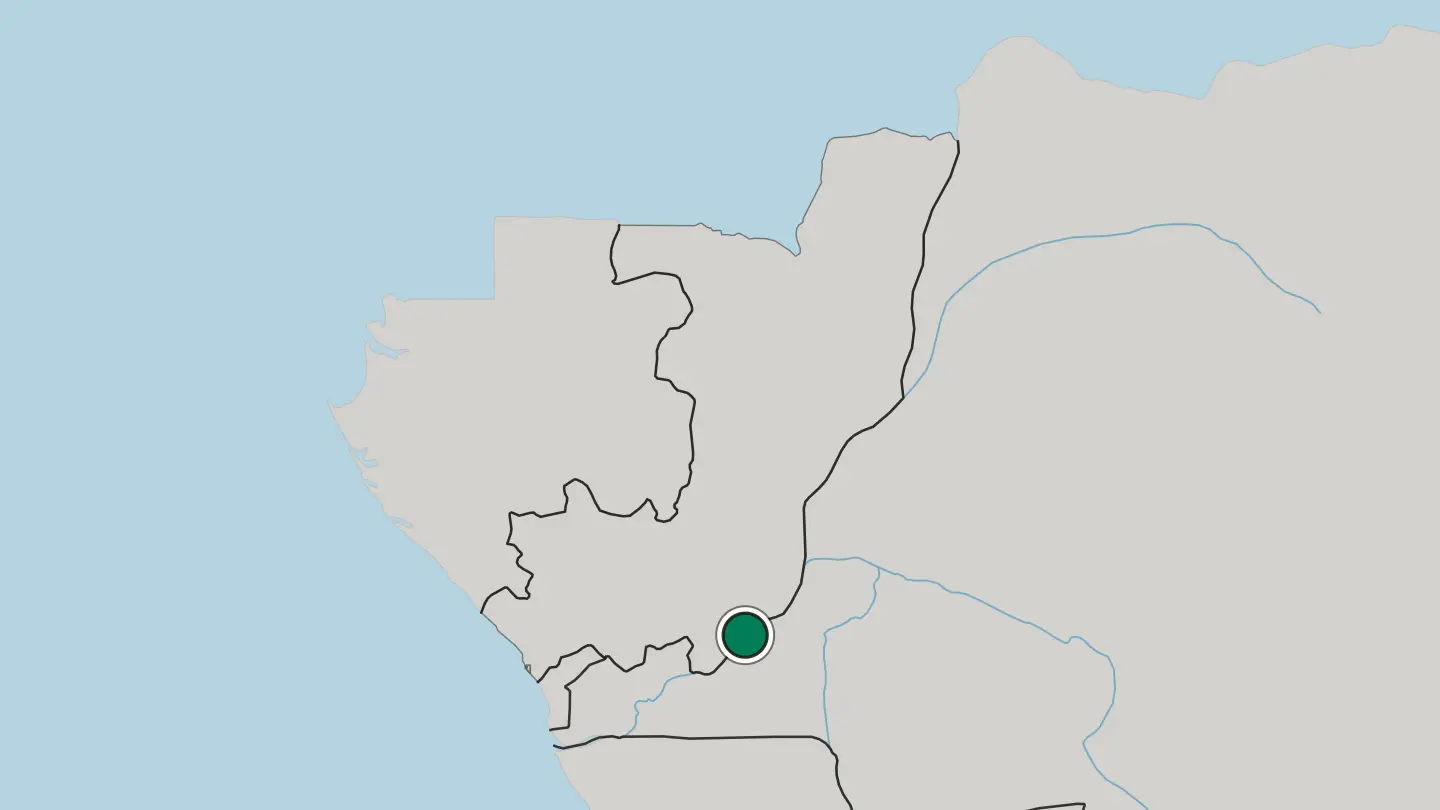
 Republic of the Congo
Pointe-Noire
Pointe-Noire is a city of the Republic of the Congo on the Atlantic, the country's port and oil town, at the end of the old railway from Brazzaville.Where to stay →
Hotel links are affiliate links: booking through them may earn us a commission, at no extra cost to you. It never affects how places are ranked. How this works
Regions of Republic of the Congo
Republic of the Congo
Brazzaville department
Brazzaville department is the capital department of the Republic of the Congo, north of the Congo River and facing Kinshasa.Towns & cities →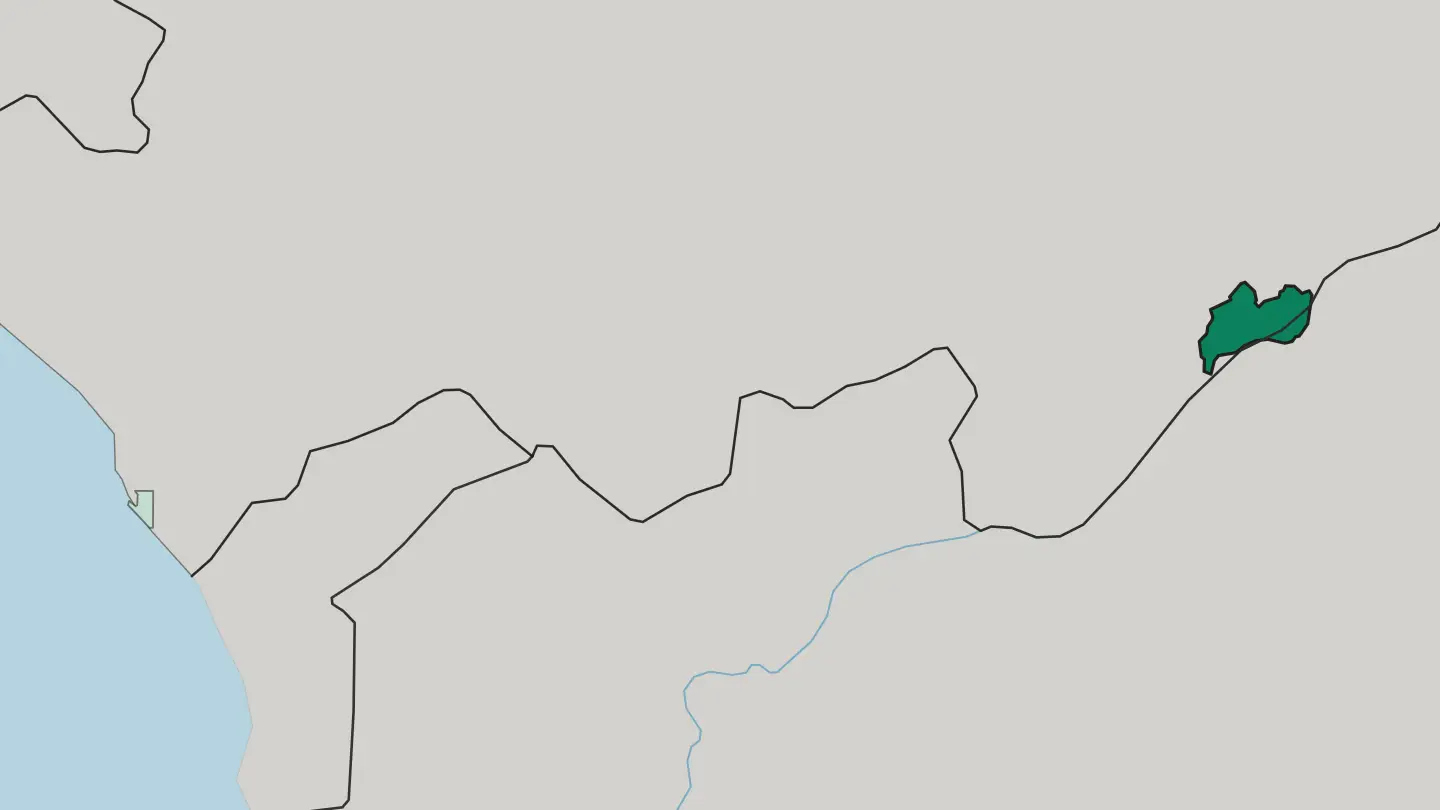 Republic of the Congo
Pointe-Noire
Pointe-Noire is an autonomous department of the Republic of the Congo, a sea port on the headland between Pointe-Noire Bay and the Atlantic Ocean.Towns & cities →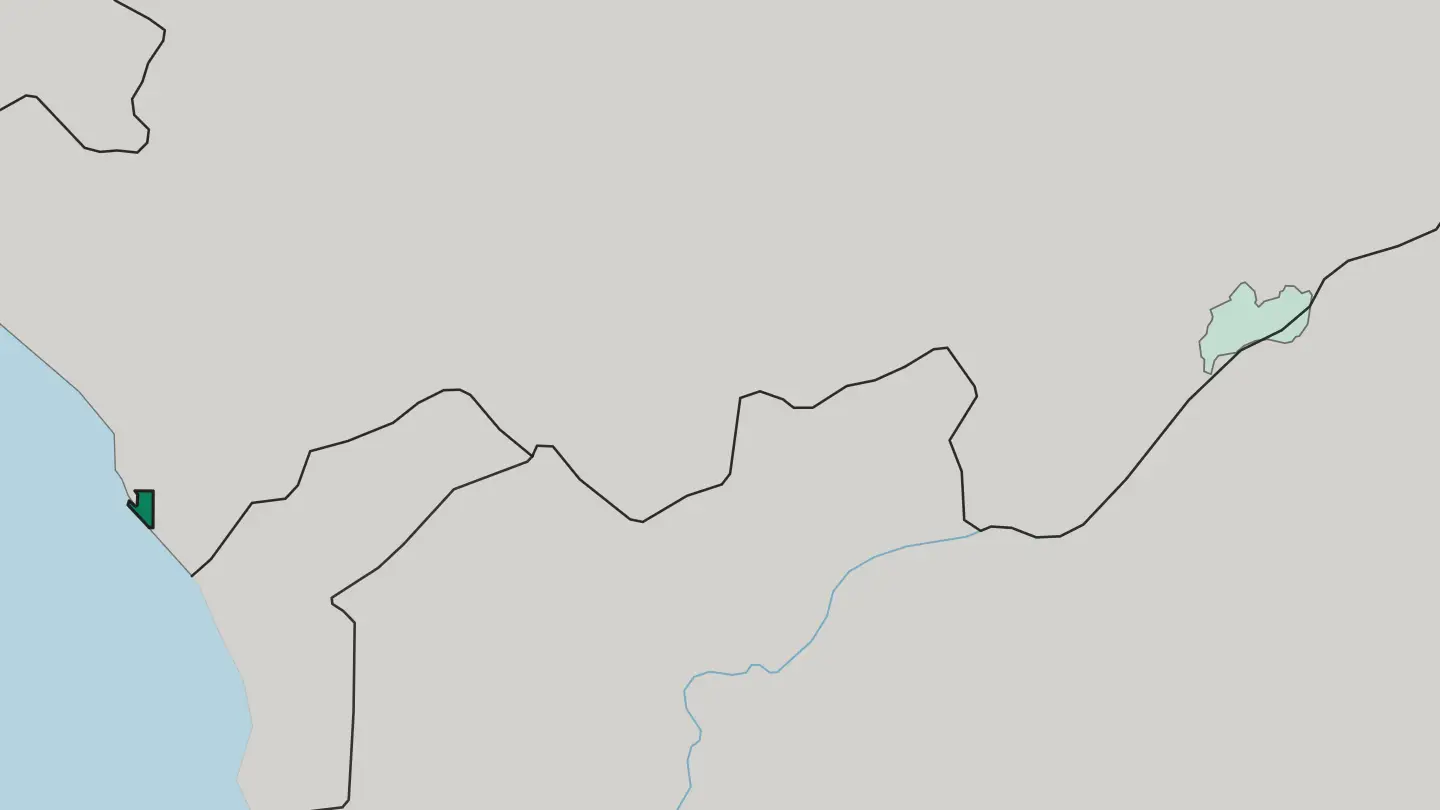
About Republic of the Congo
Congo-Brazzaville is forest country.
What is Republic of the Congo known for?
Rainforest cloaks roughly two-thirds of the land, and the western lowland gorillas and forest elephants of Odzala-Kokoua National Park draw the travellers who make the long trip north. The country is also the birthplace of Congolese rumba, the guitar-led sound that grew into soukous and carried Brazzaville's dance halls across the continent. Its two anchors are Brazzaville, the river capital, and Pointe-Noire, the Atlantic oil port and beach city on the coast.
Where is Republic of the Congo?
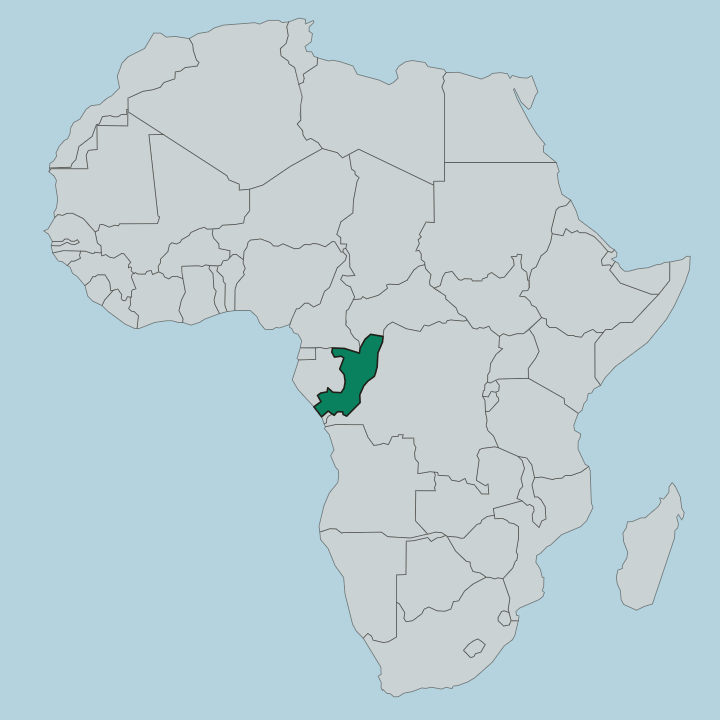
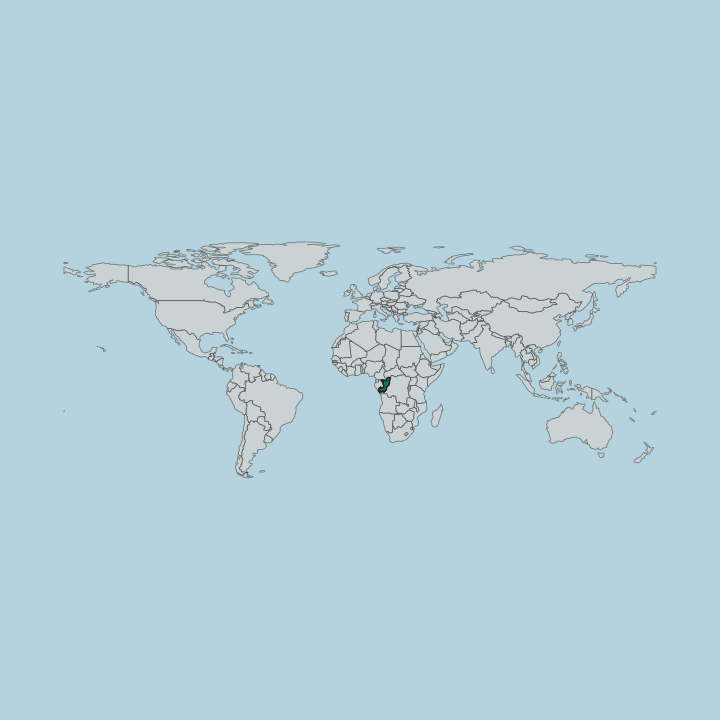
The Republic of the Congo sits on the western coast of Central Africa, west of the Congo River, wrapped by Gabon, Cameroon, the Central African Republic, the Democratic Republic of the Congo, and the Angolan exclave of Cabinda. A short strip of Atlantic shoreline forms its only sea edge in the south-west. Behind that coast the land climbs in steps.
A narrow coastal plain gives way to the Mayombe hills, then the granite dome of the Chaillu Massif, and beyond it the country opens into the vast Cuvette, the low, waterlogged heart of the Congo Basin. Water orders everything here. The Congo River and its tributary the Sangha carry traffic through the swamp forests of the north, while the Kouilou-Niari River cuts west through the Niari valley toward the sea.
Rainforest covers most of the interior, some of it standing over the peatlands of the Cuvette Centrale, one of the largest tropical carbon stores on earth. The highest ground is Mount Nabemba, a forested rise in the Sangha department of the north. Savannah plateaus break the green around Brazzaville in the south.
Forest, river, and grassland trade places across the map.
What is the history of Republic of the Congo?
Long before any border, this was kingdom country. The Kingdom of Loango traded ivory, copper, and cloth from the Atlantic coast, while inland the Teke of the Anziku Kingdom held the plateaus above the Congo River. That older order met Europe in 1880, when the Italian-born explorer Pierre Savorgnan de Brazza signed a treaty with the Teke ruler Makoko and planted the outpost that became Brazzaville.
The French folded the territory into French Equatorial Africa and ran it from that river town. Independence came in 1960, and the young republic swung through a run of coups and a long Marxist-Leninist period before a civil war tore through Brazzaville and Pointe-Noire in the late 1990s. History stays close here.
Brazza's name still marks the capital, the colonial railway still links the coast to the interior, and the river crossing to Kinshasa remains one of the busiest frontiers in Central Africa. From forest kingdoms to an oil economy, the throughline is the great river.
What is Republic of the Congo like?
Congolese life runs on rhythm. Congolese rumba was born on both banks of the Congo River and was inscribed by UNESCO as intangible cultural heritage, and the faster soukous it spawned still fills the bars and open-air clubs of Brazzaville. The capital is also the home of the Sapeurs, the dandy societies whose members spend a fortune on tailored suits and turn the street into a runway.
Style here is a statement, not a luxury. French is the official language, but daily talk moves in Lingala along the river in the north and in Kituba across the south. The table tells the same story of forest and river.
Cooks pound cassava leaves into saka-saka, simmer chicken in palm-oil moambe, and serve it beside fufu or grilled river fish. Wrestling, mask dances, and drumming carry ceremonies in villages away from the cities, where older Bantu traditions hold. Two great cities and a thousand villages share one loud, generous culture.
What is the climate of Republic of the Congo?
The equator runs through the country, so it stays warm and humid all year. Up north the climate is fully equatorial, wet through most months with only short lulls, which is why the forest there never truly dries out. Around Brazzaville and Pointe-Noire in the south the pattern turns sub-equatorial, with a clearer dry season from June to September when the heat eases and the roads and forest trails firm up.
That cooler dry stretch is the window travellers use for gorilla trekking. Rain returns hard by October.
How do you get to Republic of the Congo?
Two airports carry almost everyone in. Maya-Maya in Brazzaville and Agostinho-Neto in Pointe-Noire take the international flights, most routed through Addis Ababa, Paris, or Casablanca. The two cities are joined by the old Congo-Océan railway and by domestic hops.
Reaching the northern forests is the harder leg: it means a flight or a very long road up to Ouésso, then a charter or river transfer on to the Odzala-Kokoua National Park camps. Most visitors need a visa arranged before arrival. Plan the forest leg first, then work backward.
Good for
Updated September 2026