Colombia · Departamento del Cesar
Where to Stay in Valledupar, Departamento del Cesar
Valledupar sits between the Sierra Nevada de Santa Marta and the Serranía del Perijá, capital of Cesar and birthplace of Vallenato music.
Hotel links are affiliate links: booking through them may earn us a commission, at no extra cost to you. It never affects how places are ranked. How this works


Where to stay in Valledupar
Where the beds are, and what that means for the visit.
Valledupar divides neatly for a visitor. The Sector Fundacional de Valledupar carries the founding streets, and a bed inside it puts the Loperena School and the Casa Beto Murgas Museo del Acordeón within a few minutes on foot, which is where most of a short visit will be spent anyway. Heat pushes people to the river.
The Guatapurí runs down out of the Sierra Nevada de Santa Marta, and stays within reach of the water suit travellers who want mornings on the bank rather than in the streets. The valley itself decides the rest. Valledupar lies between the Sierra Nevada de Santa Marta and the Serranía del Perijá, and the edges of the city run out toward both ranges, away from the concentration of the founding quarter.
Two colonial chapels lie outside the core. The Capilla de Badillo and the Capilla Colonial de Valencia de Jesús belong to the wider municipality rather than the city grid, so a stay in Valledupar means a trip out to reach them, and a car helps more than a central address does. If you have come for Vallenato, the Casa Beto Murgas Museo del Acordeón and the streets of the Sector Fundacional are the reason to stay central.
Find hotels in Valledupar
Direct booking searches for these neighbourhoods.
Sector Fundacional
The Sector Fundacional de Valledupar holds the founding streets, with the Loperena School and the Casa Beto Murgas Museo del Acordeón inside the same short walk.Find hotels in Sector FundacionalMornings on the Guatapurí below the Sierra Nevada de Santa MartaToward the Guatapurí
The Guatapurí comes down out of the Sierra Nevada de Santa Marta past Valledupar, and the bank draws people off the hot valley floor.Find hotels in Toward the GuatapuríQuiet blocks facing the Serranía del Perijá across the Cesar valleyThe Perijá edge
The edges of Valledupar run out toward the Serranía del Perijá, and beds there sit away from the concentration of the Sector Fundacional.Find hotels in The Perijá edgeHotel links are affiliate links: booking through them may earn us a commission, at no extra cost to you. It never affects how places are ranked. How this works
Things to do in Valledupar
Ranked by global recognition; descriptions from Wikidata (CC0).
Museums & Galleries
1- Casa Beto Murgas Museo del Acordeón
Castles & Historic Sites
4- Loperena School Heritage
- Capilla Colonial de Valencia de Jesús Heritage
- Capilla de Badillo. Capilla de San Antonio de Padua Heritage
- Sector Fundacional de Valledupar Heritage
worth knowingacross 2 categories in Valledupar
About Valledupar
Vallenato was born here.
What is Valledupar known for?
Valledupar, the capital of Cesar, is named the birthplace of Vallenato, and the Casa Beto Murgas Museo del Acordeón keeps the accordion at the centre of that claim. Mountains stand on both sides of the valley. The Sierra Nevada de Santa Marta rises to one flank and the Serranía del Perijá to the other, with the Guatapurí and the Cesar drawing the lines the old town of the Sector Fundacional de Valledupar was set between.
What are the main landmarks in Valledupar?
Five sites carry Valledupar's heritage list. The Sector Fundacional de Valledupar covers the founding quarter itself, while the Casa Beto Murgas Museo del Acordeón sets out the accordion at the centre of Vallenato and the Loperena School stands among the older institutional buildings of Cesar. Two chapels sit beyond the centre.
The Capilla de Badillo, also called the Capilla de San Antonio de Padua, and the Capilla Colonial de Valencia de Jesús carry the colonial church building of the municipality.
What is the history of Valledupar?
The name records a cacique. Valledupar comes from Valle de Upar, established in honour of Cacique Upar, the Amerindian leader who ruled the valley before the Spanish foundation of 1550. That valley had a shape already.
It ran between the Sierra Nevada de Santa Marta and the Serranía del Perijá, watered by the Guatapurí and the Cesar, and the town went in on the floor between them. Colonial building followed. The Capilla de Badillo, dedicated to San Antonio de Padua, and the Capilla Colonial de Valencia de Jesús survive from that period, and the Sector Fundacional de Valledupar preserves the block pattern the settlement began with.
Later came the school and the music. The Loperena School belongs to the institutional layer of a departmental capital, and Vallenato grew out of the same valley, the accordion music that Valledupar is named as the birthplace of. Cesar Department took its capital from the valley floor, and Valledupar has held that role since, the administrative centre of the Eastern Andino country between the two ranges.
The Casa Beto Murgas Museo del Acordeón came later still. It gathers the instrument's history in the city that claims the music, closing the line that runs from Cacique Upar's valley to the accordion.
Where is Valledupar?
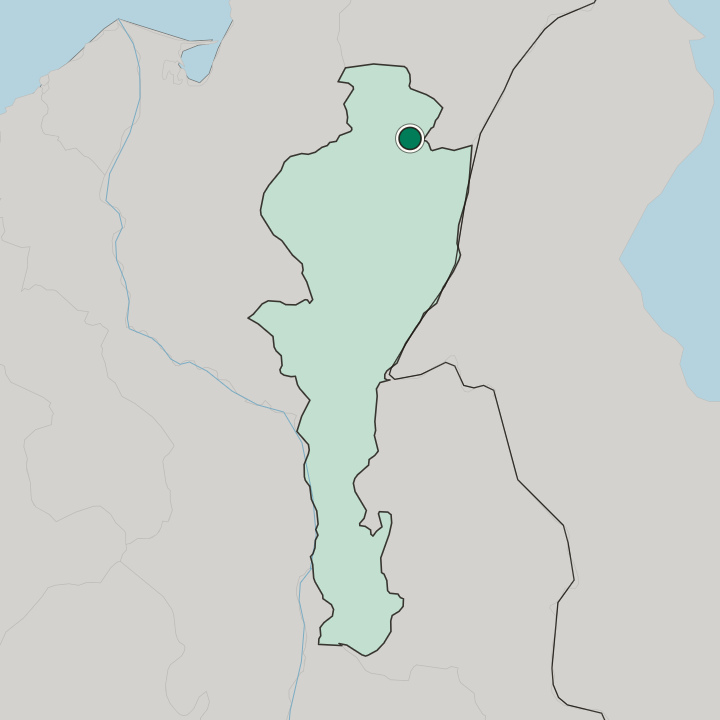
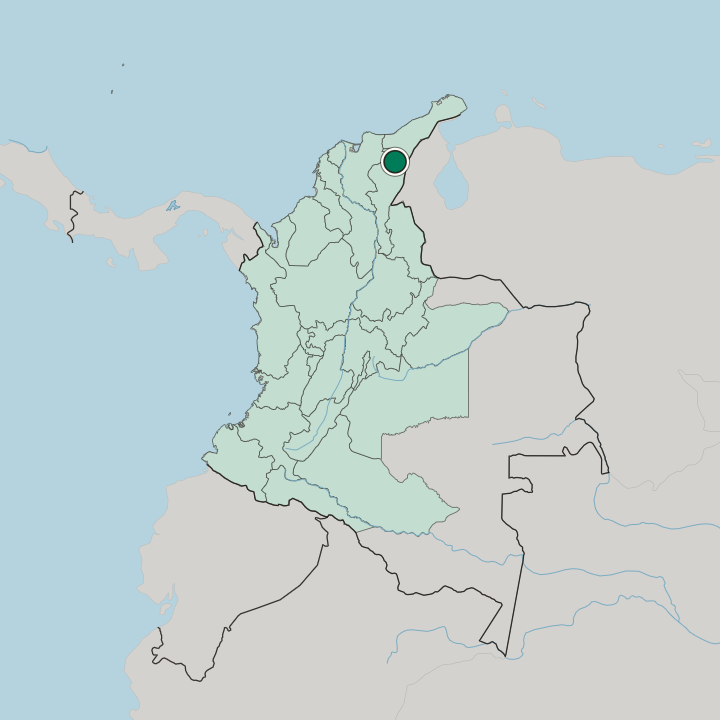
Valledupar occupies a valley floor in northeastern Colombia. Two ranges close it in. The Sierra Nevada de Santa Marta stands on one side and the Serranía del Perijá on the other, while the Guatapurí and the Cesar mark the borders of the ground the city grew across.
The municipality of Cesar's capital reaches well past the built streets into the valley around.
What is the climate of Valledupar?
The two ranges trap the heat. Valledupar lies in the tropics on a valley floor, and the Sierra Nevada de Santa Marta and the Serranía del Perijá hold the air in between them, so the days run hot rather than mild. The Guatapurí answers for that.
Water coming down off the Sierra Nevada de Santa Marta gives the valley its relief from the temperature, and the riverbank draws people out of the streets in the hottest part of the day.
How do you get to Valledupar?
Approaches to Valledupar follow the valley. The Sierra Nevada de Santa Marta on one side and the Serranía del Perijá on the other leave a single floor of open ground, and roads into Cesar's capital run along it rather than over the ranges. Valledupar is the departmental hub.
Travellers reaching the Eastern Andino country of northeastern Colombia pass through it, and the lines of the Guatapurí and the Cesar mark the edges of the city on the way in.
Common questions
What is the best area to stay in Valledupar?
Sector Fundacional: The founding quarter of Valledupar, covered on foot. Toward the Guatapurí: Mornings on the Guatapurí below the Sierra Nevada de Santa Marta. The Perijá edge: Quiet blocks facing the Serranía del Perijá across the Cesar valley.
Good for
Updated October 2026